


Texas Maternal Cardiac Arrest Lawyer
Written by: Hastings Law Firm | Reviewed by: Tommy Hastings | Updated: July 27, 2026
Maternal cardiac arrest and heart failure during or after childbirth can unfold quickly and leave families facing devastating medical and emotional consequences. The underlying crisis may follow missed warning signs, delayed treatment, or breakdowns in communication during labor and postpartum care. Understanding how complications like severe bleeding, dangerous blood pressure, infection, or sudden cardiovascular collapse are recognized and managed can clarify whether the response met accepted standards. If you or a loved one were harmed or worse due to maternal cardiac arrest during childbirth in Texas, contact Hastings Law Firm for a free, confidential case review.

Compassionate Texas Medical Attorneys for Heart Failure During Childbirth Claims
What You Should Know About Heart Failure During Childbirth Claims in Texas:
- Outcomes can be catastrophic when maternal cardiac arrest follows untreated complications during pregnancy or shortly after delivery.
- Preventable harm can occur when severe bleeding is not treated promptly with appropriate transfusion response and hemorrhage protocols.
- Life threatening escalation can follow when dangerously high blood pressure is not closely monitored and treated in time.
- Long term disability can result when cardiac arrest leads to anoxic brain injury and ongoing care needs.
- Fatal outcomes can occur when infection is not identified early and treated aggressively.
- Recovery options can depend on whether warning signs like shortness of breath or chest pain were dismissed instead of evaluated urgently.
- Delayed emergency response can be driven by communication breakdowns when concerning vital signs are documented but not promptly escalated.
- Liability disputes can turn on whether the medical team deviated from the standard of care and whether that deviation caused organ failure, injury, or death.
- Compensation can be limited for non economic losses in Texas medical malpractice cases while economic losses may remain available.
- Case outcomes can hinge on what the medical records show about monitoring, medications, labs, and clinician orders during the clinical timeline.

A Healthcare Focused Law Firm
When a mother suffers cardiac arrest, the sudden loss of heart function, during pregnancy or shortly after delivery, the shock and grief can be overwhelming. Heart failure in this context means the heart can no longer pump enough blood to sustain the body, and when it strikes during childbirth, the consequences can be catastrophic for an entire family. If you suspect that a medical team’s failures contributed to what happened, you are not wrong for asking questions.
As a Texas maternal cardiac arrest lawyer, our founder, Tommy Hastings, established Hastings Law Firm in 2005 to help families through these medical crises. We represent families facing exactly this kind of crisis with a team of attorneys, in-house nurses, and medical consultants. We focus exclusively on medical malpractice and understand both the medical science and the legal framework behind these cases. If your family has been affected, we can review what happened and explain your options in a free, confidential evaluation.
Common Causes of Cardiac Arrest During Labor and Delivery
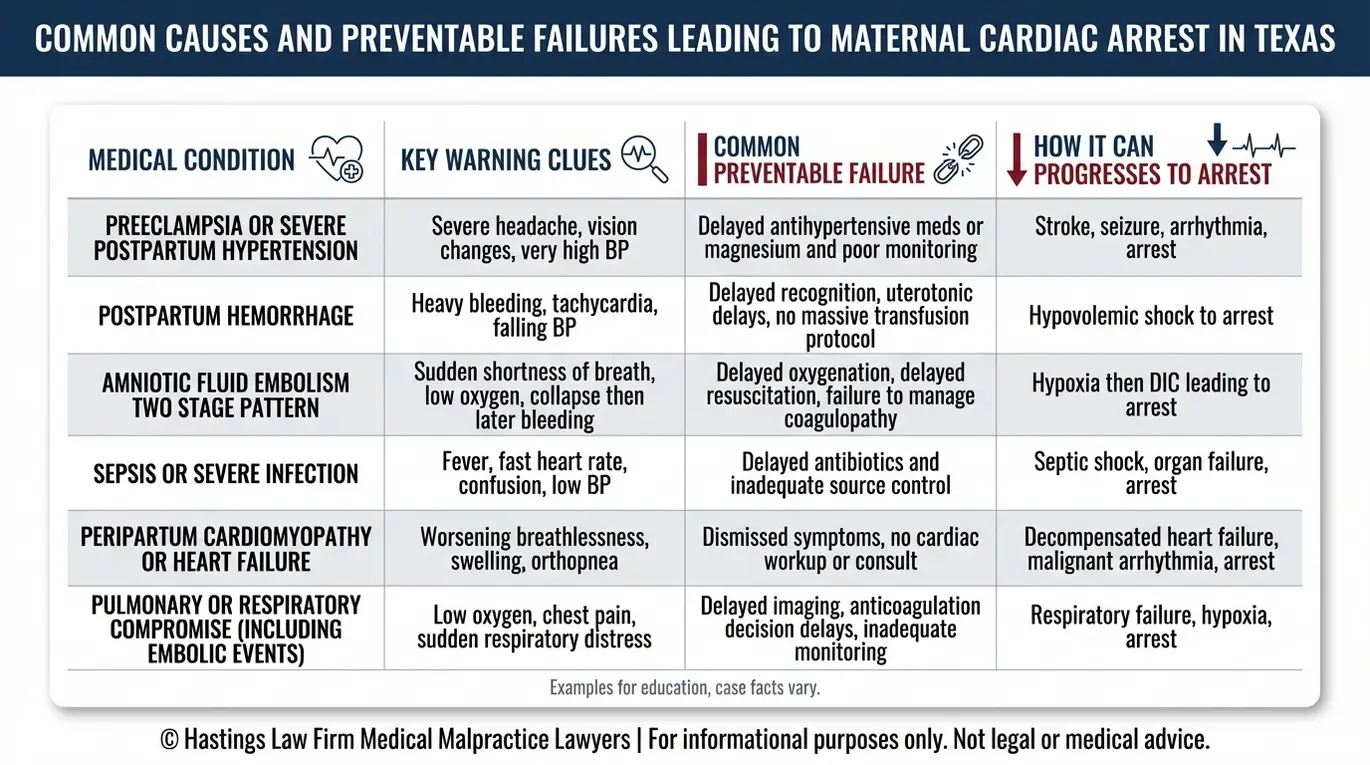
Maternal cardiac arrest is often the final stage of untreated complications such as severe hemorrhage, unmanaged preeclampsia, or amniotic fluid embolism. In many cases, cardiac arrest does not occur without warning. It follows a chain of clinical events that, if recognized and treated in time, may have been preventable.
Hemorrhage is one of the leading causes. Postpartum hemorrhage, which is severe bleeding after delivery, can rapidly deplete blood volume and send the body into shock. When transfusion protocols are delayed or blood products are not available, the resulting drop in blood pressure can lead to cardiac arrest. The Alliance for Innovation on Maternal Health Bundles has developed specific hospital protocols for managing obstetric hemorrhage, and failure to follow these evidence-based guidelines can form the basis of a negligence claim.
Preeclampsia and eclampsia involve dangerously high blood pressure during pregnancy. Left untreated, preeclampsia can progress to eclampsia, triggering seizures, stroke, or cardiac arrest. The standard of care generally requires close blood pressure monitoring and timely intervention, including medication or emergency delivery, when readings become dangerous.
Cardiovascular conditions like peripartum cardiomyopathy (PPCM), a form of heart failure that develops toward the end of pregnancy or in the months after delivery, can weaken the heart muscle to the point of failure. Early recognition of symptoms like shortness of breath and fluid retention is essential for treatment, yet these symptoms are sometimes attributed to “normal” pregnancy discomfort.
Sepsis, a life-threatening response to infection, can also lead to cardiac arrest if not caught early. Infection following cesarean delivery or prolonged labor requires rapid identification and aggressive treatment with antibiotics and fluids. Delays in recognizing sepsis allow it to progress to organ failure.
Amniotic fluid embolism (AFE), a rare but often fatal event where amniotic fluid enters the mother’s bloodstream, typically follows a two-stage clinical progression. As described by the National Center for Biotechnology Information, the first stage involves sudden cardiovascular collapse and respiratory failure. If the mother survives the initial phase, the second stage brings severe hemorrhage due to a breakdown in the blood’s ability to clot.
While AFE itself may not be preventable, liability can arise when the medical team fails to recognize and manage each stage with the urgency it demands. We evaluate the clinical response at every step to determine whether the care provided fell short.
| Medical Condition | Potential Negligent Act | Possible Outcome |
|---|---|---|
| Postpartum Hemorrhage | Failure to initiate timely blood transfusion or follow hemorrhage protocols | Hypovolemic shock leading to cardiac arrest |
| Preeclampsia / Eclampsia | Failure to monitor or treat severe hypertension | Seizures, stroke, or cardiac arrest |
| Peripartum Cardiomyopathy (PPCM) | Dismissing heart failure symptoms as normal pregnancy complaints | Progressive heart failure and potential death |
| Sepsis / Infection | Delayed identification or inadequate antibiotic treatment | Organ failure and cardiac arrest |
| Amniotic Fluid Embolism (AFE) | Failure to manage cardiovascular collapse or coagulopathy after onset | Respiratory failure, hemorrhage, and death |
Warning Signs of Heart Failure and Postpartum Complications
Warning signs of impending maternal heart failure include shortness of breath, extreme swelling, severe headache, and chest pain, which medical staff must never dismiss as normal pregnancy symptoms. These are red flags that require immediate evaluation, not reassurance that “this is just part of having a baby.”
The Texas Maternal Mortality and Morbidity Review Committee and Department of State Health Services Joint Biennial Report 2024 includes data often highlighted by the Hear Her Texas campaign. This report found that a significant percentage of pregnancy-related deaths in Texas were preventable. This data reinforces what families often already sense: something was missed, and it did not have to end this way.
One of the most persistent problems in maternal care is the dismissal of a mother’s own reported symptoms. Many women describe feeling unheard when they tell nurses or doctors about chest tightness, difficulty breathing, or a sense that something is wrong. This pattern reflects a broader tendency to minimize patient concerns rather than investigate them. If you or a loved one experienced this, your instinct to question what happened is valid.
Peripartum cardiomyopathy (PPCM), a condition where the heart muscle weakens toward the end of pregnancy or in the months after delivery, can present with symptoms that mimic normal late-pregnancy fatigue. Preeclampsia, a dangerous rise in blood pressure that can damage organs, or HELLP syndrome, may initially show as swelling and headaches. Identifying risk factors is crucial, as severe cases can escalate to respiratory failure if left unchecked. Both conditions demand close monitoring and prompt treatment, especially in the hours immediately after delivery when postpartum care is most critical.
Urgent warning signs that should never be ignored include:
- Sudden or severe shortness of breath, especially when lying flat
- Chest pain or a feeling of pressure in the chest
- Rapid or irregular heartbeat
- Extreme swelling in the face, hands, or legs
- Severe, persistent headache that does not respond to treatment
- Vision changes such as blurring or seeing spots
- Significant drop in urine output
- Confusion, dizziness, or fainting
Critical time is lost when a nurse documents concerning vitals but does not promptly notify the attending obstetrician. This type of communication breakdown is a recurring factor in delayed responses to severe postpartum hypertension and other emergencies. We examine nursing notes, physician call logs, and hospital communication records to identify exactly where the chain of care broke down.

The Hastings Law Firm Difference
Results matter, but what truly sets us apart is how we achieve them. Every verdict, every settlement, and every Texas courtroom victory comes from one guiding promise: To treat each client’s fight for justice as if it were our own.
This balance of skill, experience, and empathy reflects our core philosophy that justice should not only compensate the injured, but also make healthcare safer nationwide.

Proving Medical Negligence in Maternal Cardiac Injury Cases
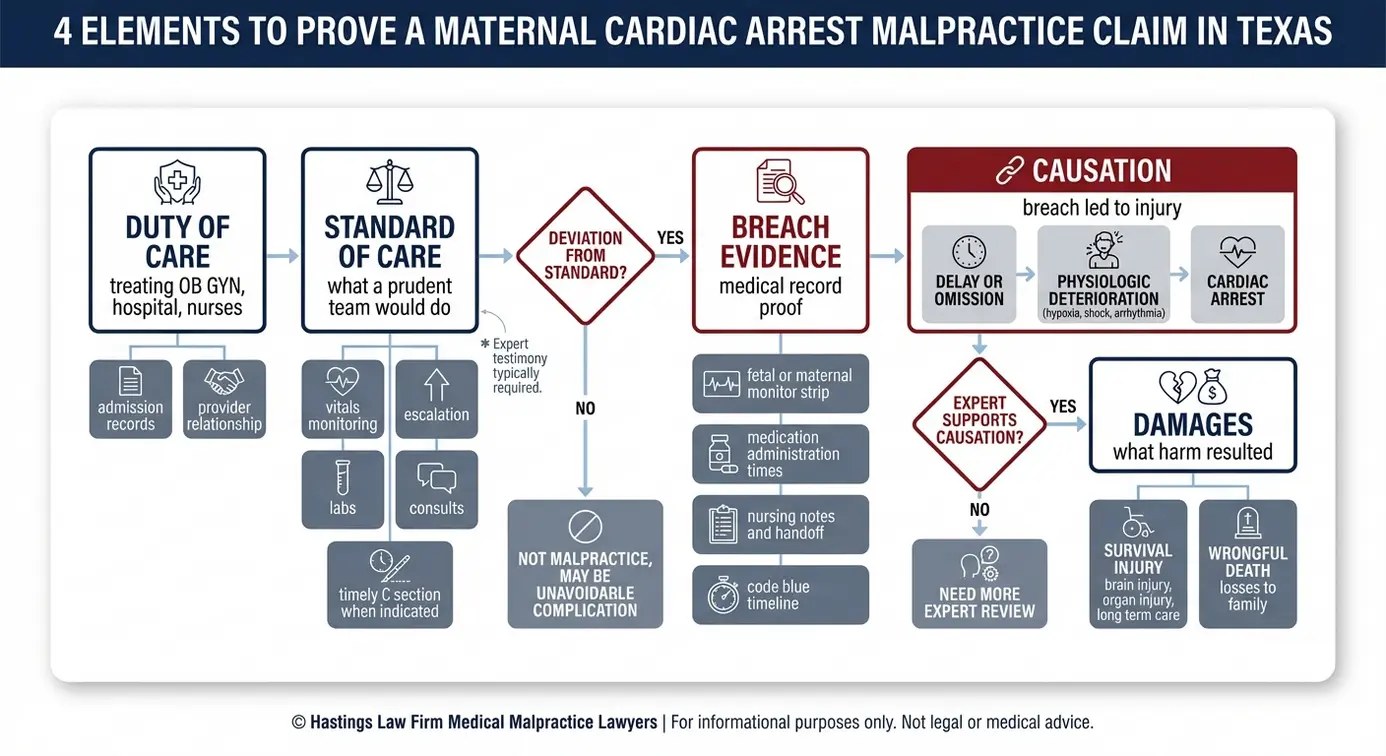
Proving negligence requires clear evidence that the medical team deviated from the standard of care by failing to monitor vitals, delaying a C-section, or ignoring signs of distress. But proving that something went wrong is not as simple as showing a bad outcome. The law requires a specific framework.
The standard of care is the level of treatment that a reasonably competent medical professional would have provided under similar circumstances. In medical malpractice cases, this includes continuous monitoring of blood pressure, heart rate, and oxygen levels, as well as timely response when those readings become abnormal. We must demonstrate that the care team’s actions fell below this standard and that the deviation directly caused organ failure, injury, or death.
Expert testimony is the foundation of that proof. As a board-certified trial lawyer, Tommy Hastings is among the fewer than 2% of Texas attorneys with this distinction from the Texas Board of Legal Specialization. Texas law requires that a qualified medical expert, such as an obstetrician or cardiologist, review the records and testify about what a prudent physician would have done.
The Centers for Disease Control and Prevention’s provisional maternal mortality data tracks pregnancy-related death. This includes deaths during pregnancy or within one year of delivery from causes related to or aggravated by the pregnancy. Understanding whether a death is classified as pregnancy-related helps shape the legal theory and determine which parties may be liable.
At Hastings Law Firm, our in-house medical staff and national network of experts work together to reconstruct the clinical timeline. We examine fetal monitoring strips, nursing flow sheets, medication administration records, laboratory results, and physician orders to build a minute-by-minute picture of what happened. This level of preparation is part of our trial-ready approach, which means we investigate every case from the outset as though it will go before a jury.
Legal Representation for Maternal Cardiac Arrest and Wrongful Death
Families may pursue compensation for medical costs, pain and suffering, and loss of companionship through a medical malpractice or wrongful death lawsuit. The type of case and the damages available depend on whether the mother survived with lasting injuries or whether the family lost her entirely.
When a mother survives cardiac arrest but suffers anoxic brain injury, which is brain damage caused by a prolonged lack of oxygen, the resulting disabilities can require a lifetime of medical care. These cases often involve enormous economic damages and a profound change in the family’s daily life. We use our insider knowledge from former defense attorneys on our team to anticipate how insurance companies evaluate these claims.
When a mother dies as a result of medical negligence, surviving family members may file a wrongful death claim. You may also bring a separate survival action on behalf of her estate to recover damages she experienced before her death.
Recoverable damages in these cases may include:
- Economic damages: Past and future medical expenses, lost wages and earning capacity, cost of ongoing care and rehabilitation
- Non-economic damages: Physical pain and mental anguish, loss of companionship and consortium, loss of parental guidance for surviving children
- Wrongful death damages: Funeral and burial costs, loss of financial support, loss of household services
As a Texas maternal cardiac arrest lawyer, Hastings Law Firm prepares every case for trial from day one. This trial-ready posture signals to hospitals and their insurers that we will not accept less than fair value. Our team includes attorneys with extensive trial experience who understand the strategies the other side will use, giving us an advantage in building the strongest possible case for your family.
Contact the Texas Birth Injury Attorneys at Hastings Law Firm Today for Help
Maternal cardiac arrest during or after childbirth is often preventable. If your family is living with the consequences of a medical team’s failure to act, you deserve to know what happened and why.
Hastings Law Firm is here to help you find those answers. Our team of attorneys, nurse consultants, and medical experts will review your records, identify where the standard of care may have been violated, and explain your legal options clearly and honestly. Many families who contact us are driven not only by the need for financial security but also by the desire to prevent the same thing from happening to someone else.
We work on a contingency fee basis, which means you pay no attorney fees or costs unless we secure a recovery on your behalf. Your initial consultation is free and confidential.
Contact Hastings Law Firm to schedule your risk-free case evaluation. Let us help you find the truth and protect your family’s future.
Frequently Asked Questions About Maternal Cardiac Arrest in Texas


This content was researched and written by the Hastings Law Firm editorial team, which includes attorneys, medical professionals, and experienced researchers. Our writing is informed by internal knowledge and practical experience, and we cross-check critical details against authoritative sources cited throughout. Every piece undergoes human-led fact-checking and legal review. Because legal and medical information can change, if you spot an error, please contact us. Learn more about our content standards and review process on our editorial policy page.

Tommy Hastings, founder of Hastings Law Firm, is a board-certified personal injury trial lawyer dedicated exclusively to healthcare injury cases. Since 2001, he has represented injured patients and families in litigation against major hospital systems, pharmaceutical companies, and negligent healthcare providers nationwide. He has handled numerous high-profile cases that have drawn national media attention and resulted in multi-million dollar recoveries. He draws on that experience in his writing, helping readers understand how these cases work and what options may be available to them.
