


Arizona Lung Cancer Misdiagnosis Lawyer
A delayed lung cancer diagnosis can narrow treatment options and worsen prognosis when warning signs on imaging or symptoms are missed or not followed up. The standard of care generally calls for timely diagnostic imaging, clear radiology reporting, appropriate referrals, and documentation that tracks changes over time. Breakdowns such as misread scans, missed incidental findings, or failure to order further testing can allow disease to progress to a more severe stage. If you or a loved one were harmed or worse due to a delayed or missed lung cancer diagnosis in Arizona, contact Hastings Law Firm for a free, confidential case review.

Last Updated: July 27, 2026
Trusted Arizona Medical Attorneys for Delayed Lung Cancer Diagnosis Claims
When a doctor overlooks or misreads signs of lung cancer, the consequences can be life-altering. A diagnosis that could have come months or even years earlier may have meant less aggressive treatment, a better prognosis, and more time with the people who matter most. If you or a loved one experienced a delayed or missed lung cancer diagnosis, you may have grounds for a medical malpractice claim.
At Hastings Law Firm, our team of attorneys, in-house nurses, and patient advocates focuses exclusively on medical malpractice. We understand the grief and frustration that follow a preventable delay, and we know how to investigate what went wrong. As an experienced Arizona lung cancer misdiagnosis lawyer team, we are here to help you find clarity. Contact our Phoenix office for a free, confidential case evaluation. You pay nothing unless we recover compensation on your behalf.

Standard of Care and Detection Protocols for Pulmonary Conditions
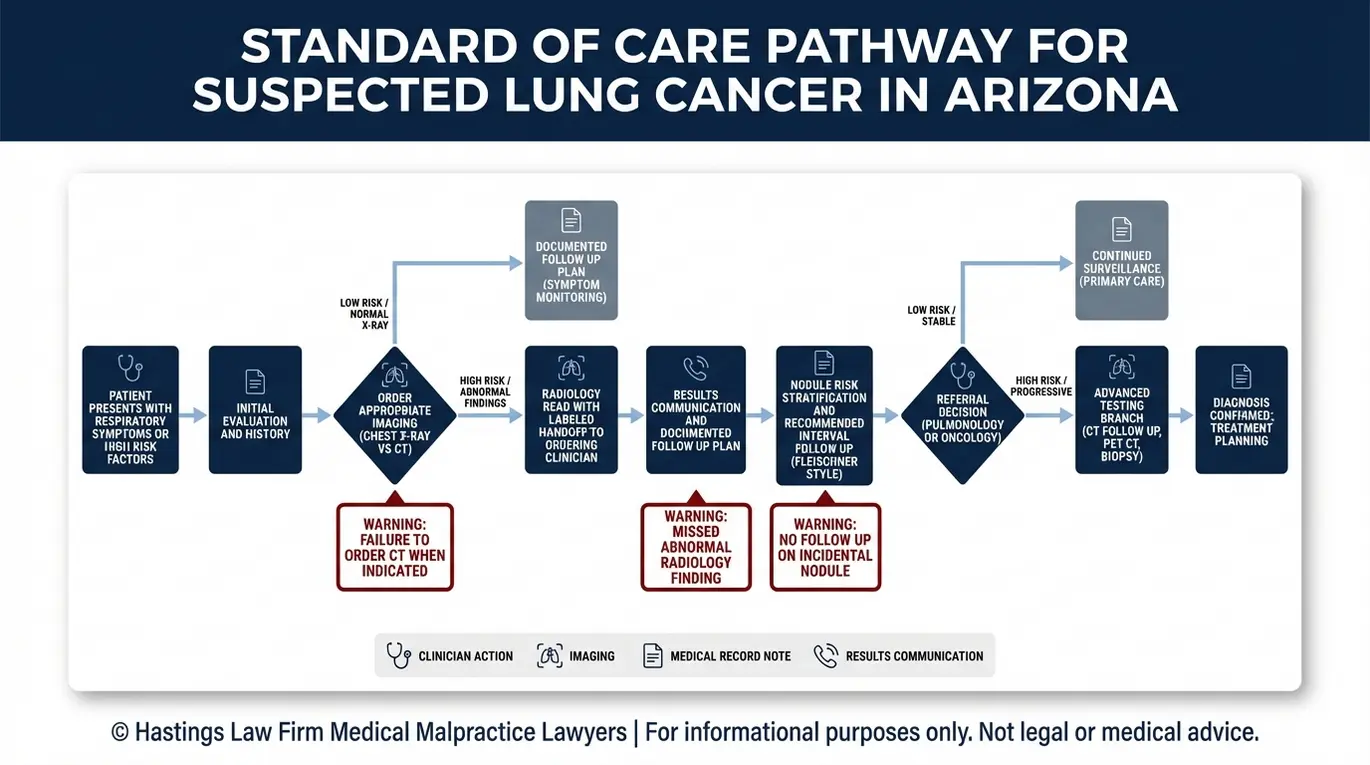
The standard of care requires physicians to timely order diagnostic imaging like CT scans or biopsies when patients present with respiratory symptoms or risk factors for lung cancer. Pulmonary conditions refer to diseases affecting the lungs and respiratory system. When a healthcare provider falls short of that obligation, a treatable condition can silently advance.
A pulmonary nodule, a small growth found in the lung tissue, is one of the most common early indicators of potential malignancy. These nodules are frequently discovered on routine chest imaging. Once identified, the Management of Incidental Pulmonary Nodules Detected on Computed Tomography Images published by Massachusetts General Hospital outlines established protocols. This includes the Fleischner Society guidelines. These widely accepted recommendations dictate how physicians should monitor nodules based on size, appearance, and the patient’s risk profile.
Under these protocols, the primary care physician bears the initial responsibility of recognizing abnormal findings or symptoms such as a persistent cough, unexplained weight loss, or chest pain. A radiologist reviewing imaging studies must accurately characterize any suspicious masses and clearly communicate those findings.
When imaging raises concern, the standard of care typically requires a prompt referral to a pulmonologist or oncologist for further evaluation, which may include a biopsy or a more detailed CT scan. Thorough documentation in medical records is essential for tracking the size and shape of these nodules over time.
When a physician fails to document these changes or ignores the specific surveillance intervals recommended by the guidelines, the opportunity for early intervention is lost. The guidelines differentiate between low-risk and high-risk patients, adjusting the frequency of follow-up scans accordingly. A failure to adhere to these distinct schedules constitutes a breach of the standard of care.
Delays at any point in this chain can allow a cancer to grow undetected. Arizona’s statute of limitations for pursuing a medical malpractice claim is governed by Arizona Revised Statutes Section 12-542, making timely legal action just as important as timely medical action. If you suspect a diagnostic failure occurred, our Arizona lung cancer misdiagnosis attorneys can help you understand where the breakdown happened.
The Role of Our In-House Medical Team
At Hastings Law Firm, your case is reviewed by medical professionals before a lawsuit is ever filed. Standard of care refers to the level of quality and caution that a reasonably competent healthcare professional would provide under similar circumstances.
Our on-staff nurses and board-certified patient advocates analyze your medical records. They examine imaging reports, pathology reports, and physician notes to identify potential breaches in the standard of care. A pathology report is a laboratory analysis of tissue samples obtained through a biopsy, which is a procedure where a small sample of suspicious tissue is removed for testing. This early medical review, supported by expert testimony from a qualified expert witness, helps us determine whether medical malpractice contributed to a delayed diagnosis.
Common Medical Errors Leading to Advanced Stage Disease
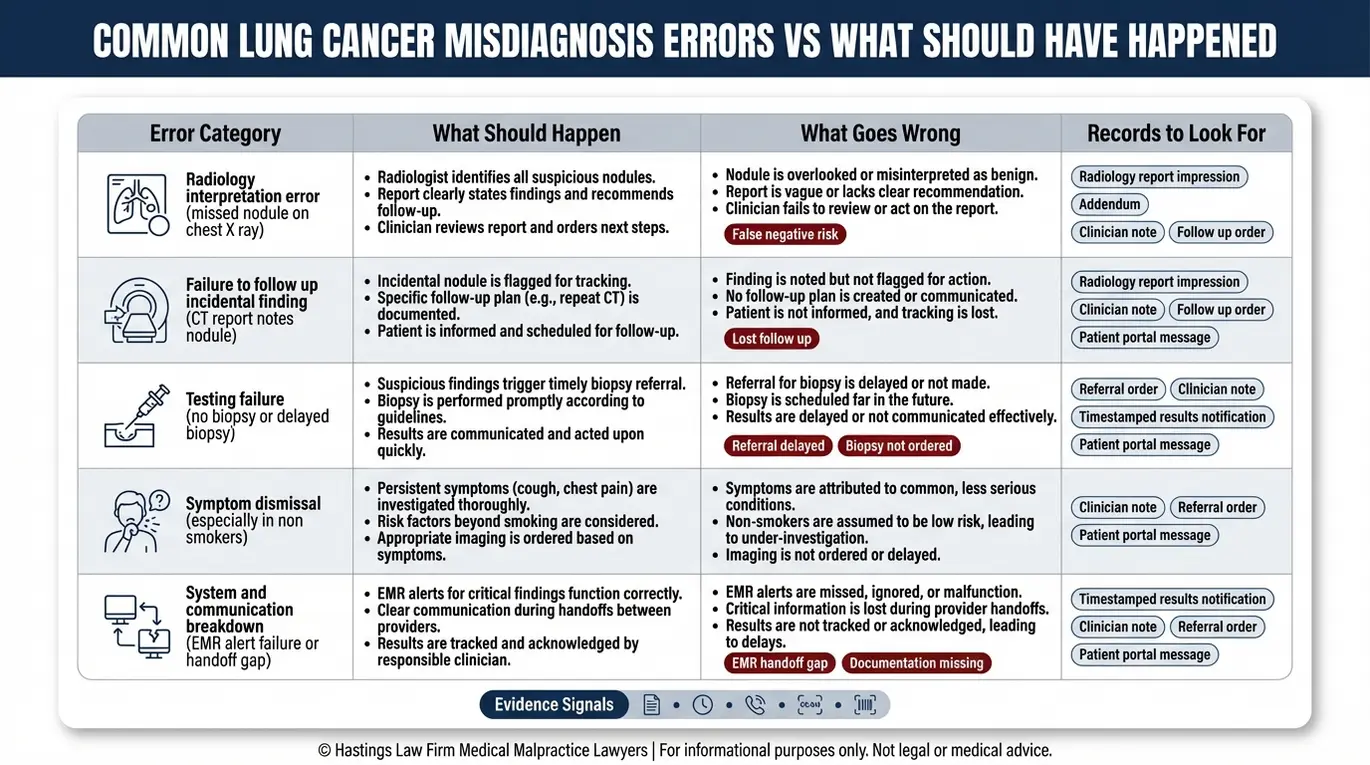
Common errors in lung cancer cases include radiological misinterpretation of chest X-rays, failure to follow up on incidental findings, and dismissing symptoms in non-smokers. Advanced stage disease occurs when cancer has progressed to more severe stages, making it harder to treat. These breakdowns in care can allow cancer to spread well beyond its original site before anyone raises an alarm.
Radiology errors are among the most frequent. A small nodule on a chest X-ray or CT scan may be overlooked entirely, or it may be misclassified as benign scarring. This type of false negative, a test result that incorrectly indicates no disease is present, can result in a delayed diagnosis. According to the National Cancer Institute’s Lung Cancer Screening guidelines, early detection through proper screening significantly improves outcomes, which makes a missed reading all the more consequential.
Systemic failures also contribute. Understaffing, poorly integrated electronic medical record systems, and communication breakdowns between departments can cause an incidental finding, an unexpected abnormality discovered during imaging performed for an unrelated reason, to fall through the cracks. A radiologist may note a suspicious shadow in a report, but if that report never reaches the ordering physician or triggers a follow-up, the patient is left in the dark.
Testing failures round out the pattern. When a suspicious mass is identified but no biopsy is ordered, the opportunity for early-stage diagnosis is lost, leading to a misdiagnosis. Patients also have the right to access their own health information under 45 CFR § 164.524 as outlined by HHS.gov, which can be an important tool for gathering records if you suspect something was missed.
A lung cancer lawyer in Arizona can help trace these failures and connect them to the harm you or your loved one experienced.
| Error Category | What Happens | How It Affects Diagnosis |
|---|---|---|
| Radiology Misread | Nodule missed or called benign scarring | False negative delays further testing |
| Systemic Communication Failure | Abnormal finding not relayed to treating physician | Incidental finding never followed up |
| Failure to Order Biopsy | Suspicious mass identified but not tested | Cancer advances without confirmation |
| Symptom Dismissal | Symptoms attributed to non-cancer causes, especially in non-smokers | Diagnostic workup never initiated |
The Hastings Law Firm Difference
Results matter, but what truly sets us apart is how we achieve them. Every verdict, every settlement, and every Arizona courtroom victory comes from one guiding promise: To treat each client’s fight for justice as if it were our own.
This balance of skill, experience, and empathy reflects our core philosophy that justice should not only compensate the injured, but also make health care safer nationwide.

Proving Causation and the Impact of Delay
To win a malpractice claim, the patient or their family must prove that the delay in diagnosis allowed the cancer to progress from a treatable stage to a terminal or more severe stage. Causation is the link between a doctor’s error and the specific harm the patient suffered.
Cancer staging describes how far the disease has spread. Stage I lung cancer, where the tumor is localized, carries significantly higher survival rates than Stage IV disease, where metastasis, the spread of cancer to distant organs like the brain, bones, or liver, has already occurred. Data from the SEER Explorer Application published by the National Cancer Institute illustrates a stark difference in five-year survival rates between localized and distant-stage lung cancers.
Defense teams in these cases often argue that the outcome would have been the same regardless of the negligence. Our lung cancer malpractice lawyers counter this by working with qualified oncologists and medical experts. These experts reconstruct the timeline and compare the patient’s actual stage at diagnosis against the stage when the error occurred. This helps establish how much the delay reduced the chance of survival.
Establishing this causal link is often the most challenging aspect of the case. It requires showing that the physician’s deviation from the standard of care was the primary factor in the patient’s worsening prognosis, distinct from the natural progression of the disease. This burden of proof requires detailed medical evidence, and it is exactly the kind of work our team prepares for from day one.
Recoverable Damages in Arizona Failure to Diagnose Cases
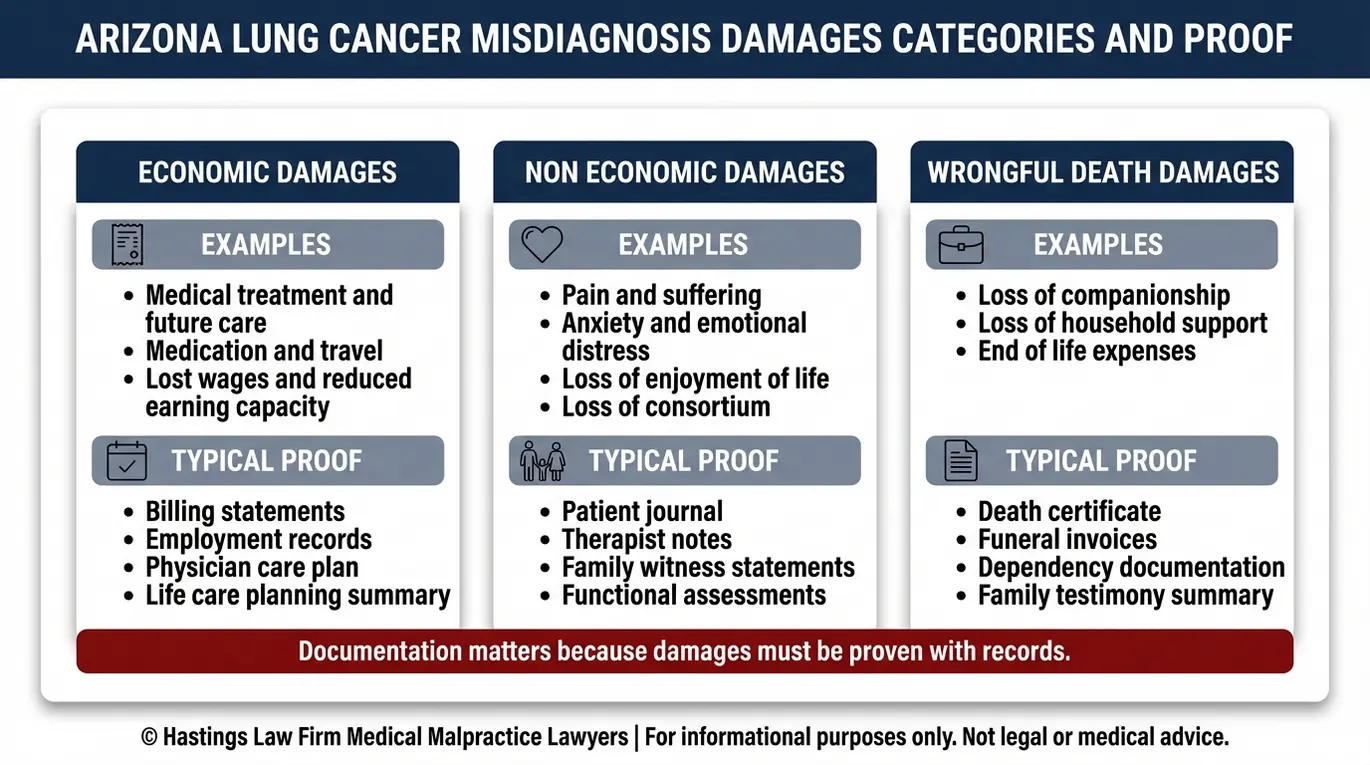
Patients and families affected by a failure to diagnose lung cancer may recover compensation for medical bills, lost wages, pain and suffering, and loss of life enjoyment. Recoverable damages are the specific types of compensation available to a patient through a legal claim for negligence. In cases where the patient has passed away, families may pursue wrongful death damages. The Arizona Constitution protects the right to a jury trial and prohibits caps on personal injury damages, preserving full access to fair compensation.
Most awards consist of compensatory damages and generally fall into the following categories:
- Economic damages: Past and future medical costs for cancer treatment, surgeries, chemotherapy, and related care, as well as lost income and reduced earning capacity.
- Non-economic damages: Pain and suffering, emotional distress, anxiety from a shortened life expectancy, and the loss of enjoyment of daily life.
- Loss of consortium: Compensation for the impact the illness and its progression have had on the patient’s spouse and family relationships.
- Wrongful death damages: If the patient has died, surviving family members may recover funeral expenses, loss of financial support, and loss of companionship.
- Punitive damages: In rare cases involving extreme or reckless conduct, the court may award punitive damages to deter similar behavior.
Each category requires supporting documentation, and our team works closely with medical and financial experts to build a clear picture of the full impact.
Contact the Arizona Misdiagnosis Attorneys at Hastings Law Firm Today for Help
A missed or delayed lung cancer diagnosis can take away options that should have been available. You deserve to know what happened, and whether the care you received met the standard your doctors were expected to follow.
Hastings Law Firm is built for cases like this. Our legal team includes former defense attorneys who understand hospital strategy, and our in-house medical staff reviews every record before we move forward. Founded by board-certified trial attorney Tommy Hastings, our firm has recovered millions for families affected by medical negligence, and we prepare every case as if it is going to trial.
As a dedicated Arizona lung cancer misdiagnosis lawyer team, we are ready to review your situation at no cost and no obligation during a free case evaluation. We work on a contingency fee basis, meaning you pay nothing unless we secure a recovery. Contact our Phoenix office today to start the conversation.
Frequently Asked Questions About Lung Cancer Misdiagnosis in Arizona


This content was researched and written by the Hastings Law Firm editorial team, which includes attorneys, medical professionals, and experienced researchers. Our writing is informed by internal knowledge and practical experience, and we cross-check critical details against authoritative sources cited throughout. Every piece undergoes human-led fact-checking and legal review. Because legal and medical information can change, if you spot an error, please contact us. Learn more about our content standards and review process on our editorial policy page.

Tommy Hastings, founder of Hastings Law Firm, is a board-certified personal injury trial lawyer dedicated exclusively to healthcare injury cases. Since 2001, he has represented injured patients and families in litigation against major hospital systems, pharmaceutical companies, and negligent healthcare providers nationwide. He has handled numerous high-profile cases that have drawn national media attention and resulted in multi-million dollar recoveries. He draws on that experience in his writing, helping readers understand how these cases work and what options may be available to them.
