


Texas Infant Resuscitation Error Lawyer
Written by: Hastings Law Firm | Reviewed by: Tommy Hastings | Updated: July 27, 2026
Infant resuscitation errors during delivery can leave a newborn with serious oxygen deprivation and lasting brain injury, especially when airway support, ventilation, medications, or CPR are delayed or performed incorrectly. Standardized neonatal resuscitation protocols are intended to guide rapid, coordinated care, and breakdowns can involve equipment readiness, staffing, training, or clinical judgment in a fast moving emergency. Understanding what happened often depends on careful review of delivery records and the newborn’s condition after birth. If you or a loved one were harmed or worse due to infant resuscitation errors in Texas, contact Hastings Law Firm for a free, confidential case review.
Top-Rated Legal Advocacy for Neonatal Injuries in Texas
What You Should Know About Neonatal CPR Negligence Claims in Texas:
- Lifelong disability and extensive care needs can follow when a newborn does not receive effective breathing support quickly after delivery.
- Severe oxygen deprivation and brain injury can be linked to delayed or mishandled ventilation, intubation, medication administration, or CPR.
- Disputes over what caused the injury can limit options, since defenses may point to prematurity, genetic factors, or events unrelated to the delivery team.
- Responsibility can extend beyond an individual clinician, since hospital level failures like inadequate staffing, training, or equipment maintenance may be central.
- Recovery can be shaped by limits on non economic damages in Texas, even when long term needs are substantial.
- Economic losses tied to lifetime medical care and lost earning capacity can be a major part of damages, since Texas does not cap economic damages.
- Clarity about timing and warning signs can depend on objective records, including fetal monitoring strips and umbilical cord blood gas results.
- The strength of conclusions about resuscitation performance can hinge on expert review by neonatologists and other qualified specialists.

A Healthcare Focused Law Firm
When a newborn struggles to breathe after delivery, the medical team’s response in those first moments can shape the rest of that child’s life. The Neonatal Resuscitation Program (NRP) provides standardized protocols that hospitals delivering babies are expected to follow to help stabilize newborns through steps like clearing the airway or providing positive pressure ventilation (PPV). PPV uses a bag and mask to push air into the infant’s lungs before escalating to advanced interventions when needed.
If your child suffered harm because that response was delayed or mishandled, you deserve honest answers about what went wrong. As a Texas infant resuscitation error lawyer, Hastings Law Firm focuses exclusively on medical malpractice and has the medical and legal team to evaluate what happened during your child’s delivery. Contact us for a free, confidential case evaluation to learn about your options.
Common Causes of Infant Resuscitation Errors in Texas Hospitals
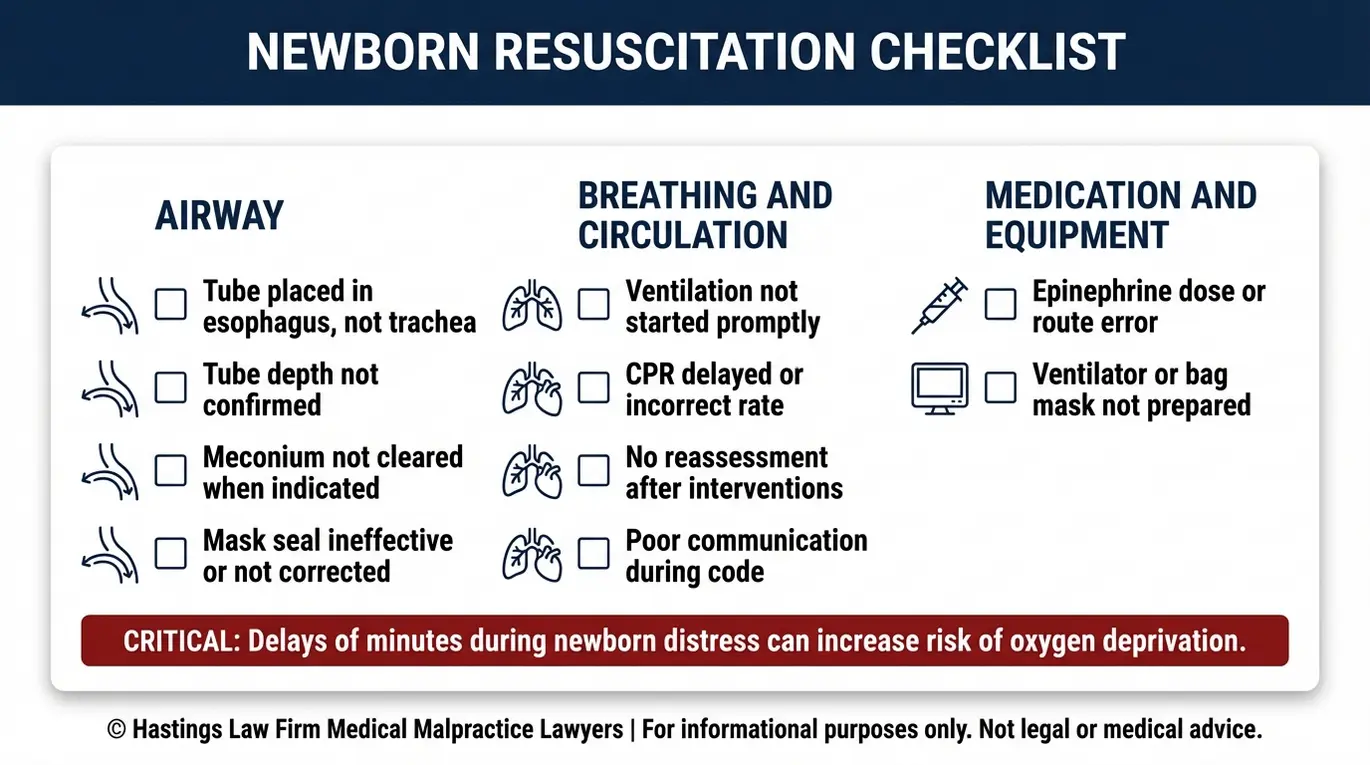
Infant resuscitation errors occur when medical staff fail to properly intubate, ventilate, or administer medication to a newborn in distress, often leading to severe oxygen deprivation or brain injury. Cases involving improper newborn resuscitation or other neonatal resuscitation errors can happen at several points during the resuscitation process, and understanding where breakdowns typically occur is an important part of building a birth injury claim.
Research published through Neonatal Resuscitation: Current Evidence and Guidelines outlines the clinical steps that delivery teams must follow. When those steps break down, the consequences can be devastating. Common failures include:
- Airway management failures: Improper endotracheal intubation, which is the process of inserting a tube into the trachea to secure the airway, can result in intubation errors such as the tube being placed in the esophagus instead. Failure to clear meconium aspiration syndrome (MAS), a condition where the infant inhales a mixture of meconium and amniotic fluid, can also obstruct breathing.
- Equipment failures: Malfunctioning ventilators or bags, missing supplies, or lack of preparation for a high-risk delivery. A cross-sectional study on Equipment Preparedness for Neonatal Resuscitation in Resource-Limited Settings found that equipment readiness gaps remain a documented concern in neonatal care.
- Medication errors: Incorrect dosing of epinephrine or other emergency drugs administered during a code event.
- Delayed response: Failure to begin CPR or mechanical ventilation immediately when the infant shows signs of asphyxia.
An infant resuscitation error lawyer can work with medical experts to determine exactly where the breakdown occurred and whether it fell below the accepted standard of care.
Medical Consequences of Oxygen Deprivation During Birth
When resuscitation is delayed or performed incorrectly, the infant may suffer perinatal asphyxia, which is a condition where the baby is deprived of adequate oxygen before, during, or immediately after birth. Even minutes of oxygen deprivation can trigger hypoxic-ischemic encephalopathy (HIE), a severe hypoxic brain injury caused by reduced blood flow and oxygen to the brain.
The effects of HIE can range from mild developmental delays to severe, permanent disability. Children may be diagnosed with cerebral palsy, cognitive impairments, seizure disorders, or other neurological conditions that require lifelong care. The severity often depends on how long the brain went without sufficient oxygen and how quickly effective treatment was provided.
Proving Liability for Resuscitation Negligence Under Texas Law
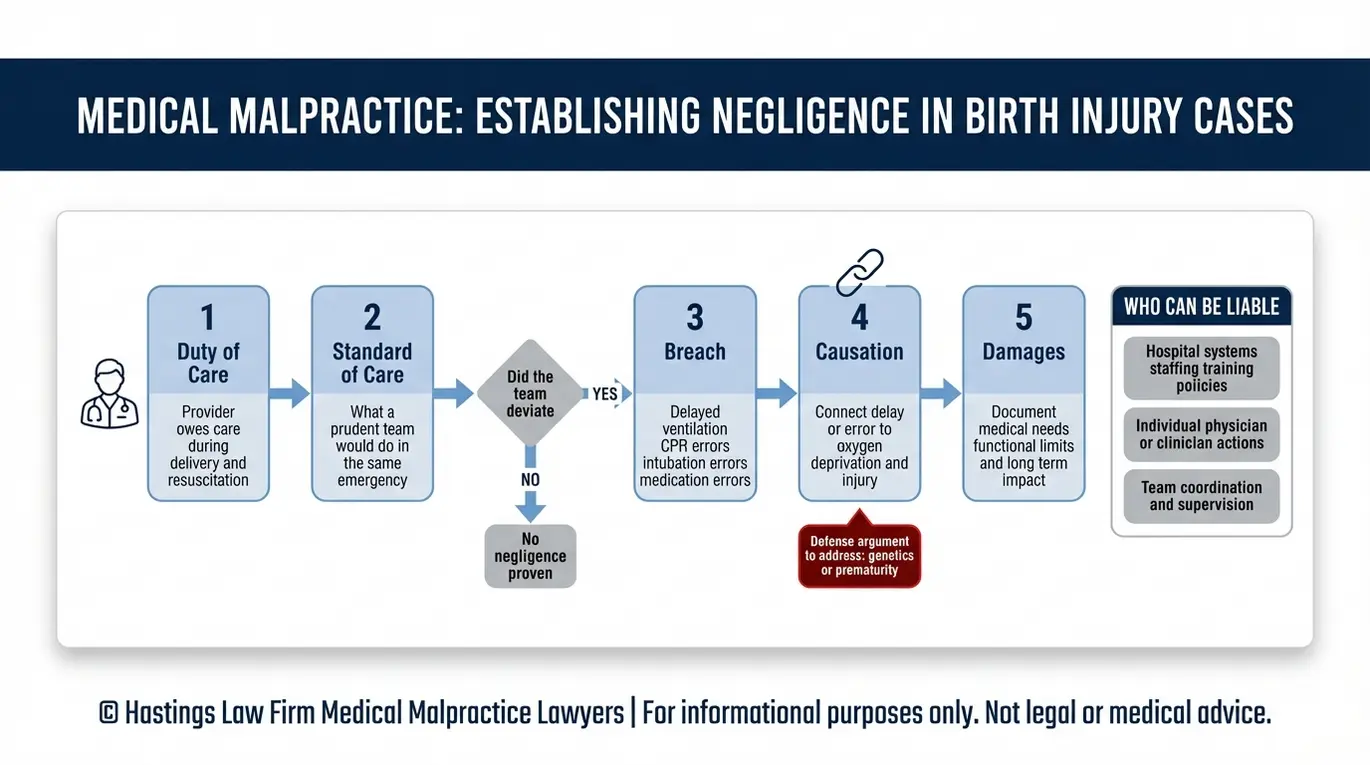
To prove liability in Texas, a plaintiff must demonstrate that the medical team breached the accepted standard of care during resuscitation and that this breach directly caused the infant’s injury. A Texas infant resuscitation error lawyer builds this case through a structured investigation that examines every step of the delivery and post-delivery response.
Duty and breach of duty form the foundation of the medical malpractice claim. Founded by board-certified trial attorney Tommy Hastings, we understand how to build a case that identifies these institutional failures. The question is whether the medical team acted as a reasonably competent provider would have under the same emergency circumstances, as failing to do so constitutes negligence.
Our team reviews the fetal monitoring strip, also called cardiotocography (CTG). This record tracks the baby’s heart rate patterns before and during delivery. We also examine umbilical cord blood gas results, which measure oxygen and acid levels in the cord blood at birth. These records can reveal whether warning signs were present and whether the response was timely.
Causation is often the most contested element. The defense will argue the injury was caused by genetic conditions, prematurity, or events unrelated to the delivery team’s actions. We rely on expert testimony from neonatologists and other qualified experts to distinguish between pre-existing conditions and harm directly linked to resuscitation failures. The ECRI’s Top 10 Patient Safety Concerns has repeatedly identified maternal and neonatal safety as a high-priority risk area, reinforcing the need for strict protocol adherence.
Determining whether to pursue a claim against a hospital or an individual clinician is an important part of the legal process. In some cases of hospital negligence, the facility itself may bear responsibility for inadequate staffing, insufficient training, or failure to maintain functional equipment, separate from any individual clinician’s errors.
The Hastings Law Firm Difference
Results matter, but what truly sets us apart is how we achieve them. Every verdict, every settlement, and every Texas courtroom victory comes from one guiding promise: To treat each client’s fight for justice as if it were our own.
This balance of skill, experience, and empathy reflects our core philosophy that justice should not only compensate the injured, but also make healthcare safer nationwide.

Recoverable Damages for Birth Injuries in Texas Courts
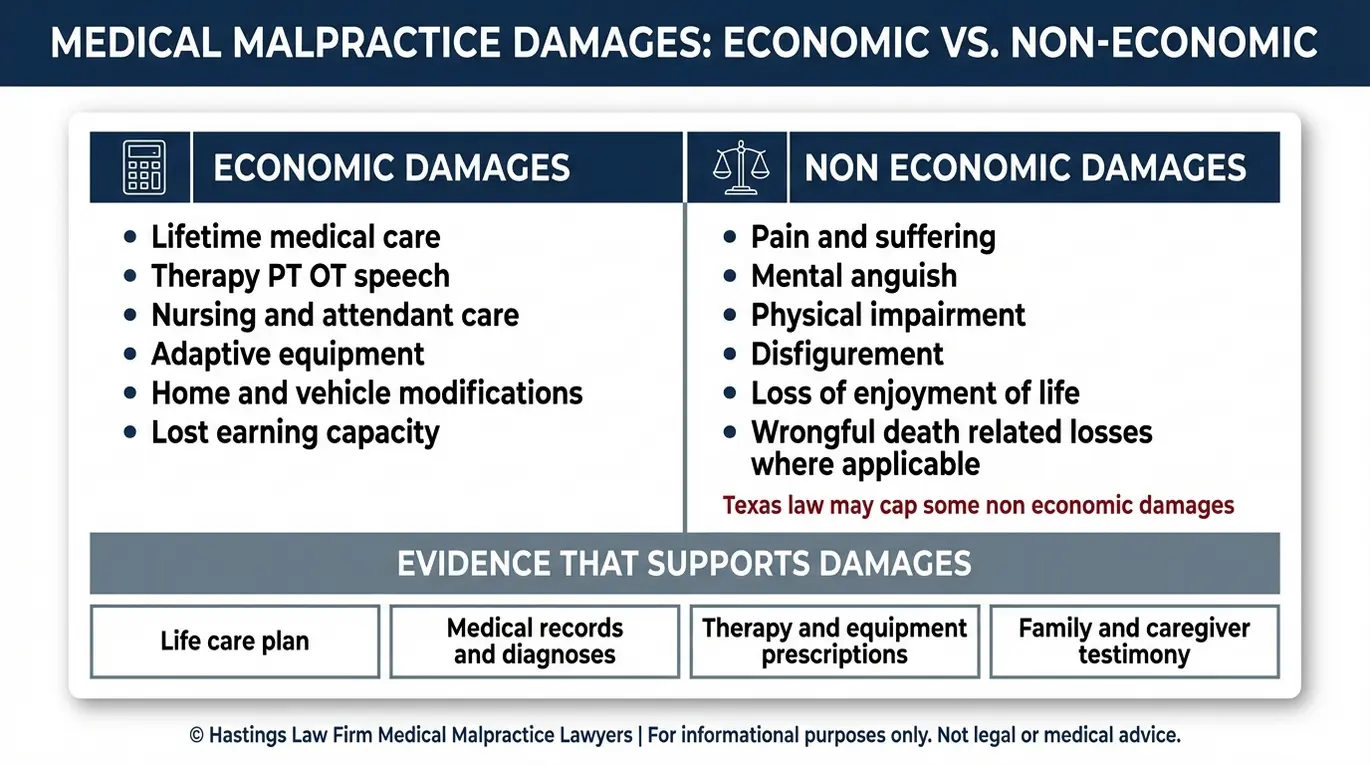
Damages in birth injury cases cover both economic losses, such as lifetime medical care and lost earning capacity, and non-economic losses like pain, suffering, and physical impairment. Texas infant resuscitation error lawyers work with specialists in life care planning. These experts follow certification standards for coordinating care plans for acquired brain injury to ensure reliable cost projections for future needs and future medical expenses.
Compensatory damages categorized as economic losses have no cap under Texas law and often represent the largest portion of a birth injury recovery. Non-economic damages are subject to limits outlined in the Texas Civil Practice and Remedies Code § 74.301.
| Economic Damages (No Cap) | Non-Economic Damages (Capped) |
|---|---|
| Lifetime medical care (therapy, surgeries, medications) | Pain and suffering |
| In-home nursing and attendant care | Mental anguish |
| Adaptive equipment and home modifications | Physical impairment and disfigurement |
| Special education and developmental services | Loss of companionship (wrongful death) |
| Lost future earning capacity |
Because these cases involve injuries that may require decades of care, accurate financial projections are essential to protecting the child’s long-term security.
Contact the Texas Birth Injury Attorneys at Hastings Law Firm Today for Help
If your child suffered a brain injury or other serious harm due to errors during resuscitation, Hastings Law Firm can help you understand what happened and whether you have a case. Our team includes in-house medical staff, former defense attorneys who understand how hospitals build their arguments, and access to a national network of neonatal experts.
As Texas infant resuscitation error lawyers, we take a trial-ready approach and prepare every case from day one as though it will go to a jury. That level of preparation strengthens negotiations and signals to the defense that we will not accept less than fair value.
Time is limited to file a medical malpractice claim in Texas. Contact us today for a free, confidential case evaluation. There are no attorney fees or costs unless we recover compensation for your family.
Frequently Asked Questions About Infant Resuscitation Error in Texas


This content was researched and written by the Hastings Law Firm editorial team, which includes attorneys, medical professionals, and experienced researchers. Our writing is informed by internal knowledge and practical experience, and we cross-check critical details against authoritative sources cited throughout. Every piece undergoes human-led fact-checking and legal review. Because legal and medical information can change, if you spot an error, please contact us. Learn more about our content standards and review process on our editorial policy page.

Tommy Hastings, founder of Hastings Law Firm, is a board-certified personal injury trial lawyer dedicated exclusively to healthcare injury cases. Since 2001, he has represented injured patients and families in litigation against major hospital systems, pharmaceutical companies, and negligent healthcare providers nationwide. He has handled numerous high-profile cases that have drawn national media attention and resulted in multi-million dollar recoveries. He draws on that experience in his writing, helping readers understand how these cases work and what options may be available to them.
