


Dallas Hysterectomy Malpractice Lawyer
Hysterectomy malpractice claims often involve preventable surgical errors, unnecessary surgery, or failures to recognize and repair injuries during the procedure. Harm can be physical, emotional, and lasting, especially when fertility is permanently lost or surgical menopause is triggered. Disputes commonly focus on whether an outcome was a known complication or the result of care that fell below accepted standards. Clear documentation and expert review are often central to showing what happened and why it mattered. If you or a loved one were harmed or worse due to hysterectomy malpractice in Dallas, Texas, contact Hastings Law Firm for a free, confidential case review.

Last Updated: July 27, 2026
Trusted Dallas Medical Attorneys for Negligent Surgical Errors
A hysterectomy, the surgical removal of the uterus, is one of the most common gynecological procedures in the country. Most are completed safely. However, when surgical errors or careless decisions cause preventable harm, the physical and emotional consequences can change a woman’s life permanently.
If you or a loved one was injured during or after a hysterectomy, you likely have difficult questions and very few clear answers. That uncertainty is normal, and you deserve to understand what happened. Founded by board-certified trial lawyer Tommy Hastings, our Dallas hysterectomy malpractice lawyer team focuses exclusively on medical negligence. We have the medical knowledge and litigation experience to investigate your case and find whether your care fell below accepted standards.
Contact us for a free, confidential case evaluation. We can review what happened and explain your options.

Distinguishing Known Surgical Risks from Actionable Malpractice
Medical malpractice occurs when a surgeon deviates from the accepted standard of care, causing an injury that goes beyond the inherent risks of the procedure. Not every complication after a hysterectomy means something went wrong. But not every complication was unavoidable, either.
Before any surgery, Texas law requires doctors to obtain informed consent, meaning the physician must explain the procedure, its risks, and reasonable alternatives so the patient can make a knowing decision. Under Texas Civil Practice and Remedies Code Chapter 74, Subchapter C, this disclosure obligation is a defined legal duty. An unnecessary hysterectomy, one performed without proper medical justification or based on a misdiagnosis, may also constitute a breach of the standard of care regardless of whether the surgery itself was technically successful.
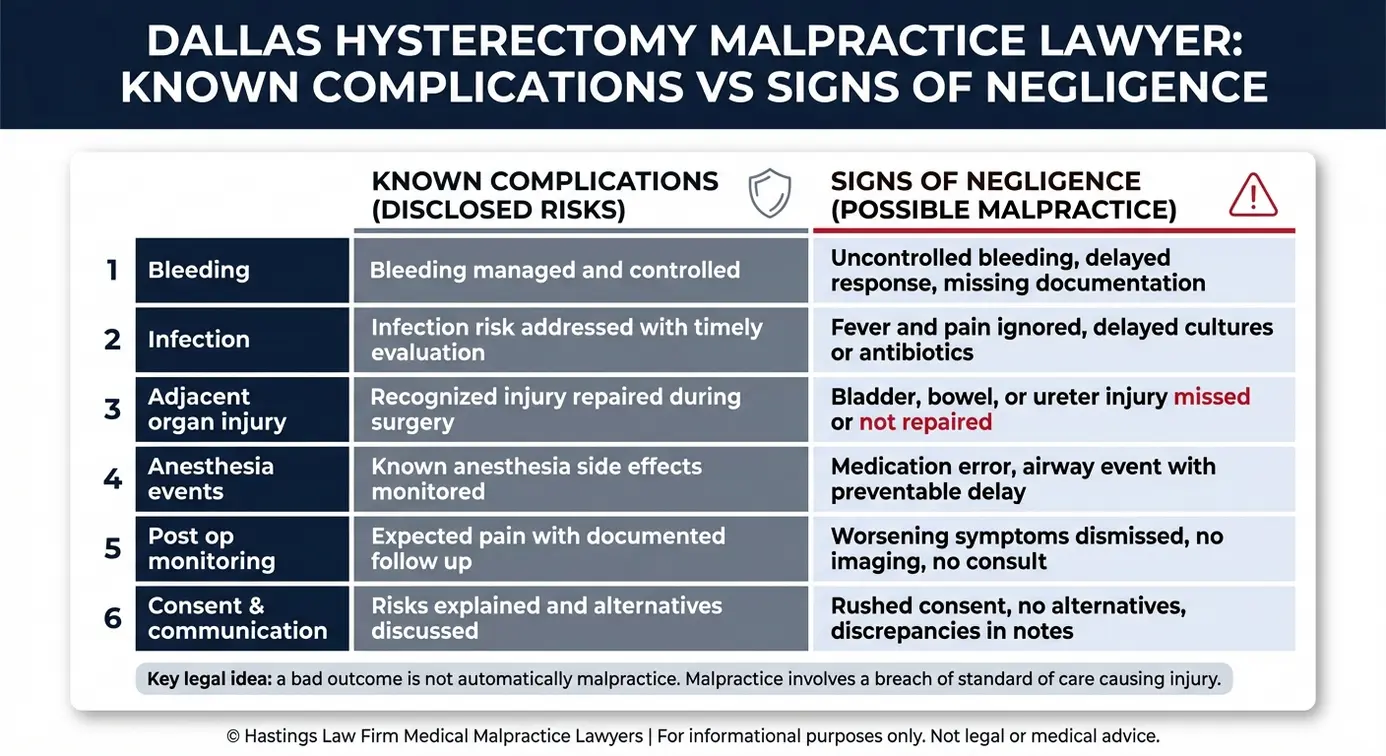
One of the most common defense strategies is to label every injury a “known complication.” While procedures like a vaginal hysterectomy do carry recognized risks, there is a clear difference between a complication that occurs despite proper care and one caused by a preventable surgical error. As a medical malpractice team in Dallas, we help our clients understand that distinction.
| Known Surgical Complications | Potential Signs of Negligence |
|---|---|
| Minor bleeding controlled during surgery | Uncontrolled hemorrhage due to a missed arterial injury |
| Temporary postoperative pain or bruising | Severe postoperative infection from unsterile technique |
| Mild reaction to anesthesia | Anesthesia dosing errors causing prolonged complications |
| Small amount of scar tissue formation | Nicking an adjacent organ and failing to identify or repair the damage |
Common Hysterectomy Errors and Injuries We Litigate
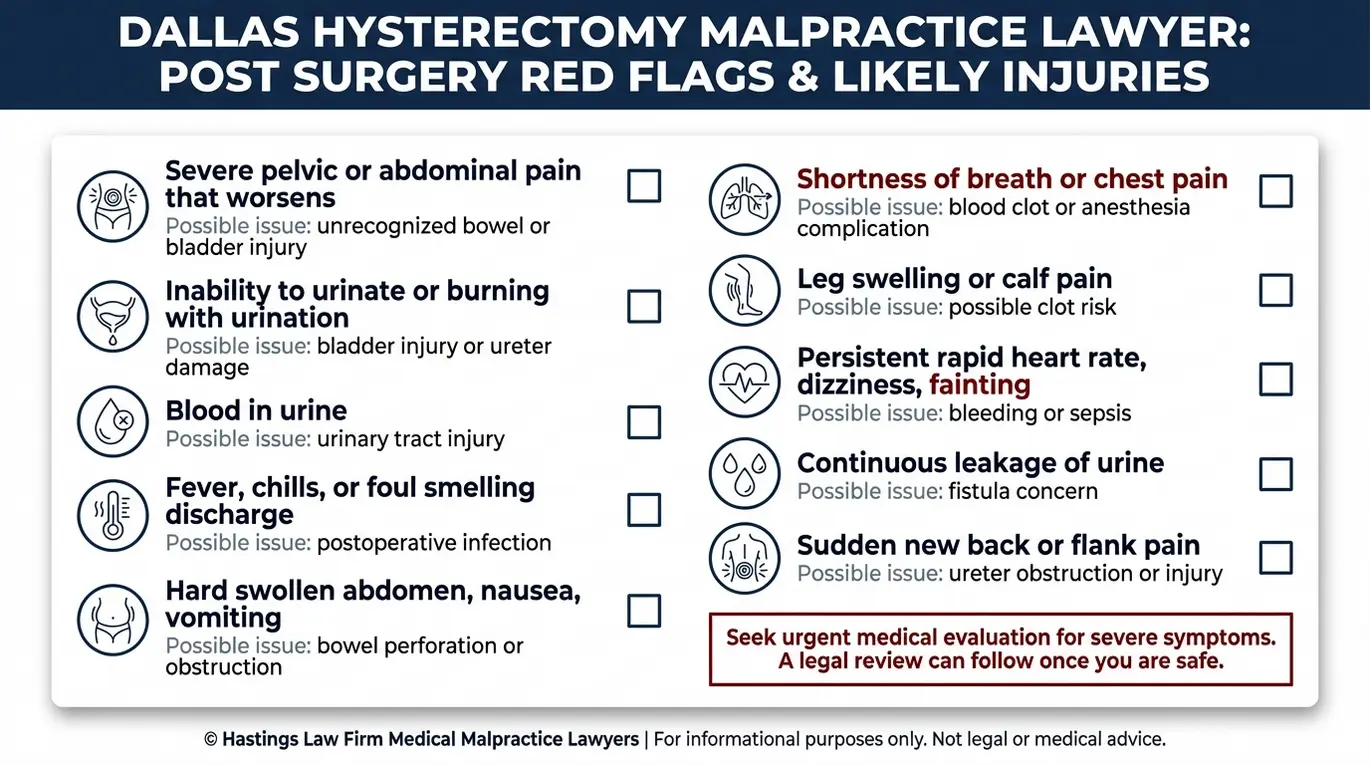
The most common grounds for hysterectomy lawsuits involve damage to adjacent organs, such as the bladder or ureters, and failure to identify those injuries during surgery. Because the uterus sits in close proximity to several critical structures, even small lapses in surgical technique can cause serious harm.
Our Dallas surgical error lawyers investigate a range of hysterectomy-related injuries, including:
- Ureteral injury: The ureters, thin tubes that carry urine from the kidneys to the bladder, can be cut, clamped, or tied off (transected or ligated) during surgery. Unrecognized ureter damage can lead to kidney failure.
- Bowel perforation: A puncture or tear in the intestinal wall that, if not identified and repaired promptly, can cause life-threatening infection.
- Bladder damage: Accidental cuts to the bladder wall are among the most frequently reported injuries during hysterectomy. A Duke University study on lower urinary tract injuries during total laparoscopic hysterectomy documented the frequency of these complications.
- Unnecessary surgery: Cases where a hysterectomy was performed based on a misdiagnosis or without sufficient medical necessity.
- Retained foreign objects: Items like surgical instruments or sponges left inside the patient.
Errors can occur in both laparoscopic and open surgical approaches, including complex procedures like a radical hysterectomy. Laparoscopic surgery uses small incisions and a camera, which can limit the surgeon’s field of vision. Open surgery provides more direct access but carries its own risks.
The type of procedure matters because the specific errors and the standard of care expected may differ between approaches. As a medical malpractice team in Dallas, we help our clients understand these differences.
Loss of Fertility and Reproductive Harm
For women of reproductive age, the removal of the uterus during an unnecessary or poorly performed hysterectomy carries consequences that extend well beyond physical recovery. The permanent loss of fertility can cause profound grief and lasting psychological harm. When a bilateral salpingo-oophorectomy (BSO), the removal of both ovaries and fallopian tubes, is also performed, the patient is forced into surgical menopause.
Surgical menopause occurs when the ovaries are removed, causing an immediate drop in estrogen production and severe symptoms for years. These losses are deeply personal, and Texas law allows recovery for non-economic damages, including emotional suffering and loss of quality of life.
The Hastings Law Firm Difference
Results matter, but what truly sets us apart is how we achieve them. Every verdict, every settlement, and every Dallas courtroom victory comes from one guiding promise: To treat each client’s fight for justice as if it were our own.
This balance of skill, experience, and empathy reflects our core philosophy that justice should not only compensate the injured, but also make health care safer nationwide.

Proving Liability: The Texas Legal Process
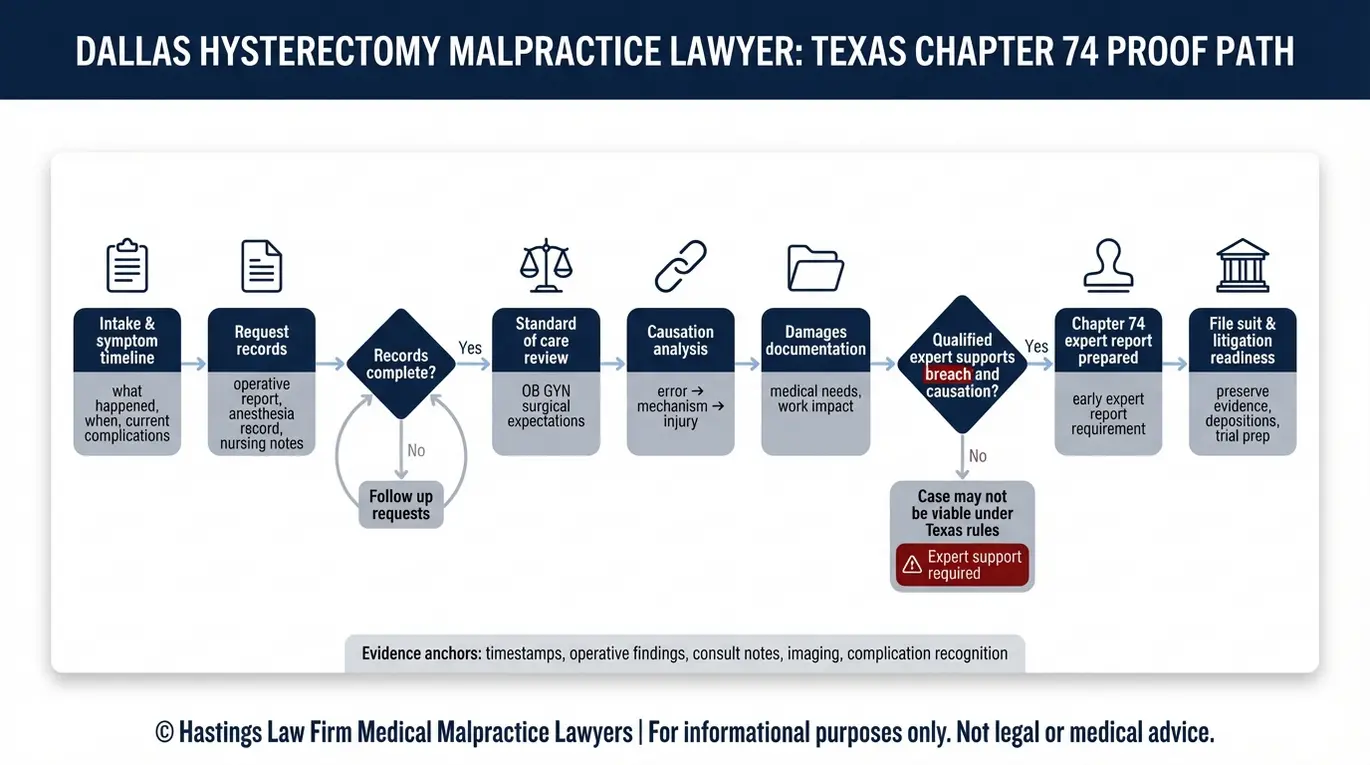
Proving negligence in Texas requires strict adherence to Chapter 74 of the Texas Civil Practice and Remedies Code regulations, including the submission of an expert report verifying the breach of care. One of the most important requirements is the expert report, sometimes referred to as an Affidavit of Merit or Certificate of Merit, which must be served within 120 days after the defendant files an answer. This report must identify the specific breach of care and explain how it caused the patient’s injuries.
Establishing that connection between the error and the harm, known as causation, is often the most contested element and relies on expert testimony. For example, if surgical records indicate a bladder injury, called a cystotomy, we examine whether the surgeon performed a cystoscopy. A cystotomy is an incision into the bladder, and a cystoscopy is a camera-assisted inspection of the bladder used to check for damage before closing. Failure to take that step can be evidence of negligence.
Our in-house nursing staff and former hospital nurses review medical records, operative reports, and surgical logs line by line to identify the liable party. Because our team includes former defense attorneys who know how hospital systems respond to claims, we build cases designed to withstand aggressive challenges from the start.
Contact the Dallas Surgical Error Attorneys at Hastings Law Firm Today for Help
You do not have to face a hospital’s legal team on your own. If you believe a surgical error during your hysterectomy caused serious harm, our medical malpractice team in Dallas is ready to listen and investigate.
Hastings Law Firm works on a contingency fee basis. You pay no attorney fees and no costs unless we recover compensation for you. Every consultation is free and confidential.
Acting promptly helps preserve critical evidence, including surgical records and electronic logs that can change or become harder to obtain over time. Contact us today to schedule your risk-free case evaluation. Let us help you find the answers you deserve.
Frequently Asked Questions About Hysterectomy Malpractice in Dallas


This content was researched and written by the Hastings Law Firm editorial team, which includes attorneys, medical professionals, and experienced researchers. Our writing is informed by internal knowledge and practical experience, and we cross-check critical details against authoritative sources cited throughout. Every piece undergoes human-led fact-checking and legal review. Because legal and medical information can change, if you spot an error, please contact us. Learn more about our content standards and review process on our editorial policy page.

Brady D. Williams is a nationally recognized medical malpractice attorney who has spent his career handling high-stakes litigation for injured patients and families across the country. Licensed in both Texas and California, Brady draws on experience from hundreds of resolved medical cases to break down complex legal and medical topics for the people who need that information most. His writing reflects the same attention to detail and commitment to clarity that he brings to every case he handles.
