


Austin Hysterectomy Malpractice Lawyer
A hysterectomy is often performed to address serious gynecologic problems, but surgical mistakes can turn a planned procedure into lasting harm. Some complications are known risks even with proper care, while others may point to negligence such as organ injury, uncontrolled bleeding, or failures in monitoring and repair. Unnecessary hysterectomy and surgery based on misdiagnosis can also cause permanent physical and emotional consequences, including loss of fertility. If you or a loved one were harmed or worse due to hysterectomy malpractice in Austin, Texas, contact Hastings Law Firm for a free, confidential case review.

Last Updated: July 27, 2026
Trusted Austin Medical Attorneys for Negligent Surgical Errors
A hysterectomy, the surgical removal of the uterus, is one of the most common gynecological procedures performed in the United States. When performed correctly, it can resolve serious conditions like cancer, chronic pain, or uncontrolled bleeding. But when a surgeon’s error turns a routine procedure into a life-altering injury, the aftermath can feel overwhelming and isolating.
If you or a loved one experienced a serious complication after a hysterectomy, you may wonder if it was bad luck or an error. This applies to both open abdominal procedures and laparoscopic hysterectomy, a technique using small incisions and a camera. An experienced Austin Hysterectomy Malpractice Lawyer can help answer that question.
At Hastings Law Firm, our team includes in-house nurse consultants and former defense attorneys who review surgical records every day. We can evaluate what happened and explain your legal options at no cost and no obligation.

Distinguishing Known Risks from Medical Negligence
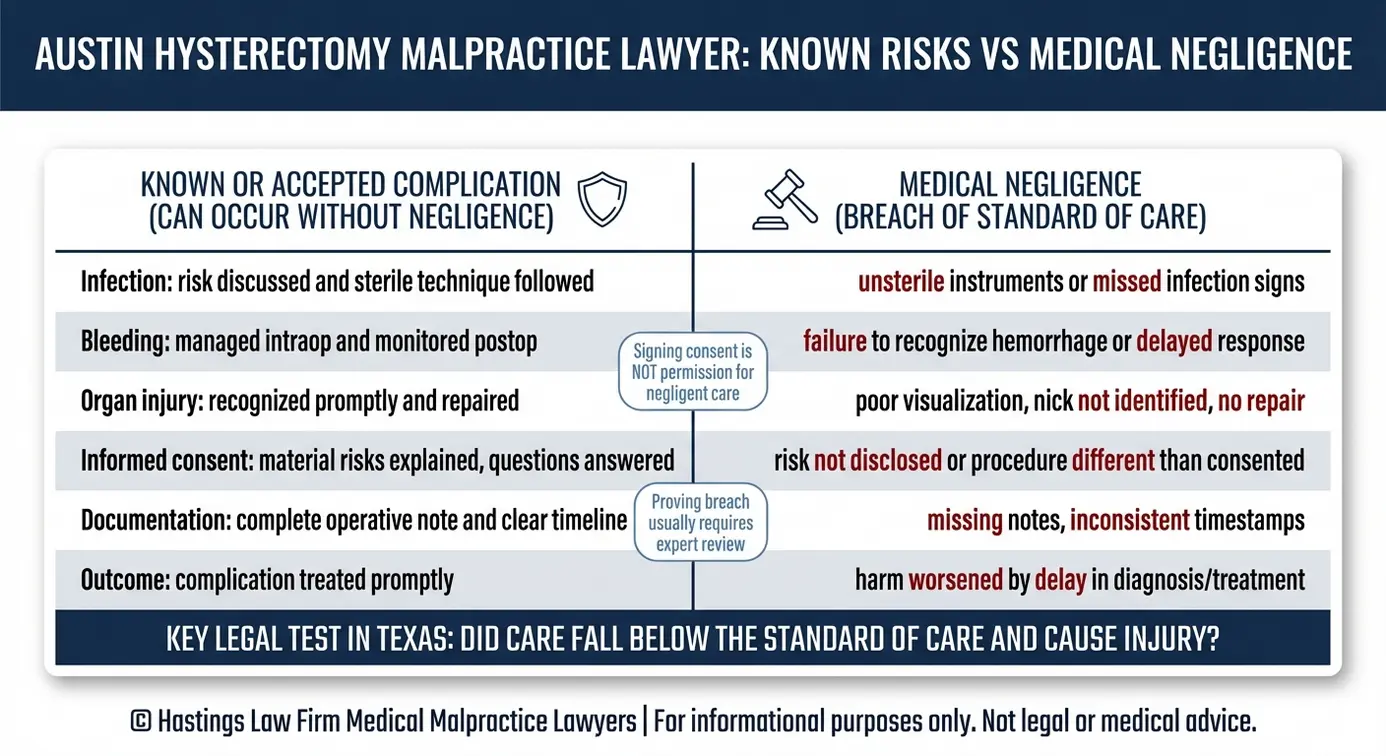
Medical negligence occurs when a surgeon deviates from the accepted standard of care, causing an injury that goes beyond the known and accepted risks of the procedure. This distinction is at the heart of surgical negligence claims, and it is often the first thing hospitals try to blur.
The “Known Complication” Defense
After a serious surgical injury, patients frequently hear some version of the same response: “This is a known risk. You signed the consent form.” Hospitals and their legal teams rely heavily on this argument because it shifts blame away from the surgeon and onto the patient. But our Austin medical malpractice attorney team knows that framing leaves out an important legal reality.
What Informed Consent Actually Means
Informed consent means your doctor explained the risks and you agreed to the treatment. This process, by which a doctor explains the risks, benefits, and alternatives of a procedure, does not give a surgeon permission to be careless. As outlined in research published by PubMed Central on informed consent, valid informed consent requires a meaningful discussion of material risks.
Signing a form acknowledging the possibility of infection, for example, does not excuse a surgeon who uses unsterile instruments. Similarly, consenting to the risk of excessive bleeding (hemorrhage, or significant blood loss during or after surgery) does not protect a doctor who fails to control a known bleed.
Why the Standard of Care Matters
Not every poor outcome after a hysterectomy is malpractice. Complications of hysterectomy can occur even when a surgeon does everything right. The legal question is whether the surgeon met the standard of care, which is the level of treatment a reasonably competent surgeon would have provided under similar circumstances.
Here is how we distinguish between the two:
- Known risk (not malpractice): A small amount of postoperative bleeding that is promptly identified and managed according to protocol.
- Potential negligence (may be malpractice): A surgeon nicks the bladder during the procedure and fails to identify or repair the injury before closing, leading to postoperative infections and additional surgery.
- Known risk (not malpractice): Mild adhesion formation after an abdominal hysterectomy.
- Potential negligence (may be malpractice): Operating on the wrong structure, or removing healthy ovaries without prior discussion or medical justification.
A hysterectomy malpractice lawyer in Austin can help you understand which category your experience falls into. Our team examines your surgical records, pathology reports, and postoperative notes to determine whether the care you received fell below the accepted standard.
Common Surgical Errors During Hysterectomy Procedures
Common actionable errors during hysterectomy include accidental perforation of nearby organs, failure to stop internal bleeding, and performing the surgery on the wrong site or patient. The specific risks can vary depending on whether the hysterectomy was performed laparoscopically, vaginally, or through an open abdominal incision, but certain patterns of malpractice during hysterectomy appear across all approaches.
Organ Damage
The uterus sits in close proximity to the bladder, bowel, and ureters, the thin tubes that carry urine from the kidneys to the bladder. During surgery, these structures can be injured if a surgeon uses poor technique, operates with limited visualization, or moves too quickly. A ureteral injury, or ureter damage, is among the most serious of these complications.
As detailed in a study published by PubMed Central on urinary tract injuries in gynecological surgery, these injuries may go unrecognized during the initial procedure. This can lead to kidney damage, sepsis, or the need for additional corrective surgeries. Bowel perforation, a puncture or tear in the intestinal wall, is another recognized surgical error. If not identified and repaired promptly, it can cause abdominal infection, sepsis, and prolonged hospitalization.
Vascular Injury and Uncontrolled Bleeding
Hemorrhage is significant or uncontrolled blood loss. Excessive bleeding during or after hysterectomy is sometimes unavoidable, but the failure to recognize and respond to internal hemorrhage is a different matter. When a surgical team does not identify active bleeding before closing, or when postoperative monitoring fails to catch signs of internal bleeding, the consequences can be severe. This often requires a thorough investigation into why the surgical team missed the active bleeding.
Post-Surgical Complications Linked to Error
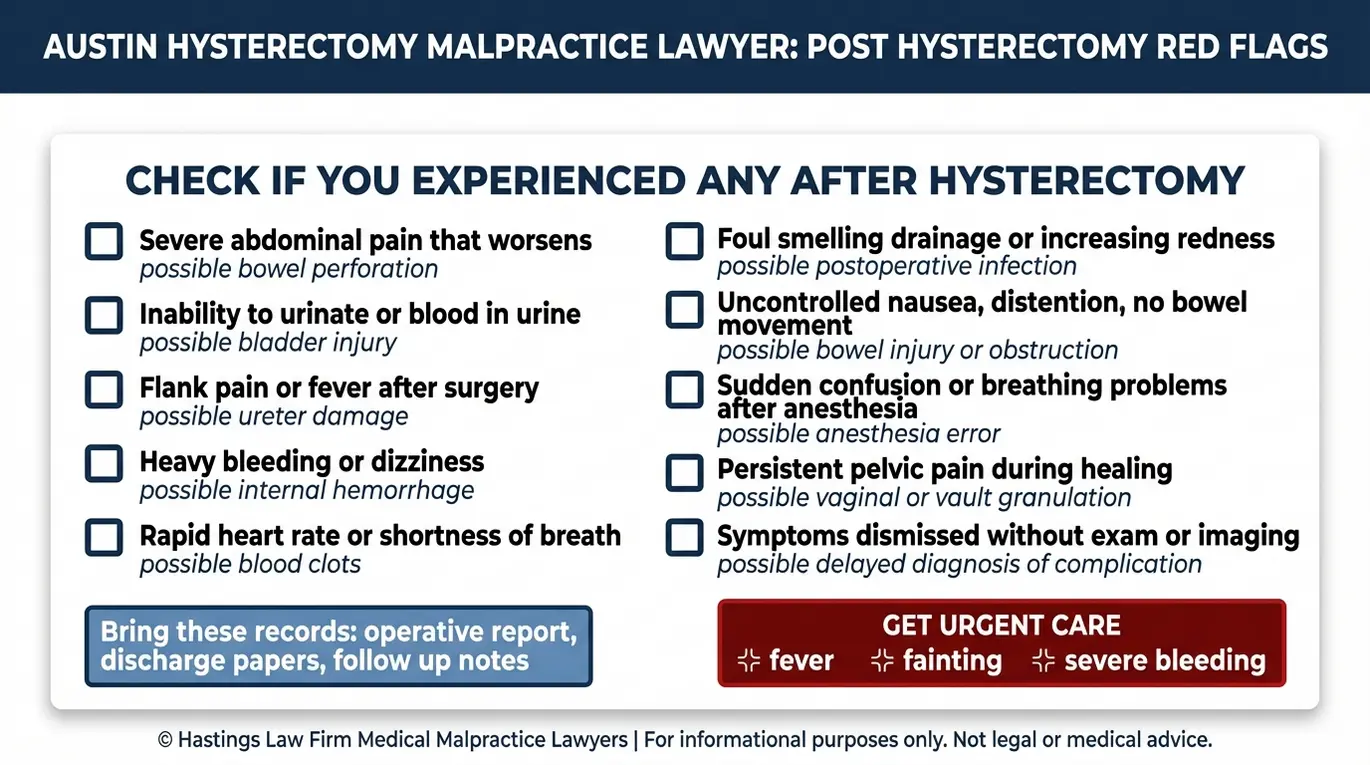
Some injuries do not become apparent until days or weeks after surgery. The table below outlines common complications that may indicate a surgical error occurred:
| Complication | What It May Indicate |
|---|---|
| Bladder injury or urinary leakage | Damage during dissection near the bladder |
| Persistent abdominal or flank pain | Possible ureteral injury or bowel perforation |
| Fever and signs of infection | Unrepaired organ damage or retained surgical material |
| Vaginal or vault granulation (excess healing tissue forming at the vaginal cuff) | Improper surgical closure technique |
| Anesthesia-related injury | Dosage errors or failure to monitor during the procedure |
If you are experiencing any of these symptoms after a hysterectomy, an Austin hysterectomy lawyer or surgical error attorney can connect you with medical professionals who can review your records and help determine whether surgical error may have played a role.
The Hastings Law Firm Difference
Results matter, but what truly sets us apart is how we achieve them. Every verdict, every settlement, and every Austin courtroom victory comes from one guiding promise: To treat each client’s fight for justice as if it were our own.
This balance of skill, experience, and empathy reflects our core philosophy that justice should not only compensate the injured, but also make health care safer nationwide.

Claims Involving Unnecessary Hysterectomy and Misdiagnosis
Surgeons may face liability if they performed a hysterectomy without first attempting less invasive treatments, or if the surgery was recommended based on a misdiagnosis of cancer or another serious condition. We evaluate each case to determine if a surgeon may face liability for these failures.
The Last Resort Principle
A hysterectomy permanently removes the uterus. In many clinical situations, less invasive options exist, including medication, hormonal therapy, or more targeted surgical procedures. The standard of care generally requires that these alternatives be explored and discussed with the patient before proceeding with an irreversible surgery. When a surgeon skips that step, performing an unnecessary hysterectomy, which is surgical removal of the uterus without medical need, a lawsuit may be warranted.
Misdiagnosis Leading to Surgery
Some cases involve patients who were told they had uterine or ovarian cancer and underwent surgery, only to learn afterward that no cancer was present. This sometimes includes a bilateral salpingo-oophorectomy (BSO), the removal of both ovaries and fallopian tubes.
The permanent loss of the uterus, cervix, and ovaries based on medical misdiagnosis carries profound physical and emotional consequences. These include immediate surgical menopause and the permanent loss of the ability to become pregnant. For patients who had planned to have children or were not given the opportunity for a second opinion, these cases raise serious questions about the care received. Our Austin malpractice counsel investigates whether proper diagnostic steps were taken before surgery was recommended.
Proving Liability and Recovering Damages in Austin Courts
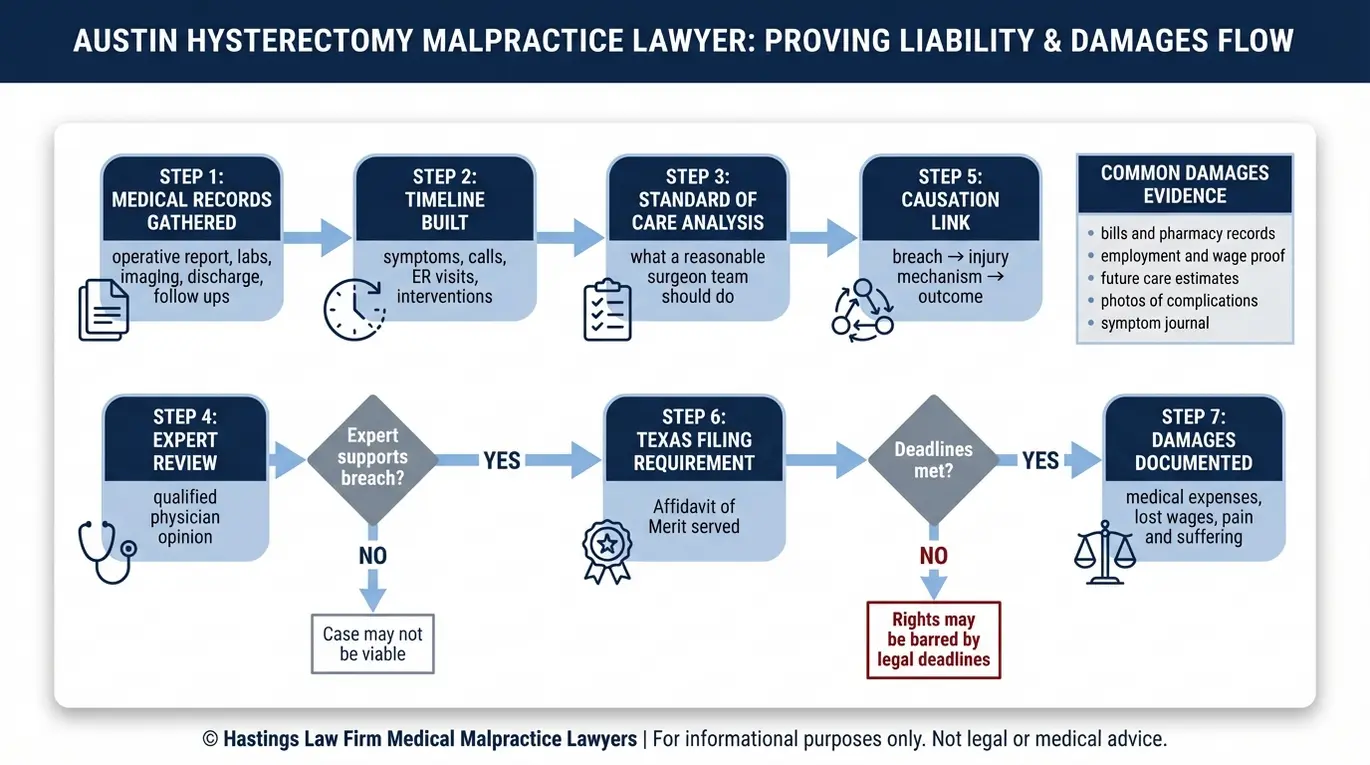
To succeed in proving hysterectomy malpractice, the patient must provide medical expert testimony establishing that the surgeon’s actions fell below the medical standard of care and that this breach directly caused specific, measurable harm.
The Burden of Proof in Texas
Texas law imposes specific requirements on medical malpractice claims. Under the Texas Civil Practice and Remedies Code Chapter 74, a claimant must serve an expert report. An expert report is a written opinion from a qualified medical expert providing a fair summary of the expert’s opinions regarding the applicable standard of care, how the care failed to meet that standard, and the causal relationship between the failure and the injury claimed.
This requirement must be met within 120 days of filing the original petition, making early expert review essential. At Hastings Law Firm, our in-house medical staff begins reviewing records and consulting with specialists as soon as a case is accepted. This allows us to build the medical foundation of a claim early and prepare for trial.
Recoverable Damages
Claims often involve specific complications such as a bladder injury (cystotomy) or vaginal or vault granulation (granulation tissue at the vaginal cuff). In a legal claim, damages refer to the financial compensation sought for specific losses. If negligence is established, compensation for surgical errors may include:
- Medical expenses to cover both current surgeries and the cost of future care.
- Lost wages for time taken off work and the potential loss of future income.
- Physical pain and suffering that results from the original injury and the recovery from corrective care.
- Emotional distress linked to the loss of reproductive function or the trauma of the error.
- Long-term costs for medical needs like hormone replacement therapy or physical therapy.
Every case is different. The damages available depend on the specific injuries sustained, the impact on daily life, and the strength of the medical evidence. Our team works to document every category of harm so that nothing is overlooked.
Contact the Austin Surgical Error Attorneys at Hastings Law Firm Today for Help
If you believe a surgical error or unnecessary procedure caused you serious harm, the legal team at Hastings Law Firm is ready to listen. Founded by Tommy Hastings, a board-certified trial lawyer, our firm focuses exclusively on medical negligence litigation.
Our Austin hysterectomy malpractice lawyers are supported by medical staff who previously worked for the hospital systems we now challenge. We understand both the medicine and the law, and we use that knowledge to hold the right people accountable. Texas law limits the time you have to file a claim, so reaching out early protects your options.
There is no cost to speak with us. Hastings Law Firm operates on a contingency fee basis, meaning you pay no attorney fees or costs unless we recover compensation for you. Contact our firm today for a free, confidential case evaluation, and let us help you find the answers you deserve.
Frequently Asked Questions About Hysterectomy Malpractice in Austin


This content was researched and written by the Hastings Law Firm editorial team, which includes attorneys, medical professionals, and experienced researchers. Our writing is informed by internal knowledge and practical experience, and we cross-check critical details against authoritative sources cited throughout. Every piece undergoes human-led fact-checking and legal review. Because legal and medical information can change, if you spot an error, please contact us. Learn more about our content standards and review process on our editorial policy page.

Gabe Sassin has focused exclusively on medical malpractice law since 2007. After spending more than a decade as a malpractice defense attorney, he knows exactly how the other side works. He has seen firsthand how healthcare providers, insurers, corporate defendants, and their legal teams think, prepare, and build their defense against claims. That knowledge works for the people who need it most today, injured patients and their families. His unique experience shapes everything he writes, giving readers a look at how these cases actually work from someone who has handled them from both sides.
