


Texas Hypoxic-Ischemic Encephalopathy Lawyer
Written by: Hastings Law Firm | Reviewed by: Tommy Hastings | Updated: July 27, 2026
Hypoxic ischemic encephalopathy is a birth related brain injury tied to oxygen deprivation and reduced blood flow around delivery. Some cases are unavoidable, but others are linked to preventable errors such as missed fetal distress or delayed emergency intervention. Families often face long term medical care needs and uncertainty about what happened during labor and delivery. Understanding how HIE is evaluated in medical malpractice claims can clarify where accountability may exist and what damages are commonly sought. If you or a loved one were harmed or worse due to HIE birth injuries in Texas, contact Hastings Law Firm for a free, confidential case review.

Aggressive Advocacy for Families Facing HIE Birth Injuries
What You Should Know About HIE Birth Injury Claims in Texas:
- Long term care needs can be life changing when HIE causes permanent neurological injury.
- Accountability can turn on whether the injury was preventable rather than genetic or unavoidable.
- A disputed cause of injury can shape outcomes because the defense often points to non negligent explanations.
- Serious harm can follow when fetal distress is missed or emergency intervention is delayed during labor and delivery.
- Early newborn complications can raise concerns about gaps in care, including seizures and the need for resuscitation.
- Options for recovery can be limited for non economic losses in Texas even when economic losses remain available.
- Future cost projections can drive damages because life care planning is used to estimate lifetime needs.
- A separate claim may be implicated when defective fetal monitoring equipment contributes to a delayed response.
- Medical records and the labor and delivery timeline can be central when evaluating whether the standard of care was met.

A Healthcare Focused Law Firm
When your child is diagnosed with hypoxic-ischemic encephalopathy (HIE), a form of brain damage caused by oxygen deprivation during birth, the weight of that news can feel unbearable. You or a loved one may be facing a future filled with medical appointments, therapies, and questions about what went wrong. If your child’s injury was caused by a preventable medical error, your family deserves answers and the resources to provide the best possible care.
As a Texas Hypoxic-Ischemic Encephalopathy lawyer, Hastings Law Firm focuses exclusively on medical malpractice. Our team, led by board-certified trial attorney Tommy Hastings, consists of attorneys and in-house nurse consultants prepared to investigate your child’s delivery, identify where the standard of care was violated, and pursue the compensation your family needs. Contact us today for a free, confidential case evaluation.
Understanding Hypoxic-Ischemic Encephalopathy Claims in Texas
Hypoxic-Ischemic Encephalopathy (HIE) is a type of brain damage caused by oxygen deprivation (hypoxia) and limited blood flow (ischemia) to a baby’s brain around the time of birth. Medical malpractice claims regarding HIE often focus on preventable birth injuries that occurred because a healthcare provider failed to intervene during a period of oxygen loss. Founded in 2005, Hastings Law Firm focuses exclusively on representing families in these complex medical liability cases.
Brain cells need a constant supply of oxygen-rich blood to survive. When that supply is interrupted, even briefly, those cells begin to die. The longer the interruption lasts, the more severe the damage becomes. These conditions often lead to cerebral palsy, developmental delays, and other permanent neurological injuries.
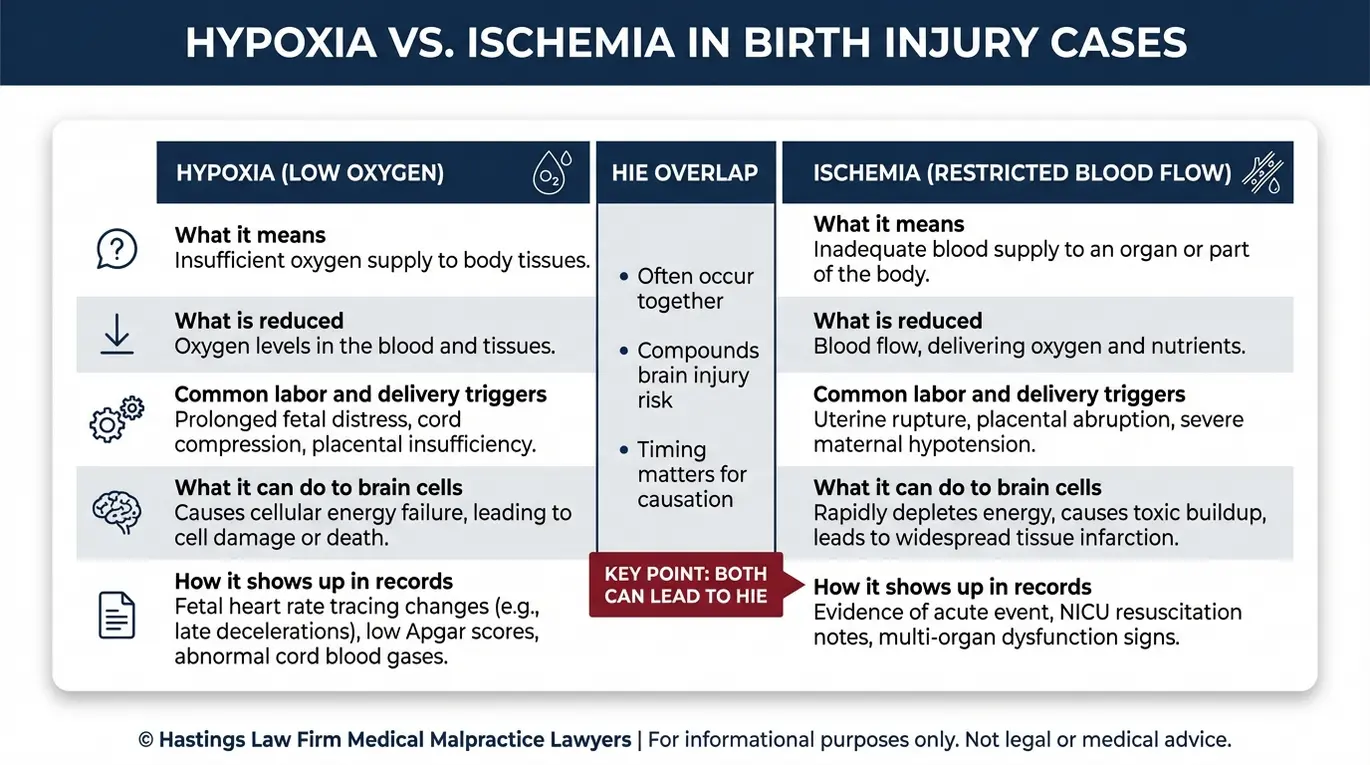
According to clinical practice guidelines published in PubMed Central, prompt recognition and treatment of HIE are essential to minimizing long-term harm. Two related but distinct mechanisms drive the injury:
| Hypoxia (Low Oxygen) | Ischemia (Restricted Blood Flow) | |
|---|---|---|
| What Happens | The baby’s brain receives too little oxygen | Blood flow to the brain is reduced or blocked |
| Common Causes | Umbilical cord compression, respiratory failure | Placental abruption, uterine rupture, cord prolapse |
| Effect on Brain Cells | Cells are starved of the oxygen they need to function | Cells lose both oxygen and essential nutrients carried by the blood |
| Result | Can cause diffuse brain cell injury | Can cause localized or widespread tissue death |
Both hypoxia and ischemia can occur simultaneously, compounding the damage. When these conditions persist without intervention, the result can be an anoxic brain injury, meaning a complete loss of oxygen to brain tissue.
Distinguishing Preventable HIE from Genetic Conditions
Not every case of HIE involves medical negligence. Some neurological conditions are genetic conditions or develop despite appropriate care. The critical legal distinction is whether the brain injury resulted from a preventable error or an unavoidable medical condition.
Our Texas HIE attorneys investigate these specific medical details to find the truth. We work with qualified medical experts to review the medical records, analyze the timeline of labor and delivery, and determine whether the standard of care was met. Conditions like umbilical cord prolapse, where the cord slips ahead of the baby and becomes compressed, or placental abruption, where the placenta separates from the uterine wall too early, are known risk factors for HIE. When medical teams fail to recognize and respond to these emergencies, a preventable injury may follow.
Common Causes of HIE Malpractice During Labor and Delivery
Medical malpractice causes HIE when healthcare providers fail to respond to signs of fetal distress, such as delaying a necessary C-section or mismanaging umbilical cord complications like cord prolapse or placental abruption, leading to prolonged oxygen deprivation. Monitoring fetal health during labor is the primary way medical teams prevent permanent neurological damage.
Fetal distress refers to signs that a baby is not tolerating labor well, most commonly detected through fetal heart rate monitoring. Medical professionals use electronic fetal heart rate monitors to continuously track the baby’s heart rate during labor. When the heart rate strips show concerning patterns, the delivery team is expected to act quickly.
The Review of Category I, II, and III Fetal Heart Rate Classifications outlines how fetal heart rate tracings are categorized. Category I tracings are normal. Category II tracings are indeterminate and require close surveillance. Category III tracings are abnormal and typically demand immediate intervention. Failing to correctly classify or respond to these patterns is one of the most common errors an HIE lawyer in Texas investigates.
Red flag medical errors that may lead to HIE include:
- Ignoring fetal heart rate strip abnormalities: Failing to escalate care when Category II or III tracings appear on the monitor.
- Delayed emergency C-section: Research published by Dove Press on decision-to-delivery time confirms that delays in performing an emergency cesarean section directly affect outcomes. Every minute matters.
- Mismanagement of labor induction: Improper use of Pitocin can cause contractions that are too strong or too frequent, potentially leading to uterine rupture and cutting off the baby’s oxygen supply.
- Failure to diagnose maternal conditions: Conditions like preeclampsia and sepsis can compromise blood flow and oxygen delivery to the baby if left untreated.
Our team, which includes nurses who formerly worked in labor and delivery, knows how to read fetal heart rate strips and identify where the standard of care broke down. As an HIE birth injury attorney, we examine these specific decision points during our investigation.
The Hastings Law Firm Difference
Results matter, but what truly sets us apart is how we achieve them. Every verdict, every settlement, and every Texas courtroom victory comes from one guiding promise: To treat each client’s fight for justice as if it were our own.
This balance of skill, experience, and empathy reflects our core philosophy that justice should not only compensate the injured, but also make healthcare safer nationwide.

Signs Your Newborn’s HIE May Be Due to Negligence
Immediate signs of HIE often include low Apgar scores, seizures within the first 24 hours, difficulty feeding, and the need for resuscitation or therapeutic cooling immediately after birth. Recognizing these early indicators is an important first step toward understanding whether your child’s injury was preventable.
An Apgar score is a quick assessment performed at 1, 5, and sometimes 10 minutes after birth. It rates the baby’s heart rate, breathing, muscle tone, reflexes, and skin color on a scale of 0 to 10. Low scores at the 5 and 10 minute marks can signal that a baby experienced significant distress during delivery.
Therapeutic hypothermia, also called cooling therapy, is a treatment where the baby’s body temperature is carefully lowered to slow brain cell damage. It must be started within six hours of birth to be effective. If your baby received this treatment, it means the medical team recognized signs of a brain injury at or shortly after delivery.
If your newborn experienced any of the following, it may warrant a closer look at the delivery records:
- Low Apgar scores at 5 and 10 minutes after birth
- Seizures or abnormal jerking movements in the NICU
- Need for immediate resuscitation or intubation
- Placement on a cooling blanket or cooling cap (therapeutic hypothermia)
- Organ dysfunction affecting the kidneys, heart, or lungs
- Difficulty feeding or an abnormally weak cry
- A diagnosis of sepsis or meningitis shortly after delivery
None of these signs alone prove negligence, though intubation errors or untreated infections can be clear indicators. When a Texas HIE malpractice lawyer reviews medical records alongside the labor and delivery timeline, these symptoms can point to future developmental delays and critical gaps in care that need further investigation.
Proving Liability and Negligence in Texas HIE Cases
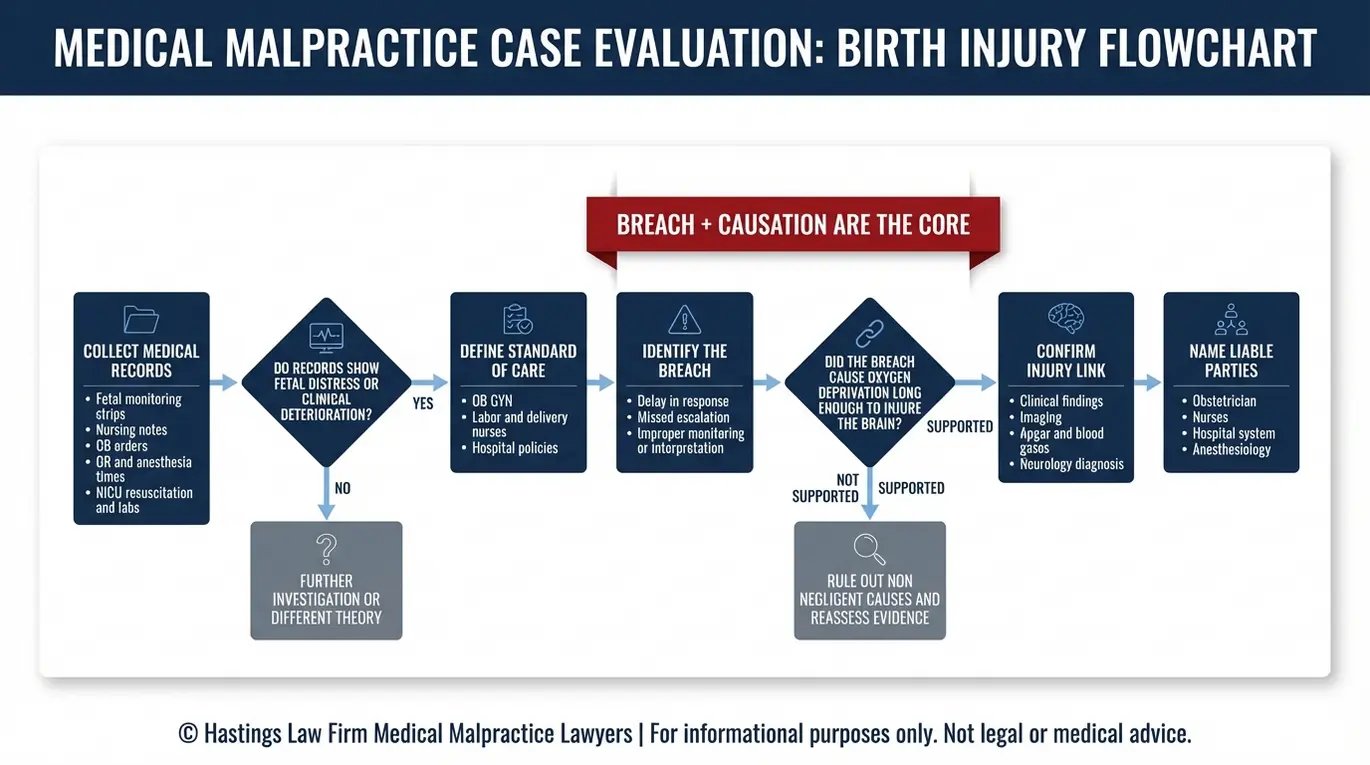
Proving liability requires demonstrating that the doctor or hospital breached the accepted standard of care and that this specific breach constitutes medical negligence and directly caused the infant’s brain injury. The standard of care establishes the legal benchmark for how a reasonably competent medical professional should have responded under the same circumstances.
For obstetricians and delivery nurses, the standard includes proper fetal monitoring, timely response to signs of distress, and appropriate decisions about emergency interventions like C-sections. Establishing causation is often the most contested part of an HIE case.
The defense will almost always argue that the brain injury was caused by something other than medical error, such as a genetic condition or an unpreventable complication. A Texas HIE birth injury lawyer must work with pediatric neurologists and maternal-fetal medicine specialists to demonstrate the direct link between the provider’s actions and the resulting anoxic brain injury. This means a complete deprivation of oxygen that caused measurable harm to the baby’s brain.
Under the Texas Civil Practice and Remedies Code Chapter 74, a qualified expert report must be filed early in the case to establish that the claim has merit. At Hastings Law Firm, we provide legal help for HIE families by having our in-house medical staff review records and build the expert framework from day one. Potentially liable parties in an HIE case may include the attending obstetrician, labor and delivery nurses, the hospital itself (for staffing or hospital protocols failures), and anesthesiologists.
Liability for Defective Monitoring Equipment
In some cases, the fetal monitor itself may have malfunctioned, failing to alert staff to dangerous changes in the baby’s heart rate. Fetal monitors are essential tools that must function correctly to prevent birth trauma caused by missed warning signs. If defective monitoring equipment contributed to a delayed response, there may be a separate medical product liability claim against the device manufacturer. Our team evaluates whether fetal monitoring equipment failure played any role in the injury.
Calculating Damages and Securing Lifetime Care Costs
Recoverable damages in HIE cases often include lifetime medical expenses, costs of future surgeries and therapies, lost earning capacity for the child, and non-economic damages for pain and suffering. These HIE lawsuits seek to recover the extensive financial resources required to support a child with permanent brain damage for the rest of their life.
Economic damages cover the tangible, calculable costs your family will face. These include past and current medical bills, and more significantly, the cost of future care. Children with severe HIE, or conditions like cerebral palsy, may require 24/7 nursing assistance, adaptive equipment like wheelchairs, home modifications, and specialized therapies.
Non-economic damages account for the child’s pain, suffering, and physical impairment. Under the Civil Practice and Remedies Code Chapter 74, Texas caps non-economic damages in medical malpractice cases. There is no cap on economic damages, which typically make up the largest portion of an HIE claim.
A Life Care Plan is the foundation of how HIE attorneys in Texas calculate future costs. Medical and financial experts create this document to itemize every anticipated need over the child’s lifetime. A thorough Life Care Plan typically addresses:
- Future surgeries and hospitalizations
- Physical, occupational, and speech therapy
- In-home nursing or attendant care (potentially 24/7)
- Durable medical equipment (wheelchairs, orthotics, communication devices)
- Home and vehicle modifications for accessibility
- Special education and vocational support
- Medications and follow-up specialist visits
At Hastings Law Firm, we work with life care planners and economists to project these costs 50 or more years into the future. This ensures that any birth injury compensation reflects the true cost of your child’s care, not just what has been spent so far. We can also advise on setting up a special needs trust to protect these funds.
Contact the Texas Birth Injury Attorneys at Hastings Law Firm Today for Help
An HIE diagnosis changes everything for a family. If your child’s brain injury was caused by a medical error during labor or delivery, you have the right to pursue accountability and the financial resources your child will need for a lifetime of care.
Hastings Law Firm is built for cases like yours. Our team, which includes attorneys who previously defended hospitals and experienced hospital nurses, focuses exclusively on medical malpractice litigation. We understand the medicine, we know how to build these cases, and we prepare every case as if it is going to trial.
As a Texas Hypoxic-Ischemic Encephalopathy lawyer, we take these cases on a contingency fee basis, meaning you pay no attorney fees or costs unless we secure a recovery for your family. Contact us today for a free case evaluation. Let us review what happened and explain your options.
Frequently Asked Questions About Hypoxic-Ischemic Encephalopathy in Texas


This content was researched and written by the Hastings Law Firm editorial team, which includes attorneys, medical professionals, and experienced researchers. Our writing is informed by internal knowledge and practical experience, and we cross-check critical details against authoritative sources cited throughout. Every piece undergoes human-led fact-checking and legal review. Because legal and medical information can change, if you spot an error, please contact us. Learn more about our content standards and review process on our editorial policy page.

Tommy Hastings, founder of Hastings Law Firm, is a board-certified personal injury trial lawyer dedicated exclusively to healthcare injury cases. Since 2001, he has represented injured patients and families in litigation against major hospital systems, pharmaceutical companies, and negligent healthcare providers nationwide. He has handled numerous high-profile cases that have drawn national media attention and resulted in multi-million dollar recoveries. He draws on that experience in his writing, helping readers understand how these cases work and what options may be available to them.
