


Phoenix Hospital Infection Lawyer
Hospital acquired infections can turn a routine hospital stay into a serious medical crisis, especially when infection control practices break down. These infections may start during a hospital stay and can worsen quickly if warning signs are missed or treatment is delayed, sometimes leading to sepsis, permanent disability, or fatal outcomes. Understanding how infections spread in healthcare settings and what standards hospitals are expected to follow can help families make sense of what went wrong. If you or a loved one were harmed or worse due to a hospital acquired infection in Phoenix, Arizona, contact Hastings Law Firm for a free, confidential case review.

Last Updated: September 20, 2026
Trusted Medical Attorneys Representing Phoenix Patients Harmed by Hospital Acquired Infections
When you or someone you love goes to the hospital, you expect to leave healthier than when you arrived. Learning that a hospital-acquired infection, an infection contracted during a hospital stay that was not present at admission, may have been preventable can feel like a deep betrayal of that trust. These infections range from common staph infections to dangerous antibiotic-resistant organisms like MRSA (methicillin-resistant Staphylococcus aureus), and the consequences can be devastating.
You deserve to know what happened and whether the care you received fell short. As a Phoenix hospital infection lawyer, Hastings Law Firm focuses exclusively on medical malpractice, and our team includes in-house nurses and former defense attorneys who understand hospital protocols from the inside. If you believe a preventable infection caused serious harm, we can review what happened and explain your options in a free, confidential consultation.

Common Hospital Acquired Infections and Antibiotic Resistant Superbugs
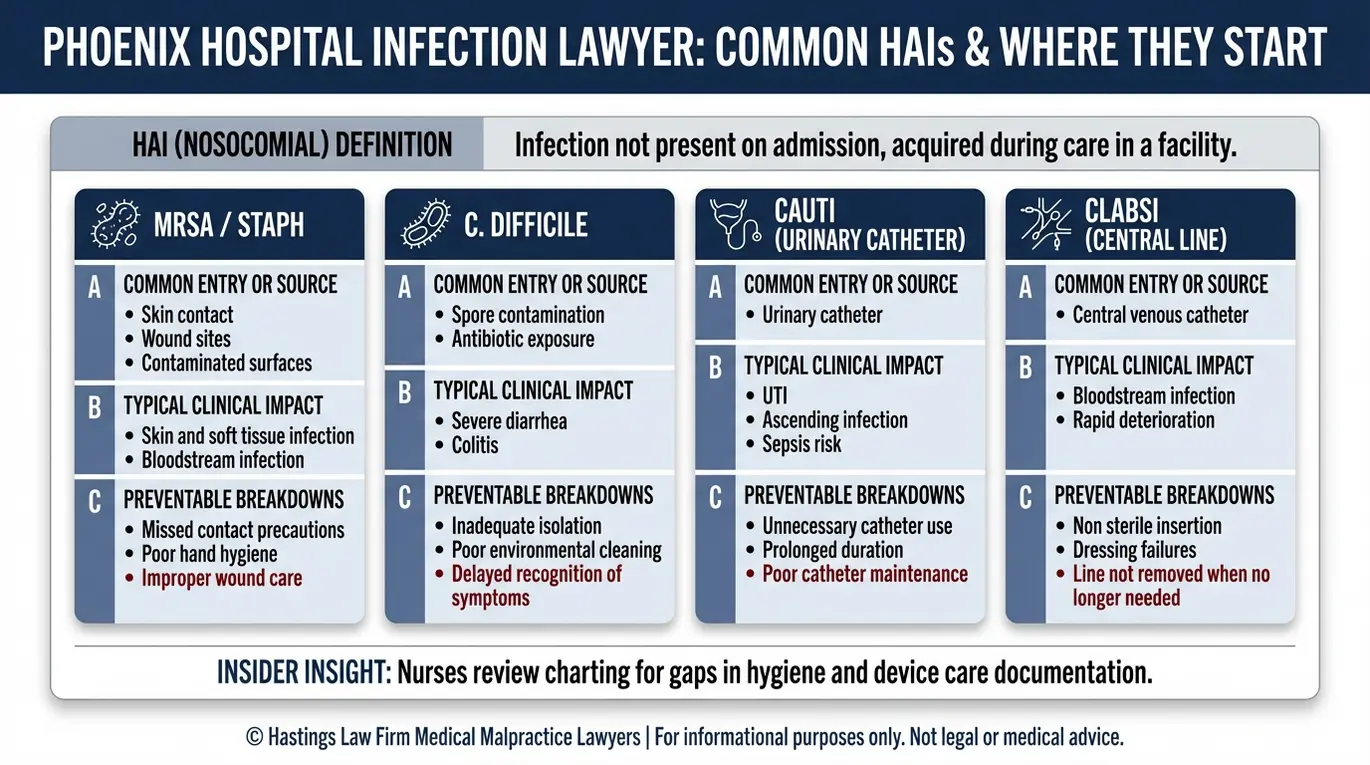
A hospital-acquired infection (HAI), also known as a nosocomial infection, is a condition contracted by a patient during their stay in a healthcare facility that was not present upon admission. According to HAI reports and data published by the CDC, these infections remain a persistent threat across U.S. hospitals, often involving antibiotic-resistant bacteria that are extremely difficult to treat.
HAIs can develop when sterilization protocols break down, hand hygiene is not maintained, or medical devices are improperly inserted or managed. The California Department of Public Health’s infection prevention guidelines outline how lapses in device maintenance and environmental controls directly contribute to infection spread. A Phoenix hospital infection lawyer can help determine whether these failures caused the infection to spread in your case.
Some of the most common HAIs include:
- MRSA (Methicillin-Resistant Staphylococcus aureus): A staph infection resistant to many standard antibiotics, often spread through direct contact with contaminated hands or surfaces.
- C. difficile (Clostridioides difficile): A bacterial infection of the colon frequently triggered by overuse of antibiotics, causing severe diarrhea, colitis, and potentially life-threatening complications.
- Surgical Site Infections (SSIs): Infections that develop at or near a surgical incision, often linked to unsterilized instruments or inadequate wound care.
- CAUTIs (Catheter-Associated Urinary Tract Infections): Urinary tract infections caused by bacteria entering through an improperly placed or poorly maintained urinary catheter.
- CLABSIs (Central Line-Associated Bloodstream Infections): Serious bloodstream infections introduced through a central venous catheter, often due to breaks in sterile technique during insertion or maintenance.
Each of these infections may be preventable when proper protocols are followed. When they are not, a lawyer for hospital infections can investigate whether negligence contributed to the harm.
The Progression from Infection to Sepsis and Septic Shock
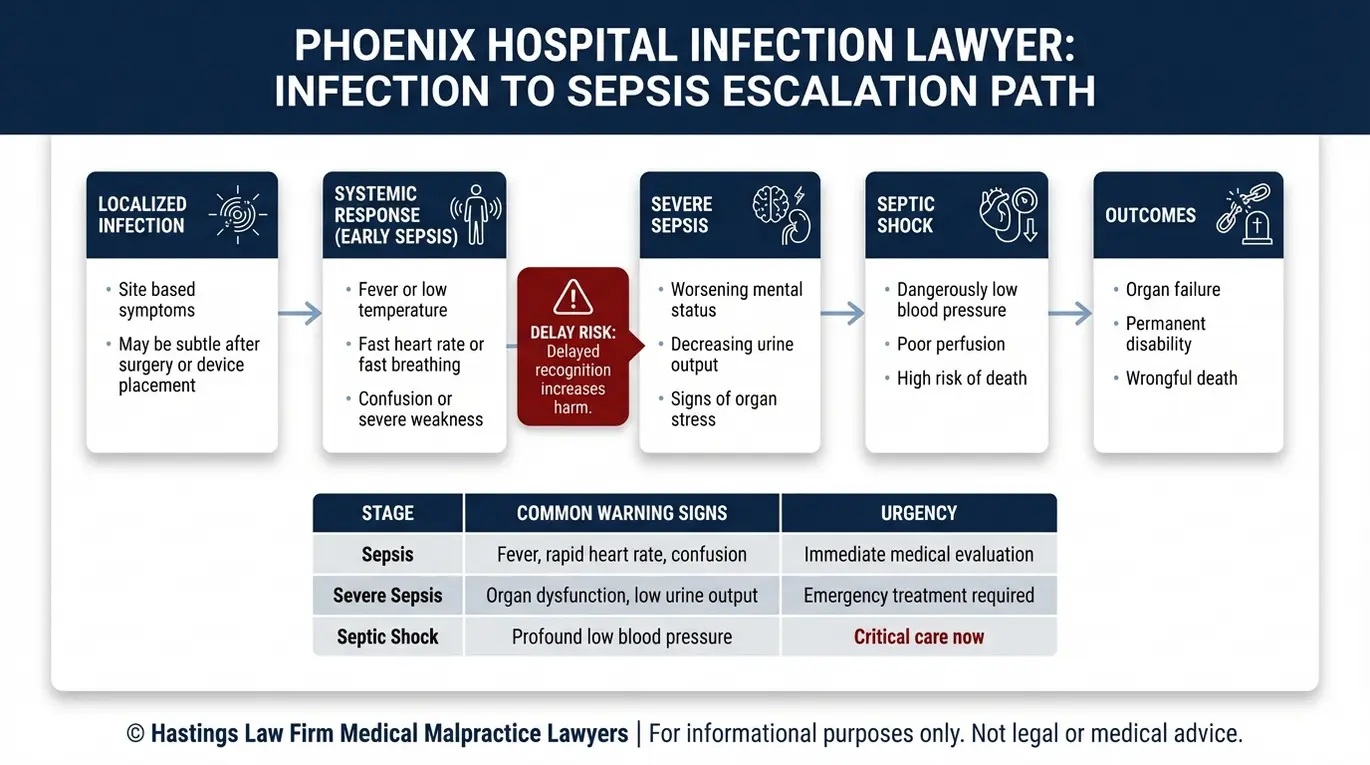
Sepsis is a life-threatening reaction to an infection that triggers widespread inflammation, potentially leading to septic shock, organ failure, and death if not treated immediately. What begins as a localized HAI can escalate to septicemia and shock when symptoms go unrecognized, often causing permanent disabilities.
Diagnostic errors involving infections are part of the “Big Three” categories of misdiagnosis-related harms in the United States, alongside vascular events and cancer. Research published in a clinical criteria study on septic shock in PubMed describes how this cascade progresses. The CDC’s resource on sepsis signs and symptoms identifies warning indicators medical teams must catch. An infection malpractice attorney evaluates whether that response happened in time.
| Stage | Key Symptoms | Urgency Level |
|---|---|---|
| Sepsis | Fever or low temperature, elevated heart rate, rapid breathing, confirmed or suspected infection | Urgent: requires immediate medical intervention |
| Severe Sepsis | Decreased urine output, sudden changes in mental status, drop in platelet count, difficulty breathing | Critical: organ dysfunction is beginning |
| Septic Shock | Dangerously low blood pressure unresponsive to fluid resuscitation, lactic acidosis, multi-organ failure | Life-threatening: high mortality risk without aggressive ICU care |
The Hastings Law Firm Difference
Results matter, but what truly sets us apart is how we achieve them. Every verdict, every settlement, and every Phoenix courtroom victory comes from one guiding promise: To treat each client’s fight for justice as if it were our own.
This balance of skill, experience, and empathy reflects our core philosophy that justice should not only compensate the injured, but also make health care safer nationwide.

Establishing Liability for Hospital Infections in Phoenix
Liability is established by proving that the hospital or medical professional breached the standard of care by failing to follow sterilization protocols, ignoring symptoms, or delaying treatment, directly causing the patient’s injury.
Not every hospital infection is the result of negligence. Infections can occur even when proper protocols are followed. That is why viable claims focus on whether the facility breached its duty of care by failing to prevent a preventable infection. Phoenix infection malpractice lawyers must demonstrate a clear connection between the provider’s breach of duty and the resulting harm.
The standard of care represents the level of caution and quality that a reasonably competent healthcare provider would offer under similar circumstances. Systemic issues like understaffing, inadequate training, or breakdowns in sterilization procedures can all contribute to the spread of dangerous bacteria. We examine medical records, staffing logs, lab results, and internal protocols to determine whether the standard of care was met.
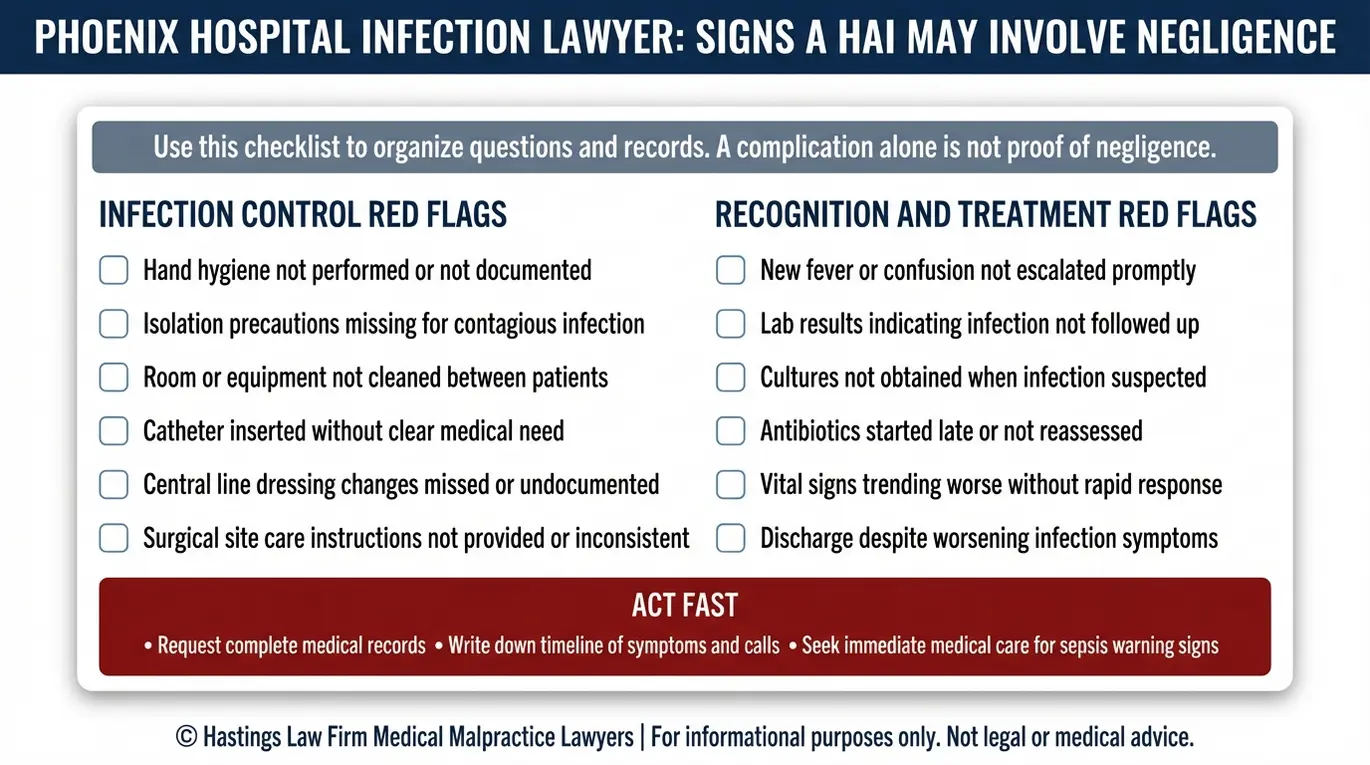
Signs that may indicate negligence in a hospital infection case include:
- Failure to follow hand hygiene protocols between patient contacts
- Use of unsterilized or improperly reprocessed surgical instruments
- Improper insertion or maintenance of catheters and central lines, increasing the risk of a catheter-associated urinary tract infection (CAUTI) or central line-associated bloodstream infection (CLABSI)
- Ignoring or delaying response to abnormal lab results indicating infection
- Failure to isolate patients with known contagious infections
- Inadequate documentation of infection control measures
- Understaffing that prevented timely monitoring of post-surgical patients
Why Choose Hastings Law Firm for Infection Malpractice Claims
Hastings Law Firm offers a unique advantage by combining board-certified trial advocacy with an in-house medical team, including former defense attorneys and nurses, to effectively challenge hospital protocols and secure maximum compensation. We represent patients and families exclusively in medical malpractice cases, including wrongful death.
Our founder, Tommy Hastings, is board certified in Personal Injury Trial Law by the Texas Board of Legal Specialization. Our team includes former defense attorneys and nurses. As a Phoenix hospital infection attorney and dedicated medical malpractice lawyer, we use that insider knowledge to identify protocol failures. Every medical malpractice attorney at our firm focuses on building strong cases from day one.
We handle every case on a contingency fee basis, meaning you pay no attorney fees unless we recover compensation for you.
Compensation for Damages Caused by Severe Infections
Victims of hospital-acquired infections may recover compensation for medical expenses, lost wages, pain and suffering, and in cases of fatalities, wrongful death damages for the surviving family.
Patients who suffer from hospital-acquired infections may recover compensation for tangible financial losses such as medical expenses, future medical care, rehabilitation costs, and lost wages. These are known as Economic damages. Non-economic damages cover the personal toll, including chronic pain, emotional distress, and diminished quality of life.
When a hospital-acquired infection leads to death, Arizona law allows surviving family members to pursue a wrongful death claim. Under Article 2, Section 31 of the Arizona Constitution, no law may be enacted limiting the amount of damages to be recovered for causing the death or injury of any person, providing an important protection for families seeking accountability.
Contact the Phoenix Hospital Malpractice Attorneys at Hastings Law Firm Today for Help
If you or a loved one suffered a serious infection during a hospital stay, you may have questions about what went wrong and whether anyone is responsible. Those questions deserve honest, informed answers.
Hastings Law Firm is here to help you find them. Our team of medical malpractice attorneys and in-house medical professionals can review your records, identify potential failures in care, and explain whether you have a viable claim. As a dedicated Phoenix hospital infection lawyer, we prepare every case as if it will go to trial, so hospitals and insurers know we are serious about getting you a fair result.
You do not have to face this alone, and there is no financial risk in reaching out. Contact us today for a free, confidential case evaluation. You pay nothing unless we win.
Frequently Asked Questions About Hospital Infection in Phoenix


This content was researched and written by the Hastings Law Firm editorial team, which includes attorneys, medical professionals, and experienced researchers. Our writing is informed by internal knowledge and practical experience, and we cross-check critical details against authoritative sources cited throughout. Every piece undergoes human-led fact-checking and legal review. Because legal and medical information can change, if you spot an error, please contact us. Learn more about our content standards and review process on our editorial policy page.

Tommy Hastings, founder of Hastings Law Firm, is a board-certified personal injury trial lawyer dedicated exclusively to healthcare injury cases. Since 2001, he has represented injured patients and families in litigation against major hospital systems, pharmaceutical companies, and negligent healthcare providers nationwide. He has handled numerous high-profile cases that have drawn national media attention and resulted in multi-million dollar recoveries. He draws on that experience in his writing, helping readers understand how these cases work and what options may be available to them.
