


Arizona Hospital Infection Lawyer
Medical facility acquired infections can cause serious harm during or after a hospital stay, especially when basic hygiene, sterilization, or safety protocols break down. Not every infection is malpractice, but preventable infections tied to a breach of the standard of care can create accountability concerns. These cases often involve disputes over whether an infection was an unavoidable risk or the result of systemic failures such as poor hand hygiene, contaminated environments, or unsafe procedures. If you or a loved one were harmed or worse due to a hospital acquired infection in Arizona, contact Hastings Law Firm for a free, confidential case review.

Last Updated: September 20, 2026
Trial-Ready Representation for Medical Facility Acquired Infections in Arizona
If you or a loved one developed a serious infection during or after a hospital stay, you may be dealing with more than just a medical setback. Hospital-acquired infections can cause lasting harm, and when they result from failures in basic hygiene, sterilization, or safety protocols, they may constitute medical negligence.
At Hastings Law Firm, we focus exclusively on medical malpractice. Our team, led by board-certified trial lawyer and ABOTA inductee Tommy Hastings, includes in-house nurses and former defense attorneys who know how hospitals operate from the inside. Founded in 2005, we serve as your Arizona Hospital Infection Lawyer to investigate what went wrong, identify where protocols broke down, and build cases designed for trial from day one.
If you suspect your infection was preventable, we can review your records and explain your options at no cost unless we take your case and secure a recovery.

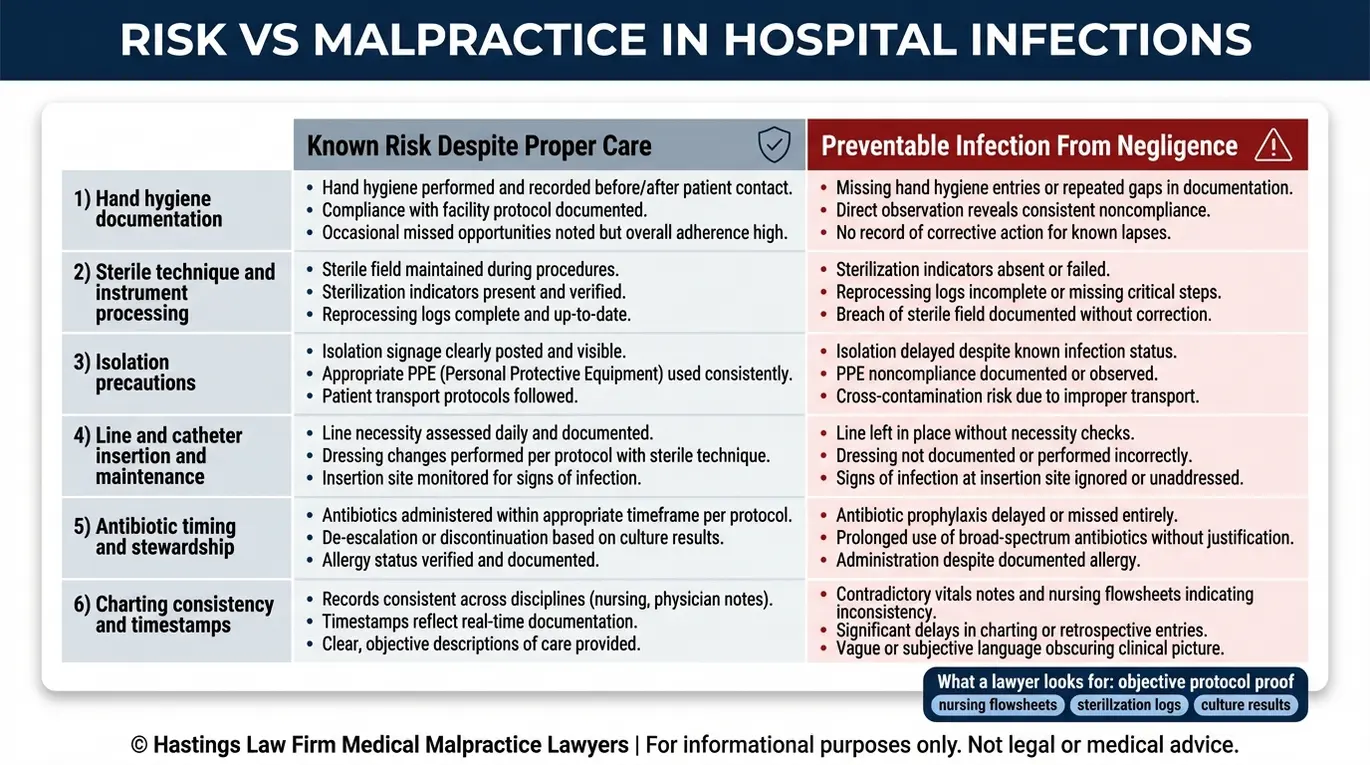
Distinguishing Between Known Risks and Medical Malpractice
Not every hospital-acquired infection, sometimes called a nosocomial infection (an infection originating in a healthcare facility), is grounds for a lawsuit, but preventable infections caused by a breach in the standard of care, the level of treatment a reasonably competent medical professional would provide under similar circumstances, are actionable medical malpractice.
The distinction matters. Hospitals are required to follow strict infection prevention protocols, including aseptic technique (sterile procedures used to prevent the introduction of bacteria during surgery or invasive procedures). These protocols are well-established and backed by evidence. The Agency for Healthcare Research and Quality (AHRQ) documents how standardized checklists reduce infection rates by ensuring medical teams consistently follow sterile procedures. When a hospital skips or shortcuts these steps, and a patient develops an infection as a result, liability can attach.
One reason many patients hesitate to question their care is what we call the “White Coat Effect.” A provider may frame a serious infection like sepsis or MRSA as a “common complication” or an unavoidable risk. In some cases, that characterization is accurate. In others, it minimizes what was actually a failure in medical negligence prevention. If your instinct tells you something went wrong, that instinct deserves a closer look.
A hospital infection attorney can help you understand whether the infection you experienced was truly unavoidable or whether the evidence points to a preventable breakdown in care.
Common Infectious Diseases Stemming from Medical Negligence
The most frequently litigated hospital-acquired infections include surgical site infections (SSI), MRSA, C. difficile, catheter-associated infections like CAUTI or CLABSI, and ventilator-associated pneumonia (VAP). Healthcare-associated infections, often called HAIs, are conditions patients contract while receiving medical care for other health issues.
While CDC data reported by CIDRAP show a decline in hospital-related infections in 2024, healthcare-associated infections remain a significant source of patient harm nationwide. When they occur because of negligence, patients and families have a right to pursue accountability. Each of these infections has a well-documented connection to preventable lapses in hospital protocols.
These infections generally fall into three categories:
Surgical Site Infections (SSI) Surgical site infections (SSI), which develop when bacteria enter the body through an incision, can range from superficial wound infections to deep tissue infections involving organs or implanted materials. A surgical site infection is a type of healthcare-associated infection that occurs after surgery in the part of the body where the surgery took place. Contaminated instruments, improperly ventilated operating rooms, or failures in preoperative skin preparation are common causes. Deep SSIs often require additional surgeries, prolonged hospitalization, and intravenous antibiotics.
Drug-Resistant Bacteria Methicillin-resistant Staphylococcus aureus (MRSA), a strain of staph bacteria resistant to many common antibiotics, and Clostridioides difficile (C. diff) are among the most dangerous organisms spread in hospital settings. Drug-resistant bacteria are strains of bacteria that have developed the ability to defeat the drugs designed to kill them. Both are frequently transmitted through poor hand hygiene by staff moving between patients. C. diff is particularly associated with overuse of broad-spectrum antibiotics, which can destroy the body’s natural gut flora and allow the bacteria to take hold.
Device-Related Infections Infections can enter the body through medical devices such as urinary catheters and central IV lines. Device-related infections occur when pathogens enter the body through medical equipment such as catheters or IV lines.
A catheter-associated urinary tract infection (CAUTI) develops when bacteria travel along an indwelling urinary catheter. A central line-associated bloodstream infection (CLABSI) occurs when pathogens are introduced through an improperly inserted or maintained IV line. Both types are largely preventable with proper insertion technique, timely removal, and daily reassessment of whether the device is still necessary.
If you believe a hospital-acquired infection harmed you or a family member, an infection malpractice lawyer in Arizona can examine your medical records to identify which protocols may have failed.
The Hastings Law Firm Difference
Results matter, but what truly sets us apart is how we achieve them. Every verdict, every settlement, and every Arizona courtroom victory comes from one guiding promise: To treat each client’s fight for justice as if it were our own.
This balance of skill, experience, and empathy reflects our core philosophy that justice should not only compensate the injured, but also make health care safer nationwide.

Systemic Failures That Cause Preventable Outbreaks
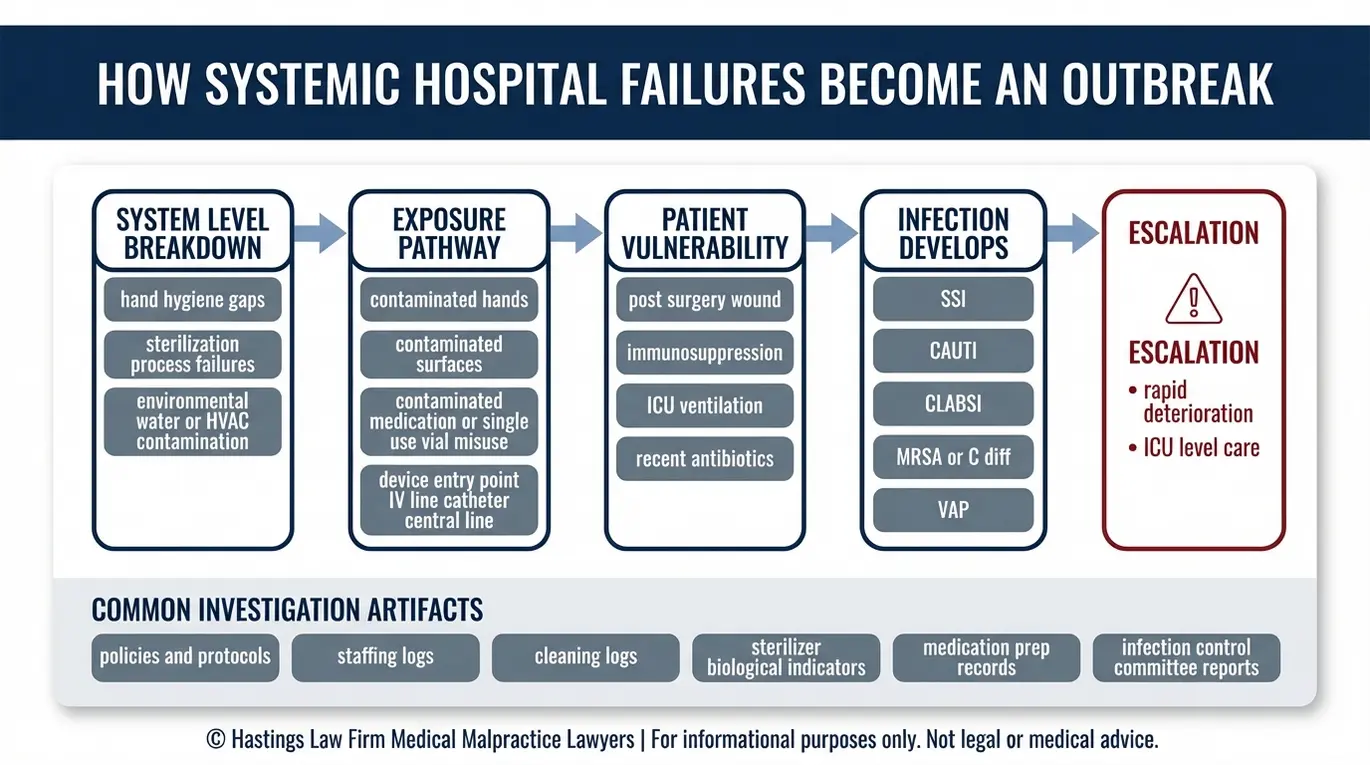
Hospital infections are often caused by systemic negligence, including unsterilized surgical tools, failure to isolate contagious patients, and improper hand hygiene by medical staff. These are not isolated mistakes. They reflect institutional failures in training, oversight, and resource allocation.
The breakdowns that lead to healthcare-associated infections (HAIs), including those involving *Clostridioides difficile* (C. diff) or catheter-associated urinary tract infections (CAUTI), typically fall into distinct categories:
| Source of Failure | Examples | Potential Infection Risk |
|---|---|---|
| Hygiene Failures | Staff not washing hands between patients; gloves not changed between procedures | MRSA, C. diff, CAUTI |
| Environmental Failures | Contaminated water systems; poor HVAC filtration in operating rooms | Legionnaires’ disease, SSI, fungal infections |
| Procedural Failures | Reuse of single-use vials; inadequate skin prep before IV line insertion | CLABSI, bloodstream infections, hepatitis |
| Isolation Failures | Not quarantining patients with confirmed drug-resistant infections | Facility-wide outbreaks of MRSA or C. diff |
Environmental failures deserve particular attention. Contaminated hospital water systems are a known vector for Legionella bacteria. The CDC’s guidance on controlling Legionella in potable water systems outlines the protocols hospitals must follow to prevent waterborne outbreaks. When those systems are poorly maintained, patients with compromised immune systems face serious risk.
An Arizona infection malpractice attorney can investigate whether a facility’s infrastructure and safety systems met the required standards at the time of your care.
Investigating Single-Use Vial Misuse and Contamination
One of the more troubling patterns we see involves the reuse of single-use medication vials, containers designed and labeled by the manufacturer to be used for one patient only. Single-use vials are medication containers meant for a single patient and a single procedure. When a provider draws from the same vial for multiple patients, bacteria or bloodborne pathogens can be introduced into subsequent doses. This practice has been linked to outbreaks of hepatitis and serious bacterial infections across the country.
A hospital negligence lawyer will look for evidence of cross-contamination by examining medication administration records, pharmacy logs, and infection control reports. If a cluster of infections appears among patients who received medication from the same batch or during the same time frame, it can point to systemic contamination.
Proving Liability and Securing Compensation for Sepsis
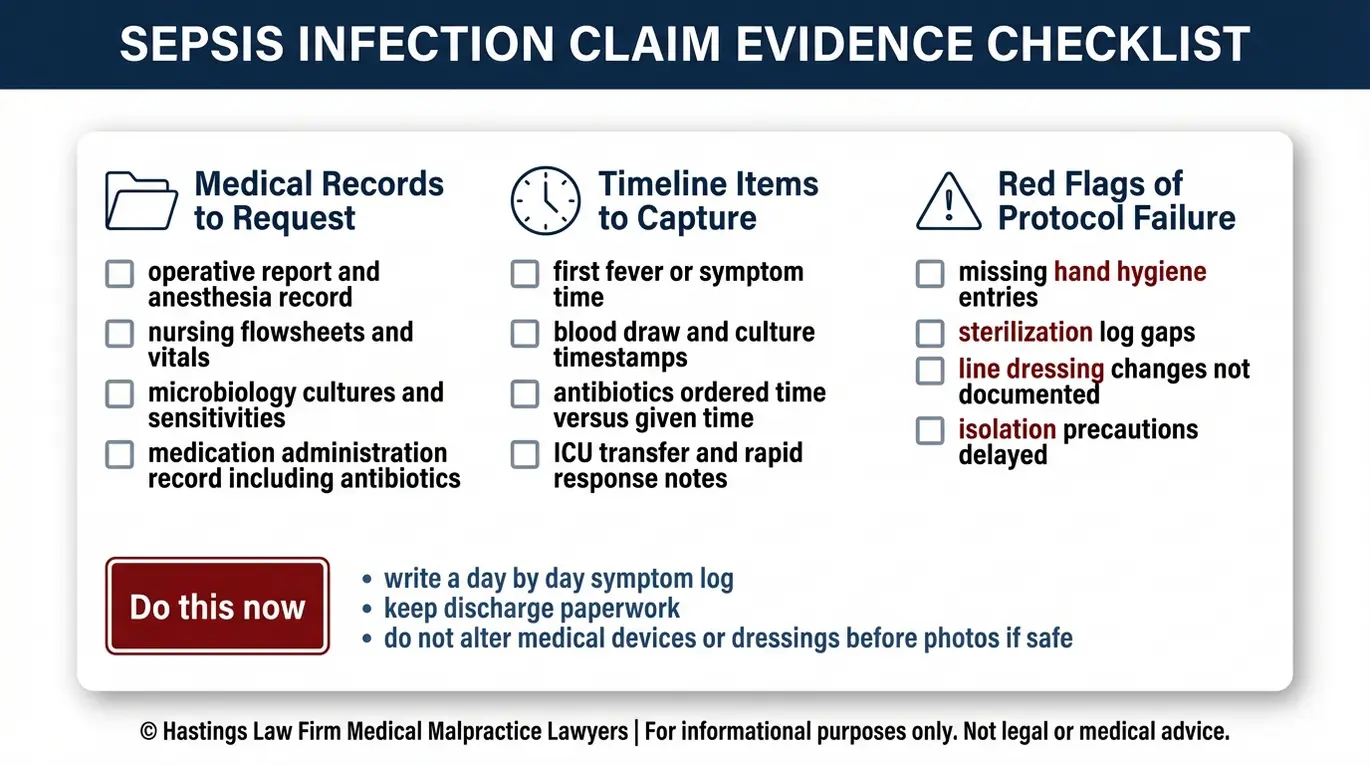
To win a hospital infection claim, we must secure expert testimony proving the hospital failed to follow mandatory infection control protocols, directly causing damages like sepsis (a life-threatening condition where the body’s response to infection begins damaging its own organs), organ failure, or death.
Our approach begins with a thorough investigation of the facility’s internal records. Using our trial-ready methodology, we work to obtain minute entries, internal infection control reports, sterilization logs, and staffing records. Our in-house nursing team reviews these documents alongside your medical records to reconstruct what happened and when.
Because our team includes former defense attorneys who previously represented hospitals, we understand how facilities document (and sometimes obscure) infection events. This background helps us identify gaps, inconsistencies, and deviations from protocol that might otherwise go unnoticed.
Recoverable damages in hospital infection cases can include:
- Emergency and ICU hospitalization costs
- Extended antibiotic therapy and follow-up care
- Additional surgeries, including treatment for complications like a central line-associated bloodstream infection (CLABSI), an infection transmitted through a central venous catheter
- Amputation or organ damage rehabilitation
- Lost wages and diminished earning capacity
- Pain and suffering, including emotional distress
- Wrongful death, when an infection proves fatal
One important protection for patients in Arizona: the Arizona Constitution explicitly prohibits caps on damages for personal injury and wrongful death claims. Under Article 2, Section 31 of the Arizona Constitution, patients can pursue full compensation for medical bills, lost wages, and pain and suffering without arbitrary limits.
A sepsis lawyer in Arizona can help determine whether the infection you or a loved one experienced resulted from preventable negligence and what your case may be worth.
Verifying Attorney Trial Experience for Infection Cases
Before hiring any firm, look into whether the attorney has actual trial experience with infection cases. You can verify this through court minute entries and trial reporter records, which document whether a lawyer has taken cases before a jury or primarily settles. A firm that prepares every case for trial, as we do, negotiates from a fundamentally different position than a “settlement mill” that routinely settles early to avoid courtroom preparation.
Contact the Arizona Hospital Malpractice Attorneys at Hastings Law Firm Today for Help
Sepsis and hospital-acquired infections can escalate quickly, and the evidence needed to prove your case can deteriorate just as fast. Sterilization logs, staffing records, and internal reports are not preserved indefinitely. Early investigation is essential.
Hastings Law Firm works on a contingency basis, meaning you pay no attorney fees or costs unless we secure a recovery on your behalf. Our team of medical negligence attorneys and in-house nursing staff is ready to review your records, identify what went wrong, and pursue the accountability you and your family deserve.
If you or someone you love developed a preventable infection during a hospital stay in Arizona, reach out to speak with an Arizona Hospital Infection Lawyer today. A free, confidential case evaluation is the first step toward getting answers.
Call Hastings Law Firm or complete our online contact form to begin your risk-free evaluation.
Frequently Asked Questions About Hospital Infection in Arizona


This content was researched and written by the Hastings Law Firm editorial team, which includes attorneys, medical professionals, and experienced researchers. Our writing is informed by internal knowledge and practical experience, and we cross-check critical details against authoritative sources cited throughout. Every piece undergoes human-led fact-checking and legal review. Because legal and medical information can change, if you spot an error, please contact us. Learn more about our content standards and review process on our editorial policy page.

Tommy Hastings, founder of Hastings Law Firm, is a board-certified personal injury trial lawyer dedicated exclusively to healthcare injury cases. Since 2001, he has represented injured patients and families in litigation against major hospital systems, pharmaceutical companies, and negligent healthcare providers nationwide. He has handled numerous high-profile cases that have drawn national media attention and resulted in multi-million dollar recoveries. He draws on that experience in his writing, helping readers understand how these cases work and what options may be available to them.
