


Texas HELLP Syndrome Malpractice Lawyer
Written by: Hastings Law Firm | Reviewed by: Tommy Hastings | Updated: July 27, 2026
HELLP syndrome is a dangerous pregnancy complication that can escalate quickly and cause severe harm when warning signs are missed or dismissed. Symptoms can resemble routine pregnancy discomfort, which can lead to delayed testing, misread lab results, and delayed delivery decisions. When care falls short, the results can include organ failure, hemorrhage, brain injury, stillbirth, or worse, leaving families searching for clear answers about what happened. If you or a loved one were harmed or worse due to HELLP syndrome malpractice in Texas, contact Hastings Law Firm for a free, confidential case review.

Top Rated Maternal Injury Attorneys Helping Families Across Texas
What You Should Know About Maternal Hemolysis Injury Claims in Texas:
- Severe maternal and infant harm can occur when HELLP syndrome is not recognized and treated promptly.
- Options for recovery can be limited because Texas medical malpractice claims face strict timing constraints.
- Financial recovery can be reduced because Texas caps non economic damages in medical malpractice cases.
- Accountability can extend beyond a physician because nurses, midwives, and hospital systems may share responsibility for missed escalation or protocol failures.
- A delayed diagnosis can be central to disputes because early symptoms may be mistaken for routine pregnancy discomfort.
- A missed differential diagnosis can drive case outcomes because other illnesses can mimic HELLP related symptoms and lab changes.
- A delay in delivery decisions can worsen outcomes because an emergency C section may be the only definitive treatment in many cases.
- Proof can be harder to obtain because Texas requires an early qualified expert report addressing standard of care and causation.
- Case evaluation can depend on documentation because medical records, lab trends, and fetal monitoring strips may show missed warning signs.
- Postpartum complications can be overlooked because HELLP syndrome can appear after delivery and discharge without clear warnings.

A Healthcare Focused Law Firm
When a pregnancy complication like HELLP syndrome causes serious harm, the emotional and physical toll can be overwhelming. You may be dealing with a difficult recovery, grieving a loss, or searching for answers about what went wrong during your care. These feelings are valid, and you deserve to know whether the medical team responsible for your care met the standard you were owed.
At Hastings Law Firm, we focus exclusively on medical malpractice. Founded by Tommy Hastings, a board-certified trial lawyer and ABOTA member, our team includes in-house nurse consultants and former defense attorneys who understand both the medicine and the law. As a Texas HELLP Syndrome Malpractice Lawyer, we know how to identify breakdowns in maternal care and hold the responsible parties accountable.
If you or a loved one suffered serious complications from HELLP syndrome, we can review what happened and explain your options during a free, confidential consultation.
Understanding HELLP Syndrome and Maternal Hemolysis Injuries
HELLP syndrome is a life-threatening pregnancy complication characterized by Hemolysis (the destruction of red blood cells), Elevated Liver enzymes, and Low Platelet count. This condition is an acronym used to describe a cluster of serious medical issues that require immediate medical intervention to prevent organ failure or maternal death.
The condition can develop rapidly, sometimes within hours. According to the University of Rochester Medical Center, HELLP syndrome occurs in an estimated 1 to 2 out of every 1,000 pregnancies and can appear in the third trimester or shortly after delivery. Without timely recognition and treatment, it can lead to liver rupture, kidney failure, and other catastrophic outcomes. Because the condition is volatile, the window for effective treatment is often narrow, making early detection critical for survival.
One of the reasons HELLP syndrome is so dangerous is that its early symptoms often look like common pregnancy discomfort. Medical providers may dismiss or overlook these warning signs, delaying diagnosis until the condition has already progressed.
Common warning signs of HELLP syndrome include:
- Severe upper abdominal pain, especially under the right ribs
- Sudden, persistent headache
- Nausea or vomiting that worsens in late pregnancy
- Vision changes, such as blurriness or seeing spots
- Sudden swelling in the face or hands
- Unusual fatigue or general malaise
A HELLP syndrome malpractice lawyer evaluates whether your care team recognized and acted on these signs within the timeframe the standard of care required. When providers attribute these symptoms to heartburn, stress, or normal pregnancy changes without ordering confirmatory blood work, the consequences can be devastating.
Distinguishing HELLP Syndrome from Preeclampsia
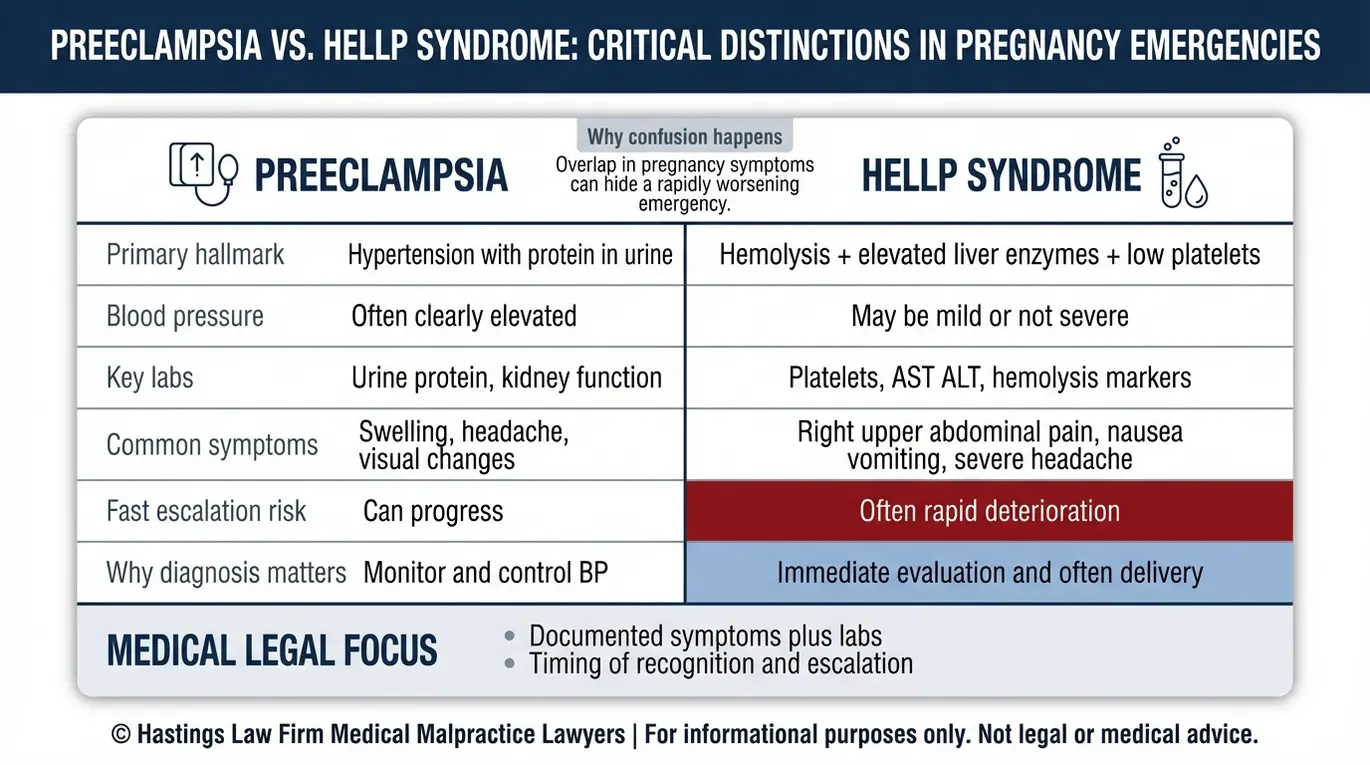
While preeclampsia, a condition involving high blood pressure, edema, and protein in the urine during pregnancy, shares some features with HELLP syndrome, HELLP is a more severe variant involving blood cell destruction and liver impairment that can develop even without extreme hypertension. Eclampsia, the onset of seizures in a patient with preeclampsia, represents yet another escalation along this spectrum.
The overlap between these conditions is exactly why accurate differential diagnosis matters. A provider who treats only high blood pressure while missing lab abnormalities may fail to intervene. These abnormalities include hemolysis, elevated liver enzymes (AST/ALT), and thrombocytopenia, which is a dangerously low platelet count. According to The Global Library of Women’s Medicine, pregnancy itself alters normal blood values, making careful lab interpretation essential.
| Feature | Preeclampsia | HELLP Syndrome |
|---|---|---|
| High blood pressure | Typically present | May or may not be present |
| Protein in urine | Common | Not always present |
| Hemolysis (red blood cell destruction) | Not typical | Defining feature |
| Elevated liver enzymes (AST/ALT) | Occasionally mild | Significantly elevated |
| Low platelet count | Mild in some cases | Markedly low |
| Primary risk | Stroke, seizures, organ stress | Liver rupture, hemorrhage, organ failure |
Differential Diagnosis Requirements
The standard of care also requires providers to rule out other conditions that can mimic HELLP symptoms, including hepatitis, gallbladder disease, and viral illness. Differential diagnosis is the process doctors use to distinguish between conditions that share similar clinical symptoms. Elevated liver enzymes (AST/ALT), which measure liver cell damage, and thrombocytopenia can appear in several of these conditions. Failure to order the correct labs or misinterpret results can constitute a misdiagnosis, and that delay is often what a Texas HELLP syndrome attorney investigates first.
The Hastings Law Firm Difference
Results matter, but what truly sets us apart is how we achieve them. Every verdict, every settlement, and every Texas courtroom victory comes from one guiding promise: To treat each client’s fight for justice as if it were our own.
This balance of skill, experience, and empathy reflects our core philosophy that justice should not only compensate the injured, but also make healthcare safer nationwide.

Common Errors Leading to HELLP Syndrome Misdiagnosis
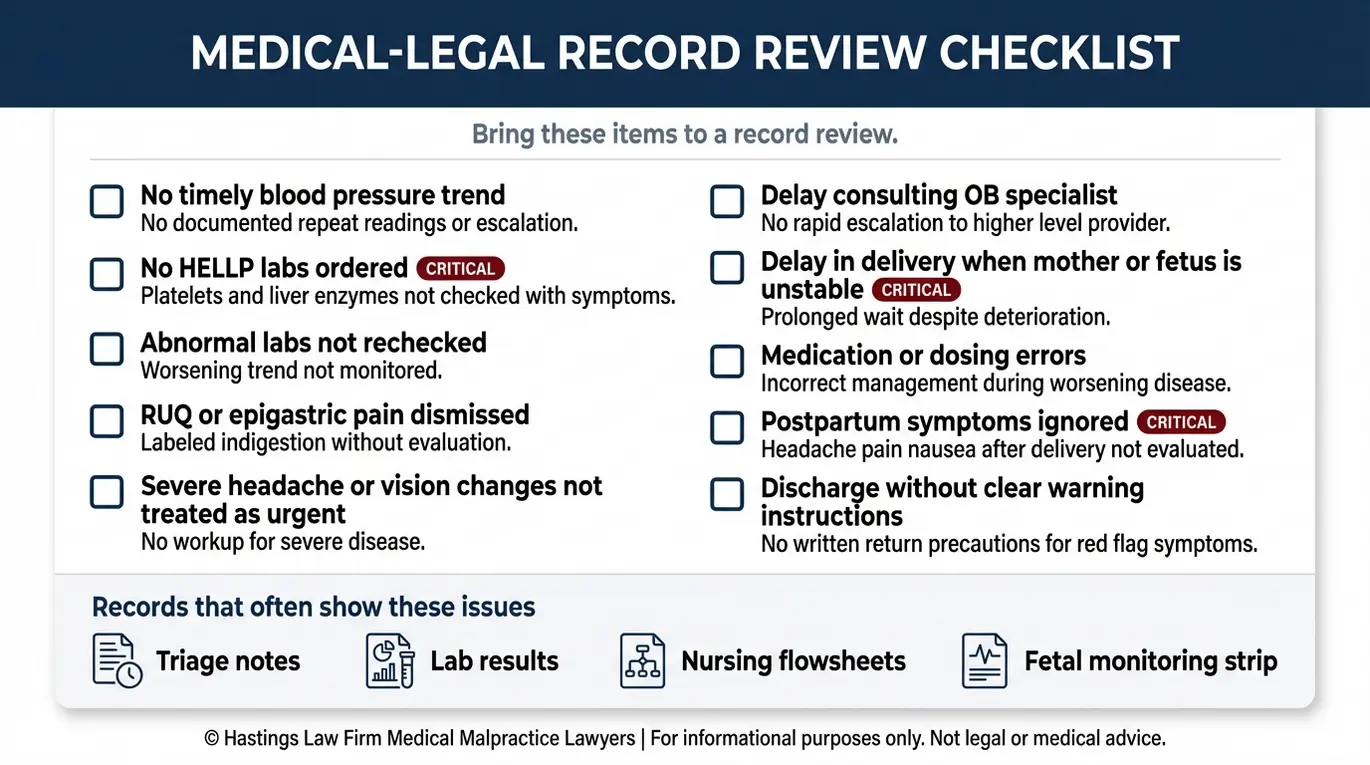
Medical negligence in HELLP cases often occurs when providers fail to order blood work for mothers showing signs of hypertension, misinterpret lab results, or dismiss complaints of upper abdominal pain as indigestion or heartburn. These errors can result in a delayed diagnosis long enough for the condition to cause irreversible harm.
As outlined by the UCSF Codex on Foundational Concepts of Diagnostic Error, diagnostic failures generally fall into categories of missed, delayed, or wrong diagnoses, impacting maternal and fetal health. Diagnostic errors in HELLP cases often happen when clinicians fail to recognize the unique signs of this pregnancy complication.
Common errors we evaluate in HELLP syndrome cases include:
- Failure to monitor blood pressure and order serial labs in high-risk pregnancies
- Attributing severe right upper quadrant pain to gastrointestinal issues without further testing
- Ignoring or downplaying patient complaints about headaches, vision changes, or sudden swelling
- Delay in performing an emergency C-section when maternal or fetal distress becomes evident
- Failure to consult with a maternal-fetal medicine specialist when lab values are abnormal
- Failure to recognize postpartum HELLP syndrome, a form of the condition where symptoms appear after delivery. This is dangerous as the discharged mother may not connect symptoms to a pregnancy-related emergency
- Medication errors, such as failing to administer magnesium sulfate for seizure prevention. This medication is the standard treatment to prevent eclampsia and further complications.
A Texas HELLP Syndrome Malpractice Lawyer examines whether any of these breakdowns occurred and whether earlier action could have prevented harm. In cases involving stillbirth, neonatal death, or fetal distress, we also review fetal monitoring strips to determine whether signs of deterioration were present before delivery was initiated.
Liver rupture, also known as subcapsular hepatic hematoma (bleeding beneath the liver’s surface), is one of the most severe complications of untreated HELLP. It is often preventable with timely diagnosis and delivery. When a HELLP syndrome lawyer in Texas reviews a case, this is one of the outcomes that most clearly points to a failure in the standard of care.
Proving Malpractice When Doctors Miss HELLP Warning Signs
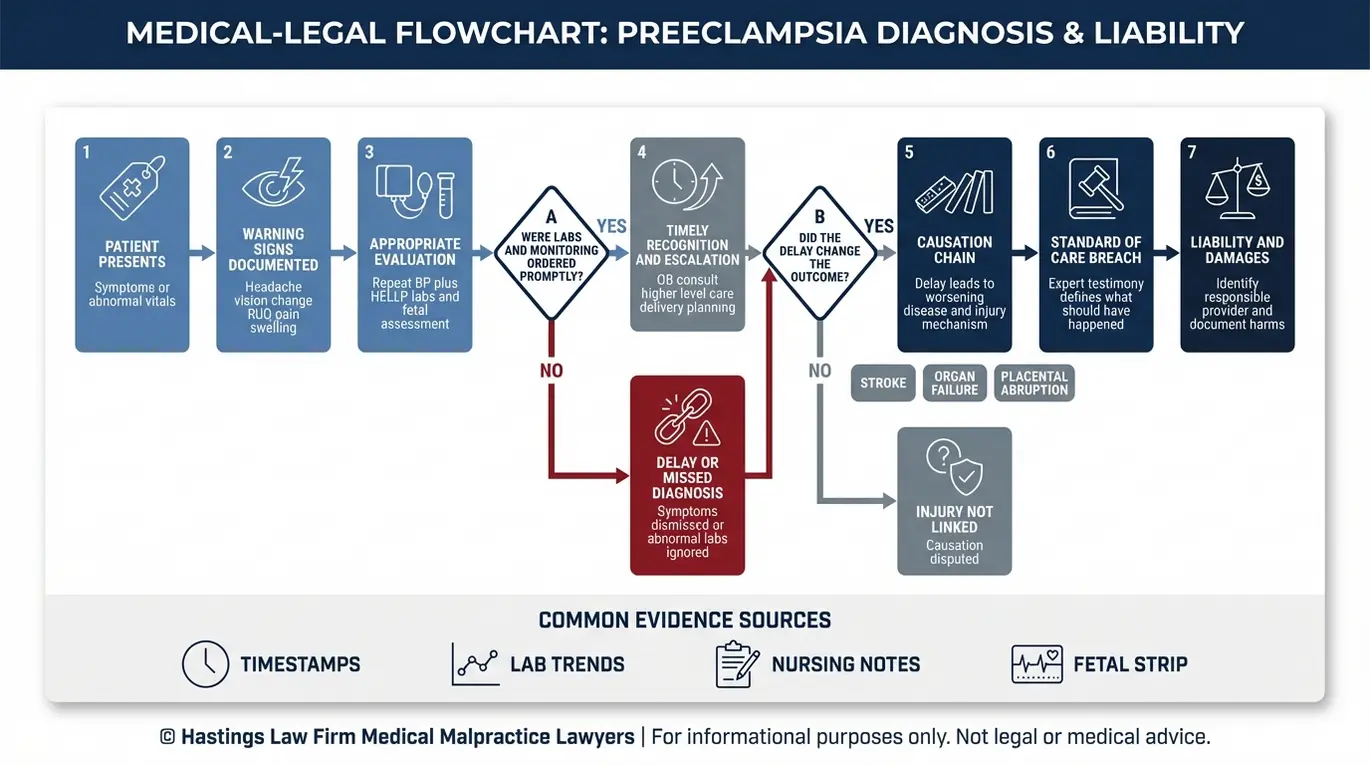
Proving medical malpractice requires clear evidence that the healthcare provider deviated from the accepted standard of care for maternal monitoring and that this deviation directly caused the mother’s or infant’s injury. Building a legal claim requires demonstrating how medical providers failed to monitor maternal health safely.
The standard of care for HELLP syndrome generally requires prompt lab evaluation when a pregnant or recently postpartum patient presents with suspicious symptoms. This standard of care is the level of care a reasonably competent healthcare professional would provide under similar conditions. In many cases, an emergency cesarean section (C-section) is the only definitive treatment, and a delay in that decision can result in birth injury or brain injury.
Under Texas Civil Practice and Remedies Code § 74.351, medical malpractice claims require a qualified expert report early in the case. This report must outline how the provider’s actions fell below the standard of care and how that failure caused harm. A malpractice attorney for HELLP syndrome works with medical experts to build that connection and secure the expert testimony needed to prove your case.
Liability does not rest solely with the attending physician. Nurses, midwives, nurse practitioners, and hospital systems can all bear responsibility. If institutional protocols failed to require timely lab draws, or if nursing staff did not escalate concerning symptoms, the facility itself may be liable. A Texas maternal injury lawyer evaluates the full chain of care to identify every responsible party. In Texas, the legal standard is a “preponderance of the evidence,” meaning you must show it is more likely than not that negligence occurred.
How Hastings Law Firm Secures Justice for Families
Hastings Law Firm brings together board-certified attorneys and medical professionals to reconstruct the full timeline of care in HELLP syndrome cases. Our team uses medical charts and testimony to prove when a hospital’s negligence caused harm. We understand that conditions like HELLP syndrome require precise legal handling due to their medical complexity.
Our in-house nurse consultants review fetal monitoring strips, maternal charts, lab orders, and nursing notes to identify gaps in documentation, missed warning signs, and deviations from accepted protocols. We prepare every case as though it will go to trial. This trial-ready approach, combined with the insight of former defense attorneys on our team, allows us to anticipate how hospitals and insurers will respond.
As a Texas HELLP Syndrome Malpractice Lawyer, we pursue full compensation for damages resulting from medical negligence, including stroke, postpartum hemorrhage, and wrongful death. We fight for coverage of past and future medical care, pain and suffering, and lost earning capacity. Our HELLP malpractice law firm operates on a contingency fee basis. You pay no attorney fees or costs unless we recover compensation for you.
Contact the Texas Birth Injury Attorneys at Hastings Law Firm Today for Help
HELLP syndrome injuries are often preventable when medical teams follow established protocols for monitoring, diagnosis, and delivery. If your care team failed to act on the warning signs, you have the right to find out what happened and to hold them accountable. Seeking legal advice after a maternal injury can help you understand the medical cause of your complications.
Hastings Law Firm represents families across Texas, with offices in Houston, Dallas, Austin, and The Woodlands, and we handle cases nationwide through our legal network. As a Texas HELLP Syndrome Malpractice Lawyer, we have the medical knowledge and litigation experience these cases demand.
Contact us today for a confidential case evaluation. There is no fee unless we win. Let us help you find the answers you deserve and take the first step toward protecting your family’s future.
Frequently Asked Questions About HELLP Syndrome Malpractice in Texas


This content was researched and written by the Hastings Law Firm editorial team, which includes attorneys, medical professionals, and experienced researchers. Our writing is informed by internal knowledge and practical experience, and we cross-check critical details against authoritative sources cited throughout. Every piece undergoes human-led fact-checking and legal review. Because legal and medical information can change, if you spot an error, please contact us. Learn more about our content standards and review process on our editorial policy page.

Tommy Hastings, founder of Hastings Law Firm, is a board-certified personal injury trial lawyer dedicated exclusively to healthcare injury cases. Since 2001, he has represented injured patients and families in litigation against major hospital systems, pharmaceutical companies, and negligent healthcare providers nationwide. He has handled numerous high-profile cases that have drawn national media attention and resulted in multi-million dollar recoveries. He draws on that experience in his writing, helping readers understand how these cases work and what options may be available to them.
