


Texas Heart Attack Misdiagnosis Lawyer
A missed or delayed heart attack diagnosis can leave lasting cardiac damage and can lead to disability, heart failure, or fatal outcomes. These errors often happen in emergency settings when symptoms are dismissed, key tests are delayed or misread, or patients are discharged before critical results are complete. Texas law can also apply a higher liability standard to emergency care, which can make accountability harder to prove. If you or a loved one were harmed or worse due to heart attack misdiagnosis in Texas, contact Hastings Law Firm for a free, confidential case review.
Last Updated: July 27, 2026
Experienced Texas Medical Attorneys for Failure to Diagnose Heart Attack Claims
When a heart attack is missed or misdiagnosed, the consequences can be life-altering. The error may involve a full myocardial infarction or a less obvious event like acute coronary syndrome (ACS). This group of conditions is caused by sudden reduced blood flow to the heart.
The damage from a delayed diagnosis often extends far beyond what should have occurred. Some patients experience a non-ST-elevation myocardial infarction (NSTEMI), which is a type of heart attack that may not produce dramatic EKG changes, making it easier for a physician to miss.
If you or a loved one suffered harm because a doctor failed to recognize the signs, a Texas heart attack misdiagnosis lawyer at Hastings Law Firm can review what happened and explain your legal options. Contact us for a free, confidential case evaluation.

Fighting for Heart Attack Misdiagnosis Victims in Texas
A Texas heart attack misdiagnosis lawyer investigates whether an emergency room doctor or physician deviated from the standard of care by failing to order or interpret critical tests like an electrocardiogram (ECG/EKG), a test that records the heart’s electrical activity, or troponin levels, resulting in preventable cardiac damage. These cases sit at the intersection of medical malpractice and emergency medicine, and they demand a legal team that understands both the clinical and legal nuances involved.
Tommy Hastings, a board-certified trial lawyer with over 20 years of experience, founded our firm to help families handle these challenges. He is a 2025 inductee into the American Board of Trial Advocates (ABOTA), an invitation-only organization for elite trial lawyers. At Hastings Law Firm, we prepare every case for trial from day one.
That trial-ready approach is not just a philosophy; it is a strategy designed to maximize our negotiating position. Insurance carriers often undervalue claims until they face a legal team capable of winning a verdict in court.
When defense attorneys know a firm has the medical knowledge and courtroom experience to present a complex cardiology case to a jury effectively, it changes the dynamic of every negotiation. We do not wait to build the evidence or hire experts. We start immediately.
Many of our clients reach out after feeling dismissed by the very doctors they trusted. They reported chest pain, shortness of breath, or fatigue, and were told it was nothing serious. That experience of being ignored or second-guessed by a medical professional can feel deeply isolating. We understand that frustration, and we take it seriously.
Proving negligence in a heart attack case requires showing what should have happened if the diagnosis had been timely. That includes examining the door-to-ECG time, the interval between a patient’s arrival and the first EKG reading, as well as the sequence of tests, clinical decisions, and documentation that followed. When a myocardial infarction goes undiagnosed, the resulting cardiac damage can lead to heart failure, disability, or wrongful death. Our job is to determine whether the care you received fell below the standard and caused harm that could have been prevented.
Common Causes of Heart Attack Misdiagnosis in Emergency Rooms
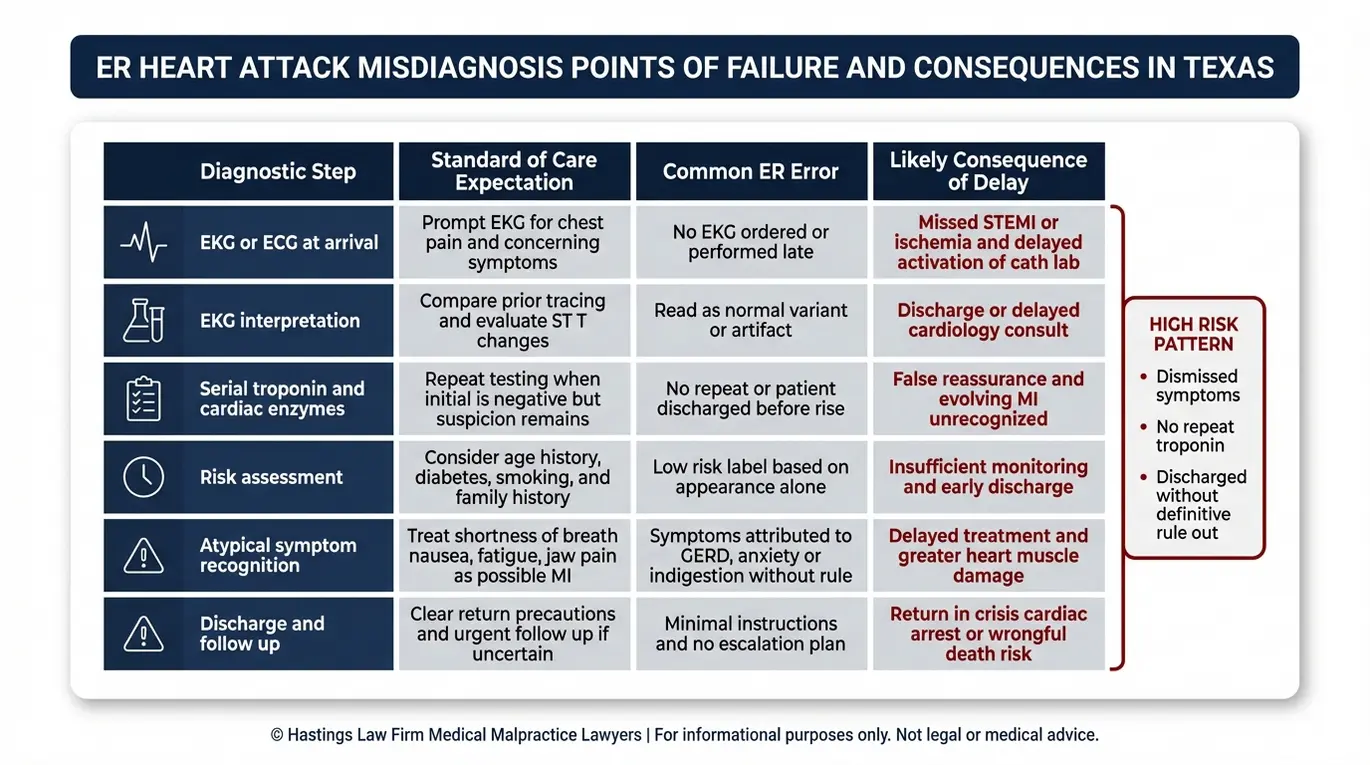
Misdiagnosis frequently occurs when medical staff fail to recognize atypical symptoms, misinterpret EKG results, or discharge a patient without waiting for the results of serial cardiac enzyme tests. In the context of emergency medicine, diagnostic errors often stem from a failure to follow standardized protocols.
Troponin, a cardiac biomarker released into the blood when heart muscle is damaged, is a critical indicator of injury. A single troponin test may return normal early in a cardiac event because levels take time to rise. That is why the standard of care typically calls for serial troponin testing, where blood is drawn at intervals to detect changes. Discharging a patient before completing that series is one of the most common and preventable errors we see, as it leaves the patient vulnerable to a major cardiac event after leaving the hospital.
Research published through PubMed Central on reducing door-to-ECG time in the emergency department underscores the importance of obtaining an EKG promptly, often within 10 minutes of a patient’s arrival with chest pain. Delays in that initial reading can set the stage for a missed diagnosis.
A Texas heart attack misdiagnosis lawyer will examine the medical records to identify exactly where the breakdown occurred. Below is a summary of common diagnostic errors:
| Diagnostic Tool | Common Error | Consequence |
|---|---|---|
| EKG/ECG | Misread as normal variant or not ordered within 10 minutes | Delayed identification of ST changes or arrhythmia |
| Troponin (Cardiac Enzymes) | Single test ordered; patient discharged before serial results | Heart attack missed during early-stage enzyme rise |
| Clinical Assessment | Symptoms attributed to GERD or anxiety without cardiac workup | Patient sent home during an active cardiac event |
The Hastings Law Firm Difference
Results matter, but what truly sets us apart is how we achieve them. Every verdict, every settlement, and every Texas courtroom victory comes from one guiding promise: To treat each client’s fight for justice as if it were our own.
This balance of skill, experience, and empathy reflects our core philosophy that justice should not only compensate the injured, but also make health care safer nationwide.

Why Do Doctors Fail to Diagnose Heart Attacks?
Doctors often fail to diagnose heart attacks due to cognitive biases, such as “anchoring” on a less serious diagnosis like heartburn, or gender bias where women’s cardiac symptoms are dismissed as anxiety. These are not just clinical oversights; they reflect patterns that have been well documented in medical literature.
Atypical heart attack symptoms, presentations that differ from the classic “crushing chest pain” most people associate with a cardiac event, are frequently overlooked. An anginal equivalent is a symptom that signals a heart problem without stereotypical chest pressure. This can involve jaw pain, upper back discomfort, nausea, extreme fatigue, or shortness of breath. These symptoms can be easily mistaken for other conditions.
Classic Heart Attack Symptoms:
- Crushing or squeezing chest pain
- Pain radiating to the left arm or shoulder
- Sudden onset of heavy sweating
Atypical Heart Attack Symptoms (more common in women and elderly patients):
- Jaw, neck, or upper back pain
- Nausea, vomiting, or indigestion
- Unexplained fatigue or weakness
- Shortness of breath without chest pain
- Dizziness or lightheadedness
Women are disproportionately affected by misdiagnosis. This represents a significant failure in women’s health protocols, as symptoms in female patients are more often dismissed. A study published through PubMed on initial ECG acquisition within 10 minutes of emergency department arrival found significant gender differences in the timeliness of cardiac testing. When a woman presents with nausea and fatigue instead of chest pain, some physicians may default to a gastrointestinal or psychological explanation, a pattern that can have fatal consequences.
Systemic pressures in the ER, including high patient volume and pressure to clear beds, can also contribute to premature discharge before a cardiac cause has been properly ruled out.
Cognitive Errors and Differential Diagnosis
Anchoring bias, a cognitive error where a physician settles on an initial diagnosis early in the evaluation and then interprets all subsequent information through that lens, can lead to missed red flags. If a doctor decides a patient has acid reflux, they may unconsciously minimize or overlook test results suggesting a cardiac event.
The standard of care requires physicians to use a differential diagnosis, a systematic process of considering and ruling out possible conditions based on symptoms, history, and test results. In cases involving chest pain or related complaints, the most dangerous possibility, a heart attack, should be ruled out before a less serious condition is diagnosed. A Texas heart attack misdiagnosis lawyer evaluates whether that process was followed and whether the physician’s reasoning was consistent with what the clinical data actually showed.
Proving Liability and the Willful and Wanton Standard
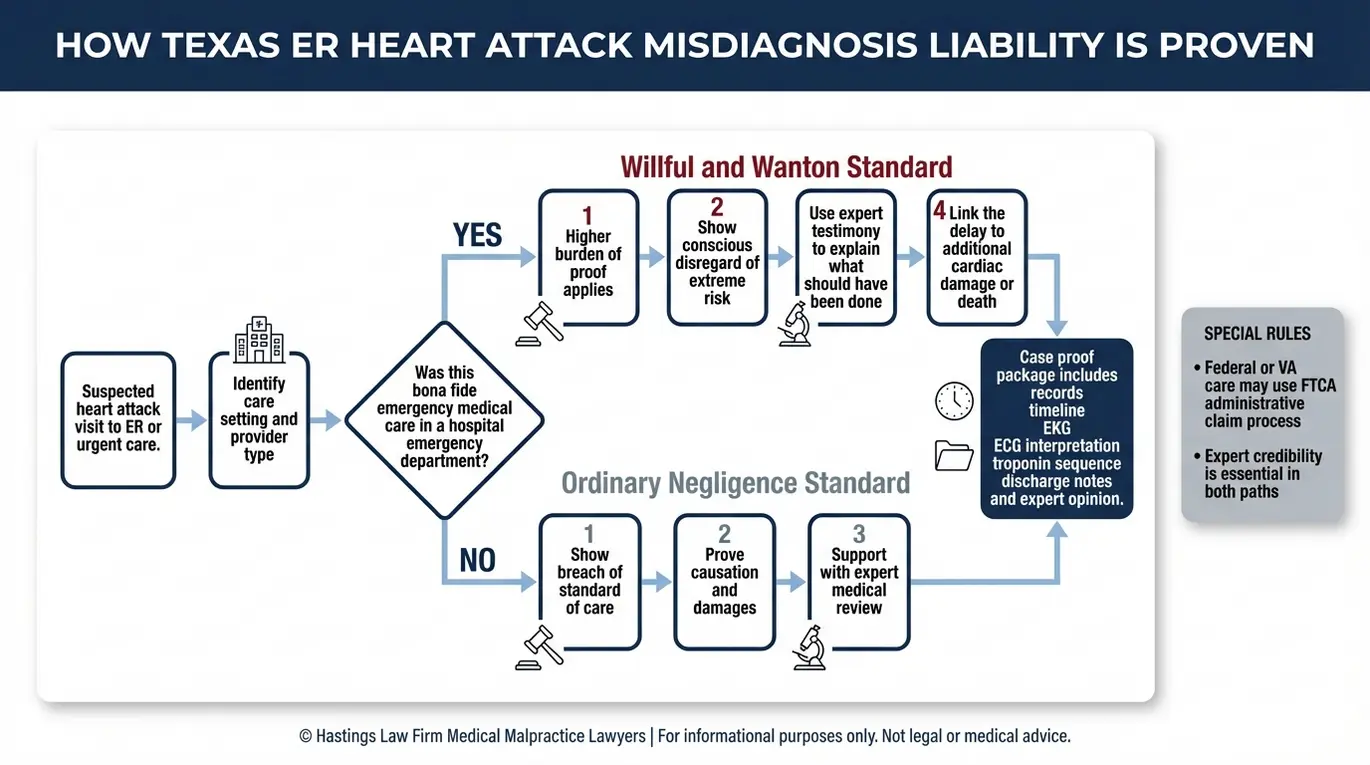
In Texas, proving liability for emergency medical care often requires meeting a higher burden of proof known as “willful and wanton negligence,” meaning the claimant must show the medical staff consciously disregarded an extreme risk to the patient’s life. Liability in these cases refers to the legal responsibility a healthcare provider has for the harm caused by their errors.
Under Texas Civil Practice and Remedies Code § 74.153, emergency physicians and hospital staff providing bona fide emergency treatment are held to this elevated standard rather than ordinary negligence. The distinction matters. Ordinary negligence requires proving that a doctor failed to meet the accepted standard of care. Willful and wanton negligence requires showing that the provider was aware of a serious risk and chose not to act on it, or acted with conscious indifference to the patient’s safety.
Meeting this standard is difficult, but not impossible. It requires detailed medical evidence and credible expert witness testimony from physicians who can explain what a competent provider would have recognized and done under the same circumstances. This high threshold is intended to protect emergency responders, but it should not shield providers who ignore clear signs of a heart attack.
Our team, which includes former defense attorneys and in-house medical professionals, works to build that evidentiary foundation from the start. This insider perspective helps us anticipate defense strategies and identify inconsistencies in medical records. Establishing conscious indifference demands a rigorous investigation into the provider’s decision-making process.
For cases involving military or VA hospitals, a different framework applies. The Federal Tort Claims Act (FTCA) requires filing an administrative claim (Standard Form 95) before a lawsuit can proceed, and the rules around liability, deadlines, and damages differ from state court claims. A Texas heart attack misdiagnosis lawyer familiar with both systems can help determine which path applies to your situation.
Compensation and Damages for Cardiac Injury
Patients harmed by a heart attack misdiagnosis may recover damages for additional heart muscle damage caused by the delay, future medical care costs for heart failure management, lost earning capacity, and physical pain and suffering. A Texas heart attack misdiagnosis lawyer can help quantify these comprehensive losses. The specific value of a claim depends on how the diagnostic failure affected the patient’s health and quality of life.
According to a long-term study published through PubMed Central on mortality in patients with acute coronary syndrome, delayed treatment significantly increases the risk of ongoing cardiac complications and death. That medical reality is directly relevant to the damages calculation in these cases.
Recoverable damages generally fall into two categories:
Economic Damages:
- Past and future medical bills, including cardiac rehabilitation, medications, and surgical procedures
- Lost wages and loss of future earning capacity
- Cost of ongoing heart failure management and monitoring
Non-Economic Damages:
- Physical pain and suffering
- Physical impairment and reduced quality of life
- Loss of consortium (the impact on your closest relationships)
- Mental anguish related to living with preventable cardiac damage
- Wrongful death (if the error resulted in the loss of a loved one)
One of the central challenges in these cases is proving causation, specifically that the delay in diagnosis caused identifiable harm beyond what the heart attack itself would have caused. Our medical and legal team works with qualified experts to separate the injury attributable to the disease from the injury attributable to the missed diagnosis.
Texas Statute of Limitations for Heart Attack Malpractice Cases
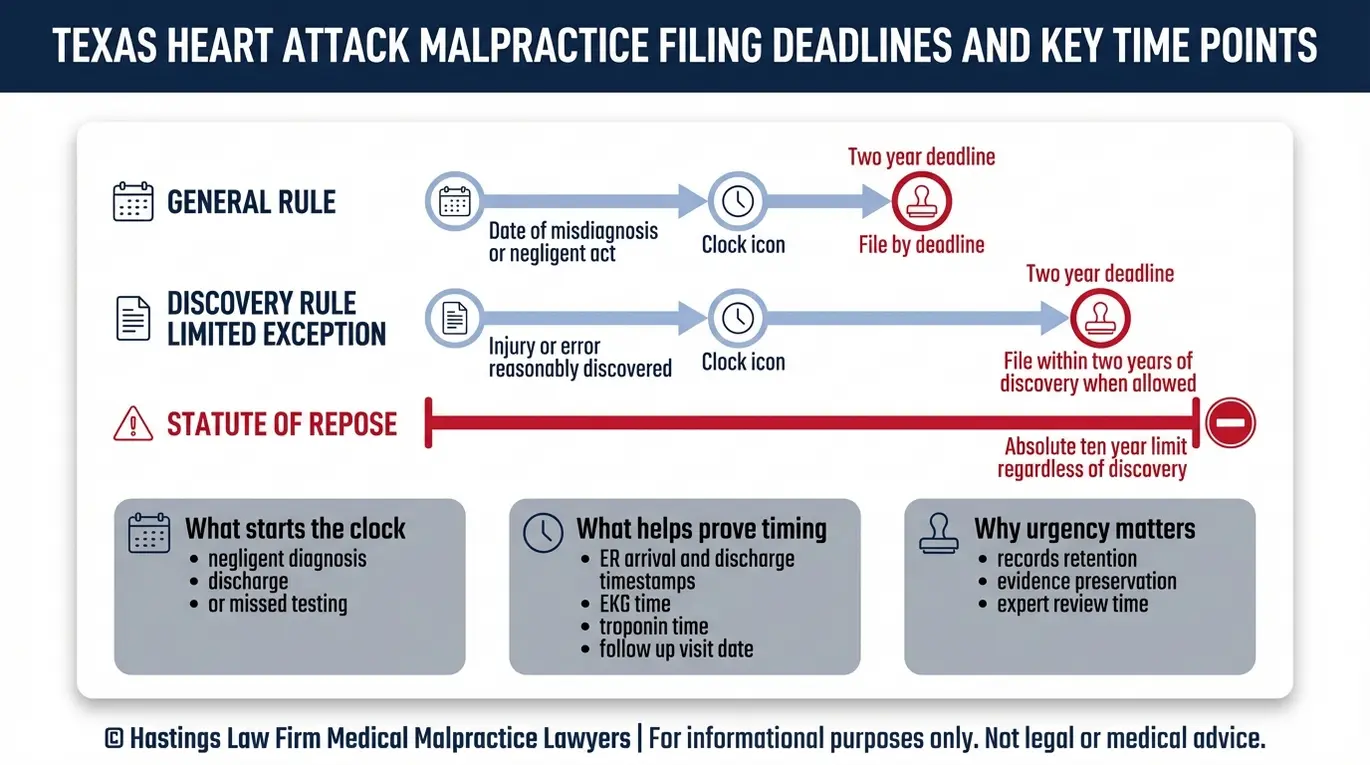
Texas law generally imposes a two-year statute of limitations for medical malpractice claims, starting from the date of the negligent act or omission, or the date the relevant course of treatment was completed. The statute of limitations acts as a legal deadline for filing your claim. Missing this deadline almost always means losing the right to file a lawsuit.
Under Texas Civil Practice and Remedies Code Chapter 74, the key deadlines include:
The General Rule: You have two years from the date the negligence occurred to file a lawsuit.
The Discovery Rule: In limited situations, if the misdiagnosis could not have been reasonably discovered at the time it happened, the clock may start from the date you learned or should have learned about the error. This concept, often related to tolling, allows for an extension of the deadline, though Texas courts apply this exception narrowly.
The Statute of Repose: Regardless of when the error was discovered, Texas imposes an absolute 10-year outer limit. After that deadline, claims are barred entirely. Using the Statute of Repose as a safeguard, the law ensures that legal disputes are eventually finalized.
Because these deadlines are strict and the Chapter 74 expert report must be served within 120 days of the defendant’s original answer, early consultation with a Texas heart attack misdiagnosis lawyer is important to protect your legal rights.
Contact the Texas Misdiagnosis Attorneys at Hastings Law Firm Today for Help
If a doctor’s failure to diagnose a heart attack has left you or a loved one with permanent heart damage, or if you have lost a family member because of a missed diagnosis, you deserve answers. Hastings Law Firm is dedicated to uncovering the truth and holding negligent providers accountable.
Our team of attorneys, nurse consultants, and medical staff will review your records, identify where the standard of care was breached, and build a case designed for trial. We operate on a contingency fee basis, which means you pay no attorney fees or costs unless we recover compensation on your behalf.
Contact a Texas heart attack misdiagnosis lawyer at Hastings Law Firm today for a free, confidential case evaluation. Call us or fill out our online form to get started.
Frequently Asked Questions About Heart Attack Misdiagnosis in Texas


This content was researched and written by the Hastings Law Firm editorial team, which includes attorneys, medical professionals, and experienced researchers. Our writing is informed by internal knowledge and practical experience, and we cross-check critical details against authoritative sources cited throughout. Every piece undergoes human-led fact-checking and legal review. Because legal and medical information can change, if you spot an error, please contact us. Learn more about our content standards and review process on our editorial policy page.

Brady D. Williams is a nationally recognized medical malpractice attorney who has spent his career handling high-stakes litigation for injured patients and families across the country. Licensed in both Texas and California, Brady draws on experience from hundreds of resolved medical cases to break down complex legal and medical topics for the people who need that information most. His writing reflects the same attention to detail and commitment to clarity that he brings to every case he handles.
