


Texas Gastroenterologist Malpractice Lawyer
Gastroenterologist errors can leave patients facing serious injuries, unexpected procedures, and long recoveries, especially when problems during colonoscopy, endoscopy, or ERCP are not recognized and treated promptly. In Texas, these cases often focus on whether the doctor met accepted standards for technique, informed consent, and post procedure monitoring, and whether a missed finding or procedural injury caused lasting harm. Clear medical records and careful review of what occurred can shape what options remain. If you or a loved one were harmed or worse due to gastroenterologist negligence in Texas, contact Hastings Law Firm for a free, confidential case review.
Last Updated: July 27, 2026
Trusted Legal Representation for GI Doctor Negligence in Texas
If a gastroenterologist’s error leads to a serious injury, the physical and emotional consequences can be overwhelming. You may be dealing with unexpected surgeries, prolonged recovery, or a diagnosis that should have been caught sooner. These situations raise difficult questions, and getting clear answers can feel impossible while you are still healing.
A Texas gastroenterologist malpractice lawyer can help you understand what happened and whether the care you received fell below accepted medical standards. At Hastings Law Firm, founded by board-certified trial attorney Tommy Hastings, our team focuses exclusively on medical malpractice. Our staff includes attorneys, in-house nurses, and former defense counsel who provide a strategic advantage in identifying medical errors.
If you believe a gastroenterology error caused harm to you or someone you love, we welcome the chance to review what happened. We offer a free, confidential evaluation to explain your options and help you determine the next steps.

Duty of Care Standards for Gastroenterologists in Texas
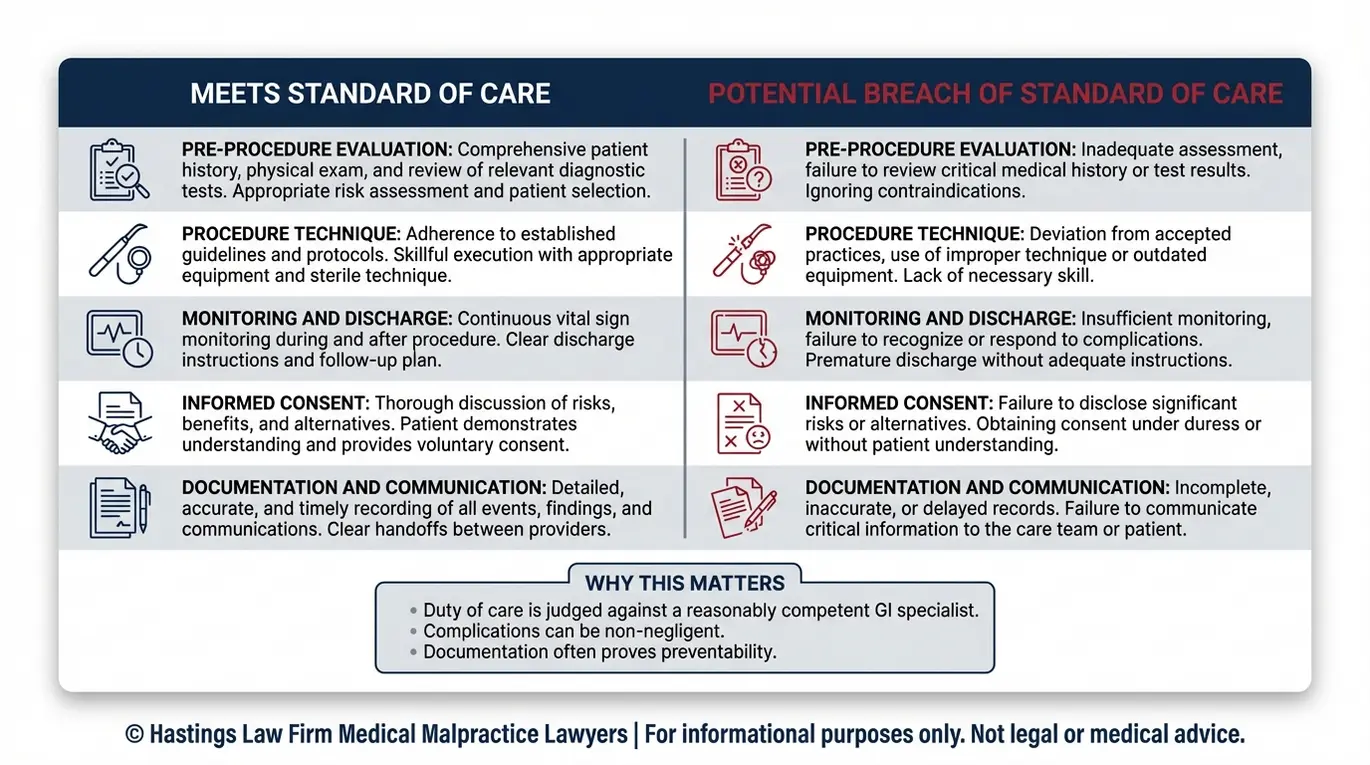
A gastroenterologist in Texas owes a duty of care to perform diagnostic and therapeutic procedures with the same level of skill and prudence that a reasonably competent GI specialist would exercise under similar circumstances. This legal duty applies to every aspect of the doctor-patient relationship, from the initial consultation through post-procedure monitoring.
Gastroenterologists are doctors who specialize in the digestive system, including the esophagus, stomach, intestines, liver, and pancreas. Much of their work involves endoscopic procedures, where a flexible scope is used to examine or treat internal organs. Because these procedures are invasive, the standard of care demands careful technique, proper patient selection, and thorough pre-procedure planning.
For a colonoscopy, the standard of care requires more than simply completing the procedure. Measurable quality benchmarks matter, such as the adenoma detection rate (ADR). This metric reflects how often a doctor identifies adenomatous polyps, which are small growths that can develop into colorectal cancer. Research published through the National Library of Medicine has identified quality indicators like ADR as important markers of a gastroenterologist’s procedural competence. A consistently low detection rate may suggest a doctor is not performing thorough examinations.
The duty of care also extends to informed consent. This means your doctor explained the specific risks, such as perforation or infection, so you could make a meaningful decision about treatment. Failing to disclose known risks or failing to monitor a patient after a procedure can represent a breach of this duty.
When we evaluate cases, our medical team reviews procedure records, technique documentation, and post-operative care to determine if the physician met these standards. Our staff includes nurse practitioners and board-certified patient advocates who help reconstruct the timeline of care. We work alongside qualified expert witnesses to compare what was done against what a competent GI specialist should have done. Our attorneys are dedicated to uncovering the truth behind these procedural failures.
Common Errors and Surgical Negligence in GI Procedures
The most frequent causes of malpractice claims against gastroenterologists include bowel perforations during colonoscopies, failure to diagnose colorectal cancer, and negligent performance of ERCP procedures leading to pancreatitis or sepsis. These common causes of malpractice often involve a departure from accepted medical protocols.
Colonoscopy and Endoscopy Errors
A colonoscopy is a procedure in which a flexible scope is inserted into the colon to screen for polyps, cancer, or other abnormalities. One of the most serious complications is a bowel perforation, which is a puncture or tear in the wall of the colon. While perforation is a risk, it is not always unavoidable. When a doctor uses excessive force or rushes through the examination, a perforation may cross the line from an inherent risk into negligence. A preventable injury caused by substandard care is gastroenterologist negligence.
Diagnostic Failures
Missed or delayed diagnosis of colorectal cancer is a common reason for suing a GI doctor. This misdiagnosis, or the failure to identify a condition correctly, can happen when a doctor fails to identify visible polyps during a screening. It also occurs when a physician does not recommend appropriate follow-up for concerning findings. Undetected cancer causes lost treatment time and can lead to significantly worse outcomes for the patient.
ERCP Complications
Endoscopic retrograde cholangiopancreatography (ERCP) is a specialized procedure used to diagnose and treat problems in the bile and pancreatic ducts. It carries a higher risk profile than a standard endoscopy, and errors during ERCP can lead to gastrointestinal bleeding, infection, or acute pancreatitis. When performed negligently, ERCP injuries can escalate into peritonitis or sepsis. These conditions are medical emergencies that require immediate intervention.
Understanding the Severity of Bile Duct Injuries
Not all bile duct injuries are equal. A minor nick during an ERCP may heal with conservative treatment. A major bile duct injury, damage to the tubes carrying bile from the liver, however, can require reconstructive surgery and extended hospitalization. These injuries sometimes result in chronic complications and repeated procedures.
If the injury was caused by incorrect treatment, inadequate training, or failure to recognize the damage during the procedure, it may support a claim. We evaluate whether the physician followed standard surgical protocols to prevent such trauma.
Post-Procedure Negligence
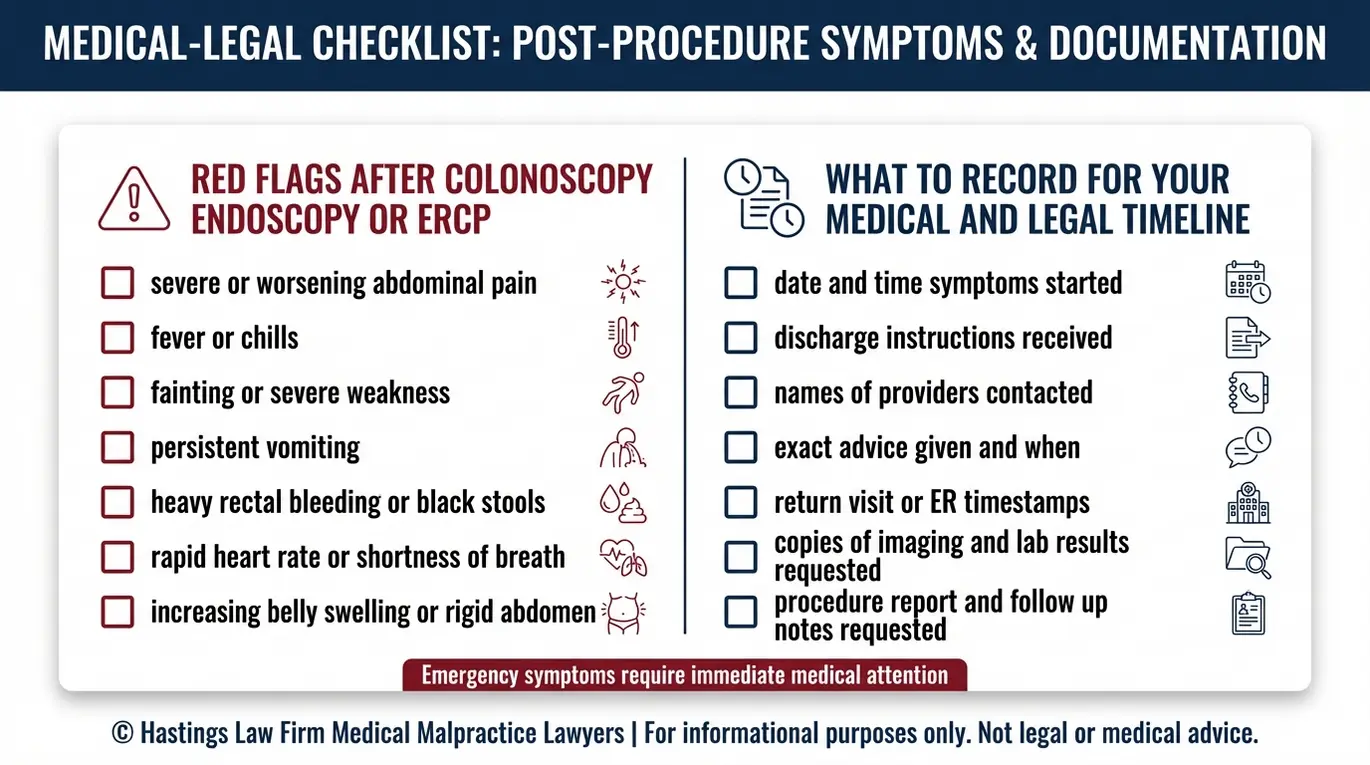
Errors also occur after the patient leaves the procedure room. A failure to monitor patients for warning signs of internal bleeding, infection, or perforation can allow a treatable complication to become a life-threatening emergency. We look closely at discharge instructions and follow-up protocols. Our investigation also reviews how quickly the care team responded to reported symptoms.
| Procedure | Potential Negligence |
|---|---|
| Colonoscopy | Perforation from excessive force; missed polyps; inadequate bowel prep assessment |
| Endoscopy | Tissue trauma; failure to biopsy suspicious lesions; missed esophageal abnormalities |
| ERCP | Bile duct injury; post-procedure pancreatitis from improper technique; failure to recognize and treat perforation |
| Post-Procedure Care | Delayed response to signs of bleeding, infection, or sepsis after discharge |
If you suspect a GI procedure caused preventable harm, consulting a malpractice lawyer for GI errors is a helpful step toward understanding what went wrong.
The Hastings Law Firm Difference
Results matter, but what truly sets us apart is how we achieve them. Every verdict, every settlement, and every Texas courtroom victory comes from one guiding promise: To treat each client’s fight for justice as if it were our own.
This balance of skill, experience, and empathy reflects our core philosophy that justice should not only compensate the injured, but also make health care safer nationwide.

Proving Liability and Negligence in Gastroenterology Cases
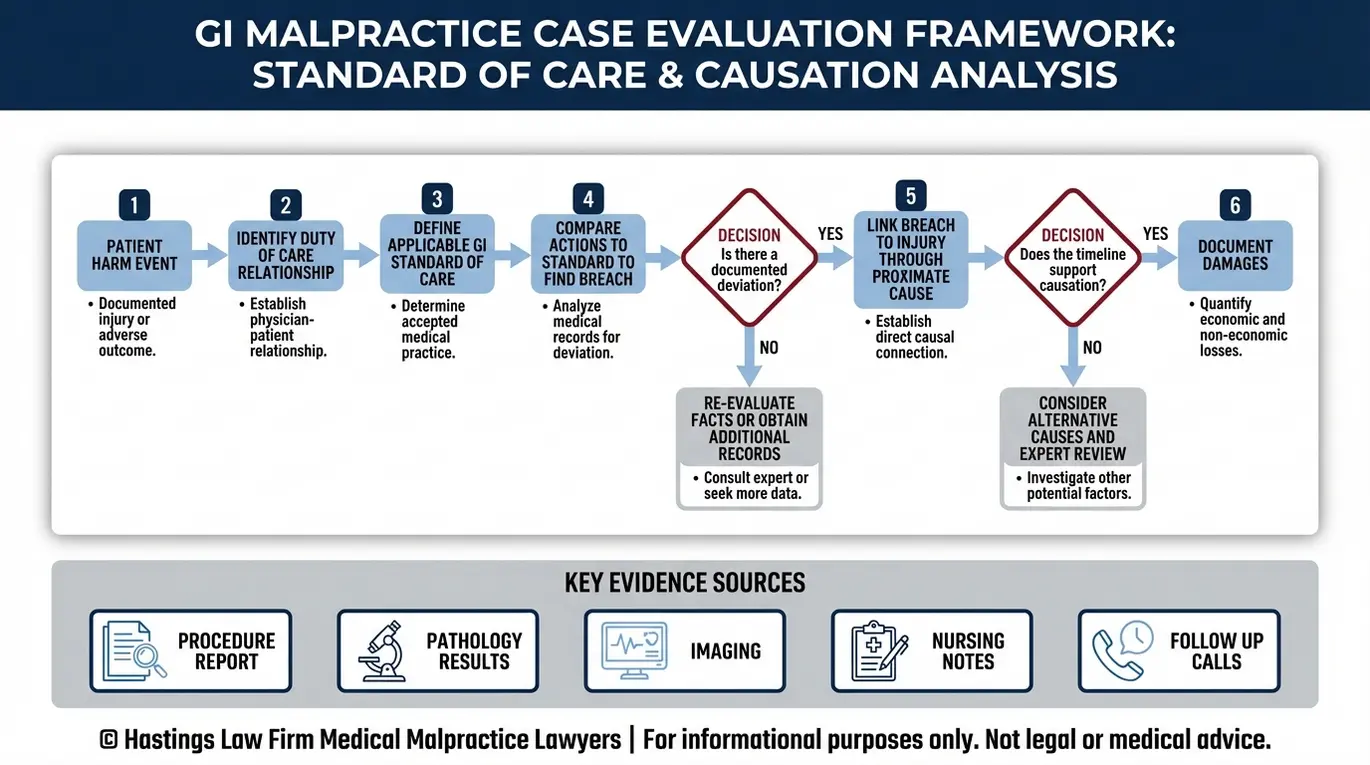
To establish liability, a plaintiff must prove that the GI doctor breached the standard of care, that this breach directly caused the injury, and that the patient suffered specific damages as a result. In Texas medical malpractice cases, establishing liability requires proving four specific elements. A qualified lawyer for GI malpractice can help navigate these challenges.
Medical negligence claims in Texas are governed by Texas Civil Practice and Remedies Code Chapter 74, which sets specific procedural requirements. This includes the obligation to file a qualified expert report early in the case. These requirements make it necessary to work with a legal team that understands both the medicine and the litigation process.
Every gastroenterology malpractice case must establish these four elements:
- Duty: The gastroenterologist had a professional obligation to provide care consistent with accepted medical standards.
- Breach: The doctor failed to meet that standard through an act or omission, such as perforating the colon or missing a visible polyp.
- Causation: The breach directly caused the injury. This requires showing the harm would not have occurred without the doctor’s error, which is the proximate cause.
- Damages: The patient suffered real, measurable harm, whether physical, financial, or emotional.
Causation is often the most contested element in these cases. Defense attorneys may argue that a patient’s underlying condition, such as Crohn’s disease or ulcerative colitis, caused the injury. Overcoming this argument requires strong expert testimony from qualified gastroenterologists. These experts explain, based on the medical records, exactly how the breach led to the specific injury.
Our firm’s in-house medical staff reviews procedure reports, pathology findings, imaging studies, and nursing notes to reconstruct a detailed timeline. This medical reconstruction is then paired with testimony from specialists in our national expert network. We prepare every case from the start as though it will go before a jury. This level of preparation is what drives fair outcomes, whether a case resolves through negotiation or at trial.
Peritonitis is a dangerous infection of the abdominal lining, and sepsis is a systemic infection that can lead to organ failure. Proving these conditions resulted from a procedural error rather than a natural disease progression is a significant medical-legal challenge. Our team is built to handle these complex investigations.
Recoverable Damages for Victims of GI Malpractice
Patients harmed by gastroenterologist negligence may recover compensation for economic losses like medical bills and lost wages, as well as non-economic damages such as pain, suffering, and physical impairment. Recoverable damages are the legal remedy for losses a patient suffers due to medical errors. The specific value of a claim depends on the severity of the injury and its long-term effects.
Economic damages cover the financial costs directly tied to the injury. These often include corrective surgeries, repair of a perforated colon, or extended hospital stays. They also cover ongoing care needs, loss of earning capacity, and income lost during recovery. In cases involving post-ERCP pancreatitis, patients may face repeated hospitalizations and chronic digestive problems that generate substantial future medical expenses.
Non-economic damages address the personal toll of the injury. This includes physical pain, mental anguish, disfigurement, and loss of enjoyment of life. These damages recognize that the harm extends well beyond medical bills.
When a GI malpractice lawyer evaluates wrongful death claims, families may seek compensation for funeral expenses and loss of financial support. They may also seek recovery for loss of companionship and the emotional devastation of losing a loved one. This often applies to cases involving untreated sepsis or a cancer diagnosis that came too late.
Contact the Texas Doctor Malpractice Attorneys at Hastings Law Firm Today for Help
Errors during gastroenterology procedures can change the course of a person’s life. Whether the injury involves a perforated colon, a missed cancer diagnosis, or complications from an ERCP, the consequences are real, and you have the right to seek answers.
At Hastings Law Firm, we focus exclusively on medical malpractice. Our legal team includes former defense attorneys who understand how hospitals and insurers respond to these claims. We also use in-house medical professionals who know how to identify where the standard of care broke down. We prepare every case as if it is going to trial to position our clients for the strongest possible outcome.
We work on a contingency fee basis, which means you pay no attorney fees or costs unless we secure a recovery for you. If you or a loved one was harmed by a gastroenterologist’s negligence, contact us for a free, confidential case evaluation. Let us help you find the answers you deserve.
Frequently Asked Questions About Gastroenterologist Malpractice in Texas


This content was researched and written by the Hastings Law Firm editorial team, which includes attorneys, medical professionals, and experienced researchers. Our writing is informed by internal knowledge and practical experience, and we cross-check critical details against authoritative sources cited throughout. Every piece undergoes human-led fact-checking and legal review. Because legal and medical information can change, if you spot an error, please contact us. Learn more about our content standards and review process on our editorial policy page.

Gabe Sassin has focused exclusively on medical malpractice law since 2007. After spending more than a decade as a malpractice defense attorney, he knows exactly how the other side works. He has seen firsthand how healthcare providers, insurers, corporate defendants, and their legal teams think, prepare, and build their defense against claims. That knowledge works for the people who need it most today, injured patients and their families. His unique experience shapes everything he writes, giving readers a look at how these cases actually work from someone who has handled them from both sides.
