


Texas Fetal Acidosis Lawyer
Written by: Hastings Law Firm | Reviewed by: Tommy Hastings | Updated: July 27, 2026
Fetal acidosis during labor can signal that a baby did not receive enough oxygen, and severe metabolic acidosis can be linked to permanent brain damage and lifelong disability. Understanding the difference between respiratory and metabolic acidosis, the role of umbilical cord blood gas testing, and how fetal distress is recognized can clarify whether preventable errors occurred. The discussion also addresses how delayed treatment after birth can worsen outcomes and increase long term care needs. If you or a loved one were harmed or worse due to fetal acidosis in Texas, contact Hastings Law Firm for a free, confidential case review.

Top Rated Texas Birth Injury Attorneys for Fetal Acidosis Claims
What You Should Know About Metabolic Acidosis Negligence Claims in Texas:
- Lifelong harm can follow severe metabolic acidosis, especially when prolonged oxygen deprivation leads to permanent brain damage.
- Clarity about what happened at birth can depend on whether metabolic acidosis is present rather than respiratory acidosis.
- Options can narrow when key umbilical cord blood gas samples were not collected or preserved after a complicated delivery.
- Preventable injury can be tied to missed fetal distress when fetal heart rate monitoring patterns are not correctly interpreted.
- Severe outcomes can worsen when emergency delivery is delayed during ongoing signs of fetal intolerance to labor.
- Additional negligence concerns can arise when therapeutic hypothermia is not recognized or is started too late after a suspected hypoxic event.
- Long term financial burden can be substantial when hypoxic ischemic encephalopathy leads to cerebral palsy and ongoing therapy needs.
- Recovery limits can apply in Texas because non economic damages in medical malpractice cases are capped.
- Disputes about whether an injury was sudden or unpreventable can turn on objective lab values such as umbilical artery pH and base deficit.
- Documentation gaps can become central when fetal monitoring strips, nursing logs, and communication timelines do not align with the clinical course.

A Healthcare Focused Law Firm
When your child’s first moments of life are overshadowed by a serious medical diagnosis, the confusion and fear can feel paralyzing. If your baby was diagnosed with fetal acidosis, a dangerous condition where acid levels in the baby’s blood rise to harmful levels (also called fetal acidemia), you may be wondering whether something went wrong during labor and delivery that could have been prevented.
You are not alone in asking that question, and you have every right to seek answers. As Texas fetal acidosis lawyers, we focus exclusively on medical malpractice and have the medical and legal resources to investigate what happened during your child’s birth. Contact us for a free, confidential case evaluation so we can review the facts and explain your options.
Understanding Fetal Acidosis and Birth Injury Liability
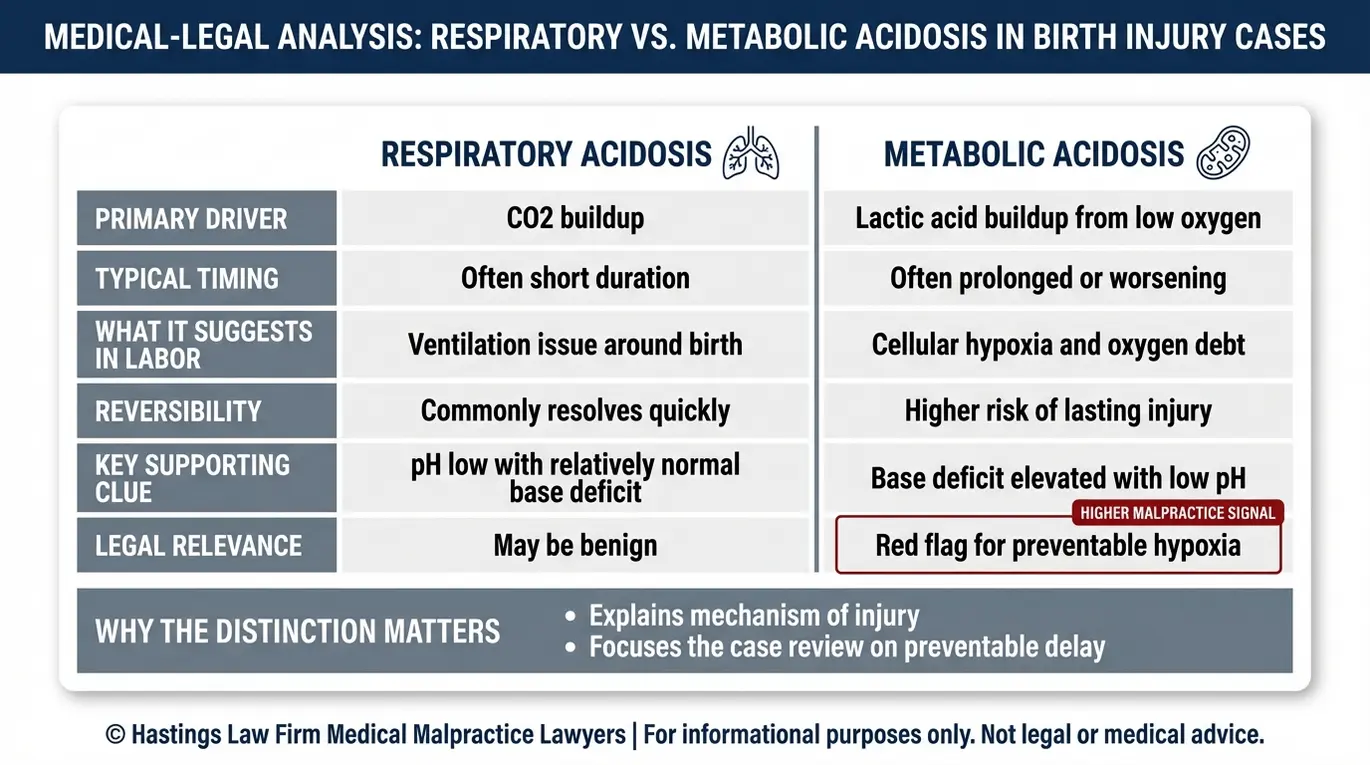
Fetal acidosis is a condition where a baby’s blood becomes dangerously acidic due to oxygen deprivation (hypoxia) during labor. Fetal acidosis occurs when the baby’s blood pH drops to dangerous levels during labor. While respiratory acidosis is common and often reversible, metabolic acidosis is severe and often indicates prolonged negligence that can lead to permanent brain damage. Not all acidosis is the same, and the distinction between the two types is one of the most important factors in a birth injury case. A fetal acidosis attorney can help determine whether the specific type of acidosis your baby experienced resulted from a failure to intervene.
Respiratory acidosis happens when carbon dioxide builds up in the baby’s blood, usually during the stress of delivery. This type often resolves quickly once the baby begins breathing on its own. It is common and, in many cases, does not cause lasting harm.
Metabolic acidosis is far more serious. It develops when oxygen deprivation forces the baby’s cells to switch from normal aerobic metabolism to anaerobic metabolism, a less efficient process that produces lactic acid as a byproduct. As lactic acid accumulates and the body’s bicarbonate buffering system is overwhelmed, the baby’s blood pH drops to dangerous levels.
This process creates a toxic cellular environment that damages important organs, particularly the brain. Unlike respiratory issues that clear with breath, this chemical imbalance persists and destroys tissue. This form of acidosis, sometimes referred to as fetal metabolic acidemia or birth asphyxia, is the primary indicator we look for in malpractice claims because it often reflects a prolonged period where the baby was not getting enough oxygen.
| Feature | Respiratory Acidosis | Metabolic Acidosis |
|---|---|---|
| Primary Cause | Buildup of carbon dioxide (CO2) | Buildup of lactic acid from oxygen deprivation |
| Onset | Often occurs during active labor | Develops over a prolonged period of hypoxia |
| Reversibility | Typically resolves quickly with breathing | Often causes lasting cellular damage |
| Base Deficit | Normal or near-normal | Significantly elevated (e.g., -12 or worse) |
| Legal Significance | Rarely indicates negligence | Strong indicator of prolonged oxygen deprivation and potential malpractice |
The distinction between these two types is central to any birth injury case. Metabolic acidosis does not develop in an instant. It builds over time, which means there is usually a window where medical providers could have, and should have, intervened.
Diagnosing Negligence via Umbilical Cord Blood Gases
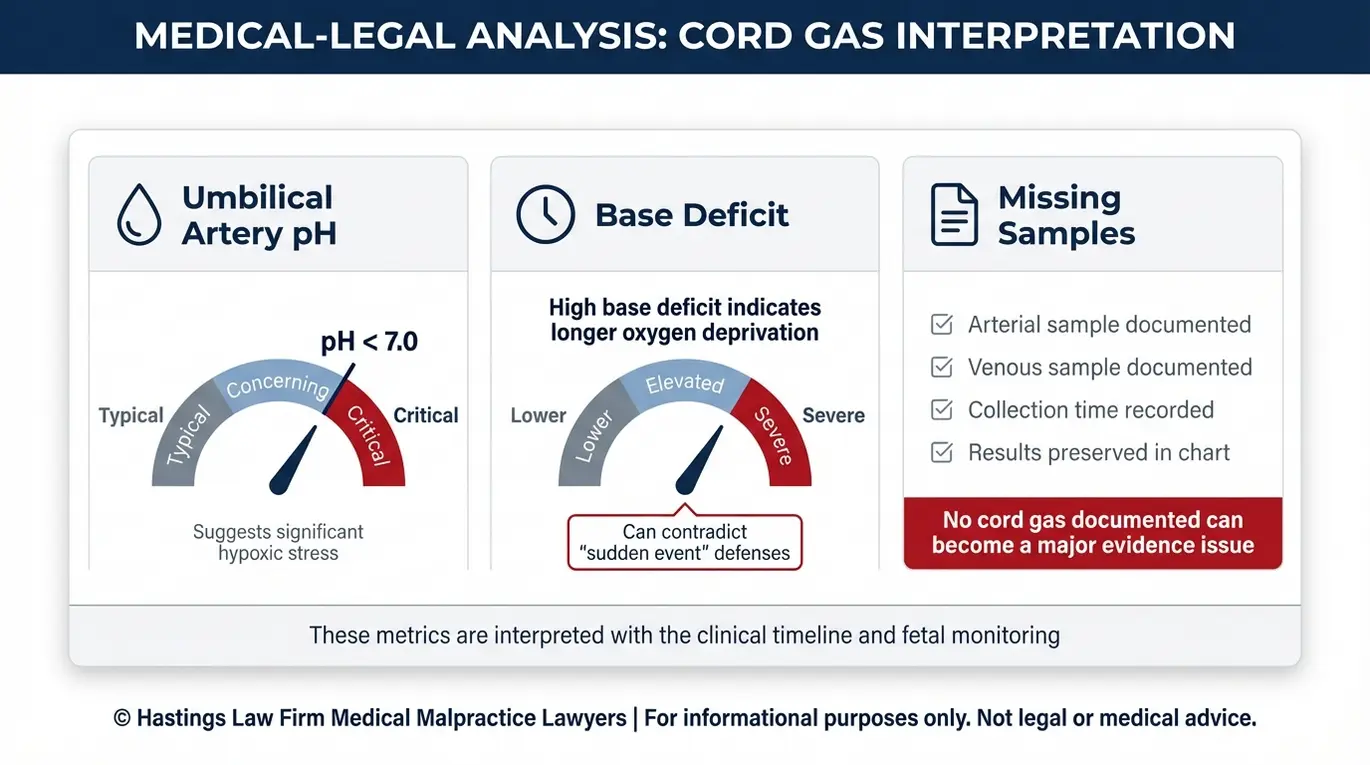
The most definitive evidence of fetal acidosis comes from an umbilical cord blood gas analysis, a lab test performed on blood drawn from the umbilical artery immediately after birth. Umbilical cord blood gas analysis is a medical test used to assess a newborn’s oxygen levels and acid-base balance. This lab test provides objective data about the baby’s condition at the moment of birth. A pH level below 7.0 or a high base deficit suggests the baby suffered a significant hypoxic event during delivery.
An acidosis malpractice lawyer will focus on specific lab values from this test to build the foundation of your case. Key metrics to understand include:
- Umbilical artery pH: A normal newborn pH is around 7.24 to 7.27. A pH below 7.0 is considered severe acidemia and is associated with a higher risk of brain injury.
- Base deficit: This measurement estimates how long the baby was deprived of adequate oxygen. A base deficit of -12 or lower indicates a prolonged hypoxic event. This number is especially powerful in litigation because it can directly contradict claims by the defense that the injury was “sudden” or “unpreventable.”
- Lactate levels: Elevated lactic acid in the cord blood confirms that the baby’s tissues were starved for oxygen long enough to shift into anaerobic metabolism.
Research published on Forensic Analysis of Umbilical and Newborn Blood Gas Values for Infants at Risk of Cerebral Palsy confirms the important role these values have in identifying birth-related brain injury. The Cord Blood Gas reference on NCBI Bookshelf provides additional clinical context for how these samples should be collected and interpreted.
One issue we investigate carefully is whether cord blood gas samples were collected at all. The standard of care generally requires these samples after a complicated delivery. When a hospital fails to obtain them, this absence of evidence can itself raise serious questions.
In some situations, the failure to collect or preserve cord blood samples may amount to spoliation of evidence, which involves the destruction or loss of material that could prove what happened to your baby. When this occurs, your attorney can argue that the missing data would have been unfavorable to the hospital, ensuring they remain accountable for the missing information.
The Hastings Law Firm Difference
Results matter, but what truly sets us apart is how we achieve them. Every verdict, every settlement, and every Texas courtroom victory comes from one guiding promise: To treat each client’s fight for justice as if it were our own.
This balance of skill, experience, and empathy reflects our core philosophy that justice should not only compensate the injured, but also make healthcare safer nationwide.

Common Causes of Acidosis Linked to Medical Errors
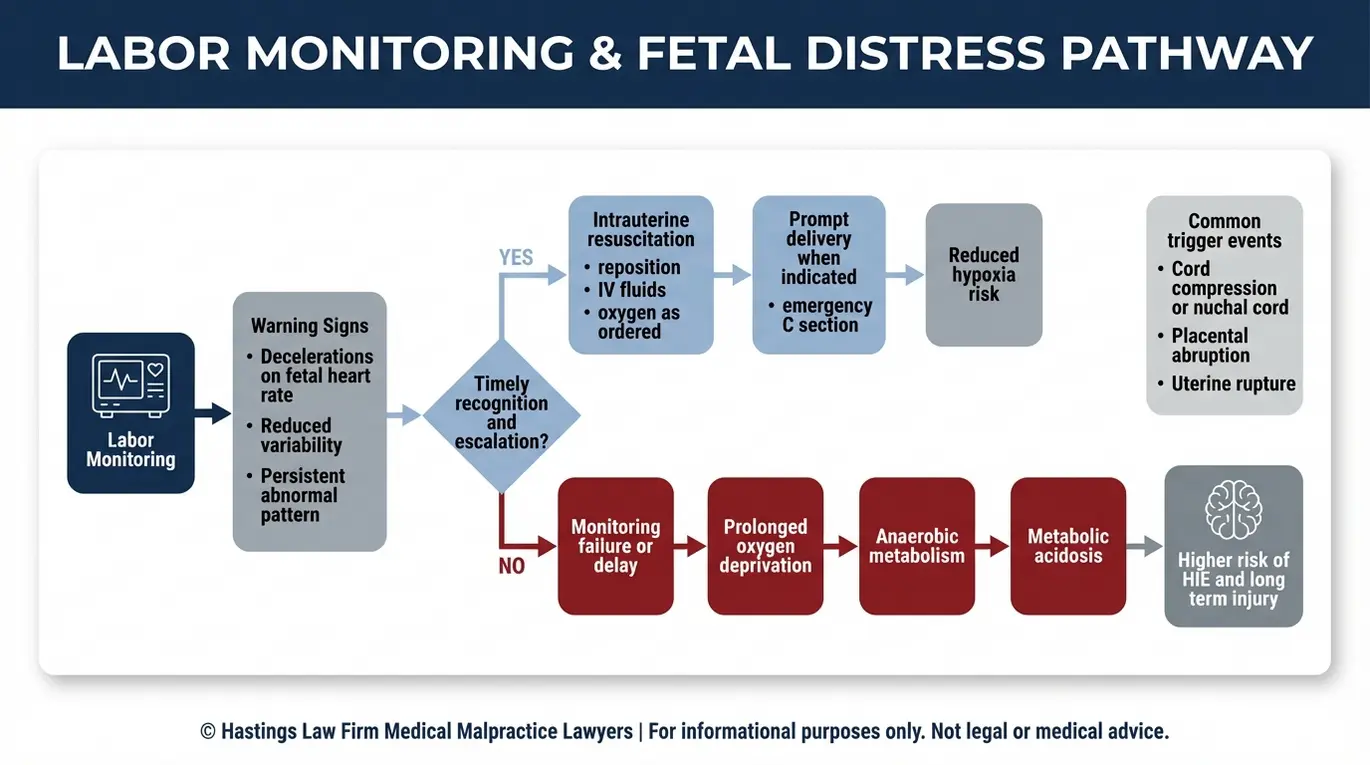
Severe fetal acidosis is frequently tied to the medical team’s failure to recognize and respond to signs of fetal distress. We investigate common delivery complications to identify whether medical errors led to the baby’s distress. Conditions like umbilical cord compression (where the cord is squeezed and blood flow to the baby is restricted, sometimes by a nuchal cord wrapped around the neck), placental abruption, or uterine rupture can rapidly cut off oxygen to the baby. When those warning signs go unaddressed, the result can be irreversible harm.
A Texas fetal acidosis lawyer investigates whether the delivery team met the standard of care at each stage of labor. Common forms of fetal acidosis negligence include:
- Failure to correctly interpret fetal heart rate monitoring: Electronic fetal monitoring (EFM), the technology used to continuously track the baby’s heart rate during labor, produces tracings that are classified into categories. According to the Review of Category I, II, and III Fetal Heart Rate Classifications from the University of Alabama, a Category III tracing is abnormal and requires immediate intervention. Category III refers to highly abnormal heart rate patterns. Ignoring persistent late decelerations or a loss of variability in the fetal heart rate can allow oxygen deprivation to continue unchecked.
- Failure to attempt intrauterine resuscitation: Before a baby’s condition deteriorates to the point of emergency, providers can attempt interventions such as maternal repositioning, IV fluid boluses, or supplemental oxygen. When these basic steps are skipped or delayed, a recoverable situation can escalate into a crisis.
- Delayed emergency C-section: When EFM tracings show a baby in distress and the medical team waits too long to move to an operative delivery, every additional minute of oxygen deprivation increases the risk of severe metabolic acidosis and permanent brain injury.
Each of these failures can represent a breach in the standard of care. We examine the medical records, fetal monitoring strips, nursing logs, and communication timelines to determine whether the delivery team acted within accepted medical guidelines, or whether preventable delays caused the injury.
Long Term Consequences and Therapeutic Hypothermia
Untreated metabolic acidosis frequently leads to hypoxic-ischemic encephalopathy (HIE), a form of brain damage caused when oxygen deprivation triggers a cascade of injury to brain cells. HIE refers to brain damage caused by a lack of oxygen or blood flow during delivery. This condition is one of the leading causes of cerebral palsy and can result in lifelong cognitive, motor, and developmental disabilities.
One of the most important interventions after a suspected hypoxic birth event is therapeutic hypothermia, sometimes called “cooling therapy.” This treatment involves lowering the newborn’s body temperature to around 33.5°C for 72 hours to slow the progression of brain cell death. According to the Neonatal Therapeutic Hypothermia reference on NCBI Bookshelf, cooling must be initiated within six hours of birth to be effective. A failure to recognize the need for this treatment; or a delay in starting it, can represent a second layer of medical negligence on top of the delivery errors.
Other indicators that often accompany severe acidosis include low Apgar scores at birth and meconium aspiration, where the baby inhales stool-stained amniotic fluid, which can cause additional respiratory complications. Apgar scores are a quick assessment of a newborn’s physical health immediately after delivery.
The financial reality of these injuries involves significant long-term costs. Children with cerebral palsy often require physical therapy, occupational therapy, speech therapy, adaptive equipment, home modifications, and around-the-clock care. A study published in the Journal of Managed Care and Specialty Pharmacy documented the high costs associated with cerebral palsy care over a child’s lifetime. A lawyer for HIE and acidosis cases works to ensure that any recovery accounts for the full scope of these future needs.
How Our Trial Ready Approach Wins Birth Injury Cases
Hastings Law Firm prepares every fetal acidosis case for trial from day one. Our firm uses a meticulous trial-ready approach for every medical malpractice claim. This is not a slogan. It is the foundation of how we build your case. When hospitals and their insurers know they are facing a team that is genuinely prepared to present evidence to a jury in a medical malpractice lawsuit, they approach settlement discussions very differently.
Our legal team includes former defense attorneys who spent years representing hospital systems. That experience gives us direct insight into the strategies the other side will use, and we plan our case to counter those arguments before they are raised. By anticipating defense tactics, we ensure that the truth of your child’s injury is not obscured by legal procedures. We also work with a national network of independent medical experts, including maternal-fetal medicine specialists, neonatologists, and neuroradiologists, who provide objective analysis and credible expert testimony. These are respected professionals whose opinions carry weight with juries and judges.
Our in-house medical staff, which includes board-certified patient advocates and former hospital nurses, reviews every page of your medical records to identify charting gaps, timeline inconsistencies, and breaches in protocol. This level of medical-legal collaboration is what separates Hastings Law Firm from general personal injury practices.
As a board-certified Texas birth injury attorney, Tommy Hastings has secured significant settlements for families in Houston and throughout Texas. Because we work on a contingency fee basis, you pay no attorney fees or costs unless we secure a recovery for your family.
Contact the Texas Birth Injury Attorneys at Hastings Law Firm Today for Help
A diagnosis of metabolic acidosis or HIE after birth is often a warning sign that something preventable went wrong during labor and delivery. You deserve to know what happened, and your child deserves a future that is protected.
At Hastings Law Firm, we offer a free, confidential case evaluation led by a patient advocate who can help you understand whether your child’s injury may have been caused by medical negligence. Our team will review the records, consult with medical experts, and give you an honest assessment of your case.
If you are looking for a Texas fetal acidosis lawyer with the medical knowledge and trial experience to handle your family’s case, call us today or complete our online form. There is no fee unless we recover compensation for you.
Frequently Asked Questions About Fetal Acidosis in Texas


This content was researched and written by the Hastings Law Firm editorial team, which includes attorneys, medical professionals, and experienced researchers. Our writing is informed by internal knowledge and practical experience, and we cross-check critical details against authoritative sources cited throughout. Every piece undergoes human-led fact-checking and legal review. Because legal and medical information can change, if you spot an error, please contact us. Learn more about our content standards and review process on our editorial policy page.

Tommy Hastings, founder of Hastings Law Firm, is a board-certified personal injury trial lawyer dedicated exclusively to healthcare injury cases. Since 2001, he has represented injured patients and families in litigation against major hospital systems, pharmaceutical companies, and negligent healthcare providers nationwide. He has handled numerous high-profile cases that have drawn national media attention and resulted in multi-million dollar recoveries. He draws on that experience in his writing, helping readers understand how these cases work and what options may be available to them.
