


Austin Failure To Diagnose Lawyer
A missed or delayed diagnosis can leave a patient facing worsening illness, more invasive treatment, lasting harm, or worse. Diagnostic errors can involve a condition that is never identified, a correct diagnosis made too late, or a wrong diagnosis that sends care in the wrong direction. These situations often raise concerns about whether a clinician or a healthcare system acted reasonably when symptoms, tests, and follow up were handled. If you or a loved one were harmed or worse due to a missed or delayed diagnosis in Austin, Texas, contact Hastings Law Firm for a free, confidential case review.

Last Updated: September 24, 2026
Trial-Ready Austin Attorneys for Missed or Delayed Diagnoses Claims
When a doctor overlooks a serious condition, the consequences can change the course of your life. You may be facing a more advanced illness, more aggressive treatment, or the loss of someone you love. The uncertainty about what happened and whether it could have been prevented only adds to the burden.
At Hastings Law Firm, we focus exclusively on medical malpractice. Our founder, Tommy Hastings, is Board Certified in Personal Injury Trial Law and has dedicated his career to representing patients in these complex cases. Our team includes in-house medical professionals and attorneys who previously defended hospitals, giving us the insight to identify exactly where the standard of care was not met. If you believe a diagnostic error harmed you or a family member, an experienced Austin failure to diagnose lawyer can review your situation and help you understand your legal options.
We offer free, confidential consultations and handle cases on a contingency fee basis, meaning you pay nothing unless we recover compensation for you.

Understanding Diagnostic Errors and Delayed Treatment
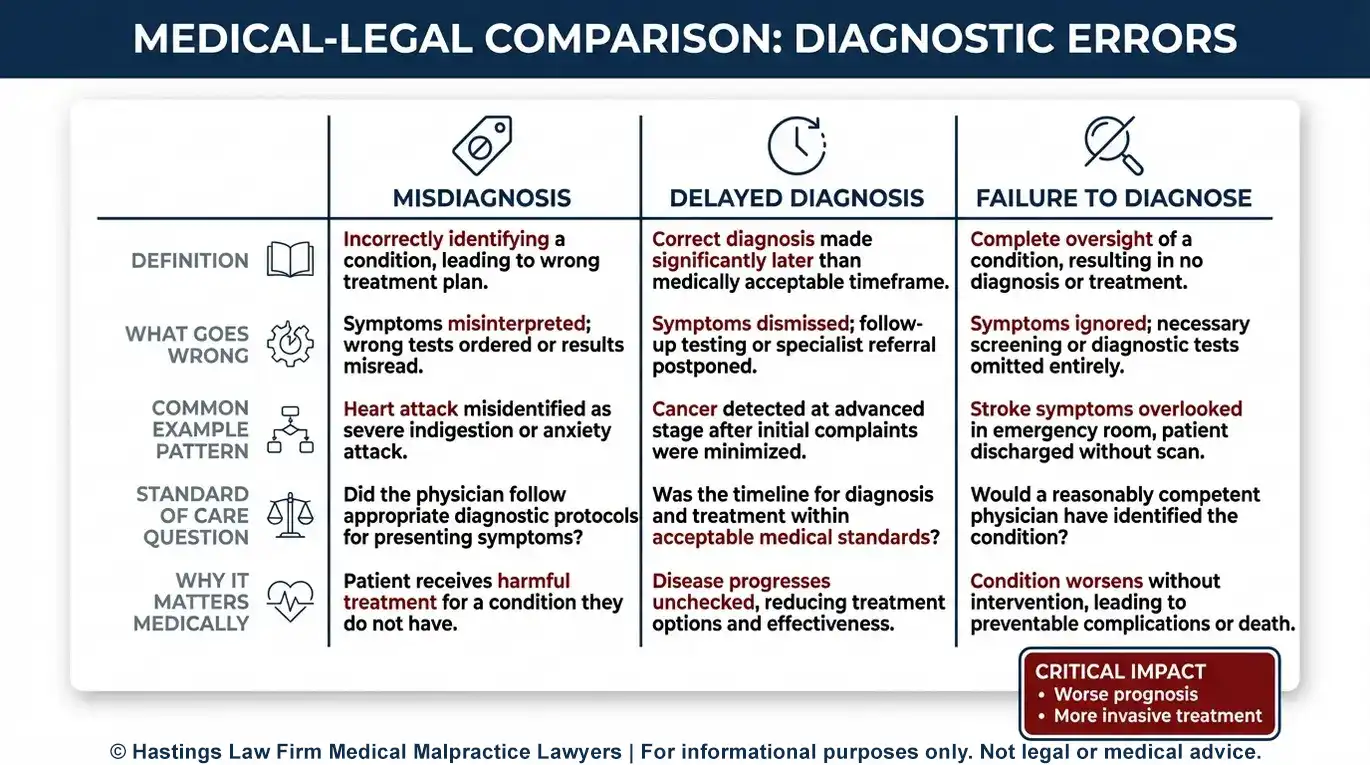
Failure to diagnose occurs when a physician neglects to identify a condition that a competent doctor would have spotted, leading to delayed treatment and worsened patient outcomes. This type of diagnostic error differs from related claims, and understanding the distinction matters when seeking a second opinion.
A misdiagnosis happens when a physician identifies the wrong condition entirely. For example, a doctor might diagnose a patient with acid reflux when they are actually experiencing early signs of a heart attack. The patient receives treatment, but for the wrong problem. Delayed diagnosis occurs when the correct condition is eventually identified, but only after a critical window for effective treatment has passed.
In these scenarios, the central legal question is whether the physician met the accepted medical standard. This standard of care asks what a reasonably competent doctor with similar training and resources would have done in the same circumstances. In Texas, as outlined in the Texas Civil Practice and Remedies Code, Chapter 74, medical negligence and liability claims require demonstrating that a healthcare provider deviated from this standard.
A failure to diagnose attorney examines whether the physician ordered appropriate tests, considered relevant symptoms, and followed up on concerning findings. When these steps are skipped, a treatable condition can progress, requiring more invasive procedures or resulting in permanent harm. This progression often forces patients to undergo aggressive therapies that could have been avoided with timely detection.
| Type | Definition | Example |
|---|---|---|
| Misdiagnosis | Identifying the wrong condition | Treating anxiety when a patient is having a stroke |
| Delayed Diagnosis | Correct diagnosis made too late | Detecting cancer at Stage IV instead of Stage II |
| Failure to Diagnose | Never identifying the condition | Dismissing recurring headaches that indicate a brain tumor |
Common Medical Conditions That are Missed by Physicians
Common conditions involving diagnostic errors include heart attacks (often mistaken for indigestion), strokes, cancers (breast, lung, colon), and infections like sepsis or meningitis. According to the National Academy of Medicine’s report on Improving Diagnosis in Health Care, most people will experience at least one diagnostic error in their lifetime, and some of these errors cause serious harm. These mistakes often stem from a failure to interpret test results correctly or to order the necessary imaging when symptoms first present.
The following conditions appear frequently in failure to diagnose cases:
- Cancer: Physicians may fail to biopsy suspicious lumps, follow up on abnormal mammograms, or order colonoscopies for patients with warning signs. A delayed diagnosis often means the difference between early-stage and late-stage cancer.
- Heart Attacks: Women and younger patients are particularly at risk for missed cardiac events. Their symptoms are sometimes dismissed as anxiety or heartburn. A false-negative test result, where a diagnostic test incorrectly indicates no disease is present, can also contribute to these errors.
- Stroke: Subtle neurological signs like slurred speech, facial drooping, or sudden confusion may be overlooked in busy emergency departments. Stroke treatment is time-sensitive, and every hour of delay can result in permanent brain damage.
- Infections: Sepsis, a life-threatening response to infection, is commonly missed in overcrowded emergency rooms. Meningitis can present with symptoms similar to the flu, leading to dangerous delays. Early detection is critical, as these infections can escalate rapidly, leading to organ failure or death if not treated with appropriate antibiotics immediately.
An Austin diagnostic error lawyer reviews imaging studies, lab results, and medical records to determine whether a physician should have recognized these warning signs sooner. In many cases, the information needed to make the correct diagnosis was already available but was overlooked or misinterpreted.
The Hastings Law Firm Difference
Results matter, but what truly sets us apart is how we achieve them. Every verdict, every settlement, and every Austin courtroom victory comes from one guiding promise: To treat each client’s fight for justice as if it were our own.
This balance of skill, experience, and empathy reflects our core philosophy that justice should not only compensate the injured, but also make health care safer nationwide.

Why Diagnostic Errors Occur in Texas Hospitals
Diagnostic errors often stem from systemic issues like understaffing, rushing through patient exams, failing to order necessary imaging, or misinterpreting lab results due to fatigue or lack of training. While individual physicians bear responsibility for their clinical decisions, hospital negligence and healthcare systems also play a role in creating conditions where mistakes become more likely. When these systemic issues lead to patient harm, it may constitute a breach of duty by the administration.
Common contributing factors include:
- Communication Breakdowns: Test results may not reach the attending physician, or critical findings from a radiologist may sit unread in an electronic system. Without a closed-loop test result follow-up system (a protocol ensuring every test result is reviewed and acknowledged), dangerous gaps can occur.
- Cognitive Bias: A physician may anchor on an initial working diagnosis and fail to reconsider when new symptoms emerge. Anchoring bias, the tendency to rely too heavily on the first piece of information encountered, can prevent doctors from pursuing a proper differential diagnosis, the systematic process of distinguishing between conditions with similar symptoms.
- Systemic Pressure: High patient volumes strain resources. In rapidly growing areas like Austin, emergency departments and clinics may push physicians to see more patients in less time.
The Agency for Healthcare Research and Quality (AHRQ) consistently identifies diagnostic errors as a top patient safety concern.
Systemic Causes vs Individual Negligence
In some cases, the error traces back to hospital protocols or equipment failures rather than a single physician’s judgment. Outdated imaging equipment, inadequate staffing ratios, or administrative policies that prioritize efficiency over thoroughness can all contribute to diagnostic failures.
An Austin misdiagnosis attorney evaluates whether liability extends beyond the treating physician to include the healthcare facility itself, often involving claims of corporate negligence. When institutional failures set the stage for individual mistakes, both may share responsibility for the patient’s harm.
Proving Liability in Failure to Diagnose Cases
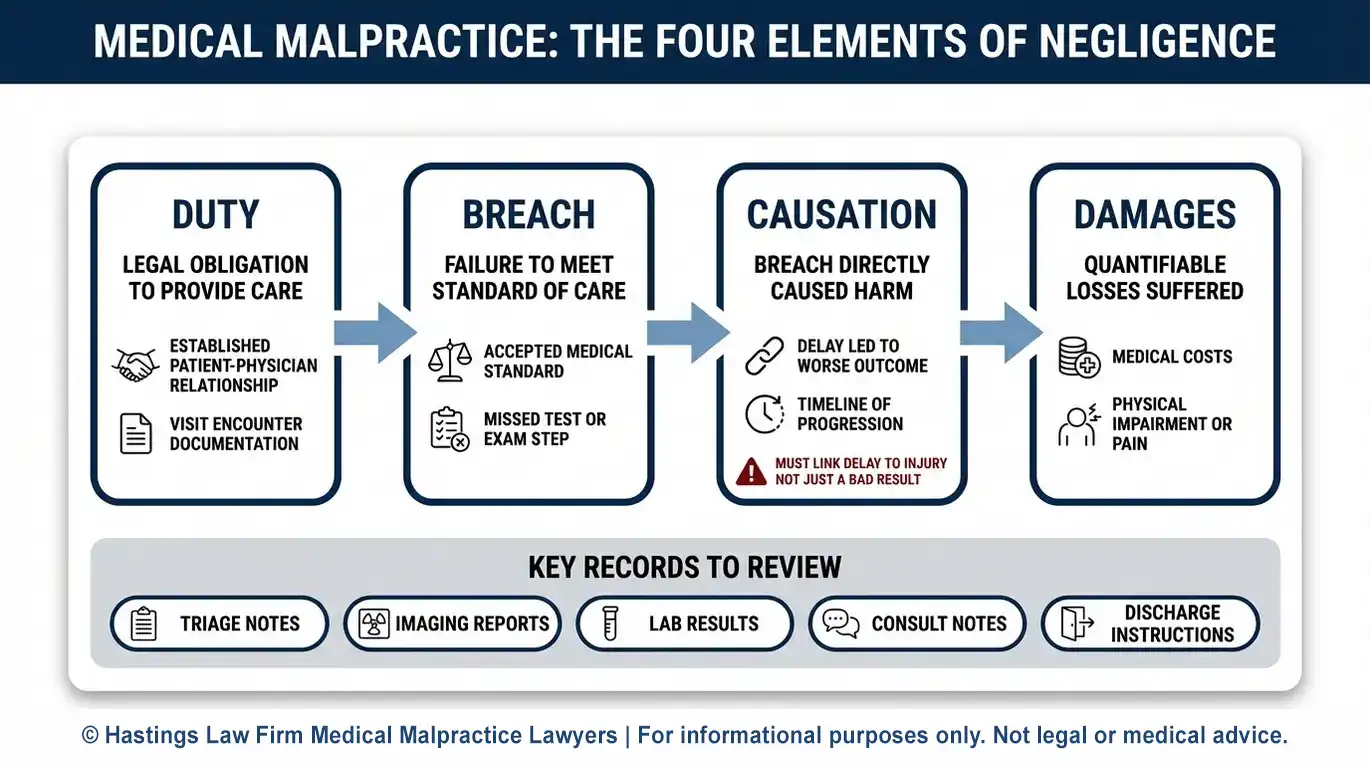
Proving liability requires demonstrating that a doctor-patient relationship existed, the doctor breached the standard of care by missing the diagnosis, and this specific delay directly caused harm that would not have occurred otherwise. Texas medical malpractice cases are built on four legal elements, each of which must be established with supporting evidence.
1. Duty
The first step is showing that a doctor-patient relationship existed. This relationship is typically substantiated by medical records showing the doctor examined you, ordered tests, or provided treatment recommendations. This relationship creates a legal duty for the physician to provide competent care.
2. Breach
Next, a failure to diagnose lawyer must demonstrate that the physician violated the accepted standard of care. This means proving that a reasonably competent doctor with similar training and experience would have made the correct diagnosis under the same circumstances. This failure to act as a prudent provider constitutes a breach of duty. Expert witnesses, typically physicians in the same specialty, provide testimony on what the standard required.
3. Causation
Causation is often the most contested element. It is not enough to show that a diagnosis was missed. The medical malpractice attorney must prove that the delay directly caused the patient’s worsened condition or death. This requires medical evidence showing that earlier detection would have led to a better outcome.
4. Damages
Finally, the patient must have suffered actual harm. This can include physical pain, additional medical expenses, lost income, emotional distress, or loss of life. Without measurable damages, there is no viable malpractice case, even if a medical error occurred.
The Lost Chance Doctrine in Texas
In some failure to diagnose cases, the patient’s condition may have been serious even with timely diagnosis. Texas courts have addressed situations where a delayed diagnosis reduced a patient’s statistical chance of survival. However, Texas law generally adheres to a strict standard, requiring proof that the patient more likely than not (>50%) would have survived or achieved a better outcome with proper care. Unlike some states, Texas does not typically recognize a separate “lost chance” claim if the patient’s initial survival odds were already below 50%.
Texas law handles these causation issues carefully, and the outcome depends on the specific facts of the case. A qualified attorney can evaluate whether the evidence in your case meets the legal threshold for liability.
Recoverable Damages for Delayed Treatment
Patients harmed by diagnostic errors may recover economic damages for additional medical bills and lost wages, as well as non-economic damages for pain, suffering, and the emotional trauma of a preventable decline in health. The Texas Civil Practice and Remedies Code, Chapter 74 governs the types and limits of compensation available in medical liability cases. In rare cases involving gross negligence or malicious intent, punitive damages may also be sought, though these are strictly limited under Texas law.
| Damage Category | What It Covers |
|---|---|
| Economic Damages | Medical expenses (past and future), lost wages, lost earning capacity, rehabilitation costs, home care needs |
| Non-Economic Damages | Physical pain, emotional suffering, loss of enjoyment of life, physical impairment, disfigurement |
| Wrongful Death Damages | Funeral expenses, loss of financial support, loss of companionship and guidance for surviving family members |
Economic damages have no cap under Texas law. These cover the tangible costs of the injury, including the additional treatment required because the condition was not caught earlier. A patient who might have needed only surgery may now require extensive chemotherapy, radiation, or long-term care.
Non-economic damages compensate for losses that are real but harder to quantify. An Austin delayed diagnosis lawyer helps document the full impact of the injury on daily life, relationships, and mental health.
Wrongful death claims allow surviving family members to seek compensation when a diagnostic error caused the patient’s death. Texas law permits spouses, children, and parents to pursue these claims within applicable time limits.
Investigating Your Claim with Medical Experts
A successful claim relies on a forensic review of medical records by independent specialists who can testify that the treating physician deviated from accepted medical protocols. Building this evidence begins long before a lawsuit is filed and requires close collaboration between legal and medical professionals.
At Hastings Law Firm, our investigation starts with a comprehensive medical record review, gathering every relevant document: imaging studies, lab results, physician notes, nursing charts, and any communications between providers. Our in-house medical staff, which includes nurse practitioners and Board Certified Patient Advocates, conducts an initial review to identify potential deviations from the standard of care.
When we determine that malpractice likely occurred, we turn to our national network of expert witnesses. These independent physicians practice in the same specialty as the defendant and can objectively evaluate whether the diagnosis should have been made sooner. Their analysis forms the foundation of the expert report required under Texas Civil Practice and Remedies Code § 74.351. Detailed expert analysis is crucial for the initial report and the subsequent discovery phase of litigation.
For example, if a physician failed to order a biopsy (a procedure where tissue is sampled for laboratory analysis) despite clear warning signs, our experts can explain why this omission fell below the standard of care and how it contributed to the patient’s harm.
A medical malpractice lawyer in Austin understands that these cases rise or fall on the quality of the expert testimony. Having a failure to diagnose attorney with direct access to qualified medical consultants strengthens the investigation and the presentation of your case.
Steps to Take After a Missed or Delayed Diagnosis
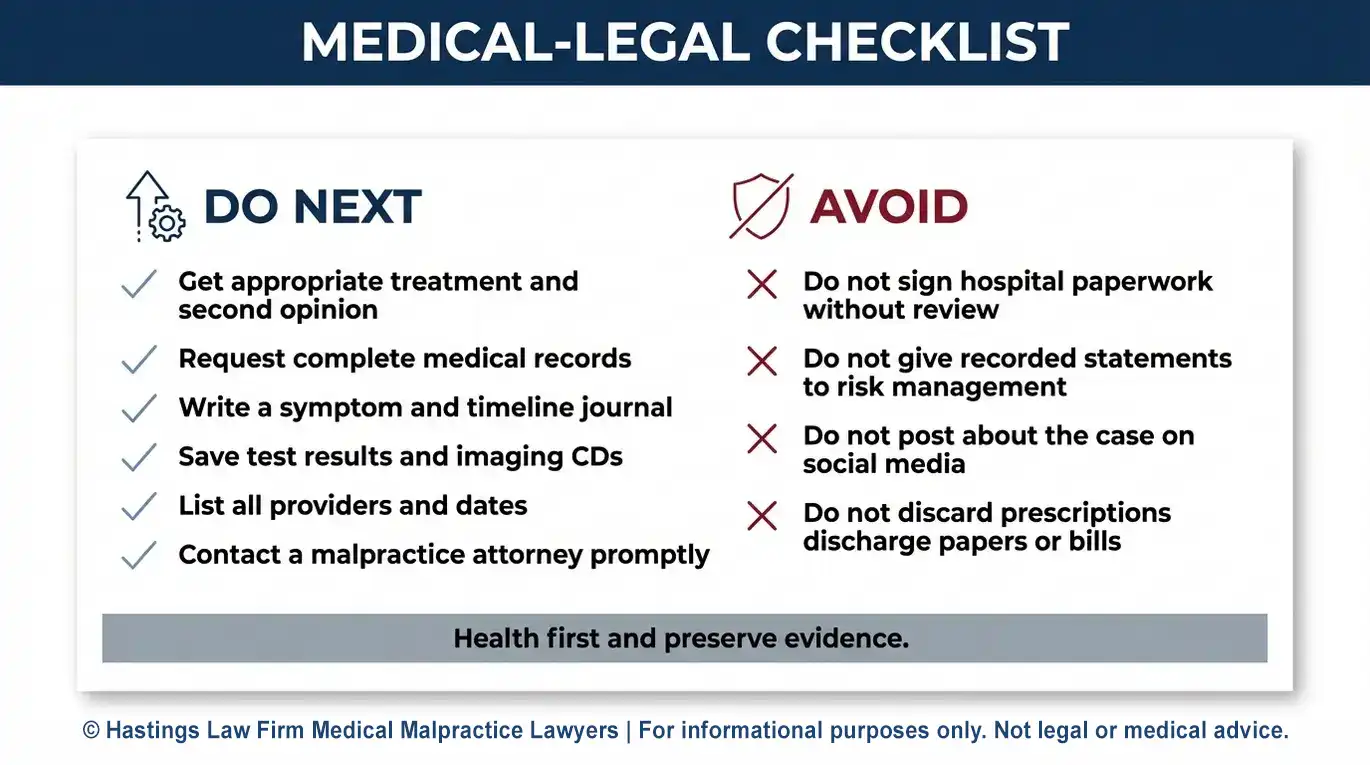
Patients should immediately seek a second opinion to stabilize their health, request a complete copy of their medical records, and contact a specialized attorney before speaking to hospital risk managers. Protecting both your health and your legal rights requires careful action in the days and weeks following a suspected diagnostic error.
- Prioritize your medical care. Your health comes first. Seek treatment from another qualified physician to address your condition and prevent further harm.
- Request your complete medical records. You have a legal right to obtain copies of all records related to your care, including imaging, lab results, and physician notes. Do this in writing.
- Do not sign documents from the hospital. Risk management departments may ask you to sign releases or statements. Politely decline until you have spoken with an attorney.
- Keep a personal journal. This acts as evidence preservation, documenting your symptoms, medical appointments, and any conversations with healthcare providers. Include dates and details.
- Contact an Austin medical negligence lawyer. An attorney experienced in diagnostic error cases can evaluate your situation during a free consultation and advise you on next steps.
If you believe a medical provider’s error contributed to your harm, you also have the right to file a complaint with the Texas Medical Board. This is separate from a civil claim but may be part of your response.
At Hastings Law Firm, we handle cases on a contingency fee basis, so you pay no upfront costs and owe no attorney fees unless we recover compensation on your behalf. Our team includes former defense attorneys who understand how hospital systems evaluate these claims.
Statute of Limitations for Missed Diagnosis in Texas
In Texas, medical malpractice claims must generally be filed within two years from the date of the negligence, though exceptions exist for cases where the error could not have been immediately discovered. The Texas Civil Practice and Remedies Code § 74.251 sets these strict deadlines, and missing them can permanently bar your right to pursue compensation.
The Two-Year Rule
The standard statute of limitations for medical liability claims in Texas is two years. This clock typically begins running on the date the alleged negligence occurred. For diagnostic errors, this date may be when the physician failed to order a test, misinterpreted results, or discharged the patient without proper diagnosis.
The Discovery Rule
In some situations, the negligence could not reasonably have been discovered within the standard timeframe. Texas courts may apply a discovery rule that allows the limitations period to begin when the patient knew, or should have known, about the injury and its connection to medical care.
The Ten-Year Statute of Repose
Regardless of when the error was discovered, Texas imposes an absolute ten-year deadline from the date of the negligent act. After ten years, the claim is barred even if the injury was not yet apparent.
Special Rules for Minors
For children under age 12, the statute of limitations is paused until the child turns 12. This means the claim must be filed by the child’s 14th birthday. This tolling provision ensures children have a path to recovery even if an error is not caught immediately.
Time-Sensitive: These deadlines are strict. If you suspect a diagnostic error harmed you or a family member, an Austin failure to diagnose lawyer can evaluate your timeline during a free consultation.
The Process of Filing a Medical Malpractice Claim in Austin
The medical malpractice process involves an initial case screening, serving an expert report within 120 days of filing suit, engaging in the discovery phase, and proceeding to mediation or trial if a settlement cannot be reached. Understanding these stages helps you know what to expect.
Phase 1: Free Case Evaluation The process begins with a confidential consultation. Our team reviews your medical records and the circumstances of your injury to determine whether your case meets the legal threshold for liability and malpractice.
Phase 2: Pre-Suit Notice and Chapter 74 Expert Report Before filing suit, Texas law generally requires serving a notice letter to the healthcare provider at least 60 days in advance. Within 120 days of the defendant’s original answer, we must also serve an expert report from a qualified physician detailing the standard of care, the breach, and how it caused your injury.
Phase 3: Discovery and Depositions During discovery, both sides exchange evidence, request documents, and take sworn testimony from witnesses and parties. This phase allows us to build a complete picture of what happened and why.
Phase 4: Mediation or Trial Many cases resolve through mediation, a structured negotiation session with a neutral third party. At Hastings Law Firm, we prepare every case from day one as if it will go to a jury. This trial-ready approach often leads to stronger settlement offers, but we are fully prepared to present your case in court if needed.
Contact the Austin Failure to Diagnose Attorneys at Hastings Law Firm Today for Help
A missed diagnosis is not simply bad luck or an unavoidable risk of medical care. When a physician fails to identify a condition that other competent doctors would have caught, the consequences often include preventable suffering, more aggressive treatment, and in some cases, loss of life. You deserve to know whether what happened to you or your loved one was the result of negligence.
At Hastings Law Firm, we handle the investigation, the expert analysis, and the legal work while you focus on your health. Our team includes in-house medical professionals who understand clinical records and former defense attorneys who know how hospitals and insurers approach these cases. We take failure to diagnose cases on a contingency fee basis, which means you pay no attorney fees or costs unless we secure compensation for you.
If you have questions about a potential claim, an Austin failure to diagnose lawyer at our firm is ready to listen. Contact us for a free, confidential consultation to discuss what happened and explore your options.
Frequently Asked Questions About Failure To Diagnose in Austin


This content was researched and written by the Hastings Law Firm editorial team, which includes attorneys, medical professionals, and experienced researchers. Our writing is informed by internal knowledge and practical experience, and we cross-check critical details against authoritative sources cited throughout. Every piece undergoes human-led fact-checking and legal review. Because legal and medical information can change, if you spot an error, please contact us. Learn more about our content standards and review process on our editorial policy page.

Gabe Sassin has focused exclusively on medical malpractice law since 2007. After spending more than a decade as a malpractice defense attorney, he knows exactly how the other side works. He has seen firsthand how healthcare providers, insurers, corporate defendants, and their legal teams think, prepare, and build their defense against claims. That knowledge works for the people who need it most today, injured patients and their families. His unique experience shapes everything he writes, giving readers a look at how these cases actually work from someone who has handled them from both sides.
