


Texas Dystonia Disorder Lawyer
Written by: Hastings Law Firm | Reviewed by: Tommy Hastings | Updated: July 27, 2026
Dystonia is a neurological movement disorder that can cause painful involuntary muscle contractions, twisting movements, and abnormal postures that disrupt daily life. Some cases are genetic, but acquired dystonia may be traceable to a specific event such as oxygen deprivation during birth, a medication error involving drugs linked to irreversible movement disorders, or nerve damage from surgery. When a preventable medical error is involved, families often face long term treatment needs, mounting costs, and lasting loss of independence. If you or a loved one were harmed or worse due to dystonia negligence in Texas, contact Hastings Law Firm for a free, confidential case review.
Trusted Texas Medical Attorneys for Dystonia Negligence Claims
What You Should Know About Dystonia From Medical Negligence Claims in Texas:
- Long term disability and chronic pain can follow when acquired dystonia is linked to a preventable medical error.
- Recovery options can hinge on whether dystonia is traced to an identifiable event rather than labeled idiopathic.
- Lifelong care costs can be substantial because treatment focuses on symptom management rather than a cure.
- Severe and permanent harm can result from oxygen deprivation during labor and delivery that damages movement control areas of the brain.
- Irreversible movement disorders can occur when certain medications are prescribed improperly or without adequate monitoring despite serious safety warnings.
- Lasting movement problems can follow surgical nerve injury when anatomical structures are not properly identified.
- Compensation can include financial losses such as medical expenses and lost earning capacity when negligence causes dystonia.
- Compensation can also reflect personal harms such as pain, emotional distress, and loss of independence under Texas law.
- Future needs can be central when a life care plan projects ongoing therapy, adaptive equipment, and support services.
- Options can narrow if Texas timing requirements for medical malpractice claims are missed.

A Healthcare Focused Law Firm
A dystonia diagnosis can turn a family’s world upside down. When the condition results from a preventable medical error, such as a mistake during birth, a wrongly prescribed medication, or a surgical error, the emotional weight is even heavier. You may feel confused about what went wrong, frustrated by a lack of answers, and uncertain about where to turn.
As a Texas Dystonia Disorder Lawyer, Hastings Law Firm focuses exclusively on medical malpractice. Our team includes board-certified trial attorneys, former defense lawyers, and in-house medical professionals who understand both the medicine and the law behind dystonia claims. If negligence caused your condition or your child’s condition, we can review what happened and explain your options in a free, confidential case evaluation.
What Is Dystonia and How Does It Affect Victims?
Dystonia is a neurological movement disorder characterized by involuntary muscle contractions that force the body into repetitive or twisting movements and abnormal postures. According to MedlinePlus, this condition can affect a single body part, multiple regions, or the entire body.
The disorder originates in the basal ganglia, a group of structures deep within the brain responsible for coordinating smooth, voluntary movement. This region acts as the brain’s switchboard for movement. When these structures malfunction or suffer damage, they send conflicting messages to the muscles. This disruption leads to sustained muscle spasms that can be both painful and debilitating.
One of the most common forms is cervical dystonia, also known as spasmodic torticollis, which causes involuntary contractions of the neck muscles. This pulls the head into uncomfortable positions and can make everyday tasks like driving or reading extremely difficult.
Some cases of dystonia are genetic. Many others are acquired, meaning they develop as the result of an external event such as a brain injury, oxygen deprivation, or exposure to certain medications. Unlike genetic forms, which may appear without a clear trigger, acquired dystonia is frequently traceable to a specific incident. Medical negligence often becomes a central question in these acquired cases, and a dystonia disorder attorney in Texas can help to determine if a preventable error is to blame.
Common Symptoms and Early Indicators of Dystonia
Symptoms often begin subtly and may include involuntary head twisting, rapid blinking, speech difficulties, and involuntary muscle contractions that tend to worsen in the evening or during periods of stress. According to Temple Health, these symptoms for patients with movement disorders can affect nearly any part of the body and vary widely in severity.
Early indicators are easy to overlook, especially in children. Frequent tipping, falling, dragging a foot, unexplained cramping in the hands, or difficulty holding objects may all signal the onset of dystonia. In adults, early signs can mimic stress-related tension or minor musculoskeletal problems, which often delays diagnosis. Observing an involuntary head twisting or a slight foot drag can be the first step in seeking a neurological evaluation.
Early warning signs to watch for:
- Involuntary twisting or turning of the head or neck
- Sustained muscle cramping in the hands, feet, or legs
- Rapid, uncontrollable blinking or eye closure
- Dragging a foot or frequent tripping without explanation
- Speech that becomes strained or difficult to control
- Symptoms that worsen during evening hours or under stress
- Tremors that do not respond to rest
The Diagnostic Journey
The diagnostic process for neurological movement disorders typically involves a full neurological examination, along with imaging like MRI scans and electromyography (EMG), a test that measures electrical activity in muscles. These tools help rule out other conditions and pinpoint the source of the abnormal movement.
In many cases, when no clear genetic or structural cause is found, the diagnosis is labeled “idiopathic,” meaning the cause is unknown. As documented in a Texas Department of Insurance contested case hearing, this kind of labeling can complicate both treatment and any potential legal claim. For families working with a dystonia lawyer in Texas, that “unknown cause” label is often the starting point for a deeper investigation into whether medical error played a role.

The Hastings Law Firm Difference
Results matter, but what truly sets us apart is how we achieve them. Every verdict, every settlement, and every Texas courtroom victory comes from one guiding promise: To treat each client’s fight for justice as if it were our own.
This balance of skill, experience, and empathy reflects our core philosophy that justice should not only compensate the injured, but also make healthcare safer nationwide.

Can Medical Malpractice Cause Dystonia?
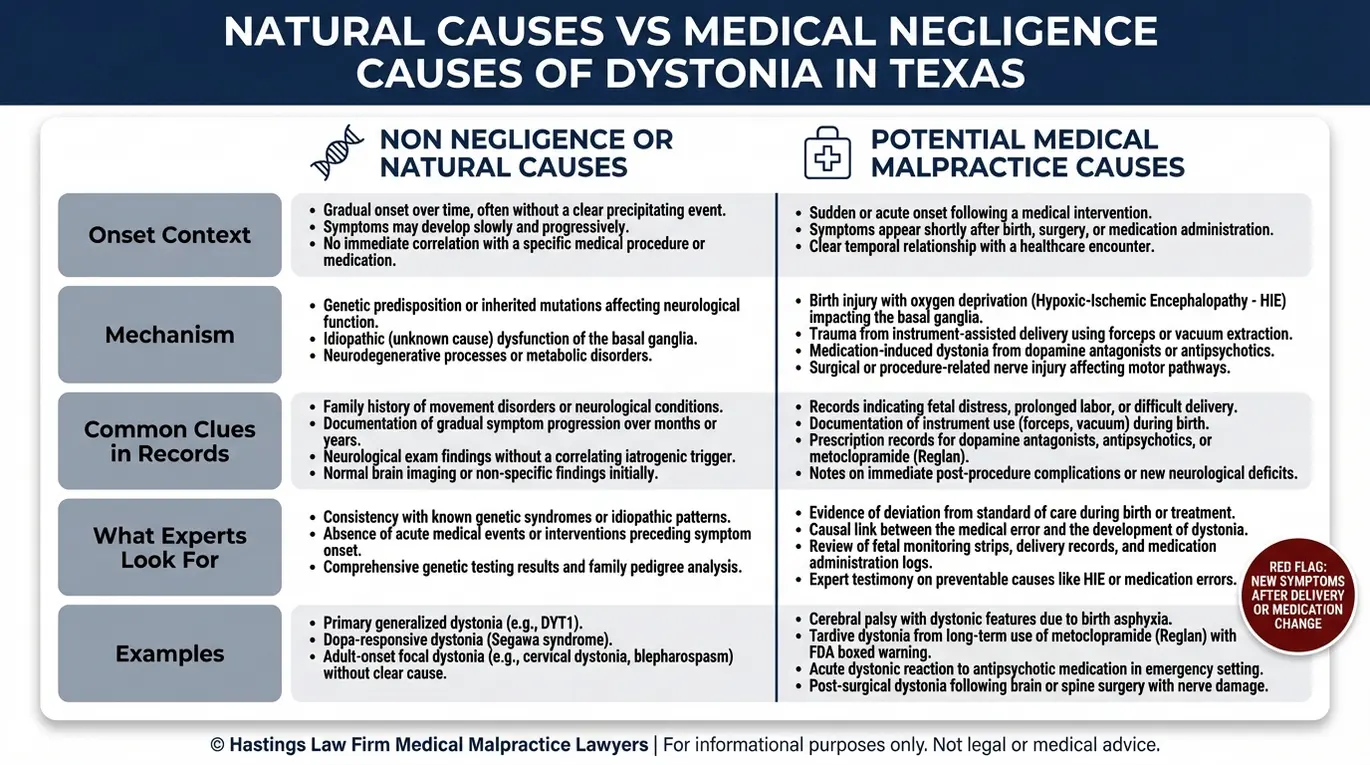
Yes, medical malpractice can cause dystonia through birth injuries resulting in oxygen deprivation or the improper prescription of certain medications that damage the nervous system. When we evaluate these cases, we look at two primary categories of medical negligence that can lead to dystonia.
Birth Injuries
Oxygen deprivation during labor and delivery is one of the most significant causes of acquired dystonia in children. Hypoxic-ischemic encephalopathy (HIE), a condition where the brain is deprived of adequate oxygen and blood flow, can cause permanent damage to the basal ganglia. This type of injury may occur when providers fail to monitor fetal distress, delay an emergency cesarean section, or misuse instruments during operative vaginal delivery, such as forceps delivery or vacuum extraction. The resulting trauma to the developing brain can lead to lifelong movement disorders, including dystonia.
Medication Errors
Certain medications, particularly dopamine antagonists and antipsychotics, are known to cause tardive dyskinesia and tardive dystonia when prescribed improperly or without adequate monitoring. Metoclopramide (Reglan) is one of the most recognized examples. The FDA’s prescribing information for Reglan includes a boxed warning, the agency’s most serious safety alert, specifically cautioning against prolonged use because of the risk of irreversible movement disorders. When a provider ignores this warning or fails to monitor a patient on these drugs, the resulting dystonia may be a direct consequence of negligence.
Surgical Errors
In less common cases, nerve damage sustained during surgery can trigger dystonia in the affected area. Improper surgical technique or failure to identify anatomical structures may result in nerve injury that disrupts normal movement control.
| Natural / Idiopathic Causes | Potentially Negligent Causes |
|---|---|
| Genetic mutations (DYT gene variants) | Oxygen deprivation during birth (HIE) |
| Family history of movement disorders | Trauma from forceps or vacuum extraction |
| Unknown origin (idiopathic) | Prolonged or unmonitored use of dopamine antagonists |
| Neurodegenerative disease progression | Prescription of Reglan despite FDA boxed warning |
| Surgical nerve damage |
A dystonia malpractice attorney can help determine which category applies to your situation by reviewing the medical records, identifying the timeline of events, and consulting with qualified medical experts. At Hastings Law Firm, our in-house nursing staff and former defense attorneys know exactly what to look for in hospital charts and prescription histories.
Diagnosing Dystonia and Proving Causation
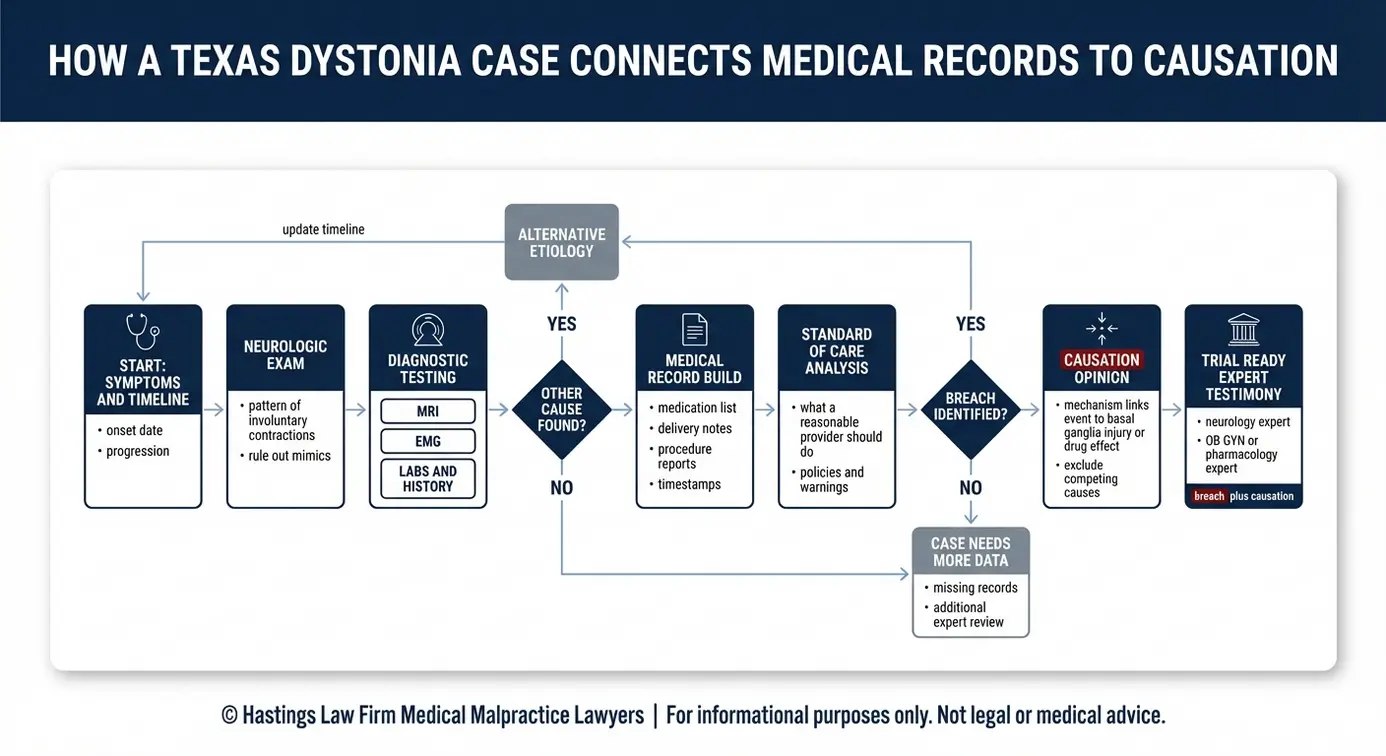
Proving a link between medical error and dystonia requires a thorough neurological workup, including MRI and EMG studies, supported by expert testimony that establishes a breach in the standard of care. This is where the legal and medical investigation must work hand in hand.
MRI imaging helps identify structural damage to the brain, particularly in the basal ganglia, while EMG testing reveals abnormal patterns of electrical activity in the affected muscles. Together, these diagnostic tools can rule out genetic or degenerative causes and point toward an acquired injury. As detailed in research published by PubMed Central on the classification of dystonia, distinguishing between inherited and acquired forms is important for both treatment planning and legal strategy.
One of the most important parts of our investigation involves challenging an “idiopathic” diagnosis. When doctors say the cause is unknown, or idiopathic, that does not mean negligence has been ruled out. It often means no one looked hard enough. We work with neurologists and other specialists to trace the root cause of symptoms back to a specific medical event, such as a complicated delivery, a medication regimen, or a surgical procedure.
Our team builds a detailed timeline using medical records, nursing notes, pharmacy logs, and imaging studies. A lawyer for dystonia disorders then pairs this evidence with expert testimony to establish what the standard of care required, how it was breached, and how that breach caused or contributed to the dystonia diagnosis. Dopamine antagonists, medications that block dopamine receptors in the brain, are frequently at the center of medication-related claims. When their use leads to tardive dystonia, which involves sustained involuntary movements caused by drug exposure, the prescribing provider’s decisions become the focus of the analysis.
Treatment Options and Calculating Future Costs
Treatment for dystonia is lifelong and costly, often involving a combination of botulinum toxin injections, physical therapy, and potentially deep brain stimulation surgery. Because there is no cure, the goal of treatment for this neurological condition is to manage symptoms and maintain the highest possible quality of life.
Common treatment approaches include:
- Botulinum toxin (Botox) injections: A purified protein injected directly into affected muscles to temporarily reduce involuntary contractions. These injections typically need to be repeated every three to four months.
- Oral medications: Muscle relaxants, anticholinergics, and other drugs may help reduce spasms, though side effects can limit their long-term use.
- Physical and occupational therapy: Ongoing therapy helps maintain range of motion, build strength, and develop strategies for managing daily activities.
- Deep brain stimulation (DBS): A surgical procedure in which electrodes are implanted in the brain to deliver electrical impulses that regulate abnormal movement signals. DBS is typically reserved for severe cases that do not respond to other treatments.
- Selective denervation surgery: A procedure that selectively cuts nerves responsible for the involuntary muscle contractions, most commonly used for cervical dystonia.
For a Texas dystonia injury lawyer, one of the most important components of building a strong case is developing a life care plan. This is a detailed, expert-prepared document that projects the total cost of medical care, therapy, adaptive equipment, and support services a patient will need over their lifetime. We work with certified life care planners to create this roadmap for your financial future. Life care plans are essential for making sure any recovery accounts for the true financial burden of the condition, not just current expenses.
Recovering Damages for Dystonia Negligence in Texas
Patients who develop dystonia because of negligence may recover economic damages for medical bills and lost wages, as well as non-economic damages for pain, suffering, and physical impairment. Understanding these legal categories of compensation is essential to building a case that reflects the full scope of harm.
Economic damages cover measurable financial losses. These include past and future medical expenses, rehabilitation costs, assistive devices, home modifications, and lost earning capacity. For someone living with a permanent movement disorder, these costs can extend across an entire lifetime.
Non-economic damages address the personal toll. Chronic pain, loss of independence, emotional distress, and the inability to participate in activities that once brought joy are all recognized harms under Texas law. For children diagnosed with dystonia after a birth injury, the impact on developmental milestones and long-term quality of life can be profound.
Dystonia disorder lawyers at Hastings Law Firm work closely with medical experts, economists, and life care planners to document every element of loss. Securing fair compensation is necessary to ensure that these needs are met without bankrupting the family. This approach ensures that any settlement or verdict reflects both the financial reality and the human cost of living with this condition.
Contact the Texas Birth Injury Attorneys at Hastings Law Firm Today for Help
Dystonia changes a family’s life in ways that are difficult to put into words. If you believe your condition or your child’s condition was caused by a medical error, you deserve answers.
Hastings Law Firm is led by Tommy Hastings, a board-certified trial attorney and 2025 inductee into the American Board of Trial Advocates. Our team of attorneys, nurse consultants, and medical experts focuses entirely on medical malpractice, and we prepare every case as if it is going to trial. As a trusted Texas Dystonia Disorder Lawyer, we have the medical knowledge and litigation experience to investigate what happened and hold the responsible parties accountable.
We work on a contingency fee basis, which means you pay no attorney fees or costs unless we secure a recovery for you. Contact us today for a free, confidential case evaluation. Let us help you find the answers you deserve.
Frequently Asked Questions About Dystonia Disorder in Texas


This content was researched and written by the Hastings Law Firm editorial team, which includes attorneys, medical professionals, and experienced researchers. Our writing is informed by internal knowledge and practical experience, and we cross-check critical details against authoritative sources cited throughout. Every piece undergoes human-led fact-checking and legal review. Because legal and medical information can change, if you spot an error, please contact us. Learn more about our content standards and review process on our editorial policy page.

Tommy Hastings, founder of Hastings Law Firm, is a board-certified personal injury trial lawyer dedicated exclusively to healthcare injury cases. Since 2001, he has represented injured patients and families in litigation against major hospital systems, pharmaceutical companies, and negligent healthcare providers nationwide. He has handled numerous high-profile cases that have drawn national media attention and resulted in multi-million dollar recoveries. He draws on that experience in his writing, helping readers understand how these cases work and what options may be available to them.
