


Texas Drug Interaction Malpractice Lawyer
Contraindicated medication errors and dangerous drug interactions can cause serious, preventable harm when prescribing and dispensing safeguards fail. These events often involve missed allergy information, incomplete medication histories, overlooked contraindications, or warnings that are dismissed in electronic records. Responsibility may involve a prescribing doctor, a pharmacist, a hospital system, or more than one party, and the effects can be life changing or worse. If you or a loved one were harmed or worse due to drug interaction malpractice in Texas, contact Hastings Law Firm for a free, confidential case review.
Last Updated: July 27, 2026
Trusted Texas Medical Attorneys for Contraindicated Medication Negligence Claims
When a medication that was supposed to help you causes serious harm, the experience can feel disorienting. You trusted your doctor or pharmacist to get it right, and now you’re dealing with consequences that should have been preventable. That kind of situation raises difficult questions about what went wrong and who is responsible.
At Hastings Law Firm, we focus exclusively on medical malpractice. Led by Tommy Hastings, who is board-certified in Personal Injury Trial Law, we provide the dedicated representation needed to handle these technically demanding cases. If you or a loved one was harmed by a dangerous drug combination, we can review what happened and explain your options in a free, confidential consultation.

Understanding Drug Interaction and Contraindicated Medication Malpractice
Drug interaction malpractice occurs when a healthcare provider negligently prescribes or dispenses a medication that reacts dangerously with a patient’s existing drugs or medical conditions, violating the accepted standard of care. These cases sit at the intersection of medicine and law, and understanding the basics can help you determine whether you have a claim.
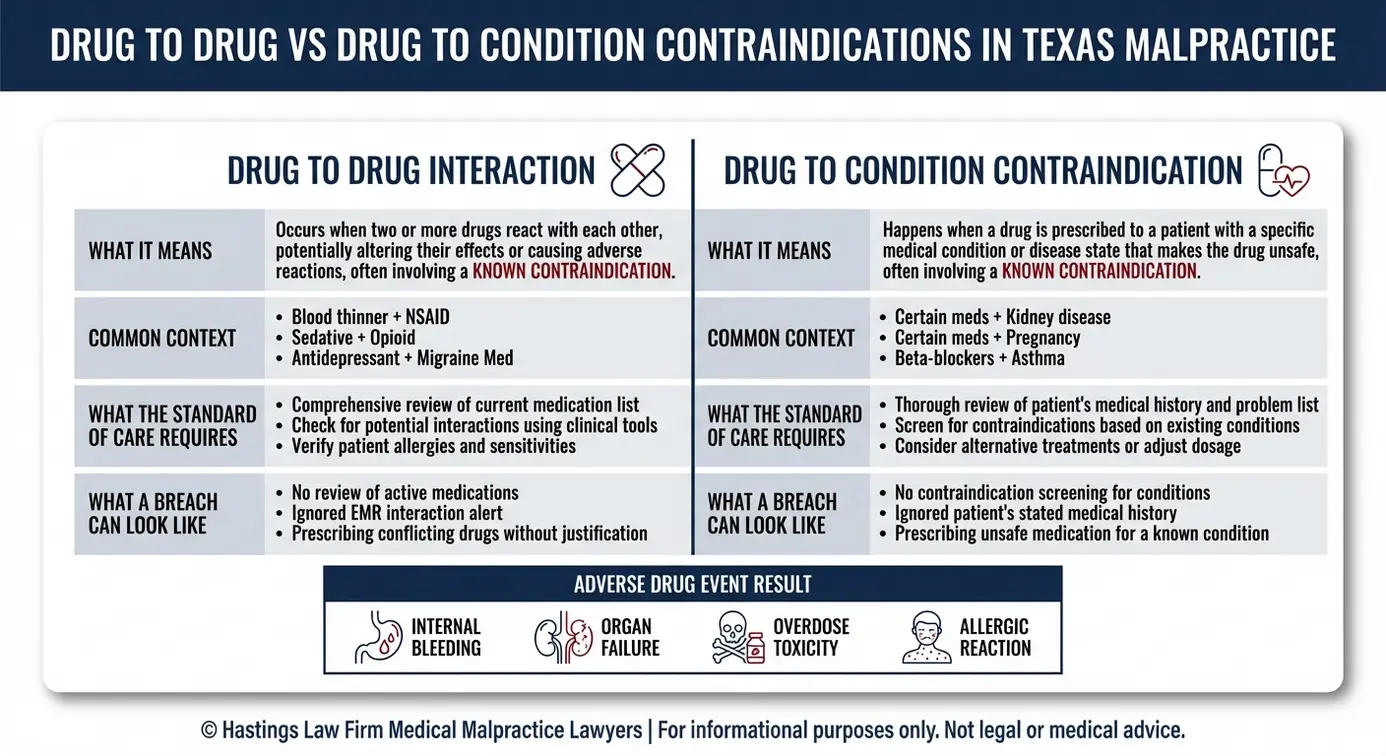
A contraindication, a specific situation where a drug should not be used because it poses a known risk, generally falls into one of two primary categories. A drug-to-drug contraindication exists when two medications interact in a way that amplifies side effects or reduces effectiveness. A drug-to-condition contraindication occurs when a medication worsens an existing medical problem, such as prescribing a blood-pressure-raising drug to someone with uncontrolled hypertension.
The duty of care requires doctors to review a patient’s full medication list, allergies, and medical history before writing a prescription. Pharmacists share a similar obligation when filling orders. When either professional skips this step or ignores a known conflict, the result can be an adverse drug event (ADE), which is any harm caused by the use of a medication at normal doses. According to the CDC’s National Estimates of Emergency Department Visits for Medication Harms, 2017–2019, hundreds of thousands of emergency department visits each year are linked to medication-related harm.
If you suspect a prescribing error caused your injury, consulting a Texas drug interaction malpractice lawyer can help clarify whether negligence occurred. A lawyer for drug interaction malpractice will know how to trace the clinical decisions that led to the harmful combination.
Common Types of Negligent Drug Interactions and Prescribing Errors
Negligent interactions often arise from doctors failing to review a patient’s history, pharmacy error such as dispensing the wrong dosage, or Electronic medical records (EMR) systems failing to flag known contraindications between new and existing prescriptions. These errors take different forms, but they share a common thread: someone in the medication safety chain did not do what was expected of them.
Drug-to-drug interactions happen when two prescriptions interfere with each other’s absorption, metabolism, or effect. Some medications alter how the body processes other drugs through a system called Cytochrome P450 (CYP450) metabolism, a group of liver enzymes responsible for breaking down most medications. When one drug speeds up or slows down these enzymes, a second drug may build up to toxic levels, potentially causing an overdose or becoming ineffective. Other errors involve pharmacodynamic interactions, where two medications produce competing or dangerously amplified effects on the same organ system, such as two drugs that both lower heart rate.
Drug-to-condition errors occur when a provider prescribes something that aggravates an existing medical problem. Look-alike and sound-alike medication errors, where drugs with similar names are confused during prescribing or dispensing, add another layer of risk. Tools like the Drugs.com Drug Interaction Checker are publicly available, and medical professionals have access to far more advanced systems. A drug interaction malpractice lawyer can investigate these systemic failures to determine liability.
Common prescribing and medication error scenarios include:
- Prescribing blood thinners alongside anti-inflammatory drugs, increasing the risk of internal bleeding
- Combining opioids with benzodiazepines, which can cause fatal respiratory depression
- Ignoring documented allergy alerts in a patient’s chart
- Dispensing the wrong dosage due to similar drug names or decimal point errors
- Failing to adjust medications for patients with kidney or liver impairment
A Texas drug interaction attorney evaluates these scenarios by examining prescription records, pharmacy logs, and the clinical reasoning behind each order. An experienced medication error lawyer knows where to look for the breakdown.
The Role of EMR Alert Fatigue in Missed Warnings
Modern electronic medical records (EMR) systems are designed to flag potential drug conflicts through clinical decision support (CDS) alerts, which are automated pop-up warnings that notify providers of known risks. The problem is that these systems generate so many warnings that providers develop what is known as alert fatigue, a pattern of routinely dismissing notifications without fully reading them. When a doctor overrides a legitimate interaction warning because they’ve become desensitized to the alerts, the EMR system’s safety function fails. This kind of override can represent a breach of duty regarding the standard of care, and the override itself is often documented in the system’s audit log.
Medication Reconciliation Failures During Hospitalization
When a patient is admitted to a hospital, staff are expected to perform medication reconciliation, the process of creating an accurate, complete list of every medication the patient currently takes and comparing it against any new orders. If a patient’s home medications are not properly recorded at admission, dangerous gaps or overlaps in treatment can occur. For example, a patient already taking a blood thinner at home who is then started on a second anticoagulant in the hospital could face a severe bleeding event. These instances of hospital negligence and documentation failure are a frequent source of preventable ADEs during inpatient care.
The Hastings Law Firm Difference
Results matter, but what truly sets us apart is how we achieve them. Every verdict, every settlement, and every Texas courtroom victory comes from one guiding promise: To treat each client’s fight for justice as if it were our own.
This balance of skill, experience, and empathy reflects our core philosophy that justice should not only compensate the injured, but also make health care safer nationwide.

Determining Liability Between Prescribing Doctors and Pharmacists
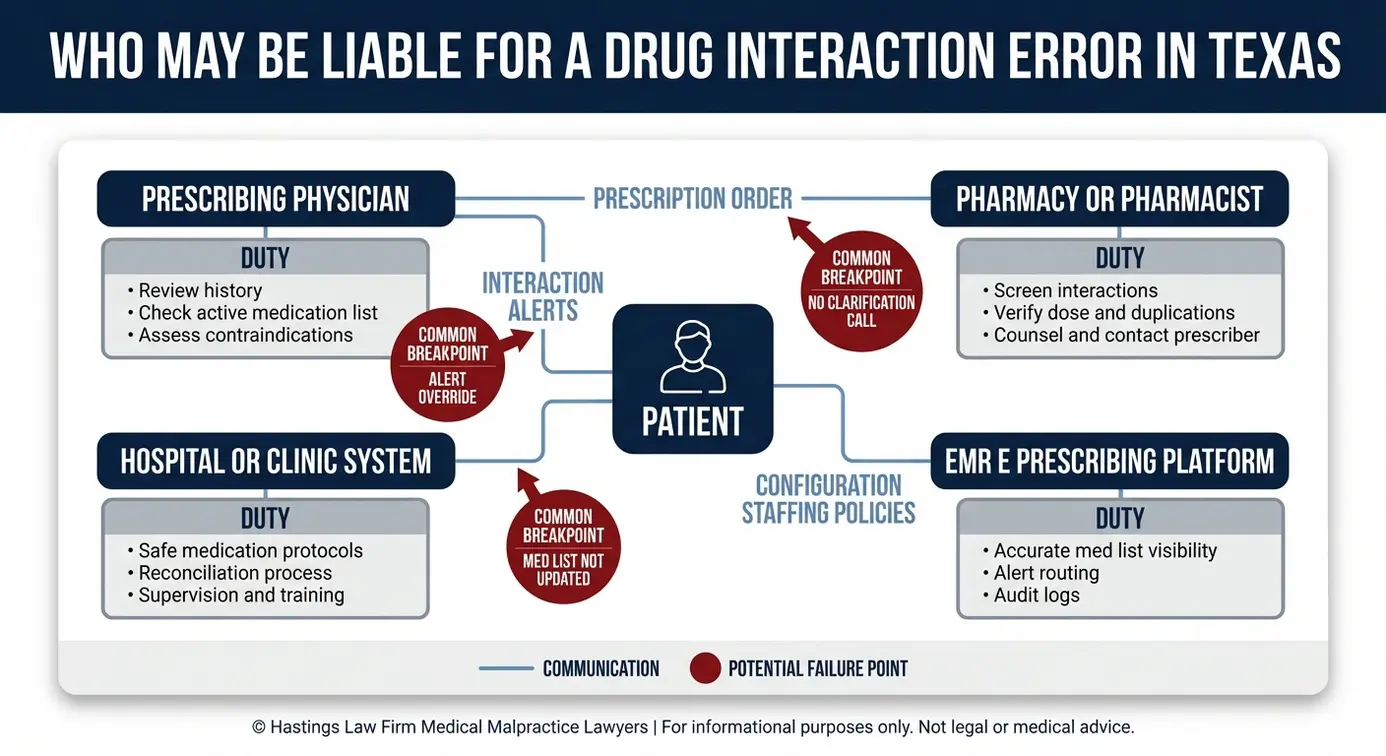
Liability may fall on the prescribing physician for ordering the contraindicated drug, the pharmacist for failing to catch the interaction during fulfillment, or the hospital for systemic failures in medication safety protocols. In many cases, more than one party bears responsibility.
The physician’s duty begins with knowing the patient’s full medical and medication history, and ensuring informed consent is obtained regarding risks. Informed consent means your doctor explained the risks and you agreed to the treatment. When a doctor orders a drug without reviewing that history, or prescribes despite a known conflict, the physician may be directly liable for the resulting harm.
The pharmacist often functions as the last checkpoint before a medication reaches the patient. Pharmacists are required to perform a drug utilization review (DUR), a screening process that evaluates each prescription for potential interactions, allergies, and dosage errors before dispensing. If a pharmacist fills a dangerous prescription without flagging the conflict, liability can attach to the pharmacy as well.
Hospital systems can also share responsibility. Under the Texas Civil Practice and Remedies Code, Chapter 101, government-run facilities face specific liability rules. For private hospitals, claims may focus on institutional failures such as inadequate staffing, faulty EMR configurations, or missing medication protocols. Our team, which includes former defense attorneys and in-house nursing staff, understands how to identify which parties in the chain failed and how to build a case that accounts for shared liability.
Proving Negligence in Medication Error Cases with Expert Testimony
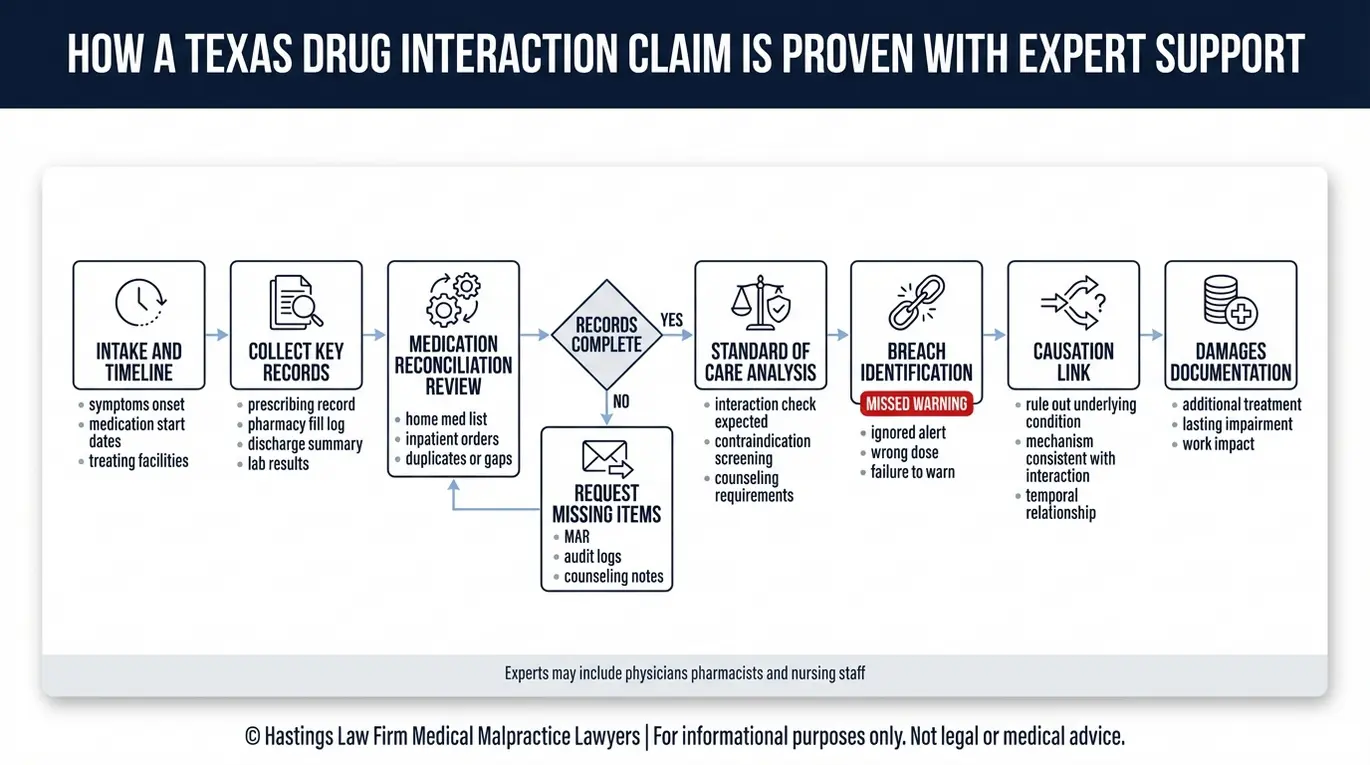
Proving negligence requires establishing a direct link between the provider’s breach of duty, such as ignoring a known contraindication, and the specific injury suffered, typically substantiated by expert medical analysis. Texas law sets a high bar for these claims, which is why having the right malpractice lawyer for drug interactions matters.
The legal framework follows three elements. First, we establish duty by confirming a doctor-patient or pharmacist-patient relationship existed. Second, we demonstrate breach by showing the provider deviated from safe prescribing practices. This could mean prescribing a contraindicated drug, ignoring an EMR alert, or failing to perform medication reconciliation. Third, we prove causation, which means connecting the drug interaction specifically to the injury rather than the patient’s underlying condition.
Under Texas Civil Practice and Remedies Code § 74.351, injured patients must serve a qualified expert report within 120 days after the date each defendant’s original answer is filed. This report must detail the standard of care, how it was breached, and how that breach caused harm. Without it, the case faces dismissal. Our firm works with a national network of medical experts, including pharmacologists and specialists, who can provide the expert witness testimony these cases demand.
As a Texas medication error lawyer team, we gather evidence early and build the causation narrative from day one. Evidence we typically collect and review includes:
- Prescription records and pharmacy dispensing logs
- EMR audit trails showing alert overrides
- Medication reconciliation documents from hospital admissions
- The patient’s complete medical records and history
- Witness statements from nurses, pharmacists, or family members
- Expert reports from independent medical specialists
Injuries and Long-Term Effects of Dangerous Drug Combinations
Severe drug interactions can lead to catastrophic outcomes including organ failure, internal hemorrhaging, permanent neurological damage, or fatal cardiac events that may require lifetime care. These injuries happen because some drug combinations change how your body processes medication or cause toxic levels to build up. Data from the CDC’s Provisional Drug Overdose Death Counts underscores how frequently drug-related harm leads to fatal outcomes nationwide.
The physical consequences of a dangerous medication combination can include:
- Liver or kidney failure from toxic drug accumulation
- Stroke or heart attack triggered by dangerous blood pressure changes
- Internal bleeding from combined anticoagulant effects
- Seizures or coma resulting from overdose or drug toxicity
- Severe allergic reactions, including anaphylaxis
- Respiratory depression leading to oxygen deprivation and brain damage
When these injuries are fatal, families may have a wrongful death claim. When they are survivable, the road to recovery is often long and expensive. A Texas drug interaction malpractice lawyer can help quantify these harms and pursue accountability for the providers whose errors caused them.
Compensation and Damages in Texas Drug Injury Cases
Patients harmed by drug interaction malpractice in Texas may recover economic damages for medical bills and lost wages, as well as non-economic damages for pain and suffering, subject to state statutory caps. These damages are intended to provide financial support for the losses you suffered because of a medical error.
Economic damages cover measurable financial losses: past and future medical expenses, rehabilitation costs, lost income, and diminished earning capacity. These are calculated based on your actual expenses and projected needs.
Non-economic damages address the human toll, including physical pain, mental anguish, and loss of quality of life. Under Texas Civil Practice and Remedies Code § 74.301, non-economic damages in medical malpractice cases are subject to statutory caps. In rare cases involving gross negligence, punitive damages may also be available. A drug interaction malpractice lawyer in Texas can evaluate the full scope of your losses and help you understand what recovery may be possible.
Contact the Texas Healthcare Malpractice Attorneys at Hastings Law Firm Today for Help
If you or a loved one was harmed by a dangerous drug combination or a contraindicated prescription, you deserve answers. At Hastings Law Firm, our team of attorneys, nurse consultants, and patient advocates is dedicated to finding out what happened and holding the responsible parties accountable.
We handle these cases on a contingency fee basis, which means you pay no attorney fees or costs unless we secure a recovery for you. Contact us today for a free, confidential case evaluation. Let us help you understand your options and take the first step forward.
Frequently Asked Questions About Drug Interaction Malpractice in Texas


This content was researched and written by the Hastings Law Firm editorial team, which includes attorneys, medical professionals, and experienced researchers. Our writing is informed by internal knowledge and practical experience, and we cross-check critical details against authoritative sources cited throughout. Every piece undergoes human-led fact-checking and legal review. Because legal and medical information can change, if you spot an error, please contact us. Learn more about our content standards and review process on our editorial policy page.

Brady D. Williams is a nationally recognized medical malpractice attorney who has spent his career handling high-stakes litigation for injured patients and families across the country. Licensed in both Texas and California, Brady draws on experience from hundreds of resolved medical cases to break down complex legal and medical topics for the people who need that information most. His writing reflects the same attention to detail and commitment to clarity that he brings to every case he handles.
