


Texas Developmental Delay Birth Injury Lawyer
Written by: Hastings Law Firm | Reviewed by: Tommy Hastings | Updated: July 27, 2026
Developmental delays after birth can leave families searching for clear explanations and support. Some delays are linked to genetic or structural conditions present before birth, while others may follow oxygen deprivation or physical trauma during labor and delivery. The difference can shape medical care needs and long term planning, especially when a delay becomes a permanent intellectual disability. Understanding warning signs, delivery related risk factors, and the role of records and testing can help families make informed decisions. If you or a loved one were harmed or worse due to developmental delay birth injury in Texas, contact Hastings Law Firm for a free, confidential case review.

Top Rated Texas Attorneys for Preventable Child Developmental Disabilities
What You Should Know About Infant Intellectual Disability Negligence Claims in Texas:
- Long term care needs can be extensive when a birth related injury leads to permanent intellectual disability.
- Options can narrow if a claim is not pursued in time because Texas limits how long minors have to bring medical malpractice cases.
- A missed connection between delivery events and later milestones can delay both medical intervention and accountability because some effects appear months or years after birth.
- Disputes often turn on whether the condition is tied to labor and delivery trauma or to congenital causes that began before birth.
- Preventable delivery room failures can be central when cognitive impairment follows oxygen deprivation or physical trauma during labor.
- Recovery can be shaped by damage limits because Texas caps non economic damages in medical malpractice cases.
- Financial projections can drive case value because damages may include lifelong therapy, specialized education, and future care needs.
- Proof challenges can increase when evidence fades because records can become harder to obtain and memories can deteriorate over time.
- Causation can hinge on objective medical data because fetal monitoring, cord blood gas results, and brain imaging may indicate when an injury occurred.
- Case viability can depend on expert review because medical specialists may be needed to assess standard of care and causation.

A Healthcare Focused Law Firm
When a child isn’t reaching the milestones you expected, the uncertainty can be overwhelming. You may be wondering whether something happened during labor or delivery that changed your child’s trajectory. Those questions deserve real answers, not guesses.
As a Texas developmental delay birth injury lawyer, Hastings Law Firm focuses exclusively on medical malpractice. Our team of attorneys, in-house nurse consultants, and board-certified patient advocates works together to determine whether a medical error caused your child’s condition. If you suspect your child’s delays are connected to the care provided during birth, we can review what happened and explain your options in a free, confidential evaluation.
Distinguishing Developmental Delays From Congenital Defects
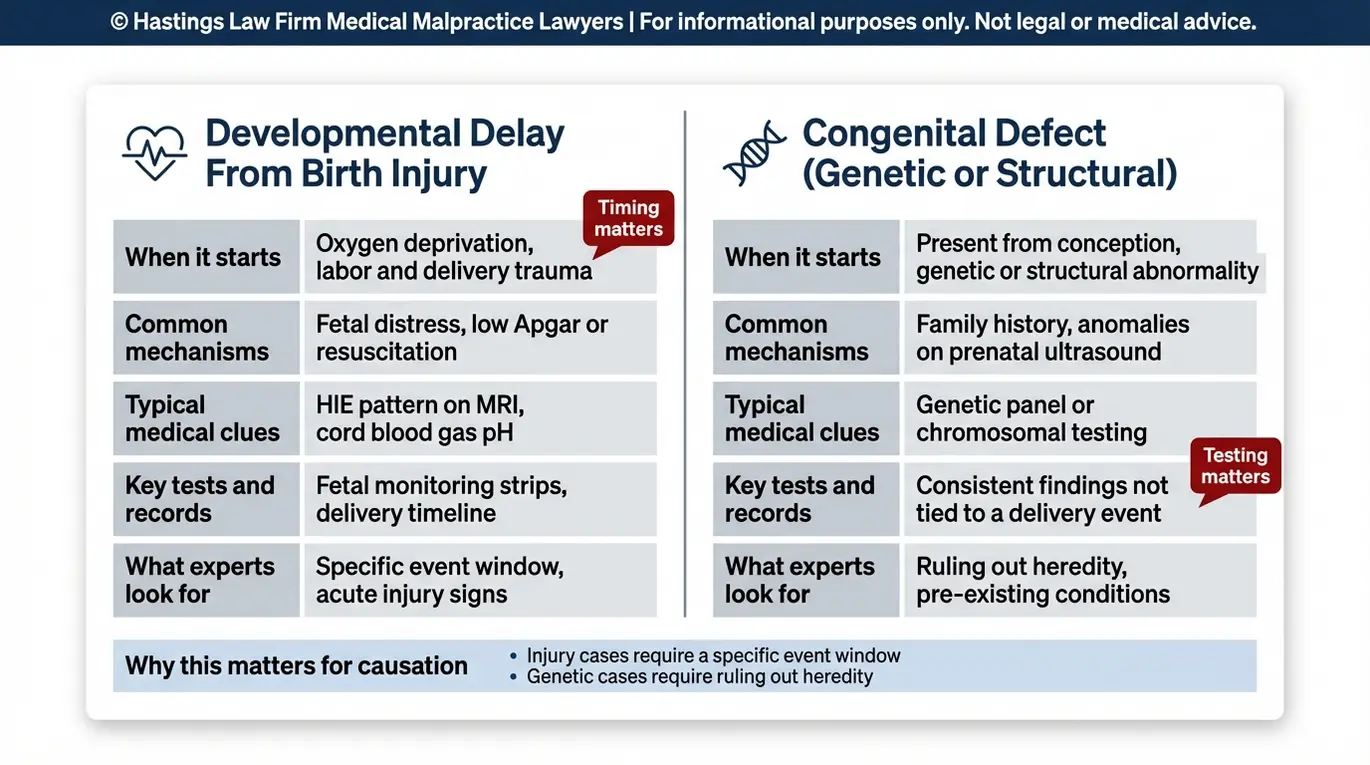
A developmental delay caused by birth injury typically results from oxygen deprivation or physical trauma during labor, whereas congenital defects are genetic or structural abnormalities present from conception. Understanding this distinction is one of the first steps in determining whether a medical malpractice claim exists.
Developmental delays in the context of birth injury litigation refer to a child’s failure to reach expected physical, cognitive, or behavioral milestones because of damage sustained during labor or delivery. A child who suffered brain damage from prolonged oxygen loss, for example, may struggle with motor control, speech, or learning in ways that become apparent over months or years. While a delay might be temporary, an unaddressed birth injury can lead to permanent intellectual disability.
A congenital defect, a structural or functional abnormality that develops before birth, often arises from inherited genetic conditions or chromosomal abnormalities. These are not caused by something that went wrong in the delivery room.
Genetic testing, the process of analyzing a child’s DNA to identify inherited conditions, is often a critical early step. When genetic testing rules out a hereditary cause, it strengthens the possibility that the child’s condition resulted from birth trauma rather than biology. The CDC’s developmental milestone guidelines provide a framework pediatricians use to identify when a child is falling behind expected benchmarks.
Medical experts we work with evaluate the full clinical picture to differentiate between a “bad outcome” and actionable negligence. They examine delivery records, imaging, genetic results, and the child’s developmental trajectory to determine whether the standard of care was met or breached. This rigorous evaluation helps distinguish cases where a disability stems from preventable errors versus unavoidable genetic causes. This analysis is central to what Texas birth injury lawyers for developmental delays investigate before moving forward with a claim.
| Factor | Birth Injury (Potential Malpractice) | Congenital Defect (Genetic/Structural) |
|---|---|---|
| Cause | Oxygen deprivation, physical trauma, or medical error during labor/delivery | Genetic mutation, chromosomal abnormality, or prenatal environmental exposure |
| Timing | Occurs during labor, delivery, or the immediate postnatal period | Present from conception or early fetal development |
| Detection | May not be apparent until developmental milestones are missed months or years later | Often identified through prenatal screening or genetic testing after birth |
| Legal Relevance | May support a medical malpractice claim if causation and breach are established | Generally not the basis for a malpractice claim unless prenatal screening was negligently performed |
Medical Terminology: Delay vs. Disability
There is an important clinical distinction between a developmental delay and an intellectual disability, and it directly affects how a legal claim is valued. A developmental delay, a condition where a child is behind schedule in reaching certain milestones, generally means the child may still catch up with intervention. An intellectual disability, a permanent and significant limitation in cognitive functioning and adaptive behavior, will affect the person for life.
This distinction matters for life care planning in a birth injury case. A child with a temporary delay may need a few years of therapy. A child with a permanent intellectual disability may require specialized education, ongoing medical care, assisted living, and support services for decades. Understanding these long-term consequences is vital for securing appropriate compensation. The projected lifetime cost shapes the damages calculation in these cases, and getting that projection right requires experienced medical and economic experts.
Obstetric Negligence Leading to Cognitive Impairment
Medical negligence during labor, such as failing to respond to fetal distress or mismanaging medication like Pitocin, can cause hypoxic-ischemic injuries that result in permanent intellectual disabilities. These injuries are preventable when obstetric teams follow established protocols for monitoring and intervention.
Fetal distress, or nonreassuring fetal status, signs indicating that a baby is not tolerating labor well, is often reflected in abnormal heart rate patterns on the electronic fetal monitor. According to the American College of Obstetricians and Gynecologists’ Clinical Practice Guideline on Intrapartum Fetal Heart Rate Monitoring, providers are expected to recognize and respond to these patterns in a timely manner. When warning signs are missed or ignored, the baby may be deprived of oxygen long enough to cause brain damage. Severe cases often involve Hypoxic-ischemic encephalopathy (HIE), a brain injury resulting from oxygen deprivation.
Several types of obstetric negligence can lead to cognitive impairment:
- Failure to monitor fetal heart rate strips. Continuous electronic monitoring during labor exists to catch early signs of oxygen deprivation. Effective monitoring requires vigilance. When nurses or physicians fail to read the strips correctly, or when staffing gaps mean no one is watching, dangerous patterns can go unaddressed.
- Pitocin misuse causing uterine tachysystole. Pitocin, a synthetic form of oxytocin used to induce or augment labor, can cause uterine tachysystole, a condition where contractions become so frequent or prolonged that blood flow to the placenta is compromised. This cuts off the baby’s oxygen supply.
- Delayed emergency C-sections. When labor stalls or fetal monitoring shows persistent distress, a timely cesarean delivery can prevent brain injury. Delays in making that decision, or delays in getting the patient to the operating room, can have permanent consequences.
- Improper use of forceps or vacuum extractors. These instruments can be necessary during difficult deliveries, but incorrect placement or excessive force may cause intracranial bleeding, skull fractures, or direct brain trauma.
An attorney for developmental delay injuries evaluates each of these potential failure points during the investigation. At Hastings Law Firm, our in-house medical staff includes nurses who previously worked in hospital settings. This helps us identify exactly where hospital protocols may have broken down. By strictly adhering to the standard of care, obstetricians can often prevent these devastating outcomes.
The Hastings Law Firm Difference
Results matter, but what truly sets us apart is how we achieve them. Every verdict, every settlement, and every Texas courtroom victory comes from one guiding promise: To treat each client’s fight for justice as if it were our own.
This balance of skill, experience, and empathy reflects our core philosophy that justice should not only compensate the injured, but also make healthcare safer nationwide.

Recognizing Early Signs of Birth-Related Trauma
Signs of a birth-related injury often manifest as missed physical or cognitive milestones, such as inability to roll over, lack of eye contact, or speech delays, which may not become obvious until months or years after delivery. This is why many parents don’t connect their child’s struggles to what happened in the delivery room.
Some indicators are visible immediately after birth, while others emerge gradually as the child grows. Parents should watch for issues with motor skills and cognitive development. In some cases, these delays may be the first indication of cerebral palsy. Knowing what to look for at each stage can help families seek both medical intervention and legal help for infant intellectual disability sooner rather than later.
Immediate signs (birth to discharge):
- Low Apgar score, a quick assessment of a newborn’s heart rate, breathing, muscle tone, reflexes, and skin color taken at one and five minutes after birth
- Seizures within the first 24 hours
- Need for resuscitation or emergency NICU admission
- Difficulty feeding or swallowing
Signs at 6 to 12 months:
- Inability to sit up without support
- Failure to crawl or bear weight on legs
- Not tracking objects with eyes or turning toward sounds
- Lack of babbling or vocal response
Toddler and preschool signs (18 months to 4 years):
- Significant speech regression or failure to use words
- Difficulty following simple directions
- Trouble with basic motor tasks like stacking blocks or holding a crayon
- Not engaging in pretend play or interacting with other children
The CDC’s milestone checklist for children by age 4 offers parents a structured way to track whether their child is meeting expected developmental benchmarks. If your child is consistently missing milestones across multiple categories, a pediatric neurologist can help determine whether the delays are connected to a brain injury sustained during birth.
Not every developmental delay points to malpractice. But when a child’s medical history includes a complicated delivery, prolonged labor, emergency interventions, or NICU time, those facts warrant a closer look. A Texas developmental delay birth injury lawyer can help you connect the medical history to your child’s current condition and determine whether the care provided fell below acceptable standards.
Proving the Link Between Labor and Developmental Delays
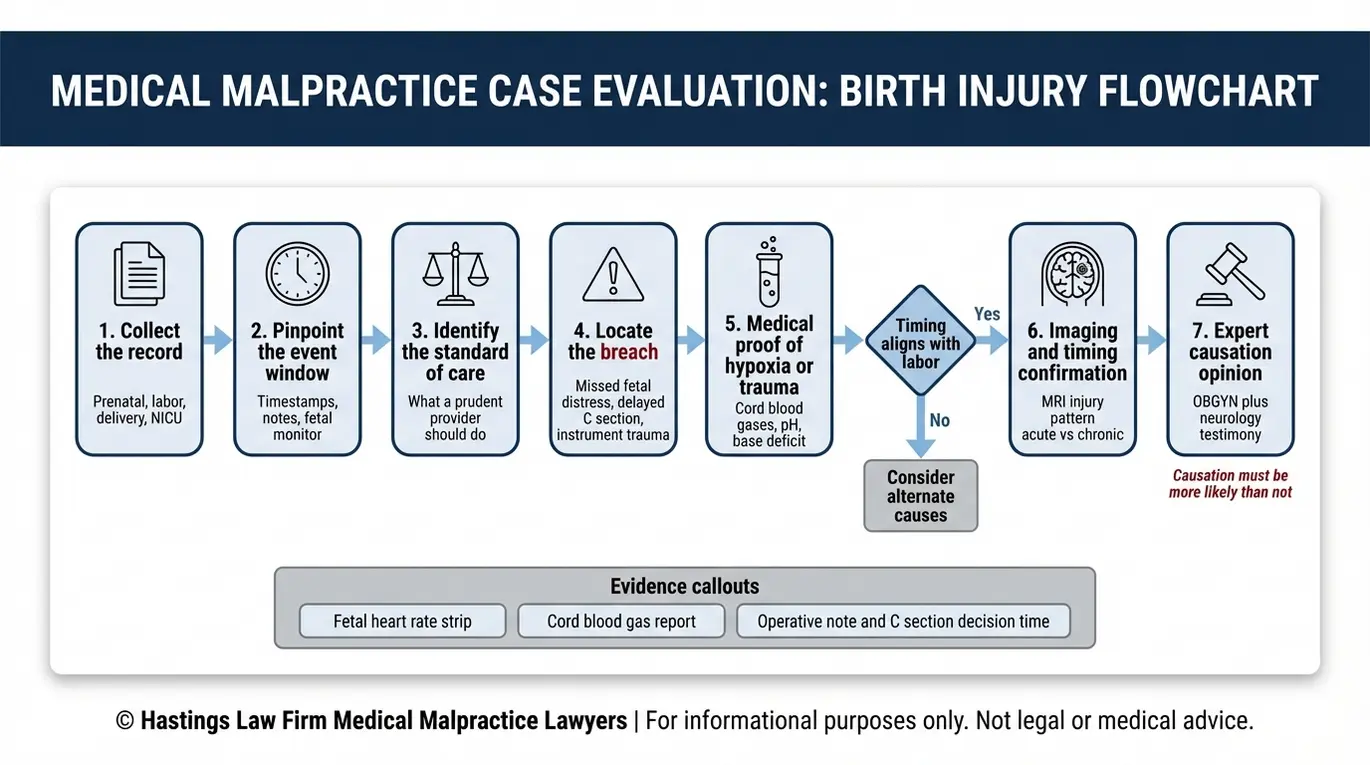
Establishing liability requires a “preponderance of the evidence,” meaning it must be shown that the medical provider more likely than not breached the standard of care and that this breach directly caused the child’s developmental delay. This is the central challenge in any birth injury claim, and it demands both medical precision and legal experience. An experienced lawyer for birth trauma delays understands that timing is everything when building this evidence.
To establish whether a breach occurred, we rely on the expertise of our founder, Tommy Hastings, who is board-certified in personal injury trial law by the Texas Board of Legal Specialization. This is a distinction held by a small percentage of attorneys in Texas.
Here is how we approach the process of building that connection:
- Collect and reconstruct the full medical record. This includes prenatal records, labor and delivery notes, fetal heart rate tracings, nursing logs, and NICU documentation. We build a minute-by-minute timeline of the events surrounding the birth.
- Analyze cord blood gas results. Umbilical cord blood gas analysis, a diagnostic test measuring the pH level and base deficit in the baby’s blood at birth, can provide direct evidence that oxygen deprivation occurred during delivery. By correlating the base deficit readings with the fetal heart rate strips, we can construct a compelling timeline of when the oxygen loss began. Data from the JAMA Network shows a strong correlation between abnormal cord pH levels and birth injury outcomes.
- Review brain imaging for timing and pattern of injury. MRI scans can help determine whether the brain injury occurred acutely during labor, meaning the damage pattern is consistent with a sudden loss of oxygen, rather than a chronic condition that developed earlier in pregnancy. This distinction is essential for proving causation.
- Retain qualified medical experts. Through our national network of OBGYNs, neonatologists, and pediatric neurologists, we secure expert testimony that addresses both the breach and the causation. These experts evaluate whether a competent provider would have acted differently and whether that different action would have prevented the injury.
Hypoxic-ischemic encephalopathy, commonly called HIE, a specific type of brain damage caused when the brain is deprived of adequate oxygen and blood flow around the time of birth, often leaves a distinct signature on imaging. Proving HIE was caused by a delivery-room failure, rather than a prenatal condition, requires this layered approach combining records, imaging, lab results, and expert analysis. This forensic approach often reveals that the injury was acute and preventable, rather than a pre-existing condition.
As a Texas developmental delay birth injury lawyer, Hastings Law Firm prepares every case with the assumption that it will go before a jury. That level of preparation, starting from day one, puts our clients in the strongest possible position whether the case resolves through settlement or at trial.
Calculating Damages for a Child with Special Needs
Compensation in developmental delay cases focuses on the child’s lifetime needs, including specialized education, therapy, around-the-clock care, and loss of future earning capacity. Damages refer to the financial compensation sought to cover the various losses a family experiences due to medical errors. Because these injuries often affect a child for the rest of their life, the financial projections involved can span five or more decades.
Economic damages cover the measurable costs associated with the injury:
- Past and future medical expenses, including hospitalizations, surgeries, and medications
- Speech therapy, occupational therapy, and physical therapy
- Special education programs and tutoring
- Home modifications such as wheelchair ramps, accessible bathrooms, or assistive technology
- In-home nursing care or attendant care services
- Loss of future earning capacity if the disability prevents the child from working as an adult
Non-economic damages address the human cost that can’t be calculated with a receipt:
- Physical pain and suffering
- Mental anguish experienced by the child and, in some claims, the parents
- Physical impairment and loss of enjoyment of life
- Disfigurement, when applicable
One of the most important tools in these cases is a life care plan. A life care planner, typically a nurse or rehabilitation specialist, works with the child’s treating physicians to project every category of care the child will need from the present through their expected lifespan. The Standards of Practice published in the Journal of Life Care Planning outline the methodology these experts follow to ensure projections are credible and defensible in court.
At Hastings Law Firm, our team works closely with life care planners and economists to build a damages model that reflects the true cost of compensation for developmental birth injuries. Our legal team collaborates with medical professionals to ensure no expense is overlooked.
From the cost of future surgeries to the price of adaptive vehicles, every potential financial burden must be accounted for. This comprehensive damages model protects the child’s financial future, ensuring they have access to the highest quality care regardless of rising medical costs. The goal is to make sure a settlement or verdict actually covers what your child will need, not just what looks reasonable on paper today.
Texas Statute of Limitations for Minors
While the standard statute of limitations for medical malpractice in Texas is two years from the date of the alleged negligence, special tolling rules apply to minors, often allowing claims to be brought until the child reaches age 14, and in some circumstances later depending on when the injury was discovered. Navigating the statute of limitations for birth injury claims in Texas requires understanding these exceptions.
Texas law recognizes that children cannot advocate for themselves. Because of this, the statute of limitations is “tolled,” or paused, for minors under the age of 12 at the time of the negligent act. This tolling generally gives the child’s parents or legal guardians until the child’s 14th birthday to file suit.
For children who were 12 or older when the malpractice occurred, the standard two-year deadline applies without the same tolling benefit. The distinction between these age groups matters significantly and can determine whether a claim is still viable. Texas Civil Practice & Remedies Code Section 74.251 also imposes specific procedural rules that can impact these timelines.
Nuances of the Age 14 Rule
Texas also imposes what is known as a “statute of repose” for medical malpractice claims, which creates an absolute outer deadline. In most medical malpractice cases, no claim may be filed more than 10 years after the date of the negligent act, regardless of when the injury was discovered. This hard cutoff applies even to minors.
The practical effect is this: even though developmental delays may not become apparent until a child enters school at age five or six, the legal clock is already running. Parents who wait too long risk losing the right to file altogether, even if the injury itself is only recently understood. Missing these legal deadlines can be fatal to a case.
There is also a “discovery rule” that may apply when the connection between the medical care and the child’s condition could not reasonably have been known earlier. But courts apply this exception narrowly, and it does not override the 10-year repose period. Since minors lack the legal capacity to file a lawsuit themselves, parents must act vigilantly.
Evidence also deteriorates over time. Medical records may be harder to obtain, fetal monitoring strips can degrade, and the memories of nurses and physicians involved in the delivery fade. A Texas developmental delay birth injury lawyer can evaluate your timeline and determine what deadlines apply to your specific situation. The sooner that assessment happens, the more evidence is preserved.
Contact the Texas Birth Injury Attorneys at Hastings Law Firm Today for Help
If your child is missing milestones or has been diagnosed with a developmental disability, those concerns deserve a thorough investigation, not assumptions. Something may have gone wrong during delivery, and you have the right to find out.
Hastings Law Firm is dedicated to helping families get answers and hold negligent providers accountable. Our team includes former defense attorneys who understand how hospitals build their cases, in-house nurses who know how to read the records, and a national network of medical experts who can evaluate what happened.
As a Texas developmental delay birth injury lawyer, we offer a free, confidential case evaluation. There are no fees or costs unless we recover compensation for your family. Contact us to take that first step toward understanding what happened and what options are available to you.
Frequently Asked Questions About Developmental Delay Birth Injury in Texas


This content was researched and written by the Hastings Law Firm editorial team, which includes attorneys, medical professionals, and experienced researchers. Our writing is informed by internal knowledge and practical experience, and we cross-check critical details against authoritative sources cited throughout. Every piece undergoes human-led fact-checking and legal review. Because legal and medical information can change, if you spot an error, please contact us. Learn more about our content standards and review process on our editorial policy page.

Tommy Hastings, founder of Hastings Law Firm, is a board-certified personal injury trial lawyer dedicated exclusively to healthcare injury cases. Since 2001, he has represented injured patients and families in litigation against major hospital systems, pharmaceutical companies, and negligent healthcare providers nationwide. He has handled numerous high-profile cases that have drawn national media attention and resulted in multi-million dollar recoveries. He draws on that experience in his writing, helping readers understand how these cases work and what options may be available to them.
