


Texas Delivery Room Hypothermia Malpractice Lawyer
Written by: Hastings Law Firm | Reviewed by: Tommy Hastings | Updated: July 27, 2026
Therapeutic hypothermia is a time sensitive treatment used to reduce brain injury in newborns with oxygen deprivation around birth. When a medical team fails to recognize eligibility, delays starting cooling, or mismanages temperature control and monitoring, the chance to limit harm can be lost. These breakdowns can leave families facing lifelong disabilities, complex care needs, and profound uncertainty about what happened in the delivery room. If you or a loved one were harmed or worse due to therapeutic hypothermia malpractice in Texas, contact Hastings Law Firm for a free, confidential case review.
Top Rated Birth Injury Attorneys Helping Families Across Texas
What You Should Know About Neonatal Hypothermia Negligence Claims in Texas:
- Lifelong disability risk can increase when cooling therapy is delayed or improperly managed after oxygen deprivation around birth.
- Options for accountability can depend on whether the medical record shows timely screening for eligibility and a prompt decision to start cooling.
- Serious complications can follow improper temperature control, since overcooling can trigger cardiac rhythm problems and rapid rewarming can trigger seizures.
- Disputes often focus on timing, since cooling must be started within a narrow window to provide meaningful neuroprotection.
- Liability questions can turn on whether the newborn met eligibility indicators such as low Apgar scoring or abnormal cord blood gas results.
- Alternative explanations can be raised by hospitals, including claims that the injury occurred before labor rather than during delivery.
- Recovery can include compensation for long term medical care needs, pain and suffering, and loss of earning capacity when a brain injury causes permanent impairment.
- Proof issues can hinge on documentation gaps, since missing orders, incomplete temperature logs, or delayed consults can indicate a breakdown in care.
- Key records can be central, including fetal monitoring strips and NICU notes that show distress recognition and cooling initiation timing.
- Additional records can matter, including placental pathology and brain imaging that may clarify the timing and pattern of injury.

A Healthcare Focused Law Firm
When your child suffers a brain injury during or after delivery, the grief and confusion can feel overwhelming. You may sense that something went wrong, that the medical team should have acted sooner or differently, but you are not sure how to confirm what happened or what to do next.
At Hastings Law Firm, founded by Tommy Hastings—who is Board Certified in Personal Injury Trial Law, a distinction held by less than 2% of Texas attorneys—we focus exclusively on medical malpractice. Our team of attorneys, nurse consultants, and medical experts understands both the clinical science and the legal framework behind these claims. As a trusted Texas delivery room hypothermia malpractice lawyer, we are here to help you find answers.
If your child was diagnosed with HIE or a related brain injury, we encourage you to reach out for a free, confidential case evaluation. We can review what happened and explain your options.
Understanding Therapeutic Hypothermia and the Standard of Care
Therapeutic hypothermia, often called cooling therapy, is the standard medical treatment for newborns suffering from oxygen deprivation (HIE) to slow brain metabolism and prevent permanent damage. It is specifically designed to reduce the risk of hypoxic-ischemic encephalopathy (HIE), a condition where reduced blood flow and oxygen trigger a cascade of injury to brain cells.
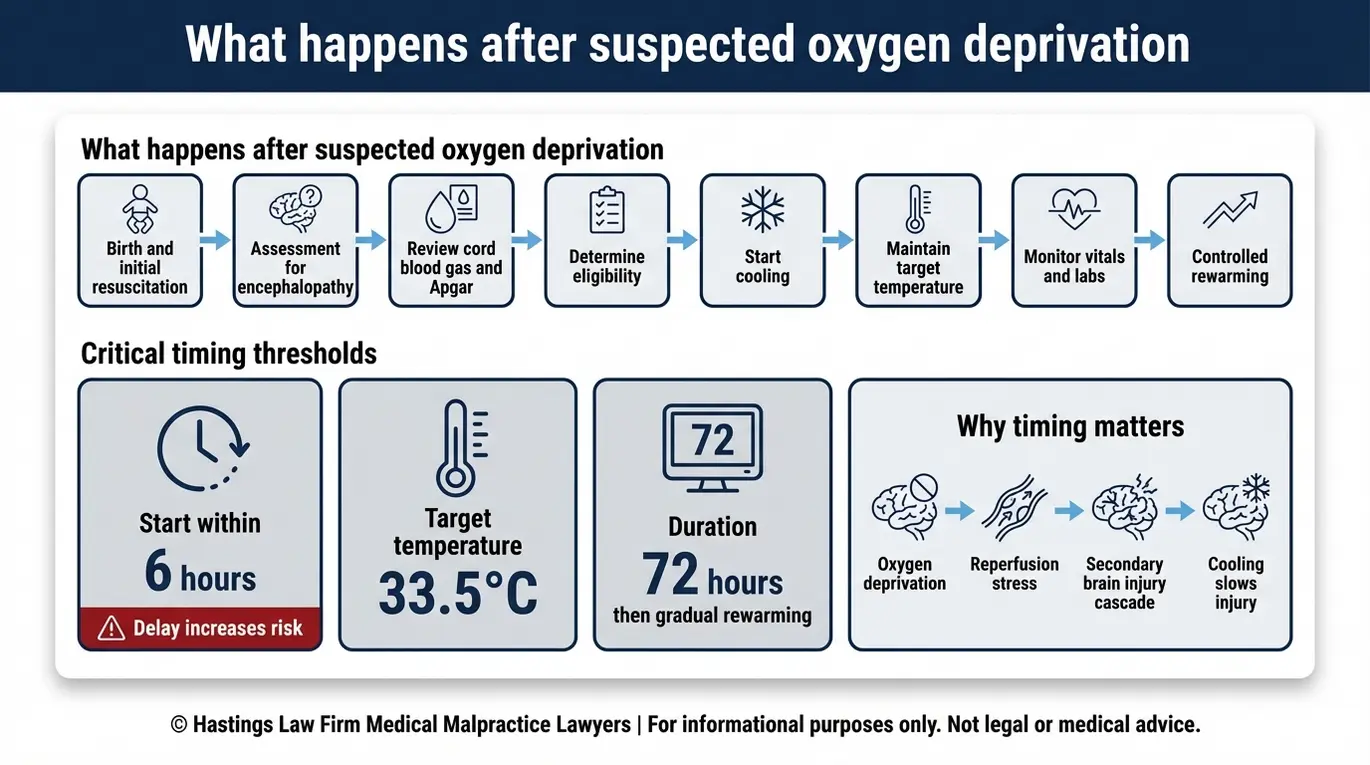
The treatment works by lowering the infant’s core body temperature to approximately 33.5°C (about 92.3°F) and maintaining that temperature for 72 hours. At this reduced temperature, the brain’s metabolic demand drops significantly, slowing the process of cell death that begins after birth asphyxia. According to the Therapeutic Hypothermia Clinical Pathway from Nationwide Children’s Hospital, this protocol has become the accepted intervention for eligible newborns with neonatal encephalopathy.
The six-hour window is critical. Often referred to as the “golden hour” concept in neonatal care, cooling therapy must be initiated within six hours of birth to be effective. This narrow treatment window is frequently at the center of malpractice claims involving hypothermia treatment in Texas. When medical teams fail to recognize the signs of HIE or delay the decision to cool, the opportunity to protect the infant’s brain can be lost entirely.
One reason timing matters so much involves reperfusion injury. After an oxygen-depriving event, blood flow eventually returns to the brain. Without cooling in place, that restored circulation can actually trigger a secondary wave of damage as oxygen floods vulnerable tissue. Cooling therapy is designed to blunt this response by stabilizing the cells before normal blood flow resumes, preventing further destruction.
Key elements of the cooling protocol include:
- Temperature target: The infant’s body temperature is reduced to 33.5°C and held there continuously
- Duration: Cooling is maintained for a full 72 hours under close monitoring
- Initiation deadline: Treatment must begin within 6 hours of birth to offer meaningful neuroprotection
- Controlled rewarming: After 72 hours, the baby’s temperature is raised gradually (typically 0.5°C per hour) to avoid triggering seizures or additional injury
Under Texas Civil Practice and Remedies Code Chapter 74, medical malpractice claims require proof that a provider deviated from the accepted standard of care. When a Texas cooling therapy attorney investigates these cases, the treatment timeline and adherence to this protocol are among the first things examined.
Eligibility Criteria Determining When Doctors Must Order Cooling
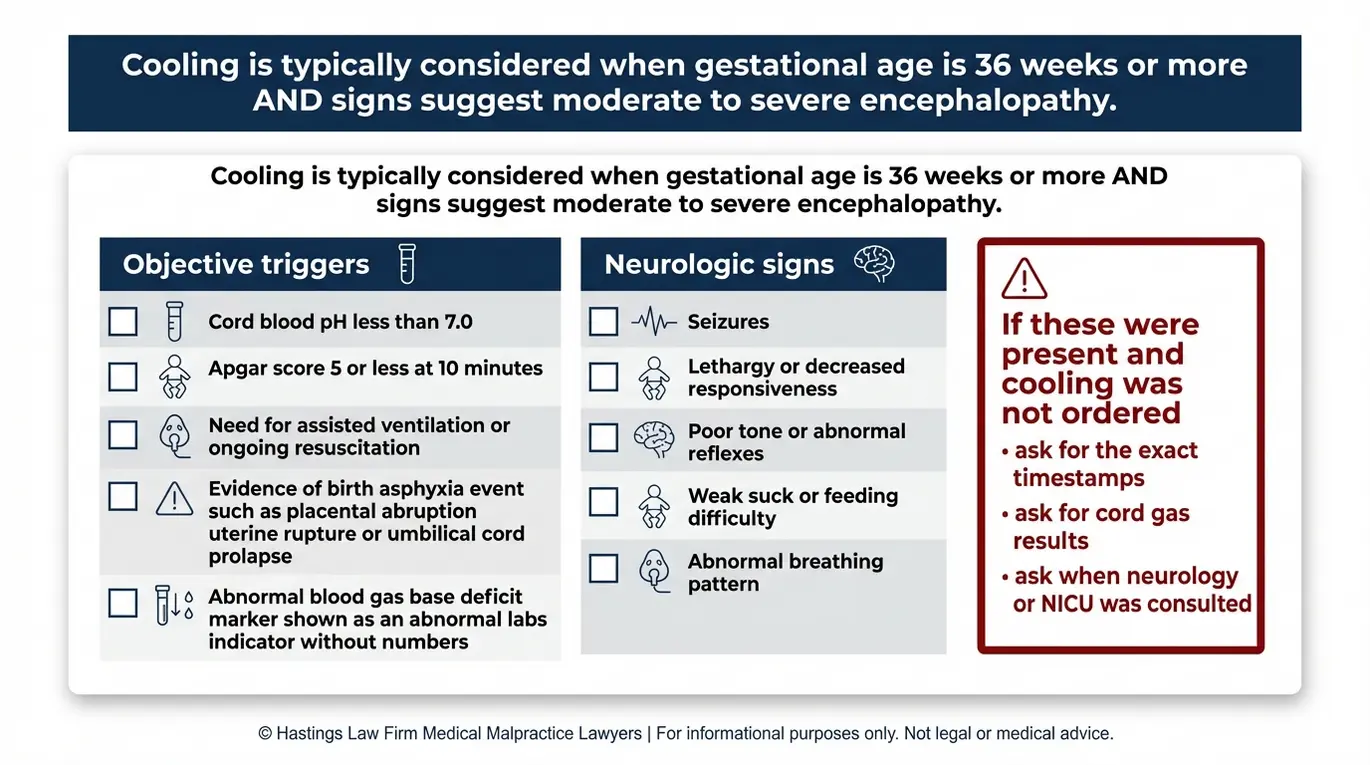
Doctors must order cooling therapy when a newborn born at 36 weeks of gestation or later shows signs of moderate to severe encephalopathy, typically evidenced by low Apgar scores, abnormal cord blood gas results, or clinical seizures.
The medical team must evaluate several clinical factors to determine if a newborn is a candidate for cooling. Doctors use the Apgar score, a quick assessment given at 1 and 5 minutes that rates a newborn’s heart rate, breathing, muscle tone, reflexes, and skin color on a scale of 0 to 10. They also rely on umbilical cord blood gas, a lab test taken from the umbilical cord at birth that measures the baby’s blood oxygen and acid levels.
According to the Treatment of Neonatal Encephalopathy using Therapeutic Whole Body Hypothermia guidelines from UC Davis Health, the standard eligibility criteria include specific clinical and laboratory thresholds.
Eligibility Criteria for Cooling Therapy
| Criteria Type | Threshold for Cooling Eligibility |
|---|---|
| Gestational age | 36 weeks or greater |
| Cord blood pH | Less than 7.0 (or base deficit ≥ 16) |
| Apgar score | 5 or less at 10 minutes |
| Assisted ventilation | Need for resuscitation at birth for 10+ minutes |
| Clinical signs | Seizures, lethargy, abnormal reflexes, poor tone |
| Initiation window | Must begin within 6 hours of birth |
When an infant meets these criteria and cooling is not ordered, that failure is often the first thing a delivery room negligence lawyer investigates. The medical record should reflect that the team assessed these indicators and made a timely decision.
If the documentation shows that the signs were present but no action was taken, or that critical hours passed before a neonatology consult was requested, that gap becomes a central focus of investigation.
A failure to cool malpractice case often turns on whether the delivering team recognized fetal distress signals like persistent abnormal heart rate patterns, events such as umbilical cord prolapse, placental abruption, or uterine rupture, and then connected those findings to the need for immediate neonatal assessment and cooling eligibility screening.
The Hastings Law Firm Difference
Results matter, but what truly sets us apart is how we achieve them. Every verdict, every settlement, and every Texas courtroom victory comes from one guiding promise: To treat each client’s fight for justice as if it were our own.
This balance of skill, experience, and empathy reflects our core philosophy that justice should not only compensate the injured, but also make healthcare safer nationwide.

When Therapeutic Hypothermia Therapy Becomes Medical Malpractice
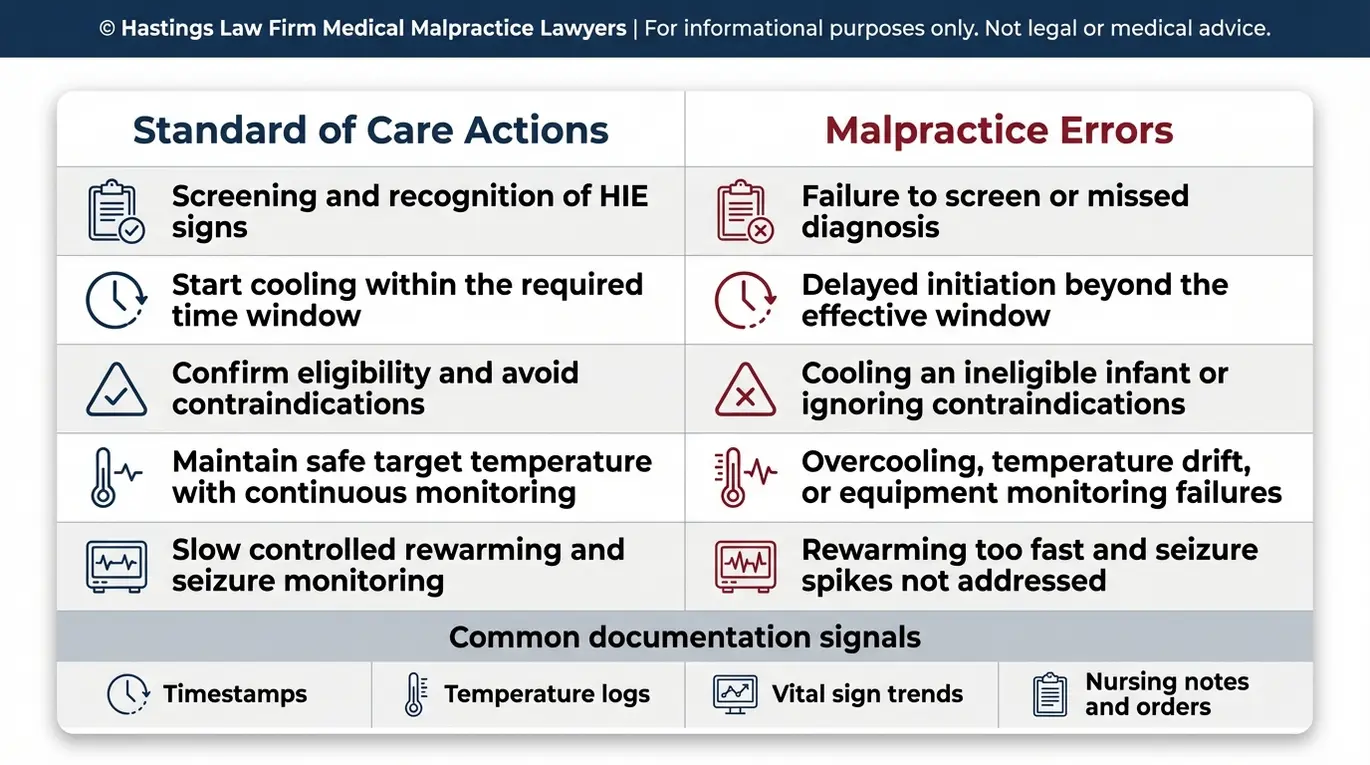
Malpractice occurs when medical providers fail to screen for HIE, delay cooling beyond the six-hour window, cool an ineligible infant, or fail to properly monitor the baby during the 72-hour treatment process.
Not every bad outcome is the result of medical negligence. But when a hospital team has clear clinical indicators that an infant needs cooling therapy and does not act on them in time, the consequences can be devastating. A Texas delivery room hypothermia malpractice lawyer investigates exactly where the breakdown occurred and whether it fell below the accepted standard of care.
Failure to initiate cooling
HIE, or hypoxic-ischemic encephalopathy, requires immediate intervention to protect brain tissue. Failure to initiate cooling is the most common error. This often happens when the physician fails to recognize HIE signs, communication breaks down with the NICU, or the facility lacks necessary equipment. Delays in transferring an infant to a higher-level facility can also push treatment past the critical six-hour window.
Improper administration
Maintaining the correct core temperature is essential to the success of cooling therapy. Improper administration is another category of negligence. If the temperature falls below the target range, systemic hypothermia can cause cardiac arrhythmias. Equally concerning is the rewarming phase.
Controlled rewarming, the gradual process of raising the baby’s temperature after the 72-hour cooling period, must be done slowly. A study published in PubMed on seizures after initiation of rewarming in cooled infants with hypoxic ischaemic encephalopathy found that rewarming too rapidly can trigger seizures and worsen the brain injury.
Equipment and monitoring failures
Cooling blankets and caps must maintain a consistent target temperature throughout the 72-hour protocol. If the equipment malfunctions or nursing staff fail to check and document temperature readings at required intervals, the treatment may be rendered ineffective due to equipment malfunctions.
Common errors that may support a malpractice claim include:
- Failing to assess the newborn for HIE eligibility despite clear risk factors
- Delaying neonatology consultation after a complicated delivery
- Not initiating cooling within the six-hour treatment window
- Overcooling or undercooling the infant due to inadequate monitoring
- Rewarming too quickly, increasing the risk of seizures
- Failing to transfer the infant to a facility capable of providing cooling therapy
Contraindications and Risks of Improper Cooling
Cooling therapy is not appropriate for every newborn. A significant contraindication is intracranial hemorrhage (ICH), or bleeding within the skull, as cooling affects blood clotting and can worsen the hemorrhage. Other contraindications may include severe congenital abnormalities or active, uncontrollable bleeding from other sources.
It is also necessary to distinguish between whole-body cooling and selective head cooling (cooling caps). Each method has different equipment requirements and monitoring protocols. Using the wrong method or equipment can result in uneven cooling and inadequate neuroprotection. When a medical team cools an ineligible infant or applies the wrong technique, that decision may itself constitute a breach of the standard of care.
The Link Between HIE Cooling Failures and Cerebral Palsy
Failure to properly administer cooling therapy prevents the brain from recovering after birth asphyxia, directly increasing the likelihood and severity of permanent disabilities like cerebral palsy.
HIE, or hypoxic-ischemic encephalopathy, is a brain injury caused by reduced oxygen or blood flow around the time of birth. It is not a single moment of injury; it is an evolving process. After the initial oxygen deprivation, the brain enters a period known as secondary energy failure, a delayed cascade of cell death that can continue for hours or even days after the original event. According to the NCBI Bookshelf resource on Neonatal Therapeutic Hypothermia, cooling therapy works precisely because it interrupts this secondary cascade.
When treatment is delayed or improperly administered, the cascade continues unchecked, and the resulting brain damage is often far more severe than what the initial event alone would have caused. Neonatal encephalopathy, the broader term for brain dysfunction in newborns, manifests in different ways depending on which areas of the brain are affected.
For many children, the damage from untreated or undertreated HIE leads to a diagnosis of cerebral palsy, a group of movement and posture disorders caused by injury to the developing brain. Other consequences can include chronic seizure disorders, cognitive disabilities, and vision or hearing impairment.
In a case brought by an experienced HIE malpractice lawyer, the central question is often whether timely and proper cooling would have prevented or reduced the severity of the child’s condition. If the evidence shows that the infant met the criteria for cooling and the medical team failed to act within the treatment window, the causal link between that failure and the child’s cerebral palsy or other injuries becomes a provable element of the claim.
Proving Liability in Texas Cooling Therapy Cases
Liability is established by proving that the medical team deviated from the accepted standard of care for HIE treatment protocols, and that this deviation directly caused or worsened the infant’s brain injury.
In Texas, medical malpractice claims involving cooling therapy require more than showing a poor outcome. The legal team must demonstrate, through qualified expert testimony, that a reasonably competent provider in the same specialty would have acted differently under the same circumstances. Qualified national expert witnesses, typically board-certified neonatologists, are essential in these claims as they offer opinions on whether the care provided met the recognized standard.
A Texas medical malpractice lawyer handling a cooling case will focus heavily on the medical record timeline. Even small gaps, a 30-minute delay in calling a neonatology consult, a missing temperature log, or an unsigned order, can reveal where the standard of care was breached. Electronic fetal monitoring strips are particularly valuable. We consult resources like the Review of Category I II and III Fetal Heart Rate Classifications to demonstrate how abnormal heart patterns establish distress. These patterns, like late decelerations, give the medical team notice that HIE screening should begin immediately.
Our legal team, which includes former defense attorneys and hospital nurses who previously worked for the systems they now challenge, anticipates the arguments hospitals typically raise. We prepare every case from day one as if it will go to a jury trial to ensure a firm negotiation posture.
One common defense strategy is to claim that the brain injury occurred weeks before delivery, during pregnancy rather than during labor. This is known as an antenatal injury defense, and proving cooling negligence requires evidence to counter it, including placental pathology, cord blood gas results, and imaging studies showing the timing and pattern of injury.
Evidence we gather in these cases includes:
- Electronic fetal monitoring strips from labor and delivery
- Umbilical cord blood gas results and Apgar scoring documentation
- NICU admission notes and cooling initiation records
- Nursing logs documenting temperature checks during the 72-hour protocol
- Placental pathology reports
- Brain imaging (MRI/ultrasound) conducted in the days after birth
- Hospital transfer records and communication logs
- Internal hospital protocols for HIE screening and cooling eligibility
Each piece of evidence helps us build a minute-by-minute timeline of what happened, what should have happened, and where the two diverged.
Damages and Compensation for Lifelong Birth Injuries
Families may recover compensation for past and future medical expenses, life care planning costs, pain and suffering, and loss of earning capacity for the child.
A brain injury caused by cooling therapy negligence often results in disabilities that require a lifetime of care. The financial burden on a family can be staggering, and a successful claim for compensation for HIE negligence is designed to account for the full scope of that burden, both now and into the future.
Recoverable damages in these cases typically include:
- Past and future medical expenses: Hospital stays, surgeries, medications, rehabilitative therapies, and specialist appointments
- Life care plan costs: Long-term needs such as in-home nursing, physical therapy, occupational therapy, speech therapy, and assistive devices (wheelchairs, communication technology, home modifications)
- Pain and suffering: Compensation for the physical pain and emotional distress the child endures
- Physical impairment: Damages reflecting the loss of normal bodily function and physical capacity
- Loss of earning capacity: Projected lifetime income the child will be unable to earn due to their disabilities
- Wrongful death: In the most tragic cases, families who lost a child may pursue a wrongful death claim
Our team works with life care planners and economists to calculate what a child will need through their expected lifespan. These professionals develop detailed projections based on the child’s specific diagnosis, level of impairment, and anticipated medical needs. This analysis is critical because it ensures that any settlement or verdict reflects the true cost of care, not just the expenses incurred so far. By accounting for inflation and rising medical costs over decades, we ensure the compensation is sufficient to provide high-quality support for the child’s entire life.
Contact the Texas Birth Injury Attorneys at Hastings Law Firm Today for Help
A child’s brain injury after a complicated delivery is not always unavoidable. In many cases, it is the result of a medical team’s failure to follow established protocols for recognizing and treating HIE.
If your family is facing this situation, Hastings Law Firm can help you find out what happened and whether your child’s injury was preventable. Our team focuses exclusively on medical malpractice and includes attorneys, nurse consultants, and medical experts who handle these cases every day. We review the records, consult with leading neonatologists, and build the evidence needed to hold the responsible parties accountable.
There is no cost to speak with us. We work on a contingency fee basis, meaning you pay no attorney fees unless we recover compensation for your family. Contact us today for a free, confidential case evaluation and take the first step toward getting the answers you deserve.
Frequently Asked Questions About Delivery Room Hypothermia Malpractice in Texas


This content was researched and written by the Hastings Law Firm editorial team, which includes attorneys, medical professionals, and experienced researchers. Our writing is informed by internal knowledge and practical experience, and we cross-check critical details against authoritative sources cited throughout. Every piece undergoes human-led fact-checking and legal review. Because legal and medical information can change, if you spot an error, please contact us. Learn more about our content standards and review process on our editorial policy page.

Tommy Hastings, founder of Hastings Law Firm, is a board-certified personal injury trial lawyer dedicated exclusively to healthcare injury cases. Since 2001, he has represented injured patients and families in litigation against major hospital systems, pharmaceutical companies, and negligent healthcare providers nationwide. He has handled numerous high-profile cases that have drawn national media attention and resulted in multi-million dollar recoveries. He draws on that experience in his writing, helping readers understand how these cases work and what options may be available to them.
