


Texas Infant Delayed Airway Management Lawyer
Written by: Hastings Law Firm | Reviewed by: Tommy Hastings | Updated: July 27, 2026
Delayed airway management during newborn resuscitation can leave families facing sudden uncertainty about what happened in the delivery room. When ventilation or intubation is not performed correctly or in time, a baby can suffer oxygen deprivation that leads to serious and lasting harm. Understanding common airway management failures, the signs of injury, and how responsibility may extend to multiple providers and the hospital can help families make informed decisions. If you or a loved one were harmed or worse due to delayed neonatal airway management in Texas, contact Hastings Law Firm for a free, confidential case review.

Top Rated Birth Injury Attorneys Helping Families Across Texas
What You Should Know About Newborn Respiratory Distress Negligence Claims in Texas:
- Long term disability can follow delayed ventilation or incorrect intubation because prolonged oxygen deprivation can injure the brain.
- A missed opportunity for cooling therapy can occur when signs of brain injury are not recognized quickly enough or transfer to a NICU capable facility is delayed.
- Responsibility can extend beyond one doctor because hospitals, nurses, and respiratory therapists may share liability for airway management breakdowns.
- Options for recovery can be more limited against government owned hospitals in Texas because sovereign immunity protections and damages caps can apply.
- Financial recovery for pain and suffering can be constrained in Texas because non economic damages are capped.
- Compensation for lifetime medical needs can remain available because Texas does not cap economic damages for items like medical care and adaptive equipment.
- Disputes about whether care was negligent can turn on whether Neonatal Resuscitation Program expectations were followed during resuscitation.
- A clearer timeline of what occurred can come from delivery records because Apgar scores and umbilical cord blood gases can document oxygen deprivation.
- Evidence of airway management errors can be reflected in clinical findings because seizures soon after birth and metabolic acidosis are described as immediate signs of injury.

A Healthcare Focused Law Firm
When your newborn suffers a preventable injury because a medical team failed to establish a clear airway in time, the confusion and fear can be overwhelming. You may sense that something went wrong in the delivery room, yet feel uncertain about what should have happened or where to turn next. Hastings Law Firm represents families across Texas in cases involving delayed neonatal airway management, bringing together board-certified trial attorneys, in-house nurse consultants, and nationally recognized medical experts to investigate exactly what occurred and why.
If your child was harmed by a failure to ventilate or intubate promptly, a Texas Infant Delayed Airway Management Lawyer at our firm can review the medical records, explain your legal options, and help you understand the path forward. The consultation is free, and there is no fee unless we recover compensation for your family.
Failures in Neonatal Resuscitation and Airway Management Standards
Medical malpractice occurs in airway management when the delivery team deviates from the Neonatal Resuscitation Program (NRP) guidelines, such as failing to intubate immediately during apnea, improperly placing a breathing tube, or delaying ventilation despite signs of fetal distress.
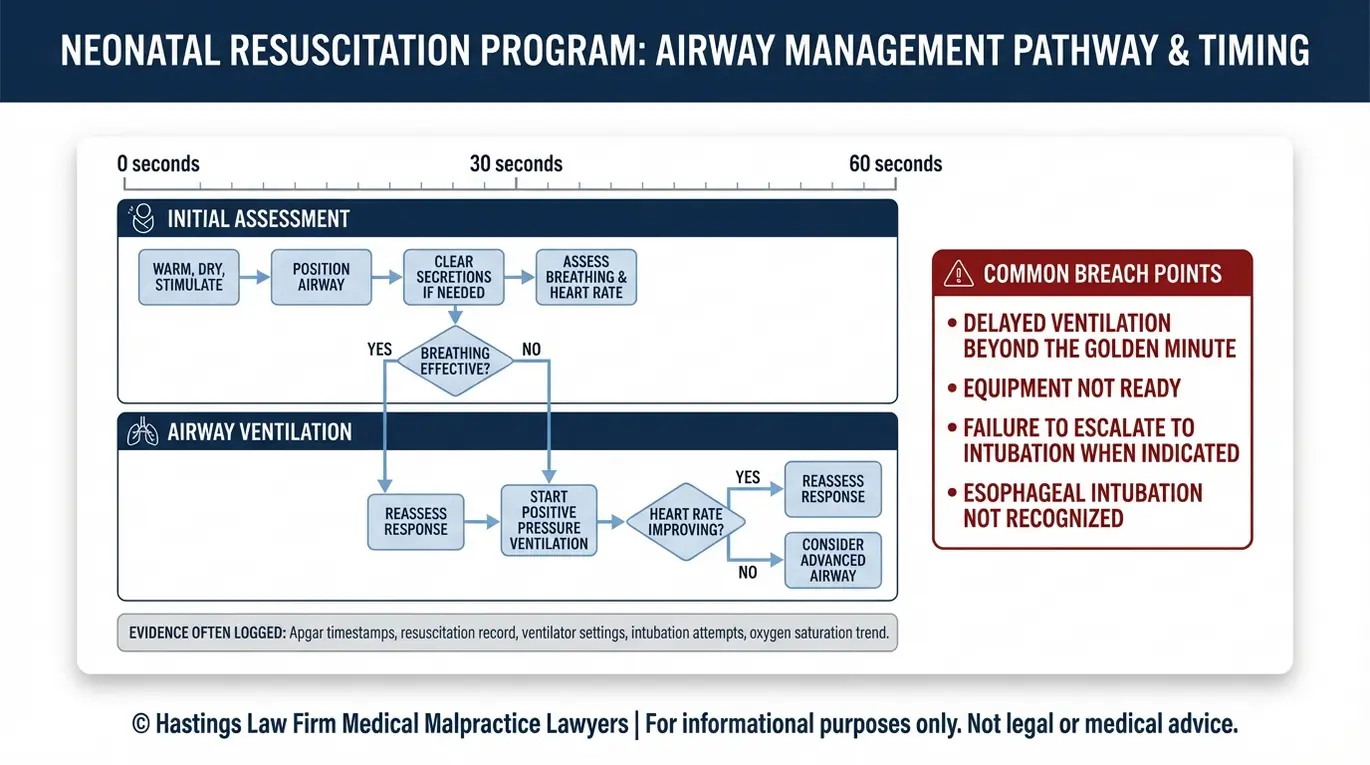
The standard that governs these critical moments is the Neonatal Resuscitation Program (NRP), a set of evidence-based guidelines developed by the American Academy of Pediatrics. A core principle of the NRP is the “Golden Minute,” the expectation that initial assessment and the first steps of resuscitation should begin within 60 seconds of birth.
When a baby is born limp or not breathing, the team is expected to follow the NRP algorithm published in PubMed Central: clear the airway, provide stimulation, and initiate ventilation if the infant does not respond. If these measures fail to improve heart rate and oxygen levels, the next step is intubation, the placement of a breathing tube directly into the trachea (windpipe).
Not every difficult delivery constitutes negligence. However, trained teams must act effectively under pressure. Common failures a Texas infant airway management attorney investigates include:
- Esophageal intubation: The breathing tube is placed into the esophagus (food pipe) instead of the trachea, meaning air goes to the stomach rather than the lungs.
- Failure to have functional equipment ready: Missing or malfunctioning laryngoscopes or suction devices can waste precious seconds.
- Delayed decision-making: Hesitation to escalate to intubation when initial efforts fail.
- Failure to confirm tube placement: Skipping CO2 detection checks can allow an esophageal intubation to go unrecognized.
- Inadequate monitoring: Failure to assemble the team when fetal distress is evident on the monitor.
The difference between a genuine emergency and a negligent lack of preparation is often the difference between a healthy child and a lifetime of disability. Our team determines whether actionable errors occurred. An experienced newborn resuscitation negligence lawyer can help identify if protocols were breached and if those failures caused your child’s injury.
Neonatal Resuscitation Program Standards for Airway Management
The NRP lays out a step-by-step protocol for medical teams managing newborn breathing difficulties. It begins with drying, stimulating, and suctioning the airway. If the newborn remains apneic (not breathing) or has a low heart rate, the team must immediately execute Positive pressure ventilation (PPV), the delivery of air or oxygen into the lungs using a mask or bag.
When PPV alone does not work, the NRP calls for intubation. This involves placing a tube through the mouth or nose and into the trachea. This is distinct from the esophagus, which leads to the stomach. A tube placed in the wrong passage is a critical error because the infant receives no oxygen while the team believes ventilation is working. Delays at any point in this sequence can result in prolonged oxygen deprivation.
Identifying Signs of Injury Caused by Delayed Ventilation
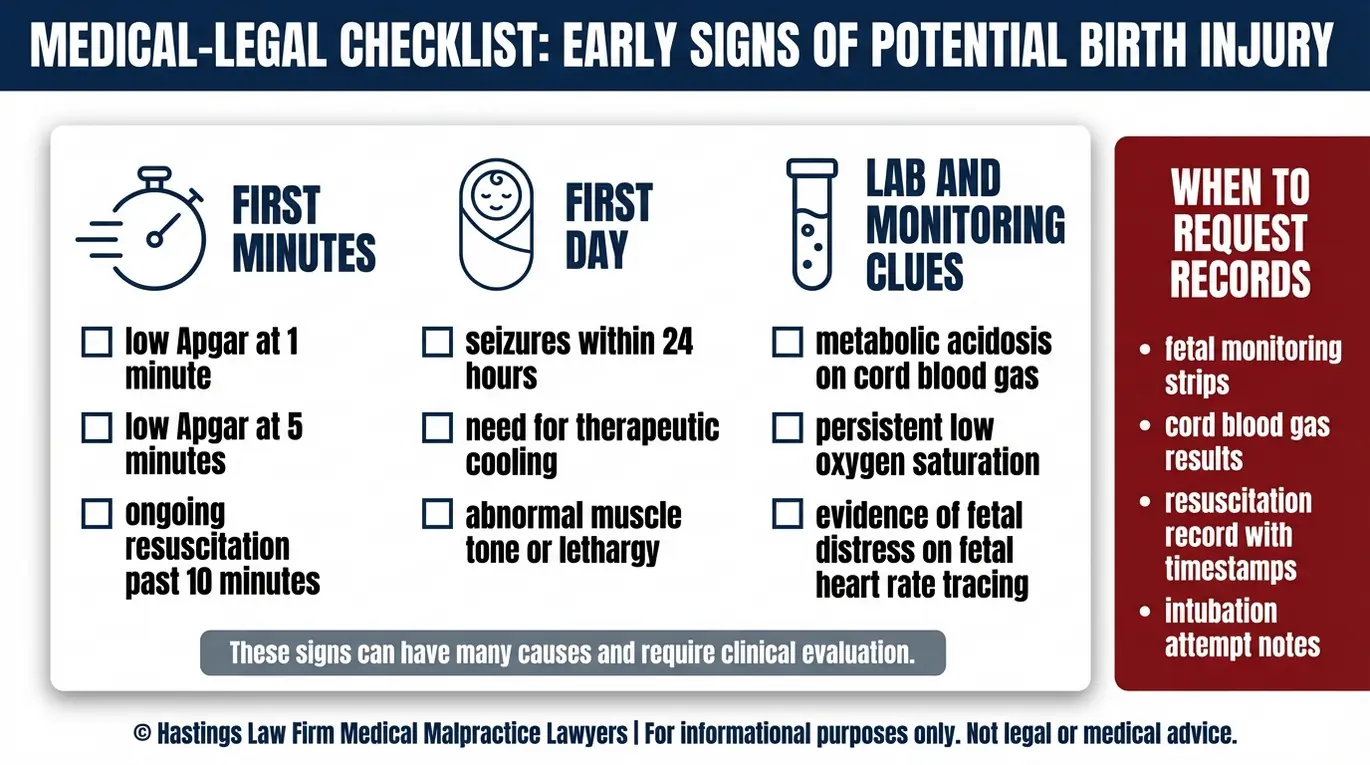
Immediate signs of injury from delayed airway management include low Apgar scores at 5 and 10 minutes, seizures within the first 24 hours, the need for therapeutic cooling, and evidence of metabolic acidosis in umbilical cord blood gases.
An Apgar score is a quick assessment performed at 1, 5, and 10 minutes after birth. A persistently low score at 5 and 10 minutes can indicate that the infant was not receiving adequate oxygen. In a potential legal case, these scores create a documented timeline that a lawyer for delayed intubation injury uses to evaluate resuscitation efforts.
Umbilical cord blood gas analysis measures the acidity of the baby’s blood. Metabolic acidosis, an abnormally high acid level, is a direct indicator that the baby experienced significant oxygen deprivation, also called hypoxia or anoxia, before or during delivery.
Physical and neurological symptoms that may appear in the hours following birth can also point to brain injury. According to a global burden analysis of neonatal encephalopathy published in PubMed Central, these injuries are a major cause of disability. Parents may observe:
| Symptom | Description |
|---|---|
| :— | :— |
| Low or absent cry | Silence at birth indicating respiratory failure or depression. |
| Cyanosis | A bluish discoloration of the skin indicating poor oxygenation. |
| Lethargy | Decreased responsiveness or excessive sleepiness. |
| Abnormal muscle tone | The infant appears unusually stiff (hypertonic) or floppy (hypotonic). |
| Seizures | Convulsions occurring within the first 24 to 48 hours of life. |
| Feeding difficulty | Inability to suck or swallow effectively. |
| NICU admission | Required for advanced respiratory support or monitoring. |
| Therapeutic cooling | Treatment initiated when significant brain injury is suspected. |
Individually, some signs can occur in normal newborns. But when several appear together alongside low Apgar scores, they form a clinical picture that our team examines closely to build a timeline of what happened.
The Hastings Law Firm Difference
Results matter, but what truly sets us apart is how we achieve them. Every verdict, every settlement, and every Texas courtroom victory comes from one guiding promise: To treat each client’s fight for justice as if it were our own.
This balance of skill, experience, and empathy reflects our core philosophy that justice should not only compensate the injured, but also make healthcare safer nationwide.

Liability for Delayed Intubation and Ventilation Errors in Texas Hospitals
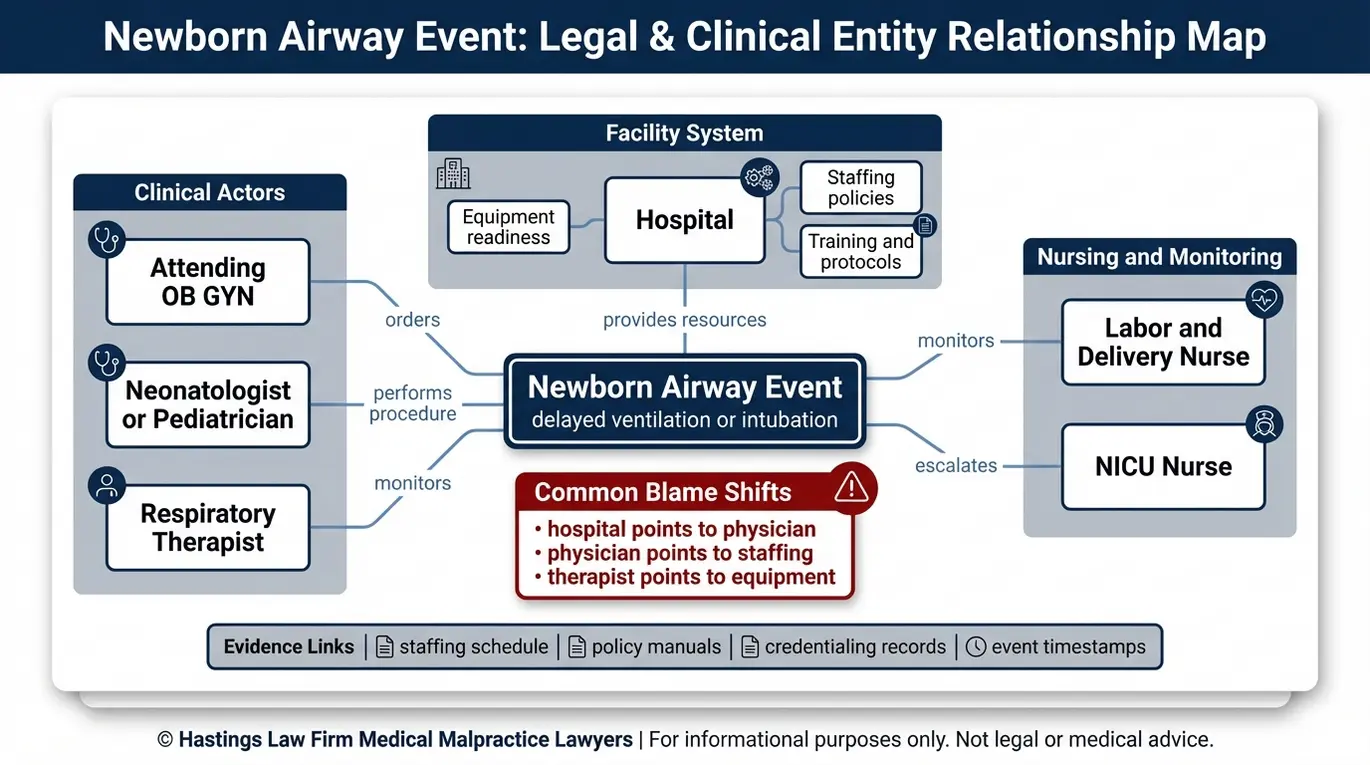
Liability often extends beyond the attending obstetrician to include the hospital for inadequate NICU staffing, respiratory therapists for improper tube placement, and nurses for failing to escalate signs of fetal distress to the physician.
- The physician may be liable if they failed to recognize signs of fetal distress, failed to order intubation when PPV was not working, or performed the intubation incorrectly.
- The hospital can face liability for systemic failures, such as understaffing, lack of a qualified neonatal team, or failure to maintain resuscitation equipment. A Texas birth injury attorney examines policies and logs to identify these institutional breaches. In the most tragic cases resulting in loss of life, a wrongful death claim may be necessary.
- Respiratory therapists and nurses carry professional obligations. A respiratory therapist who places a tube in the esophagus, or a nurse who does not escalate declining vital signs, may be individually liable for medical malpractice. Their employers can also be held responsible under the doctrine of respondeat superior, which means the hospital is responsible for the actions of its employees.
Our team includes attorneys who previously defended hospitals, giving us a direct understanding of how duties are assigned and where breakdowns happen.
Public Versus Private Hospital Liability Considerations
Suing a government-owned hospital in Texas involves additional legal hurdles. Under the Texas Tort Claims Act, public hospitals have limited sovereign immunity. These rules apply specifically to facilities run by the state or local government. Strict damages caps apply, and notice requirements are often much shorter, sometimes as few as 90 days.
Private hospitals do not have these same protections, but they are still defended by well-funded legal teams and medical malpractice insurers. Regardless of whether the facility is public or private, meeting Texas medical negligence deadlines is essential to preserving evidence.
Long Term Consequences of Hypoxic Ischemic Encephalopathy
Prolonged oxygen deprivation due to airway failure frequently results in Hypoxic Ischemic Encephalopathy (HIE), a brain injury that can lead to permanent disabilities such as cerebral palsy, cognitive impairments, and the need for lifelong 24-hour care.
Therapeutic Window: “Cooling therapy must be initiated within six hours of the injury to be effective. If the delivery team fails to recognize the signs of HIE… that treatment window can close.”
Birth asphyxia, the broader term for oxygen deprivation during or around delivery, triggers HIE. When brain cells lose their oxygen supply, they begin to die within minutes. Some infants recover with early intervention, while others suffer moderate to severe HIE. Calculating economic damages for these long-term needs is complex.
Research published by Oxford University Press (OUP Academic) confirms that many children face significant challenges requiring ongoing medical support, physical therapy, occupational therapy, and specialized education.
For families, the reality is that a child with severe HIE may need 24-hour care, wheelchair accessibility, and home modifications. An infant airway negligence lawyer works with medical experts and life care planners to document the full scope of these needs so that any legal recovery reflects the true cost of care.
Therapeutic Hypothermia as a Time Sensitive Treatment
Therapeutic hypothermia, commonly called cooling therapy, is one of the few proven treatments for Hypoxic Ischemic Encephalopathy (HIE), a type of brain injury caused by oxygen loss. It involves lowering the baby’s body temperature to about 33.5°C (92.3°F) for 72 hours to slow brain cell death.
The critical detail is timing. If there is a delay in diagnosis or transferring the infant to a facility with NICU capabilities, the opportunity for treatment may be lost. We evaluate whether the medical team identified the need for cooling in time and followed transfer protocols.
Securing Compensation for Lifetime Care and Damages
Compensation in Texas birth injury cases covers both economic damages, such as past and future medical bills and lost earning capacity, and non-economic damages, including physical pain, mental anguish, and physical impairment.
Economic damages are often substantial. A life care planner will document expenses including surgeries, medications, therapy, and adaptive equipment. These projections can extend 60 to 70 years or more. Because there is no cap on economic damages, accurately calculating future medical costs is critical.
Non-economic damages are subject to statutory caps. Texas law generally limits these damages to $250,000 per physician and $250,000 per healthcare institution. This makes the thorough documentation of economic losses even more important.
A Texas medical malpractice lawyer who prepares every case for trial is in a stronger position to secure favorable settlements or verdicts. At Hastings Law Firm, our trial-ready approach ensures that the full value of your child’s future needs is presented with the evidence needed to pursue fair compensation.
Contact the Texas Birth Injury Attorneys at Hastings Law Firm Today for Help
Your child’s injury may have been preventable, and you deserve to know what happened. At Hastings Law Firm, we believe that accountability is the foundation of patient safety, and that families harmed by medical negligence should never carry the financial burden alone.
Our team of board-certified trial attorneys, in-house nurse consultants, and former defense lawyers is ready to review your child’s medical records, identify what went wrong, and explain your legal options in plain, honest terms. The firm was founded by Tommy Hastings, a trial lawyer board-certified in Personal Injury Trial Law by the Texas Board of Legal Specialization. As an experienced Texas Infant Delayed Airway Management Lawyer team, we handle these cases on a contingency fee basis, meaning you pay no attorney fees or costs unless we recover compensation for your family.
If you believe your infant was harmed by delayed airway management, contact Hastings Law Firm for a free, confidential case evaluation. Let us help you find the answers you deserve.
Frequently Asked Questions About Infant Delayed Airway Management in Texas


This content was researched and written by the Hastings Law Firm editorial team, which includes attorneys, medical professionals, and experienced researchers. Our writing is informed by internal knowledge and practical experience, and we cross-check critical details against authoritative sources cited throughout. Every piece undergoes human-led fact-checking and legal review. Because legal and medical information can change, if you spot an error, please contact us. Learn more about our content standards and review process on our editorial policy page.

Tommy Hastings, founder of Hastings Law Firm, is a board-certified personal injury trial lawyer dedicated exclusively to healthcare injury cases. Since 2001, he has represented injured patients and families in litigation against major hospital systems, pharmaceutical companies, and negligent healthcare providers nationwide. He has handled numerous high-profile cases that have drawn national media attention and resulted in multi-million dollar recoveries. He draws on that experience in his writing, helping readers understand how these cases work and what options may be available to them.
