


Phoenix Defective Joint Replacement Lawyer
A failed hip or knee replacement can turn hoped for relief into ongoing pain, repeat procedures, and lasting uncertainty. Some implant problems stem from device defects such as design flaws, manufacturing errors, or inadequate warnings, while others relate to surgical mistakes, and the difference can shape what accountability looks like. Metal on metal implants raise added concerns when metal debris triggers tissue damage or systemic toxicity that affects the body beyond the joint. If you or a loved one were harmed or worse due to defective joint replacement in Phoenix, Arizona, contact Hastings Law Firm for a free, confidential case review.
Last Updated: July 27, 2026
Trusted Legal Representation for Failed Medical Implants in Phoenix
When a joint replacement that was supposed to restore your mobility instead causes more pain, more surgeries, and more uncertainty, the frustration can feel overwhelming. You trusted a medical device to work as promised, and now you may be dealing with complications that no one warned you about. That experience is valid, and you deserve clear answers about what went wrong and who should be held responsible.
Founded by board-certified trial lawyer Tommy Hastings, Hastings Law Firm focuses exclusively on medical negligence and defective medical device cases. Our legal team, which includes in-house nurse consultants and former defense attorneys, understands both the medical science behind implant failures and the litigation strategies needed to hold manufacturers and providers accountable. As your Phoenix defective joint replacement lawyer, we prepare every case from day one as though it will go before a jury.
If you or a loved one is experiencing complications from a hip or knee replacement, we are here to review what happened and explain your options at no cost and no obligation.

Identifying Defective Joint Implants and Recalled Devices
A defective joint implant is typically identified by design flaws, manufacturing errors, or inadequate warnings that lead to premature failure, metallosis, or the need for revision surgery. Understanding whether your complications stem from a surgeon’s mistake or a flaw in the device itself is an important first step.
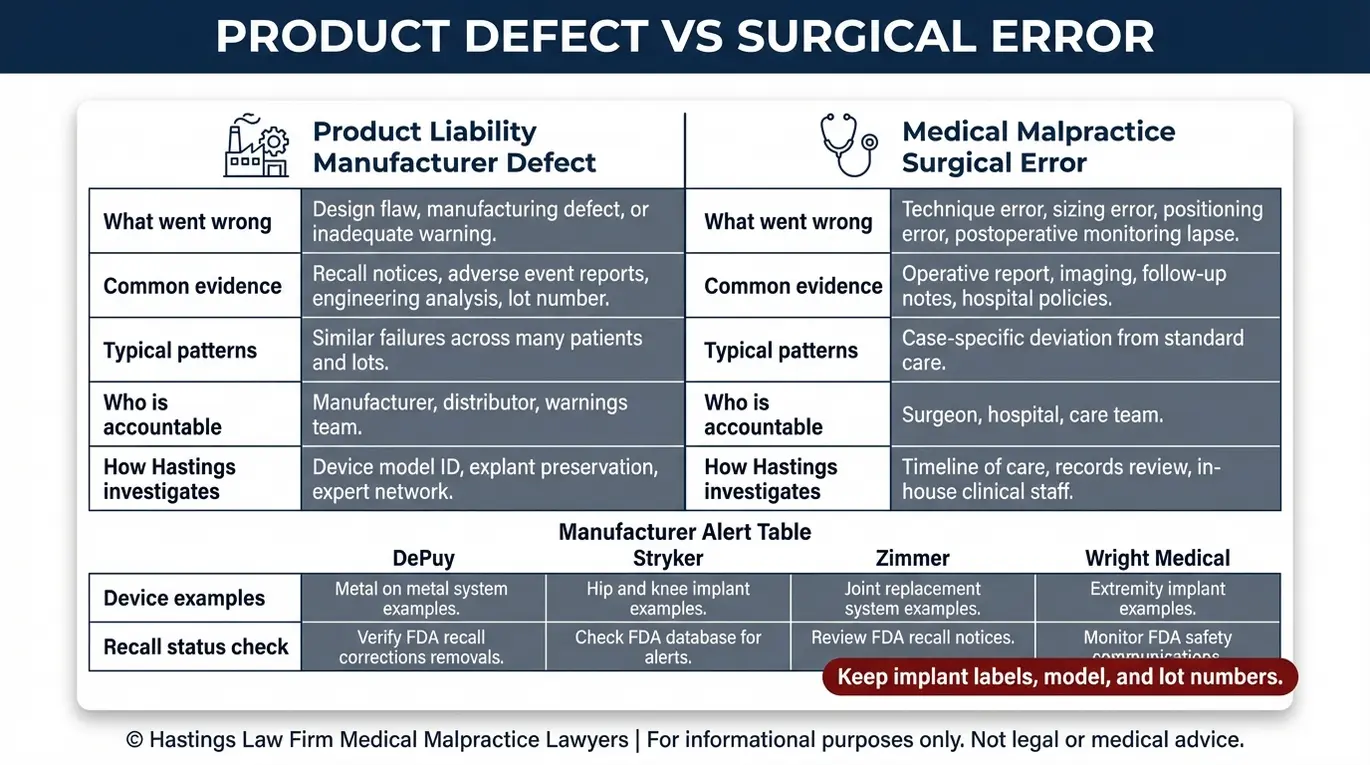
A medical error, such as improper implant positioning during surgery, falls under medical malpractice. A product liability claim, on the other hand, targets the manufacturer for releasing a device that was unreasonably dangerous due to its design, materials, or labeling. Hastings Law Firm handles both defective medical device litigation and malpractice claims, and our medical-legal team investigates each to determine the cause of the device failure.
One of the most well-documented categories of defective implants involves metal-on-metal (MoM) hip replacements, devices where both the ball and socket components are made of metal alloys. Over time, normal joint movement causes these metal surfaces to grind against each other, shedding toxic metal debris, tiny metal wear particles of cobalt and chromium that can infiltrate surrounding tissue and enter the bloodstream. The FDA has raised specific concerns about metal-on-metal hip implants, citing elevated failure rates and serious health risks. Major hip implant manufacturers have faced lawsuits and issued a hip replacement recall related to these devices.
| Manufacturer | Problematic Device(s) | Key Issues |
|---|---|---|
| DePuy (Johnson & Johnson) | ASR XL Acetabular System, Pinnacle Hip System | ASR XL recalled in 2010; Pinnacle MoM version discontinued in 2013; high revision rates, metallosis, elevated metal ion levels |
| Stryker | Rejuvenate, ABG II Modular Neck Hip Stems | Recalled in 2012; corrosion at modular neck junction, metal debris release |
| Zimmer Biomet | Durom Cup, M/L Taper Hip Prosthesis | Suspended sales after reports of early failure and loosening |
| Wright Medical | Conserve Plus, Profemur Hip System | High failure rates in MoM designs; fretting corrosion concerns |
For the most current list of recalled or corrected devices, you can search the FDA’s Recalls, Corrections and Removals database. If your implant appears on this list, or if you are experiencing unexplained symptoms after a joint replacement, consulting a Phoenix defective joint replacement attorney can help you understand whether you have a viable claim.
Understanding Metallosis and Systemic Toxicity
Metallosis, a form of metal toxicity that occurs when toxic metal debris accumulates in the soft tissues surrounding a joint implant, differs from a standard post-surgical infection. Unlike a bacterial infection, metallosis is a toxic reaction to the metal particles themselves. It can cause chronic inflammation, tissue death, and the formation of pseudotumors, which are masses of damaged tissue that develop around the implant site.
The danger extends beyond the joint. As cobalt and chromium ions enter the bloodstream, they can cause cobalt-chromium toxicity, a form of systemic metal ion poisoning that may affect the heart, nervous system, thyroid, and vision. Because these symptoms often mimic other conditions, metallosis can go undiagnosed for months or even years, allowing damage to progress silently.
Recognizing the Symptoms of a Failed Hip or Knee Replacement
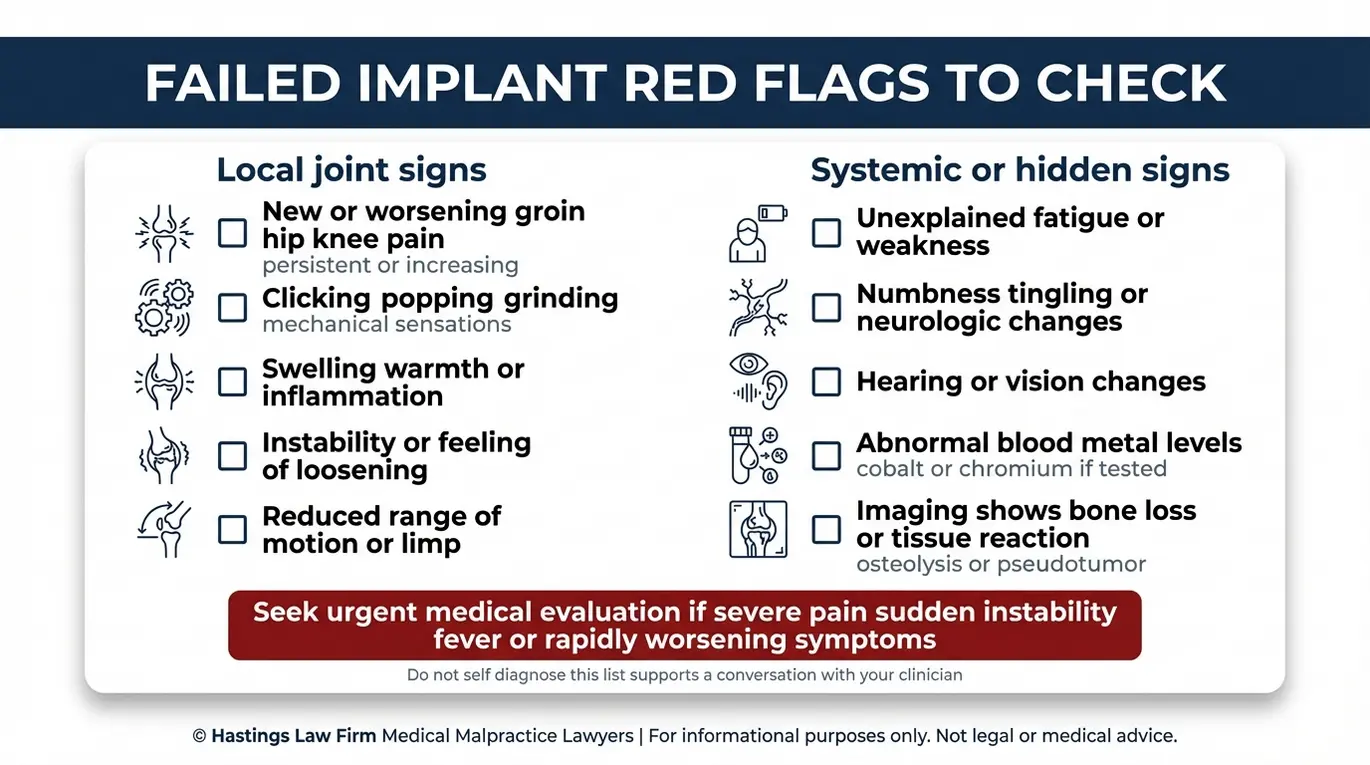
Common symptoms of a failed hip replacement include chronic pain in the groin or hip, audible clicking or popping sounds, inflammation, difficulty walking, and elevated levels of cobalt or chromium in blood tests. Some of these warning signs develop gradually, which can make them easy to dismiss as normal post-surgical recovery.
Device loosening or dislocation may produce a grinding sensation during movement, a feeling of instability when bearing weight, or sudden sharp pain during routine activity. Other implant complications, such as osteolysis (the gradual bone loss around the implant), are often completely silent. This type of periprosthetic bone loss may only become visible on imaging, yet it can undermine the structural support the implant depends on, increasing the risk of fracture or collapse.
Tissue destruction from metallosis can also progress without obvious external symptoms. By the time pain becomes severe, the damage to muscle, bone, and surrounding tissue may already require extensive revision surgery. That is why early evaluation matters so much.
Red flags that warrant immediate medical evaluation:
These warning signs can indicate that a hip or knee replacement is failing or causing systemic harm:
- Persistent or worsening groin, hip, or thigh pain that does not improve with rest
- Swelling, warmth, or visible inflammation around the joint
- Clicking, grinding, popping, or squeaking sounds during movement
- A noticeable change in leg length or difficulty walking
- Unexplained fatigue, headaches, cognitive changes, or vision problems (potential signs of systemic metal toxicity)
- Elevated cobalt or chromium levels on serum metal ion testing, a blood test that measures concentrations of metal in the blood
If you recognize several of these symptoms, a medical workup and a conversation with defective joint replacement lawyers in Phoenix can help you understand whether your implant is failing and what legal options may be available to address your pain and suffering.
The Hastings Law Firm Difference
Results matter, but what truly sets us apart is how we achieve them. Every verdict, every settlement, and every Phoenix courtroom victory comes from one guiding promise: To treat each client’s fight for justice as if it were our own.
This balance of skill, experience, and empathy reflects our core philosophy that justice should not only compensate the injured, but also make health care safer nationwide.

The Legal Process for Defective Medical Device Claims in Arizona
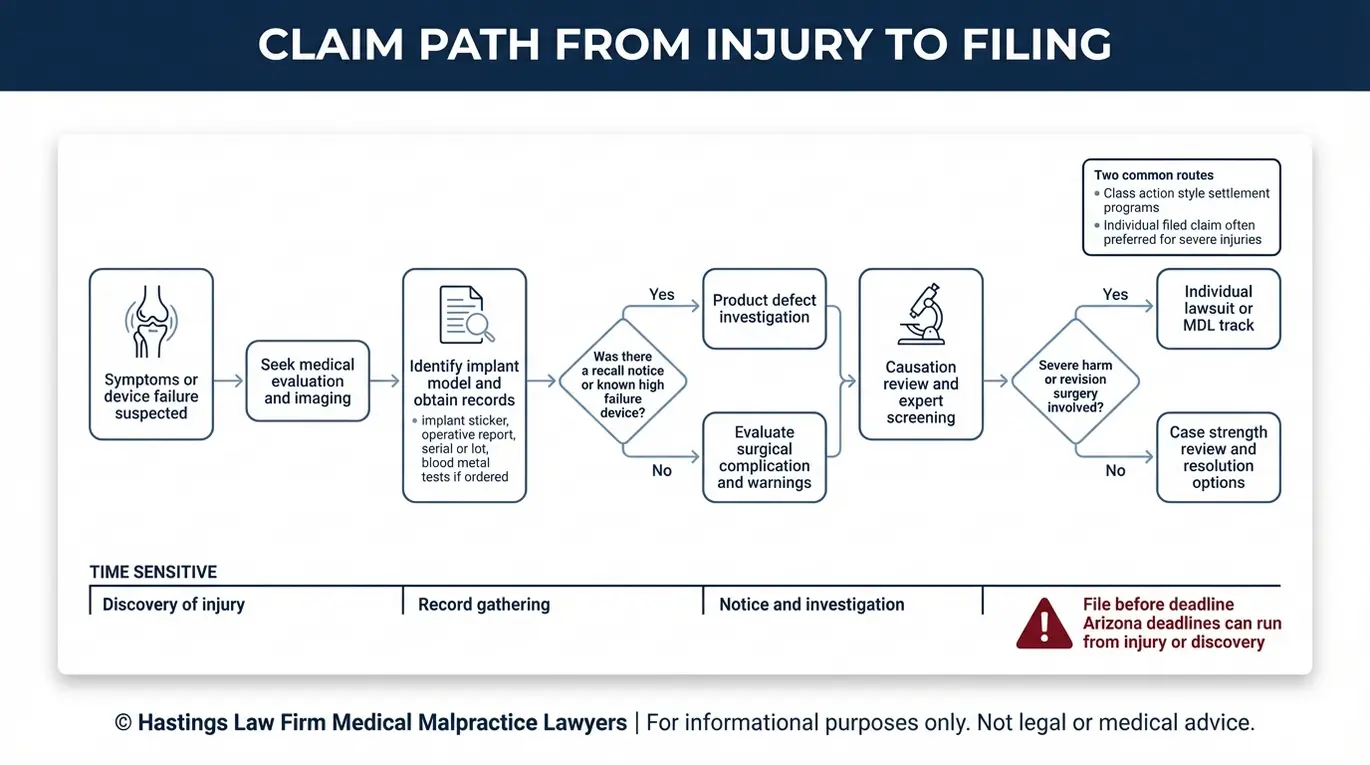
The legal process for a defective implant claim involves filing a complaint against the manufacturer, proving the device was unreasonably dangerous, and demonstrating that the defect directly caused specific damages such as revision surgery, the surgical procedure to remove and replace a failed implant, or metallosis.
Arizona’s statute of limitations generally requires you to file a product liability or personal injury claim within two years of the date you knew, or reasonably should have known, about the injury. Under Arizona Revised Statutes § 12-542, this two-year window applies to personal injuries. In defective device cases, the clock often starts ticking from the date you first learned the implant was the source of your symptoms. Because that timeline can be difficult to pin down, getting a legal evaluation early protects your ability to file.
Many defective implant cases are consolidated into multidistrict litigation (MDL), a process often handled by mass tort attorneys at the federal level. The Judicial Panel on Multidistrict Litigation groups similar claims together for pretrial proceedings, which can streamline discovery and reduce costs. MDL is different from a class action lawsuit. In a class action, one outcome applies to everyone.
In MDL, each case retains its individual facts and potential value. Patients with severe injuries may require revision surgery or suffer from pseudotumors. For these individuals, a separate claim often results in compensation that more accurately reflects the scope of their medical bills, lost income, and pain and suffering.
As your Phoenix defective joint replacement legal team, we use our experience as former defense attorneys to build a case specific to your situation. Our team includes nurse practitioners and Board Certified Patient Advocates who assist in case evaluation and record analysis.
Contact the Phoenix Medical Device Attorneys at Hastings Law Firm Today for Help
You should not have to pay the price for a manufacturer’s defective product. We are a nationally recognized trial firm, and we believe the cost of treatment belongs with the company that put a dangerous device on the market.
Hastings Law Firm operates on a contingency fee basis, which means you pay no attorney fees or costs unless we recover compensation for you. Our Phoenix office is ready to start with a free, confidential case evaluation led by our medical-legal team. We will review your records, identify the device, and explain what your claim may look like.
You do not have to figure this out alone. Contact Hastings Law Firm to speak with a Phoenix defective joint replacement lawyer who can help you take the next step toward answers and accountability.
Frequently Asked Questions About Defective Joint Replacement in Phoenix


This content was researched and written by the Hastings Law Firm editorial team, which includes attorneys, medical professionals, and experienced researchers. Our writing is informed by internal knowledge and practical experience, and we cross-check critical details against authoritative sources cited throughout. Every piece undergoes human-led fact-checking and legal review. Because legal and medical information can change, if you spot an error, please contact us. Learn more about our content standards and review process on our editorial policy page.

Tommy Hastings, founder of Hastings Law Firm, is a board-certified personal injury trial lawyer dedicated exclusively to healthcare injury cases. Since 2001, he has represented injured patients and families in litigation against major hospital systems, pharmaceutical companies, and negligent healthcare providers nationwide. He has handled numerous high-profile cases that have drawn national media attention and resulted in multi-million dollar recoveries. He draws on that experience in his writing, helping readers understand how these cases work and what options may be available to them.
