


Texas Infant Cortical Blindness Lawyer
Written by: Hastings Law Firm | Reviewed by: Tommy Hastings | Updated: July 27, 2026
Infant cortical blindness, also called cortical visual impairment, is a neurological vision loss caused by damage to the brain pathways that process sight rather than a structural problem in the eyes. When it follows preventable errors during pregnancy, labor, delivery, or neonatal care, the impact can be lifelong and can require extensive therapy, support services, and costly adaptations. Clear medical evidence and an accurate timeline of events are often central to understanding what happened and why. If you or a loved one were harmed or worse due to infant cortical blindness in Texas, contact Hastings Law Firm for a free, confidential case review.

Top Rated Birth Injury Attorneys Helping Families Across Texas
What You Should Know About Newborn Vision Loss Claims in Texas:
- Long term vision impairment can follow infant cortical visual impairment when brain pathways for sight are damaged rather than the eyes.
- Lifelong financial strain can result when ongoing therapy, assistive technology, and environmental modifications are needed for functional progress.
- Missed or delayed recognition can limit timely access to rehabilitation because early signs are often subtle and can be mistaken for other developmental concerns.
- Accountability options can narrow if legal time limits are missed because Texas applies different timing rules to a child claim and a parent claim.
- Recovery for non economic harm can be limited in Texas because caps apply to pain, suffering, and related losses.
- Full compensation for care can remain possible because economic damages for medical bills and lifetime support costs are not capped under Texas law.
- Disputes over causation can shape outcomes because defense arguments may point to genetic factors or unavoidable complications.
- Strong medical proof can be decisive because MRI findings and specialist evaluations help link vision loss to specific brain injury patterns.
- Critical documentation can become unavailable over time because providers are not required to keep records indefinitely.
- Preventable birth related events can be central because oxygen deprivation and unmanaged infections are described as pathways to brain injury affecting vision.

A Healthcare Focused Law Firm
Learning that your child has cortical blindness can feel isolating and overwhelming, especially when you suspect the injury could have been prevented. You may be struggling with unanswered questions about what happened during labor or delivery, and you deserve clarity. As a Texas infant cortical blindness lawyer, Hastings Law Firm focuses exclusively on medical malpractice cases, including birth injuries that cause lasting neurological harm.
Our team of attorneys, nurse consultants, and medical experts works alongside families to determine whether negligent care caused their child’s condition and to pursue the accountability and financial security their child needs. If your infant has been diagnosed with cortical visual impairment, we can review what happened and explain your options during a free, confidential consultation.
Understanding Cortical Visual Impairment and Infant Blindness
Cortical Visual Impairment, commonly called CVI, is a neurological form of blindness caused by damage to the brain’s visual pathways rather than the eyes themselves. Unlike conditions such as cataracts or retinopathy of prematurity, where the eye itself is structurally damaged, CVI occurs when the brain cannot properly process visual information, even though the eyes may be functioning normally. This distinction is central to both treatment, including visual stimulation therapy, and legal strategy, which is why families often turn to a cortical blindness attorney who understands the medical science behind the diagnosis.
CVI is now the leading cause of visual impairment in children in developed countries. The damage typically affects the visual cortex, the area of the brain located in the occipital lobe that is responsible for interpreting signals sent from the eyes. When oxygen deprivation, traumatic brain injury, or infection damages this region, the brain’s visual processing breaks down partially or completely.
The severity of CVI exists on a wide spectrum. Some children experience mild difficulties with visual processing, such as trouble recognizing faces or distinguishing objects against a busy background. Others may have near-total cortical blindness, with little to no functional vision. According to research published in PubMed Central on visual loss due to retrochiasmal visual pathway lesions, damage anywhere along the visual pathways behind the eyes can produce profound and lasting vision deficits.
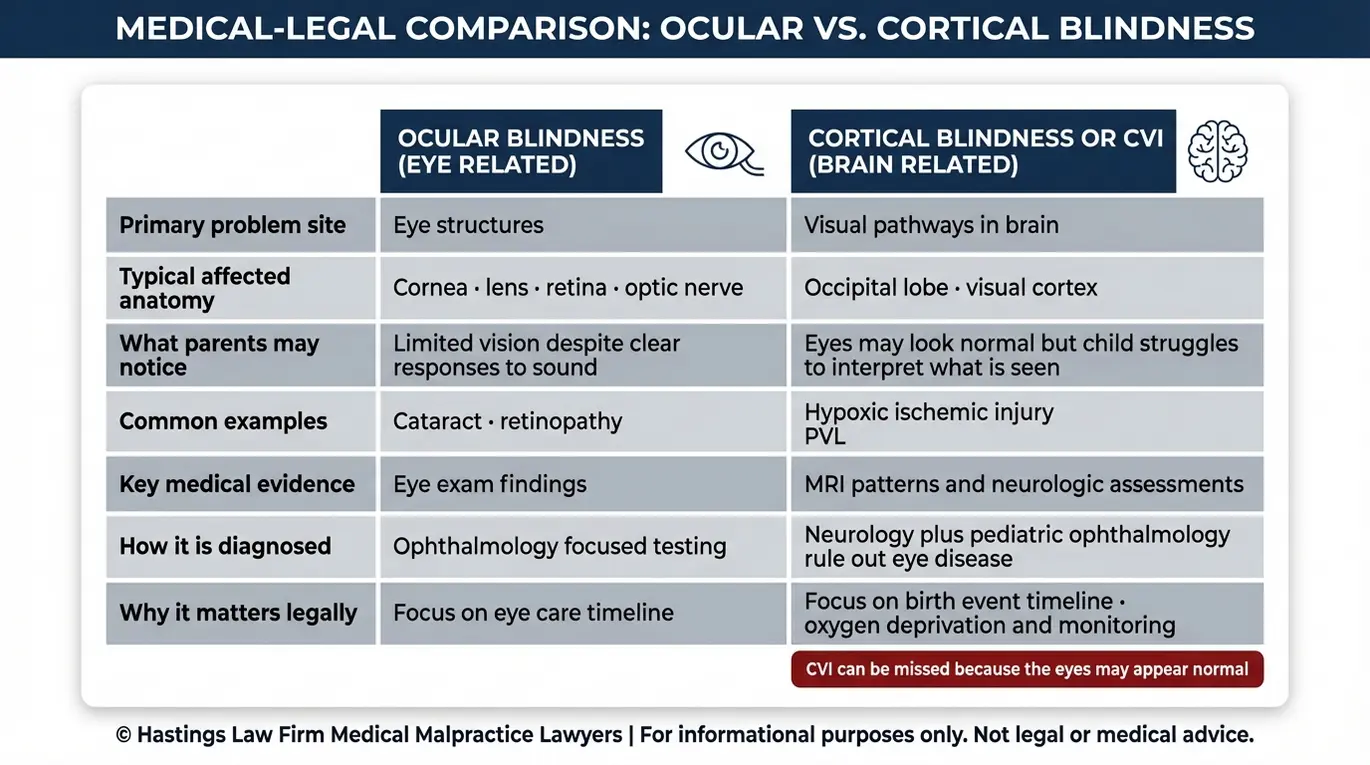
For families exploring infant blindness legal help, understanding the difference between ocular and cortical blindness matters. The type of blindness determines the type of evidence needed in a malpractice case. A CVI lawyer must be prepared to connect specific brain injuries to the failures that caused them.
| Feature | Ocular Blindness | Cortical Blindness (CVI) |
|---|---|---|
| Source of Problem | Structural damage to the eye | Damage to the brain’s visual cortex or pathways |
| Eye Exam Results | Typically abnormal | Often normal |
| Common Causes | Cataracts, glaucoma, retinopathy | Oxygen deprivation, HIE, brain injury |
| Vision Consistency | Usually stable day to day | Can fluctuate based on environment and fatigue |
| Improvement Potential | Often requires surgical correction | May improve with neuroplasticity-based therapy |
| Key Legal Evidence | Ophthalmologic records | Brain MRI, fetal monitoring strips, delivery records |
The Brain Cannot Interpret What the Eye Sees
The core challenge in CVI is that the eye captures light and transmits visual signals normally, but the brain fails to make sense of what those signals mean. The visual cortex, the part of the brain located in the occipital lobe responsible for interpreting images, shapes, movement, and depth, is damaged. This means a child with CVI may look directly at an object and still not recognize it or even register that it is there.
This “eye-intact, brain-impaired” distinction is what separates CVI from other forms of childhood blindness. It also changes how the condition is diagnosed and how its cause is traced, something a skilled infant visual impairment attorney must account for when building a case.
Recognizing Early Signs of Cortical Blindness in Infants
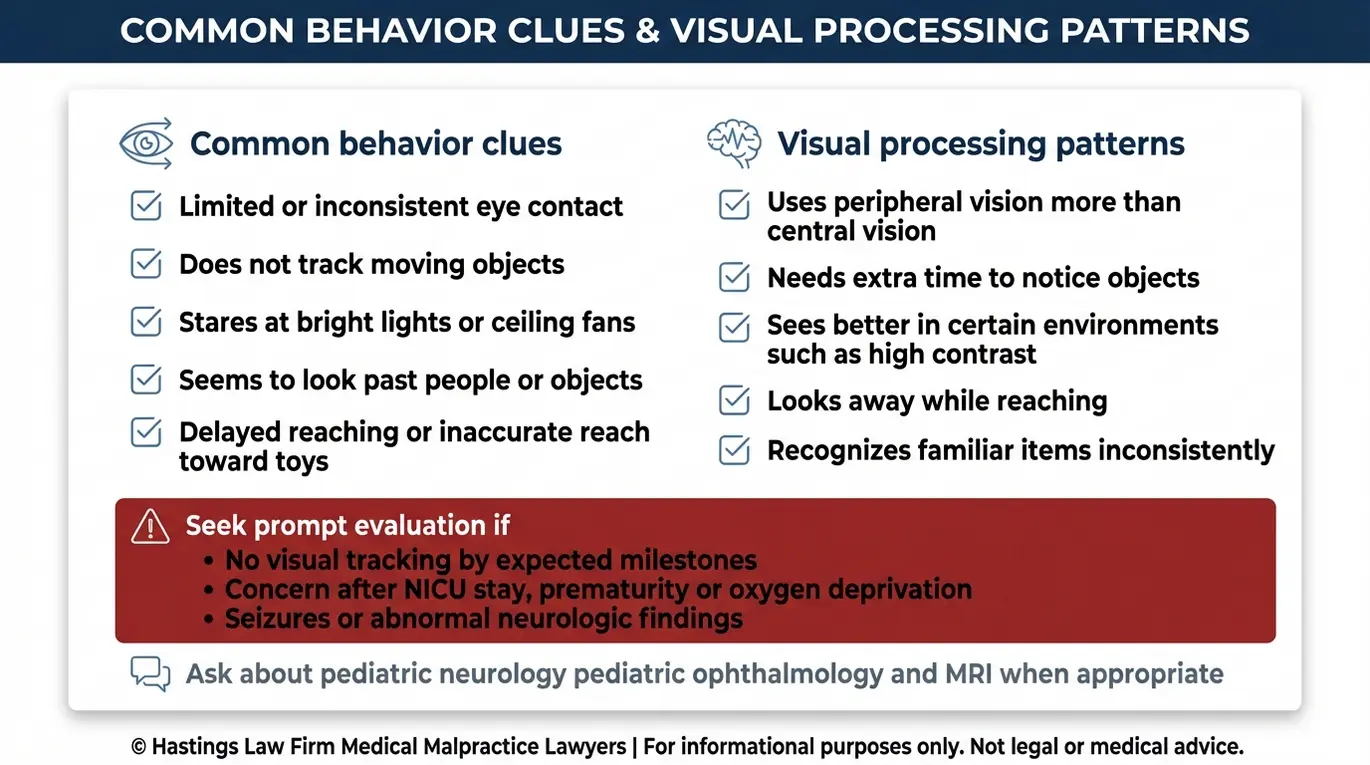
Early signs of CVI include a lack of eye contact, failure to track moving objects, a preference for peripheral vision, and an unusual attraction to bright lights or ceiling fans. These behavioral red flags often indicate that the brain’s visual processing centers are not functioning as they should. Because these behaviors can be subtle, CVI is frequently overlooked or misdiagnosed as autism, developmental delay, or even behavioral issues. Recognizing these signs early is important for both medical intervention and for preserving legal options with a CVI lawyer in Texas.
CVI affects two main visual processing pathways in the brain. The dorsal visual pathway (“where” pathway) helps a child locate objects, while the ventral visual pathway (“what” pathway) helps identify them. Depending on the injury location, a child may struggle with one or both.
For example, a child with dorsal pathway damage may have difficulty reaching for a toy or judging how far away something is. A child with ventral pathway damage may not recognize a parent’s face or distinguish between similar-looking objects. These behaviors should prompt further evaluation by a pediatric neurologist.
According to the University of Nevada Reno’s resources on cortical visual impairment, parents and caregivers should watch for specific symptoms and visual preferences that may indicate CVI. If your child shows several of these signs and you suspect a birth injury may be responsible, consulting a blindness negligence attorney can help determine whether medical errors contributed to the condition.
Behavioral signs that may indicate CVI in infants:
- Little or no eye contact with parents or caregivers
- Failure to track objects or faces moving across their field of vision
- A strong preference for looking at objects using peripheral (side) vision
- Staring at bright lights, ceiling fans, or high-contrast patterns
- Preference for specific colors, particularly red or yellow
- Difficulty seeing objects against a cluttered or busy background
- Inconsistent visual responses, seeming to “see” better on some days than others
- Compulsive light gazing or reaching for objects without looking at them
- Delayed or absent visual-motor coordination, such as reaching for a toy
If you notice several of these behaviors, bring them to the attention of your child’s pediatrician and request a referral to a specialist. Early identification of CVI can open the door to therapies that take advantage of the young brain’s capacity for change. It also helps an infant visual impairment lawyer build a stronger connection between the birth injury and the child’s condition.
The Hastings Law Firm Difference
Results matter, but what truly sets us apart is how we achieve them. Every verdict, every settlement, and every Texas courtroom victory comes from one guiding promise: To treat each client’s fight for justice as if it were our own.
This balance of skill, experience, and empathy reflects our core philosophy that justice should not only compensate the injured, but also make healthcare safer nationwide.

Negligent Causes of Infant Cortical Blindness and CVI
Medical negligence causes CVI when failures in the standard of care lead to oxygen deprivation, brain hemorrhage, or unmanaged neonatal infections that damage the infant’s visual pathways. These preventable medical errors often occur when a healthcare team fails to follow safety protocols during labor or delivery. Not every case of cortical blindness involves malpractice, but when errors are the cause, families have the right to pursue accountability. A Texas birth injury lawyer investigates these cases by tracing the injury back to specific decisions or omissions during pregnancy, labor, or neonatal care.
Hypoxic-Ischemic Encephalopathy (HIE) and Oxygen Deprivation
Hypoxic-ischemic encephalopathy (HIE), a type of brain damage caused when an infant’s brain is deprived of adequate oxygen and blood flow around the time of birth, is one of the most common causes of cortical blindness in newborns. In a cortical blindness malpractice case, we examine whether providers failed to monitor fetal heart rate patterns, delayed a necessary C-section, or mismanaged umbilical cord complications that cut off the baby’s oxygen supply.
Periventricular Leukomalacia (PVL) and Prematurity
Periventricular leukomalacia (PVL), a condition in which the white matter near the brain’s ventricles is damaged, is strongly associated with CVI because the affected brain tissue is close to the visual pathways. It is often a result of premature birth or insufficient blood flow. An infant CVI attorney may investigate whether the medical team failed to take appropriate steps to prevent preterm labor or failed to provide adequate neonatal care after a premature delivery.
Neonatal Infections
Untreated or inadequately treated infections, such as meningitis, sepsis, or chorioamnionitis, can cause inflammation that damages an infant’s developing brain. When medical providers fail to diagnose or properly treat maternal or neonatal infections, the resulting brain injury can affect the visual cortex and lead to cortical blindness.
| Negligent Act | Mechanism of Harm | Connection to CVI |
|---|---|---|
| Delayed C-section | Prolonged oxygen deprivation | Damages visual cortex through HIE |
| Failure to monitor fetal heart rate | Undetected fetal distress | Allows hypoxia to progress unchecked |
| Inadequate preterm birth management | Premature delivery complications | Increases risk of PVL affecting visual pathways |
| Failure to treat maternal infection | Fetal exposure to inflammation | Infection spreads to infant’s brain tissue |
| Delayed therapeutic hypothermia | Missed window for brain protection | Preventable damage extends to occipital lobe |
Proving Medical Malpractice Caused Your Child’s CVI
Proving malpractice requires demonstrating that a medical provider breached the accepted standard of care and that this breach directly caused the brain injury responsible for your child’s cortical blindness. We look for whether the medical team followed the accepted standard of care that a reasonable provider would have used in a similar situation. This is the foundation of every CVI case we evaluate as a Texas infant cortical blindness lawyer, and it follows a structured legal framework established under the Texas Civil Practice and Remedies Code, Chapter 74.
Defining the Standard of Care
The standard of care is the level of treatment that a reasonably competent medical professional would have provided under similar circumstances. In obstetric and neonatal settings, this includes properly monitoring fetal heart tracings, responding to signs of distress within appropriate timeframes, and following established protocols for infection management and delivery.
Connecting the Timeline to the Outcome
Medical negligence cases involving CVI require a detailed reconstruction of the events before, during, and after delivery. We work with qualified medical experts to build a minute-by-minute timeline using fetal monitoring strips, nursing notes, medication logs, and physician orders. This timeline is essential for showing exactly when the standard of care was breached and how that breach led to the infant’s brain injury.
Overcoming Defense Arguments
Defense attorneys in CVI cases frequently argue that the child’s condition was caused by genetic factors, unavoidable complications, or events unrelated to the medical team’s care. Overcoming these arguments requires strong expert testimony and medical evidence that directly links the provider’s actions or breach of duty to the brain damage.
Our process for building a cortical blindness negligence case follows these steps:
- Obtain and review all medical records, including prenatal, labor, delivery, and neonatal intensive care documentation
- Identify potential breaches in the standard of care through in-house medical staff analysis
- Retain qualified medical experts in obstetrics, neonatology, and pediatric neurology
- Reconstruct the delivery timeline using fetal heart rate tracings and nursing flowsheets
- Establish causation by connecting the identified breach to the specific brain injury shown on imaging
- Calculate the full scope of damages through expert life care planning and economic analysis
Diagnosing CVI and Establishing Medical Evidence
A CVI diagnosis is confirmed through a combination of magnetic resonance imaging, commonly known as MRI, and clinical assessments by pediatric ophthalmologists or neurologists. MRI scans are the primary imaging tool used to identify damage to the occipital lobe, the region of the brain at the back of the skull where visual information is processed. According to research published in the Karnataka Paediatric Journal on MRI brain sequences in pediatrics, specific MRI protocols can reveal the location and extent of white matter injury, hemorrhage, hydrocephalus, seizures, or ischemic damage responsible for CVI.
As an infant brain injury lawyer, we know that MRI findings alone do not complete the picture. Clinical evaluations are equally important. A pediatric ophthalmologist examines the child’s eyes to confirm that the eye structures are intact and that the vision loss is not caused by an ocular condition. A pediatric neurologist assesses brain function and correlates the imaging findings with the child’s visual behaviors and developmental profile.
One of the challenges families face is that CVI is frequently misdiagnosed. Because infants with CVI may avoid eye contact, show unusual sensory preferences, or appear unresponsive to visual stimulation, their condition is sometimes attributed to autism spectrum disorder or general developmental delay. A delayed or incorrect diagnosis can cost a family valuable time for both therapy and legal action. A CVI diagnosis attorney understands the importance of getting the medical record right.
For a Texas malpractice lawyer building a CVI case, expert medical reports and expert testimony are essential. These reports validate the diagnosis, connect it to a specific brain injury mechanism, and provide the foundation for proving that negligent care caused the damage. Without this medical evidence, even a strong legal theory cannot move forward.
Long-Term Therapies and Visual Rehabilitation Costs
Treatment for CVI focuses on neuroplasticity, the brain’s ability to form new neural connections and potentially compensate for damaged areas, through intensive therapy and environmental adaptations. Unlike ocular blindness, where vision loss tends to be fixed, children with CVI may show measurable improvement with consistent, specialized intervention. But these gains require years of dedicated effort and significant financial resources, which is why a CVI settlement lawyer works to ensure that compensation accounts for the lifelong cost of care.
Visual stimulation therapy, a treatment approach that uses controlled light, color, and movement to encourage the brain to process visual input, is one of the cornerstones of CVI rehabilitation. Therapists carefully introduce visual targets in simplified environments to gradually train the brain to respond to visual information. Over time, many children develop improved visual attention and functional use of their remaining vision.
Beyond vision-specific therapy, children with CVI often require a range of coordinated services. Occupational therapy helps children develop daily living skills and adapt to their visual limitations. Physical therapy addresses motor coordination and spatial awareness challenges that often accompany brain injuries affecting the visual pathways.
Many children also need orientation and mobility training, assistive technology, and home or school environmental modifications to support learning and independence. Research published by PubMed Central on the economic burden of visual impairment and blindness confirms that the lifetime costs associated with childhood visual impairment are substantial and extend far beyond direct medical expenses.
A life care plan is the tool we use to document these costs for litigation. Created by qualified medical and economic experts, this plan itemizes every anticipated expense across the child’s lifetime:
- Visual stimulation therapy and specialized vision rehabilitation programs
- Occupational therapy and physical therapy sessions (often multiple times per week)
- Assistive technology devices and software
- Home modifications for safety and accessibility
- Educational support services, including specialized instruction
- Orientation and mobility training
- 24-hour attendant care or supervised living assistance, if needed
- Ongoing neurological and ophthalmological evaluations
Under the Texas Civil Practice and Remedies Code, Chapter 74, these documented costs form the basis of the economic damages claimed in a birth injury compensation case. Securing a full and accurate life care plan is one of the most important steps in ensuring a child’s future needs are met.
Recoverable Damages for Cortical Blindness in Texas Courts
Families may recover economic damages for medical bills and lifetime care costs, as well as non-economic damages for the child’s physical impairment, pain, suffering, and loss of quality of life. These economic damages provide the financial support needed for a child’s ongoing care and therapy. In an infant blindness lawsuit, calculating the full scope of these losses requires close coordination between legal counsel, medical experts, and financial analysts. A Texas CVI damages claim must account for both the immediate and long-term consequences of the child’s condition.
Economic and Non-Economic Damages
Economic damages cover the measurable financial losses caused by the injury. These are not subject to a cap under Texas law, which means the full cost of care can be recovered if negligence is proven. Non-economic damages compensate for losses that do not carry a specific price tag but are no less real.
How Settlements Are Structured
In cases involving children, malpractice settlements in Texas are often structured to protect the child’s long-term financial interests. Courts may require the creation of a Special Needs Trust, which holds and manages settlement funds so the child can receive ongoing care without losing eligibility for government benefits such as Medicaid or Supplemental Security Income. Because non-economic damages are capped at $250,000 against all physicians combined and $250,000 per institution (with a maximum of $500,000 total across all institutions), maximizing the economic damages through a thorough Life Care Plan is critical for securing the necessary funds for the child’s lifetime care.
| Economic Damages (No Cap) | Non-Economic Damages (Capped) |
|---|---|
| :— | :— |
| Past and future medical expenses | Physical pain and suffering |
| Ongoing therapy costs | Mental anguish |
| Assistive devices and equipment | Physical impairment and disfigurement |
| Special education services | Loss of enjoyment of life |
| Lost earning capacity | Loss of consortium |
| Attendant care costs |
Texas Statute of Limitations for Infant Blindness Claims
In Texas, birth injury claims generally must be filed by the child’s 14th birthday, though parents have only two years from the date of the injury to file for their own related claims. A legal deadline exists for every medical malpractice case, and missing it can prevent a family from ever seeking compensation. This distinction is important, and understanding these tolling rules and when to file a claim is one of the first things we discuss with families during a consultation.
The Child’s Claim: Tolling Until Age 12
Under Texas law, the statute of limitations for a minor’s medical malpractice claim is “tolled,” meaning the legal clock is paused until the child turns 12 years old. From that point, the family has two years to file, creating an effective deadline of the child’s 14th birthday. While this extended timeline provides some breathing room, waiting too long carries serious risks that have nothing to do with legal deadlines.
The Parents’ Claim: A Two-Year Window
Parents may bring their own claims for damages they have personally suffered, including past medical expenses, mental anguish, and loss of companionship. These claims are not tolled. Parents typically have just two years from the date of the injury, or from the date they knew or should have known about the injury, to file. Missing this deadline can permanently bar the parents’ recovery even if the child’s claim remains open.
Why Acting Early Matters
Evidence preservation is one of the strongest reasons to consult a CVI lawsuit deadline attorney early. According to the Texas Medical Board’s guidance on patient information and medical records, medical providers are not required to retain records indefinitely. Fetal monitoring strips, nursing notes, and other critical documents can be lost, overwritten, or destroyed over time. The sooner an investigation begins, the more complete the evidentiary record will be.
Important: Even though your child’s claim may be tolled until age 14, the parents’ two-year deadline and the risk of lost evidence make early consultation with a Texas birth injury lawyer essential. Contact us to discuss your family’s timeline.
Contact the Texas Birth Injury Attorneys at Hastings Law Firm Today for Help
Cortical blindness caused by medical negligence changes the course of a child’s life and a family’s future. If your child was diagnosed with CVI and you believe preventable errors during pregnancy, labor, or delivery may be responsible, you do not have to carry that burden without answers.
Hastings Law Firm was built to help families in exactly this situation. Our team includes board-certified trial attorneys, former defense lawyers who understand how hospitals protect themselves, and in-house medical professionals who analyze medical records to find where care fell below the standard. Founder Tommy Hastings is board-certified in Personal Injury Trial Law and has spent more than two decades holding negligent providers accountable to secure the future needs of injured children.
We take these cases on a contingency fee basis, which means you pay no attorney fees or costs unless we recover compensation for your family. Every consultation is free and confidential.
If you are ready to learn what happened and what your options are, contact Hastings Law Firm today for a risk-free case evaluation with a Texas infant cortical blindness lawyer who will listen, investigate, and stand beside your family.
Frequently Asked Questions About Infant Cortical Blindness in Texas


This content was researched and written by the Hastings Law Firm editorial team, which includes attorneys, medical professionals, and experienced researchers. Our writing is informed by internal knowledge and practical experience, and we cross-check critical details against authoritative sources cited throughout. Every piece undergoes human-led fact-checking and legal review. Because legal and medical information can change, if you spot an error, please contact us. Learn more about our content standards and review process on our editorial policy page.

Tommy Hastings, founder of Hastings Law Firm, is a board-certified personal injury trial lawyer dedicated exclusively to healthcare injury cases. Since 2001, he has represented injured patients and families in litigation against major hospital systems, pharmaceutical companies, and negligent healthcare providers nationwide. He has handled numerous high-profile cases that have drawn national media attention and resulted in multi-million dollar recoveries. He draws on that experience in his writing, helping readers understand how these cases work and what options may be available to them.
