


Arizona Colon Cancer Misdiagnosis Lawyer
A delayed colorectal cancer diagnosis can change treatment options and long term health. Errors such as missed screening, incomplete procedures, misread pathology, and communication breakdowns can allow cancer to spread and lead to more aggressive care, reduced survival odds, and lasting impacts on quality of life. These situations are often complex because the harm depends on what should have been recognized earlier and how the delay affected the outcome. If you or a loved one were harmed or worse due to delayed colorectal cancer diagnosis in Arizona, contact Hastings Law Firm for a free, confidential case review.

Last Updated: July 27, 2026
Compassionate Arizona Medical Attorneys for Delayed Colorectal Cancer Diagnosis Claims
When a doctor overlooks or misreads the signs of colon cancer, the consequences can be life-altering. A delayed diagnosis, meaning the condition was not identified when it reasonably should have been, can allow the cancer to spread and limit treatment options that may have been effective at an earlier stage. If you or a loved one experienced a diagnostic delay involving colorectal cancer, you may have questions about what went wrong and whether anyone can be held accountable.
Founded by board-certified trial attorney Tommy Hastings in 2005, Hastings Law Firm focuses exclusively on medical malpractice cases. Our team of attorneys, nurse consultants, and medical staff understands both the clinical and legal sides of these claims. We are here to help you find answers. Contact us for a free, confidential case evaluation to review what happened and learn about your options.

Common Causes of Colon Cancer Misdiagnosis in Arizona Hospitals
Colon cancer misdiagnosis frequently occurs due to errors such as misread pathology reports, failure to order screening colonoscopies despite symptoms, improper testing techniques, or administrative communication breakdowns between primary care doctors and specialists. A delayed diagnosis occurs when a condition is not caught when it should have been. These failures can happen at multiple points along the diagnostic process, and identifying where things went wrong is the first step in any potential claim.
Screening Failures
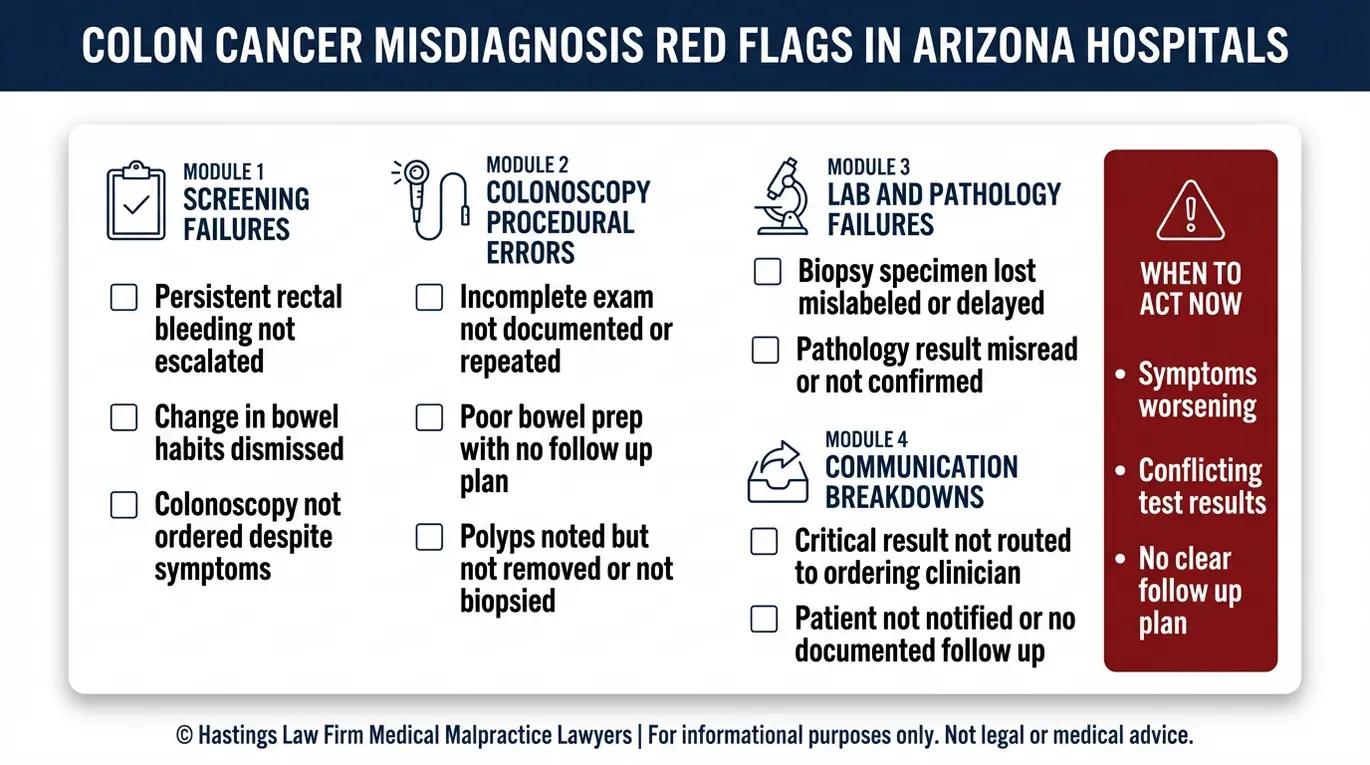
One of the most common errors involves a physician not ordering appropriate testing when a patient presents with concerning symptoms. Rectal bleeding, unexplained weight loss, persistent changes in bowel habits, and chronic abdominal pain can all signal colorectal cancer. When a doctor attributes these symptoms to a less serious condition without further investigation, the opportunity for early detection may be lost.
The National Cancer Institute has identified possible signs of colorectal cancer in younger adults that doctors should be aware of and respond to promptly. Colorectal cancer includes cancers of the colon and the rectum, which is the final several inches of the large intestine.
Procedural Errors
Even when a colonoscopy is ordered, mistakes during the procedure itself can lead to missed diagnoses. An incomplete colonoscopy, where the scope does not reach the full length of the colon, may fail to detect adenomatous polyps (abnormal growths that can develop into cancer over time). If polyps are not fully visualized or removed, the patient may leave the procedure with a false sense of security.
Laboratory and Pathology Mistakes
After tissue is collected through a biopsy, a pathology report, which is the laboratory analysis that determines whether the cells are cancerous, must be accurate and timely. Pathologists can misinterpret biopsy samples, mislabel specimens, or fail to identify cancerous cells. Radiologists reviewing imaging studies may also overlook abnormalities.
A report by the AHRQ Patient Safety Network documented deficiencies in quality management processes and delays in the communication of test results at the Phoenix VA Health Care System, illustrating how systemic failures contribute to missed or delayed diagnoses.
Communication Gaps
Critical test results sometimes never reach the ordering physician, or the physician fails to communicate abnormal findings to the patient. These administrative breakdowns can delay follow-up care by weeks or months. Our experienced attorneys help understand these complex medical histories to find the truth.
Here are common red flags that may indicate a diagnostic error occurred:
- A colonoscopy was not ordered despite persistent gastrointestinal symptoms
- The colonoscopy was documented as incomplete, yet no follow-up was scheduled
- Biopsy results were misread, lost, or significantly delayed
- Abnormal lab or imaging results were not communicated to you or your referring doctor
- Symptoms were repeatedly attributed to hemorrhoids, IBS, or stress without further testing
- A referral to a gastroenterologist or oncologist was never made
An experienced Arizona colon cancer misdiagnosis lawyer can review your medical records to identify exactly where the breakdown happened and whether it meets the threshold for a malpractice claim.
Diagnostic Bias and Age-Related Negligence
Age-related diagnostic bias, a pattern where doctors dismiss symptoms in younger patients because they assume colon cancer only affects older adults, creates dangerous delays. A screening colonoscopy, the procedure used to examine the lining of the colon and rectum for abnormal growths, is typically recommended starting at age 45. However, colorectal cancer rates among younger adults have been rising.
When a physician assumes that a 30- or 40-year-old patient’s rectal bleeding is simply hemorrhoids or irritable bowel syndrome, they may never order the tests needed to catch the disease at an earlier stage. This can prevent detection before the cancer progresses to more advanced staging. The standard of care requires physicians to evaluate each patient’s individual risk factors, family history, and symptoms rather than relying on age alone to rule out cancer.
Proving Medical Malpractice for Delayed Colorectal Cancer Diagnosis
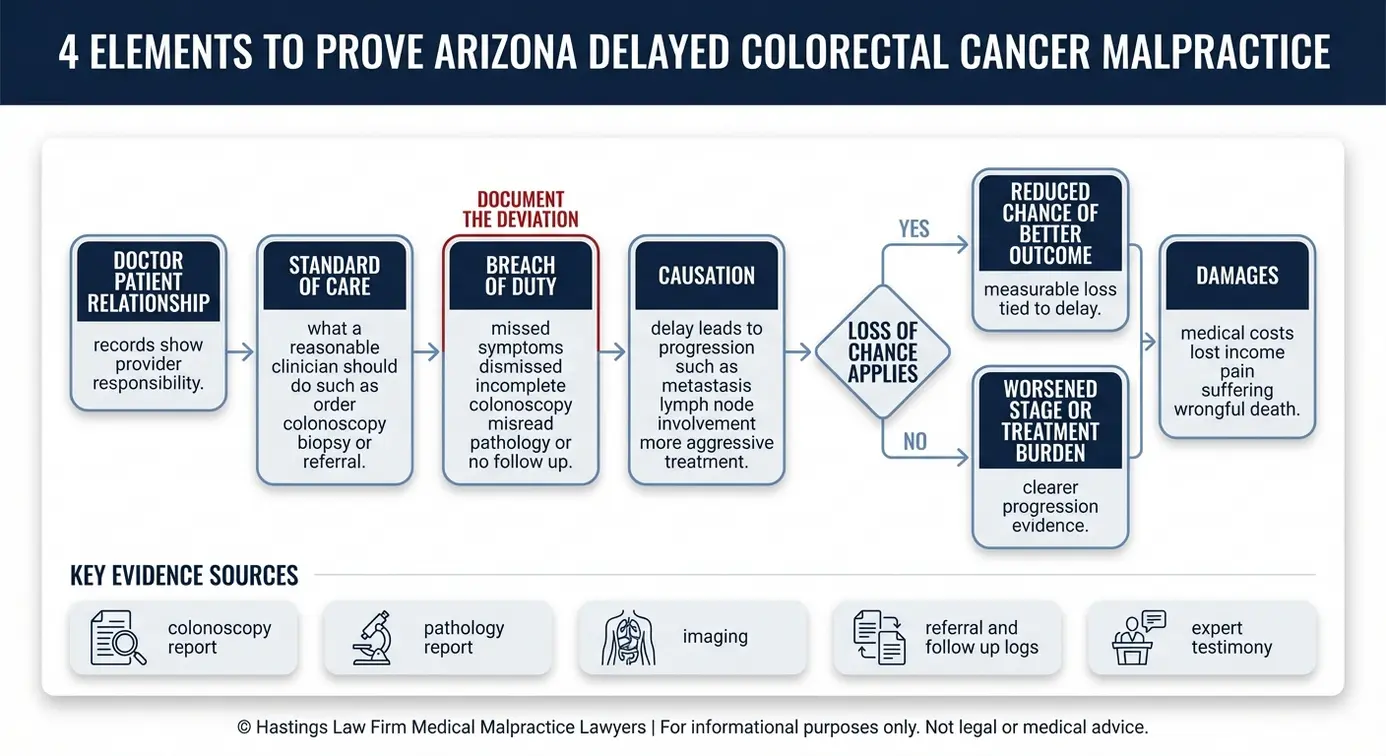
To prove malpractice, a plaintiff must demonstrate that a doctor-patient relationship existed, the physician breached the accepted standard of care by failing to diagnose the condition when a competent doctor would have, and this delay directly caused the cancer to advance or reduced the patient’s chance of survival. These cases require a methodical, evidence-driven approach. As your Arizona colon cancer misdiagnosis lawyer, we meticulously analyze the timeline of events.
To prevail, we must establish that the medical provider owed you a duty of care and that there was a clear breach of duty, a deviation from what a competent specialist would have done. We also must prove causation, showing that this specific breach led to a worse prognosis. A qualified lawyer for delayed cancer diagnosis knows how to connect these legal elements to the clinical facts.
At Hastings Law Firm, our team includes in-house nurse consultants and former defense attorneys who previously worked for the hospital systems they now challenge. This experience helps us identify where care deviated from accepted protocols and build a case that is trial-ready from day one.
Here are the elements of proof required in an Arizona delayed cancer diagnosis claim:
- Doctor-patient relationship existed: You were under the care of the physician or medical facility at the time of the alleged error.
- Standard of care was breached: A reasonably competent physician in the same specialty, under similar circumstances, would have ordered a biopsy, a procedure where tissue is removed and examined for cancer cells, a colonoscopy, or appropriate follow-up testing. We work with qualified medical experts from our national network to define what the standard required. These experts clarify whether a timely referral or additional testing was mandatory given your symptoms.
- The breach caused harm: The failure to diagnose must be directly linked to the progression of the disease or worse outcomes. If an incomplete colonoscopy, a procedure where the scope fails to examine the entire colon, led to missed polyps that later became metastatic cancer, that connection must be established through expert analysis.
- Damages resulted: The patient suffered measurable harm, whether that means more aggressive treatment like chemotherapy, reduced survival odds, or diminished quality of life. We calculate the full scope of these damages to ensure fair compensation.
Expert witnesses are central to this process. Arizona law requires qualified medical professionals to testify about what the standard of care required and how the treating physician fell short. Our firm maintains a national network of oncologists, gastroenterologists, pathologists, and other specialists who provide objective opinions and credible testimony.
According to the National Cancer Institute’s Colon Cancer Treatment PDQ, the stage at which colorectal cancer is diagnosed significantly affects treatment options and survival rates. This medical evidence is often the foundation for proving that a delay in diagnosis made a meaningful difference in the patient’s outcome.
The Loss of Chance Doctrine in Arizona
Arizona law recognizes the loss of chance doctrine, which allows patients to pursue a claim even if the initial prognosis was uncertain. Under this legal theory, a patient does not have to prove that an earlier diagnosis would have guaranteed survival. Instead, the patient must show that the physician’s negligence deprived them of a significant chance of a better outcome.
This is particularly relevant in cases where colon cancer was not caught until it had reached metastasis, meaning the cancer spread from the colon to other parts of the body such as the lymph nodes, liver, or lungs. Cancer staging is a medical classification used to describe how far the cancer has progressed. Using the TNM system, which evaluates the size of the tumor, involvement of nearby lymph nodes, and whether distant metastasis has occurred, experts can demonstrate how the disease advanced during the period of diagnostic delay.
The Hastings Law Firm Difference
Results matter, but what truly sets us apart is how we achieve them. Every verdict, every settlement, and every Arizona courtroom victory comes from one guiding promise: To treat each client’s fight for justice as if it were our own.
This balance of skill, experience, and empathy reflects our core philosophy that justice should not only compensate the injured, but also make health care safer nationwide.

Compensation Available to Victims of Colorectal Cancer Negligence
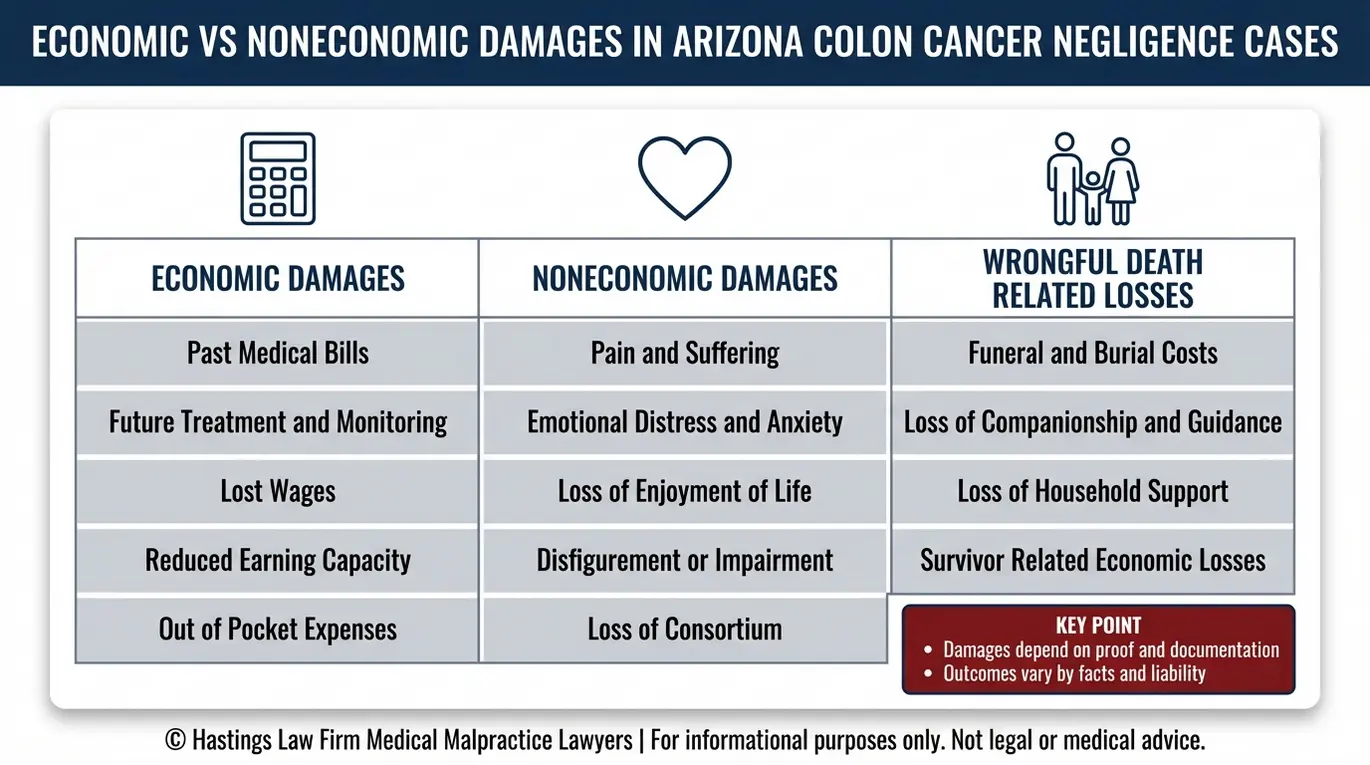
Victims of cancer misdiagnosis may recover damages for medical expenses, lost wages, pain and suffering, loss of enjoyment of life, and in cases of fatal negligence, wrongful death benefits for surviving family members. Patients affected by cancer misdiagnosis may recover damages for medical expenses, lost wages, pain and suffering, and loss of enjoyment of life. We help identify every category of loss that applies to your situation.
| Economic Damages | Non-Economic Damages |
|---|---|
| Past and future medical bills (surgery, chemotherapy, radiation, hospitalizations) | Physical pain and suffering from advanced treatment |
| Lost wages and loss of future earning capacity | Emotional anguish and mental distress |
| Cost of in-home care or rehabilitation | Fear of cancer recurrence |
| Prescription medications and medical devices | Loss of enjoyment of life and daily activities |
| Travel costs for treatment | Loss of consortium (impact on spousal or family relationships) |
Economic damages cover the financial costs that can be calculated with documentation, such as medical bills and lost income. When a delayed diagnosis leads to more aggressive or prolonged treatment, these costs can be substantial.
Non-economic damages address the personal toll. Living with advanced cancer, enduring harsher treatment, and facing an uncertain future all carry real weight that the law recognizes.
Wrongful death claims may be brought by surviving family members when a loved one dies because of a diagnostic failure. These claims can include compensation for funeral and burial costs, loss of companionship, and financial support. Arizona does not cap damages in personal injury or wrongful death cases, which means families can pursue full and fair compensation without an artificial ceiling.
In rare cases involving especially egregious conduct, punitive damages may also be available. When lymph node involvement or distant metastasis could have been caught earlier, the difference between what happened and what should have happened can be significant.
Contact the Arizona Misdiagnosis Attorneys at Hastings Law Firm Today for Help
A delayed cancer diagnosis can change the course of your life and the lives of those closest to you. Holding negligent providers accountable is about more than financial recovery. It is about uncovering the truth, protecting your family’s future, and helping prevent the same failure from happening to someone else.
Hastings Law Firm is a nationally recognized medical malpractice firm with a team built specifically for cases like these. Our attorneys, in-house nurses, and medical consultants work together to investigate what happened and identify where the standard of care was violated. We prepare every case for trial from day one to ensure we are ready to advocate for your rights.
If you believe your colon cancer was missed or diagnosed too late because of a medical error, we want to help. As your Arizona colon cancer misdiagnosis lawyer, we charge no fees unless we secure a recovery on your behalf. Contact us today for a free, confidential case evaluation so we can review your records and explain your options.
Frequently Asked Questions About Colon Cancer Misdiagnosis in Arizona


This content was researched and written by the Hastings Law Firm editorial team, which includes attorneys, medical professionals, and experienced researchers. Our writing is informed by internal knowledge and practical experience, and we cross-check critical details against authoritative sources cited throughout. Every piece undergoes human-led fact-checking and legal review. Because legal and medical information can change, if you spot an error, please contact us. Learn more about our content standards and review process on our editorial policy page.

Tommy Hastings, founder of Hastings Law Firm, is a board-certified personal injury trial lawyer dedicated exclusively to healthcare injury cases. Since 2001, he has represented injured patients and families in litigation against major hospital systems, pharmaceutical companies, and negligent healthcare providers nationwide. He has handled numerous high-profile cases that have drawn national media attention and resulted in multi-million dollar recoveries. He draws on that experience in his writing, helping readers understand how these cases work and what options may be available to them.
