


Arizona Cervical Cancer Misdiagnosis Lawyer
A delayed or incorrect cervical cancer diagnosis can change treatment options and long term health, especially when screening results are missed or follow up care is not provided. Errors such as misread Pap smears, missed HPV testing, pathology mistakes, and dismissed symptoms can allow disease to progress and lead to more intensive treatment, lasting harm, or fatal outcomes. Accountability may involve more than one provider when breakdowns occur across clinics and laboratories. If you or a loved one were harmed or worse due to cervical cancer misdiagnosis in Arizona, contact Hastings Law Firm for a free, confidential case review.

Last Updated: July 27, 2026
Compassionate Arizona Medical Attorneys for Delayed Cervical Cancer Diagnosis Claims
When cervical cancer is caught early, the survival rate is high and treatment options are far less aggressive. But when a doctor misses the signs, misreads a test, or delays a referral, the window for effective treatment can close quickly. If you or a loved one received a late or incorrect cervical cancer diagnosis in Arizona, you may be dealing with more than just a medical crisis. You may also be facing questions about whether someone failed you.
At Hastings Law Firm, we focus exclusively on medical malpractice. Our team of attorneys, in-house nurses, and medical consultants understands both the clinical and legal sides of cancer misdiagnosis cases. As your Arizona cervical cancer misdiagnosis lawyer, we can review your medical records, identify where the breakdown occurred, and explain your legal options in a free, confidential consultation.

Understanding the Types of Cervical Cancer Misdiagnosis
Cervical cancer misdiagnosis occurs when a healthcare provider fails to identify the disease accurately or in a timely manner, allowing the cancer to progress to a less treatable stage. Not every misdiagnosis looks the same, though. The type of error often determines how an Arizona Cervical Cancer Misdiagnosis Lawyer investigates the case and which parties may be held responsible.
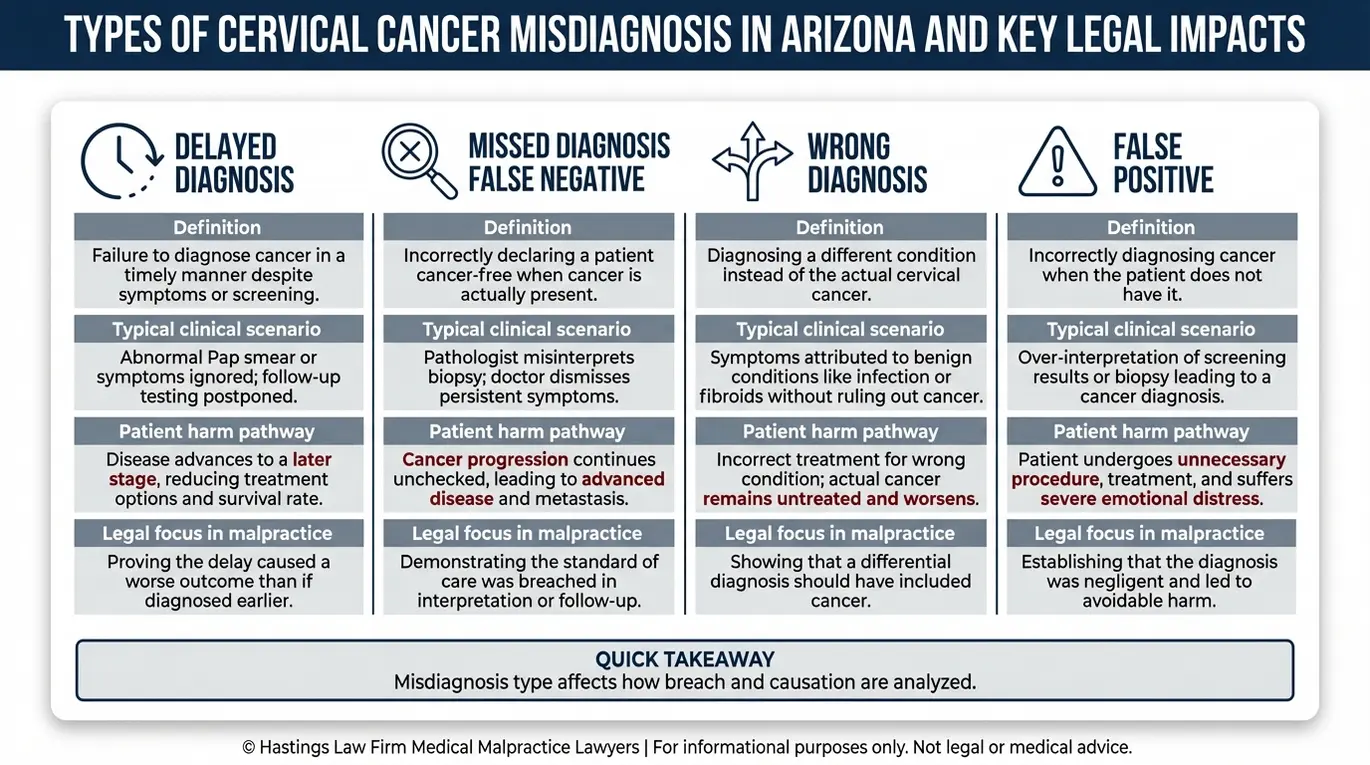
Here are the most common forms of cervical cancer misdiagnosis:
- Delayed diagnosis: This is the most frequent error. A provider may overlook symptoms or fail to act on abnormal screening results, giving the cancer time to spread before it is eventually identified. What might have been caught at a treatable stage can advance to one requiring more intensive intervention.
- Missed diagnosis (false negative): A false negative is a test result that incorrectly comes back as normal despite the presence of cancerous cells. This tells the patient nothing is wrong while the cancer continues to grow undetected.
- Wrong diagnosis: Instead of recognizing cervical cancer, a provider attributes the patient’s symptoms to a benign condition like an infection, cervical polyps, or fibroids. Treatment is directed at the wrong problem while the actual disease progresses.
- False positive: A false positive, or a result incorrectly suggesting cancer is present when it is not, can lead to unnecessary surgeries, radiation, or emotional trauma from a diagnosis that never should have been made.
Each of these errors can cause serious, sometimes irreversible harm. A delayed cervical cancer diagnosis may mean the difference between a localized, curable condition and advanced-stage disease requiring chemotherapy, radiation, or palliative care. In the most devastating situations, a failure to diagnose cervical cancer can contribute to a patient’s wrongful death.
If you suspect any of these errors occurred, speaking with a cervical cancer misdiagnosis attorney can help you understand whether the care you received fell below the accepted medical standard. An experienced Arizona cancer malpractice lawyer can evaluate the specifics of your situation, from the initial screening results to the timeline of your treatment, ensuring that no detail is overlooked in the pursuit of a legal claim.
Common Medical Errors Leading to Advanced Cervical Cancer
Common errors include misreading Pap smears, failing to order HPV testing, mishandling biopsy samples, or dismissing patient symptoms as minor gynecological issues. These breakdowns can happen at any point in the diagnostic chain, often resulting in a delayed diagnosis of cervical cancer.
Pap Smear and HPV Testing Failures
A Pap smear, or Papanicolaou test, collects cells from the cervix to check for abnormalities. Cervical cytology, the laboratory analysis of these cells, is a foundational screening tool. Errors can occur when lab technicians misread slides, when samples are contaminated, or when a provider fails to order follow-up testing.
According to the CDC’s cervical cancer screening guidelines, regular screening with Pap smears and HPV testing is essential. When a provider fails to follow these protocols, a Pap smear error attorney may be needed to investigate. HPV testing, screening for high-risk human papillomavirus strains linked to cervical cancer, is often recommended alongside a Pap smear. If a doctor does not order this test when guidelines call for it, an opportunity to catch the disease early may be lost.
Pathology Errors
When a biopsy is performed, the tissue sample is sent to a pathologist for analysis. Errors at this stage can include misclassifying malignant cells as benign. A single misread slide can set a patient’s diagnosis back significantly.
Failure to Follow Up on Warning Signs
Irregular bleeding, pelvic pain, and abnormal discharge should prompt further investigation. When a provider dismisses these signs without ordering tests, it can result in a missed cervical cancer diagnosis.
| Medical Error | Potential Consequence |
|---|---|
| Misread Pap smear or cervical cytology | Cancer progresses undetected past early, treatable stages |
| Failure to order HPV testing | High-risk HPV strains go unidentified; precancerous changes are missed |
| Misinterpreted biopsy results | Malignant tissue classified as benign; treatment is delayed |
| Dismissing symptoms without follow-up | Cancer advances while the patient believes nothing is wrong |
Failures in Cervical Cancer Screening Protocols
The standard of care for cervical cancer screening outlines specific intervals and methods for testing. Screening protocols are the established medical guidelines doctors follow to detect cancer early. A colposcopy, which is a procedure where a doctor uses a magnifying instrument to closely examine the cervix, is typically indicated after an abnormal Pap smear or positive HPV result. When a provider skips this step, the breach of duty may require a medical negligence lawyer Arizona to build a malpractice claim.
A cervical cancer misdiagnosis lawyer in Arizona works with experts to evaluate if your provider followed guidelines. At Hastings Law Firm, our in-house medical staff identifies where the process broke down.
The Hastings Law Firm Difference
Results matter, but what truly sets us apart is how we achieve them. Every verdict, every settlement, and every Arizona courtroom victory comes from one guiding promise: To treat each client’s fight for justice as if it were our own.
This balance of skill, experience, and empathy reflects our core philosophy that justice should not only compensate the injured, but also make health care safer nationwide.

Proving Liability and the Standard of Care in Arizona
To prove liability, a plaintiff must demonstrate that the medical provider breached the accepted standard of care and that this breach directly caused the cancer to progress to a worse stage. An Arizona Cervical Cancer Misdiagnosis Lawyer knows that proving medical malpractice requires demonstrating more than just a bad outcome. The legal team must establish a clear link between the provider’s actions and the harm suffered.
Defining the Standard of Care
The standard of care refers to the level of treatment a reasonably competent gynecologist, oncologist, or other specialist would have provided under similar circumstances. In cervical cancer cases, this typically includes timely screening, appropriate follow-up on abnormal results, and referral to specialists when precancerous changes are identified. Cervical intraepithelial neoplasia (CIN), a term describing precancerous cell changes on the cervix, should prompt further evaluation. When it does not, that gap may represent a failure to meet the standard of care in cancer diagnosis.
The Role of Expert Testimony
Using expert testimony for cancer claims is essential, as Arizona law requires testimony from qualified medical experts to establish that a breach occurred. Under Arizona Revised Statutes § 12-2604, expert witnesses in medical malpractice cases must be qualified in the same field as the defendant. For a cervical cancer case, that may mean retaining a board-certified gynecologist, pathologist, or oncologist who can testify about what should have been done and when. The Arizona Supreme Court has also clarified standards of proof in medical malpractice cases, reinforcing the importance of qualified expert analysis.
Causation: Connecting the Delay to the Outcome
Establishing causation in cancer cases means the delay or misdiagnosis changed the trajectory of the disease. For example, if staging shows the disease progressed from FIGO Stage I to Stage III or IV during the failure, that change can form the basis of a claim. These FIGO stages describe how far the cancer has spread within the body. This usually involves spread to surrounding tissue or distant organs.
Here is what we evaluate to build the case:
- ✅ Medical records from every provider involved in screening and treatment
- ✅ Pathology reports and lab results, including original slides if available
- ✅ The clinical timeline from the first abnormal result to the eventual correct diagnosis
- ✅ Expert review by oncologists or pathologists to identify the specific breach
- ✅ Staging data to demonstrate how the delay affected the patient’s prognosis
Importance of Patient Record Portability
Cancer screening often spans multiple providers, clinics, and laboratories. Record portability refers to the process of sharing health information across different medical systems so every provider has a complete view of a patient’s history. When records are fragmented across different systems, critical test results can fall through the cracks. A positive HPV test at one facility may never reach the gynecologist at another. Our legal and medical team works to consolidate records from every provider in the chain, reconstructing a complete clinical picture that reveals where communication failed and whether that failure constitutes negligence.

Liability Beyond the OBGYN: Who Can Be Sued
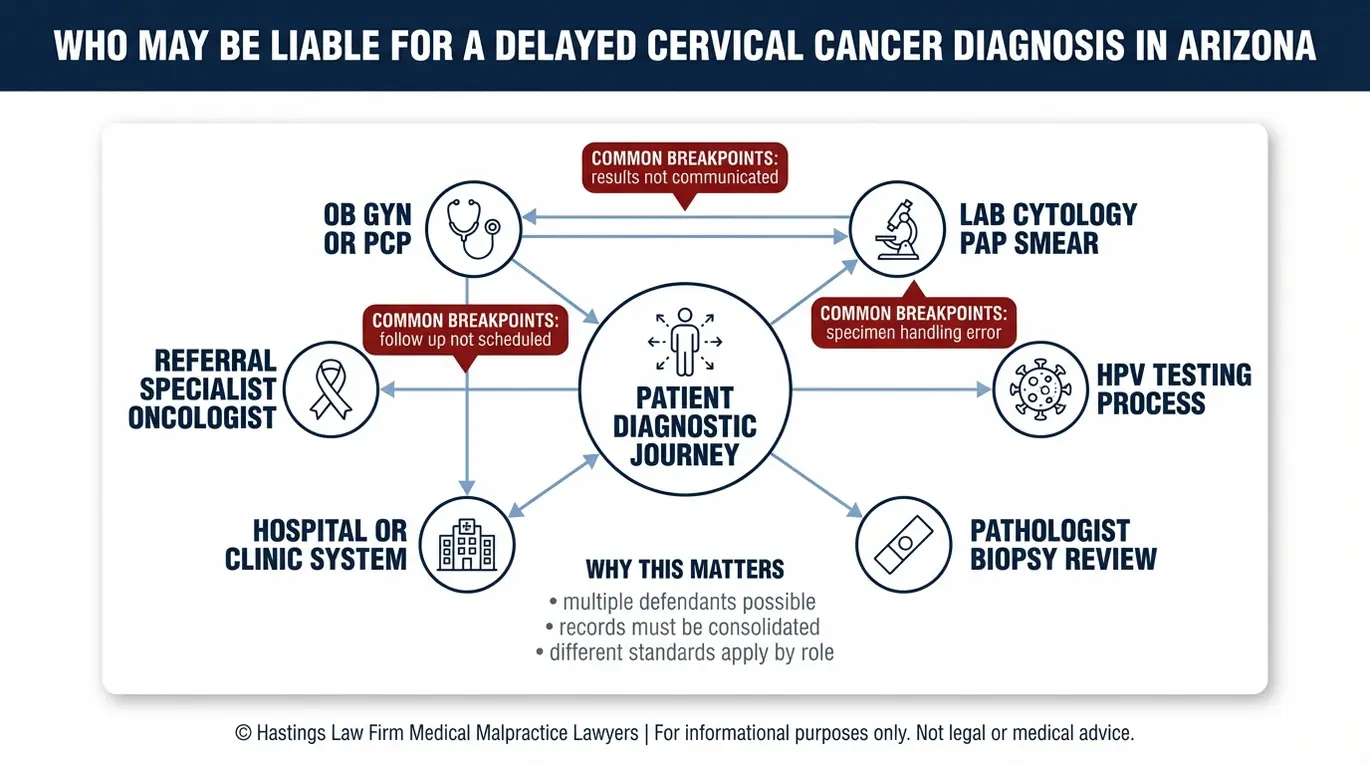
Liability may extend beyond the primary gynecologist to include laboratories, pathologists, hospitals, and primary care physicians who contributed to the diagnostic failure. Cancer diagnosis involves a chain of professionals, and a breakdown at any link can cause serious harm. Identifying all liable parties in cancer misdiagnosis is essential for a thorough recovery.
Depending on the facts of the case, the following parties may bear responsibility:
- The gynecologist or primary care physician: A doctor who failed to order recommended screenings, ignored symptoms, or did not act on abnormal results may be liable for the missed cervical cancer diagnosis.
- The laboratory or pathologist: The pathologist who examines tissue from a cervical biopsy is responsible for accurate interpretation. This process, known as histopathology, requires precision and involves the microscopic study of tissue to detect disease. If a sample was misread, pursuing a claim against a pathologist may be necessary to hold them accountable. A laboratory error attorney can also investigate if samples were mishandled or contaminated.
- The hospital or medical facility: Systemic failures can also contribute to misdiagnosis. Lost test results or administrative errors that prevented a patient from receiving her results may point to institutional negligence, requiring a hospital negligence lawyer. According to AHRQ’s PSNet on Improving Diagnostic Safety and Quality, diagnostic errors are a leading patient safety concern in healthcare systems nationwide.
As an Arizona cervical cancer misdiagnosis lawyer, Hastings Law Firm investigates every entity in the diagnostic chain. We consult with oncologists to verify if medical malpractice occurred. Our team, which includes former defense attorneys who previously represented hospitals, understands how these institutions document care and where accountability gaps tend to appear. Whether it involves securing a fair settlement or taking the case to trial, we ensure no responsible party is overlooked.
Consequences and Damages in Delayed Diagnosis Cases
Patients and families affected by a delayed cervical cancer diagnosis can recover damages for delayed cancer diagnosis, including additional medical costs, loss of income, pain and suffering, and in tragic cases, wrongful death benefits. Pursuing the process of recovering damages involves showing how the delay changed your treatment options and health. The type and amount of compensation depends on how the delay affected the patient’s health, treatment path, and quality of life.
- Economic damages: Pursuing full Arizona medical malpractice compensation is vital to cover the tangible financial costs caused by the delay. A patient diagnosed at an advanced stage may require chemotherapy or radical surgery that would not have been necessary with early detection. Lost wages and ongoing medical expenses also fall into this category.
- Non-economic damages: A delayed diagnosis often causes harm that goes beyond medical bills. Pain and suffering, emotional distress, loss of fertility, and the impact on daily life and relationships are all compensable under Arizona law.
- Loss of chance: The loss of chance doctrine Arizona courts recognize allows a patient to seek compensation when a provider’s negligence reduced their probability of survival or recovery. Even if the patient’s chances were already uncertain, the reduction in those chances is treated as a compensable harm. The Arizona Bar Foundation’s analysis of Arizona’s loss of chance doctrine explains how courts have approached this issue in practice.
- Wrongful death: If a patient passes away due to cervical cancer that should have been caught sooner, a wrongful death cervical cancer lawyer can help surviving family members pursue a claim. This can include compensation for funeral expenses, lost financial support, and the loss of companionship.
Data from the National Cancer Information Center’s SEER Explorer illustrates the significant difference in survival rates between early and late-stage cervical cancer. When a diagnostic delay pushes a patient from one stage to another, the statistical impact on survival can be powerful evidence at trial. An experienced trial attorney can use this data to maximize the potential cancer misdiagnosis settlement or verdict.
Why Choose Hastings Law Firm for Your Arizona Claim
Hastings Law Firm offers a unique combination of board-certified legal expertise and in-house medical knowledge, ensuring that complex oncology cases are handled with the highest level of professional scrutiny. We strive to be the best medical malpractice lawyer Arizona has to offer for patients who have been failed by the healthcare system.
Founder Tommy Hastings is Board Certified in Personal Injury Trial Law by the Texas Board of Legal Specialization, a distinction held by fewer than 2% of Texas attorneys. He is a 2025 inductee into the American Board of Trial Advocates (ABOTA) and has been named a Texas Super Lawyer every year since 2013. His career includes multi-million dollar results in failure-to-diagnose cases, and he is known for translating complex medical concepts into clear arguments that resonate with juries.
What sets the firm apart is its medical-legal team. Our staff includes nurse practitioners, Board Certified Patient Advocates, and former defense attorneys who previously worked for the systems they now challenge. That insider perspective gives us a strategic advantage when reviewing medical records. For cervical cancer misdiagnosis cases specifically, we work with a national network of board-certified oncologists and pathologists.
Hastings Law Firm operates from its Phoenix office, giving clients direct access to a Phoenix medical negligence attorney who understands the local court system and Arizona-specific medical malpractice laws. As an experienced Arizona cancer lawyer, we work as a no win no fee cancer lawyer firm, meaning you pay no attorney fees or costs unless we secure a recovery on your behalf.
Contact the Arizona Misdiagnosis Attorneys at Hastings Law Firm Today for Help
A cervical cancer misdiagnosis can change the course of your life. If you suspect that a delayed or incorrect diagnosis allowed your cancer to advance, you do not have to face this alone. Arizona has time limits for filing medical malpractice claims, so early action matters.
Hastings Law Firm provides a free, confidential case evaluation where our medical and legal team reviews your records and helps you understand what happened and what your options are. You will speak with a compassionate professional who can answer your questions without pressure or obligation.
If you or a loved one has been affected by a cervical cancer diagnostic error, contact Hastings Law Firm today. There is no fee unless we win.
Frequently Asked Questions About Cervical Cancer Misdiagnosis in Arizona


This content was researched and written by the Hastings Law Firm editorial team, which includes attorneys, medical professionals, and experienced researchers. Our writing is informed by internal knowledge and practical experience, and we cross-check critical details against authoritative sources cited throughout. Every piece undergoes human-led fact-checking and legal review. Because legal and medical information can change, if you spot an error, please contact us. Learn more about our content standards and review process on our editorial policy page.

Tommy Hastings, founder of Hastings Law Firm, is a board-certified personal injury trial lawyer dedicated exclusively to healthcare injury cases. Since 2001, he has represented injured patients and families in litigation against major hospital systems, pharmaceutical companies, and negligent healthcare providers nationwide. He has handled numerous high-profile cases that have drawn national media attention and resulted in multi-million dollar recoveries. He draws on that experience in his writing, helping readers understand how these cases work and what options may be available to them.
