


Fort Worth Cerebral Palsy Lawyer
Written by: Hastings Law Firm | Reviewed by: Gabe Sassin | Updated: July 27, 2026
A cerebral palsy diagnosis can leave families searching for clear answers about what happened during labor and delivery. Some cases involve preventable mistakes such as missed warning signs, delayed intervention, or improper use of delivery tools that can lead to permanent brain injury and lifelong care needs. Hospitals and insurers may point to alternative explanations, which can make it harder to get transparency and accountability. Understanding the medical records and the timeline of events is often central to evaluating what went wrong. If your child suffered harm or worse due to cerebral palsy malpractice in Fort Worth, Texas, contact Hastings Law Firm for a free, confidential case review.

Trusted Medical Attorneys for Preventable Birth Injuries in Fort Worth
What You Should Know About Birth-Related Brain Injury Claims in Fort Worth:
- Long term care needs can be substantial when cerebral palsy results from a preventable birth injury.
- Accountability can be harder to obtain when hospitals and insurers attribute the injury to non negligent causes such as genetics or prematurity.
- Clarity about what happened can be limited when internal hospital practices discourage staff from discussing errors or sharing incident information.
- Recovery options can be lost if the filing deadline is missed because Texas enforces strict time limits for medical malpractice claims.
- The ability to evaluate negligence can weaken over time because key records may be overwritten or misplaced and staff memories can fade.
- Proving causation can be difficult because a specific act of negligence must be linked to a specific brain injury using objective clinical records.
- Permanent brain injury risk can rise when oxygen deprivation during delivery is not recognized and addressed in time.
- Disputes often turn on whether fetal monitoring data and nursing documentation show timely recognition of fetal distress.
- Financial recovery can depend on a life care plan that projects medical expenses, therapy, equipment, and attendant care over a lifetime.
- Case outcomes can hinge on whether delivery records such as fetal monitoring strips, medication logs, and imaging studies are available and complete.

A Healthcare Focused Law Firm
When your child is diagnosed with cerebral palsy, the questions can feel endless. You may be wondering whether something went wrong during labor or delivery, and whether different decisions could have changed the outcome. Those questions deserve honest answers from someone who understands both the medicine and the law.
At Hastings Law Firm, we focus exclusively on medical malpractice. Our team of attorneys, nurse consultants, and in-house medical staff investigates birth injury cases by reconstructing what happened in the delivery room and measuring it against the care your child should have received. As a board-certified Fort Worth cerebral palsy lawyer, Tommy Hastings and his team have the experience and medical resources to help families understand their legal options and pursue the compensation their child may need for a lifetime of care.
If you believe a medical error contributed to your child’s diagnosis, we offer a free, confidential case evaluation. Contact us to review what happened and learn what steps you can take.
Why You Need a Dedicated Birth Injury Attorney
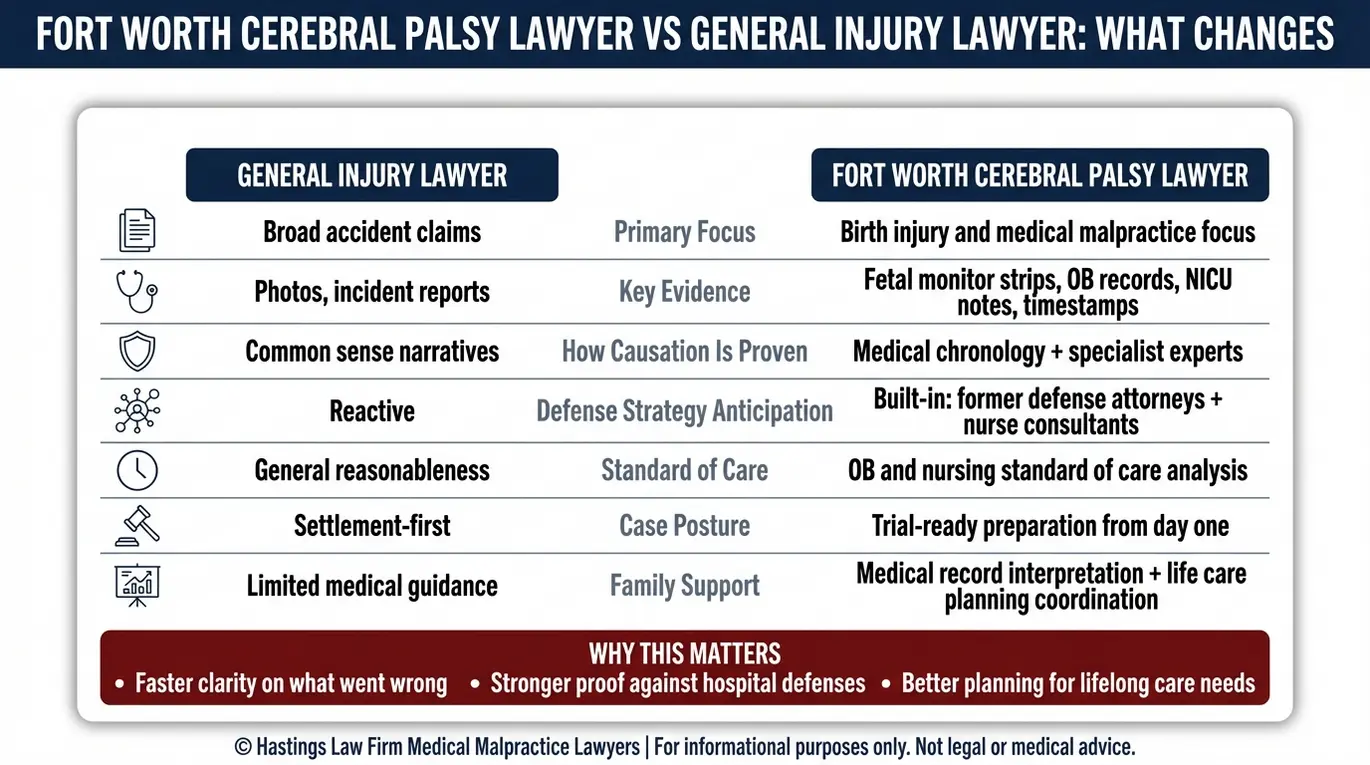
A dedicated birth injury attorney investigates complex medical records to determine whether a preventable error caused your child’s condition, and works to secure the financial resources necessary for lifelong care. These cases are fundamentally different from other personal injury claims, and the difference starts with causation.
Proving that medical malpractice caused cerebral palsy requires connecting a specific act of medical negligence to a specific brain injury. That chain of evidence runs through fetal monitoring strips, nursing logs, medication records, and imaging studies. A birth injury lawyer must be able to read those records the way a clinician would, identifying where the standard of care was met and where it broke down.
Consider the complexity involved. A labor and delivery team may administer Pitocin, a synthetic hormone used to induce or strengthen contractions. They might also decide to perform an emergency cesarean section if complications threaten the safety of the mother or baby. The medical team’s response to that data is at the heart of every cerebral palsy case.
The challenge for families is that they are going up against well-funded hospital systems with entire legal departments and insurance companies whose goal is to minimize payouts. A general personal injury firm may not have the medical knowledge to challenge a hospital’s version of events. A Fort Worth cerebral palsy lawyer with dedicated medical staff and former defense attorneys on the team understands how these cases are defended and prepares accordingly.
The emotional toll of this process cannot be overstated. You are caring for a child with serious medical needs while trying to determine whether doctor negligence or hospital negligence played a role. That is precisely why families benefit from an attorney who can manage the legal investigation while they focus on their child.
What Hospitals and Insurers Rely On:
- Blaming the injury on genetics, prematurity, or maternal health factors
- Pointing to documentation that supports their version of events while downplaying gaps in the record
- Relying on families’ lack of medical knowledge to avoid scrutiny
- Using delay tactics to run out the clock on filing deadlines
- Deploying well-credentialed defense experts to testify that the care was appropriate
A cerebral palsy attorney in Fort Worth who handles these cases daily knows how to anticipate and counter each of these strategies.
Overcoming the Hospital Code of Silence
One of the most frustrating experiences families describe is the feeling that no one at the hospital will give them a straight answer about what happened. This is not your imagination.
Medical establishments often have internal policies, sometimes explicit, sometimes cultural, that discourage staff from discussing errors or acknowledging fault. Nurses and residents may be instructed not to speak about specific events. Incident reports may be filed internally but never shared with families. The result is an information gap that can leave parents feeling dismissed or wondering if the complications they witnessed were as serious as they seemed.
This protective behavior does not necessarily mean wrongdoing occurred, but it does mean that families rarely get transparency from the institution itself. Our team examines objective data to determine if the standard of care was upheld. We review fetal heart rate tracings for signs of fetal distress, nursing timestamps, and Apgar scores, which assess a newborn’s condition immediately after birth. These records often tell a different story than the one families were given at discharge.
Understanding Cerebral Palsy Types and Symptoms
Cerebral palsy is a group of disorders affecting movement and muscle tone, often caused by brain damage that occurs before or during birth. Symptoms can range from mild muscle weakness to severe coordination problems, and they vary depending on which part of the brain was affected.
The CDC’s overview of cerebral palsy describes several classifications, each linked to the area of brain injury:
| Type of CP | Characteristics | Associated Brain Region |
|---|---|---|
| Spastic | Stiff, tight muscles; exaggerated reflexes; difficulty with movement | Motor cortex or white matter pathways |
| Dyskinetic (Athetoid) | Involuntary, slow writhing movements; fluctuating muscle tone | Basal ganglia |
| Ataxic | Poor balance and coordination; unsteady walking; tremors during purposeful movement | Cerebellum |
| Mixed | Combination of symptoms from two or more types | Multiple brain regions |
Spastic cerebral palsy, characterized by stiff muscles and exaggerated reflexes, is the most common form. Dyskinetic cerebral palsy, sometimes called athetoid cerebral palsy, involves involuntary movements caused by damage to the basal ganglia and affects a child’s ability to control their hands, arms, and legs.
Early signs of cerebral palsy are not always obvious. Some parents first notice that their baby favors one hand over the other, has difficulty feeding, or seems unusually stiff or floppy. Developmental delays, such as missed milestones like not sitting by nine months or not walking by 18 months, can also be early indicators. The CDC’s Milestone Checklists by Age offer a helpful reference for tracking your child’s development.
Early identification of these symptoms allows parents to seek intervention therapies sooner, which can significantly improve a child’s quality of life. While the diagnosis can be overwhelming, understanding whether the type of cerebral palsy is linked to a hypoxic event is a critical step in determining if actionable negligence occurred.
For Fort Worth cerebral palsy lawyers, understanding the specific type and severity of a child’s condition is essential. The classification helps our medical team trace the injury back to a point in time during labor or delivery, connecting the diagnosis to the care that was or was not provided. An attorney for cerebral palsy must be able to link the medical evidence to the legal standard, and that starts with understanding the diagnosis itself.
The Hastings Law Firm Difference
Results matter, but what truly sets us apart is how we achieve them. Every verdict, every settlement, and every Fort Worth courtroom victory comes from one guiding promise: To treat each client’s fight for justice as if it were our own.
This balance of skill, experience, and empathy reflects our core philosophy that justice should not only compensate the injured, but also make healthcare safer nationwide.

Common Medical Errors Leading to Cerebral Palsy
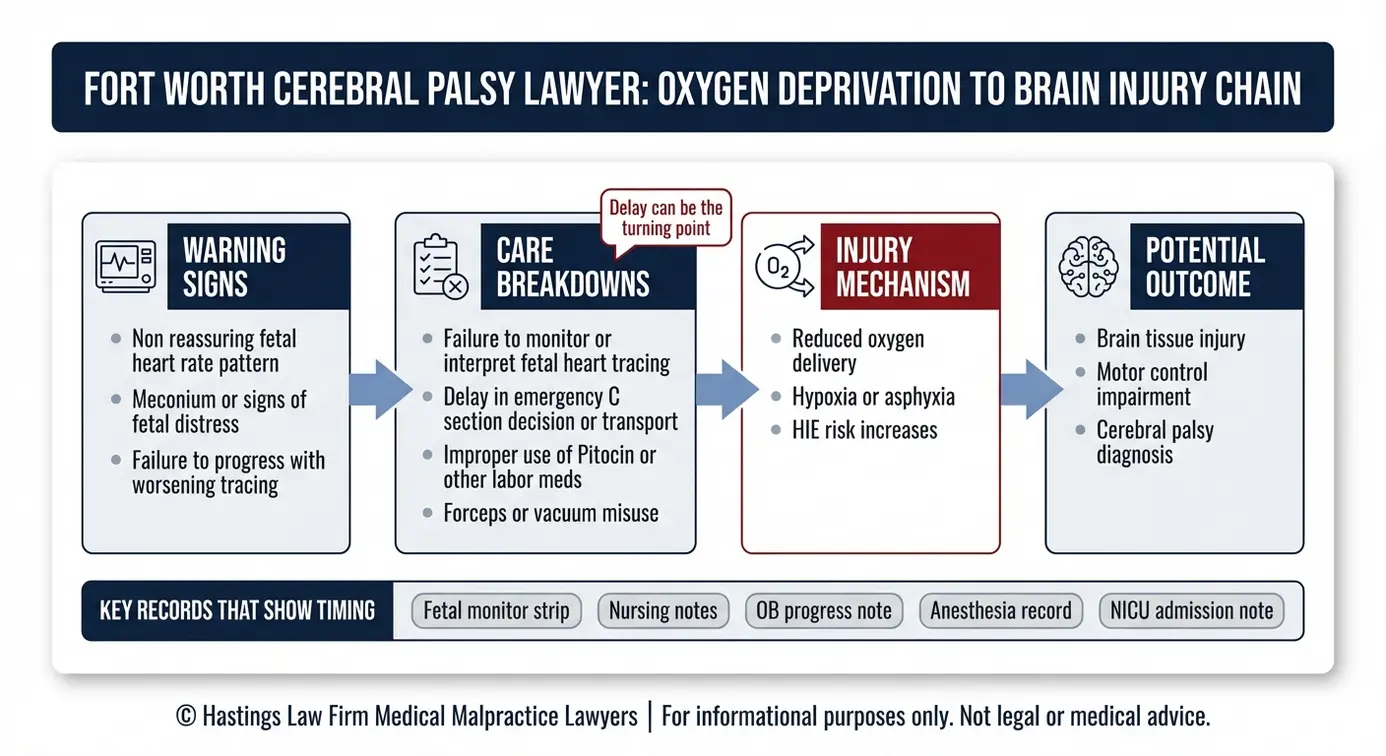
Medical errors such as failure to monitor fetal heart rates, delaying a necessary C-section, or improper use of delivery tools can deprive an infant of oxygen, leading to permanent brain damage. Research published in Frontiers in Neurology confirms that birth asphyxia is associated with increased risk of cerebral palsy, underscoring the direct link between oxygen deprivation during delivery and lasting neurological harm.
The central mechanism in most birth injury cases is oxygen deprivation. Hypoxia refers to reduced oxygen supply to the brain, while asphyxia describes a more severe condition where both oxygen and blood flow are compromised. When this deprivation is prolonged, it can cause hypoxic ischemic encephalopathy (HIE), a specific type of brain injury resulting from inadequate oxygen and blood flow to the newborn’s brain. HIE is one of the most common diagnoses underlying cerebral palsy claims.
The question a Fort Worth cerebral palsy lawyer asks is straightforward: did the medical team recognize the warning signs, and did they act in time? When a medical team is attentive, they can often intervene to prevent these outcomes. However, when staff are distracted, inexperienced, or managing too many patients, the risk of error increases. Our investigation focuses on pinpointing exactly when the distress began and why the response was delayed, ensuring that no detail is overlooked in building your claim.
Specific errors we investigate include:
- Failure to interpret electronic fetal monitoring (EFM) data. This continuous recording of the baby’s heart rate during labor often results in missed signs of distress if the medical team ignores abnormal patterns like late decelerations.
- Delayed emergency C-section. When fetal distress signals call for immediate delivery, delays of even minutes can result in irreversible brain damage.
- Improper forceps delivery or vacuum extraction. These delivery instruments can cause direct trauma to the baby’s head and brain when applied with excessive force or incorrect positioning.
- Pitocin mismanagement. Administering too much Pitocin can cause contractions that are too frequent or too strong, reducing blood flow to the baby between contractions and leading to oxygen deprivation.
- Failure to identify and treat infections. Maternal infections like chorioamnionitis, which is an infection of the placenta and amniotic fluid, can compromise the baby if not promptly diagnosed and managed. If a mother develops a fever or other signs of infection during labor, the medical team must act quickly. Failure to treat infections with antibiotics or expedite delivery can lead to sepsis and brain injury.
Each of these errors leaves a trail in the medical records. Our cerebral palsy law firm works with qualified medical experts to reconstruct the timeline of labor and delivery, identify where the standard of care was breached, and establish whether that breach caused the child’s injury.
The Litigation Process for Texas Birth Injury Claims
The litigation process begins with a thorough investigation of medical records, followed by filing a petition in court, a discovery phase involving expert testimony, and either a settlement negotiation or a trial verdict. Here is how each stage works.
Intake and Medical Review
When a family contacts our office, the first step is a confidential screening led by one of our in-house nurse consultants and Board Certified Patient Advocates. They review available medical records, including labor and delivery notes, fetal monitoring strips, and neonatal assessments. This initial evaluation helps determine whether there is evidence of a departure from the standard of care. Not every difficult birth involves malpractice, and an honest early assessment protects families from investing emotionally in a case that does not have legal merit.
Investigation and Expert Analysis
If the initial review suggests negligence may have occurred in your child’s birth, we conduct a deeper investigation. We leave no stone unturned, analyzing the actions of every provider present in the delivery room. This rigorous approach ensures that we identify all liable parties, from the attending physician to the hospital nurses. Our Fort Worth cerebral palsy lawyer team works with our national network of medical experts, including maternal-fetal medicine specialists, neonatologists, and neuroradiologists, to evaluate the evidence. These experts provide objective opinions on whether the care provided met the accepted standard and whether the departure caused the child’s injury.
Filing and Discovery
Once our investigation supports a claim for medical malpractice, we file a cerebral palsy lawsuit on the family’s behalf. The discovery phase follows, during which both sides exchange evidence. This includes depositions of the doctors, nurses, and other staff involved in the delivery. Our attorneys, including former defense counsel who understand how hospitals prepare their witnesses, use depositions to uncover the full picture of what happened. This legal journey can be lengthy, but our firm handles the administrative burden so you can focus on your child.
Settlement Negotiation or Trial
Many birth injury cases resolve through a settlement negotiation. But the families who receive the strongest outcomes are often represented by firms that genuinely prepare for trial from the start. Insurers know which firms settle for less and which ones fight for full value. By preparing for court, we maximize the leverage needed to negotiate a settlement that truly meets your child’s needs. Our trial-ready approach means that every investigation, every expert report, and every deposition is conducted as if the case will go before a jury.
As a Fort Worth medical malpractice attorney, we handle every aspect of this process on a contingency fee basis, meaning you pay no attorney fees unless we recover compensation for your family.
Securing Resources for a Lifetime of Care
Compensation in a birth injury case is designed to cover past and future medical expenses, therapy costs, home modifications, and non-economic damages like pain and suffering to ensure a child’s long-term security. For a child with cerebral palsy, these needs can span decades.
According to the CDC’s data on cerebral palsy, CP is one of the most common childhood motor disabilities. The lifelong care costs are substantial, and a Fort Worth cerebral palsy lawyer must account for every aspect of that financial reality when building a case. Families often underestimate the true cost of living with cerebral palsy. Inflation alone can double the cost of medical services over a decade. By accounting for these economic factors, we ensure the settlement reflects the real-world expenses your family will face.
Economic Damages reflect the measurable financial impact of the injury:
- Past and future medical bills, including hospitalizations, surgeries, and specialist visits
- Physical therapy, occupational therapy, and speech therapy
- Medications to manage spasticity, the muscle stiffness and tightness associated with spastic cerebral palsy, and other symptoms
- Specialized equipment such as wheelchairs, adaptive devices, and communication aids
- Home and vehicle modifications for accessibility
- Attendant care or in-home nursing services
- Lost future earning capacity
Non-Economic Damages address the human cost of the injury:
- Physical pain and suffering
- Mental anguish experienced by the child and, in some cases, the parents
- Loss of enjoyment of life and diminished quality of daily experience
To build an accurate picture of these needs, we work with life care planning experts and economic experts who project costs over the child’s expected lifetime, sometimes 50 years or more. This life care plan becomes one of the most important pieces of evidence in settlement negotiations or at trial. It translates the diagnosis into a concrete financial number that accounts for inflation, advances in medical care, and the specific needs of the individual child. These funds provide for everything from daily medication to complex surgeries that may be required as the child grows. The goal is to ensure that the cost of care never becomes a burden the family cannot bear.
Securing fair financial compensation for cerebral palsy is not about a windfall. It is about making sure your child has access to the care, support, and opportunities they deserve for the rest of their life.
Recognizing the Statute of Limitations in Texas
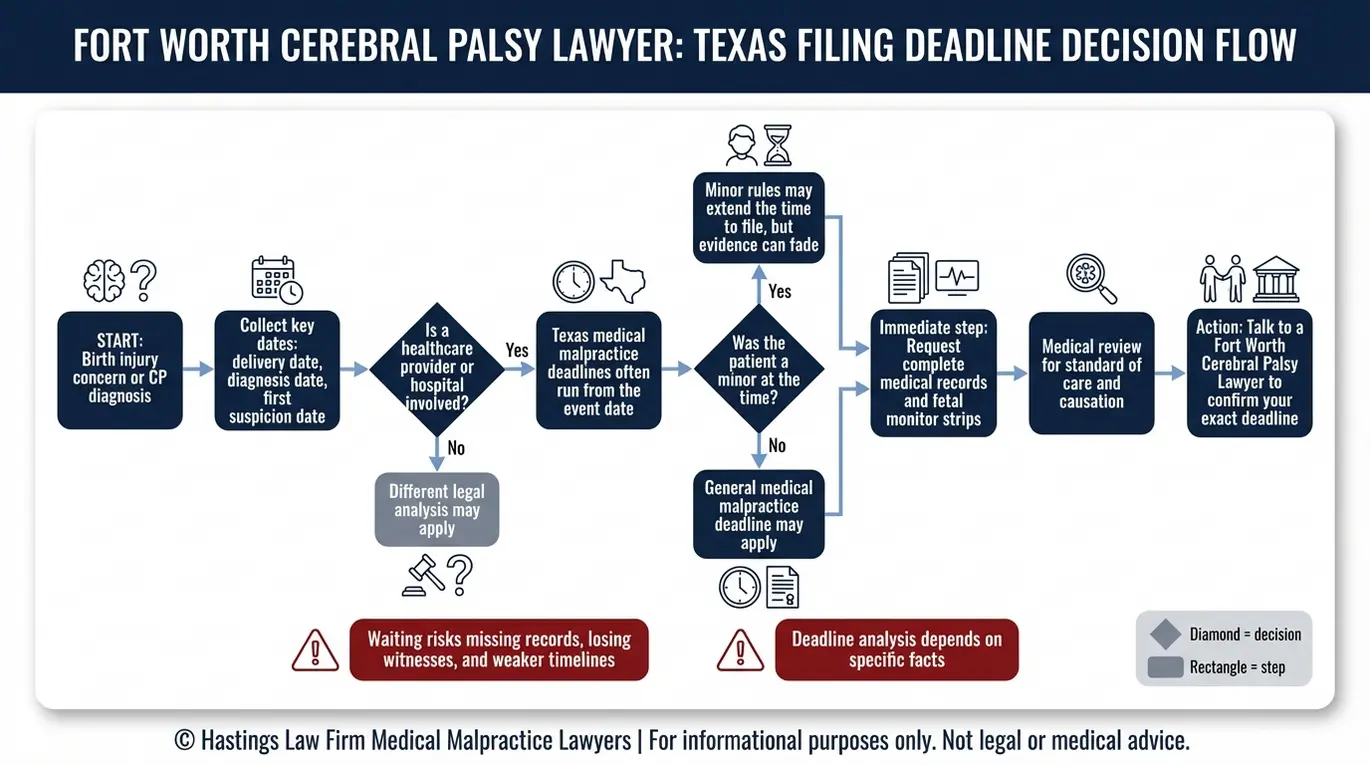
In Texas, the statute of limitations for medical malpractice is generally two years from the date the negligence occurred. However, specific exceptions exist for minors that may extend the filing deadline in birth injury cases.
The two-year rule can catch families off guard. Many parents do not realize their child has cerebral palsy until months or even years after birth, when developmental delays become apparent. Texas law includes a “discovery rule” that may adjust the starting point of the limitations period based on when the injury was discovered or reasonably should have been discovered, rather than strictly when the medical error took place.
For cases involving children, the statute of limitations may be subject to tolling, a legal concept that pauses the clock until the child reaches a certain age. Under Texas law, a minor child who was under 12 at the time of the negligence may have until their 14th birthday to bring a claim. But relying on this extension is risky for several reasons. The preservation of evidence is paramount. Electronic records can be overwritten, and paper logs can be misplaced. By initiating the legal process promptly, you secure the raw data needed to prove your case before it disappears. Do not assume that the extension for a minor child protects you indefinitely; the practical reality of building a winning case requires immediate action.
First, medical evidence degrades over time. Fetal monitoring strips, nursing notes, and other critical records may be stored for limited periods. Texas Children’s Hospital’s medical records policy illustrates how retention practices vary by institution, and waiting too long may mean that essential documentation is no longer available.
Second, the memories of the medical staff involved in the delivery fade. Witnesses retire, move, or become harder to locate. Waiting to file can also complicate the process of locating witnesses. Nurses and residents often move to other hospitals or states, making them difficult to depose. By acting quickly, you ensure that your legal team can interview these key witnesses while their recollection of the delivery is still clear. A Fort Worth cerebral palsy lawyer who can begin the investigation while evidence is fresh has a significant advantage over one who starts years later.
Third, the legal deadline in Texas is strictly enforced. Missing the filing window, even by a single day, can permanently bar your family’s claim regardless of how strong the evidence of negligence may be.
As a Fort Worth birth injury attorney, we strongly encourage families to seek legal guidance as early as possible. Even if you are unsure whether your child’s condition was caused by a medical error, an early consultation allows us to preserve evidence and evaluate the case while the facts are still accessible.
Contact the Fort Worth Birth Injury Attorneys at Hastings Law Firm Today for Help
If your child has been diagnosed with cerebral palsy and you suspect a medical error may have played a role, you are not alone in asking these questions. Families come to us looking for two things: the truth about what happened, and a plan to protect their child’s future.
At Hastings Law Firm, our mission is to restore trust for families who feel let down by the healthcare system and to enforce accountability that makes care safer for everyone. Board-certified trial attorney Tommy Hastings and our dedicated medical-legal team have the resources and experience to investigate your child’s birth, identify what went wrong, and pursue the compensation your family needs.
Your free, confidential evaluation is the first step toward finding answers. We work on a contingency fee basis, so you pay nothing unless we recover for your family. Contact us today to speak with a Fort Worth cerebral palsy lawyer who can review your child’s case and help you understand your options.
Frequently Asked Questions About Cerebral Palsy Malpractice in Fort Worth


This content was researched and written by the Hastings Law Firm editorial team, which includes attorneys, medical professionals, and experienced researchers. Our writing is informed by internal knowledge and practical experience, and we cross-check critical details against authoritative sources cited throughout. Every piece undergoes human-led fact-checking and legal review. Because legal and medical information can change, if you spot an error, please contact us. Learn more about our content standards and review process on our editorial policy page.

Gabe Sassin has focused exclusively on medical malpractice law since 2007. After spending more than a decade as a malpractice defense attorney, he knows exactly how the other side works. He has seen firsthand how healthcare providers, insurers, corporate defendants, and their legal teams think, prepare, and build their defense against claims. That knowledge works for the people who need it most today, injured patients and their families. His unique experience shapes everything he writes, giving readers a look at how these cases actually work from someone who has handled them from both sides.
