


Texas Cardiologist Malpractice Lawyer
Cardiologist negligence can cause severe cardiac injury when diagnostic workups are mishandled or when procedures like angioplasty or stent placement are performed or monitored improperly. A poor outcome alone does not prove malpractice, but a preventable error that falls below the accepted standard of care can leave lasting physical, emotional, and financial harm. Misdiagnosis and delayed treatment can be especially damaging when warning signs are dismissed or testing is not properly ordered or interpreted. If you or a loved one were harmed or worse due to cardiologist negligence in Texas, contact Hastings Law Firm for a free, confidential case review.

Last Updated: July 27, 2026
Trial-Ready Legal Representation for Heart Doctor Negligence
When a cardiologist’s error causes harm, whether during a diagnostic workup, an angioplasty (percutaneous coronary intervention, PCI), or the placement of a coronary stent (a small mesh tube used to keep an artery open), the consequences can be life-altering or fatal. If you or a loved one suffered a preventable cardiac injury, you deserve honest answers about what went wrong and whether negligence was involved.
At Hastings Law Firm, our entire team focuses exclusively on medical malpractice litigation, ensuring specialized knowledge for every case. We review the clinical details, identify where the standard of care may have been breached, and build cases designed for trial. As experienced Texas cardiologist malpractice lawyers, our team is prepared to help you understand your options.
Contact us for a free, confidential case evaluation. We can review what happened and explain your legal rights.

Understanding Cardiology Malpractice and the Standard of Care
Cardiology malpractice occurs when a heart specialist deviates from the accepted medical standard of care, resulting in injury or death to the patient. This standard represents the clinical benchmark for specialized cardiac care. The standard of care refers to the level of treatment a reasonably competent cardiologist would provide under similar circumstances. This is not a general medical benchmark; it is measured against what other qualified heart specialists would have done with the same patient presentation.
A bad outcome alone does not mean malpractice occurred. Heart disease is inherently serious, and not every complication reflects medical negligence. To establish a valid claim, there must be evidence that the cardiologist’s actions fell below the expected standard and that this breach directly caused the patient’s injury. That causal link, known as causation, is a required element under Texas Civil Practice and Remedies Code Chapter 74.
Proving a breach requires expert testimony from a physician in the same or a substantially similar specialty. Under Texas Civil Practice and Remedies Code § 74.401, qualified medical experts must validate the claim. Our cardiology malpractice attorneys work with former defense counsel and experienced nurses who provide insider insight into how hospitals evaluate cardiac cases. They can evaluate whether key diagnostic tools, such as an echocardiogram (echo) or a stress test (cardiac stress test), were properly ordered and interpreted.

Misdiagnosis of Heart Attacks and Acute Cardiac Events
Misdiagnosis is a leading cause of cardiac injury, often occurring when doctors fail to rule out serious conditions like myocardial infarction despite presenting symptoms. Failure to diagnose or properly identify these conditions is critical. When a patient arrives with chest pain, shortness of breath (dyspnea), or nausea, the treating physician should work quickly to determine whether an acute coronary syndrome, the umbrella term for conditions where blood flow to the heart is suddenly reduced, is occurring.
Too often, these symptoms are attributed to less serious conditions. Heart attack symptoms may be dismissed as heartburn, anxiety, a panic attack, or muscle strain. When that happens, patients lose critical treatment time.
Common warning signs that may be overlooked or misattributed include:
- Chest pressure or tightness mistaken for acid reflux
- Shortness of breath attributed to anxiety or a respiratory issue
- Nausea and vomiting dismissed as a gastrointestinal problem
- Jaw, neck, or arm pain classified as musculoskeletal
- Fatigue and lightheadedness written off as dehydration or stress
Research shows these gender differences mean dismissals disproportionately affect women. According to a study published by PubMed Central on myocardial infarction signs and symptoms in females versus males, women often have atypical symptoms. These can include fatigue, nausea, and back pain rather than classic chest pain. This contributes to delayed diagnosis and worse outcomes.
The American Heart Association’s heart attack warning signs resource also highlights the range of symptoms that should prompt immediate evaluation. When a heart doctor negligence lawyer reviews these cases, gender-based diagnostic bias is a common finding. Accurate diagnosis relies on the electrocardiogram, or EKG/ECG (a test that records the heart’s electrical activity), and the HEART score (a clinical tool that assigns risk based on history, EKG findings, age, risk factors, and troponin levels).
Failure to Follow Triage Protocols
In emergency and clinical settings, physicians are expected to follow a “rule in/rule out” protocol when a patient presents with potential cardiac symptoms. Triage protocols are standardized medical steps used to prioritize patients based on the severity of their condition. These protocols ensure that high-risk patients receive immediate attention. This means running the appropriate tests to either confirm or exclude a heart attack before moving on to less urgent diagnoses.
An EKG should typically be performed within minutes. Serial troponin (cardiac troponin blood test) levels help confirm or exclude myocardial injury over time. Many facilities also use the HEART score to guide treatment decisions.
When these protocols are skipped, delayed, or misread, a Texas malpractice attorney can examine the medical records to determine whether diagnostic errors occurred and if the standard of care was met.

The Hastings Law Firm Difference
Results matter, but what truly sets us apart is how we achieve them. Every verdict, every settlement, and every Texas courtroom victory comes from one guiding promise: To treat each client’s fight for justice as if it were our own.
This balance of skill, experience, and empathy reflects our core philosophy that justice should not only compensate the injured, but also make health care safer nationwide.

Common Errors Committed by Cardiologists in Texas
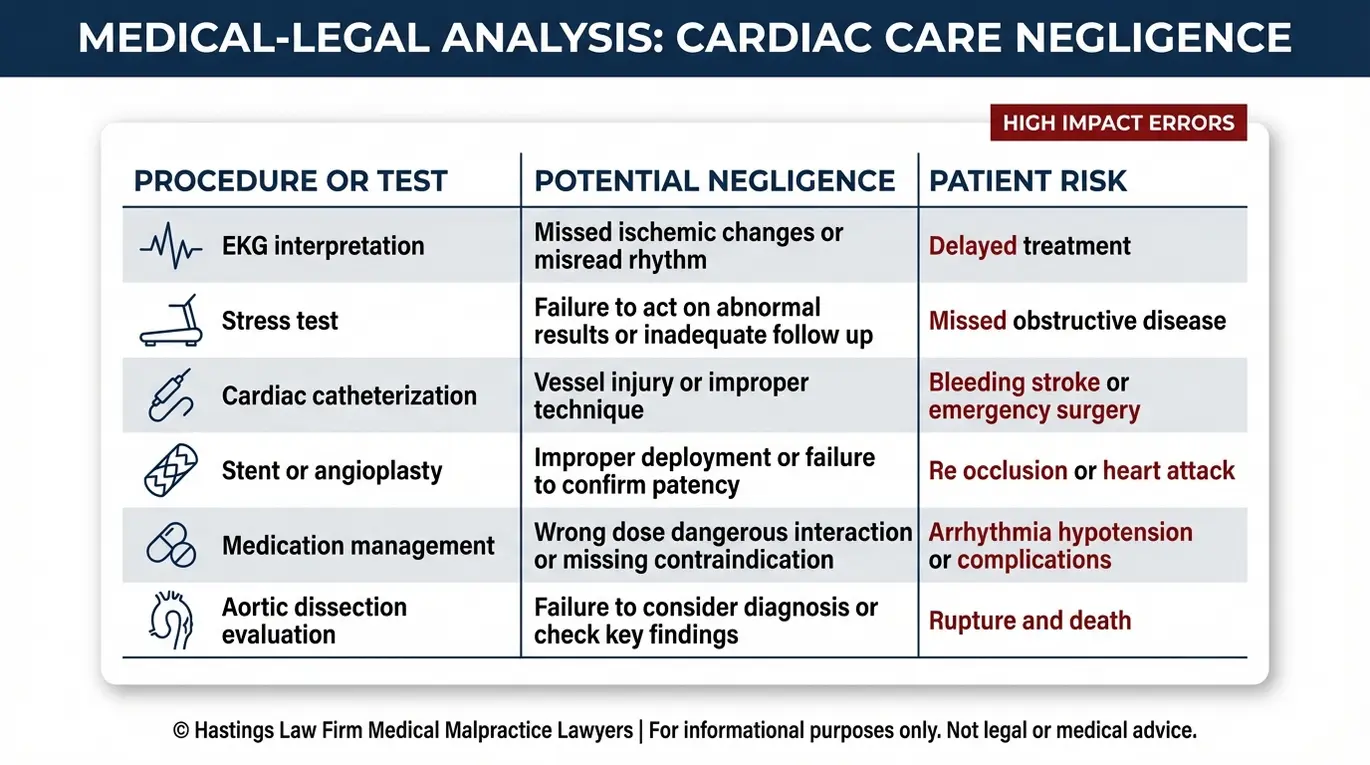
Beyond misdiagnosis, common errors include surgical mistakes during catheterization, improper stent placement, and medication management failures. These procedural errors occur during specialized interventions intended to restore blood flow. A malpractice lawyer for cardiologist errors will examine the specific procedure and clinical decisions involved to determine where the breakdown occurred. Reviewing medical records and facility policies helps identify whether the cardiologist failed to follow surgical or diagnostic protocols.
Cardiac catheterization, also known as coronary angiography (a procedure where a thin tube is threaded into the heart’s arteries to diagnose or treat blockages), carries known risks. But preventable errors during angioplasty, catheterization, or after the procedure can cause serious harm. The same applies to medication protocols like dual antiplatelet therapy, or DAPT (a regimen using two blood-thinning medications to prevent clots after stent placement), which requires careful prescribing and monitoring.
| Procedure / Condition | Examples of Potential Negligence |
|---|---|
| Stent Placement | Improperly deployed or blocked stent; failure to prescribe DAPT |
| Cardiac Catheterization | Arterial perforation; failure to monitor post-procedure complications |
| Stress Test Interpretation | Misread results leading to missed coronary artery disease |
| EKG Reading | Failure to identify ST-elevation indicating active heart attack |
| Aortic Dissection | Failure to check differential blood pressure; delayed imaging |
| Medication Management | Wrong dosage, dangerous drug interactions, or abrupt discontinuation |
Pursuing Compensation for Cardiac Injuries
Patients harmed by cardiac negligence may be entitled to economic damages for medical costs and lost wages, as well as non-economic damages for pain and suffering. These damages help address the financial and personal impact of a medical error. A cardiologist malpractice lawyer can help you identify the full scope of your losses and guide you through settlement negotiations.
Economic damages may include:
- Past and future medical expenses, including surgeries, rehabilitation, and ongoing cardiac care
- Lost wages and reduced earning capacity
- Home care and assistive needs
Non-economic damages may include:
- Physical pain and suffering
- Loss of enjoyment of life
- Emotional distress and anxiety related to the injury
If a loved one died because of a cardiologist’s negligence, surviving family members may be eligible to file a wrongful death claim to recover compensation for their loss and the financial support they depended on.
Contact the Texas Doctor Malpractice Attorneys at Hastings Law Firm Today for Help
Our mission at Hastings Law Firm is to restore trust for patients and families who have been failed by the healthcare system, and to help prevent the same errors from happening to someone else. Tommy Hastings is a board-certified trial lawyer, a distinction held by less than two percent of Texas attorneys. If you believe a cardiologist’s negligence caused harm to you or a loved one, time matters. Texas law imposes strict deadlines to file a medical malpractice claim, and critical evidence can be lost with delay.
When you contact a Texas cardiologist malpractice lawyer at our firm, you will speak with a patient advocate who will listen to your story and help you understand whether you have a case. There is no fee unless we recover compensation for you.
Contact Hastings Law Firm today to schedule your free, confidential consultation.
Frequently Asked Questions About Cardiologist Malpractice in Texas


This content was researched and written by the Hastings Law Firm editorial team, which includes attorneys, medical professionals, and experienced researchers. Our writing is informed by internal knowledge and practical experience, and we cross-check critical details against authoritative sources cited throughout. Every piece undergoes human-led fact-checking and legal review. Because legal and medical information can change, if you spot an error, please contact us. Learn more about our content standards and review process on our editorial policy page.

Gabe Sassin has focused exclusively on medical malpractice law since 2007. After spending more than a decade as a malpractice defense attorney, he knows exactly how the other side works. He has seen firsthand how healthcare providers, insurers, corporate defendants, and their legal teams think, prepare, and build their defense against claims. That knowledge works for the people who need it most today, injured patients and their families. His unique experience shapes everything he writes, giving readers a look at how these cases actually work from someone who has handled them from both sides.
