


Texas Brain Injury From Medical Negligence Lawyer
A traumatic brain injury caused by medical negligence can leave a family facing sudden disability, long term rehabilitation, and overwhelming uncertainty about what went wrong. The article describes how preventable hospital errors can deprive the brain of oxygen, trigger bleeding, or delay treatment, leading to irreversible harm. It also explains why symptoms can be physical, cognitive, or emotional, and why standard imaging may not show the full extent of injury. If you or a loved one were harmed or worse due to brain injury from medical negligence in Texas, contact Hastings Law Firm for a free, confidential case review.

Last Updated: September 20, 2026
Trusted Texas Medical Attorneys for Traumatic Brain Injury Claims
A brain injury caused by a medical error can change everything in an instant. If you or a loved one entered a hospital expecting safe, competent care and instead suffered a preventable brain injury, the confusion, anger, and fear you are feeling right now are completely understandable. You deserve answers about what went wrong and who is responsible.
As a Texas brain injury from medical negligence lawyer, Hastings Law Firm focuses exclusively on medical malpractice litigation. Founded in 2005, our firm is led by Tommy Hastings, a board-certified trial attorney. This distinction is held by less than 2% of Texas lawyers. Our team includes trial attorneys, former defense lawyers, and experienced hospital nurses who understand how hospitals manage these crises.
If you believe a medical error caused a brain injury, we are here to listen. Contact us for a free, confidential case evaluation so we can review what happened and explain your options.

Common Medical Errors That Cause Brain Injuries
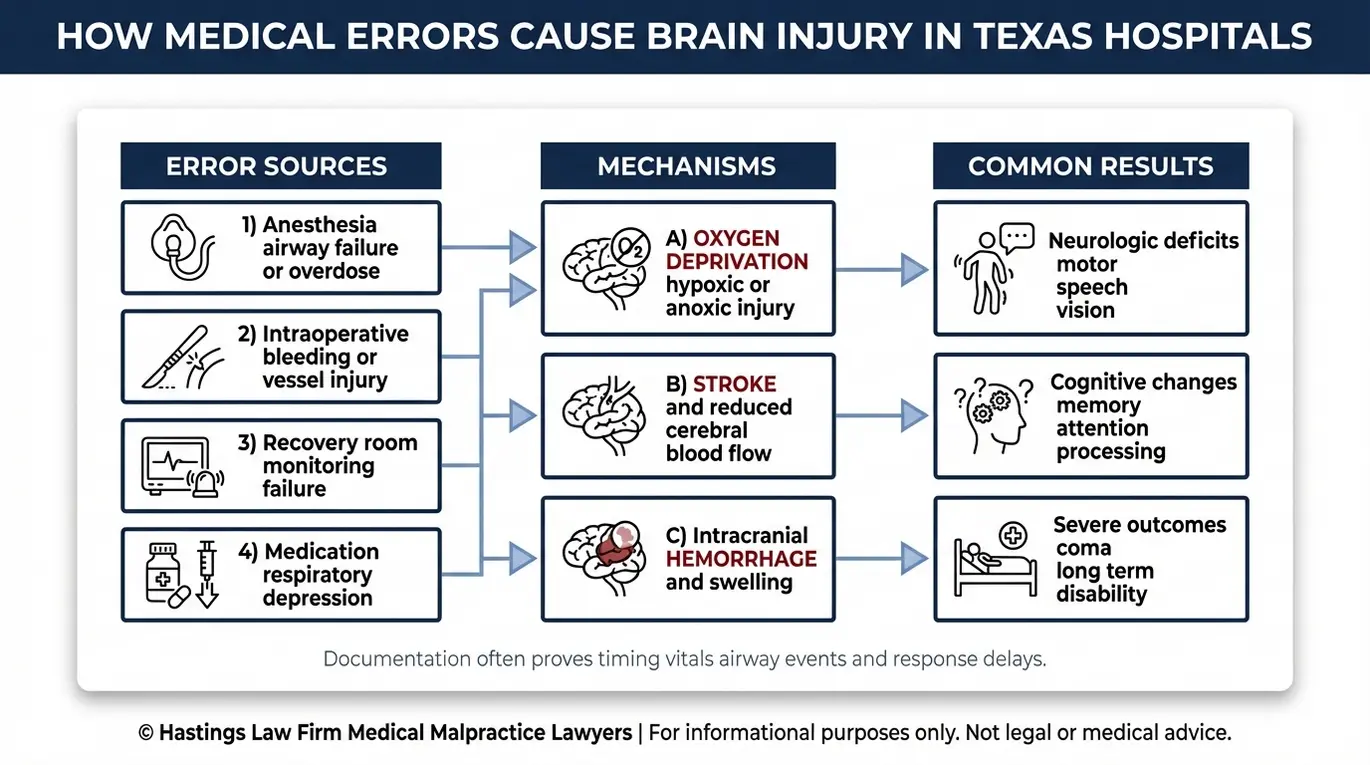
Medical negligence causes brain injuries through preventable errors such as anesthesia overdoses, oxygen deprivation (hypoxia/anoxia) during surgery, untreated strokes, or failure to monitor vital signs in recovery. In medical malpractice law, these errors occur when care falls below accepted standards. These are not rare, unavoidable outcomes. They are the result of specific failures by medical professionals who did not meet the expected standard of care.
The brain is uniquely vulnerable during medical procedures. Even a few minutes without adequate oxygen can cause permanent, irreversible damage. When hospital staff fail to prevent or quickly respond to these events, the consequences for the patient can be catastrophic. Data collected through the National Healthcare Quality and Disparities Reports from AHRQ consistently tracks the scope of preventable patient harm in hospital settings, underscoring just how frequently these errors occur.
As a brain injury lawyer in Texas, our team sees recurring patterns of negligence that lead to these injuries. The most common include:
- Anesthesia errors: These involve failures in airway management or incorrect medication dosages that cut off the brain’s oxygen supply. If endotracheal intubation, the process of placing a breathing tube into the airway, is performed incorrectly or delayed, the patient can suffer rapid oxygen deprivation. An anesthesia error can cause a hypoxic brain injury (caused by reduced oxygen) or an anoxic brain injury (caused by a complete loss of oxygen), both of which can result in permanent cognitive and physical disability.
- Surgical complications from negligence: During a procedure, a surgical error may occur, such as when a surgeon accidentally nicks an artery or damages surrounding tissue. This leads to uncontrolled bleeding or intracranial hemorrhage, which is bleeding inside the skull. If the surgical team does not identify and control the hemorrhage quickly, blood accumulates and compresses brain tissue, causing a stroke or other serious injury.
- Post-operative negligence: After surgery, patients are monitored in the PACU, or Post-Anesthesia Care Unit, where staff track vital signs as the patient wakes from anesthesia. Failure to recognize dropping oxygen levels, changes in consciousness, or early signs of stroke during this critical window is a common and dangerous form of medical negligence. These hours immediately following a procedure are when a delayed response can mean the difference between recovery and permanent brain damage.
- Medication errors: A medication error involves administering the wrong drug or dosage. Overdoses of sedatives, opioids, or other medications can depress the respiratory system to the point where the patient stops breathing adequately. Without quick intervention, this leads directly to oxygen deprivation and brain injury.
If you suspect a medical error caused a brain injury, speaking with a Texas brain injury from medical negligence lawyer who understands these clinical details is an important first step. A qualified medical negligence attorney can help you determine if the standard of care was breached.
Identifying Symptoms of Hospital-Acquired Brain Damage
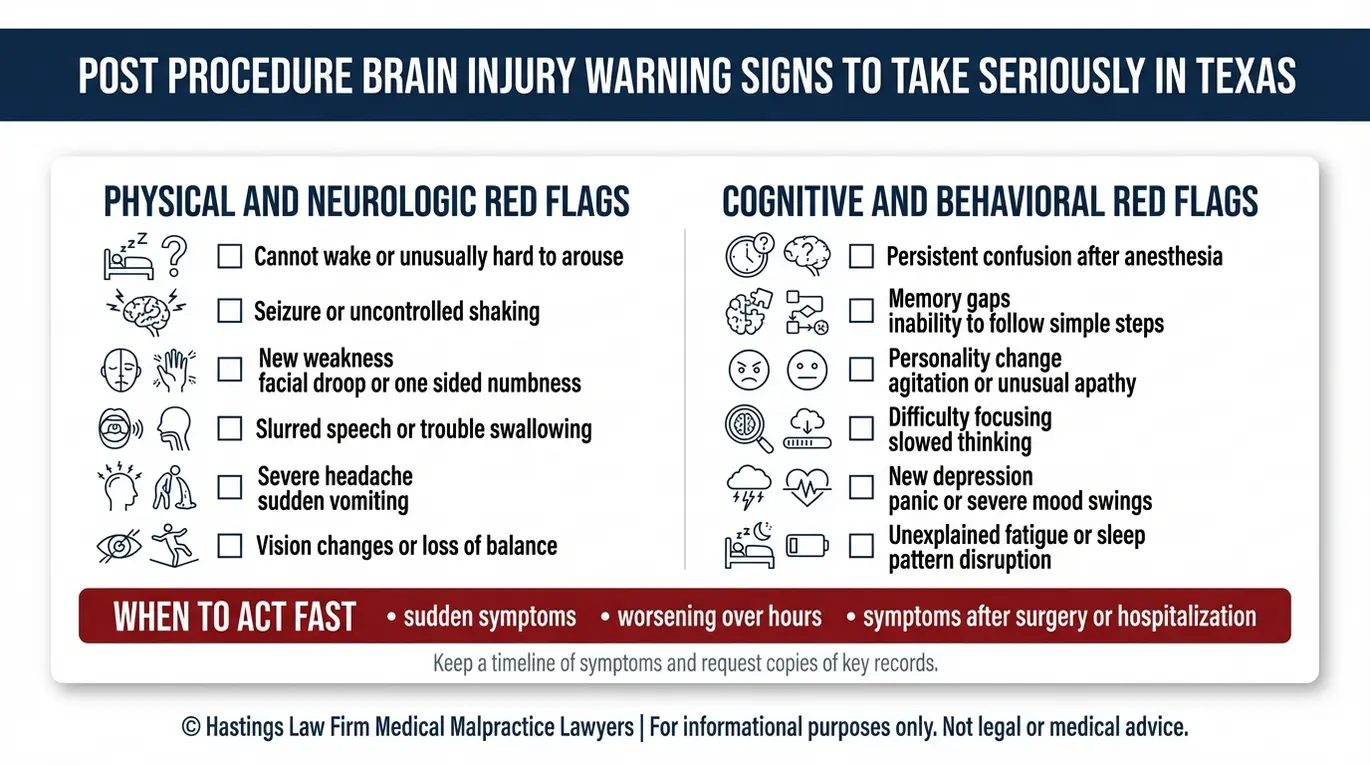
Symptoms of a medically induced brain injury range from obvious physical deficits like paralysis or slurred speech to subtle cognitive changes such as memory loss, personality shifts, or persistent confusion after a procedure. Identifying these symptoms is the first step in determining if hospital negligence occurred.
Some signs appear immediately. A patient who does not wake up on schedule after surgery, who has seizures in recovery, or who shows sudden weakness on one side of the body may be experiencing a serious brain injury in real time. These are urgent red flags that demand immediate medical intervention.
Other symptoms develop more gradually. A patient may be discharged and seem fine, only to struggle weeks later with difficulty focusing, mood swings, depression, or short-term memory problems. Cognitive deficits, which are impairments in thinking, reasoning, or remembering, do not always show up on a standard exam. According to the Centers for Disease Control and Prevention’s guide on signs and symptoms of concussion, even mild brain injuries can produce a wide range of symptoms that are easy to overlook.
One of the most difficult aspects of these cases is the “invisible” nature of some brain injuries. A patient may look physically healthy while struggling to function at work or care for themselves. If you or a loved one experienced cognitive or behavioral changes after a medical procedure, a medical negligence brain injury lawyer can help determine whether negligence played a role. Proper rehabilitation and legal support are essential for recovery.
| Physical Symptoms | Cognitive Symptoms | Emotional Symptoms |
|---|---|---|
| Seizures | Memory loss | Depression |
| Paralysis or weakness | Difficulty concentrating | Sudden mood swings |
| Slurred speech | Confusion or disorientation | Irritability or agitation |
| Loss of coordination | Slow processing speed | Anxiety or withdrawal |
| Chronic headaches | Trouble with decision-making | Personality changes |
Why Standard Scans May Miss Your Injury
Diagnostic imaging, such as CT scans and MRIs, allows doctors to see inside the skull to identify damage. However, a normal CT scan or MRI result does not necessarily mean there is no brain injury. Standard diagnostic imaging identifies large bleeds or tumors but often fails to detect widespread microscopic brain damage, such as the kind caused by oxygen deprivation, where injury to nerve cells can be diffuse and subtle.
Magnetic resonance imaging (MRI), a scan that uses magnetic fields to produce detailed images of the brain, can sometimes reveal more than a CT scan, but even advanced MRI may miss the full extent of microscopic injury. This is why families are often told “the scans look normal” despite functional loss. We evaluate this closely when building a case for a lawyer for brain injury from medical negligence.
The Hastings Law Firm Difference
Results matter, but what truly sets us apart is how we achieve them. Every verdict, every settlement, and every Texas courtroom victory comes from one guiding promise: To treat each client’s fight for justice as if it were our own.
This balance of skill, experience, and empathy reflects our core philosophy that justice should not only compensate the injured, but also make health care safer nationwide.

Proving Fault: The Standard of Care in Texas
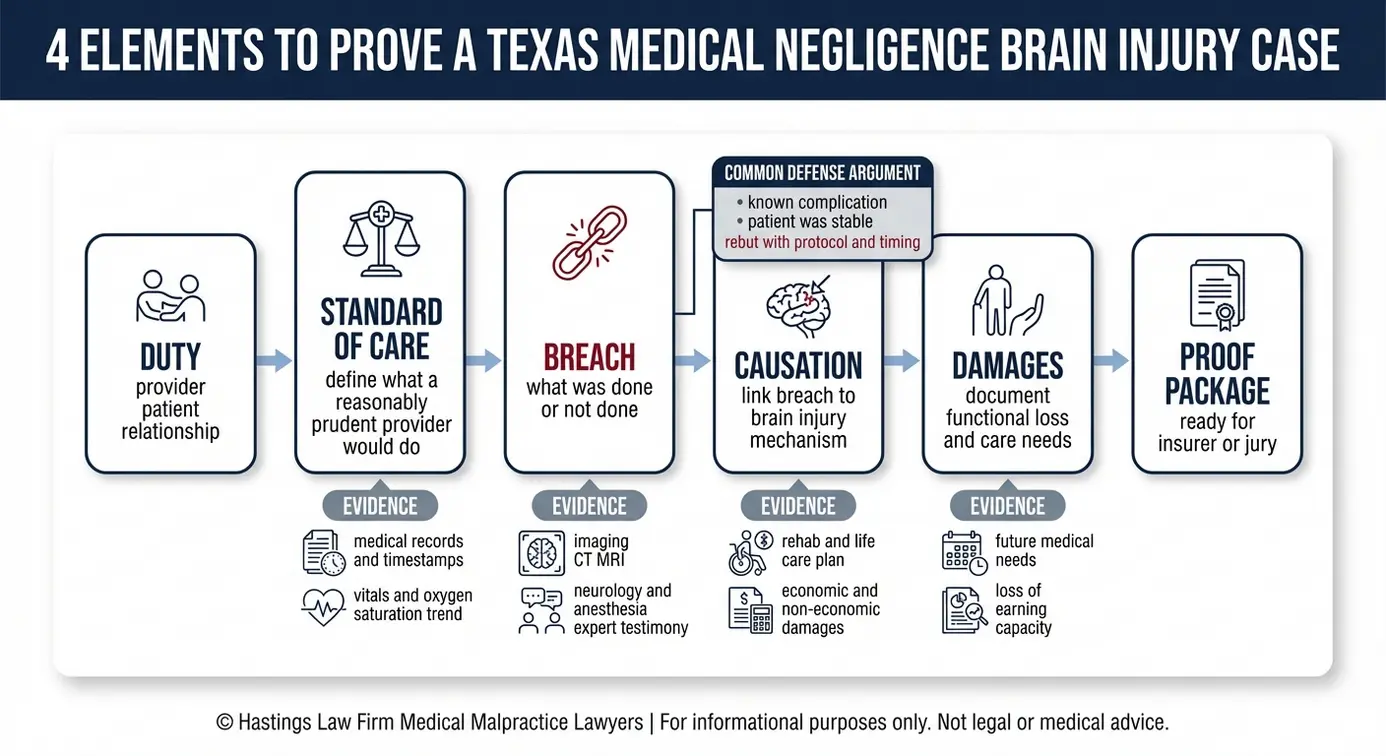
Proving fault requires demonstrating that the medical provider breached the accepted standard of care, directly causing the brain injury, confirmed through expert testimony and medical record analysis. Proving medical negligence involves building a case that connects specific clinical failures to the harm our client suffered.
The standard of care refers to the level of treatment that a reasonably competent healthcare professional, with similar training and in a similar situation, would have provided. In a surgical or hospital setting, this includes proper monitoring, appropriate medication dosing, timely responses to complications, and clear communication between team members. When a provider falls below that standard, and a brain injury results, there is a basis for a medical malpractice claim.
Texas law makes proving these cases deliberately rigorous. Under Texas Civil Practice and Remedies Code Chapter 74, every medical malpractice lawsuit requires a qualified expert report filed within 120 days of the defendant’s answer. This report must identify the standard of care, explain how it was breached, and establish how that breach caused the injury. Failing to meet this deadline can result in dismissal of the case.
One common defense tactic is to characterize the brain injury as a “known complication” of the procedure rather than the result of negligence. Hospitals and their attorneys often argue that the patient was warned of the risks. Our team examines this closely to distinguish between a known risk and a preventable error, which is important for establishing liability. We review anesthesia logs, pulse oximetry readings (SpO2 monitoring, which continuously tracks blood oxygen levels), nursing notes, and surgical records to distinguish between the two.
Proving medical negligence in brain injury cases also requires hiring specialized medical experts, such as neurologists, anesthesiologists, or neurosurgeons, who can analyze the clinical evidence and testify about what should have happened. Proposed legislation like 87R HB 3984 has sought to address expert report requirements in these cases, reflecting ongoing debates about how Texas courts evaluate medical testimony. Our national network of experts allows us to match each case with the right specialist to establish both the breach and the causation.
Understanding the difference between oxygen deprivation types also matters in these cases. Hypoxia refers to a partial reduction in oxygen reaching the brain, while anoxia means a complete loss. Both can cause devastating injury, but the clinical presentation and long-term prognosis differ. We work with medical professionals to document these details accurately, because precision in the medical evidence directly affects the strength of the legal claim.
Calculating Damages for a Lifetime of Care
Compensation for brain injuries includes economic damages for lifetime medical care and lost earning capacity, as well as non-economic damages for pain, suffering, and physical impairment. Recovering damages for medical negligence is necessary because brain injuries so often require decades of ongoing treatment and support, making the financial stakes in these cases among the highest in medical malpractice law.
Economic damages cover the measurable financial losses caused by the injury. Determining the full value of a claim requires looking at both current and future needs. For a brain injury patient, these costs can include 24-hour nursing care, future medical expenses, home modifications for accessibility, physical and cognitive rehabilitation therapy, prescription medications, and specialized medical equipment. Lost wages and reduced earning capacity are also factored in, particularly when the patient can no longer work or must accept a lower-paying role. A brain injury lawyer must account for every dollar the injury will cost over the patient’s remaining lifetime.
Non-economic damages address the losses that do not come with a receipt. These include pain and suffering, mental anguish, loss of enjoyment of life, and physical impairment. For brain injury patients who were once independent and active, the loss of the ability to engage in everyday activities, maintain relationships, or care for themselves carries immense weight. Under Texas law, non-economic damages are subject to certain caps depending on the defendant, but economic damages are not capped, which is why thorough financial documentation is essential.
Life Care Planning for Long-Term Needs
A life care plan is a projection of costs for a patient’s medical and personal needs over their remaining life expectancy. It is a detailed, professionally developed document where life care planners, professionals whose certification standards have been studied and published in peer-reviewed research, calculate expenses that families often do not anticipate.
These overlooked costs include future surgeries, long-term rehabilitation (neurorehabilitation), periodic replacement of assistive devices like wheelchairs or communication aids, and respite care for family caregivers. A Texas medical malpractice attorney will work alongside life care planners and economists to build a damages model that reflects the true, long-term cost of the injury, not just the bills that have arrived so far.
- 24-hour skilled nursing or attendant care
- Home and vehicle accessibility modifications
- Ongoing physical, occupational, and speech therapy
- Neuropsychological evaluations and follow-up care
- Replacement of durable medical equipment and assistive devices
- Respite care services for family members
- Future surgical procedures and hospitalizations
- Vocational rehabilitation and job retraining (if applicable)
Why Choose Hastings Law Firm for Your Case
Hastings Law Firm offers a trial-ready approach with a team of former defense attorneys and medical staff, ensuring that victims of medical negligence have the resources to fight powerful hospital systems. From the day we open a file, our team investigates and prepares the case as though it will go before a jury. That level of preparation sends a clear signal to defense attorneys and insurance carriers: we will not accept less than fair value for our clients.
What sets our medical malpractice law firm apart is the depth of our medical-legal team. Our attorneys include former defense counsel who spent years representing hospitals, giving us direct insight into the strategies the other side will use. Our in-house staff includes nurse practitioners and board-certified patient advocates who analyze medical records, identify charting inconsistencies, and translate clinical data into evidence a jury can understand. Unlike general personal injury practices, every member of our team is focused solely on medical malpractice.
We also understand that families dealing with a brain injury are under enormous financial pressure. That is why we work on a no win no fee contingency fee basis. You pay no attorney fees and no costs unless we recover compensation for you.
Our goal is to remove the financial barrier so that you can focus on what matters most: your family’s well-being and recovery. As a Texas brain injury from medical negligence lawyer, we fight for your future.
Contact the Texas Hospital Malpractice Attorneys at Hastings Law Firm Today for Help
A brain injury caused by medical negligence changes a family’s life in ways that are difficult to fully express. The road ahead may feel overwhelming, but you do not have to face it alone, and you do not have to take on a hospital system without experienced legal support.
Hastings Law Firm is rooted in Texas with offices in Houston, The Woodlands, Dallas, and Austin, and we represent clients nationwide. If you believe your loved one’s brain injury was caused by a medical error, we want to hear from you.
Call us or contact us online for a free, confidential case evaluation with a medical negligence attorney. There is no fee unless we win. Let us help you find the answers you deserve and take the first step toward holding the responsible parties accountable.
Frequently Asked Questions About Brain Injury From Medical Negligence in Texas


This content was researched and written by the Hastings Law Firm editorial team, which includes attorneys, medical professionals, and experienced researchers. Our writing is informed by internal knowledge and practical experience, and we cross-check critical details against authoritative sources cited throughout. Every piece undergoes human-led fact-checking and legal review. Because legal and medical information can change, if you spot an error, please contact us. Learn more about our content standards and review process on our editorial policy page.

Gabe Sassin has focused exclusively on medical malpractice law since 2007. After spending more than a decade as a malpractice defense attorney, he knows exactly how the other side works. He has seen firsthand how healthcare providers, insurers, corporate defendants, and their legal teams think, prepare, and build their defense against claims. That knowledge works for the people who need it most today, injured patients and their families. His unique experience shapes everything he writes, giving readers a look at how these cases actually work from someone who has handled them from both sides.
