


Phoenix Bowel Perforation Lawyer
A bowel perforation after surgery can quickly become a life threatening emergency, especially when the injury is missed or treatment is delayed. These cases often involve questions about whether the surgical team used proper technique, inspected for injury before closing, and responded appropriately to warning signs after the procedure. The consequences can be severe, with infection, repeated operations, lasting disability, and fatal outcomes in the most serious situations. If you or a loved one were harmed or worse due to bowel perforation after surgery in Phoenix, Arizona, contact Hastings Law Firm for a free, confidential case review.

Last Updated: July 27, 2026
Trusted Malpractice Attorneys in Phoenix for Surgical Injuries
A bowel perforation after surgery can turn a routine procedure into a life-threatening emergency. If you or a loved one suffered this kind of injury because a doctor failed to meet the expected standard of care, you deserve honest answers about what went wrong and whether negligence caused it.
At Hastings Law Firm, our team includes medical malpractice attorneys, in-house nurse consultants, and former defense lawyers. Led by Tommy Hastings, a board-certified trial attorney, we focus exclusively on cases involving medical negligence. As experienced Phoenix bowel perforation lawyers, we understand the medical details behind these injuries and how to hold the responsible parties accountable.
If you suspect a surgical error or delayed diagnosis led to a bowel injury, we can review what happened and explain your options. Consultations are free, confidential, and carry no obligation.

Common Surgical Errors Leading to Bowel Perforation
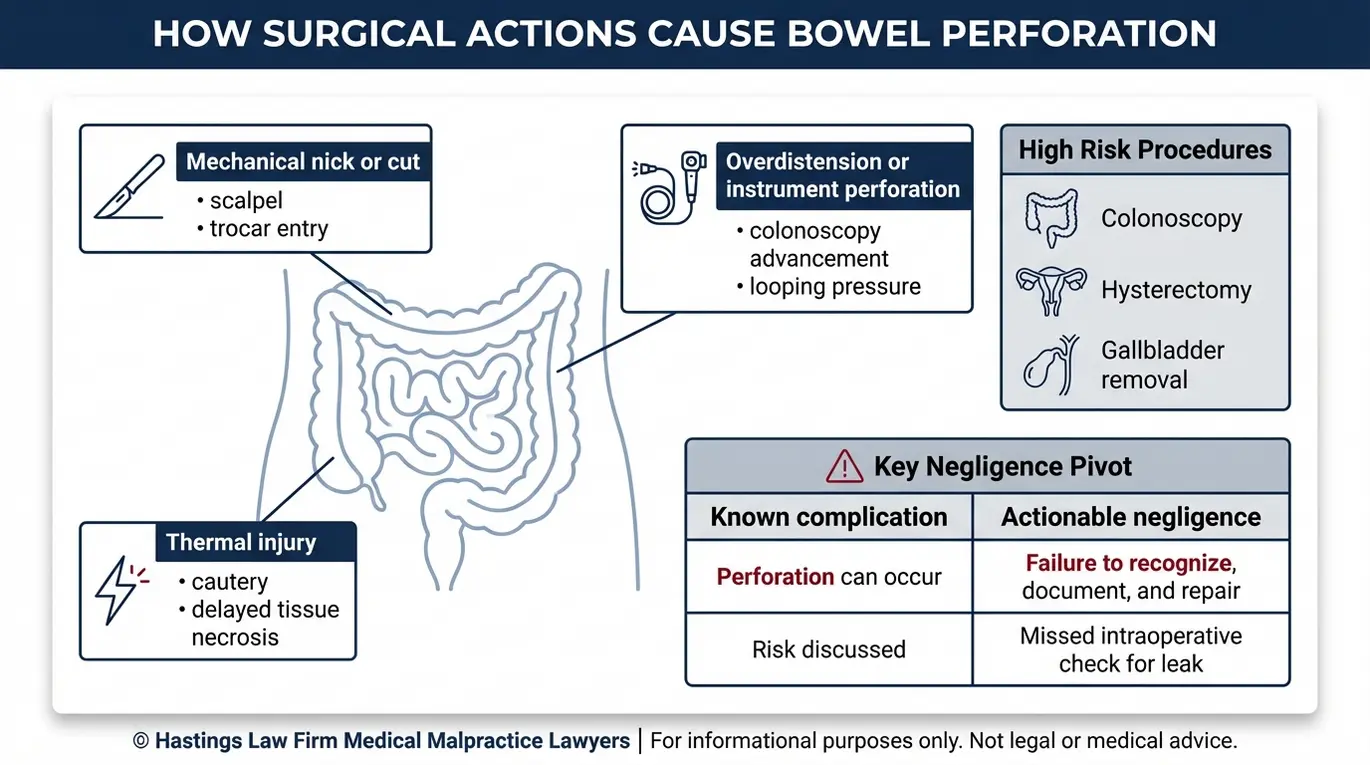
Bowel perforations often occur when a surgeon accidentally cuts or punctures the intestine during an abdominal surgery and fails to notice the error immediately. This type of injury, known as an iatrogenic bowel perforation (meaning it was caused by a medical intervention rather than disease), can happen during both open surgery and minimally invasive procedures.
The mechanics of the injury vary. A surgeon may nick the intestinal wall with a scalpel, clamp, or retractor. In other cases, the damage comes from electrocautery, which is the use of heated instruments to cut tissue or control bleeding. Thermal burns from these tools can weaken the bowel wall, causing it to break down hours or even days after the procedure ends. When this happens, the contents of the bowel can leak into the abdomen, creating a dangerous situation that requires immediate intervention.
Certain abdominal surgeries carry a higher risk of bowel perforation:
- Colonoscopies, where the scope or biopsy tools can puncture the colon wall. According to an approach to iatrogenic colon perforations published in the Journal of Surgery and Medicine, perforation during colonoscopy is a recognized but preventable complication when proper technique is followed.
- Hysterectomies, particularly when adhesions from prior surgeries distort the normal anatomy, making it difficult to distinguish the bowel from other tissues.
- Gallbladder removal (gallbladder surgery), where the intestine sits in close proximity to the surgical field and can be easily damaged by instruments.
- Laparoscopic surgery, where limited visibility increases the chance of accidental injury to surrounding organs.
Not every bowel perforation during surgery is malpractice. There is a meaningful difference between a known complication and negligence. Perforations can sometimes occur even when the standard of care is met. The issue that often gives rise to a medical malpractice claim is the failure to identify and repair the injury before closing the patient. A Phoenix medical malpractice lawyer evaluates whether the surgical team recognized the risk, used proper technique, and took appropriate steps when something went wrong. Understanding these nuances is part of how a bowel perforation attorney determines if a claim exists.
The Failure to “Run the Bowel” During Surgery
One of the most important safeguards against an undetected bowel injury is a technique called “running the bowel.” This involves the surgeon manually inspecting the full length of the intestine for leaks, burns, or punctures before closing the incision.
When a procedure involves work near the bowel or when an adhesion has been separated, the standard of care typically requires this inspection. Skipping it to save time or because the surgeon assumes no injury occurred constitutes negligence. Intestinal contents then leak into the abdominal cavity, and by the time symptoms appear, the patient may already be in serious danger.
Failure to run the bowel is one of the clearest surgical errors our lawyers for perforated bowel cases look for during an investigation. Operative reports and nursing notes often reveal whether this step was performed or omitted.
Identifying Negligence in Diagnosing Perforated Bowel Injuries
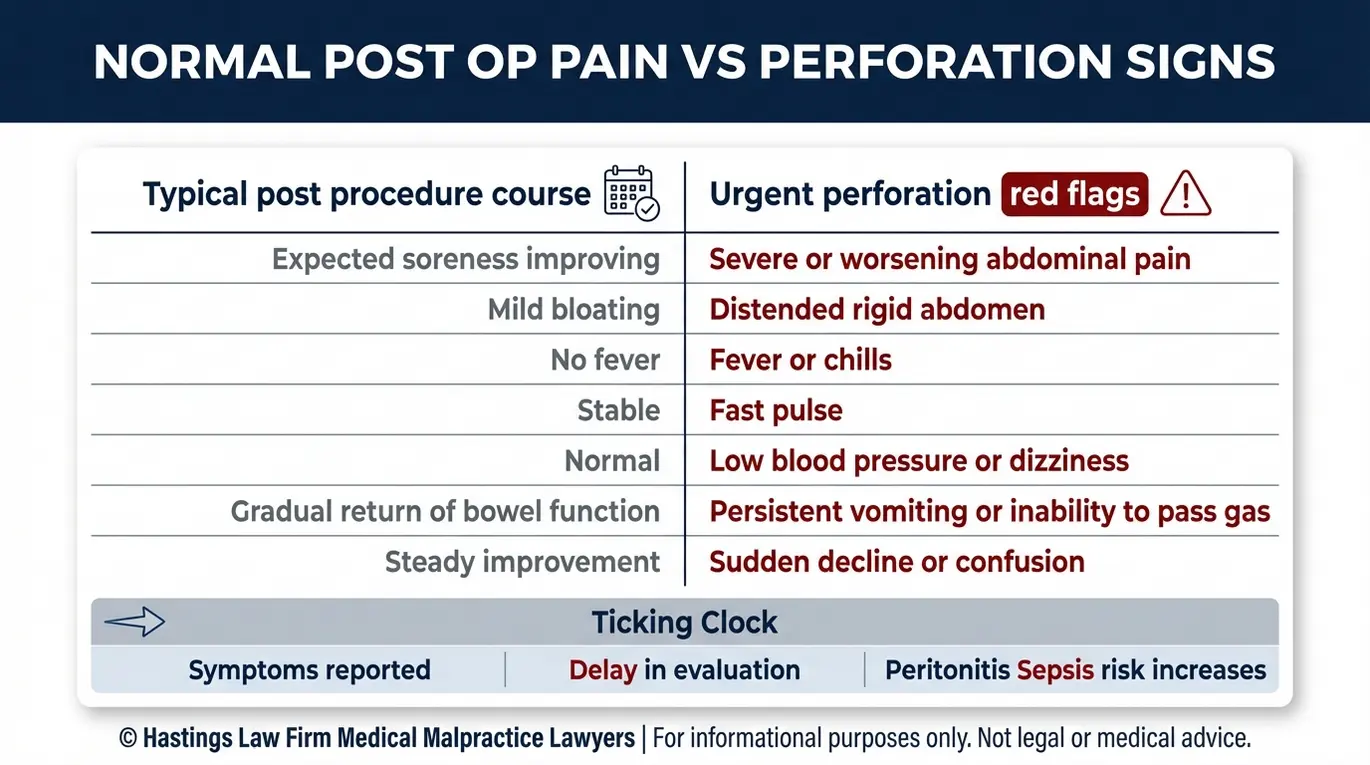
Medical malpractice can occur if a doctor ignores classic symptoms of perforation, such as severe abdominal pain or fever, allowing a life-threatening post-surgical infection to spread. A delay in recognizing and treating the breach often causes the most devastating harm, which is why early detection by a medical malpractice attorney is vital.
When the bowel wall is breached, bacteria and digestive contents spill into the abdominal cavity. This triggers peritonitis, an inflammation of the peritoneum (the membrane lining the abdomen), which can rapidly progress to sepsis, a systemic infection that can cause organ failure and death. Research published by Spandidos Publications on predictors of mortality in patients with gastrointestinal perforation confirms that delays in treatment significantly increase the risk of fatal outcomes.
The challenge for patients is that some post-surgical discomfort is expected. However, there are warning signs that distinguish normal recovery pain from a possible perforation, and a bowel injury lawyer can help if these signs were ignored:
| Normal Post-Operative Recovery | Warning Signs of Bowel Perforation |
|---|---|
| Mild, improving abdominal soreness | Severe or suddenly worsening abdominal pain |
| Low-grade temperature that resolves quickly | Persistent or rising fever |
| Gradual return of appetite | Nausea, vomiting, inability to eat |
| Stable vital signs | Drop in blood pressure, rapid heart rate |
| Soft abdomen on exam | Rigid, distended, or tender abdomen |
According to MedlinePlus, gastrointestinal perforation requires emergency treatment, and any delay increases the risk of serious complications or death. When a patient reports escalating pain or shows signs of internal bleeding and a medical team dismisses those complaints or delays imaging, that gap in care can form the basis of a Phoenix bowel perforation lawyer’s case.
A diagnostic error or delayed diagnosis in this context is not simply an oversight. It is a failure that gives infection time to spread, often turning a treatable injury into a catastrophic one.
Shortcuts in Laparoscopic Surgery
Laparoscopic, or minimally invasive, surgery uses small incisions and a camera to guide the procedure. While this approach offers benefits like shorter recovery times, it also limits the surgeon’s field of vision and tactile feedback.
A trocar injury occurs when the sharp, pointed instrument used to create entry ports for laparoscopic tools punctures the bowel during insertion. An enterotomy, which is any opening made in the intestinal wall, can also happen when instruments are used without adequate visualization. If an opening is not detected and repaired, intestinal contents can leak into the abdomen. In some cases, a negligent medical care provider may lack sufficient training in laparoscopic technique or may proceed with a minimally invasive approach when the patient’s anatomy calls for a different strategy.
These injuries may go unnoticed during the procedure itself, and symptoms may not appear until after discharge, making prompt recognition even more critical.
The Hastings Law Firm Difference
Results matter, but what truly sets us apart is how we achieve them. Every verdict, every settlement, and every Phoenix courtroom victory comes from one guiding promise: To treat each client’s fight for justice as if it were our own.
This balance of skill, experience, and empathy reflects our core philosophy that justice should not only compensate the injured, but also make health care safer nationwide.

Recovering Compensation for Life-Altering Bowel Injuries
Patients who suffer a bowel perforation due to negligence can recover economic damages for medical bills and lost wages, as well as non-economic damages for pain, suffering, and permanent disability. Economic damages cover measurable financial losses, while non-economic damages address the personal impact of the injury.
The financial impact of a perforated bowel is often severe and long-lasting. Corrective surgeries may be required, sometimes more than one. Some patients need a colostomy, a surgical procedure that reroutes part of the intestine through an opening in the abdomen, requiring an external collection bag. Others develop adhesions, bands of scar tissue that form between organs and can cause chronic pain, bowel obstructions, and the need for additional operations.
As defined under Arizona Revised Statutes § 12-561, a medical malpractice claim is an action for injury or death based on a health care provider’s negligence, allowing patients to pursue compensation for the full scope of harm caused by negligent care. Here is what our perforated bowel lawyers typically evaluate:
- Past and future medical expenses: Emergency treatment, corrective surgeries, hospital stays, medications, and long-term care such as home health services or colostomy supplies.
- Lost wages and lost income: Time away from work during recovery, as well as diminished earning capacity if the injury prevents you from returning to your previous occupation.
- Pain and suffering: The physical agony of sepsis recovery, repeated surgeries, and the emotional toll of living with permanent changes to your body and daily routine are significant. These non-economic damages often make up a substantial portion of the settlement.
- Loss of quality of life: Restrictions on activities, relationships, and independence that existed before the injury.
- Wrongful death: When a loved one dies from untreated sepsis or complications of a perforated bowel, surviving family members may have the right to pursue a separate claim for their losses. This can include compensation for funeral expenses, loss of companionship, and the financial support the deceased would have provided.
Every case is different, and the value of a medical malpractice claim depends on the specific facts, the severity of the injury, and the evidence of negligence. Our Phoenix malpractice counsel calculate these damages based on medical records, expert input, and detailed life care plans.
How Our Phoenix Medical Malpractice Team Proves Your Case
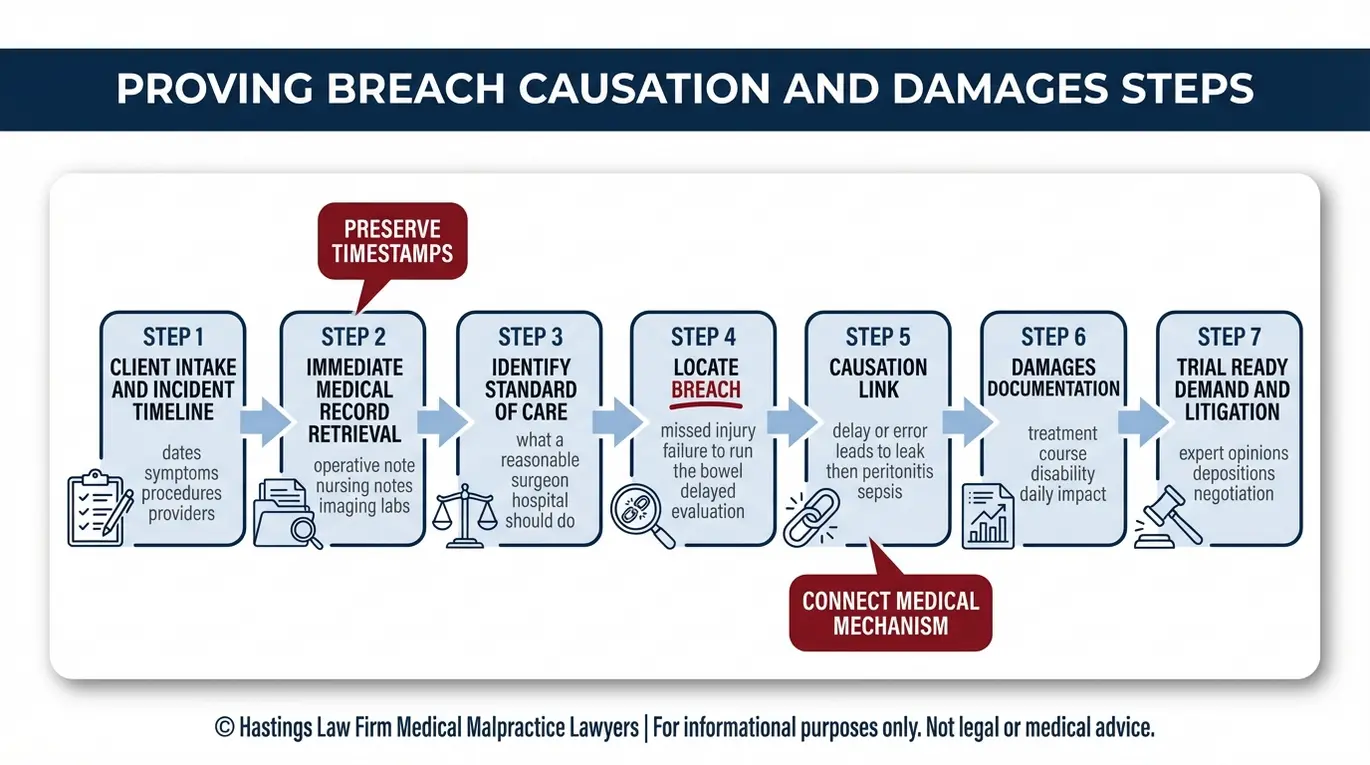
We build each case by securing expert testimony to establish that the surgeon breached the standard of care and linking that breach directly to your injuries. Under Arizona Revised Statutes § 12-563, a medical malpractice claim requires proof that the healthcare provider failed to meet accepted medical standards and that this failure caused the patient’s harm.
Our investigation begins with the immediate retrieval and preservation of all medical records, including operative reports, anesthesia logs, nursing notes, and imaging studies. These records contain the details we need, and early action helps ensure nothing is altered or lost. Our in-house nurses and Board Certified Patient Advocates review this clinical data to identify gaps, inconsistencies, and signs of pneumoperitoneum (free air in the abdominal cavity visible on imaging), which is a hallmark indicator of bowel perforation.
As your bowel injury attorney, we then work with our national expert network of surgeons and medical specialists to obtain objective expert opinions on whether the injury was preventable. These experts review the records independently, assess whether the surgical team followed proper protocol, and provide testimony connecting the error to your specific injuries.
Every case we accept is prepared from day one as if it will go to a jury. This trial-ready approach signals to defense attorneys and insurance carriers that we will not accept less than fair value for your claim.
Contact the Phoenix Surgical Error Attorneys at Hastings Law Firm Today for Help
You do not have to face the hospital’s legal team on your own. Hastings Law Firm has spent nearly two decades holding healthcare providers accountable for preventable injuries, and our team of bowel injury attorneys, nurse consultants, and former defense lawyers knows how to investigate these cases thoroughly.
We operate on a contingency fee basis, which means you pay no attorney fees or costs unless we secure a recovery for you. There is no financial risk in reaching out.
If you or a loved one suffered a bowel perforation due to a surgical error or delayed diagnosis, contact our Phoenix bowel perforation lawyers today for a free, confidential case evaluation. Let us help you get the answers you deserve and protect your family’s future.
Frequently Asked Questions About Bowel Perforation in Phoenix


This content was researched and written by the Hastings Law Firm editorial team, which includes attorneys, medical professionals, and experienced researchers. Our writing is informed by internal knowledge and practical experience, and we cross-check critical details against authoritative sources cited throughout. Every piece undergoes human-led fact-checking and legal review. Because legal and medical information can change, if you spot an error, please contact us. Learn more about our content standards and review process on our editorial policy page.

Tommy Hastings, founder of Hastings Law Firm, is a board-certified personal injury trial lawyer dedicated exclusively to healthcare injury cases. Since 2001, he has represented injured patients and families in litigation against major hospital systems, pharmaceutical companies, and negligent healthcare providers nationwide. He has handled numerous high-profile cases that have drawn national media attention and resulted in multi-million dollar recoveries. He draws on that experience in his writing, helping readers understand how these cases work and what options may be available to them.
