


Arizona Bowel Perforation Lawyer
A bowel perforation during surgery can turn a routine procedure into a medical emergency, especially when the injury is missed or diagnosis is delayed. A punctured intestine can allow waste and bacteria to leak into the abdominal cavity, leading to severe infection, sepsis, organ failure, or worse. Some injuries happen despite proper technique, but malpractice may be involved when care falls below the accepted standard, such as failing to inspect the bowel or ignoring warning signs after surgery. If you or a loved one were harmed or worse due to bowel perforation surgical negligence in Arizona, contact Hastings Law Firm for a free, confidential case review.

Last Updated: July 27, 2026
Trial-Ready Legal Representation for Surgical Injuries in Arizona
A bowel perforation during surgery can turn a routine procedure into a life-threatening emergency. If you or a loved one suffered a punctured intestine because of a surgical error, the confusion and fear you are feeling right now is understandable. You trusted a medical team to keep you safe, and something went wrong.
At Hastings Law Firm, founded by board-certified trial attorney Tommy Hastings, we focus exclusively on medical malpractice. Tommy is a 2025 inductee into the American Board of Trial Advocates (ABOTA), an invitation-only group for elite trial lawyers. Our legal team includes former defense attorneys, nurse consultants, and board-certified patient advocates who know how to identify where the standard of care broke down.
As a dedicated Arizona Bowel Perforation Lawyer, we prepare every case as if it is going to trial, because that preparation is what drives fair results. If you believe a surgical mistake caused a bowel injury, we welcome the chance to review what happened and explain your options in a free, confidential case evaluation.

Understanding Bowel Perforation and Surgical Negligence Claims
A bowel perforation claim arises when a surgeon negligently punctures the intestine during a procedure or fails to diagnose the injury after the operation, leading to severe infection or sepsis. If you suspect that a medical provider’s negligence led to these complications, our Arizona bowel injury attorneys can help determine if you have a valid claim.
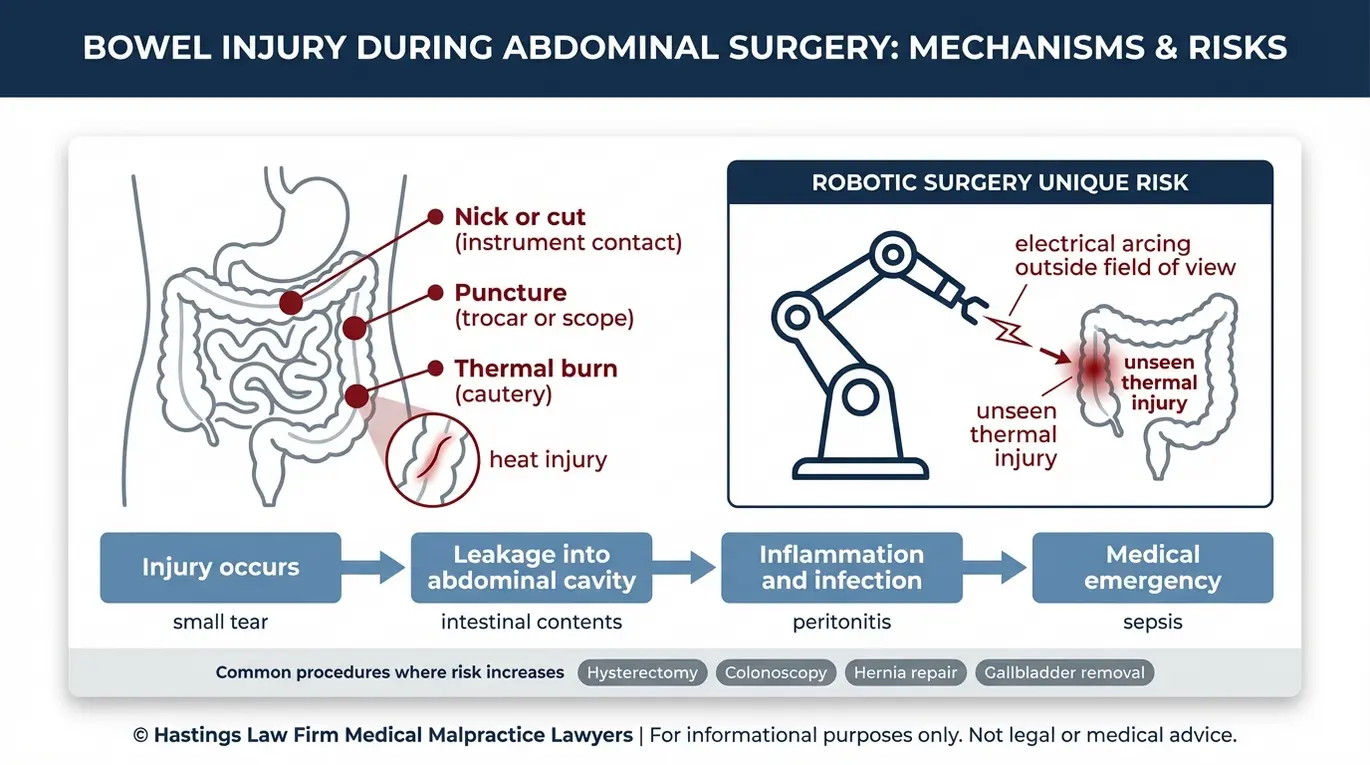
Bowel perforation, also known as intestinal perforation, occurs when a hole is created in the wall of the small intestine or colon. During abdominal surgery, this can happen through direct nicks or cuts from surgical instruments, or through thermal burns caused by electrosurgical tools that generate heat near delicate tissue.
One area of growing concern involves robotic-assisted surgery, such as procedures performed with the da Vinci surgical system. These systems allow surgeons to operate through small incisions using robotic arms and a camera.
While the technology offers precision in many cases, it also carries a specific risk: electrical arcing. This happens when electrical current from the surgical instrument jumps to nearby tissue outside the surgeon’s field of view, causing burns that may not be noticed during the procedure. Unlike a clean cut, a thermal injury may not perforate immediately; instead, the tissue creates a scab and dies over several days, causing the hole to open well after the surgery is complete.
Bowel perforation is a recognized risk in several common surgical procedures, including:
- Hysterectomy, where instruments work near loops of bowel in the pelvic cavity
- Colonoscopy, where the scope itself can puncture the colon wall
- Hernia repair, particularly when adhesions from prior surgeries are present
- Gallbladder removal (cholecystectomy), where thermal tools operate close to the intestine
A surgical error during any of these procedures can lead to waste material leaking into the abdominal cavity, setting the stage for dangerous infection. Bowel perforation, or a hole in the intestinal wall, allows bacteria to escape into areas of the body where they do not belong.
The intricate nature of these surgeries means that even small deviations in technique can have catastrophic consequences. When the perforation results from a deviation in technique or a failure to recognize and repair the injury before closing, it may constitute surgical negligence.
Distinguishing Known Risks From Actionable Malpractice
Not every surgical complication is malpractice; a case exists only when the surgeon deviates from the standard of care, such as failing to inspect the bowel before closing or ignoring signs of infection.
Medical malpractice occurs when a healthcare professional fails to meet the accepted standard of care. The standard of care refers to the level of treatment a reasonably competent surgeon would provide under similar circumstances.
In Arizona, proving malpractice requires showing that the physician’s conduct fell below this standard and that the deviation directly caused the patient’s injury. Under Arizona Revised Statutes § 12-563, a patient must establish what the accepted standard was, how the provider failed to meet it, and how that failure led to harm.
One common defense hospitals raise is the “independent contractor” argument. Many surgeons are not hospital employees; they hold independent privileges to practice at the facility. When something goes wrong, the hospital may argue that it bears no liability because the surgeon was not on its payroll.
Our team investigates the specific contractual and supervisory relationships involved to determine whether the hospital shares responsibility for the injury. While many claims are resolved through a settlement, we rigorously prepare every file for litigation to ensure our clients are ready for any outcome.
The distinction between a known risk and actionable negligence often comes down to specific decisions made in the operating room. The table below illustrates the difference:
| Known Surgical Risk | Potential Negligence |
|---|---|
| A small bowel injury occurs during a complex procedure despite proper technique | The surgeon uses excessive force or operates on the wrong tissue plane |
| The perforation is identified and repaired immediately during surgery | The perforation is missed because the surgeon did not inspect the operative field before closing |
| Post-operative infection develops despite appropriate monitoring | Warning signs like fever and rising white blood cell counts are ignored or dismissed |
| The patient was informed of perforation risk before surgery | The patient was not told about specific risks related to their anatomy or condition |
The Critical Importance of Running the Bowel
One specific protocol our medical team examines closely is whether the surgeon performed the necessary inspections. Running the bowel, the practice of visually and manually inspecting the entire length of the intestine before closing the surgical site, is essential to patient safety. The purpose is to identify any nicks, thermal injuries (burns caused by electrosurgical instruments), or other damage, collectively known as enterotomy or iatrogenic bowel injury, that may have occurred during the procedure.
This step is a well-established part of the standard of care for abdominal surgeries. When operative notes show that the surgeon skipped this inspection or documented it inadequately, it can be strong evidence that the standard of care was not met. If a surgical error is left unrepaired within the abdominal cavity, the results can be fatal. Our in-house nursing staff reviews these records carefully, looking for gaps between what the surgeon documented and what the clinical situation required.

The Hastings Law Firm Difference
Results matter, but what truly sets us apart is how we achieve them. Every verdict, every settlement, and every Arizona courtroom victory comes from one guiding promise: To treat each client’s fight for justice as if it were our own.
This balance of skill, experience, and empathy reflects our core philosophy that justice should not only compensate the injured, but also make health care safer nationwide.

Consequences of Delayed Diagnosis and Sepsis
The most severe harm often comes not from the perforation itself, but from the failure to diagnose it timely, allowing waste to leak into the abdomen and cause peritonitis or septic shock. When an intestinal injury goes undetected, bowel contents leak into the abdominal cavity, triggering a cascade of increasingly dangerous complications.
The first stage of this process is peritonitis, an infection of the peritoneum, which is the thin lining of the abdominal cavity. Peritonitis causes intense pain, fever, and abdominal rigidity. Left untreated, the bacteria spread from the abdomen into the bloodstream, leading to sepsis, the body’s extreme and potentially fatal response to infection. According to the Centers for Disease Control and Prevention’s guidance on sepsis signs and symptoms, sepsis can progress rapidly and requires immediate medical intervention.
When sepsis advances to septic shock, blood pressure drops dangerously low, organs begin to fail, and the risk of death increases significantly. Patients who survive may face weeks or months in the ICU, multiple corrective surgeries, and permanent organ damage.
The tools to catch a bowel perforation early exist. CT scans can reveal free air or fluid in the abdomen. Elevated white blood cell counts signal infection. Yet these diagnostic steps are sometimes delayed or misinterpreted.
In some cases, staffing issues contribute to the problem. Shift-change miscommunication can mean that a nurse’s concern about a patient’s worsening condition never reaches the incoming team.
Patients discharged too soon may return to the emergency room complaining of severe pain, only to be dismissed with painkillers because the staff failed to consider surgical complications. A CT scan ordered in the evening may sit unread if the radiology technician has left for the night. We examine the full timeline of post-operative care, including nursing notes, lab orders, radiology reports, and communication logs, to identify where breakdowns occurred and whether earlier action could have prevented the progression to sepsis or organ failure.

Wrongful Death and Damages in Perforation Cases
If a bowel perforation leads to a fatal infection, surviving family members may pursue a wrongful death claim to recover compensation for funeral costs, lost income, and the loss of their loved one’s companionship and guidance.
In Arizona, wrongful death laws allow families to seek justice when medical negligence leads to a loss of life. Under Arizona Revised Statutes § 12-613, wrongful death damages are measured by the financial and personal losses suffered by the surviving spouse, children, or parents of the deceased. These claims recognize that the harm extends far beyond the patient who was lost.
Damages in bowel perforation cases generally fall into two categories:
- Economic damages: Hospital and ICU bills, corrective surgeries, rehabilitation costs, lost wages, and future earning capacity
- Non-economic damages: Physical pain and suffering endured before death, emotional distress experienced by family members, and loss of consortium, which is the loss of companionship, affection, and support
For patients who survive, the long-term consequences can still be severe. Organ failure may result in permanent disability. Many survivors require a colostomy, a surgical procedure that reroutes the intestine to an opening (called a stoma) in the abdominal wall, requiring the use of an external collection bag. The costs of ongoing medical care, supplies, and the emotional toll of these life changes are all recoverable as part of a claim.
In cases involving fatal negligence, septic shock, a condition characterized by dangerously low blood pressure and metabolic abnormalities, often precedes death. While responsible physicians and hospitals are backed by powerful insurance companies, we are prepared to take a case all the way to a verdict if fair compensation is denied.
Contact the Arizona Surgical Error Attorneys at Hastings Law Firm Today for Help
If a surgical mistake left you or someone you love with a serious bowel injury, infection, or worse, you deserve clear answers about what happened and what comes next. The Arizona bowel perforation lawyers at Hastings Law Firm are ready to review your medical records, consult with qualified surgical experts, and determine whether negligence played a role.
Our team includes former defense attorneys who understand exactly how hospitals and their insurers respond to these claims. We prepare every case with the depth and rigor needed to pursue its full value, whether through settlement or at trial.
There is no fee unless we recover compensation for you. Contact us today for a free, confidential case evaluation and take the first step toward getting the answers you deserve.
Frequently Asked Questions About Bowel Perforation in Arizona


This content was researched and written by the Hastings Law Firm editorial team, which includes attorneys, medical professionals, and experienced researchers. Our writing is informed by internal knowledge and practical experience, and we cross-check critical details against authoritative sources cited throughout. Every piece undergoes human-led fact-checking and legal review. Because legal and medical information can change, if you spot an error, please contact us. Learn more about our content standards and review process on our editorial policy page.

Tommy Hastings, founder of Hastings Law Firm, is a board-certified personal injury trial lawyer dedicated exclusively to healthcare injury cases. Since 2001, he has represented injured patients and families in litigation against major hospital systems, pharmaceutical companies, and negligent healthcare providers nationwide. He has handled numerous high-profile cases that have drawn national media attention and resulted in multi-million dollar recoveries. He draws on that experience in his writing, helping readers understand how these cases work and what options may be available to them.
