


Texas Birth Center Transfer Delay Lawyer
Written by: Hastings Law Firm | Reviewed by: Tommy Hastings | Updated: July 27, 2026
A delayed referral from a birth center or midwife to a hospital can turn a manageable complication into a permanent injury for a baby and leave families facing grief and uncertainty. Transfer delay claims often focus on whether warning signs were recognized, whether escalation happened promptly, and whether the delay changed the outcome. These cases can depend on timelines, medical records, and whether a facility followed its own transport protocols. If you or a loved one were harmed or worse due to a delayed birth center transfer in Texas, contact Hastings Law Firm for a free, confidential case review.

Experienced Legal Help for Families Harmed by Delayed Midwife Referrals
What You Should Know About Birth Center Transfer Negligence Claims in Texas:
- Permanent neurological injury can follow when a needed hospital transfer is delayed during labor because oxygen deprivation risk increases as time passes.
- Liability can turn on whether a competent midwife would have initiated a transfer sooner under similar circumstances and whether the delay caused the infant injury.
- Disputes often focus on whether clear warning signs were recognized in time such as fetal distress or maternal complication.
- Recovery can be shaped by the long term financial impact of catastrophic birth injuries because damages may include medical expenses and lifetime care needs.
- Options can narrow if action is not taken promptly because key evidence like transfer logs and communication records can be lost or altered.
- Limits on medical negligence claims in Texas can affect available legal options because a statute of limitations applies.
- Facility protocols can be central to accountability because internal emergency transport guidelines may show when transfer should have occurred.
- Medical records can be decisive in timing disputes because charting notes and communication records can show what staff knew and when.
- Expert medical opinions can be critical to causation because specialists may assess whether earlier hospital intervention would have reduced the severity of the outcome.
- Evidence disputes can arise from inconsistencies in documentation because differences between recorded events and what occurred may be significant.

A Healthcare Focused Law Firm
When a birth center or midwife fails to transfer a mother to a hospital at the first sign of trouble, the consequences for a baby can be permanent. If your family is living with that reality, the confusion, grief, and unanswered questions you feel are completely valid.
A Texas birth center transfer delay lawyer can help you understand what went wrong, whether the care your family received fell below accepted medical standards, and what legal options may be available. At Hastings Law Firm, our team of attorneys, registered nurses, and patient advocates focuses exclusively on medical malpractice. This includes birth injury cases involving delayed hospital transfers from midwifery and out-of-hospital birth settings.
If you believe a transfer delay harmed your child, we are here to listen and review what happened. Contact us for a free, confidential case evaluation.
Identifying Negligence When Birth Centers Fail to Transfer in Time
Negligence in transfer delay cases occurs when a midwife or birth center staff fails to recognize clear signs of fetal distress or maternal complication that require immediate hospital intervention, violating the standard of care.
In birth complications, timing determines the difference between a healthy outcome and permanent brain damage. As delayed transfer lawyers often see, researchers documented this window. A large-scale study published in JAMA Network Open on Perinatal Hypoxic Ischemic Encephalopathy reinforces how oxygen deprivation during labor can lead to severe neurological injury. Even a short period of deprivation creates risk. When a complication arises in an out-of-hospital setting, every minute spent without escalation increases danger.
Birth centers are designed to support low-risk, uncomplicated deliveries. When labor deviates from that expectation, a transfer delay attorney emphasizes that midwives have a duty to recognize the change and initiate a hospital transfer without delay. This “failure to rescue” means a provider identified a deteriorating situation but failed to act.
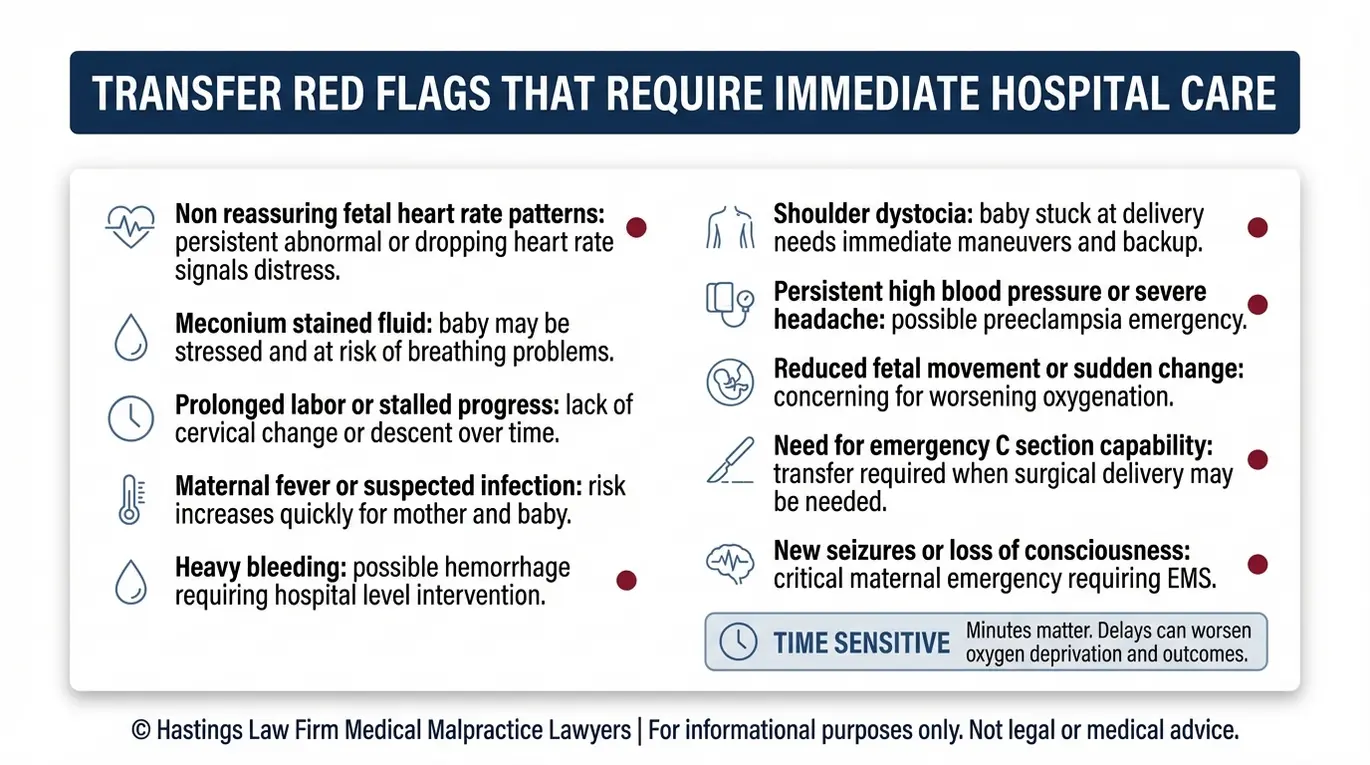
Delayed transfer lawyers note that several clinical warning signs should trigger an immediate decision to transfer. These red flags include:
- Fetal distress, a condition where the baby shows signs of not tolerating labor, often detected through changes in the fetal heart rate pattern
- Non-reassuring fetal heart rate (NRFHR), meaning the baby’s heart rate is dropping, decelerating repeatedly, or showing minimal variability
- Meconium-stained amniotic fluid, which can indicate the baby is in distress and may be at risk of aspiration
- Prolonged labor that fails to progress despite intervention
- Signs of maternal hemorrhage or infection, such as fever or abnormal bleeding
- Shoulder dystocia risk factors or other malpresentation concerns
- A sudden need for an emergency C-section that the birth center cannot perform
A Texas birth center negligence lawyer examines whether the midwife recognized these signs. We evaluate how quickly the decision to transfer was made and whether that delay worsened the baby’s injury. In many cases handled by a transfer delay attorney, clinical signs were present well before anyone called for transport.
Proving Liability in Texas Midwife and Birth Center Malpractice Cases
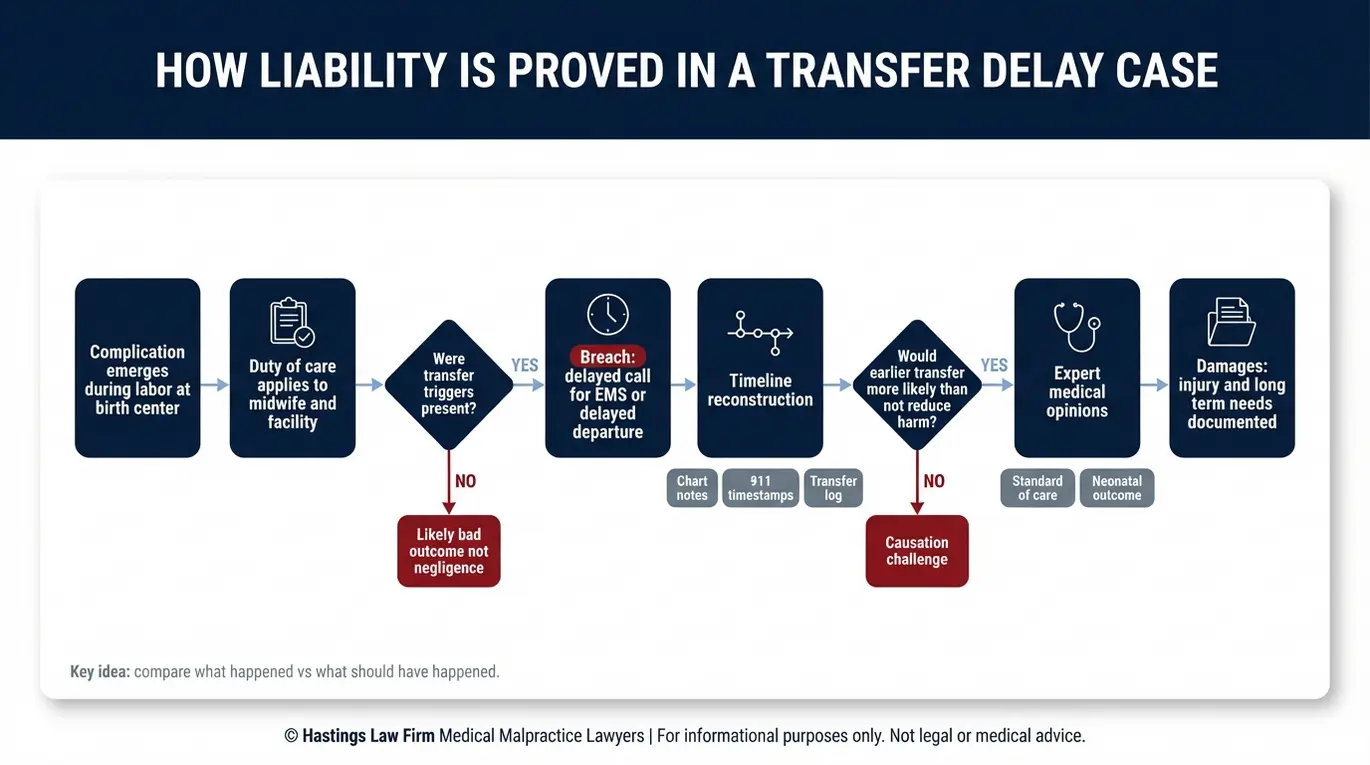
Proving liability requires demonstrating that a competent midwife would have initiated a transfer sooner under similar circumstances and that this delay directly caused the infant’s injury.
Not every difficult birth results from negligence; poor outcomes don’t always mean mistakes. A lawyer for midwife negligence knows the legal question is whether the midwife’s decisions fell below the accepted duty of care and whether a timely transfer would have changed the result.
To establish a breach of duty, a birth center transfer delay attorney must show what a qualified midwife should have done at each stage of labor. We then compare that to what actually happened. Texas laws governing midwifery and birth center operations set specific guidelines for when providers must escalate care. If those rules were not followed, that gap becomes central to a case of midwife negligence.
Expert medical opinions are essential. We work with qualified obstetric and neonatal experts who review the full medical records and establish a timeline of when the transfer should have occurred versus when it did. They also evaluate whether a timely transfer would have allowed for interventions like an emergency cesarean section. This is a surgical delivery performed when vaginal birth poses serious risk to the mother or baby. Experts also look for management of shoulder dystocia, a complication which Texas birth injury counsel frequently encounters.
Causation is the bridge between the delay and the injury. Even if a midwife made an error, Texas birth injury counsel must connect that error to the specific harm your child suffered. Our experts analyze whether earlier hospital intervention would have prevented or reduced the severity of the outcome.
Assessing the Role of Documented Protocols
Most birth centers maintain internal emergency transport guidelines, sometimes called birth center transfer protocols, that outline when and how a patient should be moved to a hospital. These documents can be powerful evidence.
We review whether the facility followed its own written procedures. A birth center’s protocol might require transfer upon observing meconium-stained amniotic fluid. This is the presence of a baby’s first stool in the amniotic fluid and can signal fetal distress. If the midwife delayed that transfer, the center’s own records may support a finding of birth center negligence.
Medical records help establish what the staff knew and when they knew it. These records include charting notes, vital sign logs, and communication records. Inconsistencies between what was documented and what actually occurred can be significant in building a medical negligence claim.
The Hastings Law Firm Difference
Results matter, but what truly sets us apart is how we achieve them. Every verdict, every settlement, and every Texas courtroom victory comes from one guiding promise: To treat each client’s fight for justice as if it were our own.
This balance of skill, experience, and empathy reflects our core philosophy that justice should not only compensate the injured, but also make healthcare safer nationwide.

How Our Medical Team Investigates Transfer Timelines and Protocols
We utilize an in-house team of registered nurses and Board Certified Patient Advocates to reconstruct the labor timeline minute-by-minute, identifying exactly when the standard of care was breached.
Unlike firms that outsource medical review, Hastings Law Firm keeps this process internal. An attorney for transfer delays at our firm ensures our medical staff reads clinical data the same way a hospital team would. We examine electronic fetal monitoring (EFM) strips, which are continuous recordings of the baby’s heart rate. We also review transfer logs, nursing notes, and 911 call records. Our team evaluates whether neonatal resuscitation was performed appropriately and in time. This involves the emergency steps taken to stabilize a newborn who is not breathing.
Our investigation is built to withstand the pressure of litigation. Every delayed birth center transfer lawyer on our team prepares cases as if they will go before a jury. This means gathering and preserving evidence early, consulting with expert medical opinions in obstetrics and neonatology, and building a medical malpractice lawsuit framework from day one.
Here is what an attorney for transfer delays analyzes in a delayed birth center transfer case:
- Fetal monitoring strips and labor progress notes
- The exact time the decision to transfer was made versus when transport was called
- Communication logs between the birth center and the receiving hospital
- The baby’s condition on arrival at the hospital, including whether hypoxic-ischemic encephalopathy (HIE) or brain injury was diagnosed
- Whether proper neonatal resuscitation was initiated and how long the baby went without adequate oxygen
- Internal protocols and the midwife’s compliance with them
This level of detail is what separates a delayed birth center transfer lawyer focused on medical malpractice from a general practice firm handling a case on the side.
Securing Compensation for Catastrophic Injuries Caused by Delays
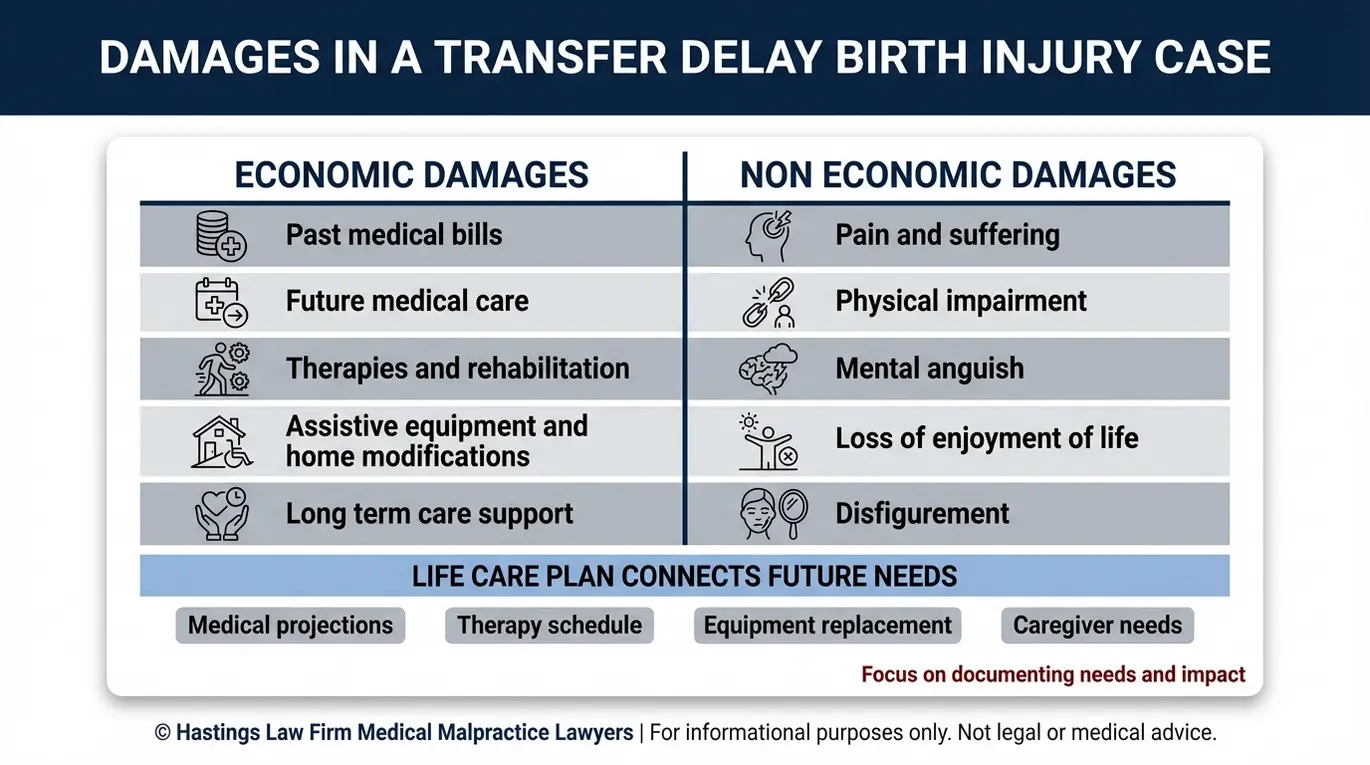
Families may recover damages for past and future medical expenses, pain and suffering, physical impairment, and the lifetime cost of care for a child with permanent disabilities like cerebral palsy.
When a transfer delay results in a diagnosis like hypoxic-ischemic encephalopathy (HIE), the financial impact on a family is enormous. HIE is a type of brain damage caused by oxygen deprivation during or around the time of birth. A Texas transfer delay lawyer understands that children with HIE, cerebral palsy, or neonatal seizures often require ongoing therapy and adaptive equipment. In some cases, they need around-the-clock nursing care.
A life-care plan is one of the most important tools in these cases. Created with medical and economic experts, this document projects every anticipated cost over the child’s lifetime. It covers surgeries, medications, specialized education, and assisted living. This ensures any compensation for birth center negligence reflects the true scope of long-term care. We also evaluate claims for wrongful birth or medical negligence.
The table below outlines the general categories of damages a Texas transfer delay lawyer may pursue to secure full compensation for birth center negligence:
| Economic Damages | Non-Economic Damages |
|---|---|
| Past and future medical expenses | Physical pain and suffering |
| Rehabilitation and therapy costs | Mental anguish |
| Adaptive equipment and home modifications | Physical impairment and disfigurement |
| In-home nursing or attendant care | Loss of enjoyment of life |
| Lost earning capacity (child’s future) | Loss of consortium (for parents) |
| Life-care plan projected costs | Emotional distress related to caregiving |
Our goal is to protect your child’s financial future so your family can focus on care, not on how to pay for it.
The Importance of Immediate Investigation in Transfer Delay Cases
Immediate legal intervention is necessary to preserve critical evidence, such as transfer logs and communication records between the birth center and the receiving hospital, before they are lost or altered. Founded by Tommy Hastings, a board-certified trial attorney with over 20 years of experience, our firm focuses exclusively on medical malpractice. We work to enforce accountability and protect your child’s future. Texas also imposes a statute of limitations on medical negligence claims under the Texas Civil Practice and Remedies Code, Section 74.251. This makes it immediate legal intervention important to ensure you secure medical records and protect your rights.
Contact the Texas Birth Injury Attorneys at Hastings Law Firm Today for Help
No amount of money can undo what happened to your child. But holding a negligent birth center accountable is one of the few ways to secure your child’s future and help prevent the same failure from happening to another family.
At Hastings Law Firm, we understand how overwhelming this moment feels. You may still be processing what happened, caring for a child with serious medical needs, and trying to decide whether legal action is the right step. We are here to answer those questions honestly, without pressure.
Our team of attorneys, nurses, and patient advocates will review your records, explain what we find, and help you understand your options. We handle every birth injury case on a contingency fee basis. This means you pay no attorney fees or costs unless we recover compensation for your family.
If your child was harmed by a delayed transfer from a birth center in Texas, call a Texas birth center transfer delay lawyer at our firm for a free, confidential consultation. Let us help you find the answers you deserve.
Frequently Asked Questions About Birth Center Transfer Delay in Texas


This content was researched and written by the Hastings Law Firm editorial team, which includes attorneys, medical professionals, and experienced researchers. Our writing is informed by internal knowledge and practical experience, and we cross-check critical details against authoritative sources cited throughout. Every piece undergoes human-led fact-checking and legal review. Because legal and medical information can change, if you spot an error, please contact us. Learn more about our content standards and review process on our editorial policy page.

Tommy Hastings, founder of Hastings Law Firm, is a board-certified personal injury trial lawyer dedicated exclusively to healthcare injury cases. Since 2001, he has represented injured patients and families in litigation against major hospital systems, pharmaceutical companies, and negligent healthcare providers nationwide. He has handled numerous high-profile cases that have drawn national media attention and resulted in multi-million dollar recoveries. He draws on that experience in his writing, helping readers understand how these cases work and what options may be available to them.
