


Texas Birth Asphyxia & Hypoxia Lawyer
Written by: Hastings Law Firm | Reviewed by: Tommy Hastings | Updated: July 27, 2026
Oxygen deprivation during labor or delivery can cause serious brain and organ injury, and the effects can follow a child and family for years. Birth asphyxia and related hypoxia are often tied to missed warning signs, delayed intervention, or breakdowns in monitoring and response. Clear documentation, diagnostic testing, and a careful review of what happened during the perinatal period can help explain whether the harm was preventable and what support a child may need long term. If you or a loved one were harmed or worse due to birth asphyxia and hypoxia in Texas, contact Hastings Law Firm for a free, confidential case review.
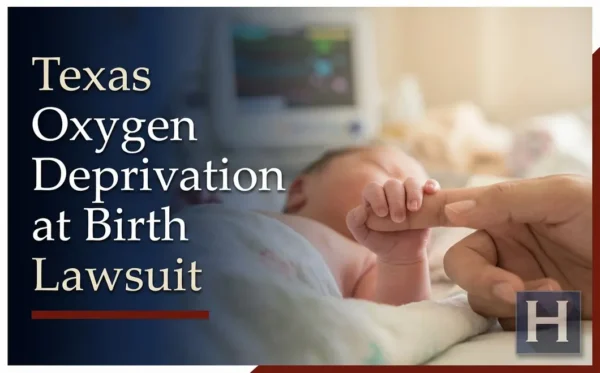
Relentless Advocacy for Infants Injured by Oxygen Deprivation
What You Should Know About Oxygen Deprivation at Birth Claims in Texas:
- Lifelong disability and complex care needs can follow oxygen deprivation at birth, especially when injury progresses to HIE or cerebral palsy.
- Options for financial recovery can be limited if key Texas timing rules are missed, since separate claims can have different filing deadlines.
- Disputes about whether malpractice occurred often turn on whether the medical team recognized fetal distress and responded without delay.
- Proof of a delivery related injury can be harder when records are incomplete, since fetal heart rate tracings and clinical notes can be central evidence.
- Early newborn findings can shape how the event is understood, since low Apgar scores and the need for resuscitation may indicate significant oxygen deprivation.
- Causation can be contested when alternative explanations exist, since imaging and neurologic testing may be used to distinguish acute birth events from other causes.
- Recovery for long term needs can depend on how damages are categorized, since Texas limits non economic damages but does not cap economic damages.
- The ability to reconstruct what happened can diminish over time, since medical records can be lost and witness memories can fade.

A Healthcare Focused Law Firm
When a baby suffers oxygen deprivation during labor or delivery, families are often left with more questions than answers. Birth asphyxia, a condition where an infant’s brain and organs are deprived of adequate oxygen around the time of birth, can result in life-altering consequences that no parent should have to face alone.
At Hastings Law Firm, we focus exclusively on medical malpractice. Our team includes in-house nurses and former defense attorneys who understand how and why these injuries happen. As a Texas birth asphyxia & hypoxia lawyer, founder Tommy Hastings and our legal-medical team work to uncover the truth behind what went wrong, and we hold the responsible parties accountable.
If your child was harmed by oxygen deprivation at birth, we can review what happened and explain your options during a free, confidential case evaluation.
Understanding Birth Asphyxia and Hypoxia
Birth asphyxia occurs when a baby’s brain and organs do not receive enough oxygen before, during, or immediately after birth, potentially leading to permanent damage. According to the National Center for Biotechnology Information (NCBI Bookshelf), birth asphyxia, also known as perinatal asphyxia, remains a significant cause of neonatal illness and death worldwide.
To understand these cases, it helps to know the difference between two related but distinct conditions. Hypoxia refers to a reduced level of oxygen reaching the baby’s tissues. The brain can tolerate brief, mild hypoxia, but if the oxygen supply drops too far or for too long, cells begin to die. Anoxia is the complete absence of oxygen, a more severe condition that can cause rapid and irreversible brain damage.
The perinatal period, the window of time just before, during, and shortly after birth, is when the risk is highest. During this critical stretch, the baby depends entirely on the mother’s placenta and umbilical cord for oxygen. Any disruption to that supply chain can set the stage for injury.
What makes many of these cases so heartbreaking is that the damage is often preventable. When medical teams recognize the warning signs early and respond appropriately, oxygen deprivation can frequently be avoided or minimized. A birth asphyxia attorney in Texas can help determine whether the care your child received met the standard that should have been provided. Our firm prepares every case to be trial-ready from the start to ensure your family’s voice is heard.
Medical Negligence Leading to Oxygen Deprivation
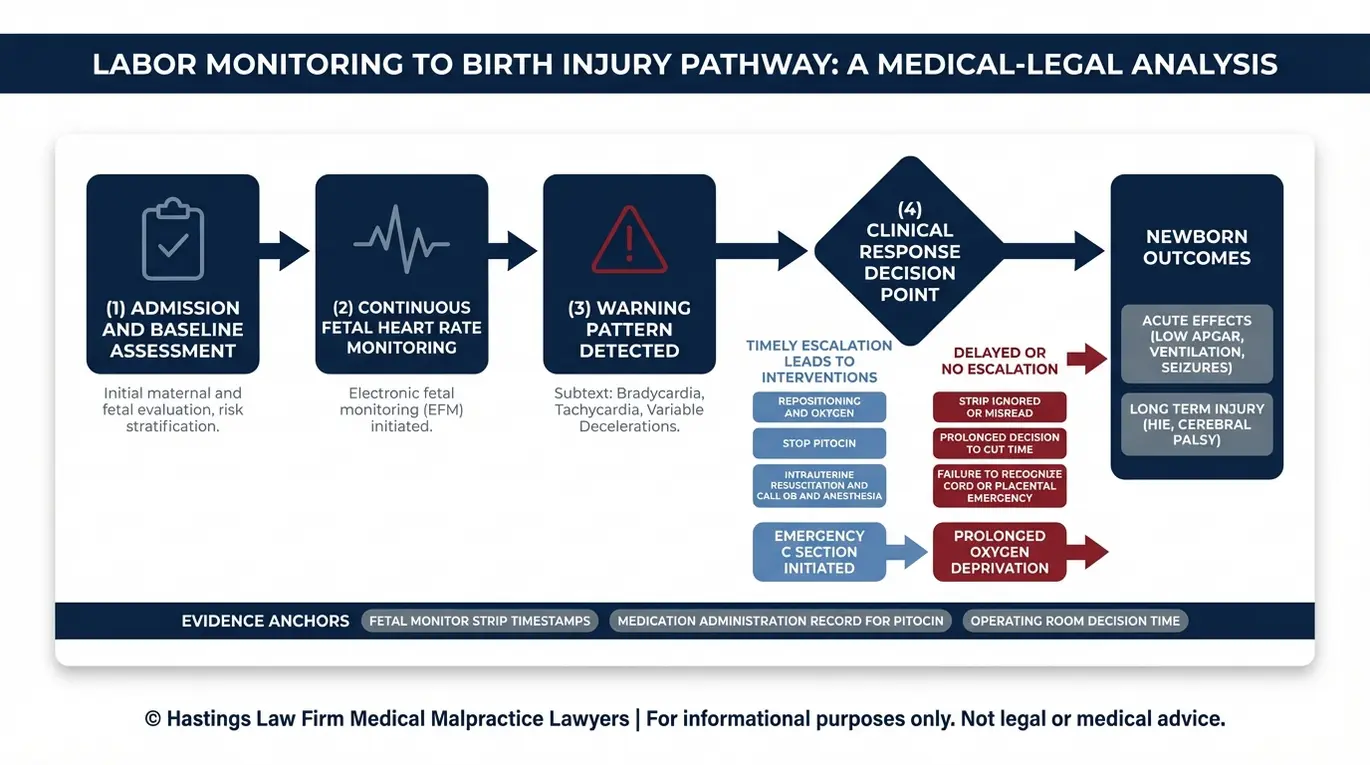
Negligence in oxygen deprivation cases often involves the failure to respond to fetal distress signals, delaying a necessary C-section, or mismanaging medication like Pitocin. These failures can occur at multiple points during labor and delivery, and identifying where the breakdown happened is central to building a case.
A study published in PubMed Central on obstetrical safety indicators highlights that timely clinical responses to fetal distress are among the most important factors in preventing harm during low-risk births. When those responses are delayed or absent, the consequences for the baby can be severe.
Common forms of medical negligence in these cases include:
- Failure to monitor fetal heart rate properly. Fetal heart rate monitoring, the continuous electronic tracking of the baby’s heart rate during labor, is the primary tool for detecting distress. Ignoring or misreading the monitor strips can mean critical warning signs go unaddressed.
- Delayed emergency cesarean section. When fetal distress is identified, the time between the decision to perform a C-section and the actual delivery is measured in minutes. Unnecessary delays during this window can result in prolonged oxygen deprivation.
- Misuse of labor-inducing drugs. Pitocin, a synthetic form of oxytocin used to strengthen contractions, can cause hyperstimulation of the uterus. When contractions come too fast or too strong, blood flow to the baby can be compromised.
- Failure to recognize cord or placental complications. Conditions like umbilical cord prolapse, where the cord slips ahead of the baby and becomes compressed, or placental abruption, the premature separation of the placenta from the uterine wall, require immediate intervention. A delay in identifying these emergencies can cut off the baby’s oxygen supply entirely.
- Ignoring meconium-stained amniotic fluid. The presence of meconium in the amniotic fluid can signal fetal distress and increase the risk of aspiration, requiring close monitoring and rapid delivery planning.
As a hypoxia lawyer, our role is to reconstruct the timeline of your delivery and determine whether the medical team’s actions, or inaction, fell below what a competent provider should have done. An experienced oxygen deprivation attorney looks at every decision point to identify where the standard of care was breached.
Mechanics of Fetal Heart Rate Tracing Abnormalities
Fetal heart rate strips are one of the most important pieces of evidence in birth asphyxia cases. These tracings provide a continuous record of how the baby responded to labor, and trained providers are expected to interpret them in real time.
Two key warning signs on the monitor are bradycardia, an abnormally slow fetal heart rate, and tachycardia, an abnormally fast rate. Both can indicate that the baby is not getting enough oxygen. Variable decelerations, sudden drops in the fetal heart rate caused by umbilical cord compression, are another red flag that requires prompt evaluation.
The standard of care generally requires the medical team to recognize these patterns, intervene with corrective measures, and escalate to an emergency delivery if the baby does not recover. When providers fail to act on what the strip is showing, the result can be prolonged hypoxia and lasting neurological injury. Our medical team reviews these fetal heart rate strips minute by minute to evaluate whether the medical response was correct.
The Hastings Law Firm Difference
Results matter, but what truly sets us apart is how we achieve them. Every verdict, every settlement, and every Texas courtroom victory comes from one guiding promise: To treat each client’s fight for justice as if it were our own.
This balance of skill, experience, and empathy reflects our core philosophy that justice should not only compensate the injured, but also make healthcare safer nationwide.

Recognizing Signs of Hypoxia and Anoxia in Newborns
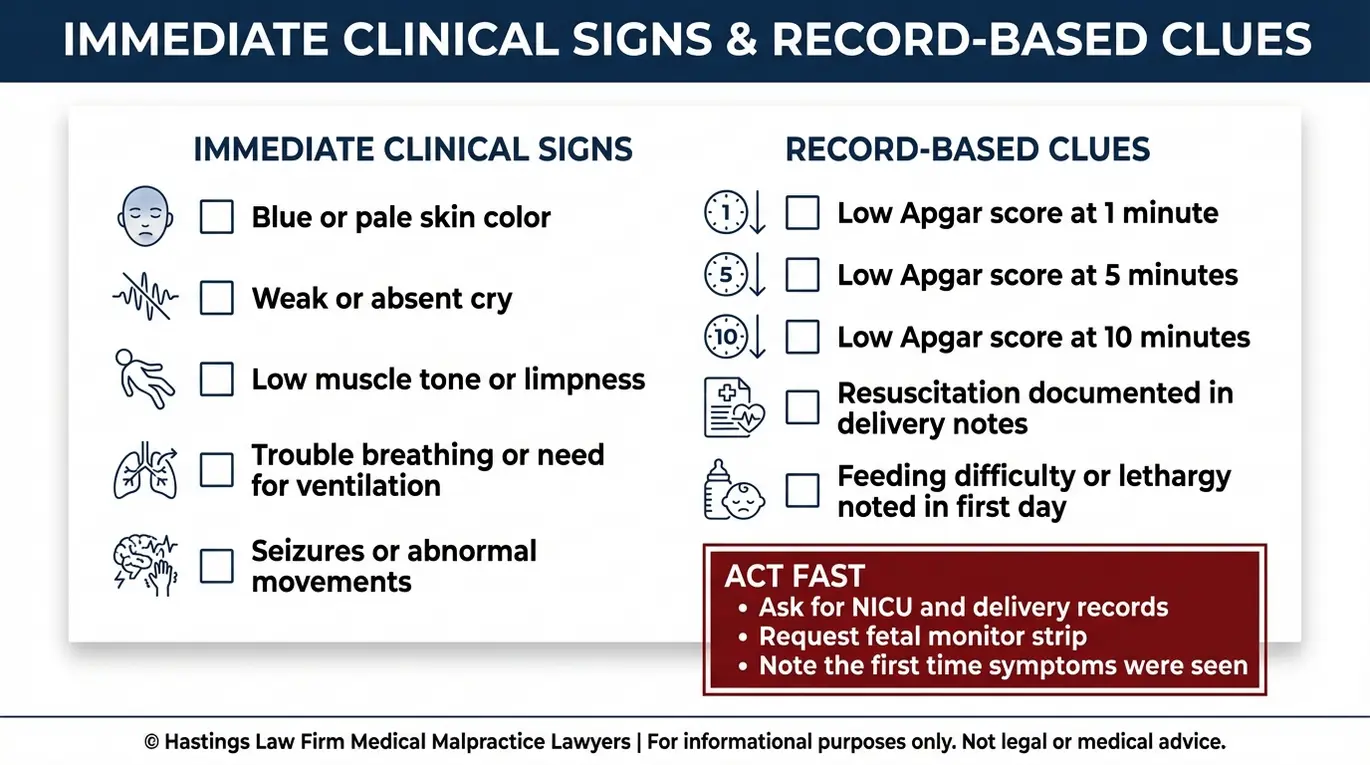
Immediate signs of oxygen deprivation include pale or blue skin, a weak cry, low muscle tone, and seizures within the first hours of life. Anoxia, the complete loss of oxygen to the brain, tends to produce more severe symptoms, but even partial deprivation can cause lasting harm if it goes unrecognized.
One of the first assessments a newborn receives is the Apgar score, as described by MedlinePlus. The Apgar score, a quick evaluation performed at 1, 5, and sometimes 10 minutes after birth, rates a baby’s heart rate, breathing, muscle tone, reflexes, and skin color on a scale of 0 to 10. Low scores, especially those that do not improve over time, can indicate significant oxygen deprivation.
Parents and medical professionals should watch for these early indicators:
- Low Apgar scores at 1, 5, and 10 minutes after delivery
- Need for resuscitation, intubation, or mechanical ventilation at birth
- Seizures or abnormal jerking movements in the first 24 to 48 hours, which can indicate neurological impairment
- Difficulty feeding, including weak suck reflex or inability to latch
- Unusual lethargy or lack of responsiveness
- Pale, bluish, or mottled skin color that does not resolve quickly
These signs are often the first evidence a Texas birth injury lawyer will examine when evaluating a potential claim. Documenting them promptly and thoroughly can make a significant difference in the strength of a case.
Diagnostic Testing and Imaging for Hypoxia
Advanced diagnostic imaging is essential for proving the timing and severity of a brain injury. MRI scans, CT scans, and EEGs (which measure electrical activity in the brain) can help tell the difference between injuries caused by oxygen deprivation during delivery and those with genetic causes.
This distinction matters because it directly affects whether a malpractice claim is possible. If advanced diagnostic imaging shows a pattern of injury consistent with an acute event during labor rather than a chronic condition, it strengthens the connection between the medical team’s actions and the baby’s outcome. Our in-house medical staff reviews these medical records alongside the treating physicians’ notes to build a clear picture of what happened and when.
Long-Term Consequences Including HIE and Cerebral Palsy
Prolonged oxygen deprivation often results in Hypoxic-Ischemic Encephalopathy (HIE), a specific type of brain injury caused by a combination of reduced oxygen (hypoxia) and restricted blood flow (ischemia) to the infant’s brain. HIE can range from mild to severe, and its effects may not become fully apparent for months or even years.
In many cases, HIE evolves into cerebral palsy, a group of permanent movement disorders that affect muscle coordination, balance, and posture. Children with cerebral palsy may require ongoing physical therapy, occupational therapy, speech therapy, and specialized medical equipment throughout their lives.
Beyond physical disabilities, oxygen deprivation can cause neurological impairment, cognitive delays, learning disabilities, vision and hearing impairments, and chronic seizure disorders. Some children require round-the-clock care and will never live independently.
The emotional and financial toll on families is immense. A birth asphyxia lawsuit is not just about holding providers accountable. It is about securing the resources a child will need for decades of specialized care, adaptive equipment, and support services. A life care planner can project those costs across the child’s expected lifespan, giving families and juries a clear picture of what is truly at stake.
Proving Malpractice and The Standard of Care
Proving malpractice requires demonstrating that a competent medical professional would have acted differently under similar circumstances to prevent the oxygen deprivation. In Texas, this analysis centers on the standard of care, the level of treatment that a reasonably skilled healthcare provider in the same specialty would have delivered given the same situation.
A successful claim requires three connected elements. First, you must show that the provider breached the standard of care and committed medical negligence. This could mean failing to respond to abnormal fetal heart tracings, ignoring maternal warning signs like elevated blood pressure or fever, or delaying a necessary cesarean delivery.
Second, you must show cause, a direct link between the breach and the baby’s brain injury. It is not enough to show that a mistake was made; you must demonstrate that the mistake caused or contributed to the harm.
Third, you must prove damages, the specific losses that resulted from the injury.
Under the Texas Civil Practice and Remedies Code, Chapter 74.051, medical malpractice plaintiffs must provide written notice to each defendant at least 60 days before filing suit. This requirement, along with the expert report obligation, makes early legal consultation important.
At Hastings Law Firm, our medical malpractice attorney team uses qualified expert witnesses, detailed medical record analysis, and minute-by-minute timeline reconstruction to build the evidence needed to meet Texas’s strict requirements.
Recovering Damages for a Lifetime of Care
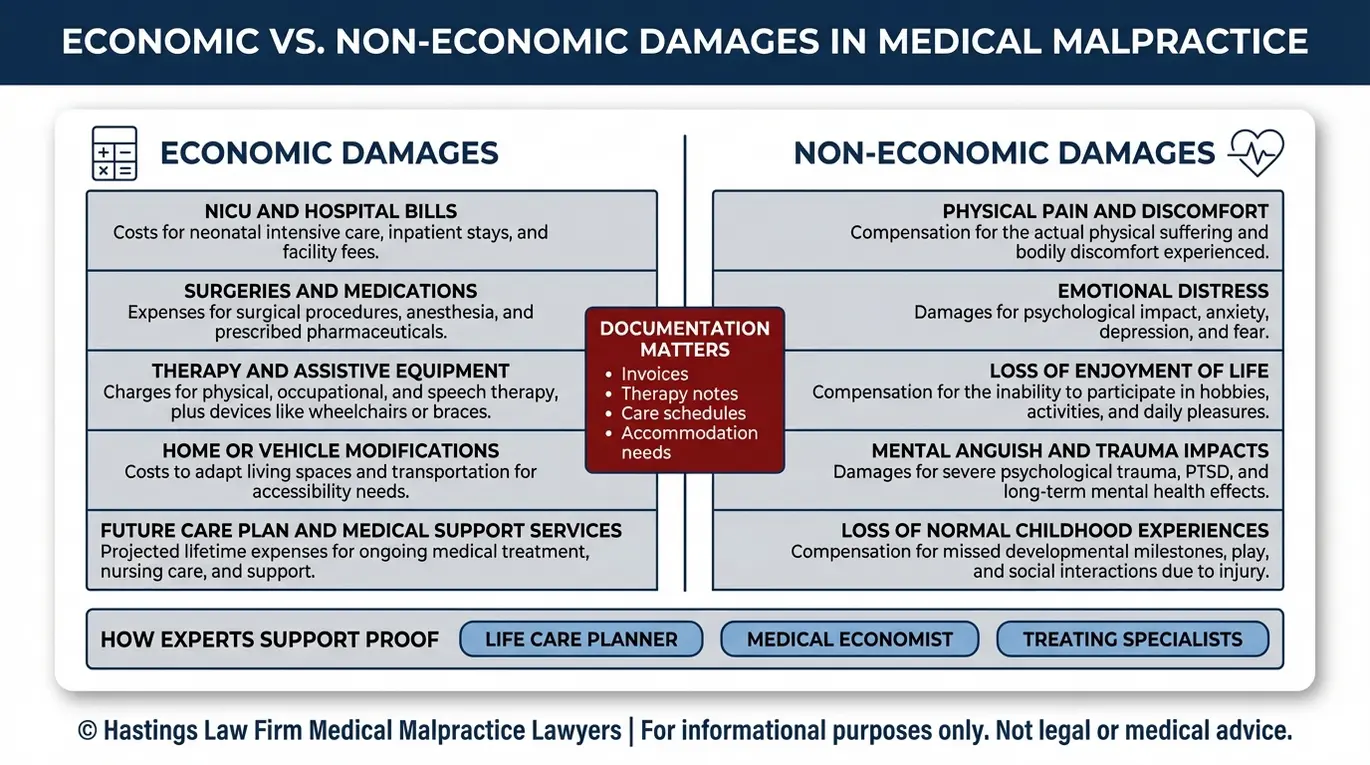
Compensation in a birth injury case may cover past and future medical bills, specialized therapy, home modifications, and non-economic damages for pain and suffering. These damages are intended to provide for the child’s long-term needs following oxygen deprivation at birth.
Damages in these cases generally fall into two categories:
| Economic Damages | Non-Economic Damages |
|---|---|
| NICU stays, surgeries, and hospitalizations | Physical pain and suffering |
| Ongoing medical care and specialist visits | Mental anguish of the child |
| Physical, occupational, and speech therapy | Mental anguish of the parents |
| Medications and medical equipment | Loss of enjoyment of life |
| Wheelchair-accessible housing and vehicles | Loss of companionship |
| 24/7 in-home nursing or attendant care | Emotional distress |
| Lost future earning capacity of the child | Disfigurement |
According to the Centers for Disease Control and Prevention (CDC), the lifetime costs associated with cerebral palsy can be substantial, often reaching into the millions of dollars when medical care, therapy, and lost productivity are factored together.
A life care planner works alongside our legal team to calculate these projected costs, providing detailed evidence of what your child will need over the course of their lifetime. This analysis is essential for pursuing a settlement or birth injury compensation that reflects the true scope of a family’s needs, not just the bills that have accumulated so far.
Deadlines for Filing Birth Injury Claims in Texas
While the standard statute of limitations for medical malpractice in Texas is two years from the date of the negligent act, Texas law includes specific tolling provisions for minors that may extend the filing deadline. For families dealing with birth hypoxia or asphyxia, understanding these timelines is essential to preserving their right to seek justice.
For children injured at birth, the two-year clock is generally tolled, or paused, until the child turns 12. This means claims can often be filed until the child reaches age 14. However, parents’ own claims for expenses they have already incurred, such as medical bills and lost wages, may be subject to the standard two-year deadline. These are separate claims with separate timelines, and missing either one can permanently bar recovery.
Texas also imposes a statute of repose, an absolute 10-year outer deadline that applies regardless of when the injury was discovered, barring certain exceptions involving the discovery rule. Once 10 years have passed from the date of the negligent act, most claims are barred.
Even with extended deadlines, acting early is important. Medical records can be lost, witnesses’ memories fade, and fetal heart rate tracings may not be preserved indefinitely. Consulting a Texas birth asphyxia lawyer sooner rather than later helps ensure that critical evidence is protected.
Contact the Texas Birth Injury Attorneys at Hastings Law Firm Today for Help
If your child suffered oxygen deprivation during birth, you deserve to know what happened and why. At Hastings Law Firm, our team of attorneys, in-house nurses, and board-certified patient advocates will review your child’s medical records, identify where the standard of care may have been breached, and explain your legal options clearly and honestly.
Tommy Hastings, a board-certified trial lawyer and Texas Birth Asphyxia & Hypoxia Lawyer, has dedicated his career to holding negligent providers accountable and securing the resources families need for a lifetime of care. Our firm has recovered millions for families affected by birth injuries, including a $7 million birth injury settlement in Houston.
There is no fee unless we recover compensation for your family. Contact us today for a free, confidential case evaluation. Let us help you find the answers you deserve.
Frequently Asked Questions About Birth Asphyxia & Hypoxia in Texas


This content was researched and written by the Hastings Law Firm editorial team, which includes attorneys, medical professionals, and experienced researchers. Our writing is informed by internal knowledge and practical experience, and we cross-check critical details against authoritative sources cited throughout. Every piece undergoes human-led fact-checking and legal review. Because legal and medical information can change, if you spot an error, please contact us. Learn more about our content standards and review process on our editorial policy page.

Tommy Hastings, founder of Hastings Law Firm, is a board-certified personal injury trial lawyer dedicated exclusively to healthcare injury cases. Since 2001, he has represented injured patients and families in litigation against major hospital systems, pharmaceutical companies, and negligent healthcare providers nationwide. He has handled numerous high-profile cases that have drawn national media attention and resulted in multi-million dollar recoveries. He draws on that experience in his writing, helping readers understand how these cases work and what options may be available to them.
