


Texas Bariatric Surgeon Malpractice Lawyer
Written by: Hastings Law Firm | Reviewed by: Gabe Sassin | Updated: July 27, 2026
Bariatric surgery is meant to improve health, but preventable mistakes during the operation or in follow up care can lead to serious complications, prolonged hospitalization, lasting injury, or worse. This topic focuses on when a poor outcome may reflect a deviation from the accepted standard of care rather than an inherent surgical risk, including issues tied to informed consent, patient screening, and delayed recognition of post operative leaks. It also highlights how these cases are evaluated using clinical records and expert review. If you or a loved one were harmed or worse due to bariatric surgeon malpractice in Texas, contact Hastings Law Firm for a free, confidential case review.

Trusted Legal Representation for Weight Loss Surgery Negligence in Texas
What You Should Know About Weight Loss Surgery Negligence Claims in Texas:
- Severe harm can follow weight loss surgery when preventable surgical errors or post operative care failures occur.
- Liability can turn on whether the outcome reflects a deviation from the accepted standard of care rather than a known surgical risk.
- A signed consent form can leave accountability intact when injuries stem from negligent care instead of inherent procedure risks.
- Options can be lost in Texas if required case filings are missed, since medical liability claims are governed by strict procedural requirements.
- Financial recovery can be limited for non economic harms in Texas, while economic losses are treated differently under state law.
- Long term health consequences can result when nutritional monitoring and follow up planning are not provided after bariatric surgery.
- The most serious outcomes can occur when post operative leak warning signs are not recognized and treated promptly.
- Disputes often focus on whether a patient was an appropriate surgical candidate when screening and eligibility guidelines were not followed.
- Operative reports, nursing logs, and follow up records can be central when reconstructing what happened during surgery and recovery.

A Healthcare Focused Law Firm
When bariatric surgery goes wrong, the physical and emotional toll can be devastating. You may be dealing with unexpected complications, repeat hospitalizations, or worsening health, all after a procedure that was supposed to improve your quality of life. If you suspect that a surgical error or a failure in post-operative care caused your injuries, you are not alone, and your concerns deserve to be taken seriously.
Hastings Law Firm has focused exclusively on medical malpractice cases since 2005. Our team includes in-house medical professionals and former defense attorneys who understand how hospitals and surgical teams operate from the inside. As a Texas bariatric surgeon malpractice lawyer, we have the resources and clinical knowledge to evaluate what happened, identify where the standard of care may have been violated, and hold negligent providers accountable for their actions in medical malpractice litigation.
If you or a loved one suffered serious harm after weight loss surgery, we can review your situation and explain your legal options at no cost and no obligation.
Common Weight Loss Procedures Involved in Malpractice Claims
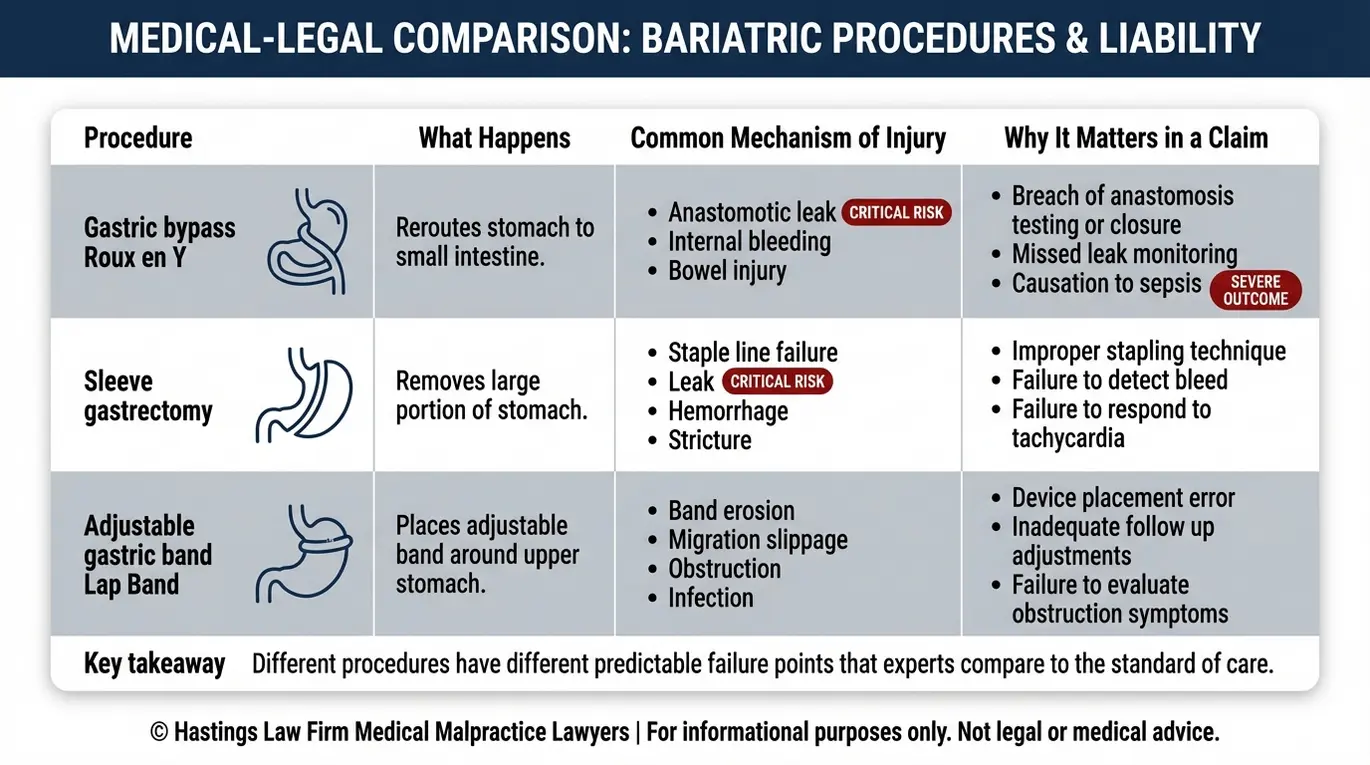
Weight loss surgery malpractice claims frequently involve gastric bypass, sleeve gastrectomy, and Lap-Band procedures where the surgeon deviates from the standard of care during the operation or post-operative monitoring. Bariatric surgery refers to various procedures performed on the digestive system to help patients achieve significant weight loss. Texas is one of the highest-volume states for these surgeries, and while most procedures are completed safely, the sheer number of operations means preventable errors do occur.
Roux-en-Y gastric bypass (RYGB), a procedure that reroutes the digestive system by creating a small stomach pouch and connecting it directly to the small intestine, carries risks of anastomotic leaks at the surgical connection points. These leaks can lead to sepsis and, in some cases, death. Because of the technical complexity involved, even small deviations in technique can result in serious harm.
Sleeve gastrectomy, sometimes called a gastric sleeve, involves permanently removing a large portion of the stomach. The primary risk here centers on staple line failure. If the surgical team does not properly reinforce or test the staple line, leaks can develop in the days following surgery.
Adjustable gastric bands (Lap-Band) work by placing a silicone band around the upper stomach. Over time, the device can migrate or erode into the stomach wall. Claims involving gastric banding often focus on whether the surgical team placed the device correctly and whether they adequately monitored for signs of complications during follow-up visits.
We evaluate these cases by examining the operative technique, the surgeon’s decision-making, and whether the post-surgical monitoring met accepted medical standards. If you are looking for a Texas weight loss surgery attorney, understanding which procedure was performed and what went wrong is the starting point.
| Procedure Name | Common Mechanism of Injury | Legal Implication |
|---|---|---|
| Roux-en-Y Gastric Bypass | Anastomotic leak at surgical connection | Failure in surgical technique or leak testing |
| Sleeve Gastrectomy | Staple line failure or leak | Inadequate reinforcement or post-op monitoring |
| Adjustable Gastric Band (Lap-Band) | Device migration or erosion | Improper placement or insufficient follow-up care |
Distinguishing Between Surgical Complications and Medical Negligence
Not every negative outcome constitutes malpractice. Medical malpractice occurs when healthcare professionals fail to meet the accepted standard of care. Actionable negligence occurs only when the surgeon fails to act as a reasonably prudent provider would under similar circumstances, directly causing preventable harm.
The standard of care in bariatric medicine refers to the level of treatment that a competent bariatric surgeon with similar training and experience would provide under the same conditions. A legal claim may exist when a surgeon falls below that standard, breaching their duty of care, and the patient is harmed as a result. The Texas Civil Practice and Remedies Code Chapter 74 governs medical liability claims in the state and sets specific procedural requirements for bringing these cases forward.
Informed consent means your doctor explained the risks and you agreed to the treatment. Signing a consent form before surgery means you acknowledged the known risks of the procedure. It does not mean you agreed to accept negligent care. If your injury resulted from a preventable error rather than an inherent risk of the surgery, that consent form does not shield the surgeon from liability.
Here are some factors that help distinguish a known complication from negligence:
- A minor surgical site infection that resolves with standard antibiotics is typically a known risk.
- A bowel perforation, a hole in the intestinal wall, that goes undetected and untreated because the surgeon failed to inspect the operative field may indicate negligence.
- An anastomotic stricture, a narrowing at the anastomosis (gastrojejunostomy) or surgical connection site that requires routine dilation, can be a recognized complication, but one caused by poor technique may suggest a breach of the standard of care.
- Post-operative bleeding that the surgical team fails to recognize or respond to promptly may reflect a monitoring failure.
When suing a bariatric surgeon, the central question is whether the harm was caused by something the surgeon did or failed to do, not simply whether the outcome was unfavorable. Our team investigates the clinical evidence to determine whether negligence in weight loss surgery was a factor.
Failures in Patient Screening and Eligibility
Bariatric surgery is not appropriate for every patient. Established medical guidelines set specific eligibility criteria based on body mass index (BMI), which measures body fat based on height and weight, medical history, and psychological readiness. When a surgeon operates on a patient who was never a viable candidate, whether due to an insufficient BMI, unaddressed psychiatric conditions, or other medical contraindications, that decision itself can form the basis of a malpractice claim.
We review pre-surgical evaluations and candidate qualifications to determine if screening negligence occurred or whether the surgeon followed accepted protocols before recommending the procedure.
The Hastings Law Firm Difference
Results matter, but what truly sets us apart is how we achieve them. Every verdict, every settlement, and every Texas courtroom victory comes from one guiding promise: To treat each client’s fight for justice as if it were our own.
This balance of skill, experience, and empathy reflects our core philosophy that justice should not only compensate the injured, but also make healthcare safer nationwide.

Examples of Preventable Errors by Bariatric Surgeons
Common errors include cutting or stapling the wrong anatomy, failing to seal the staple line causing gastric leaks, leaving foreign objects inside the patient, or damaging adjacent organs like the spleen or liver. These are not theoretical risks; they are documented failures that our medical-legal team sees in the cases we investigate.
Gastric leaks are among the most dangerous complications. A staple line leak occurs when the sealed edge of the stomach or intestinal connection fails, allowing digestive contents to spill into the abdominal cavity. This can rapidly progress to sepsis and organ failure.
A study published in *Surgical Endoscopy* examining the MBSAQIP data registry on predictors and outcomes of leak after Roux-en-Y gastric bypass confirmed that leaks remain a significant source of morbidity and wrongful death following these procedures. When a leak results from improper stapling technique or a failure to test the seal intraoperatively, that points toward bariatric surgery malpractice.
Organ perforation is another serious concern. During laparoscopic procedures, instruments can accidentally nick the bowel, intestines, or surrounding structures. If the surgeon fails to identify and repair the damage before closing, the patient may develop a life-threatening infection within hours or days.
Anesthesia errors also contribute to bariatric surgery injuries. Patients undergoing weight loss surgery often have comorbidities that require careful sedation management. Dosing errors or airway mismanagement can result in brain injury or cardiac events.
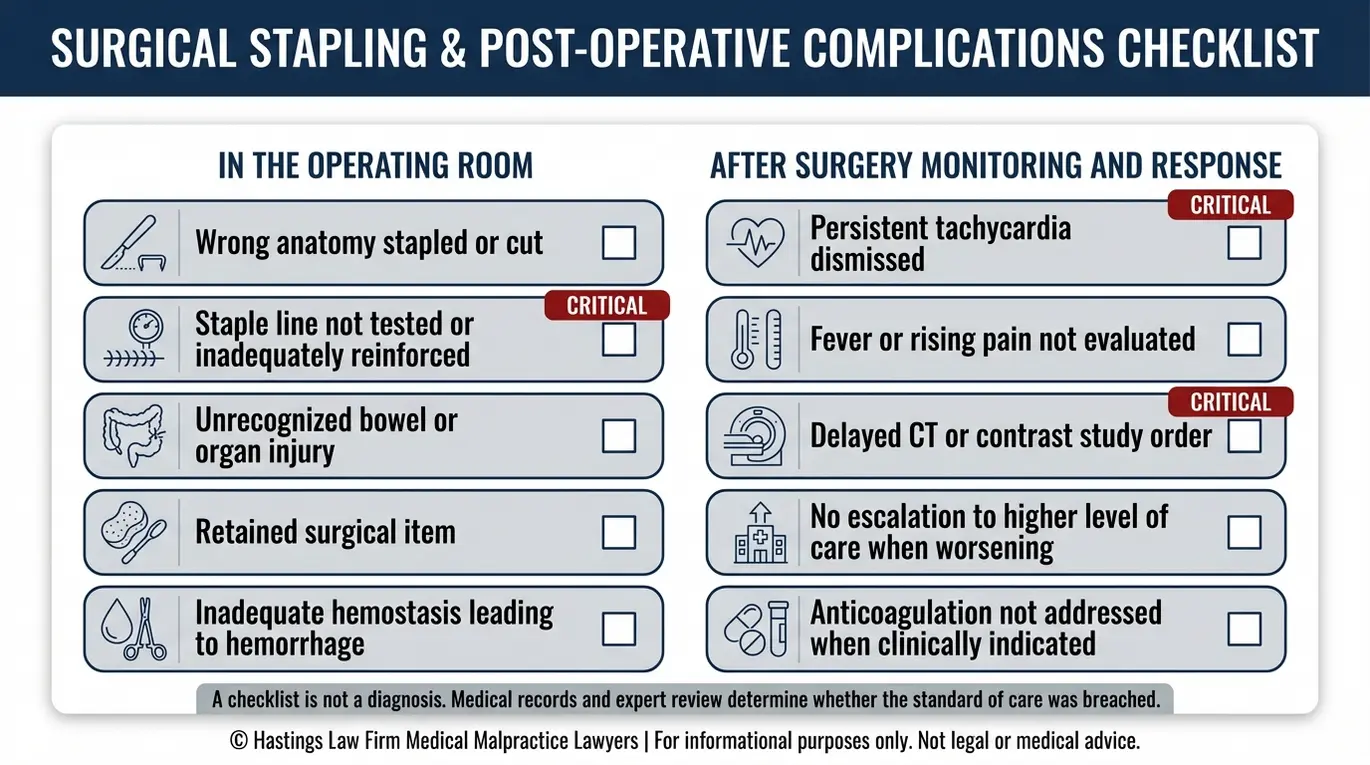
Here is a checklist of common surgical errors that may indicate a deviation from the standard of care:
- Staple line failure or inadequate reinforcement
- Undetected gastric leak during or after surgery
- Accidental bowel perforation left unrepaired
- Post-operative hemorrhage or bleeding that the surgical team fails to recognize
- Unaddressed bowel obstruction or strictures
- Retained surgical instruments or sponges
- Damage to the spleen, liver, or other adjacent organs
- Anesthesia dosing errors or inadequate airway management
- Adjustable gastric band erosion or migration, where a Lap-Band device shifts from its original position or wears into the stomach wall due to improper placement or lack of follow-up
If you believe a mistake was made during your procedure, a gastric bypass lawyer with clinical resources can review your operative reports and identify where errors may have occurred. A case involving mistakes by weight loss doctors requires both medical expertise and legal skill to build effectively.
Inexperienced Surgeons and Training Deficiencies
Laparoscopic surgery is a minimally invasive technique used in many weight loss procedures. This approach demands specialized training and a high degree of technical proficiency. In some cases, surgeons attempt advanced procedures without adequate experience or supervision. A bowel perforation, an accidental puncture through the wall of the intestine, is more likely to occur when the inexperienced surgeon lacks sufficient laparoscopic training.
We examine the surgeon’s credentials, case volume, and training history to determine whether these preventable errors were caused by inexperience. This is an important piece of the evidence picture, particularly in cases involving newer or less experienced providers.
Liability for Failure to Diagnose Post-Operative Leaks
A surgeon’s duty extends beyond the operating room; failure to timely recognize and treat symptoms of a gastric leak, such as tachycardia or fever, constitutes negligence if it leads to sepsis or death. An anastomotic leak (gastric leak) involves a breakdown at the surgical connection site where stomach or intestinal contents escape into the abdomen.
The first 24 to 72 hours after bariatric surgery are critical. During this window, warning signs such as sustained high heart rate, fever, and worsening abdominal pain should prompt immediate diagnostic testing. Too often, these symptoms are dismissed as routine post-surgical discomfort or gas pain.
A contrast swallow study, also called an upper GI series, is a diagnostic imaging test where the patient swallows a contrast dye so doctors can visualize whether a leak exists. When this study or a CT scan is not ordered promptly despite concerning symptoms, the delay can allow a treatable leak to become a fatal infection. Delayed diagnosis can lead to prolonged hospitalization, malnutrition, or sepsis.
Failure to prescribe anticoagulants after surgery is another area of concern. Bariatric patients face an elevated risk of blood clots, and a pulmonary embolism can be fatal if preventive measures are not taken. The discharge instructions published by UMass Memorial Health for bariatric surgery patients outline the types of symptoms that should trigger immediate medical attention, reinforcing that post-operative monitoring standards are well established.
Failure to treat gastric leaks in a timely manner is one of the most common and most devastating forms of post-surgical negligence we investigate.
Malnutrition and Nutritional Negligence
Proper nutrition is essential for recovery after any digestive system surgery. After bariatric surgery, patients require ongoing nutritional monitoring and dietary counseling. When surgical teams fail to track vitamin and nutrient levels, patients can develop malnutrition and severe nutritional deficiencies that lead to conditions like Wernicke’s encephalopathy, a serious neurological disorder caused by thiamine deficiency.
Liability may exist when the provider did not establish a follow-up nutritional care plan or failed to respond to lab results showing dangerous deficiencies. We review post-surgical records to evaluate whether the care team met its obligations for long-term patient monitoring.
Establishing Liability in Texas Weight Loss Surgery Cases
Building a successful case requires securing expert testimony to validate the breach of care, meeting the procedural requirements of Texas Chapter 74, and proving that the specific error directly caused the injury or death. Establishing liability in a Texas medical malpractice case involves following strict legal and procedural rules.
Investigation is the foundation. Our medical team, which includes nurse practitioners and board-certified patient advocates, conducts a detailed review of medical records, operative reports, and nursing logs. We reconstruct the timeline of care to identify exactly where the standard was breached.
Expert review is not optional in Texas. Under Texas Civil Practice and Remedies Code § 74.351, plaintiffs must serve a qualified expert report within 120 days of the date each defendant’s original answer is filed. This report must detail the standard of care, how it was breached, and how that breach caused the patient’s injury. Missing this deadline results in automatic dismissal of the case. Our firm maintains a national network of bariatric surgery experts who provide credible, objective testimony.
Causation is often the most contested element. The defense will argue that the patient’s injury was a known risk, not the result of negligence. A medical malpractice attorney for bariatric surgery must connect the specific error to the specific harm through clinical evidence, not speculation.
Damages in these cases often include past and future medical expenses, lost income, diminished earning capacity, physical pain and suffering, and in wrongful death cases, the losses sustained by surviving family members. We work with medical and economic experts to calculate the full scope of harm.
Contact the Texas Surgical Error Attorneys at Hastings Law Firm Today for Help
If you or a family member suffered a serious injury after weight loss surgery, you deserve answers about what went wrong and whether negligence played a role. These cases are medically complex and legally demanding, and the timeline for taking action in Texas is limited.
Hastings Law Firm was built for exactly this type of case. Our founder, Tommy Hastings, is a board-certified trial lawyer, a credential held by less than 2% of attorneys in Texas. Our team includes in-house medical professionals and former defense attorneys who know how hospitals and insurance carriers approach these claims. We prepare every case as if it will go to trial, and that preparation gives us the ability to negotiate from a position of strength.
We charge no fees unless we recover compensation for you. Every consultation is free and confidential.
If something does not feel right about the care you or your loved one received, trust that instinct. Call Hastings Law Firm for a risk-free case evaluation, and let us help you understand your options.
Frequently Asked Questions About Bariatric Surgeon Malpractice in Texas


This content was researched and written by the Hastings Law Firm editorial team, which includes attorneys, medical professionals, and experienced researchers. Our writing is informed by internal knowledge and practical experience, and we cross-check critical details against authoritative sources cited throughout. Every piece undergoes human-led fact-checking and legal review. Because legal and medical information can change, if you spot an error, please contact us. Learn more about our content standards and review process on our editorial policy page.

Gabe Sassin has focused exclusively on medical malpractice law since 2007. After spending more than a decade as a malpractice defense attorney, he knows exactly how the other side works. He has seen firsthand how healthcare providers, insurers, corporate defendants, and their legal teams think, prepare, and build their defense against claims. That knowledge works for the people who need it most today, injured patients and their families. His unique experience shapes everything he writes, giving readers a look at how these cases actually work from someone who has handled them from both sides.
