


Arizona Athetosis Malpractice Lawyer
Athetoid cerebral palsy can leave a child with involuntary movements and lasting challenges that often trace back to oxygen deprivation during labor and delivery. Families may be left trying to understand whether warning signs were missed, whether care was delayed, and whether the injury could have been prevented. Clear answers often depend on careful review of labor records, fetal monitoring, and neuroimaging that shows basal ganglia injury patterns. If your child suffered harm or worse due to athetosis malpractice in Arizona, contact Hastings Law Firm for a free, confidential case review.

Last Updated: July 27, 2026
Compassionate Arizona Medical Attorneys for Athetoid Movement Disorder Claims
When your child has been diagnosed with athetoid cerebral palsy, the questions can feel endless, and the answers can seem out of reach. You may sense that something went wrong during labor or delivery, but you may not know how to confirm that feeling. You are not alone in that uncertainty, and your instinct to look deeper deserves to be taken seriously.
An experienced Arizona athetosis malpractice lawyer can help you understand what happened, why it happened, and whether your family has a legal path forward. At Hastings Law Firm, our team of attorneys, nurse consultants, and medical experts focuses exclusively on medical malpractice. We review your child’s medical records, explain your options, and help you make an informed decision about your family’s future.
If you have questions about your child’s diagnosis, we welcome you to contact us for a free, confidential case evaluation.

Understanding Athetoid Cerebral Palsy and Medical Negligence
Athetoid cerebral palsy, also known as dyskinetic CP, is a movement disorder often caused by damage to the basal ganglia, a cluster of structures deep in the brain that help regulate voluntary movement. When this area is injured by oxygen deprivation during birth, a child may develop slow, involuntary, writhing movements that are difficult to control. If that oxygen deprivation resulted from medical negligence, it may be grounds for a malpractice claim.
The term athetosis refers specifically to these continuous, flowing movements that a child cannot stop or direct. Unlike spastic cerebral palsy, which primarily involves damage to the motor cortex and causes stiff muscles, athetoid CP targets the brain’s movement coordination center.
The most common cause of this type of brain damage in newborns is hypoxic ischemic encephalopathy, or HIE. HIE occurs when a baby’s brain does not get enough oxygen or blood during the birth process. The CDC’s overview of cerebral palsy states that CP is the most common motor disability in childhood. Research published by PubMed on brain injury patterns in HIE confirms that the basal ganglia are particularly vulnerable to oxygen deprivation in full-term newborns.
Key characteristics of athetoid cerebral palsy include:
- Slow, writhing movements of the hands, feet, arms, or legs
- Difficulty maintaining a stable posture or sitting upright
- Fluctuating muscle tone that shifts between too loose and too tight
- Challenges with speech, swallowing, and fine motor tasks
- Movements that may worsen with stress or effort and often diminish during sleep
For our Arizona athetosis malpractice attorneys, understanding this medical foundation is the first step in building a case. The question at the center of every claim is whether a healthcare provider’s actions, or failures to act, caused or worsened the oxygen deprivation that led to the injury.
Differentiating Movement Patterns and Subtypes
Athetoid cerebral palsy is not a single condition. It includes several distinct movement patterns. These movement patterns help doctors identify which part of the brain was injured during birth.
Dystonia involves sustained muscle contractions that force parts of the body into abnormal postures. Chorea presents as quick, irregular, jerky movements. When both patterns appear together, the condition is called choreoathetoid cerebral palsy. Some children also experience rigidity, where muscles remain stiff and resist passive movement in all directions.
Recognizing these subtypes matters because the specific movement pattern can help medical experts trace the injury back to a particular area and timing of brain damage. This medical analysis helps determine if the injury resulted from a preventable error during delivery.

Common Obstetric Errors Leading to Athetosis and Basal Ganglia Injuries
Athetosis is frequently linked to preventable birth injuries, including failure to monitor fetal distress, delayed emergency delivery, or improper use of labor-inducing medications, all of which can cause severe oxygen deprivation in a newborn. The basal ganglia are the brain structures that help coordinate smooth movements.
Not every case of athetoid CP results from negligence. When a medical team fails to recognize and respond to warning signs during labor, the consequences can be permanent. An athetosis malpractice lawyer in Arizona evaluates the specific decisions made during your child’s delivery to determine whether the standard of care was met.
Fetal heart rate monitoring involves continuous electronic tracking of the baby’s heart rate during labor. This is one of the primary tools used to detect distress. When those tracings show warning signs like prolonged decelerations or reduced variability, the medical team is expected to act quickly.
We investigate these red flags during labor and delivery:
- Non-reassuring fetal heart rate patterns, which are signs on the monitor that the baby is not getting enough oxygen, that were documented but not acted upon
- Delayed decision to perform an emergency C-section when signs of oxygen deprivation were present
- Mismanagement of Pitocin, a medicine used to start or speed up labor, which can cause contractions to happen too fast and reduce the baby’s oxygen
- Failure to recognize or respond to umbilical cord complications such as prolapse or compression
- Inadequate resuscitation efforts, which are the steps taken to help a baby start breathing after birth, if the infant showed signs of distress
- Trauma during a difficult vaginal delivery that could have been avoided with timely intervention
Each of these scenarios can lead to prolonged oxygen deprivation. Our team of former defense attorneys and in-house nurses knows exactly what to look for in the medical records because they have handled these patterns from both sides of the legal system.

The Hastings Law Firm Difference
Results matter, but what truly sets us apart is how we achieve them. Every verdict, every settlement, and every Arizona courtroom victory comes from one guiding promise: To treat each client’s fight for justice as if it were our own.
This balance of skill, experience, and empathy reflects our core philosophy that justice should not only compensate the injured, but also make health care safer nationwide.

Identifying Symptoms of Dyskinetic Cerebral Palsy and Athetosis
Symptoms of dyskinetic CP often appear as fluctuating muscle tone, involuntary writhing movements, and difficulty maintaining posture. These signs typically become more noticeable between 3 and 9 months of age, though some parents notice subtle differences even earlier.
In the newborn period, one of the first signs may be hypotonia, an abnormally low muscle tone that makes the baby feel floppy or limp. Over time, this can shift toward hypertonia, where muscles become unusually stiff or tight. This fluctuation between extremes is a hallmark of dyskinetic CP.
Medical research published by OUP Academic shows that early identification and referral are essential for improving long-term outcomes. Our Arizona lawyers for athetosis malpractice review early medical records to establish when symptoms first appeared and whether the birth history supports a connection to oxygen deprivation.
| Symptom | Typical Age of Onset |
|---|---|
| Low muscle tone (hypotonia) or floppiness | Birth to 3 months |
| Difficulty with feeding or sucking | Birth to 3 months |
| Inability to hold head up or control head movement | 3 to 6 months |
| Involuntary writhing or twisting movements | 3 to 9 months |
| Fluctuating muscle tone (shifting between floppy and stiff) | 6 to 12 months |
| Speech difficulties (dysarthria), slurred or slow speech | 12 months and beyond |
| Difficulty sitting without support or maintaining posture | 6 to 12 months |
One detail that often helps confirm the diagnosis is that involuntary movements tend to decrease or disappear during sleep. If your child was in the NICU after birth, records from that stay can provide important early evidence of neurological concerns.
Investigating the Cause and Proving Medical Malpractice
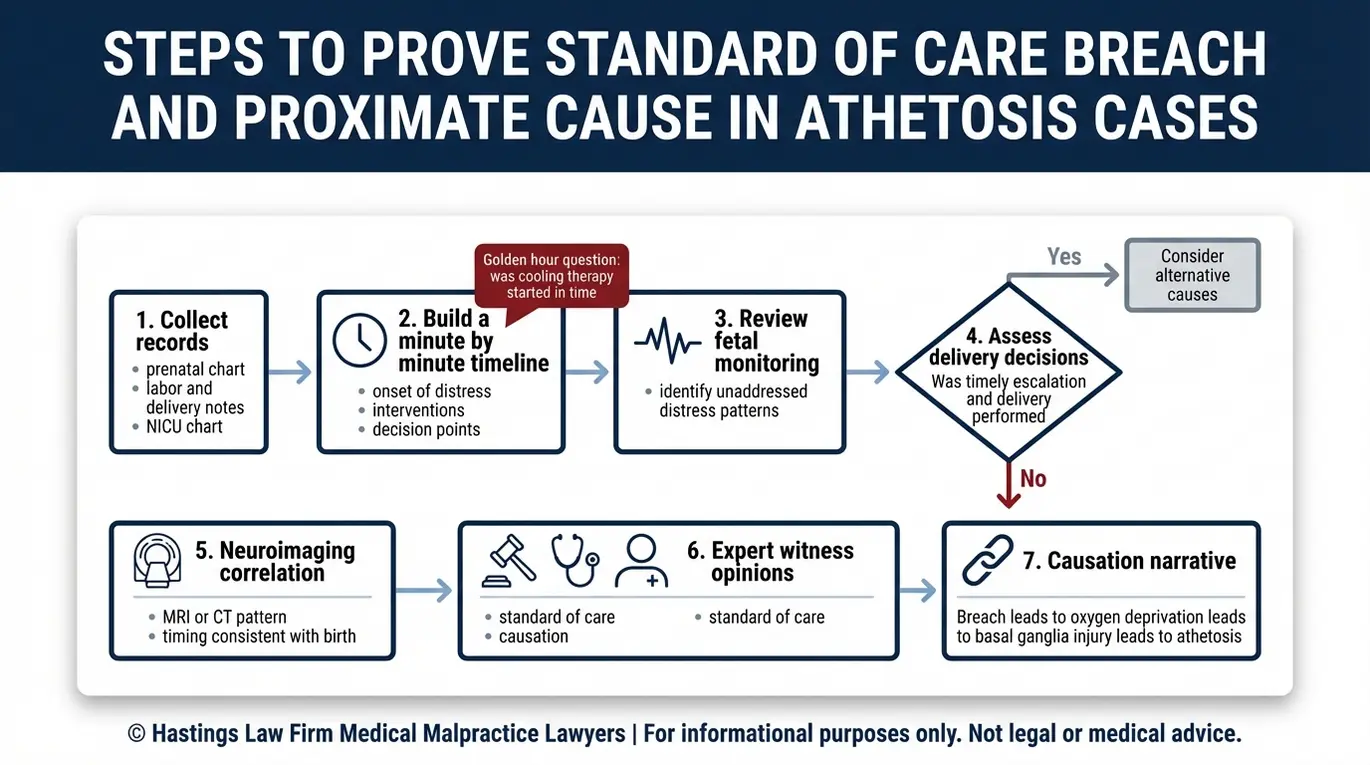
Proving malpractice requires demonstrating that a healthcare provider breached the standard of care and that this breach directly caused the infant’s brain injury. This is confirmed through expert review of medical records, neuroimaging, and a careful reconstruction of the delivery timeline.
Our investigation as athetosis malpractice legal counsel typically follows a structured process:
- Medical records collection and review: We obtain all labor and delivery records, fetal heart rate strips, nursing notes, and NICU documentation. Our in-house nurses and patient advocates analyze these records for gaps or signs of ignored distress.
- Neuroimaging analysis: MRI and CT scans can reveal the specific location and pattern of brain damage. When the basal ganglia show injury consistent with oxygen deprivation, this supports the connection between the birth event and the child’s athetoid CP.
- Evaluation of cooling therapy timing: We investigate whether the team initiated therapeutic hypothermia, or cooling therapy. This treatment involves carefully lowering the newborn’s body temperature to slow brain damage after hypoxic ischemic encephalopathy (HIE), which is caused by oxygen deprivation around birth. NCBI Bookshelf indicates this treatment must start within six hours of birth to be most effective.
- Expert witness consultation: Qualified medical experts review the evidence to determine whether the standard of care was met. They help establish if there is a proximate cause, which is the legal term for the direct link between a mistake and an injury.
This process is how we build the foundation of a case. Every step is designed to answer the central question of whether the injury could have been prevented.
Recoverable Damages for Families of Children with Athetosis
Families can recover economic damages for lifetime medical care and therapy, as well as noneconomic damages for the child’s pain, suffering, and loss of enjoyment of life. These funds help families pay for the high costs of specialized care that a child with athetoid cerebral palsy may need for decades.
The CDC’s data on cerebral palsy shows that the lifetime costs associated with CP can reach well over a million dollars. An Arizona athetosis injury attorney works with life care planners to calculate the full scope of your child’s future needs.
Compensable damages in these cases may include:
- Past and future medical expenses, including surgeries, NICU stays, and medications
- Ongoing physical, occupational, and speech therapy
- Assistive technology such as wheelchairs, communication aids, and home modifications
- Special education and vocational support
- Pain and suffering experienced by the child
- Mental anguish and emotional distress
- Loss of future earning capacity and funds for future care
Under Arizona Revised Statutes § 12-542, there is a two-year statute of limitations for personal injury actions, though special rules may apply for minors. Acting sooner allows your legal team more time to preserve evidence and build the strongest possible case for economic damages.
Why Choose Hastings Law Firm for Your Arizona Birth Injury Case
Hastings Law Firm brings a unique combination of board-certified trial advocacy and in-house medical expertise to every birth injury case. Families in Phoenix and across Arizona can rely on a team built specifically to challenge powerful hospital systems and insurance carriers.
Founder Tommy Hastings is Board Certified in Personal Injury Trial Law by the Texas Board of Legal Specialization, a distinction held by fewer than 2% of Texas attorneys. His record includes a $19.5 million settlement for a teenager with a neurological injury and a $7 million birth injury settlement in Houston. As your Arizona athetosis malpractice lawyer, our firm prepares every case to remain trial-ready, which gives us a firm negotiation posture that defense teams take seriously.
Our team includes former defense attorneys who know how hospitals and insurers build their arguments, along with in-house nurses who can interpret clinical records with precision. We work on a contingency fee basis, which means you pay no attorney fees or costs unless we recover compensation for your family.
Contact the Arizona Birth Injury Attorneys at Hastings Law Firm Today for Help
Your child’s diagnosis may raise difficult questions about what happened during labor and delivery. Those questions deserve the truth. There are legal time limits for filing a claim, so acting quickly helps your team preserve important evidence.
If you believe your child’s athetoid cerebral palsy may have been caused by a preventable medical error, we encourage you to reach out. As an athetosis malpractice lawyer in Arizona, Hastings Law Firm offers a confidential case evaluation with a patient advocate who can review your situation and help you understand your options.
You do not have to face this alone. Contact us today to schedule your risk-free case evaluation. There is no fee unless we win.
Frequently Asked Questions About Athetosis Malpractice in Arizona


This content was researched and written by the Hastings Law Firm editorial team, which includes attorneys, medical professionals, and experienced researchers. Our writing is informed by internal knowledge and practical experience, and we cross-check critical details against authoritative sources cited throughout. Every piece undergoes human-led fact-checking and legal review. Because legal and medical information can change, if you spot an error, please contact us. Learn more about our content standards and review process on our editorial policy page.

Tommy Hastings, founder of Hastings Law Firm, is a board-certified personal injury trial lawyer dedicated exclusively to healthcare injury cases. Since 2001, he has represented injured patients and families in litigation against major hospital systems, pharmaceutical companies, and negligent healthcare providers nationwide. He has handled numerous high-profile cases that have drawn national media attention and resulted in multi-million dollar recoveries. He draws on that experience in his writing, helping readers understand how these cases work and what options may be available to them.
