


Texas Allergist Malpractice Lawyer
Allergy care should improve health, not trigger a crisis. When an allergist fails to take a complete history, communicate key risks, or follow safety protocols during testing or immunotherapy, the result can be a severe reaction, lasting injury, or worse. This topic often turns on whether the standard of care was met for a specialist and whether emergency readiness and monitoring were handled appropriately. Clear documentation and timely treatment can shape what happened and why. If you or a loved one were harmed or worse due to allergist malpractice in Texas, contact Hastings Law Firm for a free, confidential case review.
Last Updated: July 27, 2026
Trusted Malpractice Attorneys for Allergy-Related Injuries in Texas
When a routine allergy appointment ends in a medical emergency, it can shake your trust in the very system that was supposed to help you feel better. You may be left with serious injuries, unanswered questions, and no clear sense of what went wrong or who is responsible. These are the moments when having the right legal team matters most.
At Hastings Law Firm, we focus exclusively on medical malpractice. Our team of attorneys, in-house nurses, and medical consultants understands how allergist negligence happens, what evidence is needed, and how to build a case that holds the responsible parties accountable. If you or a loved one suffered a severe injury after allergy testing, immunotherapy, or a medication error, a Texas allergist malpractice lawyer at our firm can review what happened and explain your options in a free, confidential consultation.

Defining Medical Negligence in Allergy and Immunology Practice
An allergist commits malpractice when they deviate from the accepted medical standard of care during testing, treatment, or immunotherapy, directly causing patient injury. The standard of care is the level of treatment a reasonably competent specialist would provide under similar circumstances. For allergists and immunologists, that standard is higher than what applies to a general practitioner. These physicians hold specialized training in diagnosing and managing allergic diseases.
General practitioners often refer complex cases to these specialists because of their advanced knowledge. The law expects them to anticipate complications that a non-specialist might miss. This specialized duty requires a high level of vigilance during every patient interaction.
One of the first duties an allergist owes a patient is taking a thorough medical history. Before ordering procedures like skin prick testing (SPT), the doctor must understand your existing conditions and medications. This testing applies small amounts of allergens to the skin to identify sensitivities. The physician must also review your history before starting subcutaneous allergen immunotherapy (SCIT), commonly known as allergy shots.
A complete history is not just a formality; it is an important safety checkpoint. The doctor must inquire about heart conditions, asthma, and concurrent beta-blocker usage. Skipping or rushing through this step can set the stage for a preventable injury.
Texas law also requires that a physician obtain informed consent before beginning treatment. This means your allergist must explain the known risks associated with a procedure, the alternatives available, and the potential consequences of declining treatment. When a patient agrees to immunotherapy without being told about the risk of anaphylaxis, the consent process may be legally deficient.
This failure to communicate important information prevents patients from making autonomous decisions about their health. If an adverse reaction occurs after a failure to disclose risks, it can lead to a claim alleging malpractice by an allergy doctor. We examine whether the risks were properly communicated before treatment began.
As a Texas allergist malpractice lawyer, we evaluate whether these duties were met by examining the clinical record and consulting with qualified specialists. A health care liability claim under Texas law requires showing that the provider breached their duty and that the breach caused harm. When suing an immunologist or allergy doctor, proving that breach often begins with documenting what should have happened versus what actually did. Our team, which includes former defense attorneys and experienced nurses, knows exactly where to look in the records for gaps between protocol and practice.
Common Errors Committed by Allergists and Immunologists
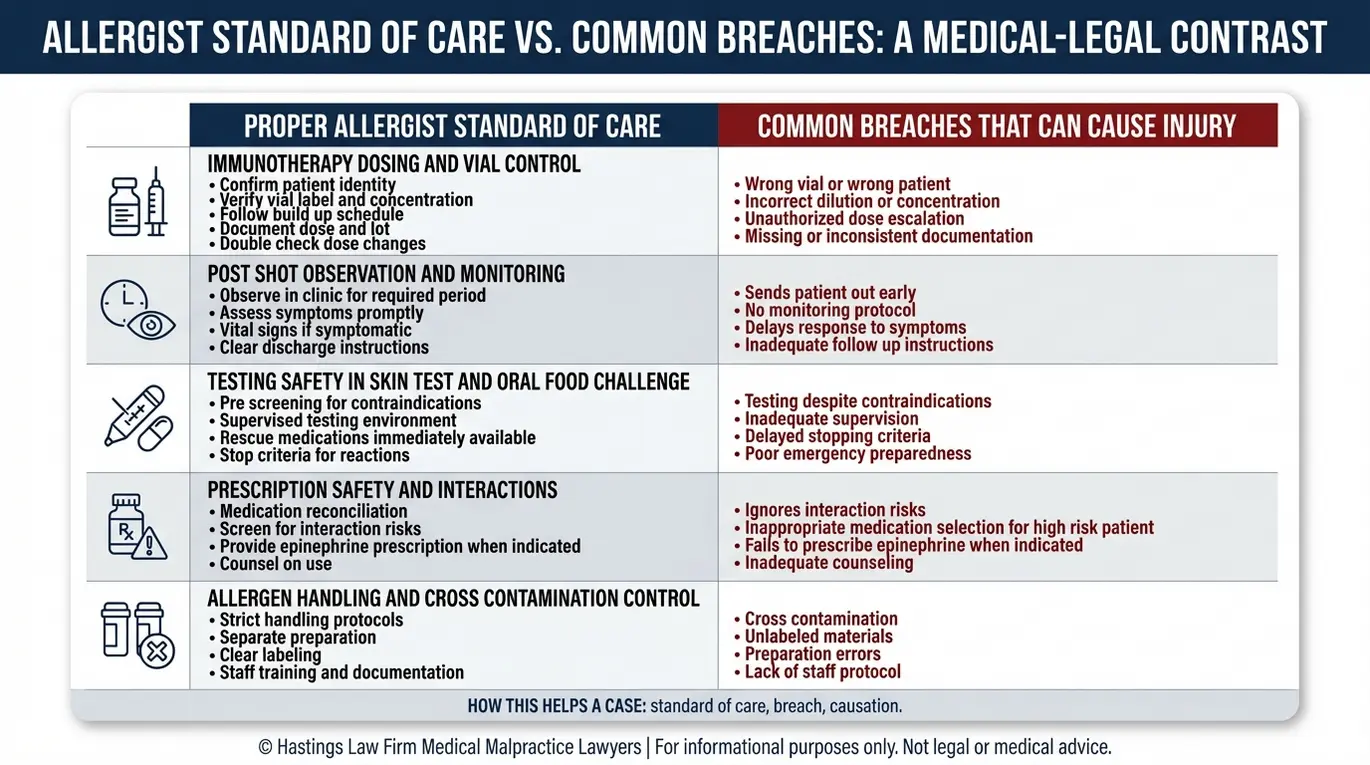
Common errors include administering incorrect immunotherapy dosages, failing to monitor patients after allergy shots, neglecting to review patient history for contraindications, and cross-contamination of allergens. These mistakes may seem small in a clinical setting, but they can trigger life-threatening reactions in minutes. Allergist negligence can occur at any point from the initial consultation to long-term maintenance.
Immunotherapy is a treatment that helps desensitize the immune system to specific allergens through regular exposure. Because it involves the introduction of triggers into the body, precision is vital. Errors during this process can lead to systemic reactions that require immediate medical intervention.
Immunotherapy and Allergy Shot Errors
Allergy shots work by gradually exposing the body to increasing concentrations of an allergen. The process depends on precise allergen extract vial dilution, meaning the exact concentration of the allergen must be carefully measured and verified at every stage. Administering the wrong vial, using an incorrect dilution, or injecting a dose intended for a different patient are all errors we see in immunotherapy cases. Clinics must have an EpiPen or equivalent epinephrine source available to treat immediate reactions.
Equally dangerous is the failure to observe a patient after an injection. The Allergy Immunotherapy Consent for Administration Packet from Drexel University outlines standard protocols requiring a mandatory observation period after each shot, typically 20 to 30 minutes, because most severe reactions develop within that window. When a clinic allows a patient to leave early or fails to staff the observation area, the results can be catastrophic.
Testing Errors
Negligence in allergy testing can occur during skin prick testing (SPT) if the wrong allergens are applied, results are misread, or the test is performed without reviewing prior reactions. During SPT, medical staff apply small amounts of suspected allergens to the skin to monitor for a reaction. These errors may lead to a failure to diagnose an existing allergy or a misdiagnosis that exposes a patient to a substance their body cannot tolerate.
Prescription Errors
Allergists must account for how their prescriptions interact with a patient’s existing medications. One well-documented medication error involves beta-blockers, a class of medication commonly prescribed for heart conditions that can worsen anaphylaxis or blunt the body’s response to epinephrine. Prescribing a medication without screening for these interactions, or ignoring a known drug allergy documented in the patient chart, may constitute a breach of the standard of care.
Under Texas Civil Practice and Remedies Code § 74.051, patients who have been harmed by such errors have the right to pursue a claim after proper notice is given to the provider. As a Texas allergist malpractice lawyer, we investigate every level of the treatment chain to identify where the breakdown occurred.
| Type of Negligence | What Should Happen | What Can Go Wrong |
|---|---|---|
| Immunotherapy dosing | Correct vial, correct dilution, correct patient | Wrong vial administered; dose intended for another patient |
| Post-injection monitoring | 20–30 minute supervised observation period | Patient released early; no staff monitoring the area |
| Allergy testing (SPT) | Review history; apply correct allergens; read results accurately | Wrong allergens used; results misinterpreted; prior reactions ignored |
| Prescription management | Screen for drug interactions and contraindications | Beta-blockers prescribed to anaphylaxis-risk patient; known allergy overlooked |
| Allergen handling | Strict labeling and storage protocols | Cross-contamination between allergen extracts |
The Hastings Law Firm Difference
Results matter, but what truly sets us apart is how we achieve them. Every verdict, every settlement, and every Texas courtroom victory comes from one guiding promise: To treat each client’s fight for justice as if it were our own.
This balance of skill, experience, and empathy reflects our core philosophy that justice should not only compensate the injured, but also make health care safer nationwide.

Negligence in Controlled Desensitization and Oral Challenges
Some of the highest-risk procedures in allergy practice involve oral food challenges (OFC), a supervised test where a patient is given gradually increasing amounts of a suspected allergen to confirm or rule out an allergy, and desensitization protocols, which use controlled allergen exposure to raise a patient’s reaction threshold over time.
These procedures carry inherent risk, which is exactly why they must be performed in a controlled setting with emergency equipment immediately available. When starting first doses without proper preparation, or when a clinic lacks epinephrine, oxygen, or trained personnel to respond to anaphylactic shock, the margin for error disappears. Strict adherence to a mandated observation period is important during these challenges. We examine whether the facility met the clinical and safety requirements these high-risk procedures demand, preventing a rush to the emergency room.
Severe Consequences of Untreated Anaphylaxis
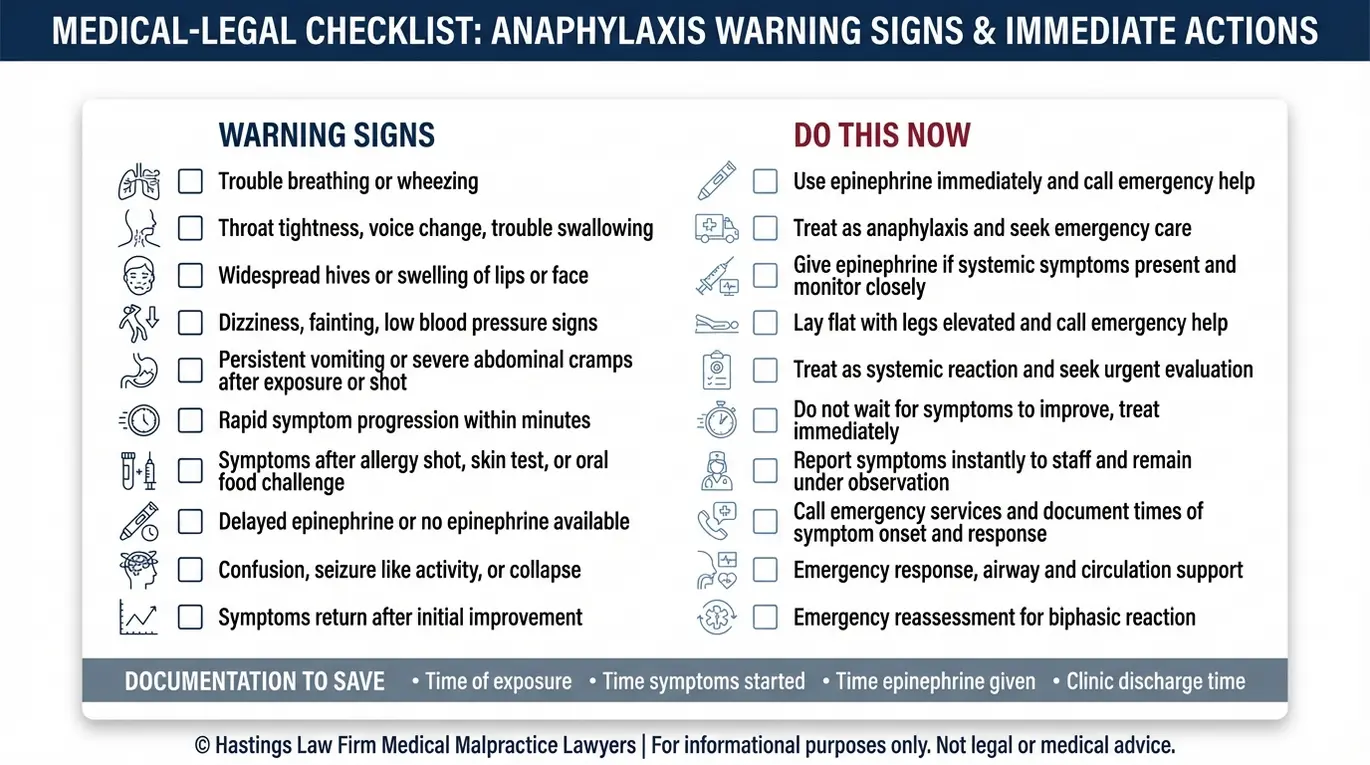
Failure to promptly recognize and treat anaphylaxis can lead to hypoxic brain injury, organ failure, cardiac arrest, and wrongful death. Anaphylaxis, a rapid, systemic allergic reaction that can affect breathing, blood pressure, and heart function within minutes, requires immediate intervention. When treatment is delayed, the consequences escalate quickly.
The single most important intervention is the timely administration of epinephrine. An epinephrine auto-injector, commonly known as an EpiPen, delivers a measured dose of the drug that can reverse airway constriction and stabilize blood pressure. According to interim guidance from the CDC on managing anaphylaxis, epinephrine should be administered immediately at the first sign of a serious reaction, and any delay increases the risk of a poor outcome.
Symptoms often escalate rapidly and may include:
- Hives, itching, or flushed skin
- Swelling of the lips, tongue, or throat
- Shortness of breath or wheezing
- Dizziness or fainting
An allergist’s office where immunotherapy or oral challenges are performed should have emergency equipment readily accessible, including epinephrine, supplemental oxygen, and the ability to call for advanced emergency support. When a practice fails to stock these supplies or train staff on emergency response, a preventable reaction can become a fatal one.
The long-term consequences of delayed treatment can be devastating. When the body is deprived of oxygen during a prolonged anaphylactic event, the brain is the first organ to suffer. Hypoxic brain injury can result in:
- Permanent cognitive impairment
- Seizures and epilepsy
- Loss of motor function
- Difficulty with speech and communication
- Need for lifelong supportive care
Other consequences may include kidney damage, cardiac complications, and extended hospitalization in an intensive care unit. For families, these injuries often mean years of medical treatment, rehabilitation, and the loss of the life they knew before.
As a Texas allergist malpractice lawyer, we work with medical experts to reconstruct the timeline of events, identify when symptoms first appeared, and determine whether the response met the standard of care. If a delay in recognizing or treating anaphylactic shock caused or worsened your injury, you may need a lawyer for anaphylactic shock injury to investigate. Prompt emergency treatment is necessary.
Proving Liability and Building a Strong Claim
Successfully proving liability requires expert testimony from a qualified immunologist to establish the standard of care and demonstrate how the defendant’s actions directly caused the injury. Under Texas Civil Practice and Remedies Code, Chapter 74, medical malpractice claims carry specific procedural requirements that must be met early in the case or risk dismissal.
Led by board-certified trial lawyer Tommy Hastings, we prepare every case to be trial-ready from day one to ensure full accountability. We retain highly qualified medical experts for allergy claims to ensure every technical detail is addressed. Our team handles all filings and litigation strategy to support your recovery.
Here is how we approach building a claim for allergy-related malpractice:
- Obtain and review all medical records. We collect the full patient chart, including treatment logs, allergy test results, immunotherapy schedules, nursing notes, and any emergency room records. We look for electronic metadata that might show if records were altered after the adverse event occurred.
- Identify the standard of care. Using the records and published clinical guidelines, our medical team and consulting experts establish what a competent allergist should have done under the same circumstances.
- Document the breach. We compare the provider’s actual conduct against the standard to pinpoint specific deviations, whether that involves a dosing error, a failure to monitor, or the absence of informed consent.
- Establish causation through expert analysis. A qualified physician, typically a board-certified immunologist, must confirm that the breach directly caused or contributed to the patient’s injury. It is not enough to show a mistake happened; we must link that mistake to the specific physical damage suffered, ruling out other potential causes.
- Serve the expert report within 120 days. Texas law requires plaintiffs to serve a detailed expert report within 120 days after the defendant’s original answer is filed. This report must address the standard of care, the breach, and causation. Missing this deadline can result in dismissal.
Defense attorneys in allergy cases often argue that the patient’s reaction was “unforeseeable” or that the outcome would have occurred regardless of the care provided. They may claim the anaphylactic event was idiopathic, meaning it had no known cause, even if evidence suggests a dosing error. Overcoming this requires rigid timeline reconstruction.
Our firm anticipates these arguments because our team includes former defense counsel who know exactly how those strategies are built. We counter them with detailed medical evidence, expert opinions, and a clear timeline that connects the provider’s actions to the harm.
If you are considering a claim, a Texas allergist malpractice lawyer at our firm can evaluate whether the medical evidence supports your case and guide you through every step of the process.

Recoverable Damages in Allergy Malpractice Lawsuits
Patients who are harmed by allergist negligence may recover economic damages for medical bills and lost wages, as well as non-economic damages for physical pain, mental anguish, and physical impairment. The total value of a claim depends on the severity of the injury and its long-term impact on the patient’s life. Our goal is to secure full compensation for medical negligence that covers every aspect of your recovery.
Economic damages cover the measurable financial losses tied to the injury. These can include emergency room visits, ICU stays, surgical procedures, ongoing rehabilitation, prescription costs, and lost income from time away from work.
In cases involving hypoxic brain injury or organ damage, the cost of hospitalization and long-term care can reach into the hundreds of thousands or more. This is especially true when future medical care and assisted living are factored in. Non-economic damages address the harm that does not come with a receipt. These include physical pain, emotional distress, loss of enjoyment of life, and physical impairment that limits a person’s ability to do what they once could.
| Economic Damages (Uncapped) | Non-Economic Damages (Capped in Texas) |
|---|---|
| Emergency room and ICU costs | Physical pain and suffering |
| Future medical care and rehabilitation | Mental anguish and emotional distress |
| Lost wages and diminished earning capacity | Loss of enjoyment of life |
| Prescription and therapy expenses | Physical impairment and disfigurement |
Texas does cap non-economic damages in medical malpractice cases. The cap is $250,000 per claimant against all physicians and individual health care providers combined, and up to $250,000 per health care institution, with a maximum of $500,000 total against all institutions. Economic damages, however, have no cap and can be recovered in full. A Texas allergist malpractice lawyer at our firm can help you understand how these limits may apply to your specific situation and ensure that every category of loss is properly documented and pursued.
Contact the Texas Doctor Malpractice Attorneys at Hastings Law Firm Today for Help
No one should bear the physical, emotional, and financial burden of an injury that a doctor could have prevented. If you or a loved one suffered a severe allergic reaction, anaphylactic emergency, or lasting harm because of an allergist’s error, you deserve answers.
Hastings Law Firm is built for cases like these. Our attorneys, nurses, and medical consultants work together to investigate what happened, identify who is responsible, and pursue the compensation you need to move forward. We handle every case on a contingency fee basis, which means you pay no attorney fees or costs unless we recover for you.
A Texas allergist malpractice lawyer at our firm is ready to listen. Contact us today for a free, confidential case evaluation to explore your legal options. Let us help you find the answers you deserve.
Frequently Asked Questions About Allergist Malpractice in Texas


This content was researched and written by the Hastings Law Firm editorial team, which includes attorneys, medical professionals, and experienced researchers. Our writing is informed by internal knowledge and practical experience, and we cross-check critical details against authoritative sources cited throughout. Every piece undergoes human-led fact-checking and legal review. Because legal and medical information can change, if you spot an error, please contact us. Learn more about our content standards and review process on our editorial policy page.

Brady D. Williams is a nationally recognized medical malpractice attorney who has spent his career handling high-stakes litigation for injured patients and families across the country. Licensed in both Texas and California, Brady draws on experience from hundreds of resolved medical cases to break down complex legal and medical topics for the people who need that information most. His writing reflects the same attention to detail and commitment to clarity that he brings to every case he handles.
