


Arizona Warfarin Mismanagement Lawyer
Written by: Hastings Law Firm | Reviewed by: Tommy Hastings | Updated: July 27, 2026
Warfarin and Coumadin require careful dosing and regular INR testing to balance the risk of dangerous clots against uncontrolled bleeding. When monitoring is missed, abnormal results are ignored, or drug interactions and patient education are overlooked, the consequences can be sudden and severe, including stroke, internal bleeding, permanent brain injury, or fatal outcomes. Responsibility may involve more than one provider, such as clinics, labs, hospitals, nursing homes, or pharmacies. If you or a loved one were harmed or worse due to Warfarin mismanagement in Arizona, contact Hastings Law Firm for a free, confidential case review.
Trusted Arizona Medical Attorneys for INR Monitoring Negligence Claims
What You Should Know About INR Monitoring Failure Claims in Arizona:
- Life changing injury or fatal outcomes can result when Warfarin dosing and INR monitoring are not managed within the accepted standard of care.
- Recovery can turn on whether the harm came from blood being too thin or too thick, since both uncontrolled bleeding and clot related events are described as catastrophic outcomes.
- Accountability can extend beyond the prescribing doctor when anticoagulation clinics, laboratories, hospitals, nursing homes, or pharmacists contribute to monitoring or medication failures.
- Options can be limited when proof of a provider deviation and medical causation is not clearly documented, especially in patients with multiple underlying conditions.
- A claim can be blocked from moving forward in Arizona without an early qualified expert opinion supporting that care fell below the standard.
- Disputes can increase when patient noncompliance is alleged, particularly around missed testing or diet consistency, and documentation of patient education becomes central.
- Severe outcomes can be worsened when reversal treatment is delayed during an active hemorrhage, since the text describes time sensitive reversal as critical.
- Case strength can depend on whether records show missed or delayed INR tests or abnormal results without a documented response.
- Clarity about what happened can depend on electronic record audit trails and communication logs that show who saw critical results and whether follow up orders were placed.
- Nursing home responsibility can hinge on whether the Medication Administration Record shows gaps in dosing or failures to arrange required INR monitoring.

A Healthcare Focused Law Firm
When someone you love suffers a stroke or uncontrolled bleeding because a doctor failed to properly manage their Warfarin, the experience can feel both devastating and deeply confusing. You may know something went wrong, but the medical records, lab values, and clinical terminology can make it difficult to understand exactly where the care broke down.
An Arizona Warfarin mismanagement lawyer can help you make sense of what happened and determine whether the harm was preventable. At Hastings Law Firm, our legal team includes in-house medical professionals, including nurse practitioners and board-certified patient advocates, who review clinical records alongside our attorneys to identify where the standard of care was violated.
If you suspect that a medication error or missed lab test led to a serious injury or the loss of a family member, we welcome the chance to review the details with you. Consultations are free, confidential, and carry no obligation.
The Critical Standard of Care for Warfarin Patients in Arizona
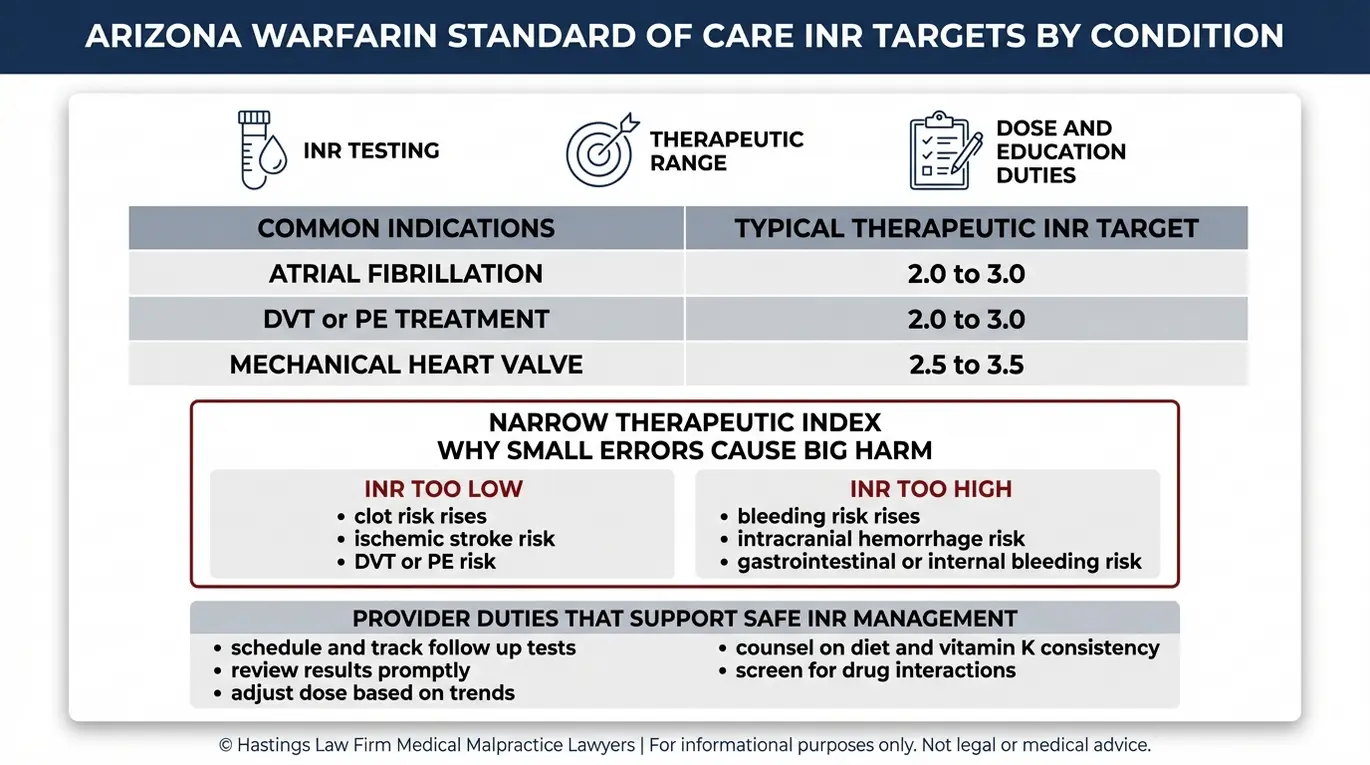
The standard of care for Warfarin patients requires strict adherence to dosing protocols and frequent International Normalized Ratio (INR) testing, a blood test that measures how long it takes blood to clot, to ensure dangerous clots do not form while also preventing uncontrolled bleeding.
Warfarin, also commonly sold under the brand name Coumadin, is one of the most widely prescribed anticoagulants in the country. It is used to prevent blood clots in patients with conditions such as atrial fibrillation, deep vein thrombosis, and mechanical heart valves. But Warfarin has what pharmacologists call a narrow therapeutic index, meaning the difference between a safe dose and a harmful one is very small. Even minor dosing errors can tip a patient toward life-threatening complications.
Because of this narrow margin, doctors are required to monitor INR levels regularly and adjust the dose based on results. The therapeutic INR target range depends on the patient’s specific medical condition:
- Atrial fibrillation (AFib): Target INR of 2.0 to 3.0
- Deep vein thrombosis or pulmonary embolism: Target INR of 2.0 to 3.0
- Mechanical heart valves: Target INR of 2.5 to 3.5 for mitral valve prostheses, or 2.0 to 3.0 for aortic valve prostheses, depending on valve position and patient risk factors
These target ranges are well established in clinical guidelines and referenced in resources such as GlobalRPH’s Warfarin INR Targets.
An INR below the target range means the blood is clotting too easily, raising the risk of stroke or embolism. An INR above the target range means the blood is too thin, which can cause dangerous bleeding events.
Beyond monitoring, physicians also have a duty to educate patients about dietary factors and drug interactions that can affect INR levels. Foods high in Vitamin K, certain antibiotics, and common over-the-counter medications can all shift INR values unpredictably. Patients must be informed that consistency in their diet is just as important as the dosage itself. When a Warfarin malpractice attorney in Arizona investigates these cases, one of the first things we look for is whether the prescribing physician provided adequate patient education and documented it.
Identifying INR Monitoring Failures and Dosage Mistakes
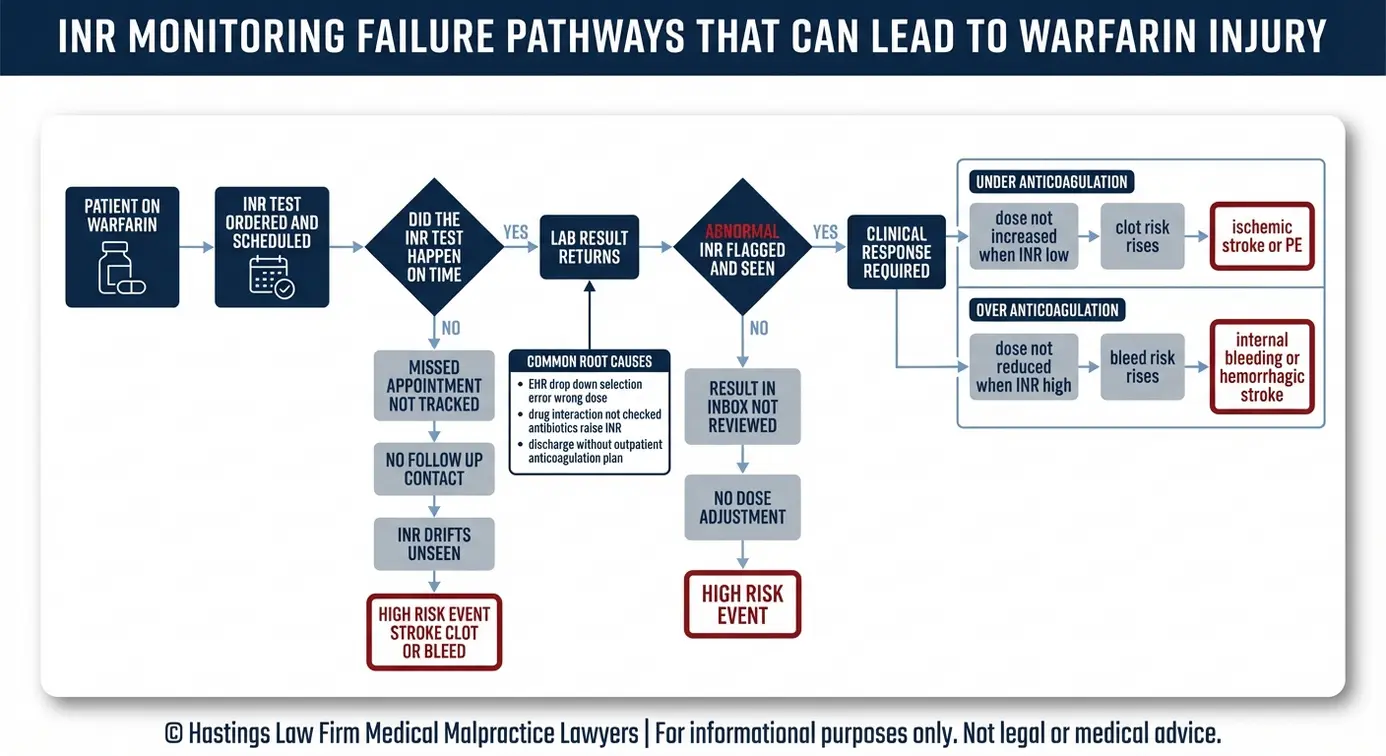
Medical malpractice often occurs when a provider fails to order timely blood tests, ignores abnormal results, or fails to adjust dosages in response to a drifting INR level. These dosing errors and monitoring lapses are not rare, isolated events. They follow recognizable patterns that our medical and legal teams know how to identify.
When reviewing a potential case, we look for specific red flags in the medical record that indicate a deviation from the standard of care:
- Missed or delayed INR tests: The patient was not scheduled for follow-up testing within the recommended timeframe, or appointments were missed without any outreach from the provider.
- Abnormal results without a response: Lab results showed an INR outside the therapeutic range, but the dosage was not adjusted and no follow-up was ordered.
- Failure to account for drug interactions: A new medication, such as an antibiotic or antifungal, was prescribed without evaluating its known effect on INR. These drug-drug interactions, where one medication amplifies or reduces Warfarin’s effect, are well documented and should trigger additional monitoring.
- Electronic Health Record (EHR) selection errors: Drop-down menus and auto-populated fields in EHR systems can lead to the wrong medication or dosage being ordered. Research from the University of Utah Health found that electronic health records fail to detect up to 33% of medication errors.
- Discharge without outpatient monitoring setup: Hospitals under pressure to discharge patients sometimes release Warfarin patients without arranging follow-up INR testing or connecting them with an anticoagulation clinic. This systemic gap can leave a patient without monitoring during one of the most critical periods of treatment.
As an Arizona Warfarin mismanagement lawyer, we examine the complete chain of care, from the initial prescription through every lab order, result notification, and dosage change. A Coumadin negligence lawyer focuses not just on what the provider did, but on what they failed to do.
The Hastings Law Firm Difference
Results matter, but what truly sets us apart is how we achieve them. Every verdict, every settlement, and every Arizona courtroom victory comes from one guiding promise: To treat each client’s fight for justice as if it were our own.
This balance of skill, experience, and empathy reflects our core philosophy that justice should not only compensate the injured, but also make healthcare safer nationwide.

Severe Injuries Caused by Warfarin Errors: Bleeding and Clots
Improper Warfarin management leads to two dangerous extremes. These medical emergencies occur when the blood is too thin, causing internal bleeding, or too thick, causing a stroke. Under-anticoagulation, where the blood clots too easily, can cause ischemic strokes and pulmonary embolisms. Over-anticoagulation, where the blood becomes too thin, can result in hemorrhagic strokes and internal bleeding.
Both outcomes can be catastrophic. The table below outlines the key differences:
| Under-Anticoagulation (INR Too Low) | Over-Anticoagulation (INR Too High) | |
|---|---|---|
| Core Risk | Blood clots form too easily | Blood cannot clot properly |
| Common Injuries | Ischemic stroke, deep vein thrombosis, pulmonary embolism | Hemorrhagic stroke, gastrointestinal bleeding, intracranial hemorrhage |
| Symptoms to Watch For | Sudden weakness or numbness, chest pain, shortness of breath | Unexplained bruising, blood in urine or stool, severe headache, prolonged bleeding from minor cuts |
When a patient on Warfarin develops an emergency bleed, the clinical team must act quickly to reverse the drug’s effects. Warfarin reversal typically involves administering Vitamin K along with prothrombin complex concentrate (PCC), marketed as Kcentra, which rapidly restores clotting factors. The EMCrit Project’s anticoagulant reversal protocols detail the time-sensitive steps providers must follow.
Delays in administering these reversal agents during an active hemorrhage can turn a survivable event into a fatal one, causing extensive tissue damage, permanent brain injury, or death. For patients who survive, the long-term consequences of a stroke caused by Warfarin mismanagement can include permanent cognitive impairment, loss of motor function, inability to live independently, and the need for lifelong care.
In cases where a blood thinner injury attorney determines that the error directly caused a patient’s death, the family may have grounds for a wrongful death claim. These cases carry significant weight because the injury was preventable with routine monitoring.
Liability for Warfarin Errors: Doctors, Labs, and Clinics
Liability may extend well beyond the prescribing physician. In Arizona medical negligence cases, liability often depends on which provider failed to monitor the patient’s blood levels correctly. Depending on where the breakdown occurred, responsible parties can include anticoagulation clinics, laboratories, nursing homes, hospitals, and pharmacists.
Anticoagulation clinics, sometimes called Coumadin clinics, are specialized outpatient centers dedicated to managing patients on blood thinners. These clinics are responsible for scheduling regular INR tests, adjusting dosages, and contacting patients who miss appointments. When a Coumadin clinic fails to follow its own protocols, it can bear direct liability for the resulting injury.
In cases of nursing home abuse or neglect, facilities carry a distinct responsibility to document every dose administered in the Medication Administration Record (MAR), a log that tracks what medication was given, when, and by whom. Gaps in the MAR often reveal that staff missed doses or failed to arrange required INR monitoring, creating dangerous lapses in care. Data published in a study on bleeding-related emergency visits tied to oral anticoagulants (PubMed Central) underscores the frequency and severity of these events.
Hospital negligence can also be a factor when discharge planning fails. If a patient is sent home on Warfarin without clear follow-up instructions or a scheduled INR test, the hospital may share responsibility for any harm that follows. Urgent care centers and pharmacists who fill prescriptions without flagging known drug interactions may face liability as well.
A medication error lawyer examines each link in the chain of care to determine where accountability lies and which parties contributed to the injury.
Proving Malpractice and Arizona Evidence Rules
As Arizona medical malpractice counsel, we know that successfully proving a Warfarin malpractice claim requires clear evidence that the provider deviated from the accepted medical standard and that this deviation directly caused the patient’s injury or death.
Founded by board-certified trial attorney Tommy Hastings in 2005, our firm works with qualified experts to establish the medical facts of your case. Under Arizona law, medical malpractice cases require more than showing that a bad outcome occurred. You must establish that a specific failure, whether it was a missed INR test, an ignored lab result, or unmonitored drug interaction, was the direct cause of harm. This concept of causation can be especially challenging in complex patients who have multiple underlying conditions. We work with qualified experts to isolate whether the stroke or bleed was caused by the medication error rather than the patient’s pre-existing condition, which is necessary for recovering damages.
Arizona also requires a preliminary expert opinion before a case can move forward. Under A.R.S. § 12-2603, the plaintiff must file an affidavit from a qualified medical expert confirming that the provider’s conduct fell below the standard of care. Our national network of hematologists, cardiologists, and other specialists provides the foundation for expert testimony.
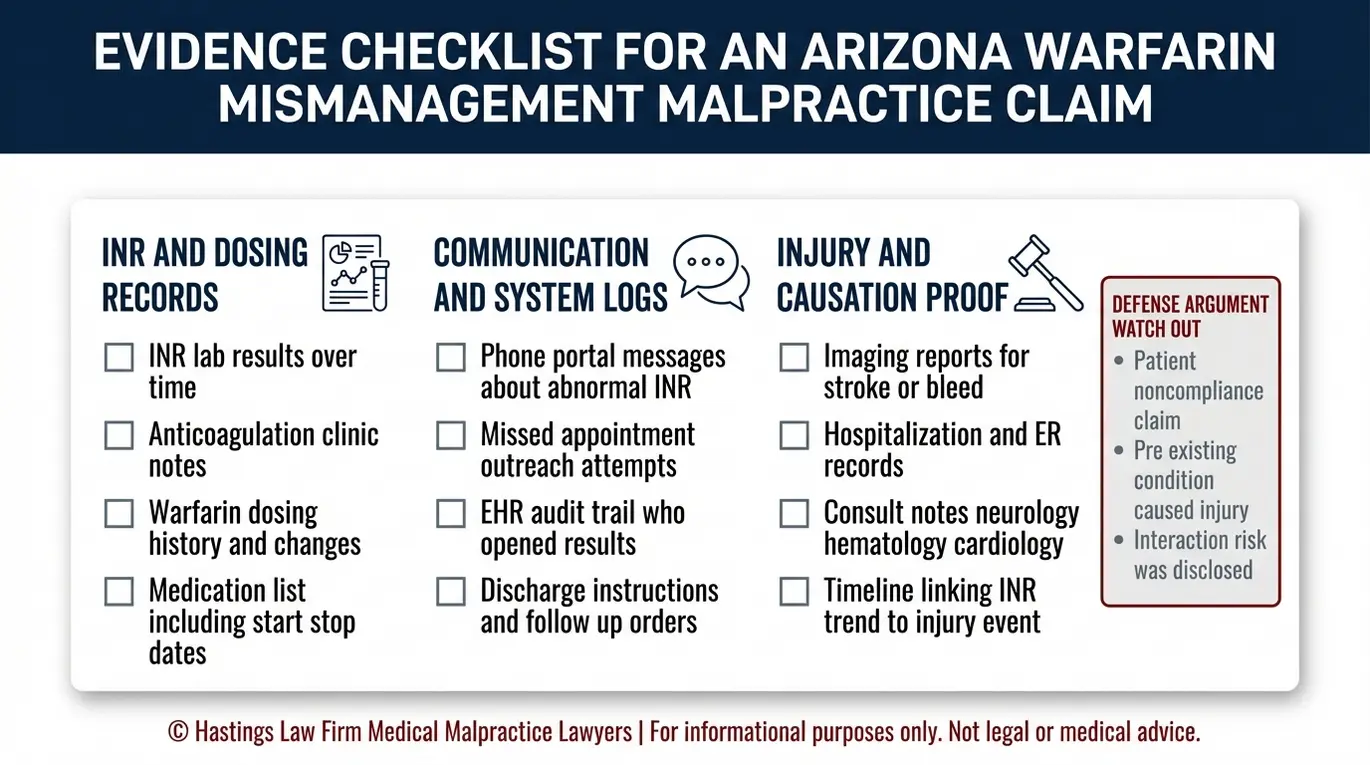
To build a strong case, we gather and review:
- Complete INR flow sheets and lab result histories
- Physician notes documenting (or failing to document) dosage decisions
- Communication logs showing whether the provider contacted the patient about abnormal results
- Electronic Health Record (EHR) audit trails, the system-generated logs that record every action taken in the digital chart, including who accessed the record and when changes were made
- Medication Administration Records from nursing facilities
- Pharmacy dispensing records and interaction alerts
Evidence Required to Prove Improper Monitoring
The strength of a Warfarin mismanagement case often comes down to documentation. These medical records, including EHR logs and audit trails, are particularly valuable because they are difficult to alter without leaving a trace. These logs can reveal whether a provider saw a critical lab result, how long they waited to act, and whether follow-up orders were placed. We reconstruct a detailed timeline from medical records, lab results, and the MAR to identify errors in medication management. That timeline often tells a story the provider’s notes alone do not.
Contact the Arizona Healthcare Malpractice Attorneys at Hastings Law Firm Today for Help
If you or a loved one suffered a serious injury because of negligent Warfarin or Coumadin management, you deserve a legal team that understands both the medicine and the law. Hastings Law Firm brings together trial attorneys, former defense attorneys, and in-house medical professionals to investigate exactly what went wrong and hold the responsible parties accountable.
Our team includes former defense attorneys who provide insider insight into hospital defense strategies and insurance tactics. Our Arizona Warfarin mismanagement attorneys prepare every case as if it will go to trial. That level of preparation strengthens negotiations and signals to the other side that we will not accept less than fair value for your family’s losses through a thorough investigation.
There is no fee unless we recover compensation for you. Contact us today for a free, confidential case evaluation. We are here to help you find answers and understand your legal options.
Frequently Asked Questions About Warfarin Mismanagement in Arizona


This content was researched and written by the Hastings Law Firm editorial team, which includes attorneys, medical professionals, and experienced researchers. Our writing is informed by internal knowledge and practical experience, and we cross-check critical details against authoritative sources cited throughout. Every piece undergoes human-led fact-checking and legal review. Because legal and medical information can change, if you spot an error, please contact us. Learn more about our content standards and review process on our editorial policy page.

Tommy Hastings, founder of Hastings Law Firm, is a board-certified personal injury trial lawyer dedicated exclusively to healthcare injury cases. Since 2001, he has represented injured patients and families in litigation against major hospital systems, pharmaceutical companies, and negligent healthcare providers nationwide. He has handled numerous high-profile cases that have drawn national media attention and resulted in multi-million dollar recoveries. He draws on that experience in his writing, helping readers understand how these cases work and what options may be available to them.
