


Arizona Velamentous Cord Insertion Lawyer
Written by: Hastings Law Firm | Reviewed by: Tommy Hastings | Updated: July 27, 2026
Velamentous cord insertion is an abnormal umbilical cord attachment that can leave fetal blood vessels exposed and vulnerable during pregnancy and labor. When the condition is missed or not monitored closely, complications can escalate quickly, including severe blood loss, oxygen deprivation, and permanent neurological harm or worse. Clear prenatal imaging, careful follow up, and timely delivery planning are central to reducing preventable injury. Families facing a traumatic outcome often need clarity about whether appropriate screening and management occurred. If your child suffered harm due to velamentous cord insertion negligence in Arizona, contact Hastings Law Firm for a free, confidential case review.

Compassionate Arizona Medical Attorneys for Velamentous Cord Insertion Negligence Claims
What You Should Know About Placental Cord Insertion Misdiagnosis Claims in Arizona:
- Outcomes can be catastrophic when velamentous cord insertion or vasa previa is missed before labor because exposed fetal vessels can rupture at membrane rupture.
- Permanent neurological injury or stillbirth can follow when exposed vessels are compressed during contractions and oxygen delivery is restricted.
- Liability disputes often focus on whether the cord insertion site was evaluated and documented during prenatal ultrasound.
- Options can narrow when follow up imaging is not ordered after an ultrasound report states the cord insertion site was unable to be visualized.
- Risk can be higher in pregnancies involving IVF, multiple gestation, or low lying placentas, which can make enhanced screening a central issue.
- Harm can be linked to delayed response to fetal distress in labor when monitor strips show bradycardia or decelerations.
- Recovery can include economic damages for medical care and lifetime needs and non economic damages for pain, suffering, and loss of quality of life under Arizona law.
- Compensation may not be capped for personal injury or death in Arizona, which can affect the potential value of severe birth injury claims.
- The ability to pursue a claim can be limited by filing time rules, and delay can increase the risk that records and imaging are no longer available.
- Proof can depend on prenatal ultrasound images, placental pathology, and fetal monitor strips that show what was visible and how labor progressed.

A Healthcare Focused Law Firm
When a pregnancy complication like velamentous cord insertion leads to a preventable injury, the emotional weight can feel unbearable. You trusted your medical team to monitor the risks, and now you’re left with questions about what went wrong and whether it could have been avoided. Those questions deserve honest, informed answers.
At Hastings Law Firm, our team focuses exclusively on medical malpractice. Founded by board-certified trial attorney Tommy Hastings in 2005, the firm works to secure full compensation and restore trust for families harmed by negligence. As an experienced Arizona velamentous cord insertion lawyer, we understand both the medical and legal details these cases demand. If your family has been affected, we welcome you to contact us for a free, confidential case evaluation. There are no fees unless we recover compensation on your behalf.
Understanding Velamentous Cord Insertion and Abnormal Placental Connections
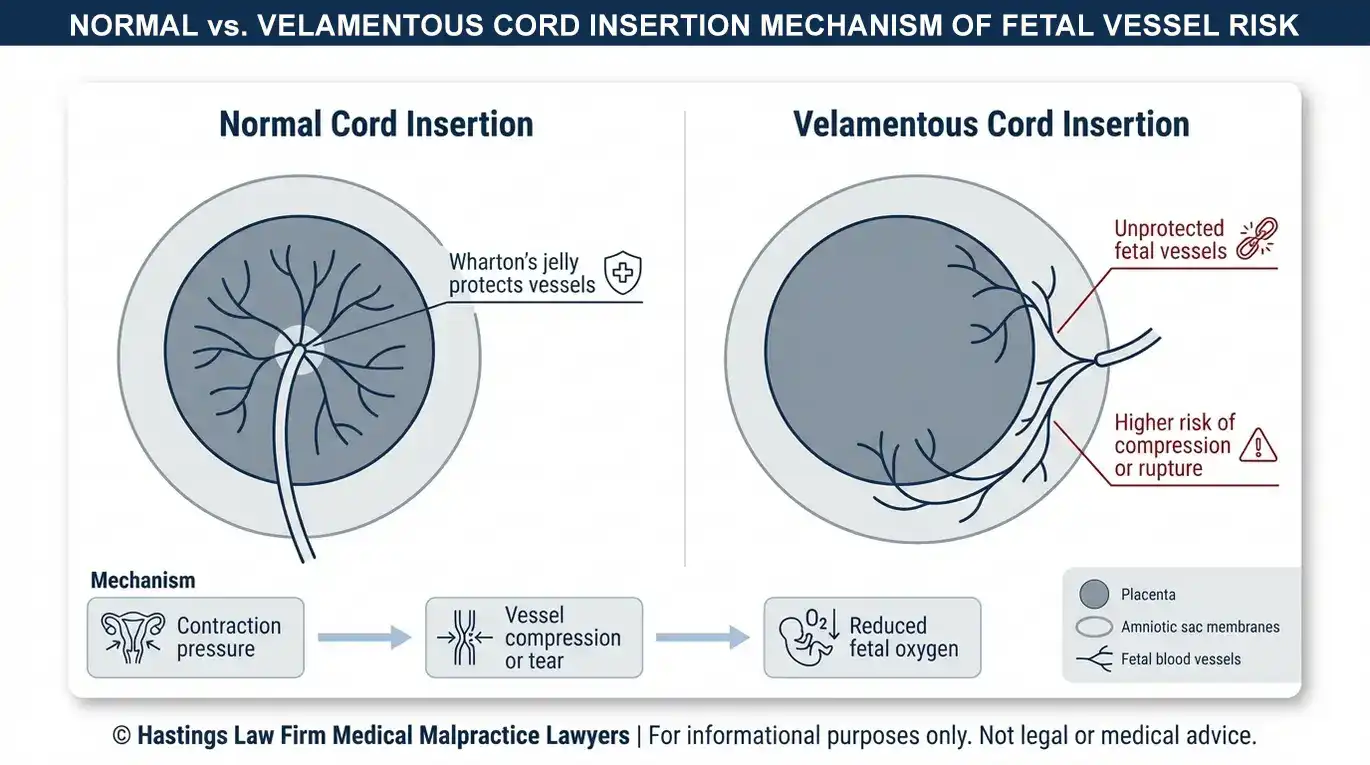
Velamentous cord insertion (VCI) is a condition where the umbilical cord attaches to the fetal membranes instead of the center of the placenta, leaving the fetal blood vessels exposed and unprotected by Wharton’s jelly, the thick, gelatinous tissue that normally surrounds and cushions the cord.
In a typical pregnancy, the umbilical cord inserts directly into the central mass of the placenta. Wharton’s jelly encases the fetal blood vessels the entire way, shielding them from compression and mechanical injury. This design protects the oxygen and nutrient supply flowing between the mother and baby.
With VCI, the anatomy is different. The cord inserts into the thin membranes of the amniotic sac at a distance from the placenta, and the blood vessels must travel through those fragile membranes before reaching placental tissue. This is sometimes referred to as an abnormal cord insertion. According to WebMD’s overview of velamentous cord insertion, this arrangement occurs in roughly 1% of singleton pregnancies and carries distinct risks.
The core danger lies in the exposed vessels themselves. Without the protective cushion of Wharton’s jelly, these blood vessels are vulnerable to:
- Rupture during labor, particularly when the membranes break (either naturally or artificially)
- Compression during contractions, which can restrict or cut off oxygen flow to the baby
- Tearing during delivery, leading to rapid fetal blood loss
These risks make early detection essential. Arizona cord insertion attorneys often see cases where a timely diagnosis could have changed the outcome entirely, but the condition was missed or inadequately monitored.
The Role of Placental Migration in Cord Abnormalities
The placenta doesn’t always stay where it first implants. A process called trophotropism, or placental migration, occurs as the placenta naturally grows toward areas of better blood supply within the uterus. This shifting can cause what was originally a central or normal cord insertion to become marginal or even velamentous. Recognizing this possibility is a key part of managing high-risk pregnancies because a single early scan may not capture the full picture.
Under Arizona Revised Statutes Section 12-542, families have a limited window to pursue claims when negligent monitoring leads to harm. Understanding the medical timeline matters from the start to ensure your rights are protected.
Risk Factors That Should Trigger Enhanced Monitoring
High-risk pregnancies involving IVF, multiple gestations such as twins or triplets, or low-lying placentas call for careful screening for cord insertion abnormalities. When these risk factors are present, providers are expected to look more closely for conditions like VCI.
Research published through PubMed Central on the association of assisted reproductive technology with placental and umbilical abnormalities confirms a higher statistical correlation between fertility treatments and velamentous cord insertion. Pregnancies conceived through in vitro fertilization (IVF) carry an elevated risk that should prompt additional imaging and follow-up.
The following risk factors should alert a provider to screen for VCI:
- IVF or assisted reproduction: Pregnancies conceived through fertility treatments are significantly more likely to develop abnormal cord insertions.
- Twin or multiple gestation pregnancies: Monochorionic twins (sharing a single placenta) face a particularly elevated risk of VCI.
- Placental anomalies: A bilobed placenta, which has two roughly equal lobes, or a succenturiate placenta, which has one or more small accessory lobes separate from the main placental body, can both increase the likelihood of abnormal cord insertion.
- Advanced maternal age: Patients over 35 face higher rates of placental irregularities.
- Smoking or history of uterine surgery: Both are associated with changes in placental development and implantation.
- Low-lying placentas (placenta previa): Abnormal placental positioning requires enhanced vigilance for vessel connection issues.
When lawyers for cord insertion errors review these cases, a central question is whether the provider recognized the risk profile and responded with the appropriate level of monitoring. A failure to connect known risk factors with enhanced screening can form the basis of a negligence claim.
The Hastings Law Firm Difference
Results matter, but what truly sets us apart is how we achieve them. Every verdict, every settlement, and every Arizona courtroom victory comes from one guiding promise: To treat each client’s fight for justice as if it were our own.
This balance of skill, experience, and empathy reflects our core philosophy that justice should not only compensate the injured, but also make healthcare safer nationwide.

The Standard of Care for Diagnosing VCI in Arizona
The standard of care, meaning the accepted level of treatment a reasonably competent provider would deliver under similar circumstances, requires evaluation of the placental cord insertion site during prenatal ultrasound. This assessment is typically expected during the second-trimester anatomy scan, performed between 18 and 22 weeks of gestation.
According to sonography second-trimester assessment protocols published through NCBI Bookshelf, the scan should include visualization of where the umbilical cord meets the placenta. When this insertion point is clearly visible, the sonographer and interpreting physician can identify whether the attachment is central, marginal, or velamentous.
When the cord insertion site cannot be clearly seen on a standard transabdominal ultrasound, the standard of care may require advanced imaging. Two key tools come into play:
| Diagnostic Tool | Purpose | When It’s Indicated |
|---|---|---|
| Transvaginal ultrasound (an internal ultrasound providing closer, higher-resolution images of the cervix and lower uterine segment) | Visualize the relationship between vessels and the cervical opening | Low-lying placenta, unclear cord insertion on standard scan |
| Color Doppler ultrasound (an imaging technique that maps blood flow through vessels using color overlay) | Map the path of fetal blood vessels near the cervix | Suspected VCI, risk of vasa previa, IVF pregnancies |
| Power Doppler / 3D HD flow | Detect low-velocity blood flow in small vessels | When color Doppler findings are inconclusive |
Some researchers have also explored earlier evaluation of the cord insertion site in the first trimester, particularly in high-risk pregnancies. Early identification allows providers to plan a monitoring strategy for the remainder of the pregnancy.
One of the most common negligence points Arizona birth injury counsel encounters is the failure to document the cord insertion site at all. When an ultrasound report notes “unable to visualize” but no follow-up scan is ordered, that gap in care can become a central issue in a malpractice case. The standard of care generally requires a provider to either confirm the finding or arrange additional imaging to resolve the question.

Dangers of Mismanaged VCI and Vasa Previa
When velamentous cord insertion goes undiagnosed, it can progress to vasa previa, a condition where the unprotected fetal blood vessels cross over or near the internal cervical opening. If the membranes rupture with vessels in that position, the result can be catastrophic fetal hemorrhage.
According to a detailed review of vasa previa published in PubMed Central, the condition carries a high fetal mortality rate when undiagnosed before labor. Understanding the relationship between VCI and vasa previa is central to understanding why missed diagnoses carry such serious consequences.
Fetal exsanguination, or rapid blood loss from the baby, can occur within minutes of membrane rupture when vasa previa is present. Because the blood in these vessels belongs to the baby, not the mother, even a small tear can be life-threatening. The total blood volume of a full-term fetus is only about 250 to 300 milliliters, so the margin for error is extremely narrow.
Even without rupture, the exposed vessels can be compressed during labor contractions. This compression restricts blood flow to the baby, causing bradycardia (a dangerously slow fetal heart rate) and oxygen deprivation. If the compression is sustained or recurrent, it can lead to hypoxic-ischemic encephalopathy (HIE), a brain injury caused by lack of oxygen, or stillbirth.
| VCI (Velamentous Cord Insertion) | Vasa Previa | |
|---|---|---|
| What it is | Cord inserts into membranes instead of the placenta | Exposed vessels cross over or near the cervical opening |
| Primary risk | Vessel compression or tearing during labor | Catastrophic hemorrhage upon membrane rupture |
| Detection method | Ultrasound with cord insertion site evaluation | Color Doppler and transvaginal ultrasound |
| Outcome if missed | Fetal distress, oxygen deprivation | Fetal exsanguination, stillbirth, or severe brain injury |
The consequences of mismanaged VCI and vasa previa include cerebral palsy, permanent neurological damage, and wrongful death. For families seeking legal help for vasa previa injuries, the connection between a missed prenatal diagnosis and the resulting harm is often the foundation of the case.
Classification of Vasa Previa Types
Vasa previa is classified into two types. Type I and Type II represent different ways the exposed blood vessels are positioned relative to the cervix and placenta.
Type I occurs when vessels from a velamentous cord insertion cross over the cervix. Type II occurs when vessels run between the lobes of a bilobed or multilobed placenta and cross the cervical area. Both types are detectable with proper imaging and require a planned delivery strategy to avoid rupture.
Proper Management and Treatment Protocols
Once VCI or vasa previa is diagnosed, the management plan should include pelvic rest, serial growth scans, regular non-stress testing, and a scheduled C-section before labor begins, typically between 34 and 37 weeks of gestation.
The specific protocols after diagnosis generally include the following:
- Serial ultrasound scans every 4 to 6 weeks to monitor fetal growth and check for intrauterine growth restriction (IUGR).
- Non-stress testing to monitor the fetal heart rate and confirm the baby is tolerating the pregnancy well.
- Pelvic rest and activity restrictions to minimize the risk of membrane rupture or bleeding.
- Corticosteroid administration (betamethasone) to accelerate fetal lung maturity in anticipation of an early delivery.
- Hospital admission if any vaginal bleeding occurs or for proximity to the operating room during the final weeks of pregnancy.
- A planned C-section before the onset of labor to avoid the risk of vessel rupture.
The failure to follow these management steps after a known diagnosis can constitute negligence. Attorneys for mismanagement of labor examine whether the delivery team adhered to accepted protocols or deviated in ways that put the baby at unnecessary risk. A planned C-section that was delayed, canceled, or never scheduled despite a confirmed diagnosis is a frequent point of failure in these cases.
Proving Malpractice in Arizona Cord Insertion Cases
To prove malpractice, we must demonstrate that the provider failed to identify the abnormal cord insertion despite clear ultrasound evidence or recognized risk factors, and that this failure directly caused the injury. Our legal team, including former defense attorneys and hospital nurses, uses strategic insight to identify charting inconsistencies and protocol failures that may suggest a breach of the standard of care.
Medical malpractice claims in Arizona require four elements: a duty of care owed by the provider, a breach of the standard of care, causation linking the breach to the injury, and damages resulting from that injury. In VCI cases, each of these elements has specific medical dimensions.
Failure to diagnose is often the starting point. We review ultrasound images to determine whether the cord insertion site was visible but not identified or documented. If the condition was viewable and the provider missed it, that may establish a breach of the standard of care.
Failure to refer is another common issue. When a patient’s risk profile warrants evaluation by a maternal-fetal medicine (MFM) specialist, and no referral is made, the general OB/GYN may be liable for the gap in care. High-risk pregnancies often require subspecialty oversight that a standard obstetric practice may not provide.
Failure to act on fetal distress during labor can also form the basis of a claim. If fetal monitor strips show bradycardia or decelerations and the delivery team delays a C-section, the resulting oxygen deprivation may be directly tied to the timing of that delay.
Under Arizona Revised Statutes Section 12-2604, expert testimony from a qualified medical professional is required to establish the standard of care and how it was breached. Our firm works with a national network of maternal-fetal medicine specialists, radiologists, and neonatologists to build the medical foundation of each case. A Phoenix cord insertion malpractice lawyer at our firm, alongside our in-house nursing staff, reconstructs the clinical timeline to identify where care fell short and whether earlier intervention would have prevented the injury.
Compensation for Birth Injuries in Arizona
Arizona law allows families to recover economic damages for medical bills and lifetime care, as well as non-economic damages for pain, suffering, and loss of quality of life. An Arizona birth injury compensation lawyer can help families understand the full scope of what the law provides.
Economic damages cover the measurable financial costs caused by the injury:
- Past and future medical expenses, including surgeries, therapies, and specialist care
- Rehabilitation and adaptive equipment such as wheelchairs or home modifications
- Future nursing care or attendant care needs outlined in a life care plan
- Lost earning capacity for the child if the injury limits their ability to work as an adult
Non-economic damages address the human cost of the injury:
- Physical pain and suffering endured by the child
- Emotional distress experienced by the child and family
- Loss of enjoyment of life and the ability to participate in normal activities
One significant protection for Arizona families is found in the Arizona Constitution. Article 2, Section 31 of Arizona’s Constitution prohibits the legislature from placing caps on damages for personal injury or death. This means there is no artificial ceiling on what a jury can award, allowing families to pursue damages for cord injury that reflect the true impact of the harm.
In cases where the infant did not survive, Arizona’s wrongful death statutes provide a separate avenue for recovery. These claims may include funeral expenses, loss of companionship, and the grief and suffering endured by the parents and surviving family members.
Statute of Limitations for Arizona Birth Injury Claims
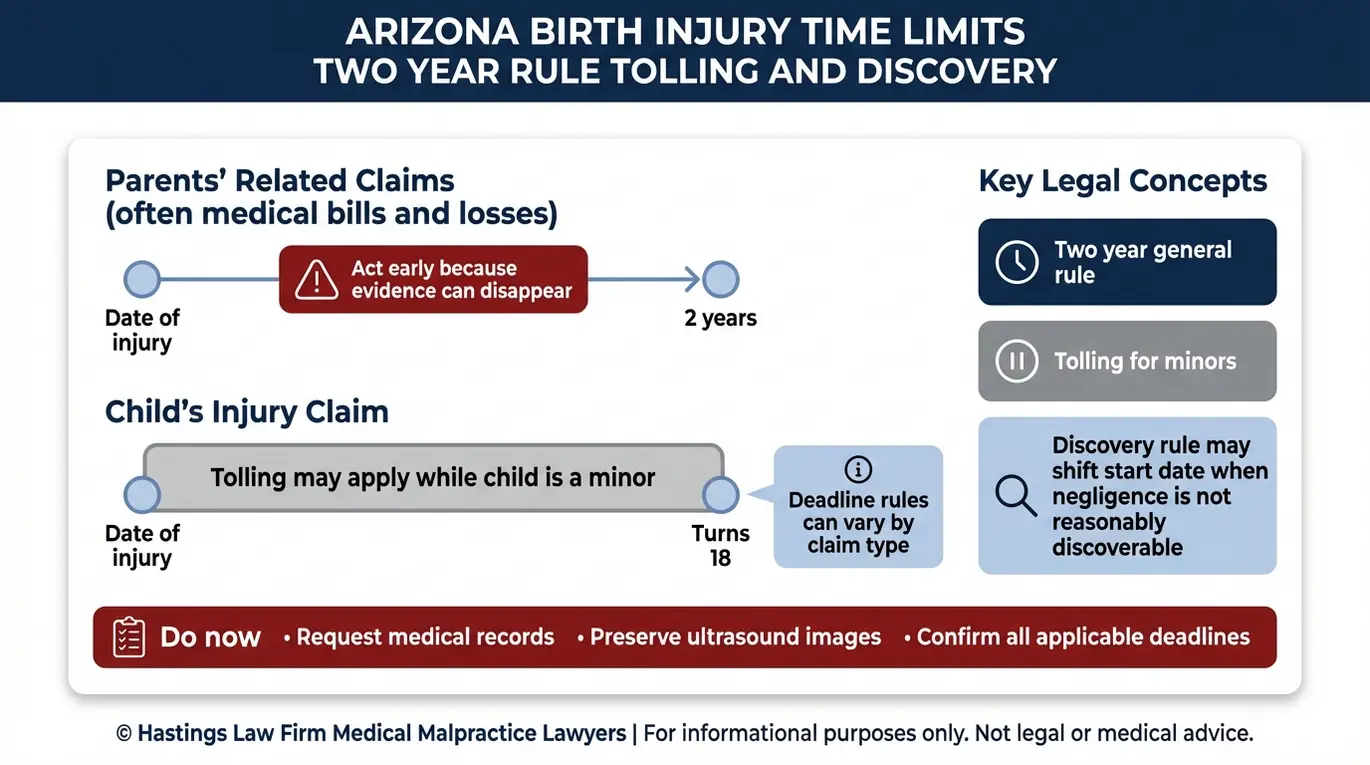
In Arizona, medical malpractice claims are generally subject to a two-year statute of limitations, but specific tolling rules apply when the injured party is a minor.
Under A.R.S. § 12-542, the standard deadline to file a medical malpractice lawsuit is two years from the date the injury occurred. For birth injuries, that date is typically the date of delivery. This two-year window applies to the parents’ own claims, including out-of-pocket medical expenses and emotional distress.
For the child’s claim, Arizona law provides tolling, meaning the statute of limitations is paused while the child is a minor. The child’s deadline to file does not begin to run until they turn 18, giving them until age 20 to bring their own claim. This distinction is critical because the parents’ claims and the child’s claims operate on different timelines.
Arizona also recognizes a discovery rule in certain cases. If the negligence was not immediately apparent, the statute of limitations may begin on the date the injury was discovered or reasonably should have been discovered.
Despite these extended deadlines, waiting to pursue a claim carries real risks. Medical records can be lost or overwritten, and ultrasound images may be stored on systems with limited retention periods.
Witnesses relocate over time. Memories also become less reliable as years pass. Consulting with an attorney early protects both the legal right to file and the quality of the evidence needed to succeed.
Contact the Arizona Birth Injury Attorneys at Hastings Law Firm Today for Help
A diagnosis of velamentous cord insertion, when identified and managed properly, should not lead to a devastating outcome. When it does, families deserve to know what happened and whether negligent care was the cause.
At Hastings Law Firm, our legal team includes board-certified trial attorneys, former defense lawyers, and in-house nurse consultants. Tommy Hastings is a 2025 inductee into ABOTA (American Board of Trial Advocates), an invitation-only organization for elite trial lawyers, reflecting his commitment to high-level advocacy.
If your child was harmed by a missed or mismanaged cord insertion diagnosis, we are here to listen and help you understand your options. There is no fee for a consultation, and you pay nothing unless we recover compensation for your family. Contact us today to have your case reviewed by a team that is prepared to stand with you for a free case evaluation.
Frequently Asked Questions About Velamentous Cord Insertion in Arizona


This content was researched and written by the Hastings Law Firm editorial team, which includes attorneys, medical professionals, and experienced researchers. Our writing is informed by internal knowledge and practical experience, and we cross-check critical details against authoritative sources cited throughout. Every piece undergoes human-led fact-checking and legal review. Because legal and medical information can change, if you spot an error, please contact us. Learn more about our content standards and review process on our editorial policy page.

Tommy Hastings, founder of Hastings Law Firm, is a board-certified personal injury trial lawyer dedicated exclusively to healthcare injury cases. Since 2001, he has represented injured patients and families in litigation against major hospital systems, pharmaceutical companies, and negligent healthcare providers nationwide. He has handled numerous high-profile cases that have drawn national media attention and resulted in multi-million dollar recoveries. He draws on that experience in his writing, helping readers understand how these cases work and what options may be available to them.
