


Arizona Vascular Surgeon Malpractice Lawyer
Vascular surgery is often high risk, but preventable errors can turn a procedure into a life changing injury with lasting physical, emotional, and financial consequences. Negligence claims focus on whether a surgeon fell below the accepted standard of care and whether that lapse directly caused harm rather than a known complication. These cases often depend on careful review of imaging, operative records, and post surgical monitoring to understand what happened and why. If you or a loved one were harmed or worse due to vascular surgeon malpractice in Arizona, contact Hastings Law Firm for a free, confidential case review.

Last Updated: July 27, 2026
Trusted Legal Representation for Vascular Surgery Negligence in Arizona
When a vascular procedure goes wrong, the consequences can change your life in an instant. Surgeries involving blood vessels, whether a vascular bypass graft (a procedure that reroutes blood flow around a blocked artery) or the placement of a vascular stent (a small mesh tube inserted to hold a narrowed vessel open), carry serious risks even under the best circumstances. But when those risks are made worse by a surgeon’s preventable error, you deserve honest answers about what happened and why.
If you or someone you love suffered a serious injury after vascular surgery in Arizona, our team can help you understand whether negligence played a role. Founded by board-certified trial attorney Tommy Hastings, our firm focuses exclusively on medical malpractice, and our medical-legal team has the clinical insight to evaluate even the most complex vascular cases. Contact an Arizona vascular surgeon malpractice lawyer at our firm for a free, confidential case review.

Understanding Vascular Surgery Negligence Claims in Arizona
Vascular surgery negligence occurs when a surgeon deviates from the accepted medical standard of care, the level of treatment a reasonably competent vascular specialist would provide under similar circumstances, during procedures involving arteries or veins, and that deviation directly causes injury or death.
Vascular surgery refers to medical procedures performed on the network of blood vessels throughout the body. Not every complication after vascular surgery means something went wrong. These are inherently high-risk procedures involving blood vessels that supply critical organs, limbs, and the brain. A poor outcome alone is not malpractice. The question is whether the surgeon’s decisions and actions fell below what a qualified peer would have done in the same situation.
Identifying that line requires deep medical knowledge. Vascular cases involve detailed imaging studies, operative reports, and post-surgical monitoring records. Techniques like revascularization (restoring circulation or blood flow to tissue) are complex. Angiography, which uses contrast dye to visualize blood vessels, also requires expert interpretation of the clinical documentation.
This team structure provides a distinct advantage. Hastings Law Firm employs former defense attorneys who once represented hospitals and healthcare systems, along with experienced nurses who understand charting practices, surgical protocols, and where errors tend to hide. That background allows us to spot inconsistencies that a general practice attorney might overlook. For example, Searchlight New Mexico reported on lawsuits against Modern Vascular involving allegations of unnecessary procedures performed at clinics across Arizona and New Mexico.
If you believe your vascular surgeon made a preventable mistake, an Arizona vascular surgeon malpractice lawyer at our firm can review your medical records. Our vascular malpractice attorneys in Phoenix help determine whether medical negligence occurred and if you have a viable medical malpractice claim.
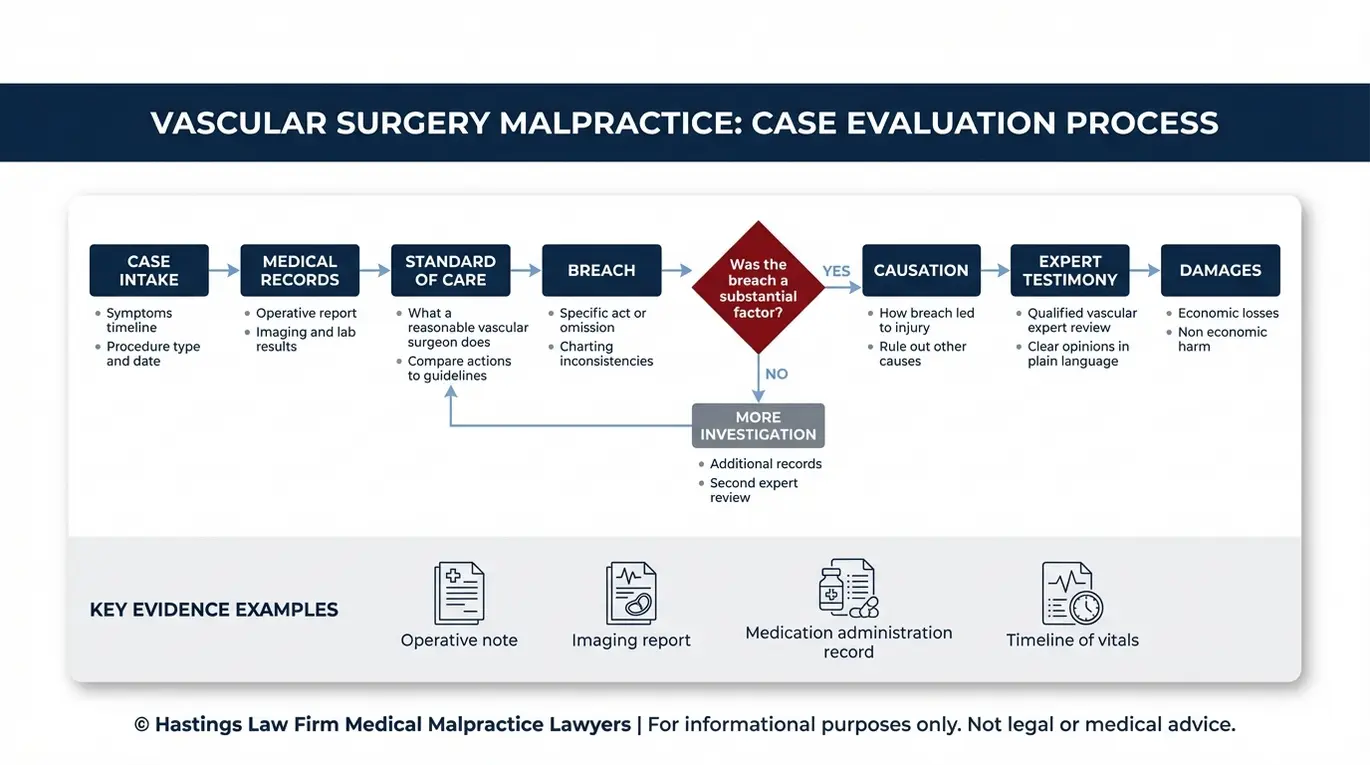
A vascular negligence claim generally requires showing:
- The surgeon owed you a duty of care as your treating physician
- The surgeon breached the standard of care through an act or omission
- That breach directly caused your injury (not just a known complication)
- You suffered measurable damages as a result
Common Errors Committed by Vascular Surgeons
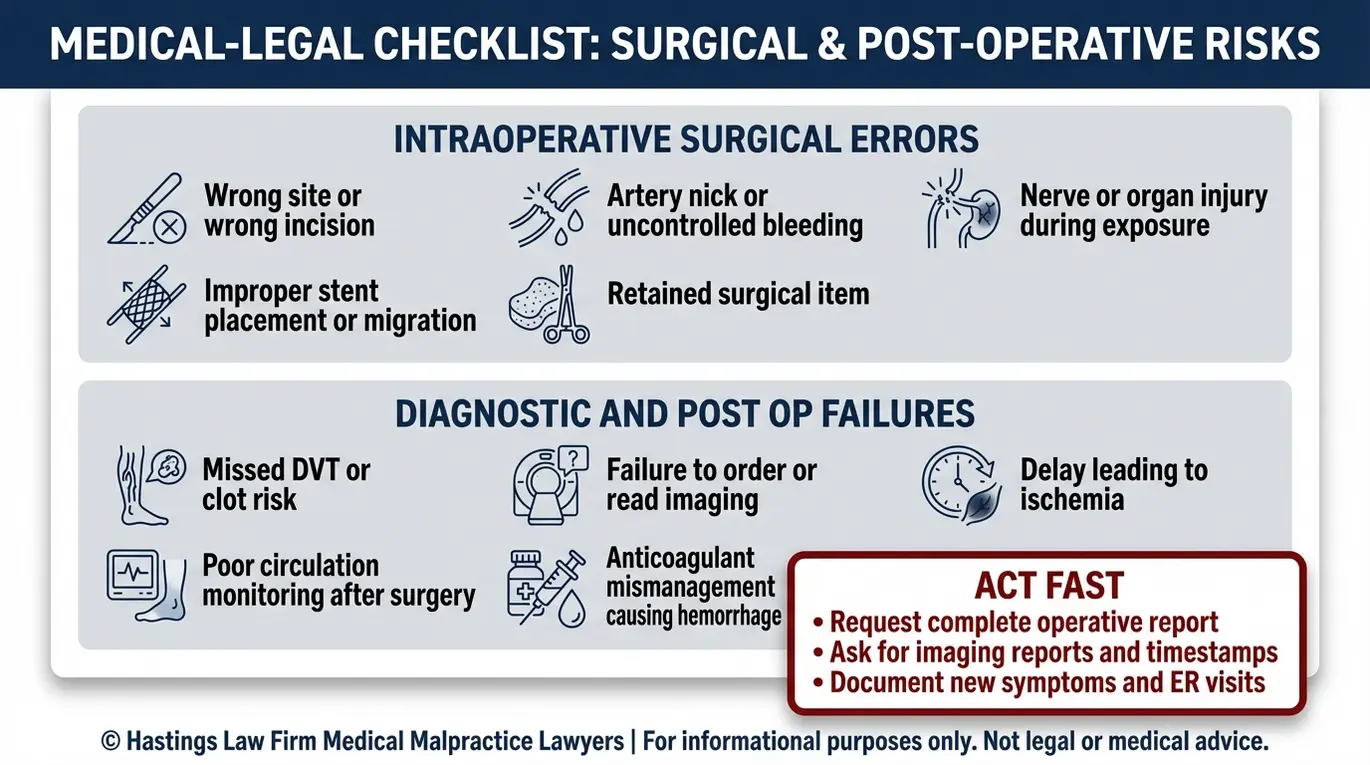
Common errors in vascular surgery include damaging adjacent nerves or organs, failure to diagnose blood clots, improper stent placement, and unnecessary surgical delays leading to loss of blood flow. While vascular procedures are technically demanding, many of the mistakes we investigate involve breakdowns in judgment, preparation, or follow-up care rather than the difficulty of the surgery itself.
Surgical Errors
Vascular surgery refers to operations performed on the veins and arteries that carry blood through the body. Mistakes during the procedure itself can cause immediate, severe harm. A surgeon may nick a nearby artery during dissection, make a wrong incision at the incorrect surgical site, or leave a foreign object inside the body. Improper stent malposition occurs when a stent is deployed in the wrong location or fails to properly restore circulation. Each of these errors can trigger hemorrhage, embolism, or tissue death.
Diagnostic Failures
Diagnostics in vascular medicine involve imaging and tests to identify blockages or damaged vessels. A vascular surgeon’s responsibility often begins before the operating room. Failing to order appropriate diagnostic tests or misreading imaging results can mean a deep vein thrombosis (a dangerous blood clot in a deep vein) goes undetected, or that an impending aneurysm rupture is missed entirely. A misdiagnosis or delayed diagnosis in vascular medicine can turn a treatable condition into a life-threatening emergency.
Post-Operative Negligence
Post-operative care involves monitoring the patient’s recovery and blood flow after the surgery is complete. After surgery, careful monitoring is essential. Failure to track circulation in affected limbs, or to properly manage anticoagulants (blood-thinning medications that prevent clots from forming), can lead to hemorrhage on one end or new clot formation on the other. These post-operative failures are some of the most preventable errors we see.
Key errors a lawyer for vascular surgeon errors may investigate include:
- Damage to surrounding nerves, organs, or healthy blood vessels during surgery
- Failure to diagnose or act on blood clots, DVT, or aneurysm warning signs
- Stent malposition or device-related complications
- Inadequate post-operative monitoring of circulation
- Improper anticoagulant management leading to hemorrhage or embolism
- Delayed surgical intervention resulting in irreversible tissue damage
Unnecessary Urgency and Conflict of Interest
Surgeons must choose the safest and most effective procedure based on the patient’s specific needs. Some vascular malpractice cases involve questions about whether the surgery should have been performed at all. In certain situations, a less invasive endovascular procedure (a catheter-based technique performed through small punctures rather than large incisions) may carry lower risk than open vascular surgery (a traditional operation requiring direct surgical access to the blood vessel). When imaging and clinical findings support a less aggressive approach but a surgeon proceeds with a riskier operation, we evaluate for unnecessary surgery. We investigate if a procedure was performed when safer options existed.
The Hastings Law Firm Difference
Results matter, but what truly sets us apart is how we achieve them. Every verdict, every settlement, and every Arizona courtroom victory comes from one guiding promise: To treat each client’s fight for justice as if it were our own.
This balance of skill, experience, and empathy reflects our core philosophy that justice should not only compensate the injured, but also make health care safer nationwide.

Severe Injuries Resulting from Blood Vessel Surgery Negligence
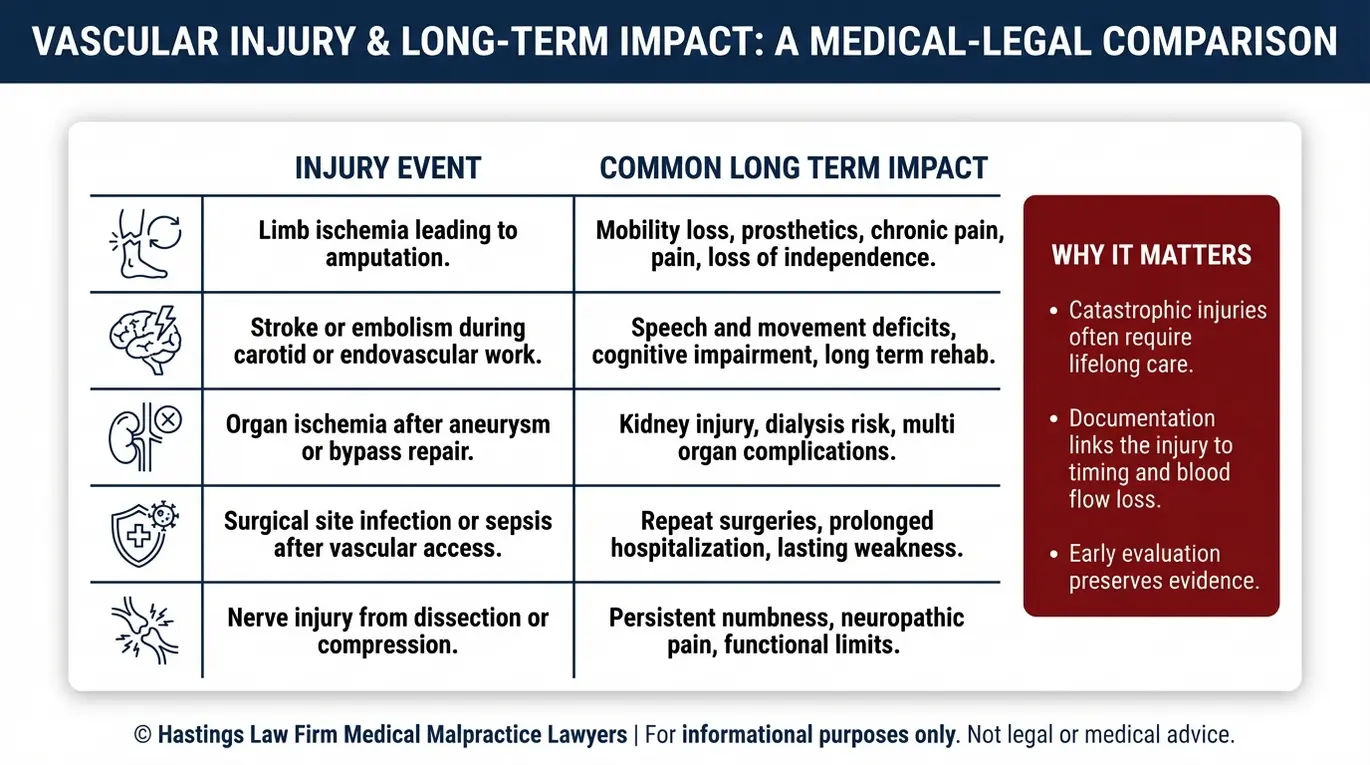
Negligence during vascular procedures can produce catastrophic, life-altering outcomes, including limb amputation, permanent stroke, organ failure from prolonged ischemia (restricted blood flow that deprives tissue of oxygen), and wrongful death.
Vascular errors can result in life-altering outcomes that impact a patient’s independence and health.
Limb Loss
Vascular health is essential for providing blood and oxygen to the arms and legs. When blood flow to an arm or leg is compromised and not restored in time, the tissue begins to die. Amputation may become the only option. The CDC’s data on hospitalizations for lower extremity amputations underscores how significant these events are, particularly for patients with vascular disease. When a surgical error causes or accelerates that outcome, the physical, emotional, and financial toll is devastating.
Stroke and Embolism
A stroke occurs when the blood supply to part of the brain is interrupted or reduced. During carotid artery surgery or other procedures near major vessels, dislodged plaque or clot material can travel to the brain. An embolism, a blockage caused by material carried through the bloodstream, can trigger a stroke with neurological consequences, including loss of speech, paralysis, or cognitive impairment.
Organ Damage
Organs depend on the circulatory system to deliver the nutrients and oxygen they need to function. Impaired blood flow after procedures like abdominal aortic aneurysm repair can lead to kidney ischemia and, in severe cases, organ failure. Nerve damage and chronic infection are also risks that may follow negligent vascular care.
An Arizona vascular surgeon malpractice lawyer evaluates these injuries in the context of what should have been prevented.
| Injury | Long-Term Impact |
|---|---|
| Limb amputation | Permanent disability, prosthetic needs, loss of independence |
| Stroke | Cognitive impairment, paralysis, speech loss, ongoing rehabilitation |
| Kidney/organ failure | Dialysis dependency, transplant needs, shortened life expectancy |
| Nerve damage | Chronic pain, loss of sensation, reduced mobility |
| Severe infection | Prolonged hospitalization, additional surgeries, sepsis risk |
Proving Negligence and Recovering Damages in Arizona
Patients injured by vascular surgery errors can recover economic damages for medical bills and lost wages, as well as non-economic damages for pain and suffering, provided they secure expert testimony to prove causation, the direct link between the surgeon’s error and the patient’s injury.
Under Arizona Revised Statutes § 12-563, a medical malpractice claim requires proof that the healthcare provider failed to meet the standard of care and that the failure caused harm. This burden of proof rests on the patient, which is why expert testimony is so central to vascular negligence cases.
To build a strong case, we retain qualified vascular surgeons and other medical experts who can review the operative records, imaging studies, and post-surgical documentation. Our founder is an inductee into the American Board of Trial Advocates (ABOTA), an invitation-only organization for elite trial lawyers. We use our national network to offer an objective opinion on whether the treating surgeon’s conduct fell below what a competent peer would have done. Courts require this level of medical expert analysis because juries need clinical context to evaluate what happened.
Recoverable compensation in an Arizona vascular malpractice case may include:
- Past and future medical expenses, including surgeries, rehabilitation, prosthetics, and home care.
- Lost wages and diminished earning capacity if the injury affects your ability to work.
- Pain and suffering reflecting the physical and emotional toll of the injury.
- Loss of consortium for the impact on your relationship with a spouse or family.
An Arizona vascular surgeon malpractice lawyer at Hastings Law Firm works with our in-house nursing staff and national expert network to assemble the evidence needed to establish each element of your claim. Our goal when suing a vascular doctor is to present a case built on facts, timelines, and credible medical analysis.
Contact the Arizona Surgical Error Attorneys at Hastings Law Firm Today for Help
If you or a family member suffered a serious injury after a vascular procedure in Arizona, you do not have to face this alone. Hastings Law Firm’s medical-legal team, including former defense attorneys, in-house nurse consultants, and board-certified patient advocates, is built specifically for cases like yours.
Legal guidance is available for families facing the aftermath of a surgical error. We operate on a contingency fee basis, which means you pay no attorney fees or costs unless we recover compensation on your behalf. Our interest goes beyond the financial outcome. We believe that holding negligent providers accountable is how we help prevent the same mistake from happening to someone else.
You deserve to know what happened. Our team can review your records, identify whether the standard of care was met, and explain your legal options in clear, honest terms.
Contact our Arizona vascular surgeon malpractice lawyer team today for a free, confidential case evaluation. Call us or complete our online form to get started.
Frequently Asked Questions About Vascular Surgeon Malpractice in Arizona


This content was researched and written by the Hastings Law Firm editorial team, which includes attorneys, medical professionals, and experienced researchers. Our writing is informed by internal knowledge and practical experience, and we cross-check critical details against authoritative sources cited throughout. Every piece undergoes human-led fact-checking and legal review. Because legal and medical information can change, if you spot an error, please contact us. Learn more about our content standards and review process on our editorial policy page.

Tommy Hastings, founder of Hastings Law Firm, is a board-certified personal injury trial lawyer dedicated exclusively to healthcare injury cases. Since 2001, he has represented injured patients and families in litigation against major hospital systems, pharmaceutical companies, and negligent healthcare providers nationwide. He has handled numerous high-profile cases that have drawn national media attention and resulted in multi-million dollar recoveries. He draws on that experience in his writing, helping readers understand how these cases work and what options may be available to them.
