


Arizona Untreated Infant Hypoglycemia Lawyer
Written by: Hastings Law Firm | Reviewed by: Tommy Hastings | Updated: July 27, 2026
Untreated low blood sugar in a newborn can cause seizures, permanent brain damage, and lifelong challenges for a child and family. The risk is higher when a baby has known factors that call for prompt glucose screening and close monitoring after birth. When hospitals miss warning signs, delay testing, or fail to escalate treatment, the harm can be severe and hard to reverse. Clear medical records and imaging findings can help distinguish hypoglycemic injury from other birth trauma. If you or a loved one were harmed or worse due to untreated infant hypoglycemia in Arizona, contact Hastings Law Firm for a free, confidential case review.
Top Rated Arizona Birth Injury Attorneys for Hypoglycemia Cases
What You Should Know About Neonatal Low Blood Sugar Injury Claims in Arizona:
- Permanent brain damage and seizures can result when neonatal hypoglycemia is not treated promptly.
- A missed opportunity for early intervention can occur when high risk newborns are not identified and monitored right after birth.
- A delayed diagnosis can follow when clinical signs such as jitteriness or lethargy are not recognized.
- More severe injury risk can occur when care teams delay escalation from feeding to IV glucose or NICU level monitoring.
- Disputes about the cause of a newborn brain injury can turn on MRI patterns that differ between hypoglycemic injury and oxygen deprivation.
- Long term impacts can emerge months or years later and may include vision problems or developmental delays.
- Recovery options in Arizona can be limited by time related rules for filing medical malpractice claims.
- Documentation gaps can complicate what happened when glucose readings are missing or inconsistent in the chart.
- Medical records requests through the Arizona Department of Health Services can be a starting point for obtaining key documentation.

A Healthcare Focused Law Firm
When a newborn suffers brain damage from untreated low blood sugar, families are left with questions that deserve honest, informed answers. You may be wondering whether the hospital should have caught the warning signs sooner, or whether a delay in treatment caused your child’s injury. These are the right questions to ask, and you are not wrong for asking them.
At Hastings Law Firm, we focus exclusively on medical malpractice, including birth injuries caused by failures in newborn glucose monitoring and treatment. Our team of attorneys, nurse consultants, and in-house medical staff understands the medicine behind these cases and the legal standard your child’s care team was expected to meet. Our team includes former defense attorneys and experienced hospital nurses who previously worked for the systems they now challenge.
If your family is dealing with the effects of untreated infant hypoglycemia, an Arizona untreated infant hypoglycemia lawyer at our firm can review the medical records, explain what should have happened, and help you understand your legal options. Tommy Hastings is a board-certified trial lawyer who founded our firm in 2005 to help families work through these difficult situations. The consultation is free, and there is no fee unless we recover compensation for your family.
Understanding Neonatal Hypoglycemia and the Risk of Brain Injury
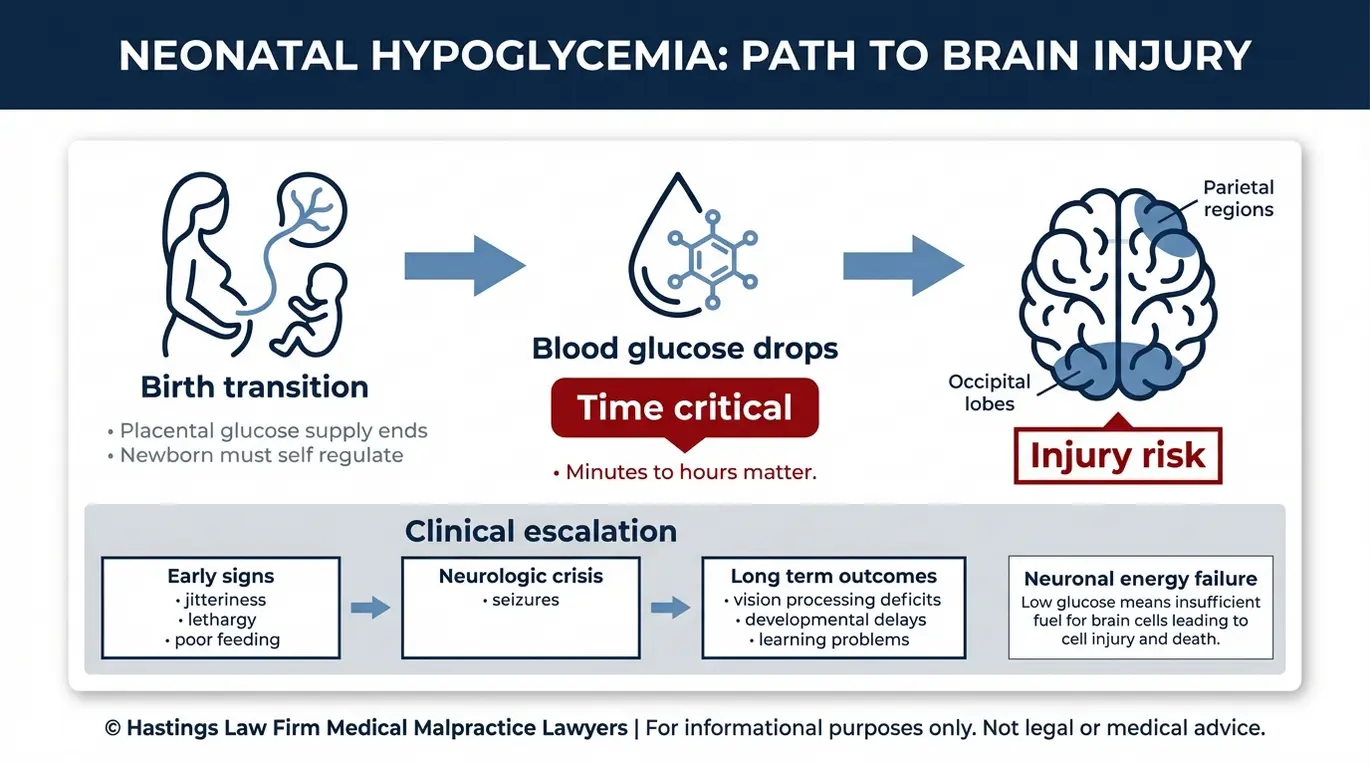
Neonatal hypoglycemia, a condition where a newborn’s blood glucose level drops below safe thresholds, deprives the developing brain of the energy it needs to survive. Neonatal hypoglycemia occurs when a newborn’s blood sugar drops too low, which can prevent the brain from getting the fuel it needs. Without prompt treatment through feeding or IV glucose, prolonged low blood sugar can destroy brain cells, trigger seizures, and cause permanent brain damage.
Inside the womb, a baby receives a constant supply of glucose through the placenta. At birth, that supply is cut off, and the newborn must begin regulating its own blood sugar. Some babies struggle with this transition, especially those with risk factors like prematurity or a mother with diabetes.
Conditions such as neonatal hyperinsulinism, a disorder causing excessive insulin production, can also drive sugar levels dangerously low. When glucose levels drop and stay low, the brain’s neurons begin to die.
Research published in Frontiers in Endocrinology on neonatal hypoglycemia and brain vulnerability confirms that the damage tends to concentrate in the occipital and parietal lobes, the areas responsible for vision and sensory processing. This is not a gradual problem. It is a time-critical emergency where minutes matter. The longer a baby’s glucose remains dangerously low without intervention, the greater the risk of lasting neurodevelopmental problems.
| Risk Level | Blood Glucose Status | Potential Outcome |
|---|---|---|
| Normal transition | Glucose stabilizes after birth | Healthy brain development |
| Mild hypoglycemia (treated quickly) | Brief dip, promptly corrected | Typically no lasting harm |
| Prolonged or severe hypoglycemia | Sustained low glucose, untreated | Seizures, neuronal death, permanent brain damage |
An untreated infant hypoglycemia lawyer in Arizona can help determine whether a failure to act quickly enough caused your child’s injury.
High-Risk Newborns Requiring Mandatory Monitoring
Hospitals are expected to identify high-risk infants immediately after birth and begin blood glucose monitoring without delay. When a baby with known risk factors is not screened through heel stick testing, that failure can represent a breach of the standard of care.
According to Congenital Hyperinsulinism International’s guidelines for detecting and managing neonatal hypoglycemia, the following risk factors should trigger mandatory glucose screening:
Maternal Factors:
- Gestational diabetes, a form of diabetes that develops during pregnancy, or pre-existing diabetes
- Mothers treated with insulin or other blood sugar medications during pregnancy
- Maternal hyperglycemia (elevated blood sugar) during labor
Infant Factors:
- Premature birth (born before 37 weeks gestational age)
- Low birth weight
- Babies who are large for gestational age (LGA), meaning they weigh significantly more than expected for their weeks of gestation
Birth Stress Factors:
- Infants who experienced asphyxia, or oxygen deprivation, during delivery
- Difficult or traumatic deliveries
If your baby had any of these risk factors and was not monitored, an infant hypoglycemia attorney can evaluate whether the hospital met its obligations. Arizona law also places time limits on when families can take legal action. Under Arizona Revised Statutes § 12-542, medical malpractice claims generally must be filed within two years of the injury, so early evaluation of the case is important.
The Hastings Law Firm Difference
Results matter, but what truly sets us apart is how we achieve them. Every verdict, every settlement, and every Arizona courtroom victory comes from one guiding promise: To treat each client’s fight for justice as if it were our own.
This balance of skill, experience, and empathy reflects our core philosophy that justice should not only compensate the injured, but also make healthcare safer nationwide.

Standard of Care for Glucose Screening and Treatment
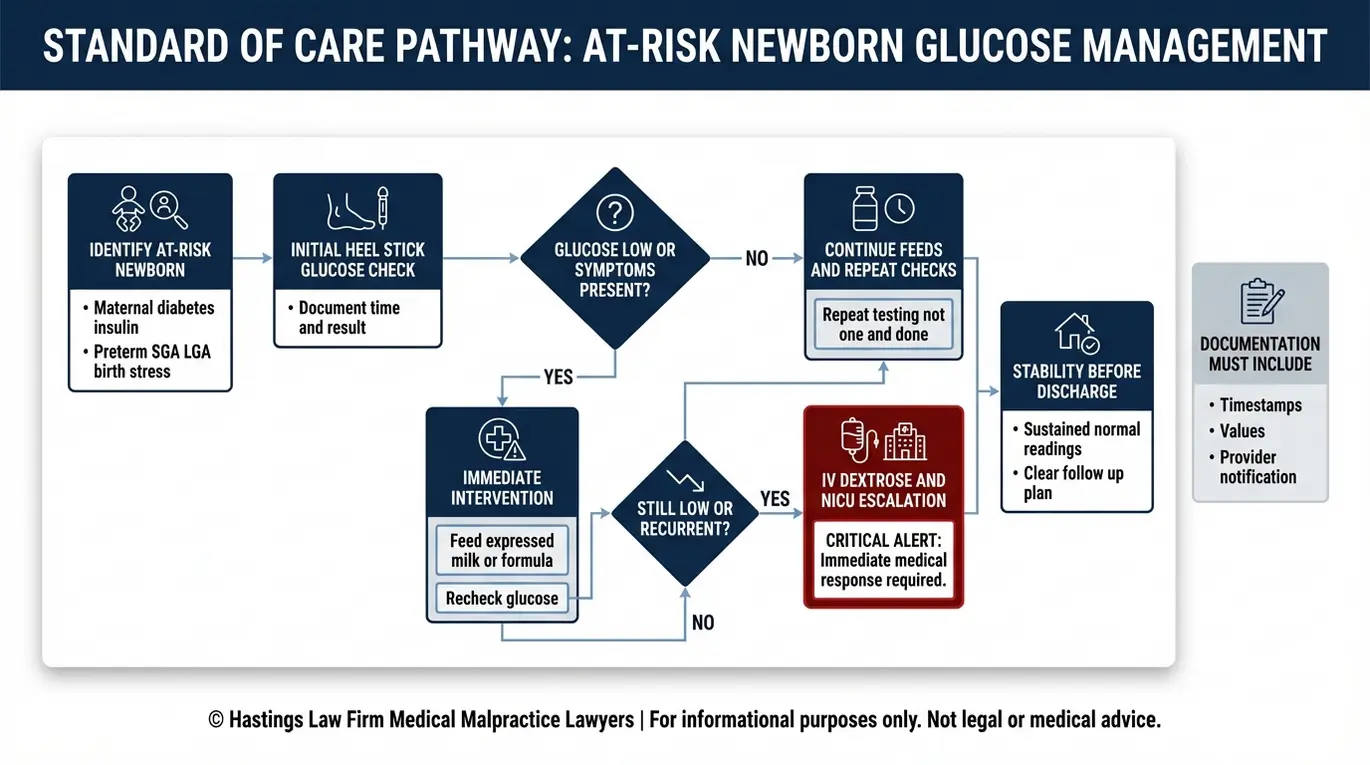
The medical standard of care requires that at-risk infants undergo blood glucose monitoring within specific timeframes after birth. The medical standard of care refers to the level of care a competent medical professional would provide under similar circumstances. A heel stick blood glucose test is the standard screening method. It involves drawing a small blood sample from the baby’s heel. If levels come back low, immediate intervention through supplemental feeding or IV dextrose (intravenous glucose) is required.
A review of neonatal hypoglycemia management guidelines published in PubMed Central outlines a clear sequence of care that medical teams are expected to follow:
- Initial screening: Perform a heel stick test within 30 to 60 minutes of birth for all at-risk newborns.
- Repeat testing: Continue blood glucose checks at regular intervals. A single normal reading does not rule out developing hypoglycemia.
- First-line treatment: If glucose is low, attempt oral feeding or formula supplementation and recheck the level within 30 minutes.
- Escalation to IV glucose: If feeding does not raise blood sugar to a safe level, the baby should receive intravenous solutions like IV dextrose immediately.
- NICU transfer: Infants with persistent or severe hypoglycemia should be moved to the neonatal intensive care unit (NICU) for continuous monitoring under a neonatologist or pediatrician.
- Pre-discharge confirmation: Before sending the baby home, the medical team must confirm glucose levels have been stable across multiple readings.
Premature discharge before glucose stability is documented is a recognized point of failure. If your child was sent home too soon, an Arizona untreated infant hypoglycemia lawyer can investigate whether proper protocols were followed. A lawyer for low blood sugar injury cases will examine the medical records to determine whether the standard of care was met at each step.
Common Errors by Arizona Hospitals in Managing Blood Sugar
Medical malpractice in hypoglycemia cases occurs when staff fail to follow established screening and treatment protocols. Neonatal hypoglycemia management errors often involve gaps in basic care protocols. Our team examines the medical records closely to identify exactly where the breakdown occurred.
Common failures and their consequences:
- Failure to screen: Not performing a heel stick test on a baby born to a mother with gestational diabetes or other documented risk factors. This can allow dangerously low glucose levels to go undetected during the most vulnerable hours.
- Failure in symptom recognition: Ignoring clinical signs such as jitteriness, grunting, lethargy, or pale skin. A failure to recognize symptoms can lead to a delayed diagnosis.
- Delayed escalation: Continuing to attempt oral feeding when blood sugar does not respond, rather than moving to IV glucose or transferring to the NICU. Every delay extends the period of brain exposure to dangerously low energy levels.
- Charting gaps or inconsistencies: Missing glucose readings, unexplained gaps in the monitoring timeline, or recorded values that do not align with the baby’s clinical presentation. These issues are a key focus of our investigation.
- Nursing communication failures: Delays in notifying the attending physician or pediatrician when a baby’s glucose levels remain low or drop further after initial treatment.
Parents who want to begin gathering their child’s medical documentation can request records through the Arizona Department of Health Services. An Arizona untreated infant hypoglycemia lawyer and medical malpractice attorney can then analyze those records for evidence of duty of care violations.
Distinguishing Hypoglycemia Brain Injury from Other Birth Trauma
Hypoglycemic brain injury produces a distinct pattern on MRI scans that is different from the damage caused by asphyxia or hypoxia. Diagnostic imaging helps doctors identify the specific type of brain injury a newborn has suffered. Specifically, untreated low blood sugar tends to injure the occipital and parietal lobes of the brain, an occipital lobe-predominant MRI pattern that researchers have documented as a signature of hypoglycemic encephalopathy. This differs from hypoxic-ischemic encephalopathy (HIE), a condition caused by oxygen deprivation, which typically damages different brain structures.
This distinction matters because defense attorneys in birth injury cases may attempt to attribute a child’s brain damage to genetic conditions or unavoidable complications. Research published in the Annals of Child Neurology on neonatal hypoglycemic encephalopathy with white matter lesions demonstrates how neuroimaging can differentiate hypoglycemic injury from other causes.
The long-term effects of hypoglycemic brain injury often appear months or years after birth. Children may develop vision problems, learning disabilities, cerebral palsy, developmental delays, or cognitive deficits that affect them throughout their lives. An untreated infant hypoglycemia lawyer works with neuroradiology and pediatric neurology experts to connect the MRI evidence directly to the failure in glucose management. For families across Arizona, an untreated infant hypoglycemia lawyer can be the difference between an unanswered question and a clear, evidence-based explanation of what happened.
Calculating Damages for a Child with Hypoglycemic Brain Injury
Families whose children suffered brain damage from untreated hypoglycemia may be entitled to both economic and non-economic damages. Since founding the firm in 2005, we have focused exclusively on medical negligence cases to protect the future of injured children. Economic damages cover costs such as future medical treatment, rehabilitative therapies, special education, and lost earning capacity. Non-economic damages compensate for pain, suffering, and the loss of life’s enjoyment.
A critical part of building these cases is life care planning. Our team works with medical and vocational experts to project the full cost of caring for a child who may need 24/7 support, ongoing therapies, and specialized services for decades. These cases often involve multi-million dollar valuations because the needs extend across an entire lifetime.
Hastings Law Firm has a track record of multi-million dollar recoveries in birth injury cases. As your Arizona untreated infant hypoglycemia lawyer, we handle the case on a contingency fee basis, meaning you pay no attorney fees or costs unless we recover birth injury compensation for your family.
Contact the Arizona Birth Injury Attorneys at Hastings Law Firm Today for Help
A child’s brain injury from untreated low blood sugar was likely preventable. If your family is searching for answers about what happened during your baby’s care, we are here to help you find them.
Hastings Law Firm offers a free, confidential case evaluation led by our in-house medical team and board-certified trial attorney Tommy Hastings. Our goal is not only to pursue the compensation your child needs for their future care, but to uncover the truth about what went wrong and hold the responsible parties accountable so it does not happen to another family.
You can reach us by phone or through our website to schedule your risk-free consultation. There is no cost to speak with us, and no fee unless we win. Let us review your child’s medical records, explain your options, and help you take the first step toward answers.
Frequently Asked Questions About Untreated Infant Hypoglycemia in Arizona


This content was researched and written by the Hastings Law Firm editorial team, which includes attorneys, medical professionals, and experienced researchers. Our writing is informed by internal knowledge and practical experience, and we cross-check critical details against authoritative sources cited throughout. Every piece undergoes human-led fact-checking and legal review. Because legal and medical information can change, if you spot an error, please contact us. Learn more about our content standards and review process on our editorial policy page.

Tommy Hastings, founder of Hastings Law Firm, is a board-certified personal injury trial lawyer dedicated exclusively to healthcare injury cases. Since 2001, he has represented injured patients and families in litigation against major hospital systems, pharmaceutical companies, and negligent healthcare providers nationwide. He has handled numerous high-profile cases that have drawn national media attention and resulted in multi-million dollar recoveries. He draws on that experience in his writing, helping readers understand how these cases work and what options may be available to them.
