


Arizona Unnecessary Surgery Lawyer
Unnecessary surgery can leave patients coping with avoidable pain, complications, and financial strain after an invasive procedure that was not medically justified. Arizona law focuses on whether objective clinical evidence supported the decision to operate and whether the accepted standard of care was followed. Concerns often arise when non surgical options were not meaningfully considered, when documentation does not match clinical findings, or when consent was shaped by incomplete or misleading information. If you or a loved one were harmed or worse due to unnecessary surgery in Arizona, contact Hastings Law Firm for a free, confidential case review.

Last Updated: July 27, 2026
Trusted Legal Representation for Surgical Negligence in Arizona
Learning that a surgery you underwent may not have been medically necessary can leave you feeling confused, angry, and unsure of what to do next. You trusted a medical professional to act in your best interest, and now you may be dealing with pain, complications, or a long recovery from a procedure you never needed. Those feelings are valid, and you deserve answers.
At Hastings Law Firm, we focus exclusively on medical malpractice cases for patients and their families. Founded by Tommy Hastings, a member of the American Board of Trial Advocates (ABOTA) and a board-certified trial lawyer, our firm is dedicated to giving a voice to patients harmed by medical error. Our legal and medical team, which includes in-house nurse consultants and former defense attorneys, investigates these cases to determine whether the standard of care was violated. If you or a loved one suspects your surgery was not medically justified, an experienced Arizona unnecessary surgery lawyer can review what happened and help you understand your options.
Contact us for a free, confidential case evaluation. There is no fee unless we recover compensation for you.

Defining Unnecessary Surgery Under Arizona Malpractice Law
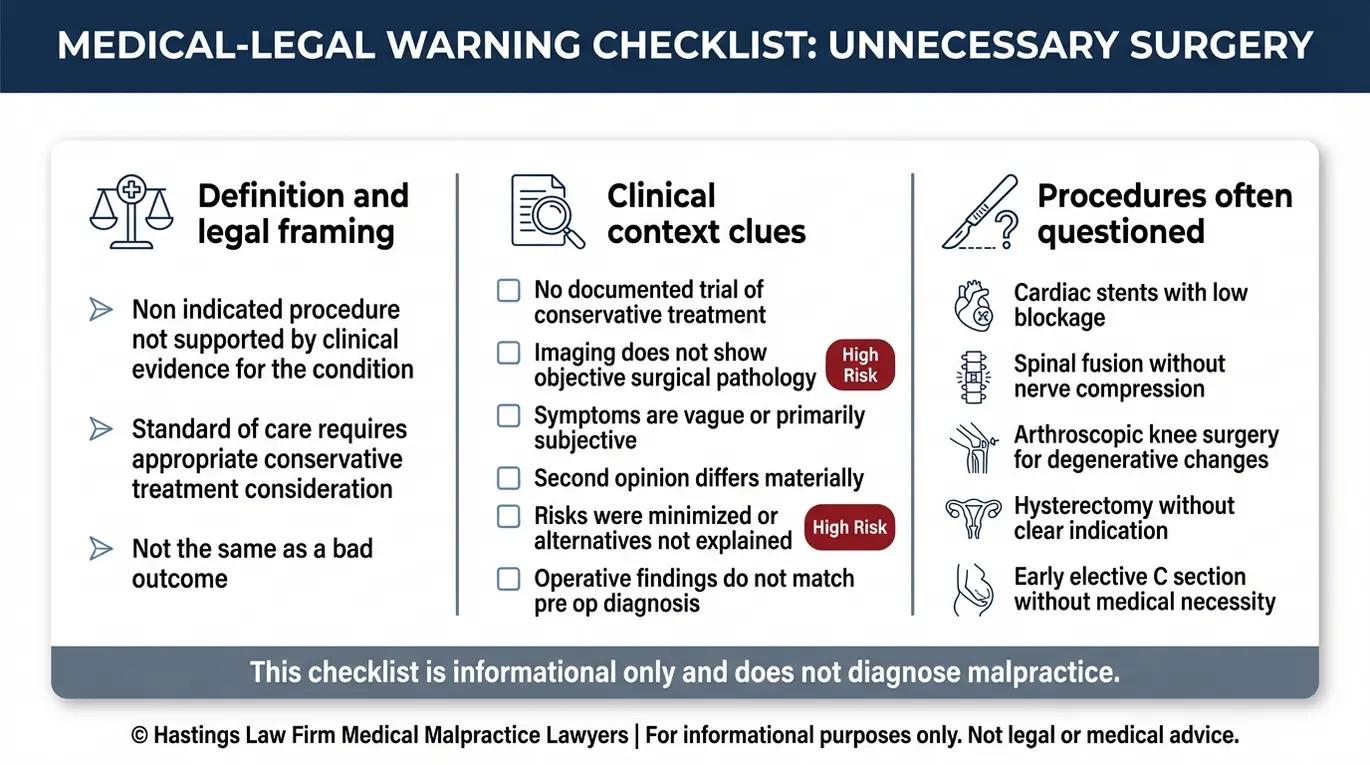
Unnecessary surgery occurs when a medical professional performs an invasive procedure that is not supported by standard medical guidelines or clinical evidence for the patient’s specific condition. Medical necessity is the legal and clinical standard used to determine if a surgery should be performed. This is not the same as a surgery that simply had a poor outcome. The legal question centers on whether the procedure was medically indicated, meaning whether objective clinical findings justified the intervention given the patient’s diagnosis.
Under Arizona Revised Statutes § 12-563, a medical malpractice claim requires proof that the provider failed to meet the accepted standard of care and that this failure caused injury. In unnecessary surgery cases, the standard often requires that conservative treatment be attempted first. This may include non-invasive care such as physical therapy, medication management, or watchful waiting. When a surgeon skips those non-surgical alternatives without clinical justification, it may constitute negligence.
A diagnosis that does not align with imaging or lab findings can also raise red flags. For example, a misdiagnosis of a condition’s severity may be used to justify an operation that the patient’s body did not actually require. The ABIM Foundation’s Choosing Wisely campaign has identified several categories of procedures frequently performed without sufficient clinical support.
Common procedures that are often flagged as potentially unnecessary include:
- Cardiac stents placed for low-grade blockages that could be managed with medication
- Spinal fusions performed without confirmed nerve compression on imaging
- Hysterectomies recommended when less invasive treatments were not explored
- Knee arthroscopies for degenerative conditions treatable with physical therapy
- Cesarean sections performed without documented maternal or fetal distress
If any of these situations sound familiar, you can have your records reviewed by an experienced unnecessary surgical procedure attorney who can evaluate whether the clinical evidence supported the operation.
Why Surgeons Perform Non-Indicated Procedures
Surgeons or hospital systems may recommend non-indicated procedures due to financial incentives, pressure to utilize operating rooms, or defensive medicine practices that prioritize revenue over patient necessity. Defensive medicine describes medical practices used primarily to avoid legal liability rather than benefit the patient. Non-indicated procedures are surgeries that do not offer a clear clinical benefit to the patient. While we do not presume intent in any individual case, certain structural factors in healthcare are well documented and can be relevant to a legal claim for unnecessary surgery.
The fee-for-service payment model, a system in which providers are paid for each procedure they perform rather than for patient outcomes, can create a financial conflict of interest. Under this model, more surgeries generate more revenue. Research compiled by the Dartmouth Atlas of Health Care has shown significant regional variation in surgical discharge rates for the same conditions. This suggests that medical necessity is not always the primary driver of surgical decisions.
When we investigate a case, we examine usage data and referral patterns to determine whether a surgeon’s recommendation fell outside accepted clinical norms. A lawyer for unnecessary operations can identify these patterns and use them to build a stronger claim. Institutional pressure to keep operating room schedules full can also influence recommendations.
The Hastings Law Firm Difference
Results matter, but what truly sets us apart is how we achieve them. Every verdict, every settlement, and every Arizona courtroom victory comes from one guiding promise: To treat each client’s fight for justice as if it were our own.
This balance of skill, experience, and empathy reflects our core philosophy that justice should not only compensate the injured, but also make health care safer nationwide.

Proving a Surgery Was Not Medically Indicated
Proving a surgery was unnecessary requires a detailed audit of medical records to demonstrate that the patient’s symptoms and diagnostic imaging did not meet the clinical threshold for surgical intervention. In unnecessary surgery cases, the standard of care is the level of care a reasonably competent surgeon would provide. Thorough investigation and qualified medical expertise are essential case strategy for an Arizona Unnecessary Surgery Lawyer.
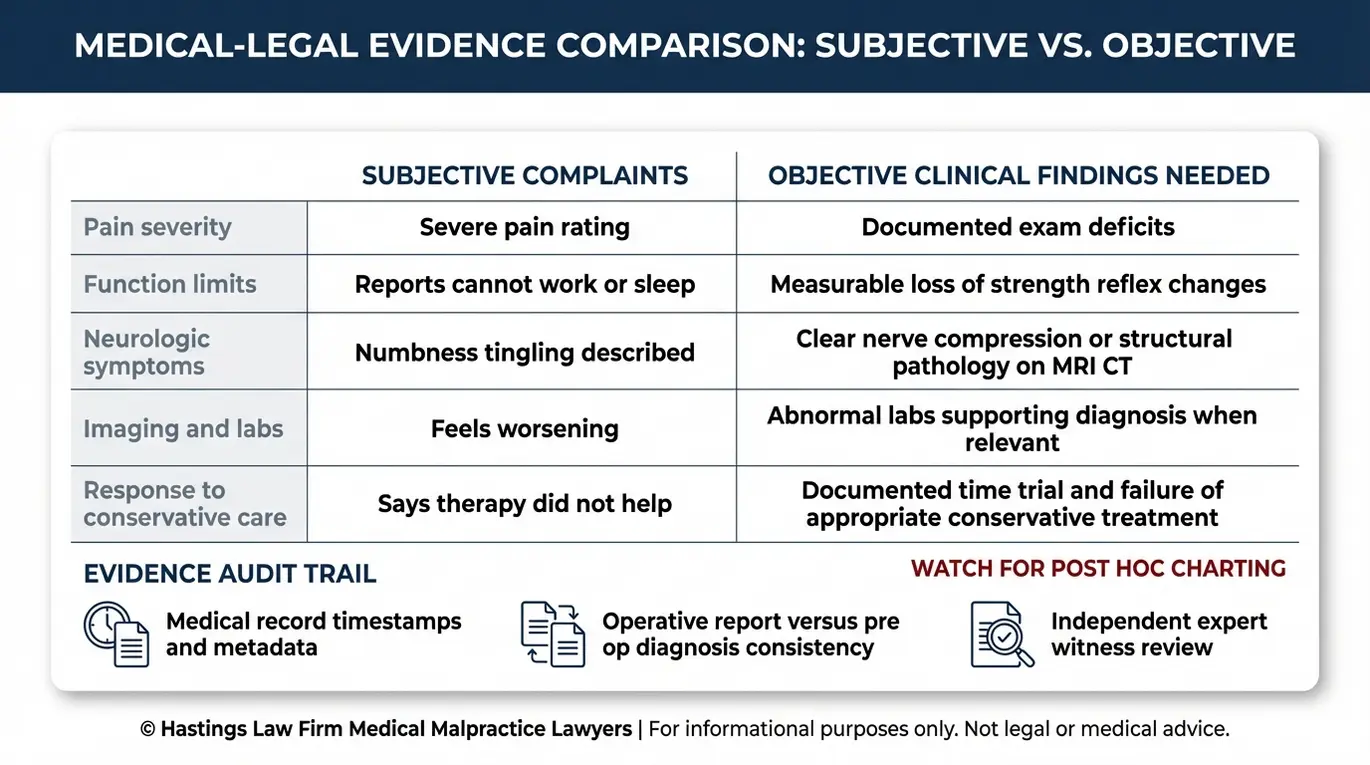
The foundation of the case rests on the distinction between what the patient reported and what the objective clinical evidence actually showed. Clinical evidence includes all objective data, such as imaging and lab results, used to justify a surgery.
| Evidence Type | What It Includes | Why It Matters |
|---|---|---|
| Subjective Complaints | Patient-reported symptoms such as pain levels, mobility limitations, and discomfort | These alone do not justify surgery; they must be corroborated by objective data |
| Objective Clinical Findings | MRI and CT imaging, lab results, nerve conduction studies, physical exam findings | These provide the measurable clinical basis that must support the decision to operate |
| Surgical Documentation | The operative report (the surgeon’s written account of the procedure) and billing codes | Discrepancies between the pre-operative diagnosis and actual findings during surgery can indicate a non-indicated procedure |
An expert witness, typically a board-certified surgeon in the same specialty, reviews the full record to establish whether the clinical data justified the operation. The expert compares what was documented against what a reasonably competent surgeon would have recommended under the same circumstances. This testimony is critical to proving both the breach of the standard of care and causation, the link between the unnecessary procedure and your injury or later complications.
We also examine the electronic medical record for signs of post-operative alterations. Under 45 CFR § 164.524, patients have the right to access their protected health information. The HealthIT.gov standards for auditable events and tamper resistance require that electronic health records maintain metadata showing when entries were created, modified, or accessed.
If charting was altered after the fact to justify the procedure, that metadata can become powerful evidence. Upcoding, the practice of billing for a more severe diagnosis than the records support, is another red flag an Arizona surgical negligence attorney will look for during this review.
Distinguishing Medical Malpractice from Medical Battery
There is an important legal distinction between malpractice and medical battery. Medical malpractice involves clinical errors, while medical battery involves a lack of legal consent for a procedure. Standard malpractice claims involve a surgeon who performed a procedure negligently or without proper justification. Medical battery applies when the surgery went beyond the scope of what the patient agreed to, or when the surgeon obtained consent through fraud or misrepresentation of the patient’s condition.
Informed consent, the process in which your doctor explains the risks, benefits, and alternatives of a proposed treatment before you agree to move forward, is central to this distinction. If a surgeon exaggerated the severity of your condition or concealed the availability of non-surgical options to secure your consent, that consent may be considered invalid. This can open the door to claims beyond standard negligence.
Damages Recoverable for Arizona Unnecessary Surgery Victims
Victims of unnecessary procedures in Arizona may recover compensation for medical bills, lost wages, future earning capacity, and the physical pain and suffering caused by the unneeded intervention. Compensation in these cases aims to return the patient to the financial position they would have been in if the error had not occurred. The Arizona Constitution (Article 2, Section 31) prohibits the legislature from capping damages in personal injury or wrongful death cases, which means there is no artificial limit on the compensation for fake surgery you can pursue.
Recoverable damages generally fall into two categories:
- economic damages: These cover the measurable financial losses, including the cost of the unnecessary surgery, any revision surgery, and lost wages.
- non-economic damages: These account for the physical pain, emotional distress, scarring, and psychological impact of being operated on without medical justification.
In cases where the unnecessary procedure led to a fatal complication, such as an anesthesia error or uncontrolled infection, surviving family members may pursue a wrongful death claim for compensation that reflects both their financial losses and their grief.
The Legal Process for Investigating Your Surgical Claim
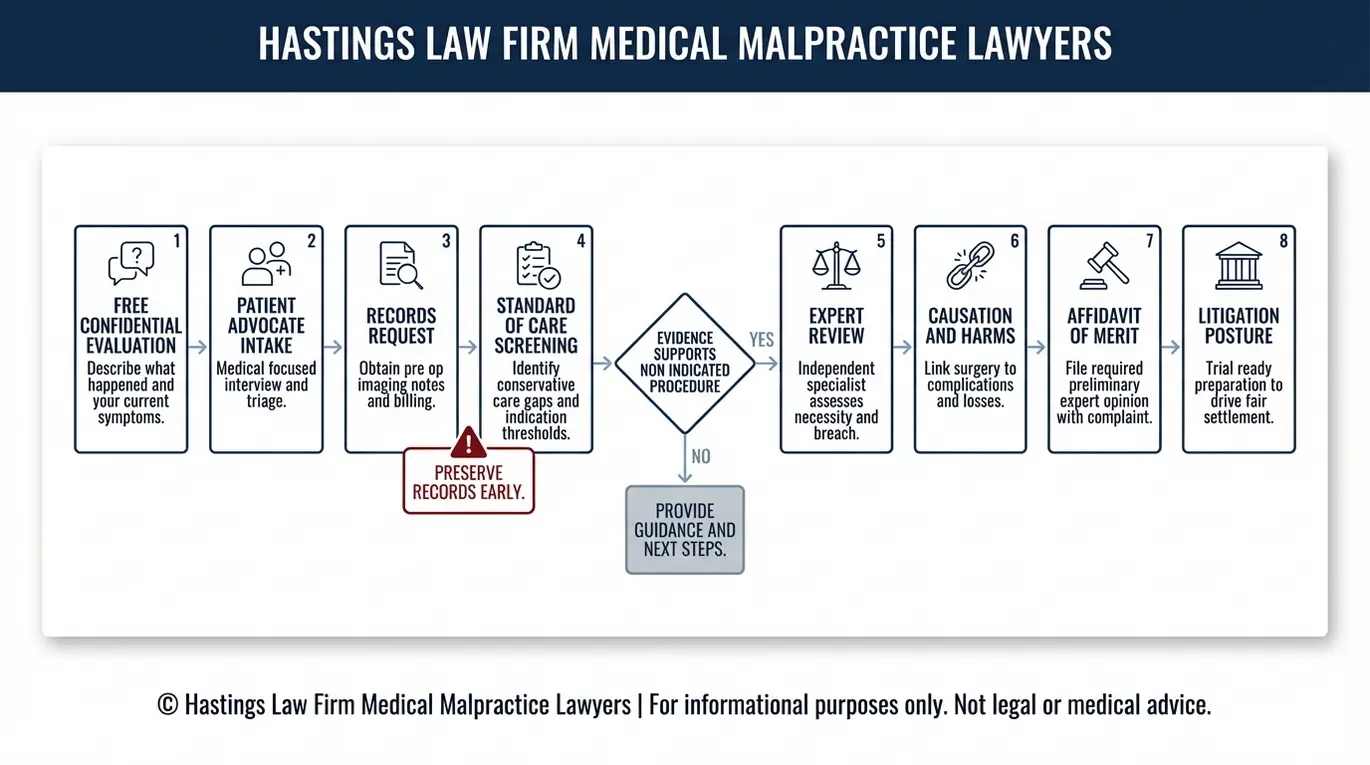
The process begins with a comprehensive medical review by a patient advocate to identify standard of care breaches followed by serving a preliminary expert opinion affidavit with your initial disclosures as required under Arizona law. At Hastings Law Firm, our in-house medical staff, including nurse practitioners and board-certified patient advocates, screen your records during a free, confidential evaluation. If we accept your case, we immediately begin building it as though it is going to trial.
This trial-ready approach, which includes expert analysis and record reconstruction, strengthens our position whether the case resolves through settlement or results in a jury verdict. We also conduct an EMR audit trail review to examine the electronic metadata that tracks when medical records were created or changed. We handle every aspect of the litigation. You pay no attorney fees or costs unless we secure a recovery on your behalf.
Contact the Arizona Surgical Error Attorneys at Hastings Law Firm Today for Help
You should not have to carry the physical, emotional, and financial burden of a surgery that was never medically necessary. If something feels wrong about the care you or a loved one received, trust that instinct. You have every right to ask questions and seek answers.
Hastings Law Firm is built to handle exactly these cases. Our team includes former defense attorneys who understand how hospitals and insurers respond to these claims, and in-house medical professionals who know how to read the records and identify where the standard of care broke down. When you are ready, an Arizona Unnecessary Surgery Lawyer at our firm can walk you through what we find and explain your legal options.
Call us or complete our online form for a free, confidential case evaluation. There is no fee unless we win.
Frequently Asked Questions About Unnecessary Surgery in Arizona


This content was researched and written by the Hastings Law Firm editorial team, which includes attorneys, medical professionals, and experienced researchers. Our writing is informed by internal knowledge and practical experience, and we cross-check critical details against authoritative sources cited throughout. Every piece undergoes human-led fact-checking and legal review. Because legal and medical information can change, if you spot an error, please contact us. Learn more about our content standards and review process on our editorial policy page.

Tommy Hastings, founder of Hastings Law Firm, is a board-certified personal injury trial lawyer dedicated exclusively to healthcare injury cases. Since 2001, he has represented injured patients and families in litigation against major hospital systems, pharmaceutical companies, and negligent healthcare providers nationwide. He has handled numerous high-profile cases that have drawn national media attention and resulted in multi-million dollar recoveries. He draws on that experience in his writing, helping readers understand how these cases work and what options may be available to them.
