


Arizona Uloric Injury Lawyer
Written by: Hastings Law Firm | Reviewed by: Tommy Hastings | Updated: July 27, 2026
Uloric, also called febuxostat, is a prescription drug used to lower uric acid in adults with gout, and it carries an FDA Black Box Warning tied to increased risk of heart related harm. People who suffer a serious cardiac event after taking Uloric can face major medical costs, time away from work, and lasting health effects or worse. Understanding the warning history, reported cardiovascular risks, and how liability is evaluated can help clarify what happened. If you or a loved one were harmed or worse due to Uloric drug injuries in Arizona, contact Hastings Law Firm for a free, confidential case review.
Trusted Legal Representation for Uloric Drug Injuries in Arizona
What You Should Know About Febuxostat Injury Claims in Arizona:
- Severe cardiovascular outcomes can follow Uloric use, including heart attack and stroke.
- The FDA added a Black Box Warning to Uloric after safety trials showed a higher risk of heart related death compared to allopurinol.
- A wrongful death claim may be considered when a loved one dies after a Uloric related cardiac event.
- Legal options can be lost entirely if Arizona filing deadlines are missed.
- Liability disputes often focus on whether Takeda Pharmaceuticals knew of cardiovascular risks yet failed to adequately warn doctors and patients.
- Compensation can include medical bills, lost wages, pain and suffering, and wrongful death damages for surviving family members.
- Many Uloric lawsuits proceed as individual cases that are consolidated into Multi District Litigation rather than a class action.
- Proof issues can turn on prescription records, hospital records of the cardiac event, and documentation of financial losses.
- Causation is often addressed through expert testimony linking febuxostat to the injury.

A Healthcare Focused Law Firm
If you or someone you love suffered a serious heart event after taking Uloric, you may be dealing with far more than a medical setback. You may be facing mounting hospital bills, lost time at work, and difficult questions about whether this could have been prevented. These concerns are valid, and you deserve clear answers about what happened and what your legal options are.
At Hastings Law Firm, we focus exclusively on medical malpractice and pharmaceutical injury cases. Our team includes in-house medical professionals and former defense attorneys who understand how drug manufacturers and their insurers respond to these claims. As a firm of experienced Arizona Uloric injury lawyers, we are prepared to review the facts of your situation, explain your rights, and help you determine the best path forward.
Contact us for a free, confidential case evaluation. You pay nothing unless we recover compensation on your behalf.
Understanding the FDA Black Box Warning and Uloric Risks
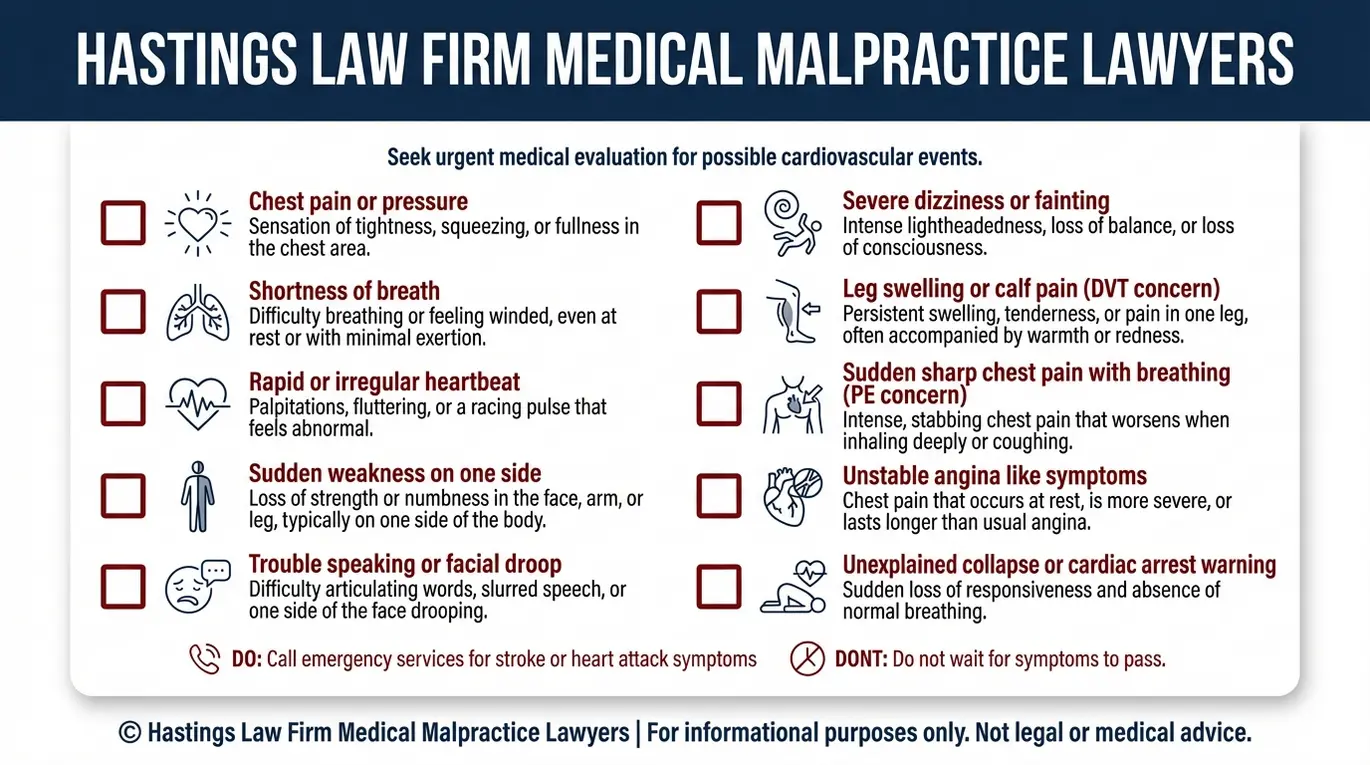
The FDA added a Black Box Warning to Uloric (febuxostat), a prescription medication used to lower uric acid levels in adults with gout, after safety trials revealed a significantly higher risk of heart-related death compared to allopurinol. This Black Box Warning, the most serious safety alert the FDA can place on a drug’s label, signals that the medication carries risks of severe or life-threatening adverse effects.
Manufactured by Takeda Pharmaceuticals, Uloric was approved in 2009. Post-approval safety data analyzed by a Phoenix Uloric lawyer revealed alarming results. According to the U.S. Food and Drug Administration’s safety communication on Uloric (febuxostat), patients taking febuxostat had a higher rate of death from heart-related causes than those on allopurinol.
A detailed review published in Reassessing the Cardiovascular Safety of Febuxostat (PubMed Central) reinforces these concerns. Febuxostat litigation attorneys note that the ULORIC febuxostat prescribing label (FDA) now reflects this updated warning.
If you experienced a cardiac event, an Arizona defective drug lawyer at our firm can evaluate your case. Patients across Arizona are now working with a Uloric lawsuit attorney to hold Takeda accountable for injuries that may have been preventable.
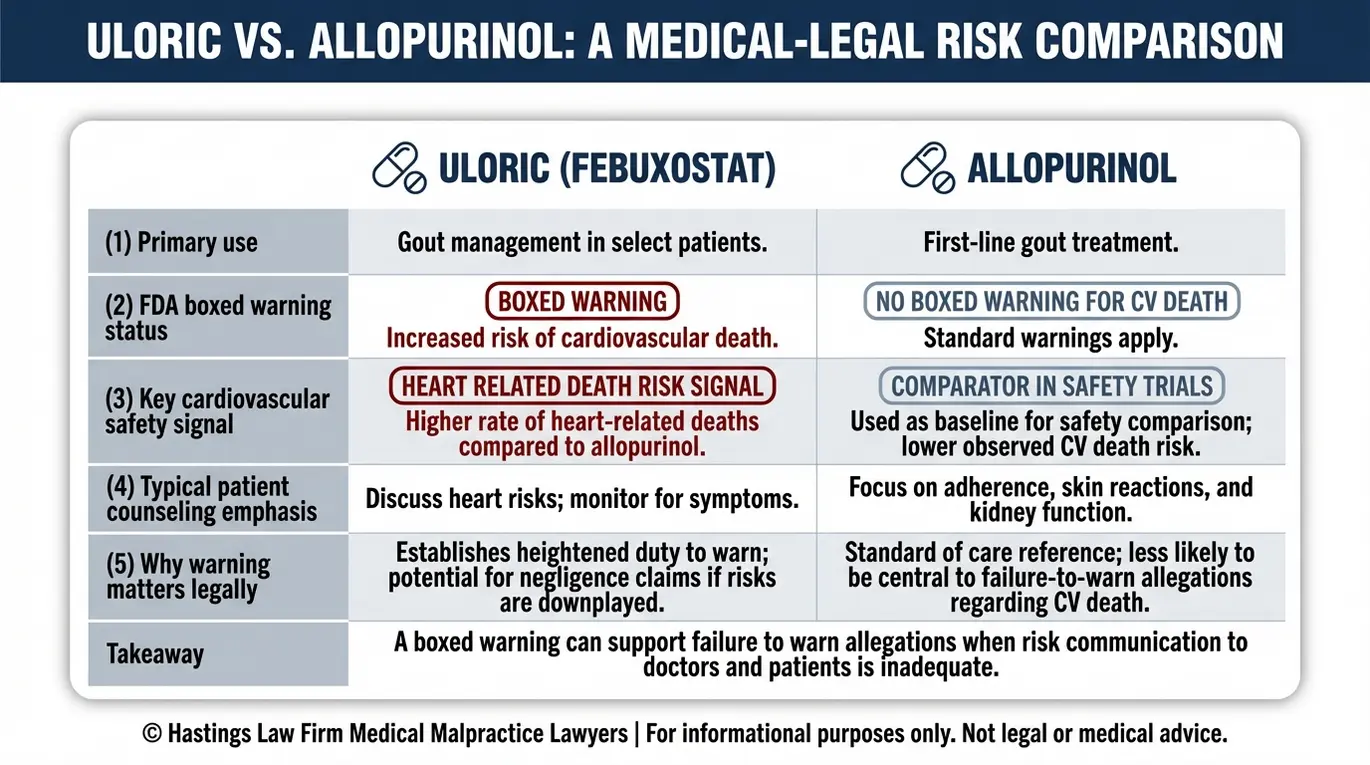
Warning signs that a Uloric attorney in Arizona suggests monitoring include:
- Chest pain or tightness
- Shortness of breath
- Rapid or irregular heartbeat
- Sudden dizziness or fainting
- Swelling in the legs (possible sign of blood clots)
Recognizing Uloric Injuries and Cardiovascular Events
Patients taking Uloric may experience severe cardiovascular injuries, including heart attack, stroke, unstable angina (a type of chest pain caused by reduced blood flow to the heart), and cardiac death due to the drug’s mechanism of action, a risk febuxostat attorneys take seriously. Families who lost a loved one after Uloric use may also have grounds for a wrongful death lawsuit with the help of Arizona Uloric claim counsel.
The connection between febuxostat and these events is grounded in clinical data from large-scale safety trials. If you or a family member experienced any of the following symptoms while taking Uloric, speak with both a cardiologist and a Uloric injury attorney in Arizona.
| Symptom | Potential Condition |
|---|---|
| Chest pain or pressure | Heart attack or unstable angina |
| Sudden numbness or confusion | Stroke |
| Shortness of breath | Pulmonary embolism (PE), a blood clot in the lungs |
| Leg swelling or pain | Deep vein thrombosis (DVT), a blood clot in a deep vein |
| Rapid or irregular heartbeat | Cardiac arrhythmia |
| Sudden dizziness or collapse | Cardiac event or stroke |
Patients may suffer a pulmonary embolism (PE), a blockage of blood flow to the lungs, or deep vein thrombosis (DVT), a clot formation in a deep vein that can travel to the lungs. Both conditions have been reported in patients using febuxostat, a fact noted by dangerous drug attorneys.
For families grieving a loved one’s death following Uloric use, a febuxostat lawyer in Arizona can help determine whether a wrongful death claim is appropriate based on the medical timeline, a task for our Uloric injury legal team.
Statistical Risks of Cardiac Death
The FDA’s Black Box Warning was prompted by the CARES trial, or Cardiovascular Safety of Febuxostat and Allopurinol in Patients With Gout and Cardiovascular Morbidities, which followed over 6,000 gout patients with pre-existing cardiovascular conditions.
The CARES trial measured major adverse cardiovascular events (MACE), a standard composite endpoint that includes heart attack, stroke, cardiovascular death, and unstable angina requiring urgent intervention. While the overall MACE rates were similar between the two drugs, the rate of heart-related death and all-cause death was notably higher in the febuxostat group.
These findings show a statistical increase in risk central to Uloric injury claims. An Arizona Uloric injury lawyer can use this data, alongside your medical records and prescribing history, to help establish whether febuxostat contributed to your cardiac event.
The Hastings Law Firm Difference
Results matter, but what truly sets us apart is how we achieve them. Every verdict, every settlement, and every Arizona courtroom victory comes from one guiding promise: To treat each client’s fight for justice as if it were our own.
This balance of skill, experience, and empathy reflects our core philosophy that justice should not only compensate the injured, but also make healthcare safer nationwide.

How to Establish Liability for a Uloric Claim in Arizona
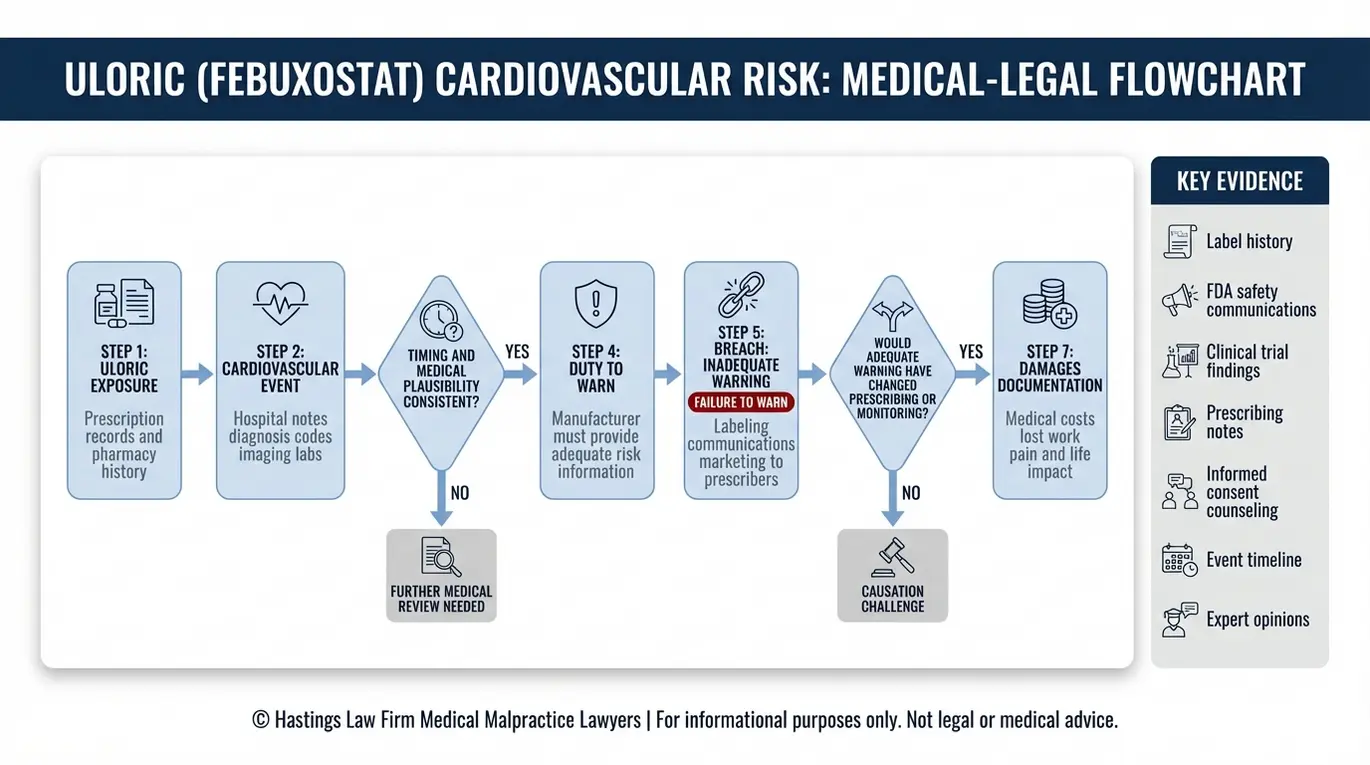
Establishing liability requires proving that Takeda Pharmaceuticals knew of the cardiovascular risks yet failed to adequately warn doctors and patients in Arizona, directly resulting in the injury. This legal theory, “failure to warn,” occurs when a manufacturer does not provide enough information about a drug’s risks. It is common in dangerous drug lawsuits. While manufacturers may raise defenses, an Arizona Uloric lawyer can help manage these claims.
Under Arizona product liability law, a product liability lawyer notes that a drug manufacturer can be held liable if its product was defective due to inadequate warnings. Arizona law requires that product liability actions be commenced within the time period prescribed by Arizona Revised Statutes § 12-551 (Arizona Legislature). In a Uloric claim, this means showing that Takeda had access to safety data, including results from clinical research conducted after a drug reaches the market, and provided insufficient warnings.
An Arizona pharmaceutical liability lawyer at Hastings Law Firm builds your case by gathering records and working with medical experts, including our in-house nurse practitioners, to establish the link between febuxostat and the injury.
If liability is established, compensation for a Uloric injury may include:
- Past and future medical bills related to the cardiac event
- Lost wages and diminished earning capacity
- Pain and suffering and other non-economic damages
- Wrongful death damages for surviving family members
Compensation may also cover unstable angina, a condition involving chest pain due to reduced blood flow. Many Uloric lawsuits are handled as individual cases consolidated into Multi-District Litigation (MDL), a process where many similar cases are grouped together for efficiency while preserving your individual claim. A Uloric claims attorney can explain which structure applies, and Arizona dangerous drug lawyers can review your specific losses.
Contact the Arizona Dangerous Drug Attorneys at Hastings Law Firm Today for Help
Arizona imposes strict deadlines on when you can file a pharmaceutical injury or wrongful death claim. Waiting too long can mean losing your right to seek compensation entirely, so acting promptly matters.
Founded by board-certified trial lawyer Tommy Hastings, an ABOTA member who has practiced for over 20 years, our firm is dedicated to securing accountability for patients harmed by medical and pharmaceutical negligence. Hastings Law Firm represents Uloric injury clients throughout Arizona from our Phoenix office. Our legal and medical team will review your records, evaluate the strength of your claim, and explain every option available to you.
We work on a contingency fee basis, which means you pay no attorney fees or costs unless we secure a recovery on your behalf. If you or a loved one suffered a heart attack, stroke, or other cardiac event after taking Uloric, we are ready to listen and help you understand your next steps. Call us today or complete our online form for a free, confidential case evaluation.
Frequently Asked Questions About Uloric Injury in Arizona


This content was researched and written by the Hastings Law Firm editorial team, which includes attorneys, medical professionals, and experienced researchers. Our writing is informed by internal knowledge and practical experience, and we cross-check critical details against authoritative sources cited throughout. Every piece undergoes human-led fact-checking and legal review. Because legal and medical information can change, if you spot an error, please contact us. Learn more about our content standards and review process on our editorial policy page.

Tommy Hastings, founder of Hastings Law Firm, is a board-certified personal injury trial lawyer dedicated exclusively to healthcare injury cases. Since 2001, he has represented injured patients and families in litigation against major hospital systems, pharmaceutical companies, and negligent healthcare providers nationwide. He has handled numerous high-profile cases that have drawn national media attention and resulted in multi-million dollar recoveries. He draws on that experience in his writing, helping readers understand how these cases work and what options may be available to them.
