


Arizona Torticollis & Wry Neck Lawyer
Written by: Hastings Law Firm | Reviewed by: Tommy Hastings | Updated: July 27, 2026
Infant torticollis after a difficult delivery can create lasting challenges for a child and family, especially when the condition follows neck trauma during labor or early newborn care. Understanding whether torticollis is congenital or delivery related can shape what comes next, since excessive traction, instrument misuse, airway management errors, or a missed diagnosis may lead to worsening asymmetry and more intensive treatment. Clear medical records and expert review often matter when the cause is disputed. If you or a loved one were harmed or worse due to birth related infant torticollis in Arizona, contact Hastings Law Firm for a free, confidential case review.

Top-Rated Arizona Birth Injury Attorneys for Infant Torticollis Cases
What You Should Know About Infant Traumatic Neck Injury Claims in Arizona:
- Long term treatment burdens can increase when traumatic torticollis is not recognized early, since delayed diagnosis can lead to permanent muscle shortening, worsening asymmetry, or surgery.
- Disputes about responsibility often turn on whether torticollis is congenital or delivery related, because positional causes are generally not tied to provider negligence while traumatic causes may be.
- Serious injury concerns can arise from delivery events, since excessive traction, neck hyperextension, or instrument misuse are described as mechanisms that can damage the sternocleidomastoid muscle.
- Ongoing daily care can become harder for families, since feeding and sleep positioning challenges are described when an infant cannot comfortably turn the head.
- Recovery options in Arizona can be broader, since the article states Arizona does not cap damages for personal injury and wrongful death.
- Financial impact can be substantial, since recoverable costs described include diagnostic testing, physical therapy, helmet therapy, and possible surgical intervention.
- Proving a claim can be harder without qualified medical experts, since Arizona law is described as requiring expert testimony on the standard of care and breach.
- Clear documentation can be central when timing is disputed, since delivery records and imaging findings are described as ways to connect symptoms to delivery events.

A Healthcare Focused Law Firm
When your child is diagnosed with torticollis after a difficult delivery, the questions come fast. Was this preventable? Did something go wrong? If you or a loved one have concerns about how your child’s birth was managed, those instincts deserve to be taken seriously.
At Hastings Law Firm, we focus exclusively on medical malpractice. Our team of attorneys, nurse consultants, and medical staff understands both the clinical details and the legal standards involved in birth injury cases. If your infant was diagnosed with wry neck following delivery complications, our Arizona torticollis & wry neck lawyers can review your child’s medical records and help you understand what happened.
We offer free, confidential case evaluations, and you pay no fees unless we recover compensation on your behalf. We are here to listen and explain your options to protect your child’s future.
Understanding Torticollis: Medical Condition or Birth Trauma?
Torticollis, commonly called “wry neck,” is a condition where the neck muscles tighten and force the head into a tilted or rotated position. In a legal context, this distinction is vital because it determines if medical staff are responsible for the injury.
The condition centers on the sternocleidomastoid muscle (SCM), a large muscle running along each side of the neck, that controls head rotation and tilting. When the SCM is damaged or shortened, the infant’s head pulls to one side with limited range of motion on the opposite side.
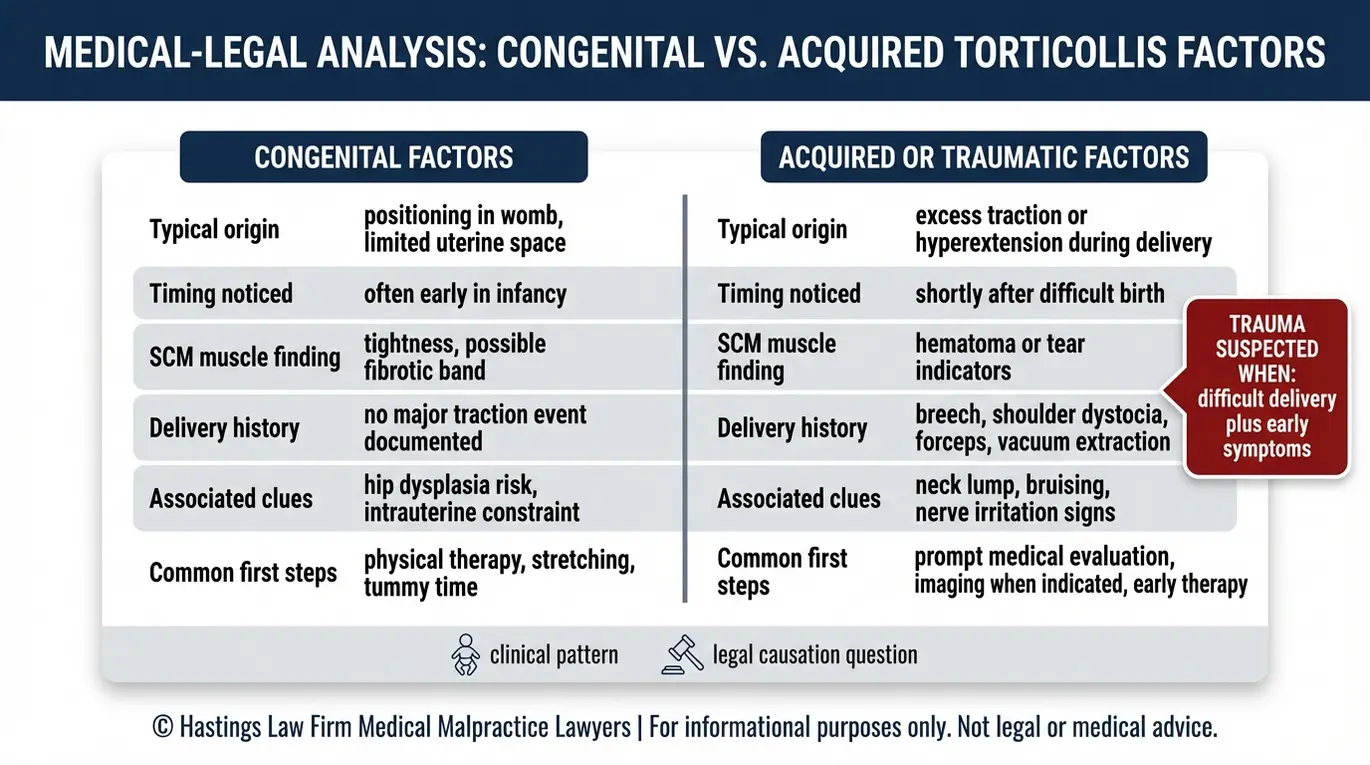
The critical question for families is whether their child’s torticollis was congenital or traumatic. Congenital muscular torticollis (CMT), the most common form in infants, can develop from positioning in the womb. According to the National Center for Biotechnology Information’s review of Congenital Torticollis, CMT is often linked to crowding inside the womb or abnormal fetal positioning. But when birth trauma is involved, the cause may be entirely different.
Our team evaluates whether the delivery itself caused the damage. If a provider applied excessive traction, hyperextended the neck during a breech birth, or misused instruments, those actions may have torn or hemorrhaged the SCM, resulting in the condition. Understanding this distinction is the first step for parents seeking legal help for wry neck caused by negligence.
| Factor | Congenital (Positional) | Traumatic (Delivery-Related) |
|---|---|---|
| Cause | Cramped uterine position; limited fetal movement | Excessive pulling, hyperextension, or instrument misuse during delivery |
| Onset Timing | May be present at birth or develop in the first weeks | Symptoms typically appear shortly after a difficult or complicated birth |
| SCM Involvement | Gradual shortening or fibrosis of the muscle | Acute tearing, hemorrhage, or hematoma within the muscle |
| Common Risk Factors | Large birth weight; multiple pregnancies; oligohydramnios (low amniotic fluid) | Breech delivery; shoulder dystocia; forceps or vacuum extraction |
| Legal Relevance | Generally not linked to provider negligence | May indicate a breach of the standard of care |
Recognizing the Signs of Traumatic Neck Injury in Infants
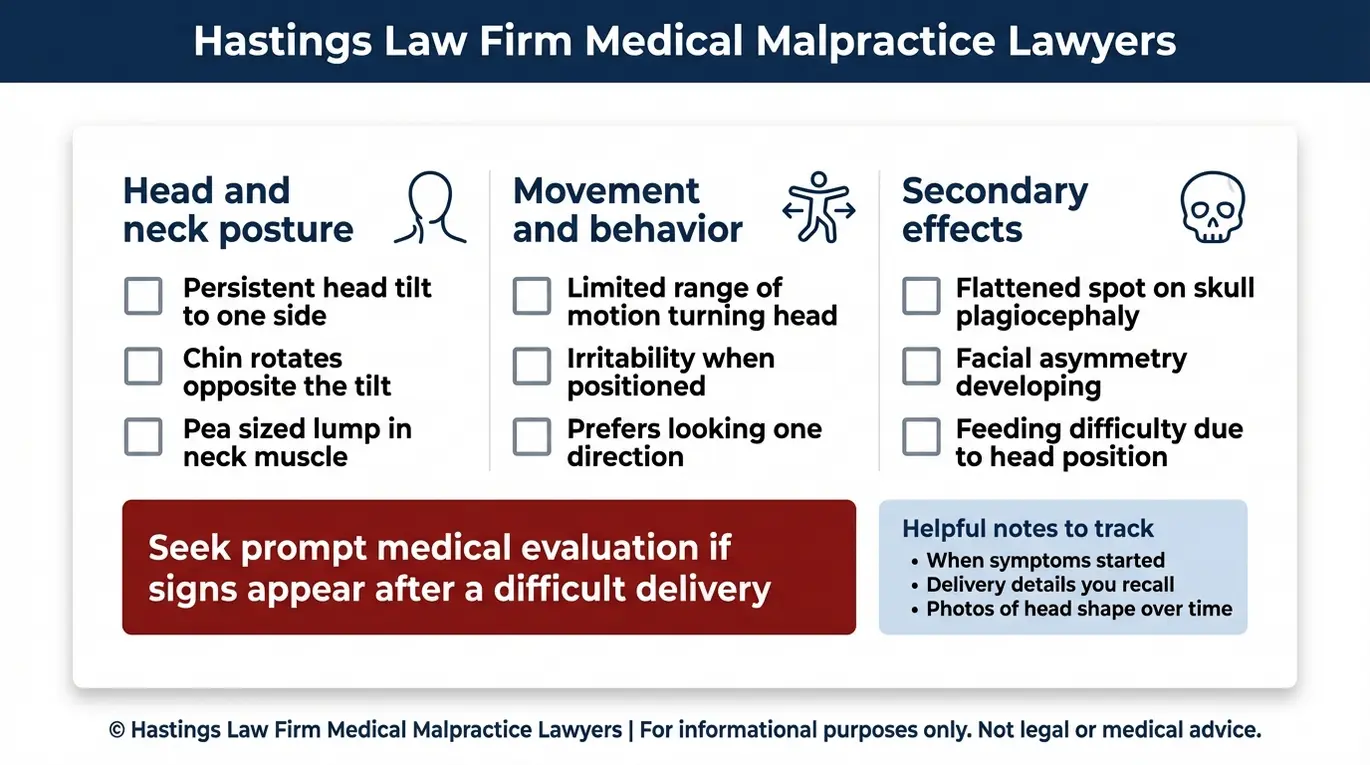
Symptoms of traumatic torticollis include a persistent head tilt, a small firm lump on the neck, limited range of motion, and early signs of facial asymmetry appearing shortly after a difficult birth. Identifying these signs early can help establish a timeline of when the injury occurred.
Our Arizona infant injury attorneys can help connect the timing of these symptoms to delivery events documented in the medical records.
Physical signs to watch for include:
- A consistent head tilt to one side with the chin rotated toward the opposite shoulder, which occurs when the neck muscle is shortened
- A pea-sized, firm lump in the neck muscle, sometimes called a sternocleidomastoid “pseudotumor” (a small mass of fibrous tissue within the SCM)
- Limited ability to turn the head in one direction, often making it difficult for the child to look toward a parent
- Uneven shoulder height or neck stiffness during movement, indicating physical discomfort
Behavioral signs may include:
- Irritability during feeding or when the head is gently repositioned because the movement causes strain
- A strong preference for looking in only one direction, which is a key clinical indicator of muscle tightness
- Resistance to tummy time or difficulty with head control, as the child lacks the necessary muscle flexibility
According to the Children’s Hospital of Philadelphia’s guide on Congenital Muscular Torticollis, untreated torticollis can lead to plagiocephaly, a flattening of one side of the skull caused by sustained pressure from the infant consistently resting on the same area of the head. Facial asymmetry can develop as well, affecting the alignment of the ears, eyes, and jaw.
Daily Struggles: Feeding and Sleeping Challenges
Torticollis, or wry neck, causes physical tension that complicates routine care. Feeding difficulties, such as breastfeeding trouble, can become especially challenging when the infant cannot comfortably turn toward one side. You may need to adjust nursing positions repeatedly to ensure the infant can latch.
Sleep positioning also requires attention to prevent further flattening of the skull. Parents often work with pediatric therapists to develop crib-side strategies that gently encourage the infant to look in the restricted direction. Consistent tummy time becomes a necessary part of the child’s daily routine to promote neck strengthening. These ongoing challenges underscore why early identification matters to our medical malpractice team.
The Hastings Law Firm Difference
Results matter, but what truly sets us apart is how we achieve them. Every verdict, every settlement, and every Arizona courtroom victory comes from one guiding promise: To treat each client’s fight for justice as if it were our own.
This balance of skill, experience, and empathy reflects our core philosophy that justice should not only compensate the injured, but also make healthcare safer nationwide.

Liability: Did Medical Negligence Cause Your Child’s Injury?
Medical negligence occurs if a doctor or nurse deviates from the accepted standard of care during delivery—such as using excessive force with forceps—resulting in muscle tearing or nerve damage that causes torticollis. Proving these errors requires a deep understanding of standard medical practices during labor and delivery.
Several delivery-room scenarios can give rise to a birth injury claim in Arizona. In these cases, we investigate whether a medical error caused the neck muscle trauma.
Improper traction is one of the most common factors we investigate. During shoulder dystocia or breech delivery, where the baby presents feet or buttocks first, a provider may apply excessive lateral or downward force on the infant’s head and neck. That pulling can tear the SCM, which may indicate a breach of safety protocols.
Instrument misuse is another area of concern. Forceps and vacuum extraction, a delivery method using a suction cup applied to the infant’s head, are sometimes necessary to assist with a difficult birth. But aggressive or improper application of these instruments can hyperextend the neck and injure the muscle.
Airway management errors during neonatal resuscitation can also contribute. If an infant requires intubation after birth, incorrect technique or excessive neck extension during the procedure may cause trauma to the same structures.
Failure to diagnose is a separate but equally important form of negligence. If a pediatrician does not identify the condition during early check-ups, the window for conservative treatment can close. Delayed diagnosis may result in permanent shortening of the muscle, increased facial asymmetry, or the eventual need for surgery. We examine whether the standard of care required earlier recognition and intervention.
Proving the Case: The Hastings Law Firm Approach
Proving a torticollis claim requires establishing a direct connection between what happened during delivery and the injury your child sustained. In medical malpractice law, this link is known as causation, and it must be proven with expert evidence.
As an Arizona birth trauma lawyer team, we follow a structured investigative process:
- Record retrieval and review: We obtain the complete delivery record, including fetal monitoring strips, nursing notes, physician orders, and any instrument usage logs. Our in-house medical staff, which includes nurse practitioners and board-certified patient advocates, reviews these records to identify gaps, inconsistencies, or charting irregularities.
- Diagnostic imaging analysis: We work with specialists to evaluate MRI or CT scan results that may reveal intramuscular hematomas or tissue damage consistent with trauma rather than a congenital cause. In some cases, electromyography (EMG), a test that measures the electrical activity of muscles and nerves, can help determine whether nerve damage is present.
- Expert witness support: Through our national expert network, we retain pediatric orthopedists, neurologists, and maternal-fetal medicine specialists who can independently review the evidence and provide expert witness testimony on causation. Their role is to explain, in clear terms, how the provider’s actions fell below the standard of care and directly caused the injury.
Under Arizona Revised Statutes §§ 12-2603 and 12-2604, medical malpractice claims require expert testimony to establish both the applicable standard and the breach. This is mandatory for legal success. This clinical evidence is the foundation of an infant injury claim.
We prepare every case from day one as if it will go to a jury. That level of preparation gives us a strong position whether the case resolves through settlement or proceeds to trial.

Damages: Calculating the Cost of Torticollis Treatment
Compensation in Arizona birth injury cases covers both economic damages, such as medical bills and therapy costs, and non-economic damages, including pain and suffering and the impact on your child’s quality of life. Arizona law allows families to seek full repayment for all harms related to a birth injury.
We help families account for the full scope of current and future expenses to ensure the settlement is adequate. Recoverable costs in a torticollis claim may include:
- Diagnostic testing: Costs for imaging studies (MRI, CT, ultrasound), specialist evaluations, and EMG testing used to assess the injury and determine its cause
- Ongoing physical therapy: Many children require months or years of physical therapy sessions focused on stretching exercises and strengthening the affected muscles to restore movement
- Helmet therapy: Helmet therapy, or cranial remodeling orthosis, is a custom-fitted helmet prescribed to correct plagiocephaly that develops alongside untreated torticollis. According to a Practical Review of the Cost of Diagnosis and Management of Positional Plagiocephaly published in PubMed Central, the costs associated with helmet therapy and related management can be significant for families
- Surgical intervention: If conservative treatment does not resolve the condition, muscle-release surgery (a procedure to surgically lengthen or divide the shortened SCM) may be necessary, adding hospital stays, anesthesia, and post-operative rehabilitation to the total cost
- Future medical care: Some children require ongoing monitoring, additional procedures, or corrective therapies as they grow to address long-term skeletal or muscular issues
- Pain and suffering: Financial recovery for the physical pain and emotional distress caused by the injury, which compensates for the impact on the child’s development
Non-economic damages reflect the less tangible but very real effects of the injury. Calculating these costs requires looking at the child’s long-term developmental needs. Families seeking legal compensation for wry neck often find that Arizona does not cap these damages, which means a jury can award the full value of your child’s suffering and future needs.
Why Choose Hastings Law Firm for Your Arizona Claim
Hastings Law Firm specializes exclusively in medical malpractice, offering a higher level of technical expertise than general personal injury firms. Medical malpractice law requires specific clinical knowledge that general injury firms may not possess.
Our founder, Tommy Hastings, is board certified in Personal Injury Trial Law by the Texas Board of Legal Specialization, a distinction held by fewer than 2% of Texas attorneys. His team includes former defense attorneys who previously represented hospitals, giving us direct insight into the strategies the other side will use. We also have in-house nursing professionals who review clinical records and help identify where the standard of care may have been violated.
For families looking for the best medical malpractice lawyer in Arizona, this combination of medical knowledge and litigation experience matters. Birth injury cases involving torticollis require a firm that understands both the clinical medicine and the courtroom.
We operate on a “no fee unless we win” basis. You pay no attorney fees or costs unless we secure a recovery for your family. There is no financial risk in reaching out for a consultation to discuss your child’s injuries.
Contact the Arizona Birth Injury Attorneys at Hastings Law Firm Today for Help
You do not have to face the hospital’s legal team on your own. Speaking with an experienced lawyer can help you decide how to best care for your child and protect your child’s future.
At Hastings Law Firm, we help families find the truth about what happened and pursue the compensation needed to protect their child’s future. Our team will review your child’s medical records, consult with medical experts, and give you an honest assessment of your case through a free, confidential case evaluation.
Contact us today to understand your options. There is no fee unless we win, and there is no obligation to move forward. We are here to answer your questions and help you manage the legal steps ahead.
Frequently Asked Questions About Torticollis & Wry Neck in Arizona


This content was researched and written by the Hastings Law Firm editorial team, which includes attorneys, medical professionals, and experienced researchers. Our writing is informed by internal knowledge and practical experience, and we cross-check critical details against authoritative sources cited throughout. Every piece undergoes human-led fact-checking and legal review. Because legal and medical information can change, if you spot an error, please contact us. Learn more about our content standards and review process on our editorial policy page.

Tommy Hastings, founder of Hastings Law Firm, is a board-certified personal injury trial lawyer dedicated exclusively to healthcare injury cases. Since 2001, he has represented injured patients and families in litigation against major hospital systems, pharmaceutical companies, and negligent healthcare providers nationwide. He has handled numerous high-profile cases that have drawn national media attention and resulted in multi-million dollar recoveries. He draws on that experience in his writing, helping readers understand how these cases work and what options may be available to them.
