


Arizona Thoracic Surgeon Malpractice Lawyer
Thoracic and lung surgery errors can be devastating when a preventable mistake turns a planned procedure into a medical crisis. Common problems include operative injuries, retained instruments, post operative monitoring failures, and anesthesia errors, and some events are considered so preventable that they signal major safety breakdowns. Proving negligence often depends on showing a deviation from the accepted standard of care, supported by qualified expert review and complete medical records. If you or a loved one were harmed or worse due to thoracic surgery malpractice in Arizona, contact Hastings Law Firm for a free, confidential case review.

Last Updated: July 27, 2026
Trial-Ready Arizona Medical Attorneys for Surgical Negligence
When a thoracic surgery, a procedure involving the chest, lungs, esophagus, or other structures within the chest cavity, leads to a serious injury or the loss of someone you love, the shock can be overwhelming. You trusted a specialist with your life, and something went wrong. That kind of experience can leave you searching for answers and unsure of where to turn.
Since 2005, our firm has focused exclusively on medical malpractice cases, including injuries from cardiothoracic procedures. Founded by board-certified trial attorney Tommy Hastings, our Arizona thoracic surgeon malpractice lawyer team understands how to investigate surgery on the heart, lungs, and surrounding organs. Our legal and medical professionals can review what happened, explain your options, and help you understand whether the care you received fell below the accepted standard. If you or a loved one was harmed during or after chest surgery, contact us for a free, confidential case evaluation.

Common Errors in Thoracic and Lung Surgery
Thoracic surgery errors often involve preventable mistakes such as organ perforation (an accidental puncture or tear of an internal organ), wrong-site procedures, or failure to diagnose postoperative complications like internal bleeding. These errors can turn a recoverable surgery into a life-threatening emergency.
Not every poor outcome means negligence occurred. But when a surgeon makes a mistake that a competent professional would have avoided under the same circumstances, that distinction matters. A thoracic surgery malpractice attorney can help determine whether the injury was a known risk or the result of a preventable error.
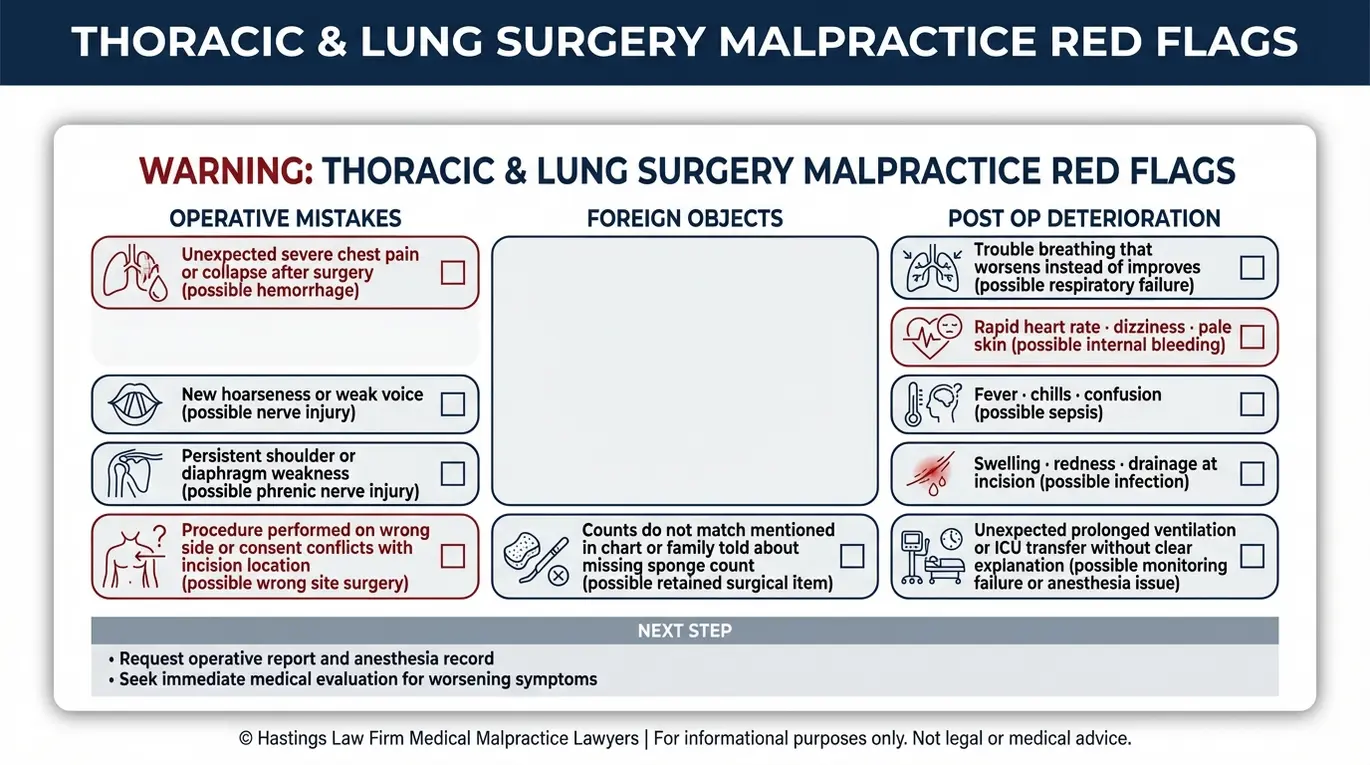
The types of surgical errors we investigate as a lung surgery negligence lawyer or in cardiothoracic surgeon malpractice cases generally fall into three categories:
- Operative mistakes: Accidentally cutting or damaging nearby structures during the procedure, such as nicking the esophagus, the aorta, or injuring the phrenic nerve during a lung resection. Nerve damage in the chest can lead to permanent breathing difficulty.
- Retained surgical instruments (RSI): Sponges, clamps, or other tools left inside the chest cavity after surgery. According to research published by PubMed Central on retained surgical objects, these are classified as preventable “never events,” yet they continue to occur due to breakdowns in counting protocols and team communication.
- Post-operative negligence: Failure to monitor a patient for signs of hemorrhage, sepsis (a life-threatening condition in which the body’s response to an infection causes organ dysfunction), or respiratory failure in the hours and days following surgery. The UMass Medical School Thoracic Surgery Discharge Instructions outline specific warning signs that surgical teams are expected to watch for during recovery.
Anesthesia mistakes also contribute to thoracic surgery injuries. Because many chest procedures require complex airway management, errors in drug dosing or ventilation monitoring can cause oxygen deprivation and lasting organ damage.
Never Events in Chest Surgery
“Never events” are errors so serious and so preventable that they should simply never happen. These incidents represent profound lapses in medical safety protocols. Wrong-site surgery, where the surgeon operates on the wrong side of the chest or the wrong lobe of the lung, is one example. Wrong-patient surgery is another.
Despite their name, these events still occur. Studies consistently show they are underreported, partly because institutional tracking systems vary and partly because disclosure is not always immediate. When a never event does happen, it often points to a systemic breakdown in safety protocols, not just an individual surgeon’s lapse. Surgical negligence of this nature can lead to catastrophic outcomes, including sepsis, organ failure, or death.
Proving Negligence in Cardiothoracic Procedures
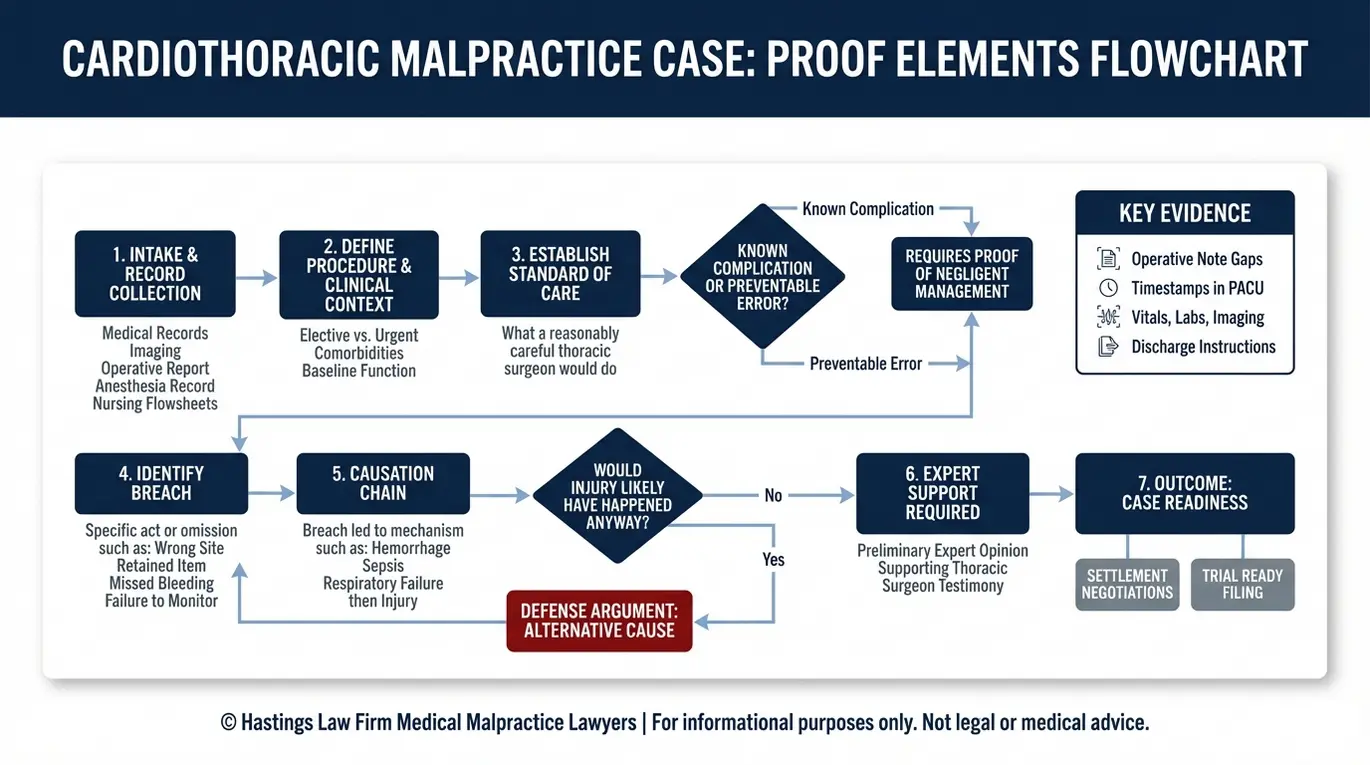
Proving negligence requires demonstrating that the thoracic surgeon deviated from the accepted medical standard of care, the level of treatment a reasonably competent surgeon would have provided under similar circumstances, and that this deviation directly caused the patient’s injury.
An Arizona surgical malpractice lawyer must build a case around three core elements. The first is establishing the medical standard of care: what should have been done during the procedure, given the patient’s condition and the surgical approach used. This includes evaluating whether techniques like one-lung ventilation (OLV) were managed properly. We also check whether vulnerable structures like the phrenic nerve (the nerve controlling the diaphragm) were adequately protected.
The second element is expert testimony. Under Arizona Revised Statutes § 12-2603, a preliminary expert opinion affidavit is required early in the case when suing a thoracic surgeon. This means a qualified cardiothoracic surgeon must review the records and confirm the claim has merit. We work with a national network of surgical experts who can evaluate the care, identify where the standard was breached, and provide credible expert medical testimony.
The third element involves informed consent. Before any elective procedure, a chest surgery malpractice attorney will examine whether the surgeon explained the specific risks involved. If the patient was not told about a known complication, and that complication occurred, the failure to disclose may itself be a basis for liability.
Uncovering Omitted Operative Notes
An operative note is the surgeon’s written account of what happened during the procedure. This documentation provides the surgeon’s official account of the surgery. It should describe each step, any complications, and how they were handled. In practice, these notes are sometimes dictated hours after surgery and may omit details that the surgeon would prefer not to document.
We compare operative notes against other records created in real time: nursing logs, anesthesia records, and the surgical count, which is the formal tracking of every sponge and instrument used during the case. Discrepancies between these records can reveal what actually happened in the operating room and help establish surgical negligence in a medical malpractice claim. They can also clarify if proper postoperative care instructions were documented.
The Hastings Law Firm Difference
Results matter, but what truly sets us apart is how we achieve them. Every verdict, every settlement, and every Arizona courtroom victory comes from one guiding promise: To treat each client’s fight for justice as if it were our own.
This balance of skill, experience, and empathy reflects our core philosophy that justice should not only compensate the injured, but also make health care safer nationwide.

Compensation for Botched Thoracic Surgeries
Patients harmed by surgical negligence may recover damages for medical bills, lost future income, pain and suffering, and in severe cases, wrongful death benefits for surviving family members. Financial recovery helps families manage the high costs of long-term medical care. The value of a claim depends on the severity of the injury, the cost of ongoing care, and how the error has affected the patient’s daily life.
Arizona recognizes several categories of damages in medical malpractice cases:
- Economic damages: Costs of corrective surgeries, hospital readmissions, long-term rehabilitation, and lost wages. For patients who can no longer work, this includes lost future earning capacity. Data from the Healthcare Cost and Utilization Project (HCUP Fast Stats) highlights how quickly costs accumulate after cardiovascular surgery complications.
- Non-economic damages: Compensation for physical pain, scarring and disfigurement, emotional distress, and loss of enjoyment of life.
- Wrongful death benefits: When a patient dies as a result of a surgical error, the family may pursue compensation for surgical error covering funeral expenses, loss of financial support, and loss of the relationship.
In rare cases involving extreme conduct, punitive damages may also be available. Securing full recovery often requires a detailed accounting of all current and future losses.
Time Limits for Filing Thoracic Surgery Lawsuits in Arizona
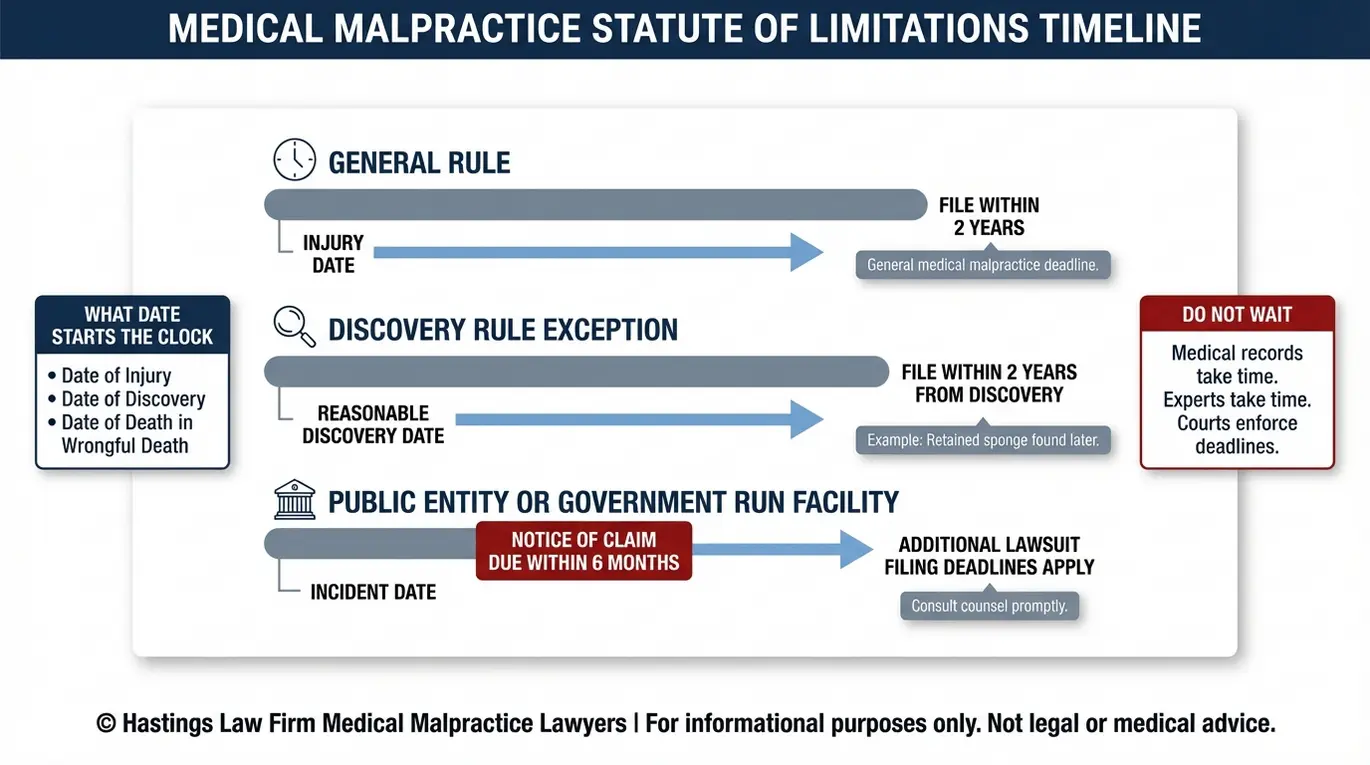
In Arizona, the standard statute of limitations for medical malpractice is generally two years from the date of the injury, though exceptions apply for hidden errors. Legal deadlines, known as the statute of limitations, dictate how long you have to seek justice.
Under Arizona Revised Statutes § 12-542, patients typically have two years from the date the injury occurred to file a claim. Missing this deadline usually means losing the right to pursue compensation entirely, regardless of how strong the case may be.
The Arizona medical malpractice statute of limitations does include an important exception known as the discovery rule. If the injury was not and could not have been immediately apparent, such as a retained sponge found months or years after surgery, the clock may begin when the patient reasonably discovered the harm. This distinction can be critical in cases involving hidden surgical errors, ensuring patients are not unfairly barred from justice due to circumstances beyond their control.
Do not assume you have more time than you do. Even if you believe the discovery rule applies, delays in gathering evidence and securing expert opinions can jeopardize your case. Consulting with a surgeon malpractice attorney as early as possible protects your ability to file.
Strict Deadlines for Public Entity Claims
If the surgeon or hospital is part of a government-run institution, such as a state university medical center or county hospital, different rules apply. These rules apply to any medical center funded by the government. Public facilities are subject to shorter notification requirements than private hospitals. Arizona requires a formal Notice of Claim to be filed within 180 days (six months) of the injury.
This is a strict deadline, and filing a claim in Phoenix or anywhere else in Arizona against a public entity without meeting this requirement can result in the case being dismissed before it ever reaches a courtroom. Failure to file on time releases the government entity from liability for the surgeon’s negligence. Because many patients do not realize their provider is state-funded, we help you clarify the time limit to sue a surgeon or facility early in the process.
Contact the Arizona Surgical Error Attorneys at Hastings Law Firm Today for Help
If you or a loved one suffered a serious injury during or after chest or lung surgery, you deserve honest answers about what went wrong. Our team provides the specialized knowledge needed to hold negligent providers accountable. Our team at Hastings Law Firm includes former defense attorneys, in-house medical staff, and experienced trial lawyers who focus entirely on medical malpractice cases.
As your Arizona thoracic surgeon malpractice lawyer, we prepare every case as if it will go to trial. That preparation gives us the ability to negotiate from a position of strength and, when necessary, present your case to a jury.
We offer a free, no-obligation case evaluation, and we work on a contingency fee basis, meaning you pay no attorney fees unless we secure a recovery for you. Contact us today to discuss what happened and learn what options may be available.
Frequently Asked Questions About Thoracic Surgeon Malpractice in Arizona


This content was researched and written by the Hastings Law Firm editorial team, which includes attorneys, medical professionals, and experienced researchers. Our writing is informed by internal knowledge and practical experience, and we cross-check critical details against authoritative sources cited throughout. Every piece undergoes human-led fact-checking and legal review. Because legal and medical information can change, if you spot an error, please contact us. Learn more about our content standards and review process on our editorial policy page.

Tommy Hastings, founder of Hastings Law Firm, is a board-certified personal injury trial lawyer dedicated exclusively to healthcare injury cases. Since 2001, he has represented injured patients and families in litigation against major hospital systems, pharmaceutical companies, and negligent healthcare providers nationwide. He has handled numerous high-profile cases that have drawn national media attention and resulted in multi-million dollar recoveries. He draws on that experience in his writing, helping readers understand how these cases work and what options may be available to them.
