


Arizona Testosterone Replacement Therapy Malpractice Lawyer
Written by: Hastings Law Firm | Reviewed by: Tommy Hastings | Updated: July 27, 2026
Testosterone replacement therapy can be safe when it is properly prescribed and monitored, but missed blood work and ignored warning signs can allow dangerous blood thickening to develop. When hematocrit rises without timely action, the risk of blood clots and life changing cardiovascular or neurological injury can increase. Concerns often center on excessive dosing, failure to screen for contraindications, and inadequate informed consent about known risks. If you or a loved one were harmed or worse due to testosterone therapy monitoring failures in Arizona, contact Hastings Law Firm for a free, confidential case review.

Trusted Arizona Medical Attorneys for TRT Monitoring Failure Claims
What You Should Know About TRT Monitoring Failure Claims in Arizona:
- Severe injury can follow testosterone therapy when rising hematocrit is not detected or addressed and blood becomes dangerously thick.
- Recovery can turn on whether the record shows missed lab monitoring or ignored abnormal results during testosterone therapy.
- Liability disputes often focus on excessive dosing and whether testosterone levels were pushed beyond a normal physiological range.
- Options can narrow if contraindications were not evaluated before prescribing testosterone therapy, especially with prior cardiovascular history.
- Accountability can be harder to establish when causation is contested and alternative explanations like age or pre existing conditions are raised.
- A malpractice claim can be strengthened when product labeling warnings exist but the provider still fails to monitor for the warned of complications.
- Compensation can include medical bills, lost wages, and non economic harms tied to the long term impact of the injury.
- The ability to pursue a claim can be lost if filing requirements are not met in time under Arizona law.
- Different limits can apply when care occurred at a VA or government clinic and required federal steps are not followed.
- Key proof can depend on lab results and clinic notes that show a worsening pattern without appropriate dose changes or pauses in therapy.

A Healthcare Focused Law Firm
If you or someone you love suffered a stroke, heart attack, or blood clot while on testosterone therapy, you likely have questions that no one has been willing to answer. You may sense that something went wrong with your care, that the warning signs were there but no one acted on them. That instinct deserves to be taken seriously.
At Hastings Law Firm, founded by board-certified trial attorney Tommy Hastings, we focus exclusively on medical malpractice. Our legal and medical team, which includes in-house nurse consultants and former defense attorneys, investigates hormone therapy injuries by reconstructing the clinical timeline, analyzing lab results, and identifying exactly where the standard of care broke down. As an experienced Arizona testosterone replacement therapy malpractice lawyer team, we understand both the medicine and the law behind these cases.
If you believe your provider failed to properly monitor your testosterone therapy, we can review what happened and explain your options at no cost and no obligation.
The Hidden Dangers of Improperly Monitored Testosterone Therapy
Improperly monitored testosterone therapy can cause blood to thicken dangerously, a condition called polycythemia, which drastically increases the risk of blood clots, heart attacks, and strokes. This section explores how these medical risks develop when hormone levels are not correctly managed by a healthcare provider.
Testosterone replacement therapy, often called TRT, is a medically prescribed treatment designed to restore normal hormone levels in men diagnosed with low testosterone, also known as low T or hypogonadism. When administered and monitored correctly, it can be safe and effective. The problem arises when monitoring falls short.
How TRT Affects Your Blood
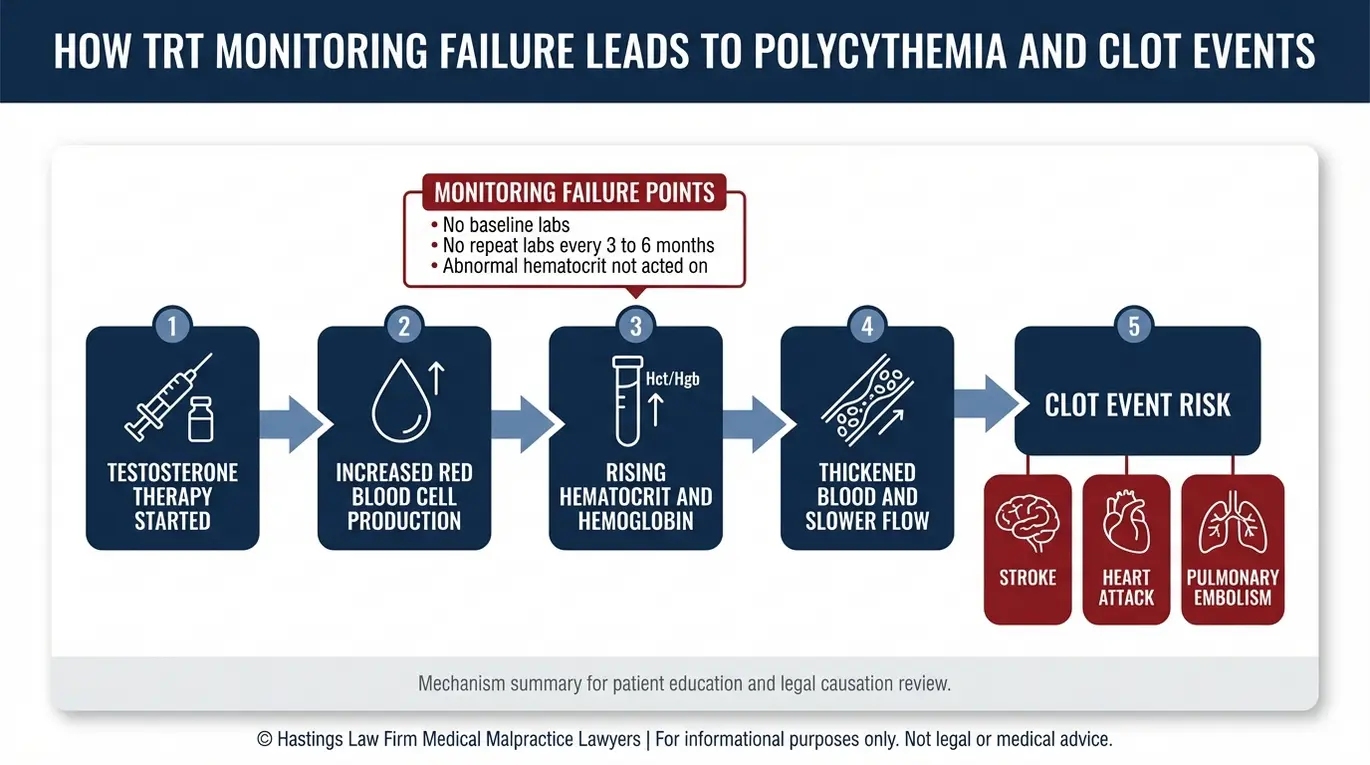
Testosterone stimulates the body to produce more red blood cells through multiple mechanisms, including effects on erythropoietin and bone marrow. In controlled amounts, this can actually be beneficial. But when doses are too high or blood levels go unchecked, red blood cell production can accelerate beyond safe limits. The blood becomes thicker and more viscous, a state that slows circulation and dramatically raises the chance of a clotting event.
According to research published in Blood Advances on drug-induced erythrocytosis, testosterone is one of the most common pharmaceutical causes of this dangerous elevation in red blood cells. When left unmanaged, the consequences can be severe and irreversible.
What can go wrong when monitoring fails:
- Polycythemia develops silently, with hematocrit levels climbing into dangerous territory without the patient knowing
- Thickened blood increases the risk of deep vein thrombosis or pulmonary embolism, a blood clot in the lungs
- Stroke can result from clots that travel to or form in the brain’s blood vessels
- Heart attack risk rises as thickened blood strains the cardiovascular system
The growth of the “Low T” industry has made these injuries more common. Men’s health and hormone optimization clinics have expanded rapidly in Arizona and across the country, many of them prioritizing volume over individualized patient care. Some clinics prescribe bioidentical testosterone, a synthetic hormone chemically identical to that produced by the human body, or injectable formulations without establishing adequate follow-up protocols.
A patient may receive an initial prescription and never be scheduled for the blood work needed to catch problems before they become emergencies. If you experienced a serious cardiac or neurological event during TRT, an Arizona testosterone malpractice attorney can help determine whether missed monitoring contributed to your injury. A TRT injury lawyer with medical expertise can evaluate your lab history and clinical timeline to identify gaps in care.
Common Malpractice Errors in Hormone Replacement Clinics
Malpractice in TRT often involves prescribing excessive doses, failing to perform regular blood work, or ignoring rising hematocrit levels that signal dangerous blood thickening. These errors occur when a provider fails to meet the standard of care, which is the level of care a competent medical professional would provide under similar circumstances. These are not judgment calls in gray areas of medicine. They are failures to follow well-established clinical guidelines and clinical studies.
Failure to Monitor Blood Work
The single most common error we see is the absence of routine lab testing after a patient begins testosterone therapy. Clinical guidelines call for hematocrit and hemoglobin checks at regular intervals, typically every three to six months. When a clinic skips these tests or spaces them too far apart, polycythemia, the condition of abnormally high red blood cell concentration, can develop undetected.
Ignoring Contraindications
Some patients should not receive TRT at all. Contraindications to testosterone therapy are pre-existing medical conditions that make the treatment unsafe, such as a history of heart disease, prior stroke, or certain prostate conditions. Prescribing testosterone to a patient with these risk factors without a thorough evaluation and informed consent discussion can constitute medical negligence.
Dangerous Dosing Practices
Responsible TRT aims to bring testosterone levels into a normal physiological range. Some clinics, however, prescribe supraphysiologic doses, meaning levels that exceed the body’s natural range and enter territory more associated with performance enhancement than medical treatment. These elevated doses accelerate red blood cell production far beyond what careful monitoring can safely manage.
Standard of Care vs. Negligence
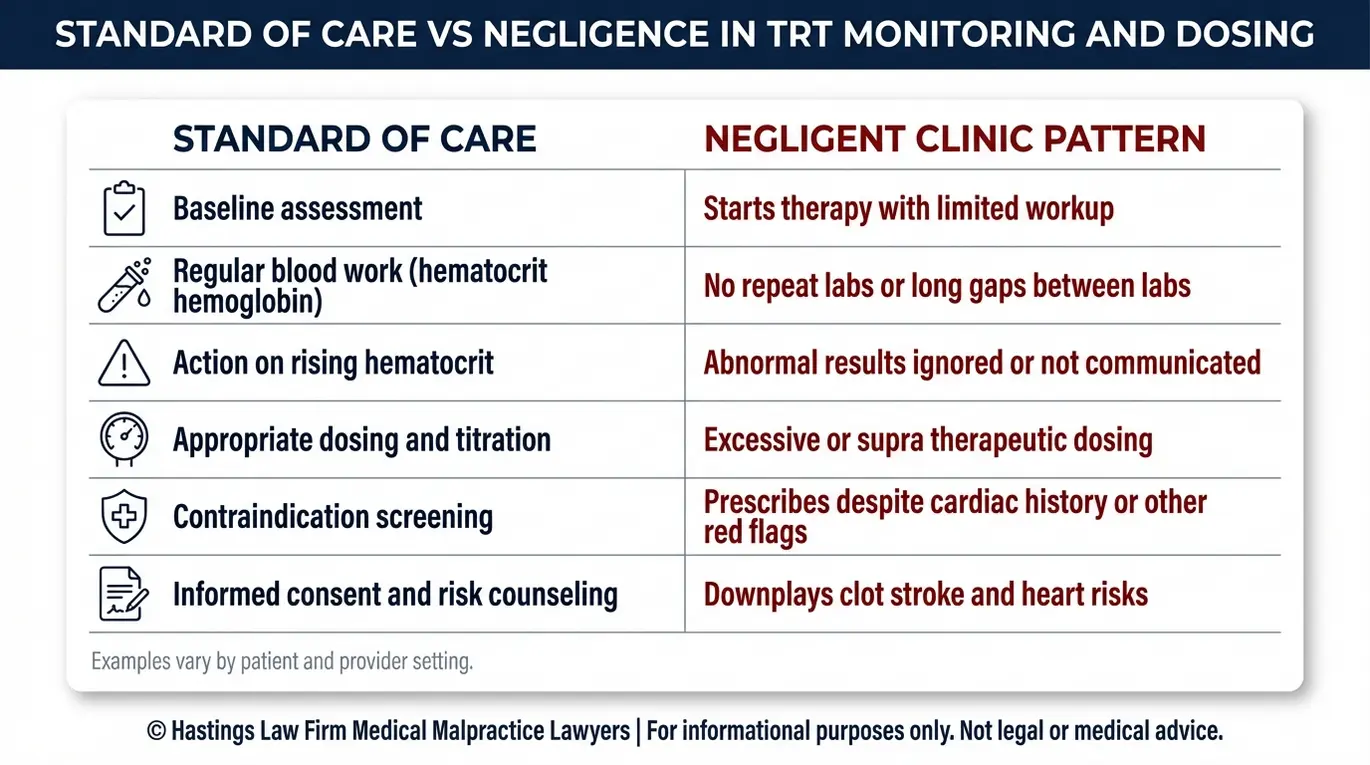
| Responsible TRT Practice (Standard of Care) | Common Negligent Practice |
|---|---|
| Confirm hypogonadism diagnosis with two separate morning blood tests before prescribing | Prescribe TRT based on symptoms alone or a single borderline lab result |
| Monitor hematocrit and hemoglobin every 3–6 months | No follow-up blood work after initial prescription |
| Reduce dose or pause therapy if hematocrit exceeds 54% | Continue treatment despite rising hematocrit levels |
| Screen for cardiac history and prostate conditions before starting therapy | Prescribe without reviewing full medical history |
| Discuss risks and obtain informed consent | Rush the patient through paperwork without meaningful risk discussion |
A testosterone replacement therapy malpractice lawyer in Arizona can review your medical records to determine whether your provider followed these standards or fell short.
Polycythemia and Blood Thickening Injuries
Polycythemia, sometimes referred to clinically as testosterone-induced erythrocytosis, is a condition in which the body produces too many red blood cells. It is a known and manageable side effect of TRT. It becomes dangerous only when a provider fails to detect or respond to it.
The key measurement is hematocrit (Hct), the percentage of your blood volume made up of red blood cells. This measurement helps determine if the blood is becoming too thick to circulate safely. A normal hematocrit for adult men generally falls between 40% and 50%. When testosterone therapy pushes this number above 54%, the blood becomes thick enough to significantly increase clotting risk.
This is exactly why regular blood work matters. When a provider monitors hematocrit levels and responds appropriately, the risk can be managed effectively. This may include lowering the dose, pausing therapy, or ordering therapeutic phlebotomy, which is a controlled blood draw to reduce red blood cell concentration. When those steps are skipped, the patient’s medical records often tell a clear story of escalating danger that went unaddressed. That pattern of inaction is central to establishing causation in these cases.
The Hastings Law Firm Difference
Results matter, but what truly sets us apart is how we achieve them. Every verdict, every settlement, and every Arizona courtroom victory comes from one guiding promise: To treat each client’s fight for justice as if it were our own.
This balance of skill, experience, and empathy reflects our core philosophy that justice should not only compensate the injured, but also make healthcare safer nationwide.

Establishing Liability for Hormone Therapy Malpractice in Arizona
To prove liability, a patient must show that the TRT provider deviated from the accepted medical standard of care, such as failing to adjust dosage despite abnormal lab results, and that this deviation directly caused the injury. In medical legal terms, legal responsibility refers to the obligation a provider has to follow safety protocols. Every element must be supported by evidence and, in most cases, by expert testimony.
Arizona TRT malpractice attorneys approach these cases by methodically building each element of the claim. Here is how that process typically works:
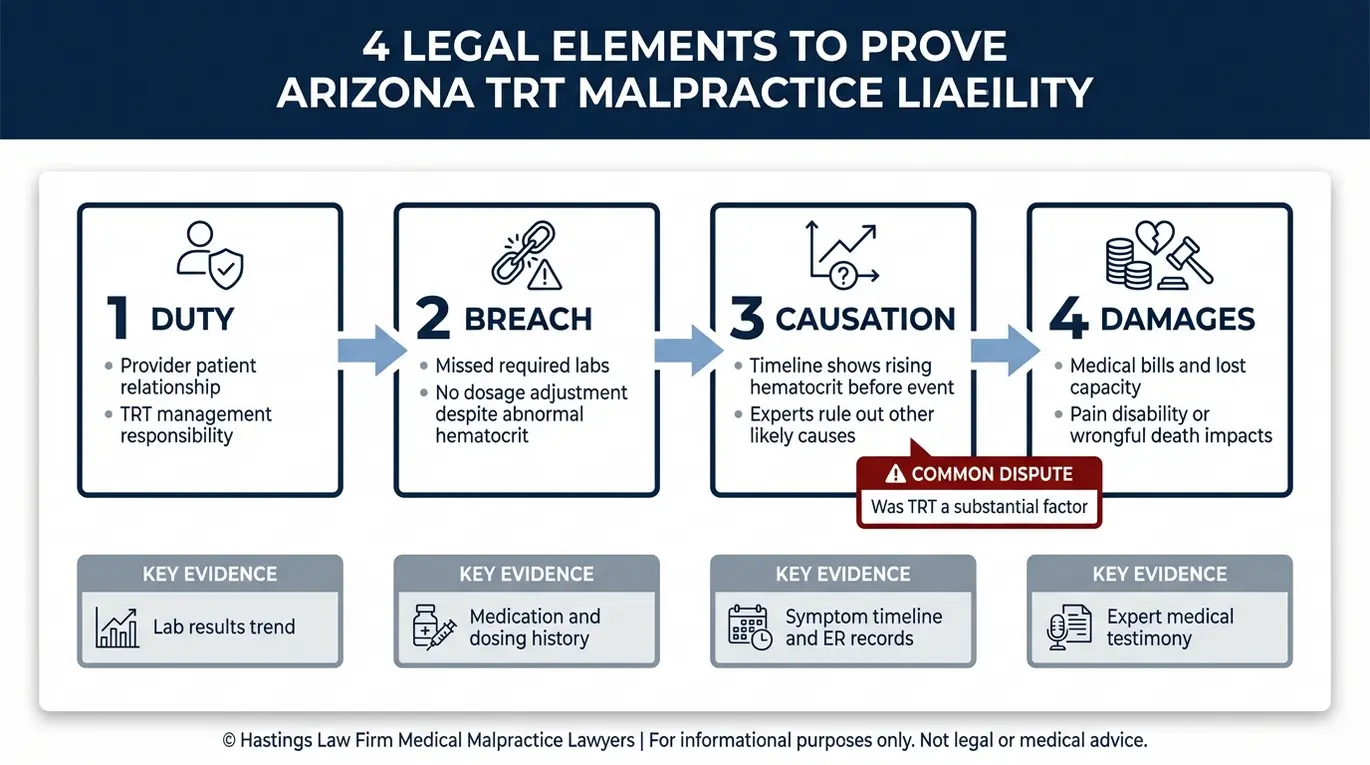
The four elements of a medical malpractice claim:
- Duty of Care: The provider had a doctor-patient relationship and owed a duty to treat the patient according to accepted medical standards. For TRT, this means a reasonable physician would monitor blood levels, adjust dosing as needed, and respond promptly to abnormal results, such as ordering therapeutic phlebotomy, a procedure to withdraw blood and reduce red blood cell count, or stopping testosterone when hematocrit exceeds safe thresholds.
- Breach of Duty: The provider failed to meet that standard. Evidence of breach may include missing lab orders, ignored test results, or a complete absence of follow-up appointments. If hematocrit climbed to dangerous levels and the clinic continued therapy without intervention, that gap in care may constitute a breach.
- Causation: The breach must be directly linked to the injury. This is often the most contested element. Proving that a stroke or heart attack was caused by TRT-induced polycythemia, rather than by other lifestyle or genetic factors, requires detailed analysis. Expert witnesses, often endocrinologists or hematologists, review the medical records to establish a timeline showing that elevated hematocrit levels from unmonitored therapy precipitated the clotting event. Hemoglobin (Hb), the oxygen-carrying protein in red blood cells, is another marker experts examine alongside hematocrit to confirm the mechanism of injury. This expert analysis is essential to refute common defense arguments that attribute the injury to age or pre-existing conditions rather than the therapy itself.
- Damages: The patient suffered real, measurable harm as a result, whether physical, financial, or both.
Published research and clinical guidelines, including those from the Journal of the American Medical Association (JAMA) and the FDA’s prescribing requirements, help establish what the medical community considers appropriate monitoring. Our team uses these standards, combined with expert medical testimony, to build a clear picture of what should have happened and what actually did.
Res Ipsa Loquitur and Arizona Malpractice Law
In some cases under Arizona law, the legal doctrine of res ipsa loquitur, a Latin phrase meaning “the thing speaks for itself,” may apply. This legal concept allows a jury to infer negligence based on the nature of the injury and shifts the burden of proof.
Consider a scenario where a previously healthy patient with no cardiovascular history suffers a massive stroke within weeks of starting hormone therapy, and records show no blood monitoring was ever performed. In circumstances like these, the injury itself may serve as evidence that something went wrong in the patient’s care. Arizona courts may allow this inference when the patient can show the injury was under the provider’s control and could not have occurred in the absence of negligence. It does not eliminate the need for expert testimony, but it can strengthen the case.
Malpractice vs. Product Liability in Testosterone Cases
Product liability claims target the drug manufacturer for defective warnings or a dangerous product, while medical malpractice claims target the doctor for failing to safely prescribe, administer, or monitor the drug for the specific patient. This distinction determines whether the legal action focuses on the medicine’s design or the physician’s professional conduct.
In TRT litigation, most cases involve malpractice, not product liability. The testosterone medications themselves, whether brand-name products like AndroGel or generic injectables, carry FDA-required labeling warnings about risks including polycythemia, venous thromboembolism, and increased blood pressure. These warnings alert prescribers to monitor patients for potentially serious complications.
The existence of these warnings actually strengthens a malpractice claim rather than weakening it. A doctor cannot prescribe a medication that carries explicit safety warnings and then fail to monitor the patient for those exact complications. The warning creates a heightened duty to screen patients carefully and track their blood levels throughout treatment. While product liability claims focus on dangerous drugs and defective labeling, malpractice claims address the failure of professional judgment.
Misinterpreting symptoms can lead to medical misdiagnosis, where the provider fails to recognize the therapy is causing harm. Even if the drug is safe when used correctly, it becomes a hazard when the doctor ignores the manufacturer’s safety protocols.
| Factor | Medical Malpractice (Doctor/Clinic Liability) | Product Liability (Manufacturer Liability) |
|---|---|---|
| Who is responsible | The prescribing doctor or clinic | The pharmaceutical company |
| Basis of the claim | Failure to monitor, improper dosing, or ignoring warning signs | Defective product design or inadequate safety warnings |
| Key evidence | Medical records, lab results, treatment timeline | Drug labeling, clinical studies, FDA submissions |
| Most common in TRT cases? | Yes, the majority of current cases | Less common, as most products now carry FDA warnings |
A TRT negligence lawyer in Arizona can evaluate which type of claim, or both, applies to your situation based on the specific facts involved.
Compensation for Victims of Improper Testosterone Administration
Patients who have been harmed may recover economic damages for medical bills and lost wages, as well as non-economic damages for pain, suffering, and loss of enjoyment of life caused by the preventable injury. The specific value of a case depends on the severity of the harm and its long-term impact on the patient’s life.
An Arizona testosterone replacement therapy malpractice lawyer will work with medical and financial experts to calculate the full scope of damages, not just immediate costs but the ongoing burden a serious injury creates.
Types of compensation that may be available to patients:
- Emergency and ongoing medical expenses: Hospital stays, surgeries, cardiac rehabilitation, neurological care, prescription medications, and any future treatments related to the injury
- Life care plans: For patients who suffered a stroke or other disabling event, a life care plan calculates the projected cost of long-term care, including therapy, home modifications, assistive devices, and in-home nursing. These plans are meticulously created by medical experts to ensure that every anticipated need is accounted for, preventing the financial burden from falling on the family.
- Lost wages and lost earning capacity: If the injury prevents you from returning to work or forces you into a lower-paying role, these losses can be significant over a lifetime, threatening your future financial security.
- Pain and suffering: Physical pain, emotional distress, anxiety, depression, and the daily burden of living with a preventable injury
- Loss of enjoyment of life: The activities, hobbies, and relationships that the injury has diminished or taken away
- Wrongful death damages: If a cardiac event caused by unmonitored TRT was fatal, surviving family members may pursue a wrongful death claim for their loss, including funeral expenses, lost financial support, and loss of companionship
Research published in ClinicoEconomics and Outcomes Research (Dove Press) documents the substantial healthcare costs associated with acute ischemic stroke, demonstrating that even a single event can generate hundreds of thousands of dollars in medical expenses over time. These documented costs are a critical part of building a complete damages claim.
How to File a TRT Malpractice Lawsuit in Arizona
Filing a lawsuit involves obtaining medical records, securing a preliminary expert opinion affidavit from a qualified expert, and filing a complaint within the two-year statute of limitations. Arizona law requires specific procedural steps to ensure claims have merit before they proceed. Each of these steps requires careful coordination, and missing any one of them can put your case at risk.
Here is what the process generally looks like:
- Free case evaluation: The process begins with a confidential consultation. At Hastings Law Firm, our in-house patient advocates and nurse consultants listen to your experience and begin gathering the information needed to assess your claim.
- Medical records collection and review: Our medical team requests and analyzes your complete treatment records, including lab results, prescription logs, and clinic notes. We look for patterns such as missing blood work, untreated rising hematocrit, or dosing decisions that fall outside accepted guidelines.
- Expert medical review: Arizona law requires an early expert assessment. Under A.R.S. § 12-2602, a preliminary expert opinion affidavit must be served with the claimant’s initial disclosures as required by the Arizona Rules of Civil Procedure. This affidavit comes from a qualified physician, often an endocrinologist or cardiologist, who confirms that the standard of care was breached and that the breach caused the injury.
- Filing the complaint: Once the investigation supports a viable claim, we file the formal complaint in the appropriate Arizona court, initiating the lawsuit.
- Discovery, depositions, and litigation: The case moves into discovery, where both sides exchange evidence. Our attorneys, including former defense counsel who understand hospital litigation tactics from the inside, handle depositions, motions, and all pretrial preparation.
- Resolution: Many cases resolve through negotiated settlement once the evidence is fully developed. If a fair resolution cannot be reached, we are prepared to take the case to trial. We prepare every case from day one as if it will go to a jury. This trial-ready strategy ensures we are ready to advocate for you effectively.
The statute of limitations in Arizona is generally two years from the date of injury. Because TRT injuries can develop gradually, the discovery rule may apply, meaning the clock starts when you knew or reasonably should have known about the connection between your therapy and the harm. Even so, delays can be costly. Consulting a testosterone lawsuit attorney Phoenix residents trust early protects your ability to file.
Claims Involving VA or Government Clinics
If your TRT was prescribed and managed at VA medical facilities or another government-run clinic, different rules apply. Claims against the U.S. Government for actions by federal healthcare providers fall under the Federal Tort Claims Act (FTCA). This law requires an administrative claim to be filed with the appropriate federal agency before any lawsuit can proceed. The deadlines and procedures differ from standard Arizona malpractice cases, and failing to follow the federal process can bar your claim entirely. Our team can help determine whether the FTCA applies and guide you through the required steps.
Contact the Arizona Healthcare Malpractice Attorneys at Hastings Law Firm Today for Help
If you or a loved one suffered a stroke, heart attack, or pulmonary embolism while undergoing testosterone therapy, you may have a valid medical negligence claim. These injuries are often preventable, and you deserve to know whether your provider met the standard of care.
Hastings Law Firm represents TRT injury patients across Arizona from our Phoenix office. Our team of attorneys, nurse consultants, and medical experts will review your records, identify what went wrong, and explain your legal options clearly.
We charge no fees unless we recover compensation for you. Every consultation is free, confidential, and without obligation. Contact us today to tell us what happened. We are ready to listen and help you understand your path forward.
Frequently Asked Questions About Testosterone Replacement Therapy Malpractice in Arizona


This content was researched and written by the Hastings Law Firm editorial team, which includes attorneys, medical professionals, and experienced researchers. Our writing is informed by internal knowledge and practical experience, and we cross-check critical details against authoritative sources cited throughout. Every piece undergoes human-led fact-checking and legal review. Because legal and medical information can change, if you spot an error, please contact us. Learn more about our content standards and review process on our editorial policy page.

Tommy Hastings, founder of Hastings Law Firm, is a board-certified personal injury trial lawyer dedicated exclusively to healthcare injury cases. Since 2001, he has represented injured patients and families in litigation against major hospital systems, pharmaceutical companies, and negligent healthcare providers nationwide. He has handled numerous high-profile cases that have drawn national media attention and resulted in multi-million dollar recoveries. He draws on that experience in his writing, helping readers understand how these cases work and what options may be available to them.
