


Arizona Surgical Site Infection Lawyer
A serious infection after surgery can turn recovery into a prolonged medical crisis, especially when sterile technique, wound care, or antibiotic timing falls short of accepted standards. Surgical site infections can worsen quickly and lead to deep tissue damage, organ failure, sepsis, and fatal outcomes, along with additional procedures and lasting disability. Understanding how infections are classified, how warning signs are handled, and how hospitals track infection rates can clarify whether an outcome was preventable. If you or a loved one were harmed or worse due to surgical site infection malpractice in Arizona, contact Hastings Law Firm for a free, confidential case review.

Last Updated: July 27, 2026
Trusted Arizona Medical Attorneys for Post-Operative Infection Malpractice Claims
Surgery is supposed to help you heal, not result in avoidable complications. If you or a loved one developed a serious infection after a surgical procedure, you may have many questions about what went wrong. These are common concerns, and we help families address the complex issues that follow surgery.
At Hastings Law Firm, we focus exclusively on medical malpractice. Our team, which includes former defense attorneys and experienced hospital nurses, understands how facilities operate from the inside. We review cases like yours every day, examining records and protocols to determine whether a preventable error caused your infection. As your Arizona surgical site infection lawyer, we can help you understand what happened and what your legal options may be.
If you are ready to get answers, contact us for a free, confidential case evaluation. There is no fee unless we recover compensation on your behalf.

Defining Surgical Site Infections (SSI) in Arizona Medical Malpractice Cases
A Surgical Site Infection (SSI) is a type of hospital-acquired infection (HAI) that occurs after surgery in the part of the body where the surgery took place, often resulting from a breach in sterile technique or negligent post-operative care. According to the CDC’s FAQs on Surgical Site Infections, SSIs account for a significant portion of all healthcare-associated infections reported nationally.
An SSI is not simply an unfortunate complication. In many cases, it is the direct result of a failure to follow established protocols for sterilization, wound care, or antibiotic administration. When a hospital or surgical team deviates from the standard of care, that deviation can form the basis of a medical malpractice claim. The standard of care refers to the accepted level of treatment a reasonably competent provider would deliver under similar circumstances.
This failure to adhere to safety protocols turns a routine recovery into a serious medical challenge. A focused lawyer for infection cases can investigate whether your infection was a preventable error rather than a random complication. The consequences of a negligent SSI can be severe. What begins as redness or swelling around an incision can progress to deep tissue damage, organ failure, sepsis, and death.
Patients may face prolonged hospitalizations, multiple corrective surgeries, and lasting disability. An experienced Arizona surgical site infection lawyer can evaluate the facts of your situation, identify where the standard of care was breached, and determine who may be held liable for the harm caused.
Classifying Types of Infections and Warning Signs
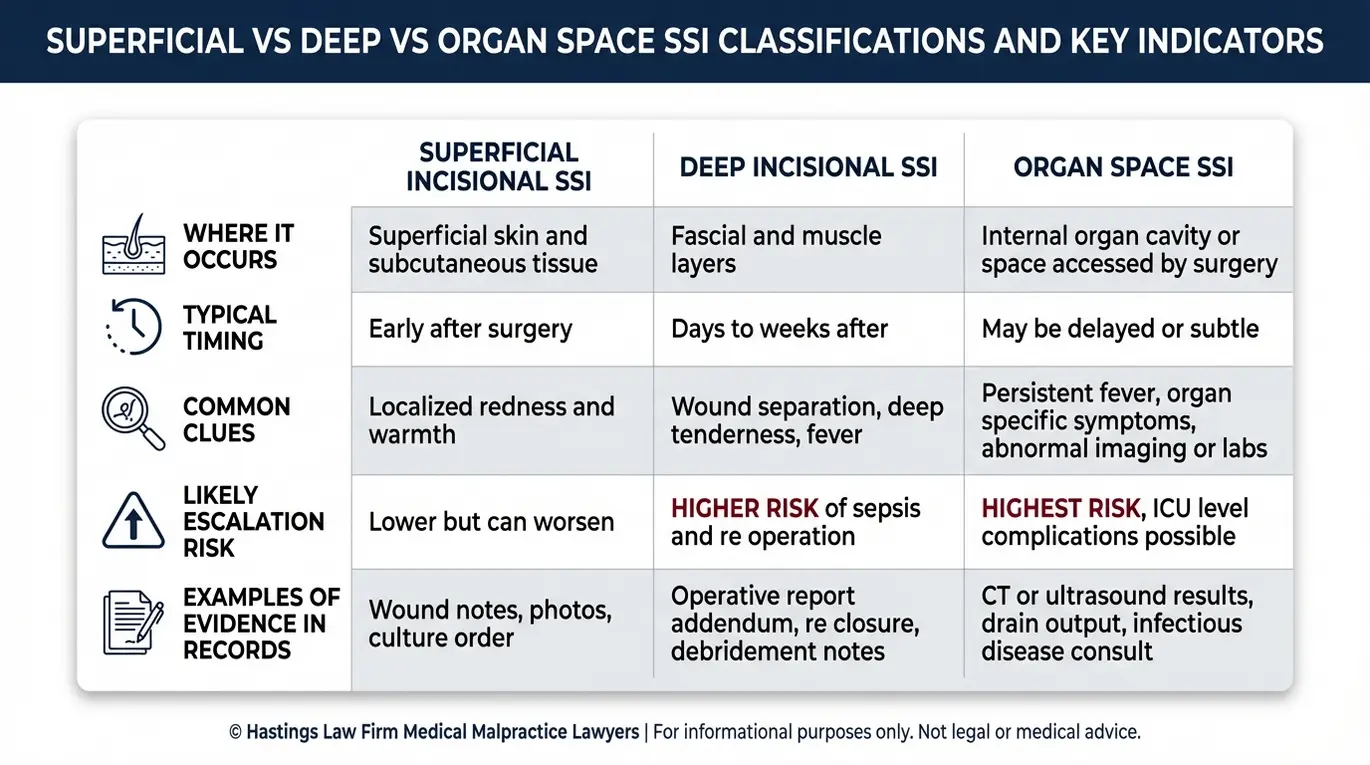
Infections are classified by depth and severity, ranging from superficial skin infections to deep soft tissue or organ/space infections, with symptoms often escalating from redness and fever to life-threatening sepsis if left untreated. Understanding these classifications matters in a legal claim because the type and severity of the infection often correlates directly to how the negligence occurred and what damages resulted.
SSI Classifications
| Type | Location | Severity |
|---|---|---|
| Superficial Incisional SSI | Skin and subcutaneous tissue at the incision site | Generally the least severe; involves redness, swelling, or drainage at the wound surface |
| Deep Incisional SSI | Deeper soft tissues such as fascia and muscle layers | More serious; may require surgical reopening and debridement of infected tissue |
| Organ/Space SSI | Any organ or body cavity that was opened or manipulated during surgery | Most dangerous; can lead to abscess formation, organ failure, and sepsis |
Superficial incisional SSI, an infection affecting only the skin and tissue immediately surrounding the surgical cut, is generally less severe than a deep incisional SSI, which extends into the fascia or muscle beneath the incision. Organ/space SSIs are the most dangerous, involving infection in internal organs or body cavities that were accessed during the procedure. Identifying the specific pathogen and infection level is a task for a knowledgeable surgical infection attorney. Seeking post-operative infection counsel immediately ensures that evidence of the infection’s progression is preserved.
Common Pathogens
In a surgical setting, pathogens are germs that cause disease. Several dangerous organisms are frequently identified in surgical infection cases:
- Staphylococcus aureus (Staph infection) is among the most common bacteria found in SSIs.
- MRSA (Methicillin-resistant Staphylococcus aureus) is a drug-resistant strain of staph that is particularly difficult to treat and often linked to hospital environments.
- Clostridium difficile (C. diff) can develop after antibiotic use disrupts normal gut bacteria, leading to severe gastrointestinal complications.
Red Flag Symptoms
Medical staff have a duty to monitor for and respond to symptoms of infection. Patients and staff should watch for signs after surgery, as early detection is important for a safe recovery. The following signs should prompt immediate evaluation:
- Fever above 101°F persisting beyond 48 hours post-surgery
- Increasing redness, warmth, or swelling around the incision
- Purulent (pus-like) drainage from the wound
- Extreme or worsening pain at the surgical site
- Elevated white blood cell count on lab work
- Rapid heart rate or low blood pressure suggesting sepsis
When these warning signs are dismissed or overlooked, a treatable infection can become a fatal one. An Arizona infection malpractice lawyer examines the medical timeline to determine whether providers failed to act on clear clinical indicators.
Distinguishing Surgical Site from Secondary Infections
Not every post-operative infection originates at the incision. Secondary infections can develop from a catheter, an IV line, or intubation during mechanical ventilation. These issues often relate to care protocols for medical devices rather than the surgical site itself.
Identifying the true source of the infection is essential to building an accurate claim and holding the right parties accountable. Ventilator-associated pneumonia, catheter-related bloodstream infections, and IV site infections are distinct from SSIs but equally preventable.
The Hastings Law Firm Difference
Results matter, but what truly sets us apart is how we achieve them. Every verdict, every settlement, and every Arizona courtroom victory comes from one guiding promise: To treat each client’s fight for justice as if it were our own.
This balance of skill, experience, and empathy reflects our core philosophy that justice should not only compensate the injured, but also make health care safer nationwide.

Common Causes of Hospital-Acquired Infections in Arizona Surgical Centers
Negligence in the operating room often stems from failures in sterilization, such as using unsterilized instruments, improper skin preparation, or failing to administer prophylactic antibiotics, preventive antibiotics given before surgery to reduce the risk of infection, within the required timeframe. The CDC’s Surgical Site Infection Prevention Guidelines outline specific protocols that hospitals are expected to follow before, during, and after every procedure.
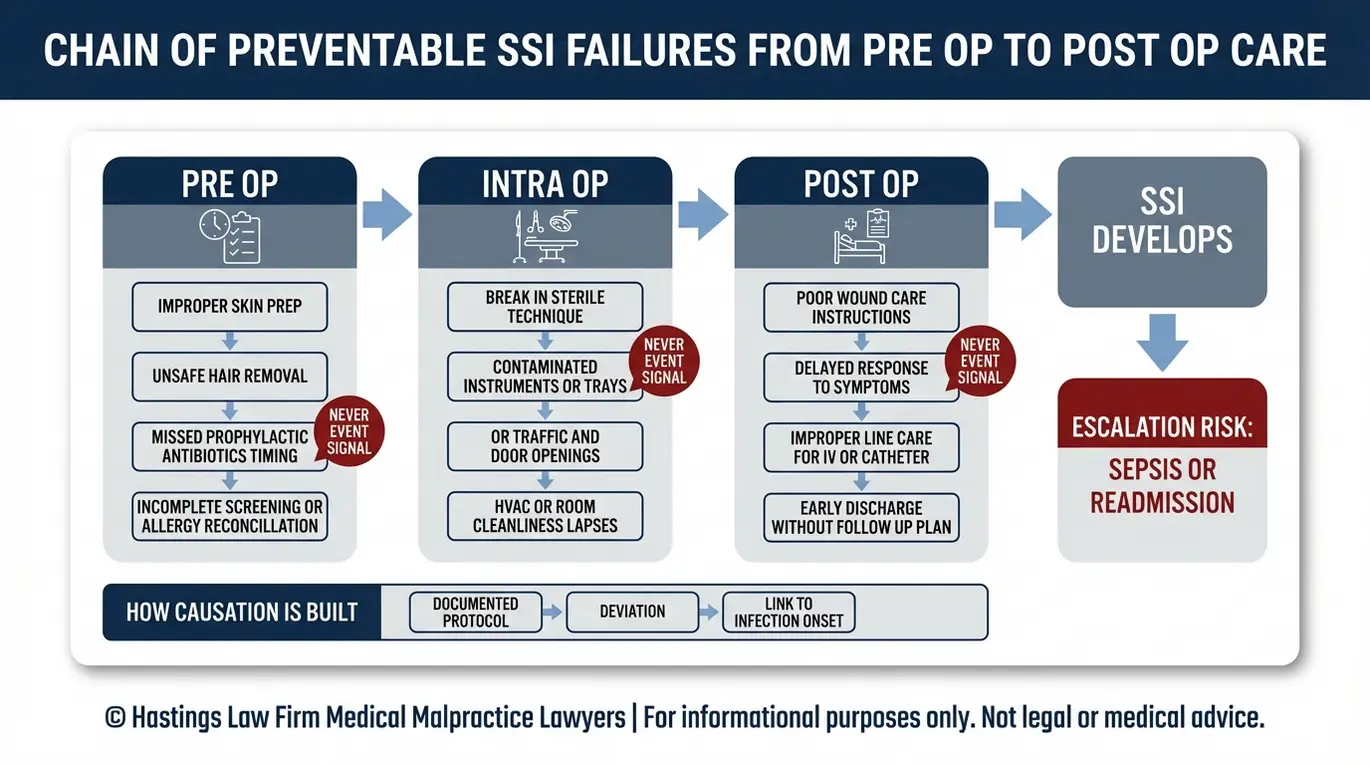
These failures tend to follow a pattern across three phases of care.
Pre-operative failures include inadequate skin preparation with an appropriate antiseptic, improper hair removal techniques, and delays in administering antibiotics before the first incision.
Intra-operative failures involve breaches in sterile technique, the set of practices designed to maintain a germ-free environment during surgery. This can include contaminated instruments, breaks in the sterile field, poor hand hygiene among surgical staff, or malfunctioning air filtration systems in the operating room.
Post-operative failures include neglecting wound care, failing to monitor for early signs of infection, and not adjusting or prescribing antibiotics when clinical signs demand it. Any deviation from the standard of care during these phases places patients at unnecessary risk.
Some of these failures are considered serious preventable errors that should not happen when proper protocols are followed:
- Use of contaminated or improperly sterilized surgical instruments
- Leaving foreign objects like sponges or tools inside the patient
- Operating on the wrong site or the wrong patient
- Failing entirely to administer required prophylactic antibiotics
Institutional Surveillance and Infection Tracking
Hospitals are required to engage in institutional infection surveillance and infection-rate tracking through programs like the National Healthcare Safety Network (NHSN). The NHSN is a CDC-managed surveillance system that collects data on healthcare-associated infections at facilities nationwide.
When a facility’s infection rate consistently exceeds expected benchmarks, it can suggest systemic negligence. This might include chronic understaffing or poor training. If you suspect systemic issues, a hospital infection lawyer can help.
A surgical negligence attorney will request these logs to uncover the truth. As a dedicated malpractice lawyer in Arizona, we dig deep because a pattern of infections may reveal problems that go well beyond a single case.
Proving Malpractice and Establishing Liability
To prove malpractice in a surgical infection case, the patient must demonstrate that the healthcare provider deviated from the accepted medical standard of care and that this deviation directly caused the infection and the resulting harm. Arizona medical malpractice claims are built on four legal elements: duty, breach, causation, and damages.
Duty means the provider had a professional obligation to treat the patient according to accepted medical standards. Breach means the provider failed to meet that obligation; this failure constitutes a breach of duty. Causation requires showing the breach directly led to the infection. And damages means the patient suffered real, measurable harm as a result. When suing for infection cases, you need a focused infection malpractice attorney to link these elements together.
Expert testimony is required to establish each of these elements. A qualified physician in the same specialty must review the case and confirm that the care fell below the standard. This is not optional. Arizona law requires a preliminary expert opinion affidavit before a malpractice case can move forward.
One of the most common defense arguments in infection cases is that “infections are a known risk of surgery.” While that is true in general, it does not excuse negligence. To prove medical negligence, we must show that sterile protocols were not followed, that antibiotics were delayed or omitted, or that obvious symptoms of infection were ignored for days. Prolonged antibiotic use exceeding ten days can indicate an infection that was allowed to progress unchecked.
Medical records are the foundation of every infection malpractice case. Under Arizona Revised Statutes § 12-2294, patients and their attorneys have the right to obtain medical records and payment records. Our team reviews operative reports, nursing notes, lab results, and pharmacy logs to reconstruct exactly what happened and when. Records might show an untreated MRSA infection or early signs of sepsis, a life-threatening response to infection that damages tissues and organs.
We look for gaps in documentation, delayed responses to abnormal lab values, and inconsistencies between what was charted and what protocols required. Hospitals sometimes initiate a “family meeting” shortly after a complication. While these meetings may appear supportive, they can also be used to shape the narrative early. Having legal counsel involved early helps protect your ability to pursue answers on your own terms.

Damages Recoverable for Surgical Infection Victims in Arizona
Victims of negligent surgical infections may recover compensation for economic losses like additional surgeries and lost wages, as well as non-economic damages for pain, suffering, and permanent disability. The Arizona Constitution, Article 2, Section 31, expressly prohibits caps on damages for personal injury and wrongful death, meaning juries in Arizona can award the full value of the harm without an arbitrary ceiling.
A systematic review and meta-analysis published in PubMed Central confirmed that surgical site infections in abdominal surgery patients are associated with significantly longer hospital stays, higher readmission rates, and increased mortality. These complications translate directly into compensable losses.
Economic damages cover measurable financial losses, including:
- Medical bills for treating the infection, including additional surgeries and extended hospitalization
- Future medical costs for ongoing wound care, physical therapy, or reconstructive procedures
- Lost wages from time away from work during treatment and recovery
- Diminished earning capacity if the injury causes long-term disability
Non-economic damages compensate for harm that does not carry a specific price tag but profoundly affects your quality of life:
- Pain and suffering caused by the infection and its treatment
- Emotional distress or anxiety stemming from prolonged illness
- Loss of enjoyment of life due to scarring, disfigurement, or permanent limitations
- Disfigurement from debridement, wound vacs, or additional corrective surgeries
In cases where a surgical infection progresses to fatal sepsis, surviving family members may pursue a wrongful death claim to recover funeral expenses, loss of companionship, and the financial support the deceased would have provided. An Arizona surgical site infection lawyer can help calculate the full damages for infection patients, including specific compensation for sepsis complications, and present them effectively to a jury or in settlement negotiations.
Contact the Arizona Surgical Error Attorneys at Hastings Law Firm Today for Help
An infection should never be the price of surgery. When preventable errors cause serious harm, you deserve more than silence or deflection from the people responsible for your care. You deserve the truth, and you deserve someone willing to stand beside you while you pursue it.
Hastings Law Firm is led by Tommy Hastings, a board-certified trial lawyer whose team includes former defense counsel, in-house nursing staff, and a national network of medical experts. We prepare every case as if it is going to trial. This preparation is what drives fair results, whether at the negotiating table or in front of a jury.
If you or a loved one developed a serious infection after surgery in Arizona, we are ready to listen. Contact us today for a free, confidential case evaluation. You pay no fees unless we recover compensation on your behalf.
Frequently Asked Questions About Surgical Site Infection in Arizona


This content was researched and written by the Hastings Law Firm editorial team, which includes attorneys, medical professionals, and experienced researchers. Our writing is informed by internal knowledge and practical experience, and we cross-check critical details against authoritative sources cited throughout. Every piece undergoes human-led fact-checking and legal review. Because legal and medical information can change, if you spot an error, please contact us. Learn more about our content standards and review process on our editorial policy page.

Tommy Hastings, founder of Hastings Law Firm, is a board-certified personal injury trial lawyer dedicated exclusively to healthcare injury cases. Since 2001, he has represented injured patients and families in litigation against major hospital systems, pharmaceutical companies, and negligent healthcare providers nationwide. He has handled numerous high-profile cases that have drawn national media attention and resulted in multi-million dollar recoveries. He draws on that experience in his writing, helping readers understand how these cases work and what options may be available to them.
