


Arizona Spine Surgeon Malpractice Lawyer
Back and spine surgeries such as spinal fusion and laminectomy carry known risks even when performed correctly. When a preventable mistake occurs during planning, the operation, or recovery, the harm can be severe and may reflect medical malpractice. Common concerns include wrong level surgery, misplaced hardware, missed nerve monitoring, and delayed response to post surgical complications, which can leave lasting pain, nerve injury, disability, or worse. If you or a loved one were harmed or worse due to spine surgery malpractice in Arizona, contact Hastings Law Firm for a free, confidential case review.

Last Updated: July 27, 2026
Trial-Ready Back Surgery Negligence Attorneys in Arizona
Procedures like spinal fusion, where two or more vertebrae are permanently joined to stabilize the spine, carry real risks. These risks also apply to laminectomy, the removal of part of a vertebra to relieve pressure on the spinal cord, even under ideal conditions. But when those risks are caused by a surgeon’s preventable mistake rather than a known complication, that is not just a bad outcome. It may be medical malpractice.
If you or a loved one suffered a serious injury after back or spine surgery in Arizona, an experienced Arizona spine surgeon malpractice lawyer can help you understand what went wrong and whether negligence played a role. At Hastings Law Firm, our team of attorneys, nurse consultants, and medical experts focuses exclusively on medical malpractice cases. Contact us for a free, confidential case evaluation to learn about your options.

Common Errors in Spinal Fusion and Laminectomy Surgeries
Surgical errors in spine procedures often involve operating on the wrong vertebral level, misplaced hardware impinging on nerves, or failure to monitor spinal cord function during the operation. These surgeries require high precision to protect the delicate nervous system. Because the spinal column houses such a dense concentration of nerves, even a small mistake during surgery can lead to permanent disability.
Spine procedures like discectomy and multi-level fusion are technically demanding. When preparation is inadequate or attention to detail lapses, the results of spine surgery malpractice can be devastating.
Some of the most serious errors include:
- Wrong-level surgery: Operating on the incorrect vertebral segment. This wrong-site surgery is classified as a “never event,” a term defined by the National Quality Forum (NQF) Patient Safety Terms and Definitions to describe errors so serious they should never occur.
- Pedicle screw malposition (misplaced hardware): Screws placed outside the intended bone path can compress nerves, leading to paralysis.
- Retained foreign objects: Sponges or instruments left inside the body.
- Dural tears and spinal cord injury: Accidental puncture of the membrane surrounding the spinal cord.
- Failure to use intraoperative monitoring: Neglecting real-time nerve monitoring can allow a back surgery error to go undetected.
The Universal Protocol for Preventing Wrong Site, Wrong Procedure, Wrong Person Surgery exists to prevent these mistakes. When a negligent spinal surgeon skips these steps, patients pay the price. An Arizona spine injury attorney can help determine whether surgical negligence was the cause.
Hidden Dangers of Surgical Errors Occurring Outside the Operating Room
Negligence isn’t limited to the incision. These medical errors can occur during any phase of treatment, from initial planning to recovery. Pre-operative planning failures, like misreading imaging, can lead to a wrong procedure or inadequate preparation. Medical teams must monitor patient progress both before and after the operation to ensure safety.
Post-operative care carries risks. A surgical site infection (SSI), an infection that develops at or near the incision after surgery, must be treated promptly.
A postoperative epidural hematoma, a collection of blood pressing against the spinal cord, requires urgent intervention. When staff delay corrective medical care, a treatable complication can become permanent. The standard of care requires monitoring for these conditions.

Proving Negligence Against Arizona Spine Surgeons
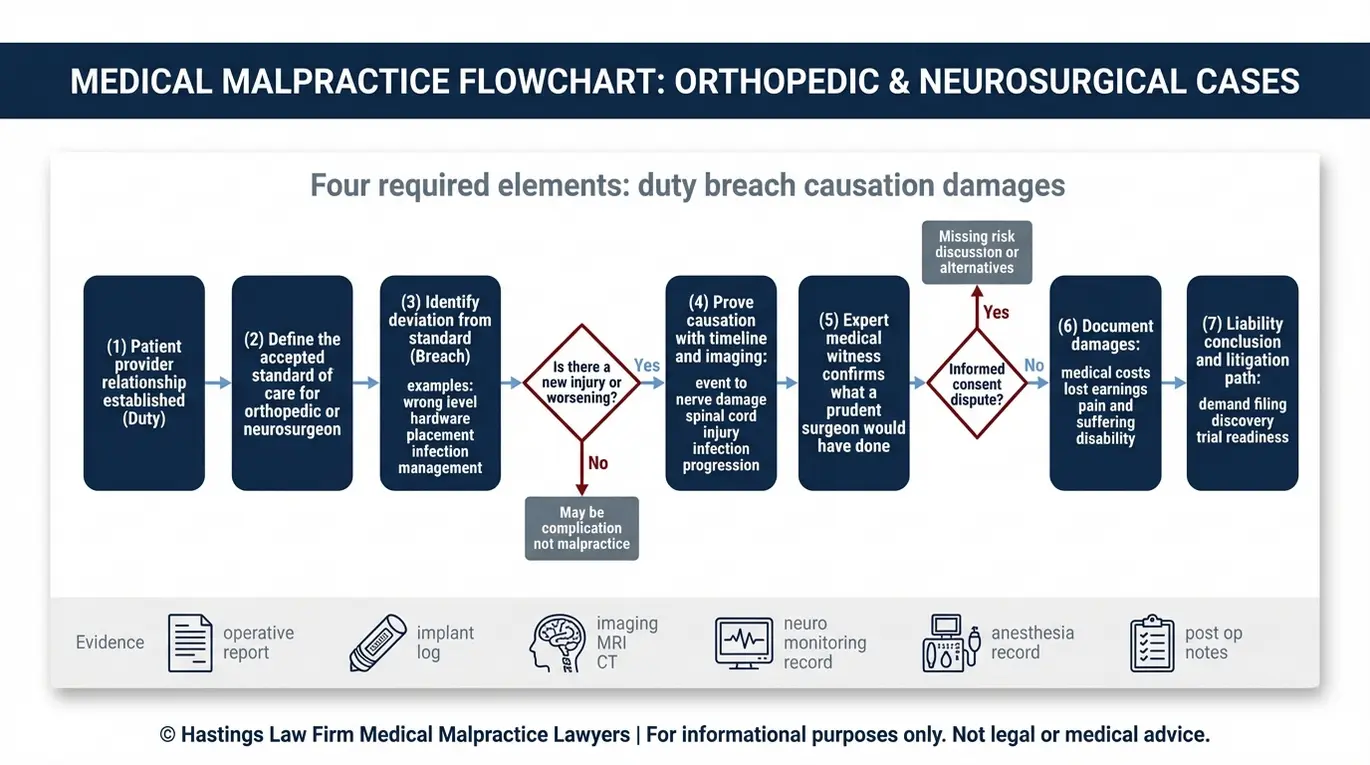
To prove spine surgeon liability, a patient must demonstrate that the surgeon deviated from the accepted medical standard of care and that this deviation directly caused new injury or worsened the existing condition.
The standard of care refers to the level of treatment that a reasonably competent orthopedic or neurosurgeon would provide under similar circumstances. Proving surgeon negligence in these cases almost always requires an expert witness for back surgery. These are qualified surgeons who review records to determine if standard of care violations occurred.
One issue that frequently arises is informed consent. If the surgeon failed to adequately disclose risks like paralysis, the consent may be insufficient. Our medical malpractice lawyer works with in-house nurse consultants to reconstruct the event. We examine if protocols, such as those from JCAHO, were followed.
We also check intraoperative neuromonitoring (IONM), which tracks nerve function in real time during surgery, and post-operative notes. When a dural tear and cerebrospinal fluid (CSF) leak, a breach in the membrane protecting the spinal cord, goes undocumented, it can be evidence of spine surgeon liability.
The Hastings Law Firm Difference
Results matter, but what truly sets us apart is how we achieve them. Every verdict, every settlement, and every Arizona courtroom victory comes from one guiding promise: To treat each client’s fight for justice as if it were our own.
This balance of skill, experience, and empathy reflects our core philosophy that justice should not only compensate the injured, but also make health care safer nationwide.

Damages You Can Recover for Failed Back Surgery
Patients harmed by spine surgery malpractice can recover economic damages for medical bills and lost wages, as well as non-economic damages for pain, suffering, and loss of quality of life.
Legal damages help address financial losses and the personal impact of a surgical error. Suing a spine doctor allows patients to seek compensation for nerve damage or even brain damage caused by anesthesia errors. Injuries often require revision surgery, a second procedure to correct problems caused by the first.
Some patients develop cauda equina syndrome, a serious condition where compressed nerves at the base of the spinal cord cause bladder dysfunction. The National Library of Medicine on the prevalence and economic burden of spinal deformity underscores the high costs of these conditions.
Damages in Arizona follow the framework of Arizona Revised Statutes Title 12. A fair spine injury settlement covers:
| Damages Category | What It Covers |
|---|---|
| Economic Damages | Past and future medical expenses, revision surgeries, rehabilitation, lost wages, reduced earning capacity, in-home care needs |
| Non-Economic Damages | Pain and suffering, emotional distress, PTSD, loss of enjoyment of life, loss of mobility or independence |
| Punitive Damages | Available only when the surgeon’s conduct reflects an “evil hand guided by an evil mind,” meaning the defendant acted with intentional misconduct or conscious disregard for the patient’s safety |
Punitive damages are rare, but they can apply when the evidence shows extreme indifference.

Arizona Statute of Limitations for Spine Injury Claims
In Arizona, medical malpractice claims must generally be filed within two years of the date the injury occurred or was discovered, though strict exceptions apply.
The discovery rule is important here. Symptoms of hardware failure may not appear immediately. The clock starts when the injury is discovered. However, the statute of limitations in Arizona has strict limits. Filing a spine injury claim on time is essential.
If your claim involves a public or state-run hospital, shorter deadlines apply:
- Claims against public entities require a formal Notice of Claim filed within 180 days of the injury.
- Failing to meet this time limit to sue surgeons can eliminate your right to file a lawsuit before the medical malpractice deadline expires.
Because these filing windows are strict, speaking with an attorney immediately is the safest course of action.
Contact the Arizona Surgical Error Attorneys at Hastings Law Firm Today for Help
You should not have to pay the price for a surgeon’s mistake. If a spine procedure left you or someone you love with new pain, nerve damage, paralysis, or the need for additional surgeries, you deserve honest answers about what happened and why.
Founded by board-certified trial attorney Tommy Hastings, our firm focuses exclusively on medical malpractice litigation. Hastings Law Firm represents spine surgery patients across Arizona from our Phoenix office.
Our legal team includes former defense attorneys and experienced hospital nurses who previously worked for the systems they now challenge. This background helps us interpret your surgical records and understand how hospitals respond to these claims. We prepare every case as though it is going to trial, because that preparation is what drives fair outcomes.
There is no fee unless we recover compensation for you. A Phoenix spine malpractice attorney at our firm can review your medical records, consult with qualified surgical experts, and give you a clear picture of your legal options.
Call us or request your free, confidential case evaluation today. Let us help you find the answers you deserve.
Frequently Asked Questions About Spine Surgeon Malpractice in Arizona


This content was researched and written by the Hastings Law Firm editorial team, which includes attorneys, medical professionals, and experienced researchers. Our writing is informed by internal knowledge and practical experience, and we cross-check critical details against authoritative sources cited throughout. Every piece undergoes human-led fact-checking and legal review. Because legal and medical information can change, if you spot an error, please contact us. Learn more about our content standards and review process on our editorial policy page.

Tommy Hastings, founder of Hastings Law Firm, is a board-certified personal injury trial lawyer dedicated exclusively to healthcare injury cases. Since 2001, he has represented injured patients and families in litigation against major hospital systems, pharmaceutical companies, and negligent healthcare providers nationwide. He has handled numerous high-profile cases that have drawn national media attention and resulted in multi-million dollar recoveries. He draws on that experience in his writing, helping readers understand how these cases work and what options may be available to them.
