


Arizona Sepsis Malpractice Lawyer
A missed or delayed sepsis diagnosis can turn a treatable infection into a life threatening emergency with lasting harm. Sepsis cases often depend on whether warning signs were recognized, whether testing and monitoring were timely, and whether treatment began fast enough to prevent organ failure, amputation, or fatal outcomes. Breakdowns in communication, discharge decisions, and hospital systems can also play a major role. If you or a loved one were harmed or worse due to failure to diagnose sepsis in Arizona, contact Hastings Law Firm for a free, confidential case review.

Last Updated: July 27, 2026
Trusted Arizona Medical Attorneys for Failure to Diagnose Sepsis Claims
When sepsis goes undiagnosed or untreated, the consequences can be catastrophic. What begins as a treatable infection can spiral into organ failure, amputation, or death, sometimes in a matter of hours. If you or someone in your family suffered a serious sepsis-related injury because a healthcare provider failed to act in time, you deserve answers about what went wrong and why.
At Hastings Law Firm, our legal and medical team focuses exclusively on medical malpractice cases. We understand both the clinical science behind sepsis and the legal framework needed to hold negligent providers accountable in Arizona. Our in-house nurses and former defense attorneys know how to identify where the standard of care broke down, and we prepare every case for trial from the very first day.
If you believe a delayed or missed sepsis diagnosis caused serious harm, an Arizona sepsis malpractice lawyer at our firm can review your situation and explain your options in a free, confidential evaluation.

Understanding Sepsis and Septic Shock Malpractice Claims
Sepsis malpractice claims arise when a healthcare provider fails to recognize or treat the body’s extreme response to an infection in a timely manner, leading to tissue damage, organ failure, or death. These cases hinge on timing, because sepsis is not the infection itself. It is the body’s dangerous overreaction to that infection, a cascade of inflammation that can damage tissues and shut down vital organs if left unchecked.
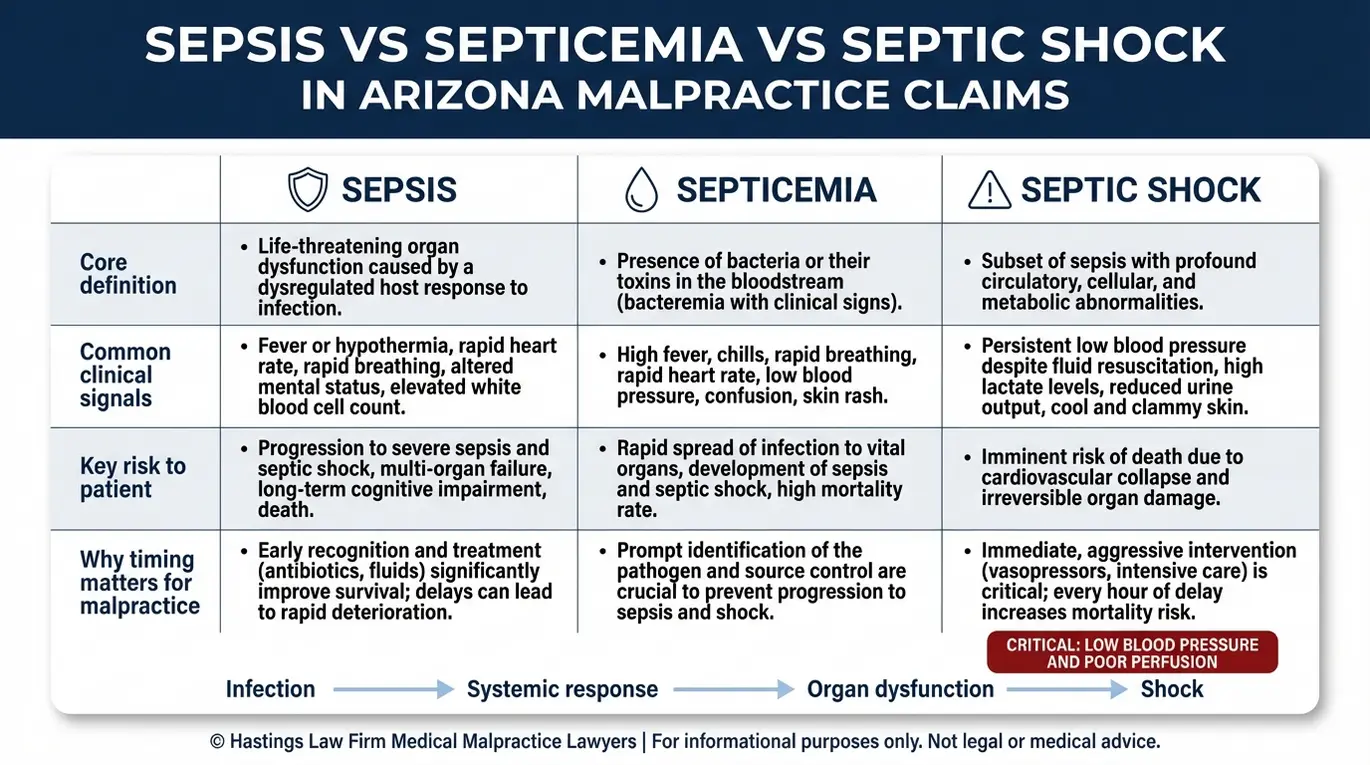
Sepsis, a condition where an existing infection triggers a systemic inflammatory response throughout the body, is often confused with related terms. Septicemia, or blood poisoning where bacteria multiply in the bloodstream, refers specifically to the bacterial presence and is distinct from the broader inflammatory response of sepsis. The Society of Critical Care Medicine and the European Society of Intensive Care Medicine define sepsis through organ dysfunction caused by a dysregulated response to infection.
The progression typically follows a recognizable path. Sepsis can advance to septic shock when blood pressure drops dangerously low despite fluid resuscitation, starving cells and tissues of oxygen. As organ dysfunction worsens, the risk of death increases dramatically.
| Condition | What It Means | Key Clinical Feature |
|---|---|---|
| Sepsis | Infection triggers a harmful, body-wide inflammatory response | Organ dysfunction; altered mental state, rapid breathing, low blood pressure |
| Septicemia | Bacteria actively multiplying in the bloodstream | Positive blood cultures confirming bacterial presence |
| Septic Shock | Most severe stage; the body can no longer maintain adequate blood pressure | Persistent hypotension requiring vasopressors; high mortality risk |
An Arizona sepsis malpractice lawyer or sepsis injury attorney evaluates where along this progression a provider should have intervened but did not. The difference between sepsis and septic shock can be the difference between recovery and death, and that difference often comes down to hours or even minutes of medical decision-making.
Common Causes of Sepsis Misdiagnosis in Arizona Hospitals
Misdiagnosis often occurs due to emergency room overcrowding, failure to order blood cultures, dismissing symptoms as the flu, or poor communication between nursing staff and physicians during shift changes. This “generic symptom” trap leads some providers to send patients home with a viral diagnosis when their body is already mounting a dangerous inflammatory response.
System-level failures contribute just as often as individual clinical errors. Research published by the National Library of Medicine on diagnostic errors using the SEIPS framework highlights how breakdowns across people, tasks, tools, and organizational factors combine to produce missed or delayed diagnoses. In busy Arizona emergency departments, these breakdowns can take many forms:
- Failure to order blood cultures, the laboratory tests that identify specific bacteria in the bloodstream, before starting antibiotics
- Delayed administration of IV fluids or antibiotics when vital signs suggest infection
- Lost or delayed lab results due to processing backlogs or communication gaps
- Poor handoff communication between nursing staff and physicians during shift changes, causing critical observations to fall through the cracks
- Failure to monitor vital signs at appropriate intervals, missing early warning signs of deterioration
- Understaffing that prevents adequate patient observation during high-volume periods
Any one of these failures can allow sepsis to progress unchecked. When several occur together, the risk of a fatal outcome increases dramatically, often necessitating the scrutiny of an Arizona Sepsis Malpractice Lawyer.
Failures in Discharge Instructions
Discharge instruction failures represent one of the most dangerous errors in sepsis cases. If a patient is discharged with unstable vital signs, or without clear instructions on what symptoms should prompt an immediate readmission to the emergency room, that discharge decision itself may constitute negligence.
Patients who are sent home during the early stages of an unrecognized infection may not understand that recurrence of fever, worsening confusion, or a new drop in blood pressure requires emergency care, not a follow-up appointment days later. Proper discharge protocols should include specific warning signs, a clear timeline for follow-up, and documentation that the patient understood the instructions.
The Hastings Law Firm Difference
Results matter, but what truly sets us apart is how we achieve them. Every verdict, every settlement, and every Arizona courtroom victory comes from one guiding promise: To treat each client’s fight for justice as if it were our own.
This balance of skill, experience, and empathy reflects our core philosophy that justice should not only compensate the injured, but also make health care safer nationwide.

Establishing the Standard of Care and the Sepsis Bundle
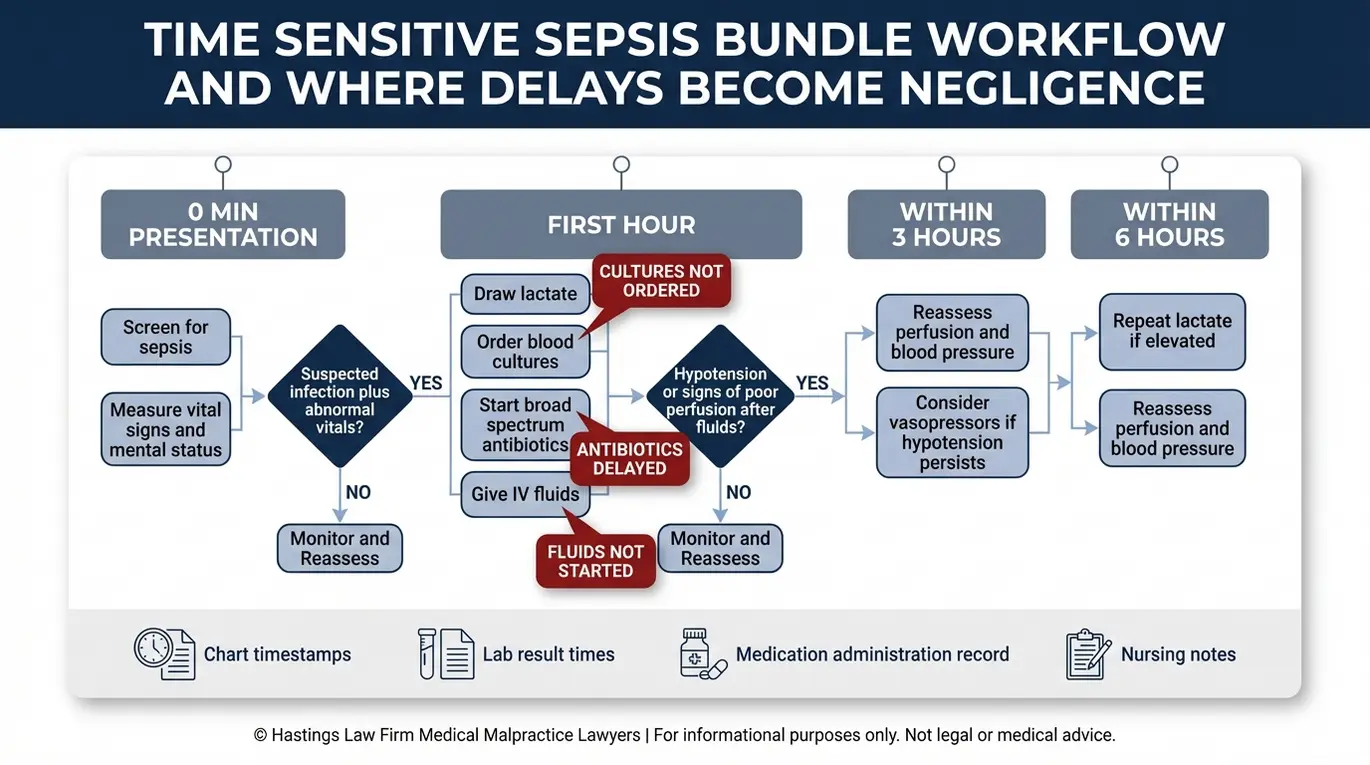
The standard of care for sepsis typically requires adherence to specific “Sepsis Bundles,” which are time-sensitive protocols mandating the administration of antibiotics and fluids within hours of presentation. In practical terms, the standard of care is the level of treatment a reasonably competent healthcare provider would deliver under similar circumstances. For sepsis, that standard has been shaped by decades of critical care research.
A sepsis bundle is a structured set of interventions that must be completed within a defined time window. The Surviving Sepsis Campaign guidelines, as summarized by the American Academy of Family Physicians, now recommend initiating a bundle of interventions within the first hour of sepsis recognition. These time-sensitive interventions include:
Within the first hour:
- Measure serum lactate, a lactate level that indicates whether tissues are receiving enough oxygen
- Obtain blood cultures and other blood tests before administering antibiotics
- Administer broad-spectrum antibiotics
- Begin rapid IV fluid resuscitation for patients showing signs of low blood pressure or elevated lactate
Ongoing reassessment within the first several hours:
- Reassess volume status and tissue perfusion
- Re-measure lactate if the initial level was elevated
- Administer vasopressors if blood pressure remains low despite adequate fluid resuscitation
When a failure to diagnose sepsis lawyer or Arizona Sepsis Malpractice Lawyer examines a case, the medical records are measured against these time-based benchmarks. Gaps between when symptoms appeared and when treatment began often reveal the breach that forms the foundation of a malpractice claim.
The Hour-by-Hour Mortality Risk
The urgency behind sepsis bundles is not arbitrary. For patients in septic shock, the most severe stage where blood pressure collapses and organs begin to fail, research has consistently shown that each hour of delayed antibiotic treatment can increase mortality risk by approximately 8%. This means that a six-hour delay in appropriate care can dramatically reduce a patient’s chance of survival.
This data is central to establishing causation in an Arizona sepsis malpractice case. It allows medical experts to draw a direct line between the delay and the outcome, demonstrating that a delayed diagnosis or timely intervention would have, more likely than not, changed the result.
Proving Medical Negligence for Failure to Diagnose Sepsis
To prove negligence, a plaintiff must demonstrate that a doctor-patient relationship existed, the provider breached the standard of care by missing clear signs of sepsis, and this breach directly caused severe injury or death. Causation is often the most contested element. Causation is the legal requirement to show that the doctor’s specific error directly caused the patient’s injury, rather than the illness alone.
To counter defense arguments, qualified expert witnesses review the timeline of symptoms and treatment decisions, then offer opinions on whether earlier intervention would have changed the outcome. The CDC’s clinical guidance on sepsis signs and symptoms provides a reference point for what symptoms should have prompted immediate action.
An Arizona Sepsis Malpractice Lawyer or septic shock lawyer works alongside infectious disease specialists and critical care physicians to reconstruct the medical timeline and identify exactly where the standard of care was violated. Establishing liability often requires showing that the provider deviated from accepted medical practices.
Challenges with Elderly Patients and Comorbidities
Sepsis cases involving elderly patients present unique challenges. Older adults may not display the classic signs of infection, such as high fever, and their baseline vital signs may already be abnormal due to pre-existing conditions. Defense attorneys frequently argue that age or comorbidities like diabetes, kidney disease, or heart failure caused the patient’s decline, not the missed sepsis diagnosis, often claiming these conditions were masking early sepsis signs.
Our team addresses this by working with experts who can distinguish between the expected progression of a chronic condition and the acute deterioration caused by untreated sepsis. The fact that a patient had pre-existing health issues does not excuse a provider from recognizing and treating a new, life-threatening infection.
Who May Be Held Liable for Sepsis Injuries
Liability can extend beyond the attending physician to include nurses for failing to report vitals, hospitals for inadequate staffing or protocols, and labs for processing delays. Multiple parties across the healthcare system may share responsibility when failures at different stages allow an infection to progress unchecked.
Potentially liable parties include:
- Physicians who fail to order appropriate diagnostic tests, misinterpret lab results, or delay treatment despite clinical indicators of sepsis
- Nurses and nursing staff who fail to escalate abnormal vital signs to a physician, miss trends in patient deterioration, or do not follow monitoring protocols
- Hospitals and healthcare facilities where hospital negligence leads to patient harm through systemic issues like inadequate staffing ratios, poor infection control practices, or failure to implement sepsis screening protocols
- Laboratories that cause processing delays for blood cultures or other time-sensitive diagnostic tests
- Facilities responsible for hospital-acquired infections (HAIs), infections that patients contract during their hospital stay due to unsanitary conditions, improper sterilization, or contaminated equipment, such as MRSA or C. diff
An Arizona sepsis malpractice lawyer investigates each point in the chain of care to determine where breakdowns occurred. Legal concepts like vicarious liability may make the facility responsible for employee errors. In many cases, liability is shared among multiple providers and the institution itself.

Compensation and Damages in Sepsis Wrongful Death Cases
Victims and their families may recover economic damages for medical bills and lost income, as well as non-economic damages for pain, suffering, and the loss of a loved one’s companionship. Economic damages cover quantifiable financial losses, including past and future medical expenses and the cost of ongoing care. Non-economic damages account for pain and suffering, loss of enjoyment of life, and, in wrongful death cases, the loss of a loved one’s presence.
Arizona law recognizes two distinct types of claims when sepsis leads to death. A survival action addresses the pain and suffering the patient endured before death, including the medical interventions and physical distress experienced during the progression from sepsis to organ failure. A wrongful death claim compensates the surviving family for their own losses, including lost financial support, lost consortium, and funeral expenses.
For sepsis survivors, the financial toll can be enormous. Many patients who survive septic shock face amputations, kidney dialysis, cognitive impairment, or a condition known as post-sepsis syndrome (PSS), a collection of long-term effects including chronic pain, fatigue, and organ damage that may require years of rehabilitation and medical care.
An Arizona Sepsis Malpractice Lawyer works with financial and medical experts to calculate the full scope of current and future losses, ensuring families protect their future financial security.
Contact the Arizona Healthcare Malpractice Attorneys at Hastings Law Firm Today for Help
Sepsis injuries caused by diagnostic failures are not unavoidable tragedies. They are preventable outcomes that happen when healthcare providers do not follow established protocols. When that failure causes life-altering harm or the death of someone you love, you have the right to seek answers and accountability.
Founded by board-certified trial attorney Tommy Hastings, our firm is built specifically to handle these complex legal challenges. Our team of attorneys, in-house nurses, and medical consultants understands the science behind these cases and prepares every matter as though it is going to trial.
If you suspect that a missed or delayed sepsis diagnosis caused serious harm to you or a family member, contact an Arizona sepsis malpractice lawyer at Hastings Law Firm for a free, confidential case evaluation. You pay nothing unless we recover compensation on your behalf.
Frequently Asked Questions About Sepsis Malpractice in Arizona


This content was researched and written by the Hastings Law Firm editorial team, which includes attorneys, medical professionals, and experienced researchers. Our writing is informed by internal knowledge and practical experience, and we cross-check critical details against authoritative sources cited throughout. Every piece undergoes human-led fact-checking and legal review. Because legal and medical information can change, if you spot an error, please contact us. Learn more about our content standards and review process on our editorial policy page.

Tommy Hastings, founder of Hastings Law Firm, is a board-certified personal injury trial lawyer dedicated exclusively to healthcare injury cases. Since 2001, he has represented injured patients and families in litigation against major hospital systems, pharmaceutical companies, and negligent healthcare providers nationwide. He has handled numerous high-profile cases that have drawn national media attention and resulted in multi-million dollar recoveries. He draws on that experience in his writing, helping readers understand how these cases work and what options may be available to them.
