


Arizona Rotational Forceps Birth Injury Lawyer
Written by: Hastings Law Firm | Reviewed by: Tommy Hastings | Updated: July 27, 2026
Rotational forceps delivery is a high risk maneuver that can place significant mechanical force on a baby’s head during birth. When the technique is used without proper training, clear clinical justification, or careful blade placement and traction control, the result can be severe injury with lasting effects on a child and family. Understanding when rotational forceps are appropriate, what informed consent should cover, and how injuries are evaluated can help families seek clarity after a traumatic delivery. If you or a loved one were harmed or worse due to rotational forceps birth injury in Arizona, contact Hastings Law Firm for a free, confidential case review.

Experienced Arizona Birth Injury Attorneys for Complex Forceps Cases
What You Should Know About Infant Rotational Forceps Injury Claims in Arizona:
- Long term disability can follow improper rotational forceps use, including permanent neurological and nerve related impairment.
- Life threatening bleeding and brain injury can occur when forceps compress or shear a newborn’s head during delivery.
- Lasting loss of movement or sensation can result when excessive traction injures nerves in the face or arm.
- Reduced recovery options can follow when Arizona requirements for expert support are not met.
- Disputes often focus on whether rotational forceps were justified over alternatives such as vacuum extraction or a C section.
- Preventable harm may be indicated when prerequisites for a safe attempt were not present at the time of delivery.
- Meaningful compensation can be central for families facing lifelong care needs, including medical expenses and specialized support.
- Key evidence can become harder to obtain over time, including delivery records and fetal monitoring strips.
- A clear timeline of fetal distress can be central to evaluating whether a prolonged or failed attempt contributed to oxygen deprivation.
- Operative reports and nurse charting can be pivotal when assessing blade placement, traction, and decision making during delivery.

A Healthcare Focused Law Firm
When a child is harmed during delivery, families are often left searching for answers about what happened and why. If your baby was injured during a rotational forceps delivery, you may be dealing with serious medical diagnoses, mounting care costs, and the painful feeling that something went wrong in the delivery room. These emotions are valid, and you deserve clarity.
At Hastings Law Firm, we focus exclusively on medical malpractice, and birth injury cases involving rotational forceps are among the most medically complex claims we handle. Our founder, Tommy Hastings, is a board-certified trial lawyer who has spent over 20 years representing families in complex medical negligence cases. Our team includes in-house nurse consultants and former defense attorneys who understand how hospitals document and defend these deliveries. Contact us for a free, confidential case evaluation.
Understanding Rotational Forceps Delivery and Associated Risks
Rotational forceps delivery is a high-risk obstetrical maneuver used to turn a baby’s head to the correct position for birth, but it requires precise skill and is frequently abandoned in favor of a C-section due to the high risk of fetal trauma.
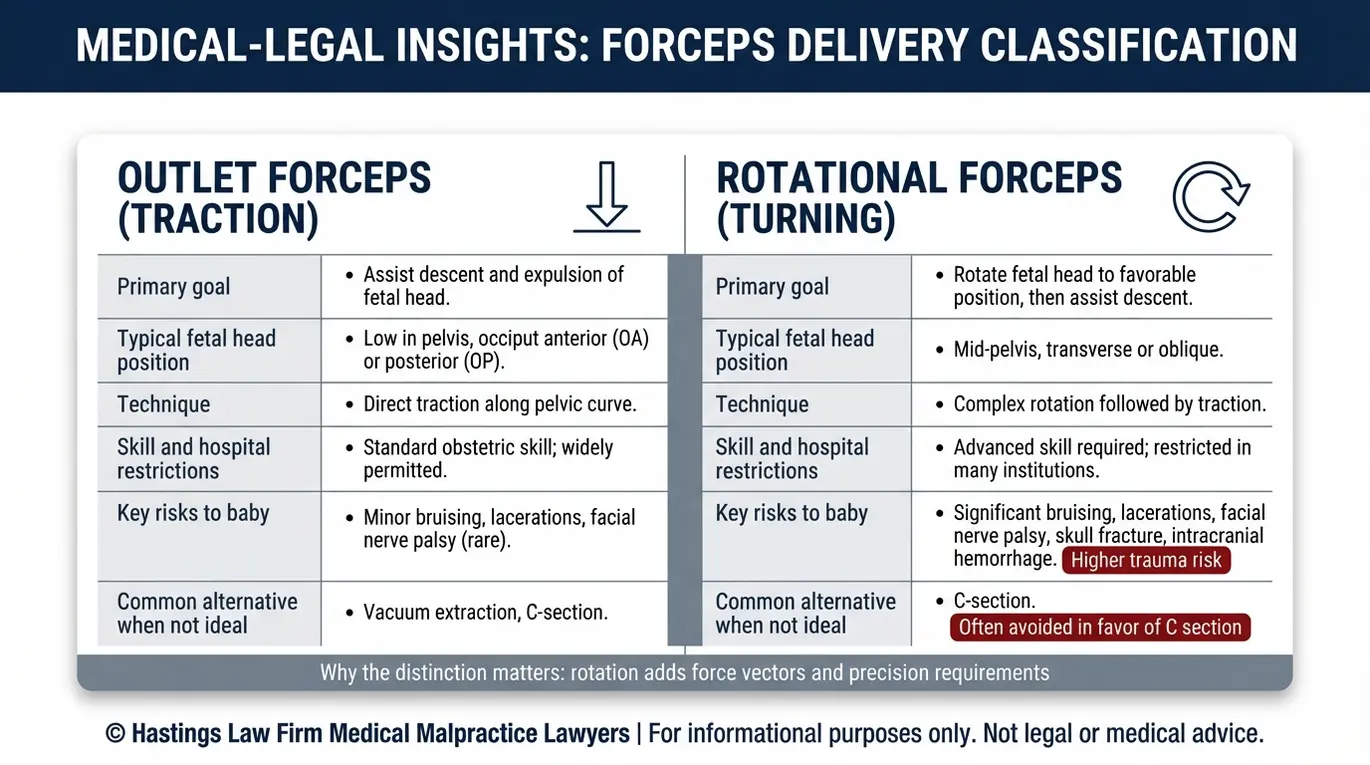
To understand why these injuries happen, it helps to know the difference between the two main types of forceps delivery:
- Outlet forceps are used when the baby’s head is already visible and positioned correctly. The obstetrician applies the blades to guide the baby out with minimal rotation. This is considered lower risk.
- Rotational forceps are used when the baby’s head is deeper in the birth canal and facing the wrong direction. The physician must use the instrument to physically turn the baby’s skull before delivery. This carries a significantly higher risk of trauma to both mother and child.
The distinction matters because rotational forceps involve far more mechanical force applied to the baby’s head. Not every obstetrician or midwife is trained to perform this maneuver safely, and errors in angle, pressure, or timing can cause devastating injuries.
Many hospitals and training programs have moved away from teaching rotational forceps techniques. When a physician chooses this approach over an assisted vaginal delivery by vacuum extraction or a C-section, the decision must be supported by clear clinical justification. If you believe something went wrong during a forceps delivery, a rotational forceps injury attorney can help you understand whether the standard of care was met.
The Mechanics of Rotational Maneuvers
The most commonly referenced instrument for this procedure is the Kielland forceps, a specialized tool designed with a minimal pelvic curve that allows the obstetrician to rotate the fetal head within the birth canal. These maneuvers involve rotating the baby within the birth canal before extraction. In birth injury litigation, these mechanics are evaluated to determine if a physician followed safe medical practices. Unlike standard forceps, Kielland forceps are built specifically to turn the baby, not just guide it downward.
The precision required is extreme. The physician must identify the exact fetal head position, place the blades symmetrically around the skull, and rotate around a precise point of pivot without applying uneven pressure. A miscalculation of even a few degrees can compress the skull unevenly or damage delicate cranial structures. This is why the standard of care demands that the delivering physician have specific training and demonstrated competency with rotational techniques before attempting them on a laboring patient.
When Rotational Forceps Are Appropriate and When They Are Negligent
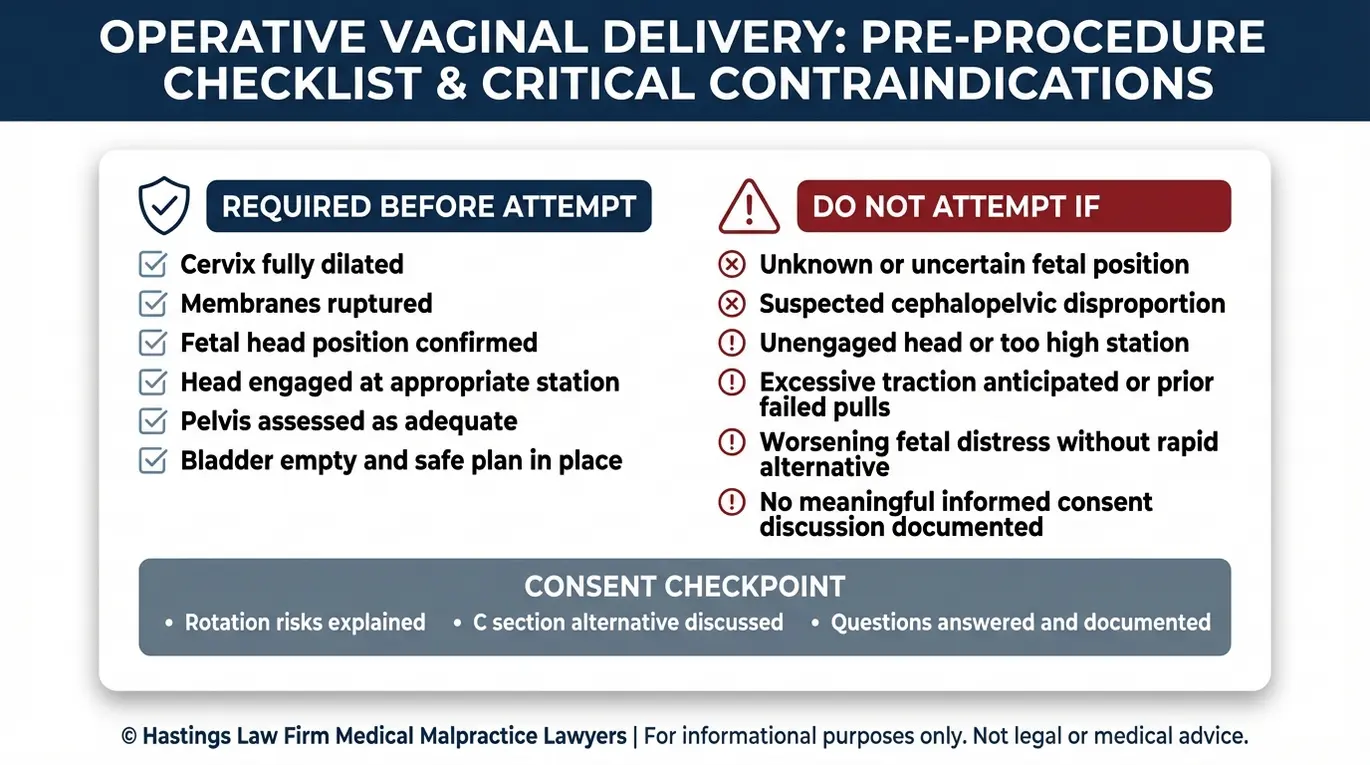
Rotational forceps are only appropriate when the cervix is fully dilated, the membrane is ruptured, the fetal head is engaged at an appropriate level for the procedure, and the physician has determined that a C-section poses a greater risk than an instrument-assisted delivery. When any of these conditions is absent, attempting the procedure may constitute negligence. Contraindications are medical reasons why a specific procedure should not be performed.
Physicians typically consider this intervention only when specific indications, such as a prolonged second stage of labor or maternal exhaustion, make a natural delivery unlikely.
Prerequisites that must be confirmed before a rotational forceps attempt:
- The cervix is fully dilated (10 cm) and completely effaced
- The membranes are ruptured
- The fetal station, which refers to how far the baby’s head has descended into the pelvis measured in centimeters relative to the mother’s ischial spines, is at an appropriate level for the procedure
- The baby’s exact head position has been confirmed
- The mother’s bladder has been emptied
- Adequate pain management is in place
- A surgical team is immediately available for an emergency C-section if the attempt fails
Contraindications that should prevent the procedure:
- The baby’s exact head position is unknown or uncertain
- There is evidence of cephalopelvic disproportion (the baby’s head is too large for the mother’s pelvis)
- The fetus is premature or has a known bleeding disorder
- Fetal distress is already present and worsening
- The physician lacks specific training in rotational forceps technique
Informed consent is another critical element. Before proceeding, the standard of care generally requires the obstetrician to explain the risks of rotation compared to alternatives, including a C-section. Informed consent means your doctor explained the risks and you agreed to the treatment. A forceps birth injury lawyer in Arizona can evaluate whether proper consent was obtained by reviewing the medical records and consent documentation.
Accurate Traction Measurement and Blade Positioning
The standard of care also governs how much force, known as traction in operative vaginal delivery, a physician may apply when pulling during a forceps-assisted birth. Traction refers to the pulling force applied during an assisted delivery. In medical malpractice cases, the amount of mechanical force used during delivery is a key factor in proving negligence. Excessive traction is one of the most common causes of injury during these deliveries.
Blade positioning matters as well. Whether fenestrated (open-windowed) or solid blades are used, they must sit symmetrically on the baby’s head. Asymmetric placement concentrates pressure on one side of the skull and can lead to fractures or nerve damage.
Excessive downward traction on the baby’s head and shoulders can cause a brachial plexus injury (Erb’s palsy). This condition results from damage to the network of nerves running from the neck into the arm. Medical malpractice claims in forceps cases often center on whether the physician applied force beyond what the clinical situation warranted.
The Hastings Law Firm Difference
Results matter, but what truly sets us apart is how we achieve them. Every verdict, every settlement, and every Arizona courtroom victory comes from one guiding promise: To treat each client’s fight for justice as if it were our own.
This balance of skill, experience, and empathy reflects our core philosophy that justice should not only compensate the injured, but also make healthcare safer nationwide.

Severe Birth Injuries Caused by Improper Forceps Use
Improper use of rotational forceps can cause catastrophic physical trauma including skull fractures, brain bleeds, and nerve damage, often resulting in permanent disabilities such as cerebral palsy or Erb’s palsy. The severity of these injuries frequently requires a lifetime of specialized medical care.
Traumatic Brain Injuries
The compressive force of metal forceps blades against a newborn’s skull can cause several types of dangerous bleeding. A subgaleal hemorrhage, which is bleeding between the skull’s periosteum and the scalp’s connective tissue, can be life-threatening because blood accumulates in a large potential space with few natural boundaries to stop it. According to research published by PubMed Central on neonatal subgaleal hemorrhage, this condition requires immediate recognition and aggressive management.
Intracranial hemorrhage, or bleeding inside the skull and around the brain, can cause permanent brain damage or death. Research published in Haematologica on delivery-related intracranial hemorrhages confirms that the mode of delivery directly impacts the risk of these major bleeds. A cephalohematoma, or collection of blood between the periosteum and the skull, may also occur, as can skull fractures requiring surgical intervention.
Nerve Damage
Forceps applied with improper angle or excessive pressure can injure the facial palsy (cranial nerve VII), causing facial palsy that may be temporary or permanent. Nerve damage occurs when physical pressure or stretching interrupts signals between the brain and body. Brachial plexus injuries from aggressive traction during delivery can result in loss of movement and sensation in the arm and hand.
Oxygen Deprivation
When a rotational attempt fails or is prolonged, the delay in delivery can cut off the baby’s oxygen supply. This delay can lead to hypoxic-ischemic encephalopathy (HIE), a form of brain damage caused by insufficient blood flow and oxygen. HIE can cause seizures in the newborn period and may result in a diagnosis of cerebral palsy, developmental delays, or other lifelong neurological conditions.
| Injury | How It Occurs | Potential Long-Term Impact |
|---|---|---|
| Subgaleal hemorrhage | Shearing force separates scalp tissue from skull | Hypovolemic shock; brain damage if untreated |
| Intracranial hemorrhage | Compression or tearing of blood vessels inside the skull | Permanent neurological impairment; developmental delays |
| Skull fracture | Direct pressure from forceps blades | May require surgery; risk of underlying brain injury |
| Facial palsy | Compression of cranial nerve VII | Partial or complete facial paralysis |
| Brachial plexus injury | Excessive traction on head and shoulder | Arm weakness or paralysis (Erb’s palsy) |
| HIE / Cerebral palsy | Prolonged oxygen deprivation from failed or delayed delivery | Lifelong cognitive and motor disabilities |
If your child suffered any of these injuries during a forceps delivery, an Arizona birth injury attorney can help determine whether negligence was involved. Consulting a medical malpractice lawyer early preserves critical evidence, including delivery records that may otherwise become harder to obtain over time.
Proving Malpractice in Arizona Forceps Injury Claims
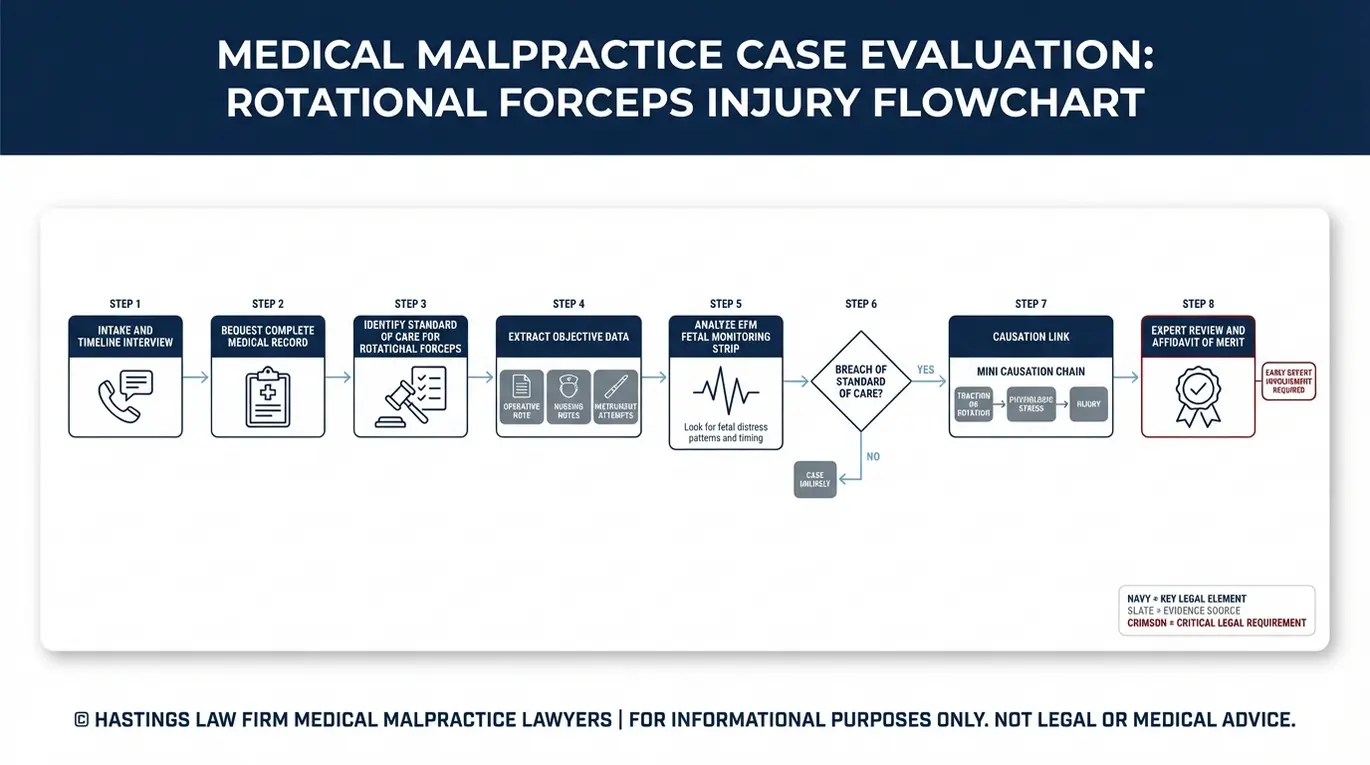
Proving malpractice in Arizona requires demonstrating that the obstetrician deviated from the accepted standard of care during the delivery and that this deviation directly caused the infant’s injury, a process that necessitates expert medical testimony and a thorough analysis of fetal monitoring strips.
The Burden of Proof
Under Arizona Revised Statute § 12-563, a medical malpractice claim requires proof of negligence. You must show the healthcare provider failed to exercise the care and skill a reasonably competent provider would have used under similar circumstances. The family must also prove that this failure was the direct cause of the child’s injuries, not simply that a bad outcome occurred.
Gathering Evidence
Building a forceps injury case involves collecting and analyzing several categories of evidence:
- Labor and delivery records, including nurse charting and physician notes
- Operative reports documenting the forceps application and technique used
- Electronic fetal monitoring strips showing the baby’s heart rate patterns
- Anesthesia records and medication logs
- Imaging studies performed after delivery (CT, MRI, ultrasound)
- Witness statements from nurses, residents, or other staff present during delivery
The Affidavit of Merit
Arizona law under A.R.S. § 12-2603 requires that a preliminary expert opinion affidavit be filed in medical malpractice cases. This affidavit must be supported by a qualified medical expert who confirms that the claim has merit and that the provider’s conduct fell below the standard of care. At Hastings Law Firm, our in-house medical staff and national expert network handle this review process early, often before a case is even filed. A Phoenix medical negligence lawyer on our team can walk you through how this works.
Electronic Fetal Monitoring Strips as Evidence
Electronic fetal monitoring (EFM) strips, continuous paper or digital tracings that record the baby’s heart rate alongside the mother’s contractions, are often the most telling piece of evidence in a forceps injury case. Electronic fetal monitoring helps us identify whether a baby was showing signs of distress during labor. These strips create a minute-by-minute timeline showing how the baby responded to each contraction and each application of the forceps.
Distress patterns on the strip, such as late decelerations, variable decelerations, or prolonged bradycardia, can indicate that the baby was experiencing oxygen deprivation during the delivery. We work with maternal-fetal medicine specialists and neonatologists to interpret these tracings and establish whether the clinical signs warranted abandoning the forceps attempt sooner than the delivering physician did.
Compensation for Lifelong Care After a Traumatic Birth
Families may recover compensation for past and future medical expenses, cost of specialized care, pain and suffering, and loss of future earning capacity to ensure the child’s financial security for life. Financial compensation is designed to cover the high costs of medical equipment and therapy. When a birth injury results in a permanent condition like cerebral palsy, the financial impact extends across decades.
Economic Damages
These cover measurable economic damages, including hospital bills, surgeries, physical and occupational therapy, speech therapy, adaptive equipment such as wheelchairs or communication devices, home modifications, and the cost of full-time or part-time nursing care. This funding addresses the reality that complex medical needs often intensify as the child ages, requiring strictly managed therapies and expensive assistive technology. In severe cases, 24/7 attendant care may be necessary for the rest of the child’s life.
Non-Economic Damages
Arizona law also allows recovery for pain and suffering, emotional distress, and loss of enjoyment of life. For a child who will grow up with significant physical or cognitive limitations, these damages reflect the human cost that medical bills alone cannot capture. These non-economic damages acknowledge that the injury has fundamentally altered the child’s human experience and potential.
The Life Care Plan
In cases involving permanent disability, we work with life care planning experts who project every anticipated cost from infancy through the child’s full life expectancy. These plans account for inflation, evolving medical needs, and the cost of emerging therapies. We rely on these comprehensive projections to negotiate settlements that account for inflation and the rising cost of healthcare over a lifetime. Forceps injury legal representation from a firm experienced in these cases ensures that no category of loss is overlooked.
Contact the Arizona Birth Injury Attorneys at Hastings Law Firm Today for Help
A birth injury caused by rotational forceps is not simply an unfortunate complication. In many cases, it is a preventable outcome that resulted from a decision that should not have been made, or a technique that was not performed correctly. You and your family deserve to know what happened during your child’s delivery and whether the care provided met the standard your baby was owed.
At Hastings Law Firm, we dedicate our entire practice to medical malpractice. Our team of attorneys, nurse consultants, and medical experts is ready to review your records, identify what went wrong, and help you understand your legal options.
There is no fee unless we recover compensation for your family. Contact us today to request a free, confidential case evaluation. Let us help you find the answers you deserve.
Frequently Asked Questions About Rotational Forceps Birth Injury in Arizona


This content was researched and written by the Hastings Law Firm editorial team, which includes attorneys, medical professionals, and experienced researchers. Our writing is informed by internal knowledge and practical experience, and we cross-check critical details against authoritative sources cited throughout. Every piece undergoes human-led fact-checking and legal review. Because legal and medical information can change, if you spot an error, please contact us. Learn more about our content standards and review process on our editorial policy page.

Tommy Hastings, founder of Hastings Law Firm, is a board-certified personal injury trial lawyer dedicated exclusively to healthcare injury cases. Since 2001, he has represented injured patients and families in litigation against major hospital systems, pharmaceutical companies, and negligent healthcare providers nationwide. He has handled numerous high-profile cases that have drawn national media attention and resulted in multi-million dollar recoveries. He draws on that experience in his writing, helping readers understand how these cases work and what options may be available to them.
