


Arizona Rheumatologist Malpractice Lawyer
Written by: Hastings Law Firm | Reviewed by: Tommy Hastings | Updated: July 27, 2026
Rheumatologist negligence can leave patients with worsening pain, permanent joint damage, organ complications, or worse, especially when autoimmune disease management falls short. The article describes how diagnostic failures, medication errors, and poor monitoring can lead to irreversible harm, and it highlights the role of standard of care, causation, and damages in Arizona claims. It also discusses how statewide specialist standards and expert testimony can shape whether a claim can move forward. If you or a loved one were harmed or worse due to rheumatologist malpractice in Arizona, contact Hastings Law Firm for a free, confidential case review.

Top Rated Arizona Attorneys for Arthritis and Autoimmune Negligence
What You Should Know About Arthritis Specialist Negligence Claims in Arizona:
- Life altering harm can follow when rheumatology care falls below the accepted standard of care, especially with diagnostic errors or inadequate monitoring.
- Options can be limited when a claim cannot be supported by qualified specialist expert testimony.
- Severe outcomes can result when early autoimmune indicators are dismissed or follow up testing is not pursued.
- Preventable drug toxicity or serious infection risk can occur when high risk rheumatic medications are prescribed without appropriate monitoring or screening.
- Recovery can be reduced when comparative negligence is alleged, such as missed appointments or other noncompliance.
- Compensation can cover both financial losses and personal harms, including pain and suffering and loss of quality of life.
- Recovery is not limited by a damages cap in Arizona for medical malpractice and wrongful death claims.
- A stricter process can apply when the care occurred at a government healthcare facility, which can narrow available options if missed.
- Disputes over what the doctor knew and when can turn on electronic health record audit trails that show access to results and possible alterations.
- Proof issues can hinge on whether medical records are complete, including documentation of test review, follow up, and informed consent discussions.

A Healthcare Focused Law Firm
When a rheumatologist’s error leaves you or a loved one facing worsening pain, permanent joint damage, or organ complications, the sense of betrayal can be overwhelming. You trusted a specialist with your care, and that trust was not honored. Autoimmune diseases, conditions where the body’s immune system mistakenly attacks its own tissues, and rheumatic diseases, a broad category of disorders affecting the joints, muscles, and connective tissues, demand careful, ongoing management. When that management falls short, the consequences can be life-altering.
As an Arizona Rheumatologist Malpractice Lawyer, Hastings Law Firm focuses exclusively on medical malpractice. Our team of attorneys, in-house nurses, and medical consultants understands the clinical details behind these cases. If you believe a rheumatologist’s negligence caused you harm, we can review what happened and explain your options in a free, confidential consultation.
Establishing Liability and the Standard of Care in Rheumatology
Rheumatology malpractice occurs when a specialist deviates from the accepted standard of care, directly causing patient harm through diagnostic errors, improper medication management, or failure to monitor disease progression. Proving this type of medical negligence requires more than showing a bad outcome. It requires demonstrating that a competent rheumatologist, facing the same clinical picture, would have acted differently to avoid specialist negligence.
The standard of care is the level of treatment a reasonably skilled rheumatologist would provide under similar circumstances. In rheumatology, this includes following established protocols like a treat-to-target (T2T) approach, a strategy where the doctor sets a specific disease activity goal and adjusts treatment until that target is met. It also means timely prescribing of disease-modifying antirheumatic drugs (DMARDs), which are medications designed to slow or stop the immune system from attacking the joints and organs. When a specialist fails to follow these protocols, resulting in standard of care violations, the consequences for the patient can be severe and irreversible.
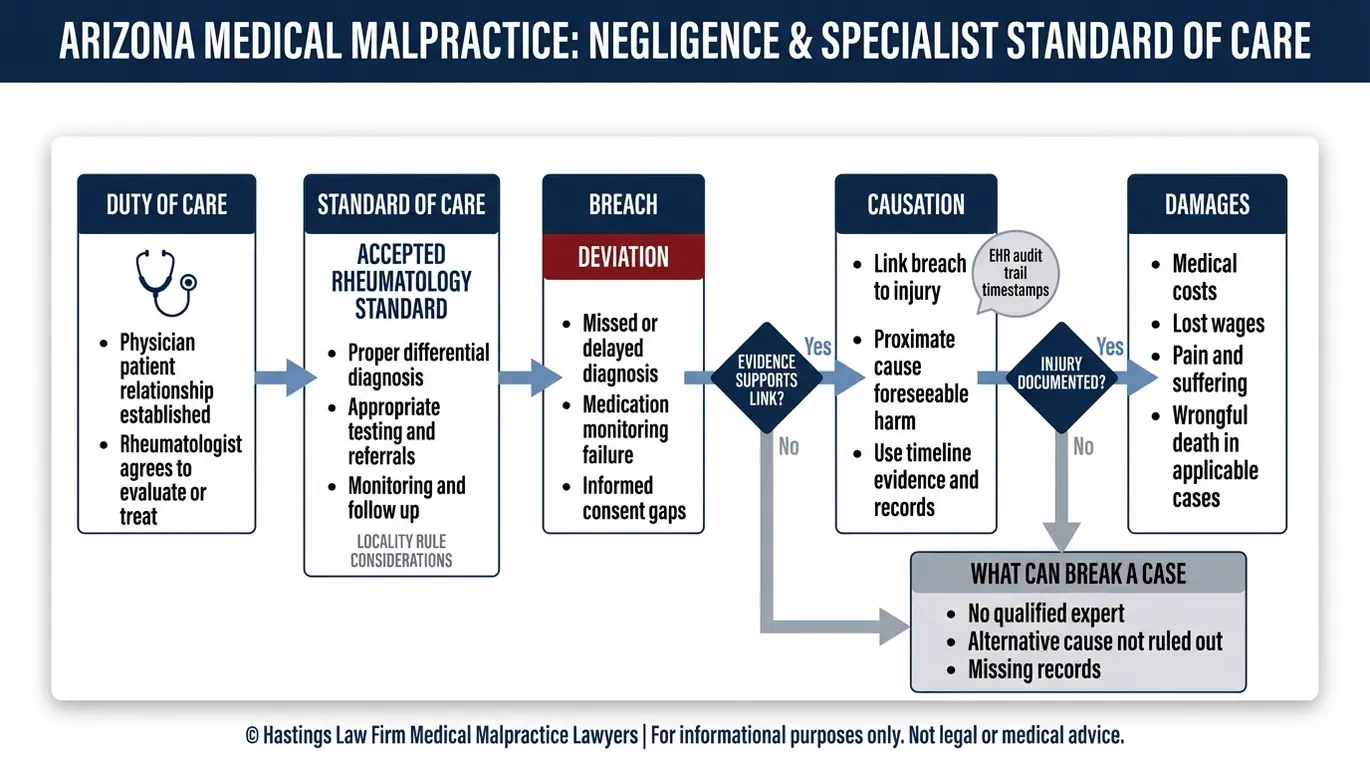
Establishing doctor liability in an Arizona malpractice case requires proving four legal elements. First, the rheumatologist owed you a duty of care, which is established the moment a doctor-patient relationship exists. Second, the doctor committed a breach of that duty by failing to meet the standard of care. Third, causation must connect the breach directly to your injury, meaning the harm would not have occurred but for the doctor’s negligence.
This is often referred to as proximate cause. Fourth, you must show actual damages, whether physical, financial, or emotional.
These cases carry a level of clinical complexity that general injury attorneys often miss. Autoimmune conditions fluctuate, lab values shift, and symptoms overlap across multiple diseases. A rheumatology malpractice lawyer handling these claims needs to understand the difference between a disease flare and a treatment failure, between expected side effects and preventable harm.
At Hastings Law Firm, our in-house medical staff works alongside our Arizona malpractice attorney team to interpret clinical data and identify exactly where autoimmune malpractice occurred. If you are suing a rheumatologist for a missed diagnosis or a medication error, we have the experience to litigate your claim.
Locality Rule and Local Standard of Care Considerations
Under A.R.S. § 12-563, Arizona holds medical specialists to a statewide standard of care rather than a purely local one. This means a rheumatologist in Phoenix is expected to meet the same clinical benchmarks as one practicing anywhere else in the state. This rule helps determine if a specialist met the professional benchmarks expected of any qualified peer within Arizona. While the locality rule historically limited comparisons to doctors in the same geographic area, modern statutes focus on statewide specialist standards. Expert testimony is essential to establish what that standard requires in a given situation and to demonstrate how the treating doctor fell short.
Common Diagnostic Failures Involving Autoimmune Diseases
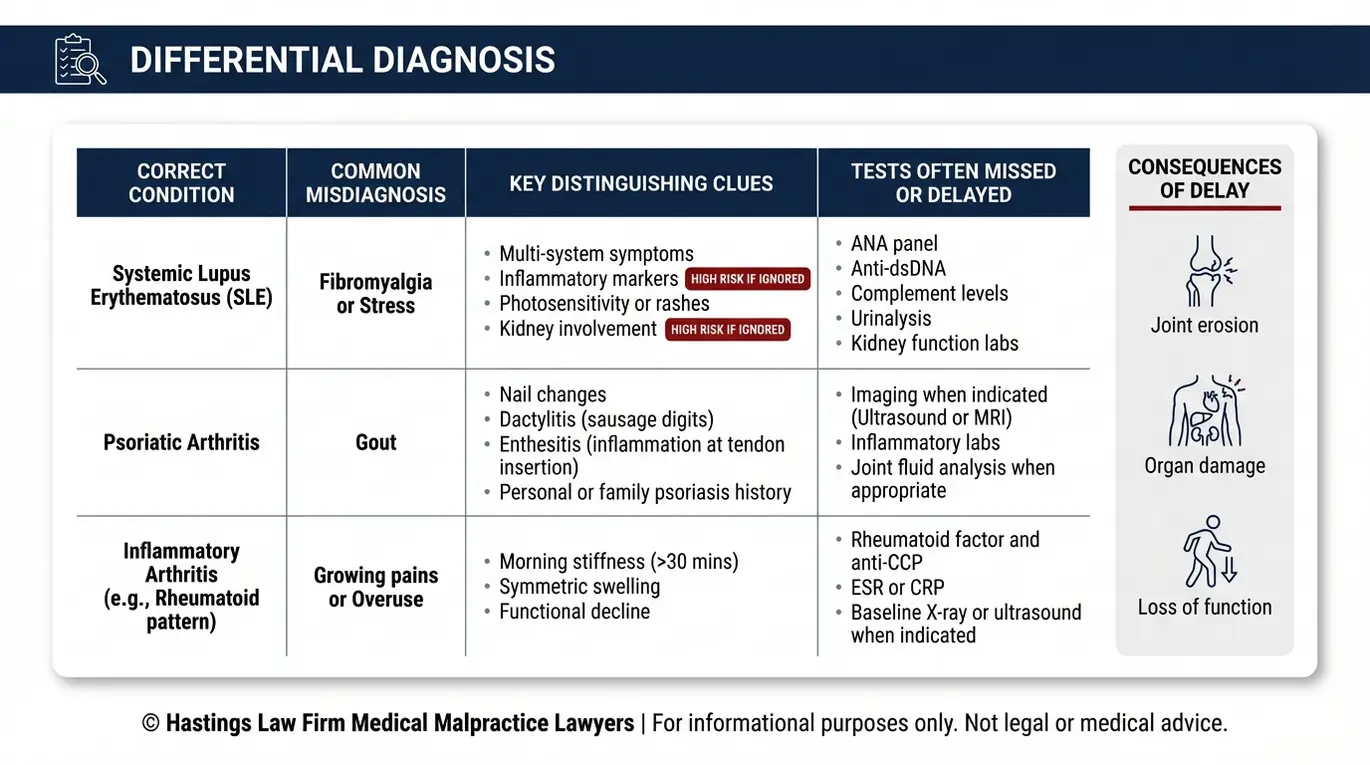
Diagnostic failures in rheumatology often involve failing to order necessary imaging, misinterpreting lab results, or dismissing symptoms as “growing pains” or psychosomatic, leading to irreversible joint damage or organ failure. These errors frequently stem from a breakdown in the differential diagnosis process. This is the systematic method a doctor uses to evaluate competing possible conditions by weighing symptoms, test results, and patient history before arriving at a diagnosis.
One of the most common failures involves the antinuclear antibody (ANA) test, a blood screening used to detect autoimmune activity. A positive ANA result should prompt further investigation, but some providers stop short of ordering more specific antibody tests such as anti-dsDNA or an ENA panel, or imaging like a CT scan, MRI, or ultrasound to assess the extent of inflammation or organ involvement. When a rheumatologist dismisses early indicators or attributes them to less serious conditions, the window for effective treatment closes. A missed diagnosis lawyer often sees cases where rheumatologist negligence led to years of unnecessary suffering.
Certain conditions are misdiagnosed with troubling frequency:
| Correct Condition | Common Misdiagnosis | Consequence of Delay |
|---|---|---|
| Lupus (SLE) | Fibromyalgia, chronic fatigue, depression | Kidney failure, cardiovascular damage |
| Psoriatic Arthritis | Gout, osteoarthritis | Permanent joint erosion, disability |
| Rheumatoid Arthritis | Age-related wear, repetitive strain | Irreversible joint destruction |
| Vasculitis | Infection, allergic reaction | Organ damage, tissue death |
Research published by PubMed Central on delayed diagnosis and misdiagnosis of systemic lupus erythematosus confirms that diagnostic delays for lupus remain unacceptably common and contribute to worse long-term outcomes. A separate PubMed Central study on diagnostic and support experiences of patients with lupus found that patients frequently report having their symptoms dismissed or attributed to psychological causes before receiving a correct diagnosis.
A failure to diagnose autoimmune disease is not simply inconvenient. It can mean the difference between manageable arthritis and permanent disability, between early lupus treatment and kidney failure. If you are considering suing for misdiagnosis, our diagnostic error lawyer team can evaluate if the delayed diagnosis of lupus or other conditions constituted actionable Arizona medical malpractice. When a rheumatologist fails to diagnose a condition that the clinical evidence supported, an arthritis misdiagnosis attorney can help prove that failure was negligent.
Proving Delays with EHR Audit Trails
Electronic health records contain more than clinical notes. They include metadata showing when a provider opened a lab result, how long they spent reviewing imaging, and whether medical records were altered after the fact. Audit trails act as a digital timeline of every action taken within a patient’s electronic file. Our legal team examines EHR audit trails to build a precise timeline of what the doctor knew, when they knew it, and whether they acted on it. This type of evidence can be critical in proving that a delayed diagnosis was not an honest clinical judgment call but a failure to respond to available information.
The Hastings Law Firm Difference
Results matter, but what truly sets us apart is how we achieve them. Every verdict, every settlement, and every Arizona courtroom victory comes from one guiding promise: To treat each client’s fight for justice as if it were our own.
This balance of skill, experience, and empathy reflects our core philosophy that justice should not only compensate the injured, but also make healthcare safer nationwide.

Medication Errors and High Risk Rheumatic Drugs
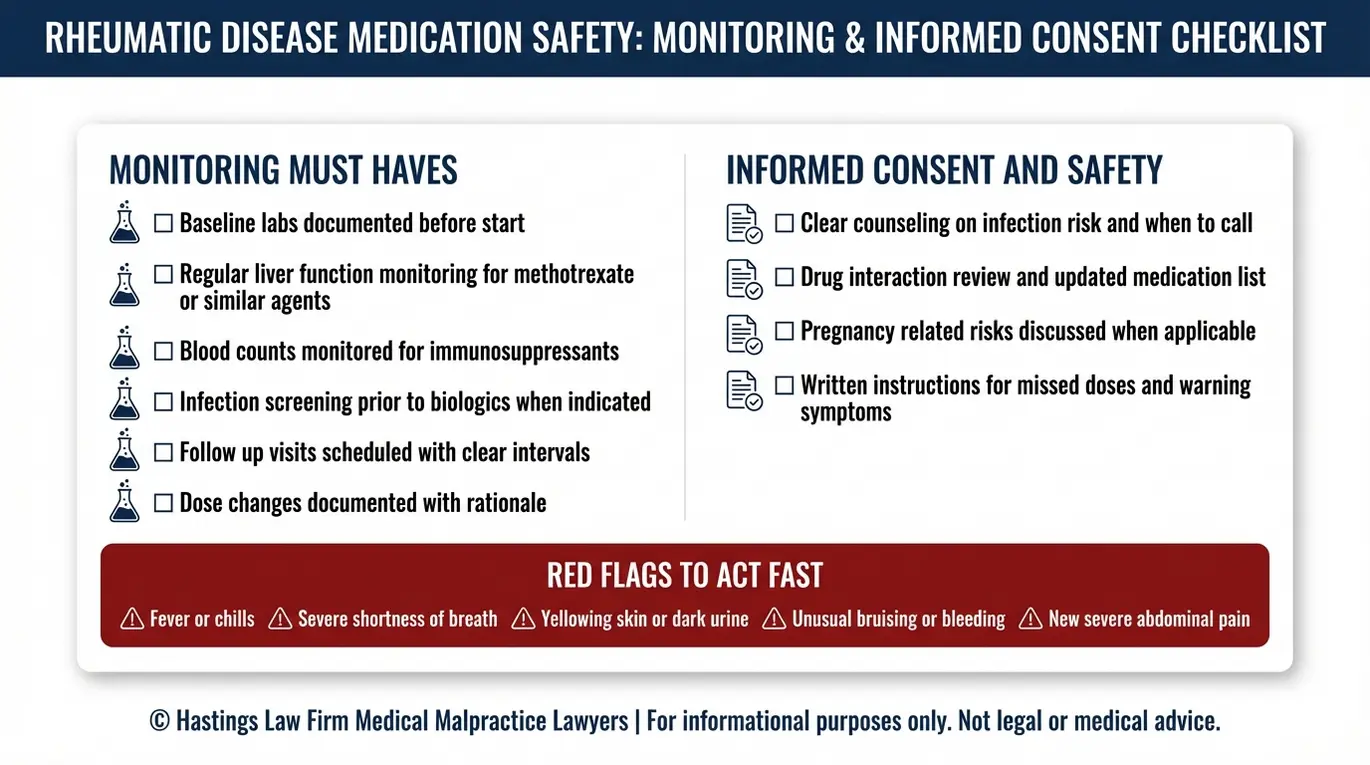
Rheumatologists frequently prescribe potent immunosuppressants and biologics that require strict monitoring; failure to track liver function or toxicity levels constitutes actionable medical negligence. These are not routine prescriptions. Immunosuppressants and biologics are powerful drugs engineered to target the immune response, and many carry serious risks that demand a structured, ongoing monitoring protocol. A medication error lawyer often finds that the negligence lies not in the drug choice, but in the lack of surveillance.
Methotrexate toxicity is one of the most common bases for rheumatology malpractice claims, often requiring the attention of a methotrexate toxicity lawyer. Methotrexate is a powerful immunosuppressant used to treat rheumatoid arthritis, lupus, and other autoimmune conditions. According to the FDA’s prescribing information for Methotrexate, the drug requires regular blood monitoring for liver damage, bone marrow suppression, and kidney impairment. When a rheumatologist fails to order these tests at appropriate intervals, preventable toxicity can result in organ damage or death.
Tumor necrosis factor (TNF) inhibitors, a class of biologic drugs that block specific proteins driving inflammation, carry their own risks. These medications suppress the immune system in targeted ways but can leave patients vulnerable to serious infections, including tuberculosis reactivation, if screening protocols are not followed. In cases of biologic therapy malpractice, our rheumatology drug negligence attorneys investigate if mandatory screenings were skipped.
High-risk medications that require close monitoring include:
- Methotrexate: Requires regular liver function tests (LFTs), complete blood counts, and kidney function panels
- TNF inhibitors (e.g., Humira, Enbrel, Remicade): Require tuberculosis screening before initiation and ongoing infection surveillance
- Corticosteroids (e.g., Prednisone): Require monitoring for bone density loss, blood sugar elevation, and adrenal suppression with long-term use
- Mycophenolate and Azathioprine: Require blood count monitoring to detect bone marrow suppression
Informed consent is another area where medication negligence can arise, leading to claims handled by an Arizona prescription error attorney. Before starting an aggressive therapy, the standard of care requires the rheumatologist to explain the risks, expected benefits, and alternative treatment options. If you are suing for drug injury because you were not adequately informed, a medical malpractice lawyer can help determine if your consent was valid. An experienced pharmacy error attorney can also review if the error originated with the dispensing of the medication.
Liability in Coordinated Care Failures
Autoimmune diseases rarely stay confined to a single organ system. Lupus can affect the kidneys, and rheumatoid arthritis can involve the lungs. Multi-system management involves the careful integration of treatments across different medical specialties. When a rheumatologist fails to provide coordination of care with other specialists, such as nephrologists for Lupus nephritis or pulmonologists for interstitial lung disease, the result can be multi-system failure.
Multi-system autoimmune disease management requires diligence. Biologic therapy, which refers to biologic DMARDs engineered from living cells to target specific parts of the immune response, adds another layer of coordination responsibility. Our team evaluates specialist liability to see whether the treating rheumatologist met their obligation to communicate findings, share test results, and involve the right specialists at the right time.
Building a Winning Case with Medical Experts
Arizona law requires expert testimony from a qualified specialist to validate that the treating rheumatologist breached the standard of care; without this, a case cannot proceed. This is not a formality. The strength and credibility of your medical expert witness can determine whether a case settles favorably or fails at the earliest stages.
Not every doctor willing to testify is the right fit. We look for board-certified rheumatologists with active clinical practices who can speak to the exact type of care at issue. Through our national expert network, we connect with specialists across the country who have no professional ties to the defendant or local medical community. This independence matters. Local experts may be reluctant to testify against colleagues they refer patients to or see at professional events.
Every case we accept is prepared from day one as though it will go to a jury. Our founder, Tommy Hastings, is Board Certified in Personal Injury Trial Law, a distinction held by fewer than 2% of attorneys. Our team of attorneys, including former defense counsel who understand how hospitals and insurers build their arguments, works alongside in-house medical staff to reconstruct the clinical timeline. We identify where the standard of care was violated, retain qualified experts to confirm it, and build a case file that demonstrates accountability. This trial-ready preparation creates real leverage in settlement negotiations, because the defense knows we are prepared to present the evidence in open court.
A malpractice trial lawyer understands Arizona malpractice laws inside and out, including the expert testimony requirement. We work through complex doctrines like res ipsa loquitur—a rule where negligence is inferred from the nature of an accident—when applicable and ensure every procedural step, such as the affidavit of merit, is handled correctly. In proving medical negligence, our experts review critical data points, such as liver function tests (LFTs), which are blood panels that indicate liver health, to confirm if monitoring protocols were followed.
Damages Available for Autoimmune Injury Victims
Victims of rheumatologist malpractice in Arizona can recover economic damages for medical bills and lost wages, as well as non-economic damages for pain, suffering, and loss of quality of life, with no state cap on compensation.
Recoverable damages in these cases generally fall into the following categories:
- Economic damages: Past and future medical malpractice damages for expenses, rehabilitation costs, prescription drug costs, and lost earning capacity. For disabling autoimmune conditions, future medical costs and lost income can represent the largest portion of a claim.
- Non-economic damages: Physical pain and suffering, emotional distress, loss of enjoyment of life, and loss of consortium for spouses. suing for pain and suffering allows patients to be compensated for the intangible impact of their injury.
- Wrongful death damages: When a loved one dies as a result of rheumatology negligence, surviving family members may pursue compensation for funeral expenses, lost financial support, and the loss of companionship.
Unlike many states, Arizona does not impose a statutory cap on medical malpractice damages. This means a jury can award full compensation for arthritis injury based on the evidence presented, without an artificial ceiling limiting recovery. An Arizona injury settlement should reflect the true cost of the harm done.
Contact the Arizona Doctor Malpractice Attorneys at Hastings Law Firm Today for Help
If you or a loved one suffered harm because a rheumatologist failed to diagnose, improperly treated, or neglected to monitor an autoimmune condition, you deserve answers. At Hastings Law Firm, our entire practice is dedicated to medical malpractice. We understand the clinical complexity of rheumatology cases, and we have the medical and legal resources to investigate what went wrong.
Our goal is to restore trust and enforce accountability so that what happened to you does not happen to someone else. We operate on a contingency fee basis, which means you pay no attorney fees or costs unless we recover compensation on your behalf.
Your first step is a free, confidential case evaluation with one of our patient advocates. Contact Hastings Law Firm today so we can review your medical records and help you understand your options.
Frequently Asked Questions About Rheumatologist Malpractice in Arizona


This content was researched and written by the Hastings Law Firm editorial team, which includes attorneys, medical professionals, and experienced researchers. Our writing is informed by internal knowledge and practical experience, and we cross-check critical details against authoritative sources cited throughout. Every piece undergoes human-led fact-checking and legal review. Because legal and medical information can change, if you spot an error, please contact us. Learn more about our content standards and review process on our editorial policy page.

Tommy Hastings, founder of Hastings Law Firm, is a board-certified personal injury trial lawyer dedicated exclusively to healthcare injury cases. Since 2001, he has represented injured patients and families in litigation against major hospital systems, pharmaceutical companies, and negligent healthcare providers nationwide. He has handled numerous high-profile cases that have drawn national media attention and resulted in multi-million dollar recoveries. He draws on that experience in his writing, helping readers understand how these cases work and what options may be available to them.
