


Arizona Retained Medical Objects Lawyer
A retained surgical item can leave a person facing unexpected pain, fear, and a long path to recovery after a procedure that was supposed to help. Objects such as sponges, instruments, or device fragments may be missed during surgical counts and later cause infection, organ damage, or the need for additional surgery. Symptoms can appear right away or be delayed, and imaging does not always identify the problem quickly. If you or a loved one were harmed or worse due to retained surgical items in Arizona, contact Hastings Law Firm for a free, confidential case review.

Last Updated: July 27, 2026
Trusted Legal Representation for Surgical Negligence in Arizona
Discovering that a surgical instrument, sponge, or other object was left inside your body after a procedure is a deeply unsettling experience. You trusted a medical team with your care, and that trust was broken in one of the most preventable ways possible. If you or a loved one is dealing with the physical pain and emotional weight of a retained surgical item, you are not alone, and this was not your fault.
Hastings Law Firm is a medical malpractice firm with a team of attorneys, nurse consultants, and patient advocates who focus exclusively on cases like these. From our Phoenix office, we represent patients across Arizona who have been harmed by surgical errors that should never occur. If you suspect a foreign object was left behind during surgery, we can review what happened and explain your legal options at no cost and no obligation. Contact our Arizona retained medical objects lawyer team for a confidential case evaluation.

Common Types of Retained Surgical Items Found in Patients
Retained surgical items typically fall into two categories: soft goods like sponges and towels, which are the most common, and hard instruments such as retractors, needles, or clamps. Each poses serious risks to a patient’s health, often requiring additional surgery and causing complications that can last for years.
Soft Goods: Sponges, Gauze, and Towels
Surgical sponges, also called lap sponges (small absorbent pads used to soak up blood and fluids during surgery), are the most frequently retained items. According to a study published through PubMed Central on retained surgical objects as preventable never events, sponges account for a significant portion of these cases. The reason is simple: once saturated with blood, they become nearly indistinguishable from surrounding tissue. Gauze and surgical towels carry the same risk, particularly in procedures involving large open cavities like the abdomen or chest, often leading to claims handled by an Arizona retained medical objects attorney.
Sharps and Instruments
Hard objects present a different kind of danger. These include:
- Needles and scalpel blades that can puncture tissue or migrate through the body
- Retractors, clamps, and forceps that cause internal pressure, obstruction, or organ damage
- Broken instrument fragments that may snap off during a procedure and go unnoticed
Device Fragments: Catheters and Guide Wires
Guide wires, which are thin, flexible wires used to direct catheters into position inside blood vessels, can break during insertion or removal. Catheter tips and other device fragments may also detach and remain lodged in the body. These pieces are small enough to escape detection during a routine post-surgical check but large enough to cause serious vascular or organ damage over time.
An experienced retained medical objects lawyer in Arizona can help determine exactly what was left behind, when it should have been detected, and who bears responsibility.
The Hidden Danger of Gossypiboma
When a cotton-based item like a surgical sponge is left inside the body, it can trigger a specific and dangerous condition known as gossypiboma, a mass or pseudotumor that forms around the retained cotton material as the body attempts to wall off the foreign object. The surrounding tissue becomes inflamed, and over time, the mass can mimic the appearance of an abscess or even a tumor on imaging.
Gossypiboma presents a real diagnostic challenge. Standard X-ray imaging may miss the sponge entirely unless it contains a radiopaque marker, a thin strip embedded in some surgical sponges specifically so they can be detected on imaging. Even with markers, degraded or folded sponges can be difficult to identify. A CT scan is typically more reliable, but if the treating physician is not specifically looking for a retained foreign object, the condition may be misdiagnosed as a tumor, abscess, or post-surgical complication, delaying proper treatment by months or even years.
Failures in Surgical Count Protocols and Standard of Care
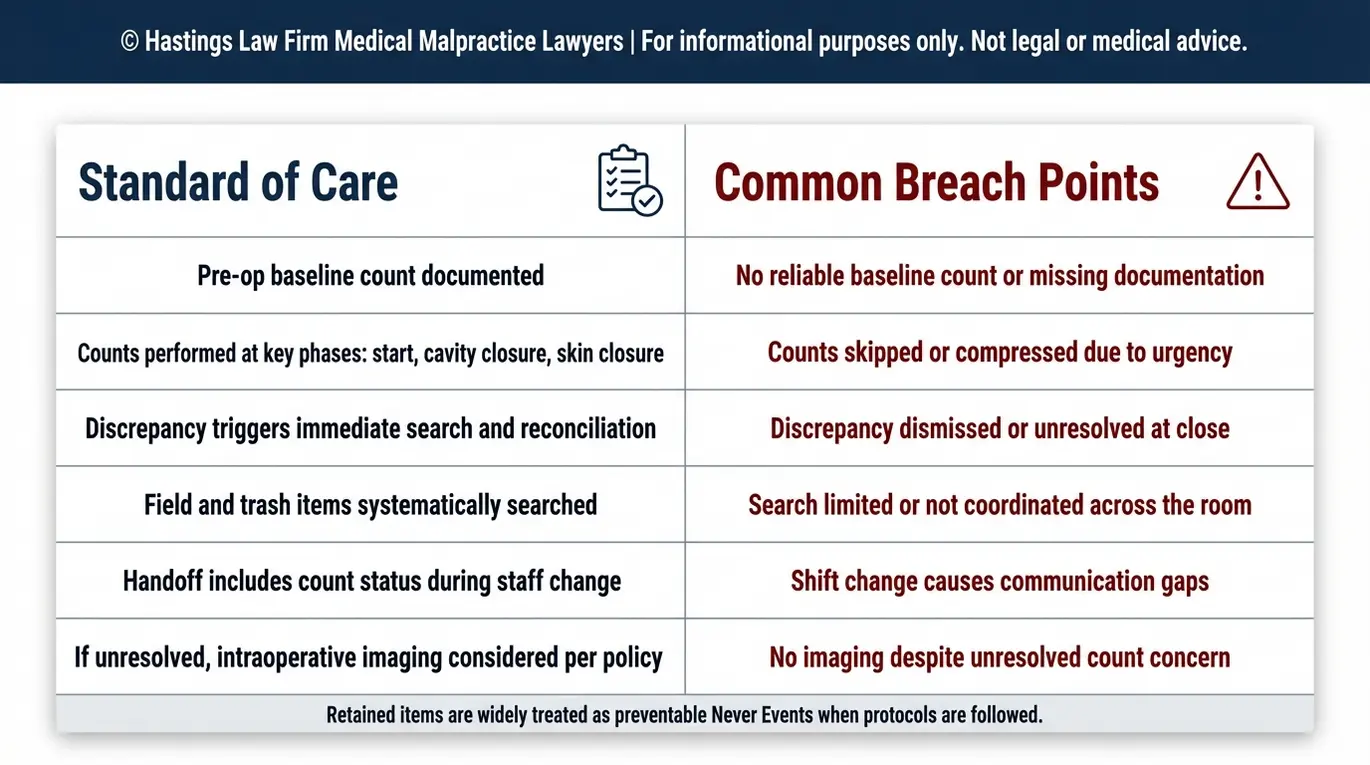
Leaving an object behind is classified as a “Never Event” because strict count protocols mandated by The Joint Commission require staff to account for every item before closing the patient. When those protocols fail, the result is negligence.
The Surgical Count Process
Operating room staff must strictly follow a surgical count protocol, a standardized procedure to track every item used during surgery. It typically involves three separate counts:
| Protocol Stage | What Should Happen | Where Breakdowns Occur |
|---|---|---|
| Initial Count | All instruments, sponges, and sharps are counted and recorded before the first incision. | Items may be added mid-procedure without being logged. |
| Intra-operative Count | Counts are repeated any time there is a staff change or a new item is introduced. | Shift changes or staff rotations disrupt continuity. |
| Closing Count | A final count is performed before the surgical site is closed. All numbers must match. | Urgency during emergency procedures or surgeon pressure to close quickly can lead to skipped or rushed counts. |
When the closing count does not match the initial count, the standard of care requires the team to stop, locate the missing item, and confirm it has been removed before proceeding. Closing a patient with a known discrepancy is a clear breach that a lawyer for retained medical objects will expose.
Why These Failures Happen
Common risk factors include emergency surgeries where time pressure overrides protocol, staff fatigue during long procedures, and poor communication during shift changes. These are explanations for how errors occur, but they are not legal defenses. The standard of care exists precisely because operating rooms are high-pressure environments. This is a fact an Arizona retained object attorney emphasizes when establishing liability. A retained medical objects lawyer in Arizona will examine whether the surgical team followed or deviated from these required safety steps.
At Hastings Law Firm, our team includes in-house nurse consultants who understand hospital charting practices and operating room workflows. We know where to look for gaps in the documentation and how to identify protocol failures that the hospital may not voluntarily disclose.
The Hastings Law Firm Difference
Results matter, but what truly sets us apart is how we achieve them. Every verdict, every settlement, and every Arizona courtroom victory comes from one guiding promise: To treat each client’s fight for justice as if it were our own.
This balance of skill, experience, and empathy reflects our core philosophy that justice should not only compensate the injured, but also make health care safer nationwide.

Health Consequences of Foreign Objects Left in the Body
Retained objects can cause severe, life-threatening complications including perforation of organs, widespread infection (sepsis), and the formation of abscesses or adhesions. The physical toll depends on the type of object, its location, and how long it remains inside the body.
Immediate vs. Delayed Symptoms
Some patients experience sharp, localized pain almost immediately after surgery. Others may feel relatively normal for weeks, months, or even years before symptoms develop. This delay is one of the most dangerous aspects of retained surgical items, as noted in a PubMed Central case report and literature review on gossypiboma. Patients and their doctors may attribute ongoing discomfort to normal post-operative healing, missing the true cause entirely. This is a scenario familiar to a lawyer for surgical objects left in body.
Infection and Sepsis
The body treats a retained object as an invader. The immune response can produce chronic inflammation, localized infection, or abscess formation around the item. If the infection spreads into the bloodstream, sepsis can develop, a severe outcome that a retained medical objects attorney will highlight when calculating damages. Sepsis is a medical emergency that can lead to organ failure and death if not treated immediately.
Obstruction and Organ Damage
A retained sponge or instrument in the abdominal cavity can press against the intestines, causing bowel obstruction. Patients may experience nausea, vomiting, severe cramping, and an inability to pass stool. In more serious cases, the object can perforate the bowel wall, leading to peritonitis and the need for emergency surgery.
Warning signs that may indicate a retained surgical item include:
- Persistent or worsening pain near the surgical site
- Unexplained fever or recurring infections
- Swelling, redness, or a palpable lump
- Digestive problems such as nausea, bloating, or bowel obstruction
- Fatigue or malaise that does not improve with time
If you experience any of these symptoms after surgery, seek medical imaging and evaluation right away. An Arizona retained medical objects lawyer can help connect these health consequences to the original surgical error and build the causation evidence needed for your claim.
Migration and Metallosis Complications
Retained objects do not always stay where they were left. Migration, the movement of a retained surgical item from its original location to another part of the body, can also occur. A sponge left in the abdomen, for example, may shift over time and compress nearby blood vessels or organs. Needles and small instrument fragments can travel even further, sometimes lodging in areas far from the surgical site.
Metal instruments and fragments carry an additional risk: metallosis, a condition in which corrosion of the metal releases particles into surrounding tissue. These metallic ions can cause chronic inflammation, tissue necrosis, and, in some cases, systemic toxicity. Metallosis is particularly concerning because it can develop slowly and mimic other conditions, making it difficult to diagnose without a high level of clinical suspicion and targeted imaging.

Investigating Liability and Proving Negligence in Arizona
Proving negligence involves gathering surgical inventory logs, radiology reports, and witness testimony to demonstrate that the surgical team breached the standard of care by failing to remove all instruments. This process requires both legal skill and deep medical knowledge, which is why a medical malpractice lawyer at Hastings Law Firm pairs attorneys with in-house medical professionals on every case.
Our investigation typically follows these steps:
- Securing the surgical count sheet and operating room records. The count sheet is the document that tracks every item used during surgery. In some cases, these records may be incomplete, altered, or difficult to obtain without legal action from an Arizona retained medical objects lawyer. We move quickly to preserve this evidence before anything is lost.
- Reviewing imaging and pathology reports. X-rays, CT scans, and reports from the removal surgery help establish what was left behind, where it was found, and what damage it caused.
- Identifying all liable parties. Responsibility may extend beyond the surgeon. The scrub technician who conducts the count, the circulating nurse who verifies it, and the hospital that employs them can all share liability. Under vicarious liability, the hospital may be held responsible for the negligence of its employees, even if the hospital itself did not directly cause the error.
- Engaging qualified medical experts. Arizona medical malpractice cases require expert testimony to establish the standard of care and explain how it was breached. Our national network of surgical and nursing experts provides objective opinions that strengthen the case.
At Hastings Law Firm, our legal team includes former defense attorneys who previously represented hospitals in cases like these. That background gives us insight into how the other side will respond and allows us to build a case designed to anticipate and counter those arguments from day one as your retained object legal counsel.

Recoverable Damages for Retained Object Victims
Patients harmed by a retained surgical item may recover economic damages for medical bills and lost wages, as well as non-economic damages for pain, suffering, and the emotional trauma of undergoing a second surgery that should never have been necessary, entitling the patient to compensation for retained objects.
The categories of recoverable compensation typically include:
- Corrective surgery costs: The expense of the procedure to locate and remove the retained object, including hospital stays, anesthesia, and follow-up care.
- Past and future medical expenses: Treatment for infections, organ damage, or chronic conditions caused by the retained item, which may require long-term management.
- Lost income: Wages lost during the extended recovery period, as well as diminished future earning capacity if the injury results in lasting physical limitations.
- Pain and suffering: Compensation for the physical pain endured and the emotional distress of learning that a preventable error caused ongoing harm.
- Permanent impairment: Damages for lasting organ damage, scarring, or loss of bodily function.
- Wrongful death: If a retained object leads to fatal complications such as uncontrolled sepsis, surviving family members may pursue a wrongful death claim.
According to the Healthcare Cost and Utilization Project (HCUP) Statistical Brief 223, millions of surgical procedures are performed each year across the United States. Even a small percentage of retained object incidents translates to thousands of affected patients. An Arizona retained medical objects lawyer can calculate the full scope of your damages and pursue fair compensation on your behalf.
Contact the Arizona Surgical Error Attorneys at Hastings Law Firm Today for Help
You should not have to bear the cost of a surgeon’s preventable mistake. If a surgical object was left inside your body or the body of someone you love, Hastings Law Firm is ready to help you find out what happened and hold the responsible parties accountable.
Our Arizona retained medical objects lawyer team works on a contingency fee basis, meaning you pay no attorney fees or costs unless we recover compensation for you. Every case begins with a free, confidential evaluation led by a patient advocate who will listen to your story and help determine whether you have a claim.
Beyond securing fair compensation, our goal is to make sure this does not happen to the next patient. Contact our Phoenix office today to schedule your risk-free consultation. Call a retained medical objects attorney at our firm or fill out our online form to get started.
Frequently Asked Questions About Retained Medical Objects in Arizona


This content was researched and written by the Hastings Law Firm editorial team, which includes attorneys, medical professionals, and experienced researchers. Our writing is informed by internal knowledge and practical experience, and we cross-check critical details against authoritative sources cited throughout. Every piece undergoes human-led fact-checking and legal review. Because legal and medical information can change, if you spot an error, please contact us. Learn more about our content standards and review process on our editorial policy page.

Tommy Hastings, founder of Hastings Law Firm, is a board-certified personal injury trial lawyer dedicated exclusively to healthcare injury cases. Since 2001, he has represented injured patients and families in litigation against major hospital systems, pharmaceutical companies, and negligent healthcare providers nationwide. He has handled numerous high-profile cases that have drawn national media attention and resulted in multi-million dollar recoveries. He draws on that experience in his writing, helping readers understand how these cases work and what options may be available to them.
