


Arizona Respiratory Therapist Malpractice Lawyer
Written by: Hastings Law Firm | Reviewed by: Tommy Hastings | Updated: July 27, 2026
Respiratory therapists play a critical role in airway management and mechanical ventilation, and mistakes can escalate quickly into severe and lasting harm. When alarms are missed, tubes are misplaced, or monitoring is delayed, oxygen deprivation can injure the brain, trigger cardiac arrest, and leave families facing long term care needs and unanswered concerns. Understanding the standard of care, common respiratory errors, and how responsibility may extend to hospitals and supervising clinicians can clarify what went wrong. If you or a loved one were harmed or worse due to respiratory therapist malpractice in Arizona, contact Hastings Law Firm for a free, confidential case review.
Top Rated Arizona Attorneys for Respiratory Specialist Negligence Claims
What You Should Know About Breathing Therapy Negligence Claims in Arizona:
- Life changing injury or wrongful death can follow respiratory therapy failures because oxygen deprivation can cause permanent brain damage and cardiac arrest.
- Accountability can extend beyond one clinician because respiratory injury cases may involve therapists, supervising physicians, and hospitals.
- Options for financial recovery can be broader in Arizona because the state prohibits caps on damages in personal injury and wrongful death cases.
- Serious harm can occur quickly because airway and ventilator errors may leave only a narrow window to correct oxygen delivery problems.
- Disputes often focus on whether the respiratory therapist met the standard of care when responding to alarms, interpreting blood gas results, and using independent clinical judgment.
- Liability risk can increase when a clearly dangerous physician order is carried out because respiratory therapists have a professional obligation to speak up or refuse unsafe directives.
- Proving what happened can become harder when documentation is incomplete because missing ventilator settings, alarm limits, and patient responses can conceal negligence and disrupt continuity of care.
- The ability to pursue a claim can be lost if action is delayed because Arizona applies a statute of limitations to personal injury claims including respiratory malpractice.
- Future care needs can drive the value of damages because severe oxygen deprivation injuries may require lifelong medical care, rehabilitation, assistive technology, and full time supervision.
- Recovery calculations can hinge on long term planning because a life care plan may be used to estimate future costs over a patient life expectancy.

A Healthcare Focused Law Firm
Respiratory therapists manage critical hospital interventions, such as mechanical ventilators that breathe for patients. They must respond immediately when a ventilator alarm signals a life-threatening change. When that care falls short, the consequences can be devastating and irreversible.
If you or a loved one suffered a brain injury, cardiac arrest, or other serious harm because of negligent respiratory care, you deserve answers about what went wrong and who is responsible. As an experienced Arizona respiratory therapist malpractice lawyer, Hastings Law Firm focuses exclusively on medical malpractice and has the medical-legal team to investigate these complex cases. Contact us for a free, confidential case evaluation to learn about your options.
Standard of Care for Respiratory Therapists in Arizona
The standard of care defines the accepted baseline of treatment that a reasonably competent respiratory therapist (RT) must provide under similar clinical circumstances. A respiratory therapist is a licensed professional who manages a patient’s breathing and airway. This role includes following physician orders, adhering to professional guidelines established by the American Association for Respiratory Care (AARC), and exercising independent clinical judgment when a patient’s condition changes.
An RT is not simply a technician who adjusts dials on a machine. They are licensed clinicians tasked with managing an artificial airway, which is a device placed in the throat or trachea to keep a patient’s breathing passage open. They also interpret critical diagnostic tests like an arterial blood gas test (ABG), which measures oxygen, carbon dioxide, and acid levels in the blood. When those results signal danger, the RT has a duty to act.
One area we examine closely as a respiratory therapist malpractice lawyer is the relationship between physician orders and bedside reality. An RT is expected to follow a doctor’s instructions, but they also have a professional obligation to speak up or refuse to carry out an order that is clearly dangerous. This duty extends beyond technical skills; it requires a proactive approach to patient safety, ensuring that every member of the team is aware of critical changes. Blindly following an unsafe directive does not shield an RT from liability for medical negligence.
Proper documentation is another important component of the standard of care. Accurate records of ventilator settings, alarm limits, and patient responses allow the entire medical team to track the patient’s progress. Failure to maintain these records can conceal negligence and complicate the continuity of care, potentially endangering the patient further. RTs must exercise independent clinical judgment to ensure that every adjustment to a ventilator matches the patient’s current medical needs.
Here is a summary of core RT responsibilities that define the standard of care:
- Continuously monitoring oxygen saturation and end-tidal CO2 levels
- Interpreting arterial blood gas results and reporting abnormalities
- Adjusting mechanical ventilator settings based on the patient’s clinical status
- Verifying proper placement of endotracheal tubes after intubation
- Responding promptly to ventilator alarms and changes in respiratory status
- Documenting assessments, interventions, and patient responses accurately
- Communicating concerns about a patient’s condition to the supervising physician
When an RT fails to meet any of these responsibilities and a patient is harmed, negligence by a respiratory therapist may form the basis of a malpractice claim.

Common Respiratory Errors and Airway Management Failures
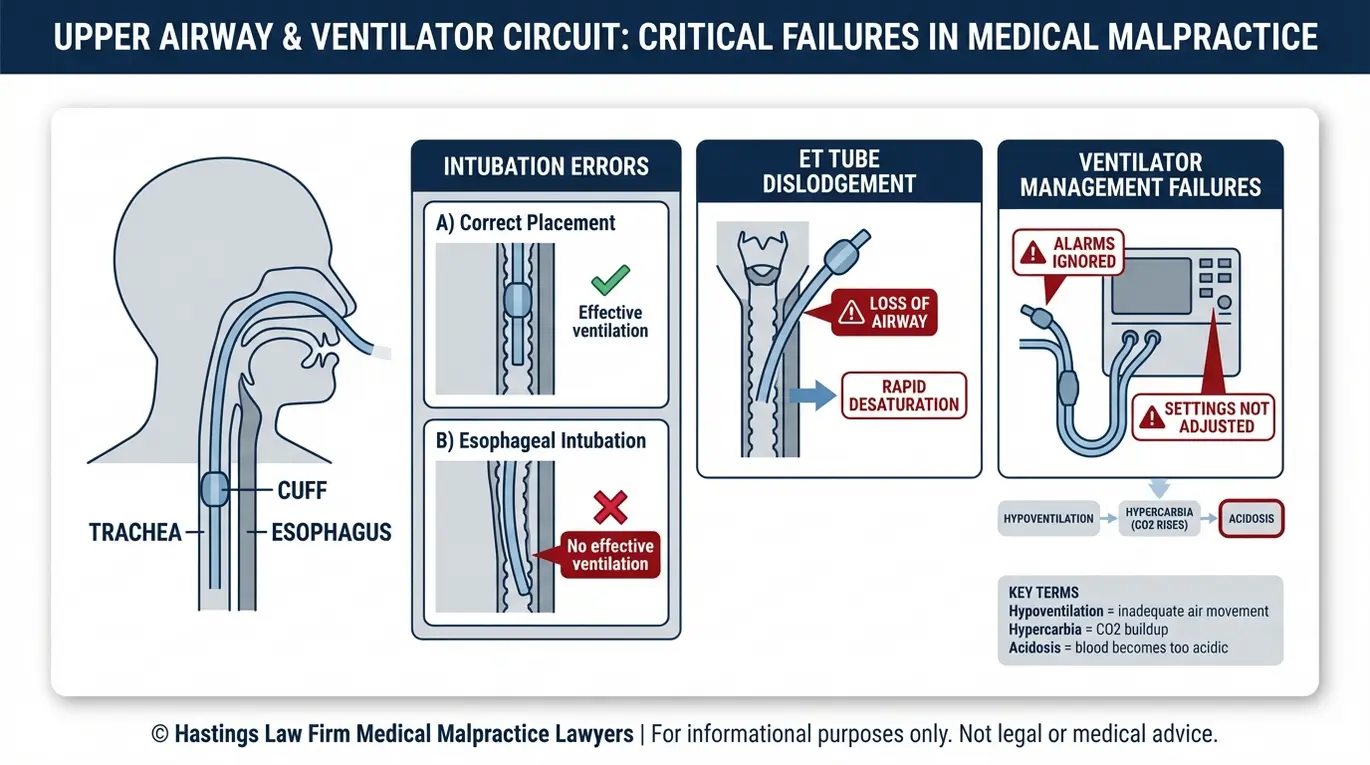
Respiratory malpractice often involves failures in airway management, such as improper intubation, failure to respond to ventilator alarms, or delayed recognition of signs of respiratory distress like hypercarbia, a dangerous buildup of carbon dioxide in the blood.
These errors can happen quickly, and the window to correct them is narrow. Understanding how they occur helps explain why the resulting injuries are often so severe. A respiratory malpractice attorney can help identify where these breakdowns occurred.
- Intubation Errors: Intubation is the process of inserting a tube into the trachea (windpipe) to secure a patient’s airway and deliver oxygen. One of the most dangerous errors is esophageal intubation, where the endotracheal tube (ET tube) is mistakenly placed into the esophagus (the food pipe) instead of the trachea. When this happens, the patient receives no oxygen to the lungs, resulting in a complete loss of airway. A closed claims analysis published in PubMed Central on difficult tracheal intubation found that airway management failures remain a significant source of patient injury and malpractice claims.
- Ventilator Management Failures: Once a patient is on a mechanical ventilator, the RT must continuously monitor and adjust settings to match the patient’s needs. Errors here include setting incorrect tidal volumes, which can cause lung injury, or failing to respond when alarms indicate a disconnect, obstruction, or pressure change. The mechanical ventilator settings must be precisely managed to support breathing without causing damage to the lung tissue.
- Monitoring Failures: Blood gas tests reveal whether a patient is developing acidosis (a dangerous drop in blood pH) or hypercarbia. Hypoventilation, where the patient is not receiving enough air exchange, can cause both conditions simultaneously. When an RT ignores or delays action on abnormal results, the patient’s condition can deteriorate rapidly.
A breathing therapy negligence lawyer evaluates these cases by reconstructing the clinical timeline. We look at what the monitors showed, when alarms sounded, and how quickly the care team responded. Our in-house medical staff, including nurses with direct hospital experience, reviews charting and ventilator logs to identify gaps between what should have happened and what actually did.
Arizona has a two-year statute of limitations under A.R.S. § 12-542 for personal injury claims, including those involving respiratory malpractice. Acting promptly helps preserve evidence and protects your right to file a claim. If you believe an airway management failure or ventilator error caused harm, an Arizona malpractice counsel can evaluate whether the evidence supports a case.
The Hastings Law Firm Difference
Results matter, but what truly sets us apart is how we achieve them. Every verdict, every settlement, and every Arizona courtroom victory comes from one guiding promise: To treat each client’s fight for justice as if it were our own.
This balance of skill, experience, and empathy reflects our core philosophy that justice should not only compensate the injured, but also make healthcare safer nationwide.

Consequences of Oxygen Deprivation: Hypoxia and Anoxic Brain Injury
When respiratory therapy fails, the brain is deprived of oxygen, leading to rapid tissue death known as hypoxia or anoxia, which can result in permanent brain damage or cardiac arrest within minutes.
The progression typically follows a predictable and devastating path. A respiratory error, whether a misplaced tube, a silenced alarm, or a delayed response, leads to inadequate oxygen delivery. The body enters a state of hypoxia, meaning oxygen levels in the blood and tissues drop below what is needed to sustain normal function. If oxygen is cut off entirely, the condition becomes anoxia.
The brain is the organ most vulnerable to this kind of injury. Brain cells can begin dying within minutes of oxygen deprivation, and significant irreversible damage can occur in as few as four to six minutes. The severity of the injury often correlates with the duration of the oxygen interruption. Even a brief period of anoxia can destroy neurons in the hippocampus, which is the area of the brain responsible for memory.
As the deprivation continues, damage spreads to the cortex, affecting motor control and cognitive processing. When the heart follows, respiratory arrest can progress to full cardiac arrest. Even if the patient survives, the anoxic brain injury is often permanent.
One of the most serious outcomes is hypoxic-ischemic encephalopathy (HIE), a type of brain damage caused by the combination of oxygen deprivation and reduced blood flow. Research published in PubMed Central on HIE pathophysiology describes how the resulting injury can affect cognition, motor function, and the ability to live independently. Patients with HIE may require around-the-clock care for the rest of their lives.
In the most tragic cases, oxygen deprivation leads to wrongful death. Families are left not only grieving but searching for answers about preventable failures. A lawyer for respiratory negligence can help determine whether the injury resulted from a breach of the standard of care and who should be held accountable.
Liability for Respiratory Injuries: Therapists, Doctors, and Hospitals
Liability in respiratory injury cases is rarely limited to a single person. The RT who made the error may bear direct responsibility, but a supervising physician who failed to provide adequate oversight can also be liable. Hospitals may share responsibility through a legal doctrine called vicarious liability, which holds employers accountable for the negligent acts of their employees.
We also investigate whether institutional failures contributed to the harm. Understaffing, inadequate training, or missing equipment can all point to hospital negligence. Even when a hospital claims the RT was an independent contractor, liability may still attach if the patient reasonably believed the therapist was part of the hospital’s care team.
Compensation for Respiratory Malpractice Victims in Arizona
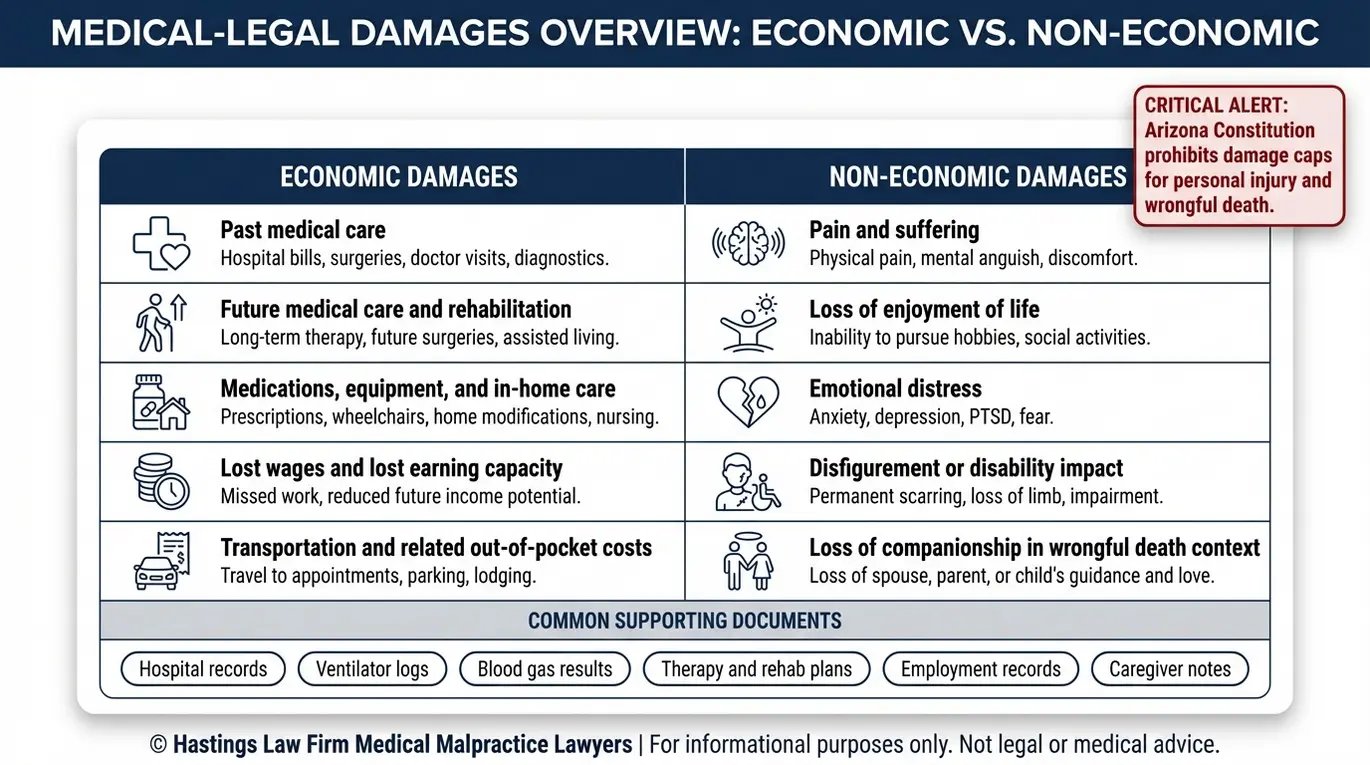
Patients harmed by respiratory malpractice in Arizona may recover economic damages for medical bills and lost wages, as well as non-economic damages for pain, suffering, and loss of quality of life.
The financial impact of a brain injury caused by oxygen deprivation is often staggering. Patients with HIE or anoxic brain injury may need lifelong medical care, rehabilitation, assistive technology, and full-time supervision. An Arizona respiratory malpractice lawyer works to ensure that any recovery accounts for both current expenses and the full cost of future care.
Because these injuries are often permanent, calculating future damages requires a detailed life care plan. This plan accounts for inflation and the rising cost of medical services over the patient’s life expectancy. It ensures that the settlement or verdict is sufficient to provide quality care decades into the future, rather than running out when the patient needs it most.
| Economic Damages | Non-Economic Damages |
|---|---|
| Past and future medical expenses | Physical pain and suffering |
| Rehabilitation and therapy costs | Emotional distress |
| Lost wages and earning capacity | Loss of enjoyment of life |
| Home modifications and assistive devices | Loss of consortium (for spouses) |
| In-home nursing or attendant care | Diminished quality of life |
Arizona protects injured patients in an important way. Under the Arizona Constitution, Article 2, Section 31, the state prohibits caps on damages in personal injury and wrongful death cases. This means there is no arbitrary ceiling on what a jury can award based on the evidence presented. The full scope of your losses can be considered.
Hastings Law Firm handles these cases on a contingency fee basis. You pay no attorney fees unless we recover compensation on your behalf.
Contact the Arizona Healthcare Malpractice Attorneys at Hastings Law Firm Today for Help
If someone you love suffered a brain injury, respiratory arrest, or death because of negligent respiratory care, you do not have to accept the hospital’s version of events. Years of conditioning may tell you not to question a medical professional, but your instinct that something went wrong deserves to be heard.
As an Arizona respiratory therapist malpractice lawyer, Hastings Law Firm brings a team of attorneys, in-house nurses, and former defense counsel who know how hospitals build their cases and how to hold them accountable. We focus exclusively on medical malpractice, and every case is prepared as if it will go to trial.
Your consultation is free, confidential, and comes with no obligation. As a medical negligence attorney team that works on contingency fee, we charge no fee unless we win. Contact us today to get the answers you and your family deserve.
Frequently Asked Questions About Respiratory Therapist Malpractice in Arizona


This content was researched and written by the Hastings Law Firm editorial team, which includes attorneys, medical professionals, and experienced researchers. Our writing is informed by internal knowledge and practical experience, and we cross-check critical details against authoritative sources cited throughout. Every piece undergoes human-led fact-checking and legal review. Because legal and medical information can change, if you spot an error, please contact us. Learn more about our content standards and review process on our editorial policy page.

Tommy Hastings, founder of Hastings Law Firm, is a board-certified personal injury trial lawyer dedicated exclusively to healthcare injury cases. Since 2001, he has represented injured patients and families in litigation against major hospital systems, pharmaceutical companies, and negligent healthcare providers nationwide. He has handled numerous high-profile cases that have drawn national media attention and resulted in multi-million dollar recoveries. He draws on that experience in his writing, helping readers understand how these cases work and what options may be available to them.
