


Arizona Pulmonologist Malpractice Lawyer
Pulmonologist negligence can leave patients facing worsening breathing problems, delayed treatment, and lasting harm when preventable errors occur in diagnosis, procedures, or critical care. Missed warning signs, delayed imaging follow up, and ventilator mismanagement can quickly escalate a respiratory crisis and lead to permanent injury or worse. Arizona law ties medical malpractice to whether care met the accepted standard and whether the lapse caused harm. If you or a loved one were harmed or worse due to pulmonologist malpractice in Arizona, contact Hastings Law Firm for a free, confidential case review.

Last Updated: July 27, 2026
Trusted Legal Representation for Medical Specialist Negligence in Arizona
When a pulmonologist, a doctor who specializes in diagnosing and treating diseases of the lungs and respiratory system, causes harm through a preventable error, the consequences can be devastating. You may be left with worsening symptoms, unanswered questions, and a deep sense that the care you received fell short. That feeling deserves to be taken seriously.
At Hastings Law Firm, we focus exclusively on medical malpractice. Our legal and medical team works together to determine whether a lung specialist’s actions met the accepted standard of care, or whether negligence contributed to your injury or a loved one’s death. If you are looking for an Arizona pulmonologist malpractice lawyer, we are here to review what happened and explain your options in a free, confidential consultation.

Common Errors Committed by Pulmonologists and Lung Specialists
Pulmonologist negligence occurs when a lung specialist deviates from the accepted standard of care, the level of treatment a reasonably competent physician in the same specialty would provide under similar circumstances. When that standard is breached, causing a breach of duty, and a patient suffers harm as a result, it may constitute medical malpractice under Arizona law. This failure can happen in a private clinic, during a routine procedure, or in a high-stakes environment like the Intensive Care Unit (ICU).
Pulmonologists manage some of the most serious and time-sensitive conditions in medicine. Their scope of care includes treating chronic obstructive pulmonary disease (COPD), asthma, interstitial lung disease, respiratory infections, and lung cancer. They also manage patients on mechanical ventilation, which is the use of a breathing machine to support or replace a patient’s ability to breathe. Because these conditions can deteriorate rapidly, even a short delay or oversight can cause irreversible damage.
The complexity of the respiratory system means that accurate, timely intervention is critical, and errors can have immediate life-or-death consequences. Lung doctor malpractice can take many forms, including:
- Failure to diagnose pulmonary embolism (PE): Dismissing warning signs like sudden shortness of breath, chest pain, or dropping oxygen levels, particularly in patients with known risk factors.
- Delayed detection of lung cancer: Missing or failing to follow up on suspicious nodules found on imaging, or not referring a patient for biopsy when clinical guidelines call for one.
- Failure to diagnose pneumonia: Mistaking a serious bacterial or viral infection for a minor ailment, leading to sepsis or respiratory failure.
- Errors during bronchoscopy: A bronchoscopy is a procedure where a thin, flexible tube with a camera is inserted into the airways to examine or collect tissue samples. Complications from negligence during this procedure can include lung puncture, uncontrolled bleeding, or infection.
- Biopsy mistakes: Performing a biopsy on the wrong site, using improper technique, or failing to obtain an adequate tissue sample for accurate diagnosis.
- ICU errors and ventilator mismanagement: Negligence in managing life support settings can lead to hypoxia (dangerously low oxygen levels), ventilator-associated lung injury, or prolonged sedation that delays recovery.
- Medication errors: Prescribing incorrect dosages of bronchodilators, corticosteroids, or anticoagulants, or failing to account for drug interactions.
If you believe a lung specialist’s error contributed to a serious injury or a loved one’s death, a malpractice lawyer in Arizona can help you understand whether the care you received fell below the accepted standard. Our team includes in-house medical professionals and former defense lawyers who provide insider insight into how hospitals and insurance carriers evaluate these claims.
Pulmonary Embolism and Failure to Diagnose Critical Clots
A missed pulmonary embolism (PE) diagnosis is one of the most frequent grounds for malpractice claims against pulmonologists and emergency physicians. PE occurs when a blood clot, most often originating from deep vein thrombosis (DVT), a clot that forms in the deep veins of the legs or pelvis, breaks free and travels to the lungs.
This migration turns a treatable leg clot into a life-threatening lung blockage. The connection between DVT and PE is well-understood, meaning physicians must remain vigilant. Once lodged in the pulmonary arteries, the clot blocks blood flow and can cause sudden death.
According to research published through PubMed Central on global pulmonary embolism mortality trends, PE remains a leading cause of preventable hospital death worldwide. The condition is treatable when caught early, typically with anticoagulant (blood-thinning) medications.
Because the clot physically obstructs oxygenation, the window for effective treatment closes quickly. Without rapid anticoagulation, the strain on the heart can become fatal. If a patient passes away due to negligence, this may constitute wrongful death.
One of the core problems in pulmonary embolism misdiagnosis is that symptoms can overlap with less serious conditions. Shortness of breath, chest tightness, and an elevated heart rate are also associated with anxiety, asthma, or even a panic attack. In some cases, doctors may attribute these symptoms to a benign cause without ordering the tests needed to rule out a clot. Diagnostic failures can represent potential negligence when a physician skips these steps.
The following table outlines common PE symptoms alongside the conditions they are frequently confused with:
| PE Symptom | Commonly Misdiagnosed As |
|---|---|
| Sudden shortness of breath | Anxiety, asthma exacerbation |
| Sharp chest pain (worse with breathing) | Heart attack, pleurisy, muscle strain |
| Rapid heart rate (tachycardia) | Panic attack, dehydration |
| Low oxygen saturation (hypoxia) | COPD flare-up, pneumonia |
| Cyanosis (bluish skin discoloration) | Circulatory disorder |
| Leg swelling or pain (DVT sign) | Musculoskeletal injury, cellulitis |
Certain patients carry a higher risk for DVT and PE. These include individuals who have recently undergone surgery, those on prolonged bed rest, patients with cancer, women taking oral contraceptives or hormone therapy, and anyone with a prior history of blood clots.
When a patient with one or more of these risk factors presents with respiratory distress, the standard of care generally requires the physician to actively investigate for PE rather than attributing symptoms to a less dangerous cause. A PE misdiagnosis lawyer can help determine whether a doctor’s failure to recognize these warning signs and order appropriate testing constituted a breach of duty. As an Arizona malpractice attorney team, we work with qualified pulmonology and hematology experts to reconstruct the clinical timeline and evaluate whether the standard of care was met.

The Hastings Law Firm Difference
Results matter, but what truly sets us apart is how we achieve them. Every verdict, every settlement, and every Arizona courtroom victory comes from one guiding promise: To treat each client’s fight for justice as if it were our own.
This balance of skill, experience, and empathy reflects our core philosophy that justice should not only compensate the injured, but also make health care safer nationwide.

Standard of Care for Diagnostic Testing and Imaging
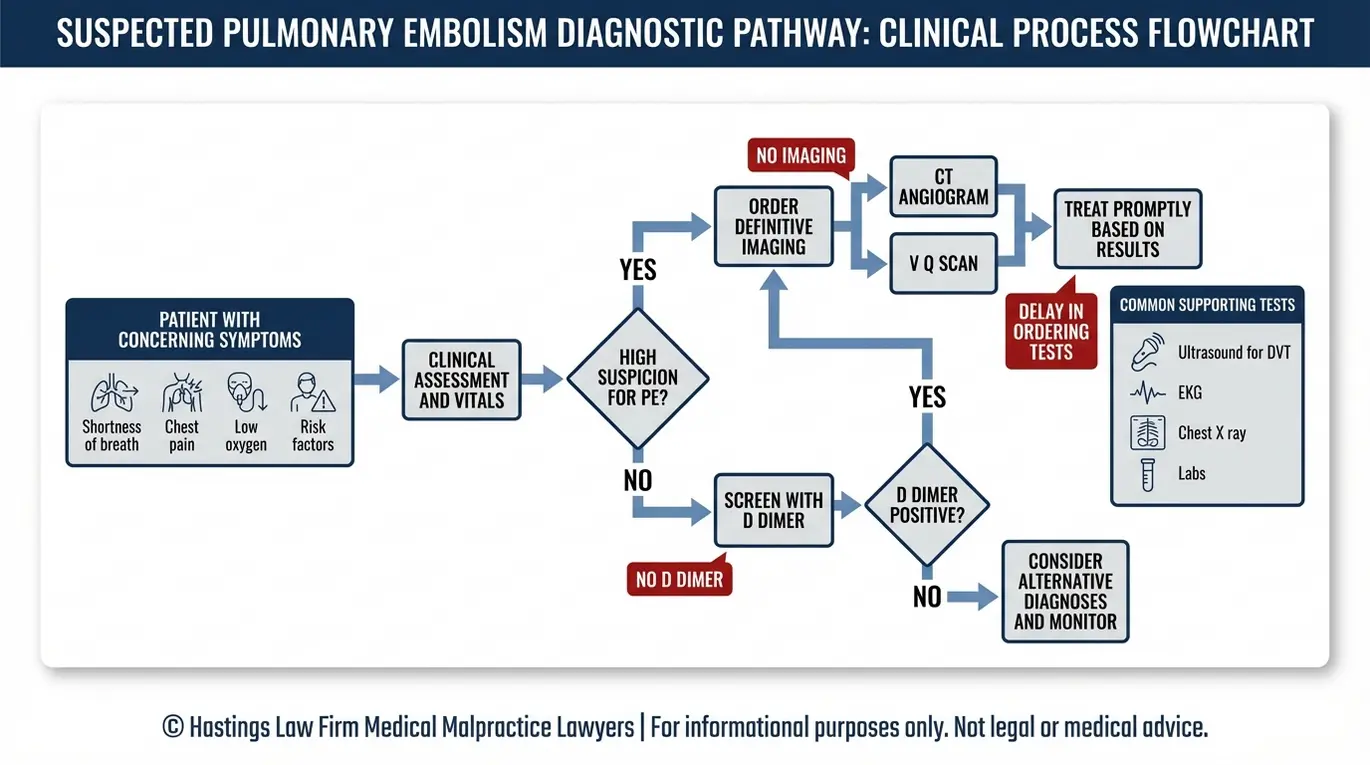
The standard of care for a suspected pulmonary issue requires physicians to rule out life-threatening conditions using objective diagnostic tests rather than relying on physical observation alone. In pulmonology, this principle is sometimes called the rule-out approach: when a dangerous condition like PE is a reasonable possibility, the physician has a duty to eliminate it through testing before settling on a less serious diagnosis. This safety-first mindset is critical in emergency medicine and pulmonology because missing a major diagnosis can be fatal.
Guidelines published by PubMed Central on the diagnosis and management of pulmonary embolism outline a tiered diagnostic protocol that most pulmonologists and emergency physicians are expected to follow. When these steps are skipped or delayed, and a patient suffers harm as a result, it can form the basis of a medical negligence claim.
Here is a checklist of the key diagnostic tools that the standard of care may require when PE or another serious pulmonary condition is suspected:
- D-dimer blood test: A D-dimer test measures a protein fragment produced when a blood clot dissolves. An elevated D-dimer does not confirm a clot, but a normal result in a low-risk patient can help rule one out. Failing to order this initial screening in an appropriate clinical context may represent negligence.
- CT pulmonary angiography (CTPA): CTPA is a specialized CT scan that uses contrast dye to visualize blood flow in the pulmonary arteries. Also known as a CT angiogram, this test is widely considered the gold standard for confirming or excluding PE. When clinical suspicion is moderate to high, the standard of care typically calls for this test.
- Ventilation-perfusion (V/Q) scan: A V/Q scan compares airflow and blood flow in the lungs. It is often used when a patient cannot receive contrast dye, such as those with kidney disease or a dye allergy, providing an alternative pathway to diagnosis when a CT angiogram is contraindicated.
- Doppler ultrasound of the legs: This non-invasive imaging test checks for DVT in the lower extremities. Finding a clot in the legs can support the diagnosis of PE even before lung imaging is completed.
- Electrocardiogram (EKG): While an EKG alone cannot diagnose PE, specific patterns of heart strain can raise suspicion and prompt further testing.
- Chest X-ray: A chest X-ray may help exclude other causes of respiratory distress, such as pneumonia or a collapsed lung, but it cannot reliably detect PE on its own.
- Pulmonary angiography: Though rarely used as a first-line test today, this invasive procedure remains the most definitive method for visualizing clots in the pulmonary vasculature.
Under Arizona Revised Statutes § 12-561, medical malpractice (referred to as a “medical malpractice action”) requires proof that the healthcare provider failed to meet the recognized standard of care. When a pulmonologist malpractice attorney evaluates a case, one of the first questions is whether appropriate diagnostic tests were ordered in a timely manner, and if not, whether that failure caused or contributed to the patient’s injury. Our firm was founded by board-certified trial attorney Tommy Hastings, and we apply high-level medical scrutiny to every record we review.
Liability and Damages in Arizona Lung Injury Cases
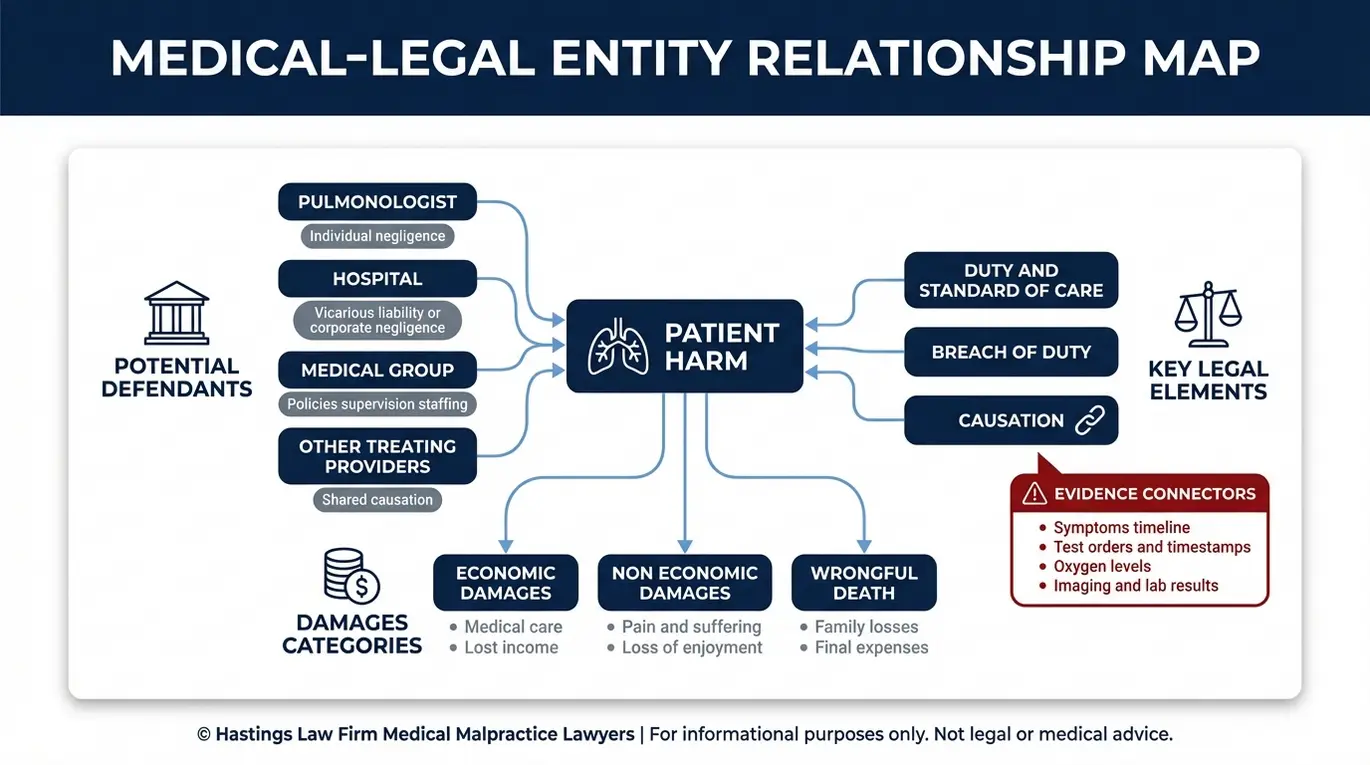
In Arizona, liable parties for pulmonology errors can include the individual physician, the hospital or medical facility that employs them, or an independent medical group. Determining who is responsible depends on the specific employment relationships and the circumstances of the care provided.
When a pulmonologist is a direct employee of a hospital, the hospital may share liability through a legal theory called vicarious liability, meaning the employer can be held responsible for the negligent acts of its employees performed within the scope of their duties. In cases involving hospital liability or corporate negligence, the hospital itself may be liable for systemic failures like inadequate staffing, poor credentialing, or deficient protocols. This distinction matters because it affects which parties are named in the claim and which insurance policies are involved.
The injuries caused by pulmonology errors are often catastrophic. Hypoxia, a condition where the body or brain does not receive enough oxygen, can result in permanent brain damage. Some patients require long-term oxygen therapy (LTOT), a treatment involving supplemental oxygen delivered through a portable or stationary device for extended periods, sometimes for the rest of their lives. Others suffer irreversible lung damage that limits their ability to work, care for themselves, or participate in daily activities.
Arizona law allows injured patients and families to pursue both economic and non-economic damages. Economic damages cover tangible financial losses: medical bills, rehabilitation costs, lost wages, and future care needs. Non-economic damages address the less quantifiable harms, including physical pain, emotional distress, loss of enjoyment of life, and loss of companionship. In severe cases, the lifetime cost of care can be astronomical.
In cases where a patient dies from an untreated PE, respiratory failure, or other preventable lung condition, surviving family members may pursue a wrongful death claim. An Arizona injury lawyer can help the family identify all potentially responsible parties and calculate the full scope of losses. Proving these elements requires a clear demonstration of causation, typically through an expert witness who must testify that the doctor’s actions directly caused the injury. We use a trial-ready strategy, preparing every case from day one as if it will go to a jury.
You have the legal right to obtain your medical records. Under the U.S. Department of Health and Human Services’ HIPAA access guidance, patients and their authorized representatives can request copies of health information, which is a critical first step in building a malpractice case. Our team assists clients with gathering and interpreting these records from the very beginning.
Contact the Arizona Doctor Malpractice Attorneys at Hastings Law Firm Today for Help
Errors by lung specialists are not simply medical complications. They are preventable failures that can change the course of a life or end one entirely. If you or a loved one has been harmed by a pulmonologist’s negligence, you deserve honest answers about what went wrong and whether you have a valid legal claim.
At Hastings Law Firm, our team of attorneys, former defense lawyers, and in-house medical professionals works together to evaluate pulmonology malpractice cases with the medical depth they require. We prepare every case as if it will go to trial, and we operate on a contingency fee basis, meaning we do not collect a fee unless we secure a recovery for you.
If you need an Arizona pulmonologist malpractice lawyer, contact us today for a free, confidential case evaluation. Let us help you find the answers you deserve.
Frequently Asked Questions About Pulmonologist Malpractice in Arizona


This content was researched and written by the Hastings Law Firm editorial team, which includes attorneys, medical professionals, and experienced researchers. Our writing is informed by internal knowledge and practical experience, and we cross-check critical details against authoritative sources cited throughout. Every piece undergoes human-led fact-checking and legal review. Because legal and medical information can change, if you spot an error, please contact us. Learn more about our content standards and review process on our editorial policy page.

Tommy Hastings, founder of Hastings Law Firm, is a board-certified personal injury trial lawyer dedicated exclusively to healthcare injury cases. Since 2001, he has represented injured patients and families in litigation against major hospital systems, pharmaceutical companies, and negligent healthcare providers nationwide. He has handled numerous high-profile cases that have drawn national media attention and resulted in multi-million dollar recoveries. He draws on that experience in his writing, helping readers understand how these cases work and what options may be available to them.
