


Arizona Postoperative Malpractice Lawyer
Postoperative negligence can turn a successful surgery into a serious medical crisis when warning signs are missed during recovery. Failures to monitor vital signs, respond to alarms, or escalate concerns can delay treatment for complications and lead to lasting harm. Risk can increase during transitions from specialized recovery units to regular hospital floors where staffing and oversight may change. Understanding how monitoring should work and where breakdowns happen can help families make sense of what went wrong. If you or a loved one were harmed or worse due to postoperative negligence in Arizona, contact Hastings Law Firm for a free, confidential case review.
Last Updated: July 27, 2026
Trusted Legal Representation for Postoperative Negligence in Arizona
When a loved one comes through surgery only to deteriorate during recovery, it can feel like the system that was supposed to protect them simply stopped paying attention. You may sense that something went wrong, that warning signs were missed or ignored, but proving it feels overwhelming when the hospital holds all the records and the expertise.
You do not have to figure this out alone. As a dedicated Arizona Postoperative Malpractice Lawyer team, we focus exclusively on medical malpractice, and we understand both the medicine and the law behind these cases. Our in-house medical staff and former defense attorneys know exactly where to look for evidence of negligent postoperative care.
If you believe a failure to monitor caused harm after surgery, we can review what happened and explain your options in a free, confidential consultation.

Defining Postoperative Malpractice and Failure to Monitor in Arizona
Postoperative malpractice occurs when medical staff fail to adhere to the standard of care during recovery, specifically by ignoring vital signs, failing to recognize distress, or delaying treatment for complications. This breach of the accepted standard of care a reasonably competent professional would provide often involves ignoring changes in patient status or failing to escalate concerns when complications arise during recovery after surgery in Arizona.
The period immediately after surgery is sometimes called the “golden hour,” a critical window when patients are most vulnerable to anesthesia-related complications, bleeding, and respiratory problems. During this time, patients are typically monitored in the post-anesthesia care unit (PACU), a specialized recovery area where trained nurses track heart rate, blood pressure, oxygen levels, and consciousness as the effects of anesthesia wear off. In the PACU, the ratio of nurse to patient is typically one-to-one or one-to-two, ensuring constant observation.
This intense scrutiny is necessary because the body is struggling to regain homeostasis after the trauma of surgery and the chemical impact of anesthesia. The American Society of Anesthesiologists has published specific standards outlining the monitoring and staffing requirements for this phase of care.
Once a patient is transferred from the PACU to a hospital floor, the responsibility for ongoing monitoring shifts to floor nurses. This transition is a well-documented risk point. When a patient moves to the floor, the nurse-to-patient ratio drops significantly, sometimes to one-to-six. This reduction in oversight creates a dangerous gap.
Many preventable errors occur at this transition point, turning a successful surgery into a medical tragedy. Nursing negligence during post-operative care can include missed medication doses, infrequent vital sign checks, or a failure to escalate concerns to the surgical team when a patient’s condition changes. Arizona postoperative malpractice attorneys evaluate whether providers followed established monitoring protocols at every stage of recovery. The gap between what should have been observed and what action was actually taken is often where medical negligence is found.
Identifying Injuries Caused by Negligent Post Surgical Monitoring
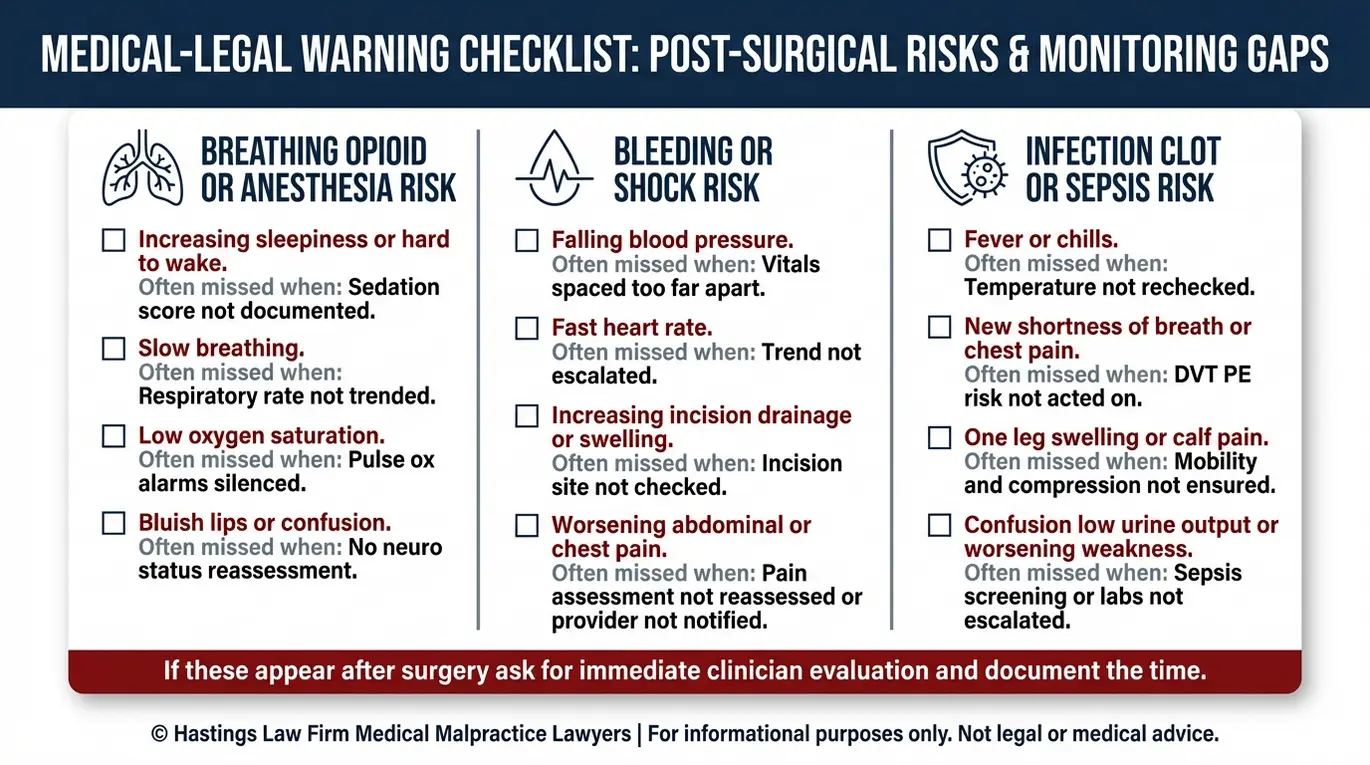
Negligent monitoring can result in preventable injuries such as sepsis, pulmonary embolism, or internal hemorrhage that worsen unchecked because of ignored alarms or infrequent assessments. When a postoperative malpractice lawyer in Arizona reviews these cases, the focus is on whether the care team had the information they needed to intervene and whether they acted on it in time.
Respiratory depression, a dangerous slowing or stopping of breathing, is one of the most common post-surgical emergencies. It can result from lingering anesthesia effects or opioid pain medications. Monitoring tools like pulse oximetry, which measures oxygen saturation (SpO2) in the blood, are designed to catch this early.
While pulse oximetry is useful, it is a lagging indicator. It may not show a drop in oxygen until significant respiratory depression has already occurred. This is why vigilance regarding respiratory rate and effort is equally important. Opioids depress the drive to breathe; without proper monitoring, carbon dioxide builds up in the blood, leading to respiratory arrest or permanent brain injury.
Hemorrhage and internal bleeding may not always be visible at the incision site. A steady drop in blood pressure, rising heart rate, or changes in drain output can all signal internal blood loss. The body initially compensates for blood loss by increasing the heart rate to maintain blood pressure. A vigilant nurse will spot this tachycardia before the blood pressure crashes; missing this early sign removes the window for effective surgical intervention. Without timely recognition, patients can go into shock and suffer organ failure.
Deep vein thrombosis (DVT), a blood clot that forms in the deep veins of the legs, is a known risk after surgery. When clots break loose and travel to the lungs, they cause a pulmonary embolism (PE), which can be fatal. Immobility promotes blood stasis, especially in orthopedic or pelvic surgeries. The Agency for Healthcare Research and Quality tracks perioperative PE and DVT rates as a key patient safety indicator. Preventive measures like early mobility and compression devices are standard, and failing to implement them can constitute negligence.
Infection and sepsis can develop when fever spikes, abnormal lab results, or wound changes go unaddressed. Sepsis, the body’s life-threatening response to infection, progresses rapidly. Early recognition is the only defense against septic shock.
When nurses fail to report abnormal lab values, such as an elevated white blood cell count or high lactate levels, the infection spreads systematically. A delay of even a few hours in starting antibiotics can lead to organ failure or death.
Research published in PubMed Central examines how surgical teams manage complications and medical errors, reinforcing that timely recognition and response are central to the standard of care.
| Complication | Missed Warning Sign | Negligent Act |
|---|---|---|
| Internal Bleeding / Hemorrhage | Drop in blood pressure, rising heart rate | Failure to notify surgeon or check drain output |
| Respiratory Depression | Falling oxygen saturation (SpO2) | Ignoring pulse oximetry alarms |
| DVT / Pulmonary Embolism | Leg swelling, sudden chest pain | Failure to use compression devices or encourage mobility |
| Sepsis / Infection | Fever spikes, abnormal white blood cell count | Delayed antibiotics or failure to escalate to physician |
| Organ Failure | Declining urine output, altered mental status | Infrequent monitoring or failure to order labs |
The Hastings Law Firm Difference
Results matter, but what truly sets us apart is how we achieve them. Every verdict, every settlement, and every Arizona courtroom victory comes from one guiding promise: To treat each client’s fight for justice as if it were our own.
This balance of skill, experience, and empathy reflects our core philosophy that justice should not only compensate the injured, but also make health care safer nationwide.

Liability for Post Surgical Negligence Among Surgeons and Hospitals
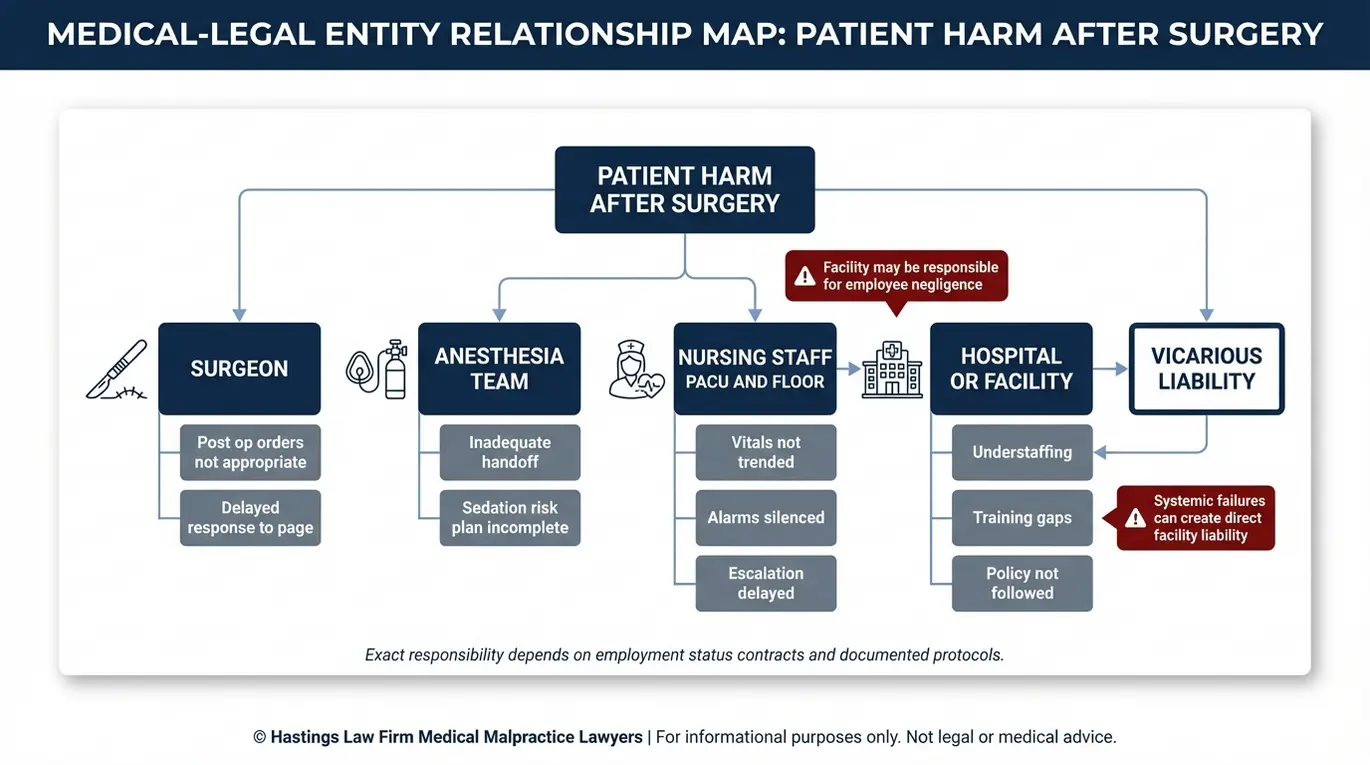
Liability in postoperative cases often extends beyond the surgeon to the hospital itself, particularly when systemic failures like understaffing, inadequate training, or nursing negligence contributed to the harm. In Arizona medical negligence cases, under the legal doctrine of vicarious liability, a hospital can be held responsible for the actions or inactions of its employees. This means the facility is responsible for staff errors, ensuring patients have recourse against the entity that employs the team. It prevents hospitals from shifting blame entirely onto individual nurses who were working under flawed policies.
The surgeon may bear direct responsibility if they failed to leave adequate postoperative orders, did not respond to nursing calls, or neglected to check on a patient with known risk factors. But in many cases, the breakdown happens at the nursing level or within hospital systems. To win a claim against a hospital, we must demonstrate that these systemic issues were the proximate cause of the patient’s suffering. This means the negligence was the direct reason the injury happened.
Alarm fatigue, a condition where staff become desensitized to the constant beeping of monitors and begin ignoring or silencing alerts, is a documented safety concern in hospitals nationwide. When alarms for dropping oxygen levels or irregular heart rhythms go unanswered, the consequences can be severe. This phenomenon is not an excuse for negligence; it is a symptom of administrative failure. Hospitals have a duty to configure monitor parameters and staffing levels so that alarms remain meaningful and actionable.
A neurological status assessment, the routine evaluation of a patient’s consciousness, pupil response, and motor function, is another area where gaps in monitoring can cause harm. If nursing staff are not performing these checks at required intervals, changes in brain function after surgery may go undetected until irreversible damage has occurred.
Arizona malpractice lawyers for postoperative care typically evaluate multiple parties when building a case. Potentially liable parties may include:
- The operating surgeon or surgical team
- PACU and floor nurses responsible for direct monitoring
- The hospital or surgical facility as the employer
- Anesthesiologists or nurse anesthetists
- Third-party staffing agencies that provided temporary nursing staff
Using Internal Hospital Protocols to Prove Negligence
One of the most effective tools in a postoperative malpractice case is the hospital’s own written policies. Many facilities maintain internal protocols that exceed the minimum requirements set by state law or accreditation bodies. When staff fail to follow hospital protocols, those documents become powerful evidence of a breach in the standard of care.
For example, a hospital’s protocol may require capnography, a monitoring technique that measures end-tidal CO2 (EtCO2) to detect breathing problems, for all patients receiving opioid pain medication. If that monitoring was not provided and the patient suffered respiratory arrest, the hospital’s own policy helps establish what should have been done. Similarly, protocols for incision site assessment, the regular visual and physical examination of a surgical wound for signs of bleeding, swelling, or infection, create a documented standard that we can measure actual care against.
Our team, which includes former defense attorneys, in-house nursing professionals, and Board Certified Patient Advocates, knows how to obtain and interpret these internal documents. We understand how hospitals organize their policies because members of our team previously worked within those systems.
Proving Causation and Damages in Arizona Malpractice Cases
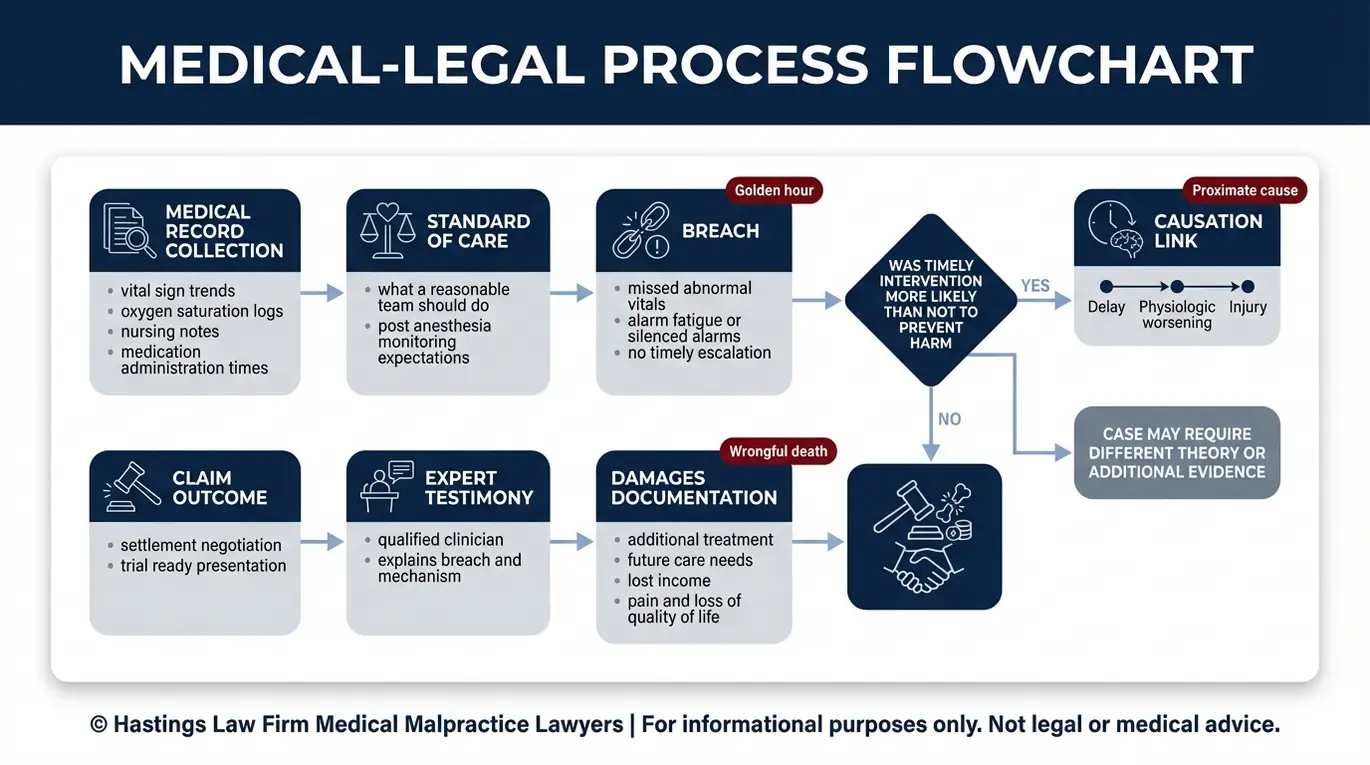
Proving a postoperative malpractice case requires establishing that a specific failure to monitor directly caused the patient’s injury, supported by expert testimony and a detailed accounting of both economic and non-economic damages.
Under A.R.S. § 12-2603, Arizona requires a preliminary expert opinion affidavit certifying that a qualified medical expert has reviewed the case and believes the standard of care was breached. Postoperative malpractice attorneys in AZ must present expert analysis connecting the monitoring failure to the resulting harm. This is the legal concept of causation, showing that the injury would not have occurred, or would have been less severe, if the care team had acted appropriately.
Defense counsel often argue that the complications were unavoidable risks of the procedure. We counter this by constructing a minute-by-minute timeline. We show exactly when the warning signs appeared and how a timely intervention would have altered the outcome. This detailed reconstruction is necessary to satisfy the burden of proof.
Our medical team works with nationally recognized experts to reconstruct timelines from nursing notes, vital sign records, medication logs, and monitor data. Failures in pain management protocols or a skipped neurological status assessment can be pivotal pieces of evidence. We look at whether devices like patient-controlled analgesia (PCA) pumps, which allow patients to self-administer pain medication, were properly programmed and monitored. We also examine whether sequential compression devices (SCDs), inflatable sleeves placed on the legs to prevent blood clots, were ordered and applied as required.
Damages in these cases generally fall into two categories:
- Economic damages: Current and future medical bills, rehabilitation costs, lost wages, and reduced earning capacity
- Non-economic damages: Physical pain, emotional suffering, loss of quality of life, and loss of companionship
When the monitoring failure results in death, Arizona law allows the family to pursue a wrongful death claim. These cases carry their own set of damages, including loss of financial support, funeral expenses, and the profound loss of the relationship itself. Every element of the case, from the breach to the injury to the financial impact, must be built with evidence that can withstand scrutiny at trial.
Why Choose Hastings Law Firm for Your Arizona Medical Injury Claim
Choosing Hastings Law Firm means working with an Arizona postoperative malpractice legal team that prepares every case as if it will go before a jury. That level of preparation sends a clear message to insurance carriers and defense counsel: we are trial-ready.
Our founder, Tommy Hastings, is board certified in Personal Injury Trial Law by the Texas Board of Legal Specialization, a distinction held by fewer than two percent of Texas attorneys. He has dedicated his career to giving a voice to patients affected by medical error and is recognized as a leading authority on medical malpractice litigation. He was inducted into the American Board of Trial Advocates in 2025, an invitation-only organization for experienced trial lawyers.
From our Phoenix office, our team combines local presence with national resources, including a network of top-tier medical experts, in-house nurse consultants, and former defense attorneys who understand how hospitals and insurers build their cases. We invest the time and financial resources required to hire the best experts and reconstruct the medical events accurately. Our reputation for thorough trial preparation encourages fair consideration from insurers, knowing we are ready to present your case to a jury if a fair settlement is not offered.
We handle all postoperative malpractice cases on a contingency fee basis. You pay no attorney fees or costs unless we recover compensation for you.
Contact the Arizona Healthcare Malpractice Attorneys at Hastings Law Firm Today for Help
Arizona imposes strict deadlines on medical malpractice claims, and critical evidence like monitor logs and nursing notes can become harder to obtain over time. Taking that first step now helps protect both the evidence and your right to file a risk-free case evaluation.
We understand how isolating it can feel to question the care a hospital provided. You are not alone in this, and asking questions does not mean you are doing anything wrong. It means you are looking for the truth about what happened.
Our team is ready to listen, review your medical records, and help you understand whether you have a case. The consultation is free, confidential, and carries no obligation. Call Hastings Law Firm or contact us online to schedule your case evaluation today.
Frequently Asked Questions About Postoperative Malpractice in Arizona


This content was researched and written by the Hastings Law Firm editorial team, which includes attorneys, medical professionals, and experienced researchers. Our writing is informed by internal knowledge and practical experience, and we cross-check critical details against authoritative sources cited throughout. Every piece undergoes human-led fact-checking and legal review. Because legal and medical information can change, if you spot an error, please contact us. Learn more about our content standards and review process on our editorial policy page.

Tommy Hastings, founder of Hastings Law Firm, is a board-certified personal injury trial lawyer dedicated exclusively to healthcare injury cases. Since 2001, he has represented injured patients and families in litigation against major hospital systems, pharmaceutical companies, and negligent healthcare providers nationwide. He has handled numerous high-profile cases that have drawn national media attention and resulted in multi-million dollar recoveries. He draws on that experience in his writing, helping readers understand how these cases work and what options may be available to them.
